If you have ever thought about skin care at a dermatology clinic,
you may have heard of “Ultherapy” at least once.
But have you ever worried whether it would really suit you... or whether there might be side effects?
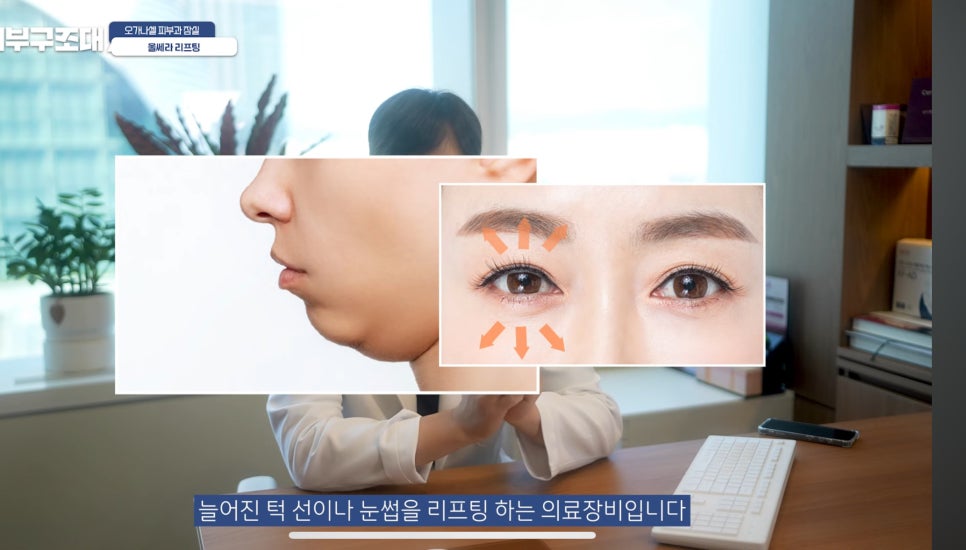
Ultherapy is a lifting device that precisely improves areas that need firmness, such as the jawline or drooping brows.
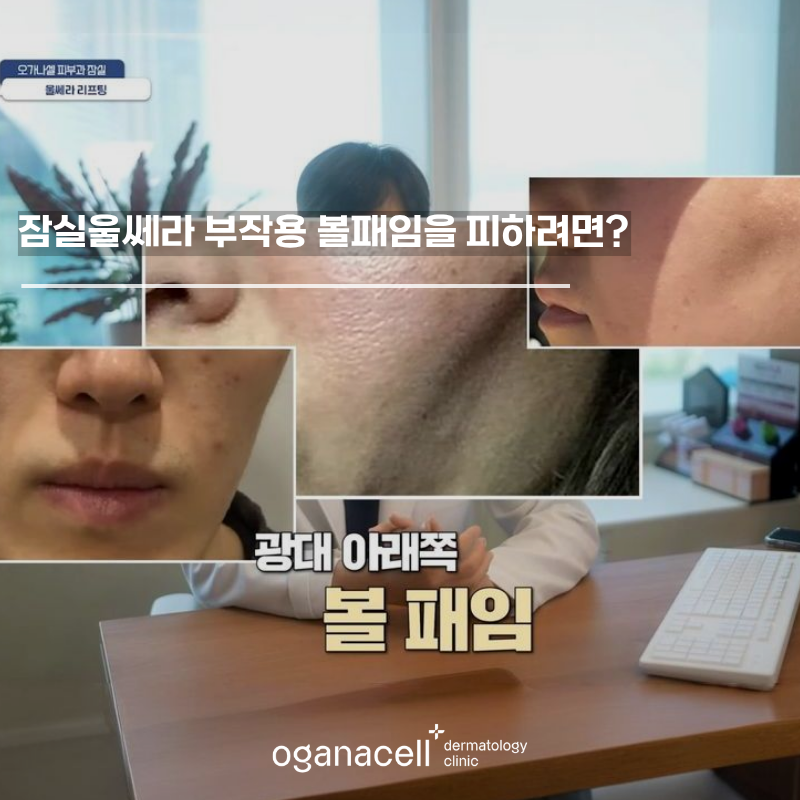
However, Ultherapy treatment that does not take facial structure and skin thickness into account can instead become irritating and create unwanted results such as cheek hollowing or facial contour asymmetry.
That is why the medical staff’s planning, skill, and shot distribution matter more than anything else. Shall we take a closer look?
Ultherapy is a focused ultrasound device
Ultherapy treatment works by delivering HIFU (focused ultrasound) concentrated on the desired skin layer to tighten loosened tissue.
In other words, the entire face is not treated with the same intensity.
Depending on skin thickness, fat layer thickness, elasticity, and the direction of sagging, the required position and depth differ for each person.
More shots are not necessarily better for everyone with Ultherapy.
Therefore, stronger intensity does not always mean better results, and if too much energy is delivered to one area, side effects such as cheek hollowing can occur, so careful treatment is necessary.
Ultherapy is not simply device-centered care; the key point is that it is design-centered lifting.^^
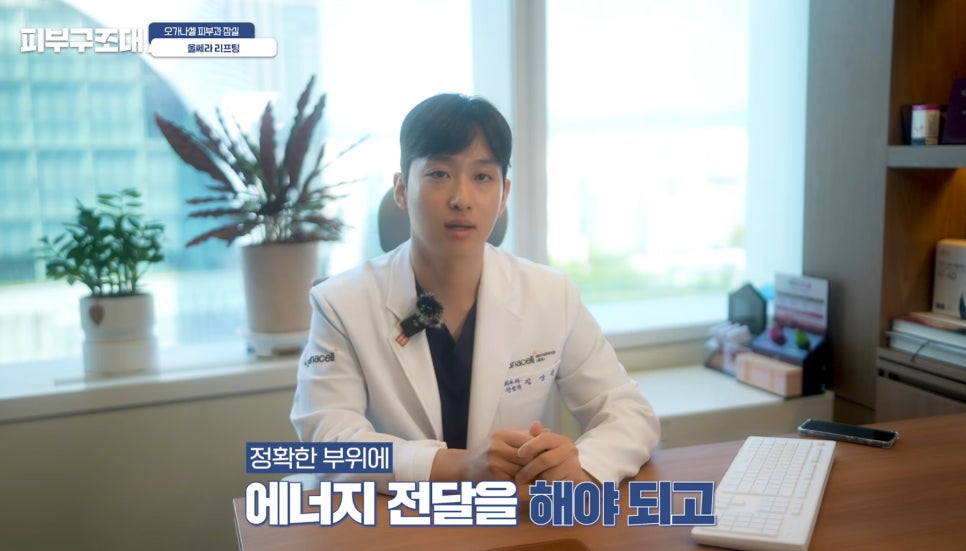
Why is DEEP SEE technology in Ultherapy important?
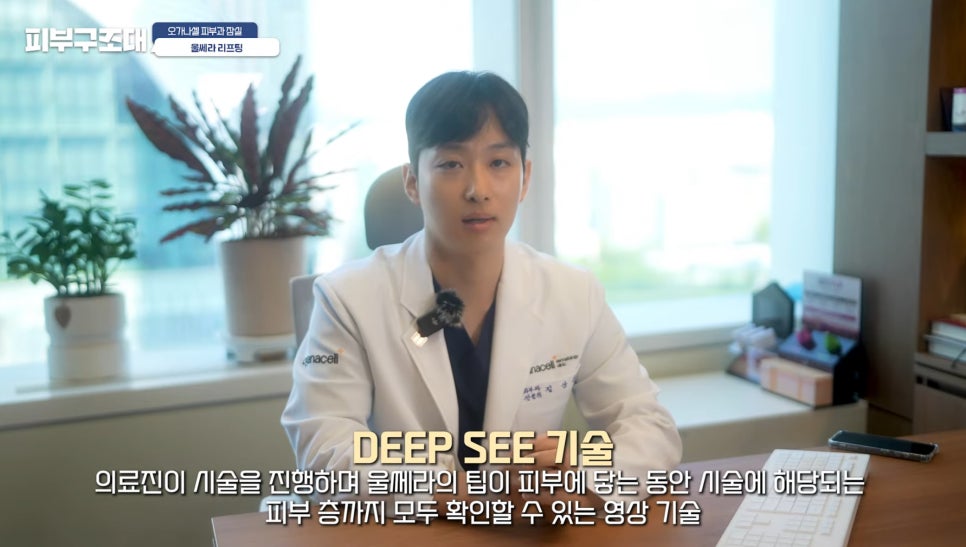
Ultherapy is equipped with DEEP SEE ultrasound imaging technology, allowing for more precise treatment.
The moment the Ultherapy tip touches the skin, it enables real-time monitoring of the tissue beneath the skin so that each layer can be checked.
That is,
Skin thickness
Fat layer depth
SMAS position that needs lifting
Boundary areas to avoid
Each one is examined directly with the eyes according to the individual’s skin condition, and the procedure is carried out based on the desired design.
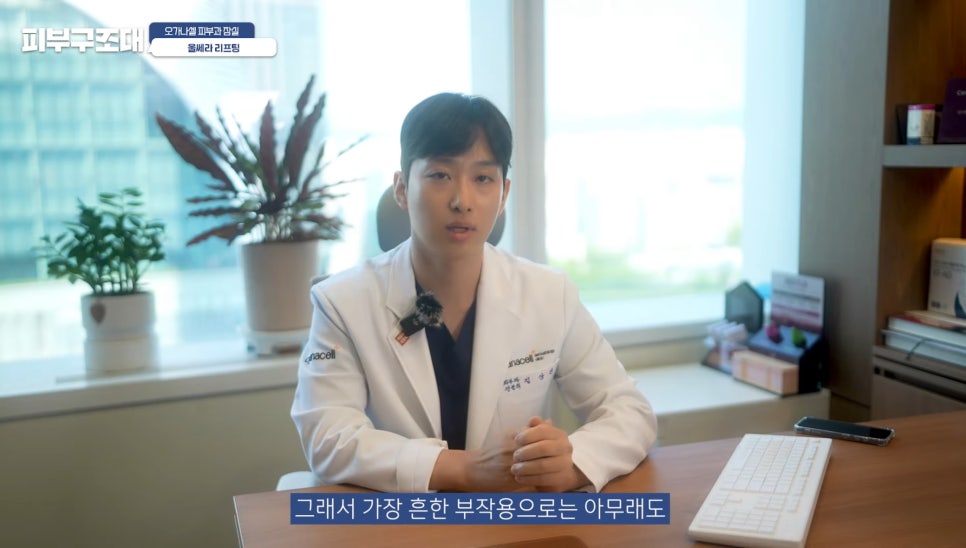
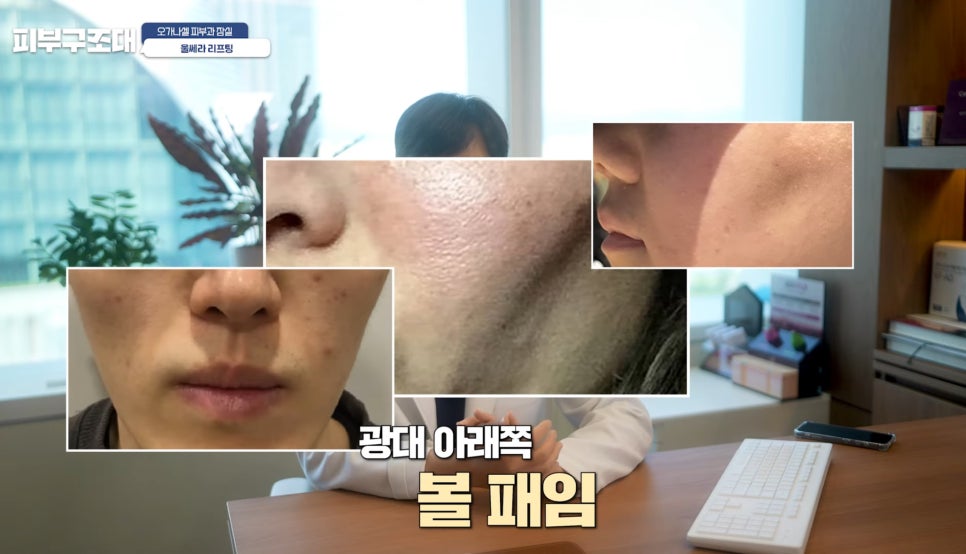
How can you avoid cheek hollowing?
Personalized design planning is important
In Ultherapy treatment, precise design is important.
Because each person’s skin condition, concern areas, and desired design are different, customized firmness correction is needed.
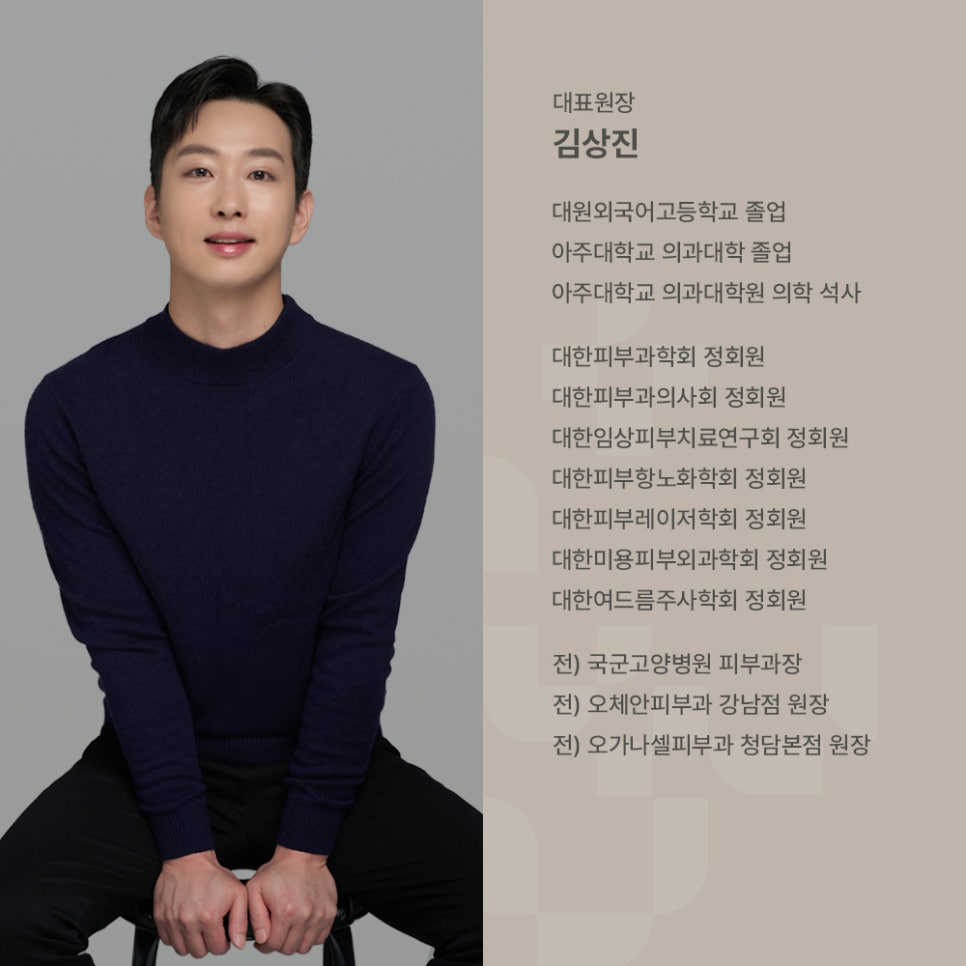
Also, we hope you receive treatment from an experienced dermatologist so that care can be provided more safely and with less worry.
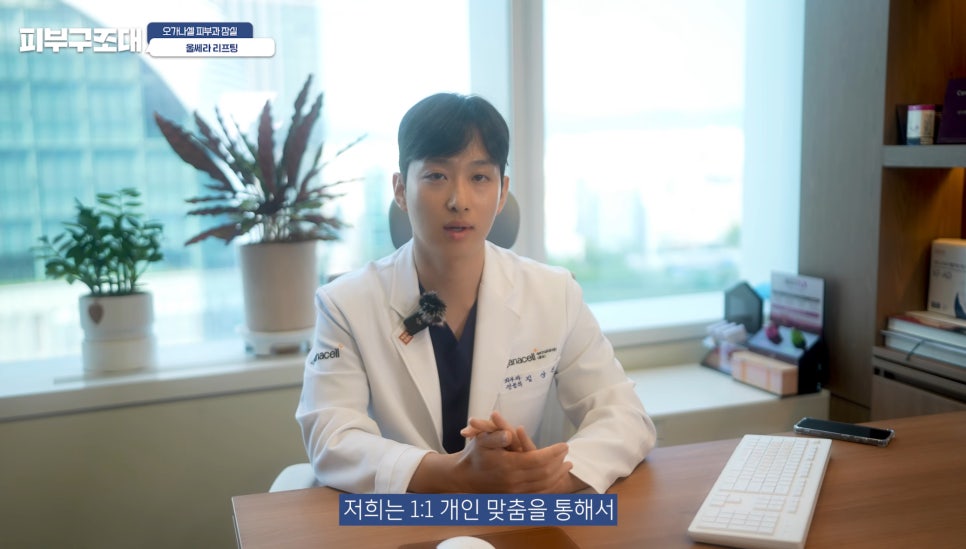
At Ogana Cell Dermatology Clinic Jamsil Branch, a board-certified dermatologist personally designs the treatment through 1:1 consultation, and for each individual,
customized layer-by-layer energy is used to help prevent the areas you are concerned about.
These are cases in which cheek hollowing can occur
For those worried about Ultherapy side effects such as the cheek hollowing mentioned earlier, let’s look at it in more detail.
It can also occur when excessive energy is delivered to the area below the cheekbones where the “cheek flesh” is located.
It can also happen when treatment is performed at the same depth without considering skin thickness, or when too much heat is delivered to the fat layer!
It can also happen when the provider lacks experience and the shots are not distributed evenly!
In such cases, the treatment may not suit your skin.
That is why a careful diagnosis of facial contour, cheek volume, jawline angle, and skin thickness is so important.
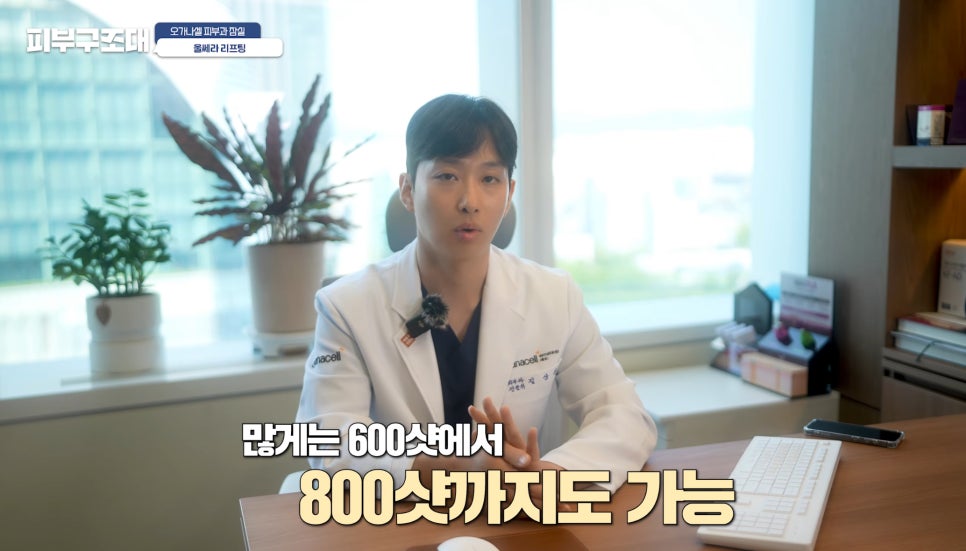
There is no fixed “correct answer” for the number of shots
We also receive inquiries such as, “Please do a lot of shots,” but the number of shots is not a treatment with a fixed correct answer.
If a person has a small face, very thin skin, and few firmness concerns, 600 shots may actually be too much; conversely, if the skin is very thick,
or depending on the degree of sagging, 600 shots may be too few.
For those with thin skin, depth adjustment is essential; for those with severe sagging, concentrated shots in specific areas are needed; and for those with little fat, caution is needed around the cheekbones and cheek hollowing.
As such, we recommend adjusting the number of shots according to each individual to proceed safely.^^
What about the Ultherapy interval and recovery?
After Ultherapy treatment, there may be slight swelling or tightness, although this varies from person to person.
Also, while the degree of sensation differs for everyone, mild tenderness usually improves naturally within about 7 days.
Ultherapy gradually produces visible improvements over time through natural firmness enhancement, and
the treatment interval is usually 1 to 2 times a year, though it may become longer or shorter depending on skin condition.^^
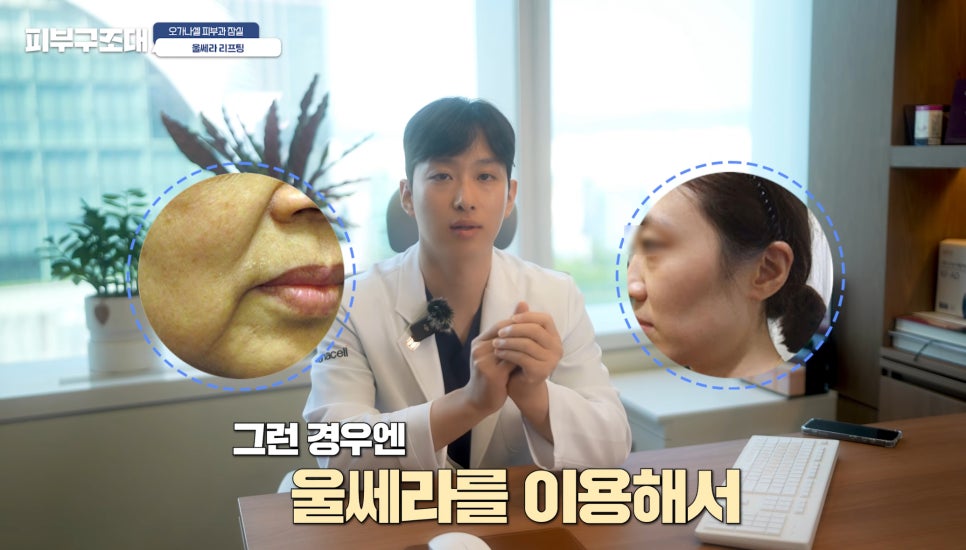
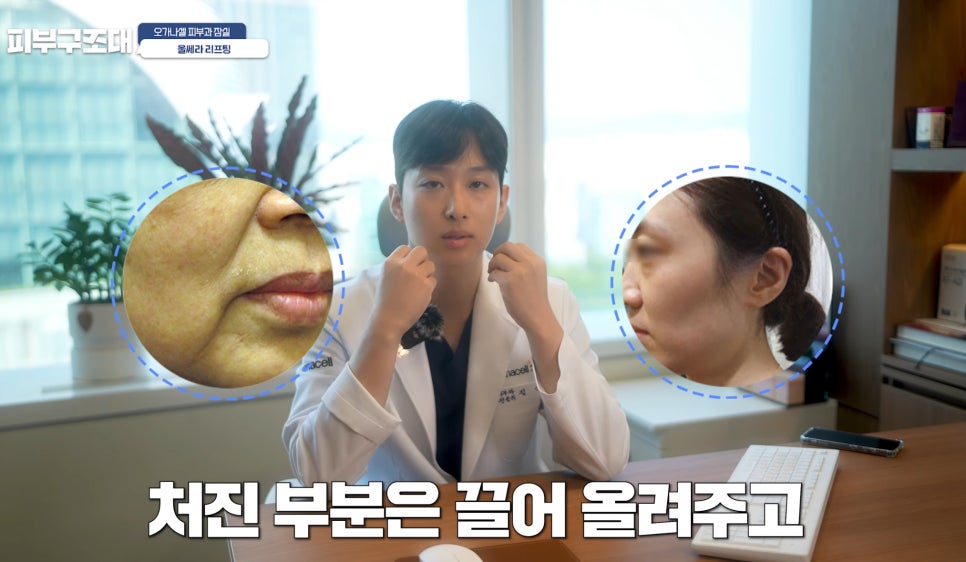
Firmness correction that varies according to skin concerns
As we age, the skin naturally sags, and the depth of wrinkles differs depending on lifestyle habits, so it is only natural that there are small differences from person to person.
That is why, for those who need not just a simple solution to sagging, but fundamental care for firmness,
Ultherapy as well as additional personalized firmness correction can be used.
Because Ultherapy is specialized for lifting, you can also combine it with Thermage, which focuses on skin texture and firmness, or receive Botox treatment to help with muscle tension.
How Can You Avoid Cheek Hollowing as a Potential Side Effect of Jamsil Ultherapy?
1:1 Firmness Correction at Ogana Cell Dermatology Clinic Jamsil Branch!
Ultherapy is not a treatment that the machine does “on its own.”
It is a dermatology treatment that can complete a natural and harmonious facial contour only when the skin layers are checked directly and energy is delivered only to the necessary areas.
If you want to avoid the cheek hollowing that many people worry about and improve brow drooping, jawline sagging, and cheek sagging precisely, we hope you will seriously consider an experienced dermatologist.
Ogana Cell Jamsil Branch provides 1:1 firmness correction with a personalized plan for each individual.
Thank you.^^








#JamsilUltherapy #UltherapySideEffects #UltherapyCheekHollowing #JamsilUltherapyDermatology