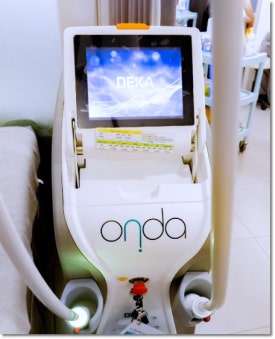
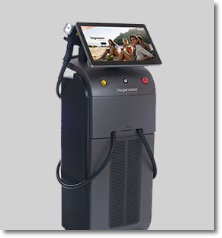
“What's the difference between Onda and Titanium lifting?”
As more lifting devices have become available, many people say they get confused about what the differences are.
In the past, people also explained them by dividing them into ultrasound lifting and radiofrequency lifting, but devices that use other principles have also been introduced in addition to those two.
Onda lifting and Titanium lifting are exactly those kinds of devices.
They work on a different principle from existing Ulthera and Thermage lifting.
However, because people often hear that they are celebrity lifting treatments and that they are highly effective, they are also among the devices most frequently asked about.
The two devices differ in the type of energy they use, the layer they act on, and the way their effects appear.
Because of that, the choice should vary depending on your skin condition and the goal you want to achieve, and in some cases, using both procedures together can create better results.
Today, we will compare all the differences between Onda and Titanium lifting, from their principles to their effects and features.
A Complete Comparison of the Difference Between Onda and Titanium Lifting
- Onda lifting: Fat reduction plus firmness?
- Titanium lifting: Immediate effects?
- Comparison of the differences between Onda and Titanium lifting
Onda vs Titanium difference
Onda lifting: Fat reduction plus firmness?
The key feature of Onda lifting is that it uses microwave energy.
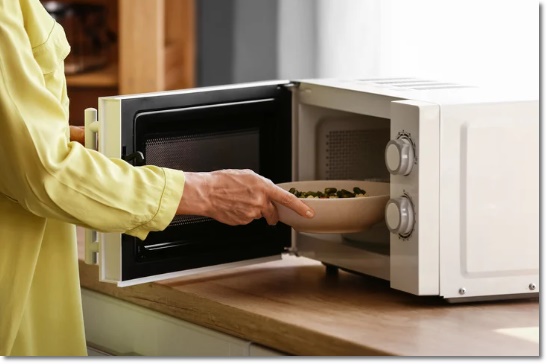
Unlike ordinary radiofrequency or ultrasound lifting, it works in a way similar to a microwave oven.
It creates thermal energy by making the water molecules inside the skin vibrate.
Onda has two handpieces. The 3 mm handpiece stimulates the dermis to promote collagen regeneration and improve skin elasticity, while the 7 mm handpiece targets fat cells to help reduce localized fat.
In other words, Onda is not simply a lifting treatment that pulls the skin upward; it is a dual-effect lifting treatment that reduces fat while tightening the skin at the same time.
It is especially suitable for people who are concerned about fat, such as a double chin or buccal fat.

However, the effect of breaking down fat cells appears gradually.
Usually, fat cell metabolism takes place over several weeks after the procedure, and as collagen regeneration becomes more active, the improvement in elasticity becomes more noticeable after 1 to 3 months.
It is a good option for people who want lifting while also refining facial fat.
Onda vs Titanium difference
Titanium lifting: Immediate effects?
Titanium lifting is characterized by the simultaneous use of three laser wavelengths (755 nm, 808 nm, and 1064 nm).
In fact, many people think of Ulthera or Thermage as laser lifting. However, Ulthera and Thermage are not actually laser lifting treatments.
They are ultrasound lifting and radiofrequency lifting, and Titanium lifting is the true laser lifting treatment.
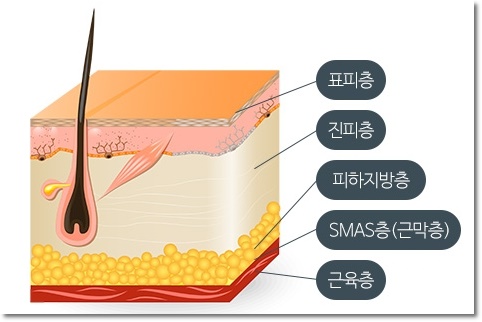
The laser wavelengths used in Titanium lifting each reach different depths of the skin (epidermis, dermis, subcutaneous tissue, and the SMAS layer), delivering heat from the surface to the deeper layers.
Because it can reach as deep as the SMAS layer, it can contract the foundation that supports the skin structure, allowing for an immediate lifting effect.
Titanium is especially effective for sagging jawlines, loose cheeks, and contour definition.
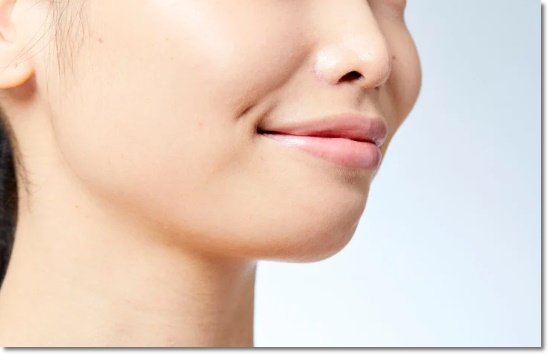
You can feel a tightening sensation immediately after the procedure, and over time, collagen regeneration further enhances firmness.
However, by principle, this device focuses more on pulling up the skin and structural layers to sharpen the contour line rather than reducing fat.
In other words, it is more suitable for people whose issue is loose skin and reduced elasticity rather than excess facial fat, and it is also appropriate for those who want to see results right away since there is almost no downtime.
Comparison of the differences between Onda and Titanium lifting
Onda and Titanium differ in both the energy they use and the process by which their effects appear.
Onda uses microwaves to reduce fat cells while tightening the skin, which is advantageous for facial types with more fat.
On the other hand, Titanium uses triple-wavelength lasers to deliver energy deep into the skin and lift the skin structure, making it strong for correcting sagging and collapsed facial lines.
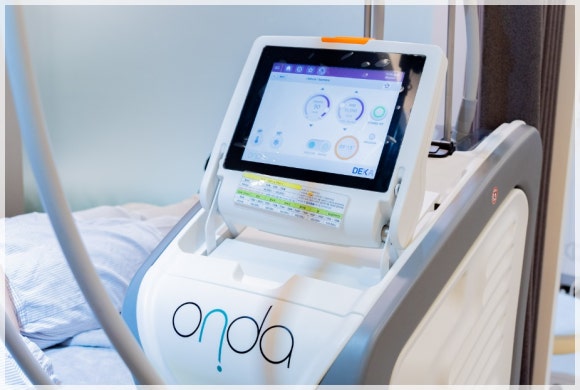
The effects of Onda appear gradually over 1 to 3 months, while Titanium can show a lifting effect immediately after the procedure.
If you need results to show by a certain time, please choose accordingly.
Onda focuses on lifting by reducing fat, while Titanium lifts by contracting loosened tissue.
Although the two procedures work in different ways, both are effective for refining facial contours.
In other words, rather than simply asking which of the two is better, the choice should depend on whether the problem is fat or reduced elasticity.
Also, in some cases, combining the two procedures can be more effective. Onda can refine the fat, and Titanium can tighten the sagging skin.
I have compared the differences between Onda and Titanium lifting.
Even if the effects of the two procedures may seem similar, the principles behind those effects are different, so receiving treatment that suits your skin increases the likelihood of better results.
If excess fat is more noticeable, Onda is a better fit. If sagging skin is your concern, Titanium is a better match.
Also, because the timing of the effects is different, that should also be considered.
If you need an immediate effect, Titanium is suitable. If you want to reduce fat even if it takes time, Onda is the better choice.
I hope you choose the lifting treatment that suits you best based on this comparison of Onda and lifting.
Thank you. This was Yeongdeungpo U&I^^
< What are the criteria for choosing a dermatology clinic in Yeongdeungpo? >
< Directions to Yeongdeungpo U&I >