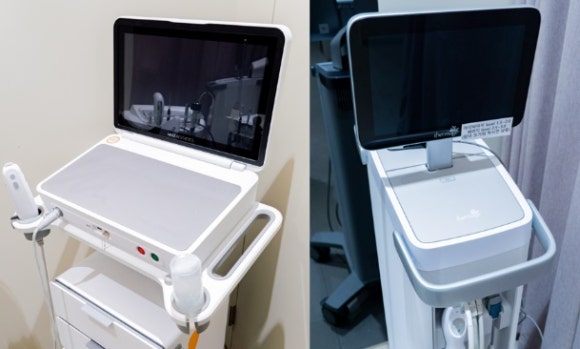
“I'm thinking about getting a lifting procedure,
which is better, Ultherapy or Thermage?”
This is a question I get very often.
When you look in the mirror, there are times when your jawline seems to sag or fine lines seem to increase. That is when many people start looking into lifting procedures.
Among them, the most commonly mentioned and compared are Ultherapy and Thermage.
That is because both are long-used devices, and many people say they have seen lifting effects from them.
In fact, these two lifting treatments differ from their principles to their effects.
So today, I’ll organize the differences between Ultherapy and Thermage in terms of principle, effect, side effects and recovery, and which people they are suitable for.
Ultherapy vs. Thermage: Difference and Effect Comparison
-
What is the difference in lifting principles?
-
What is the difference in lifting effects?
-
Differences in pain and side effects
Ultherapy Thermage
What is the difference in lifting principles?
The biggest difference between the two procedures is what kind of energy they use and how deep that energy reaches.
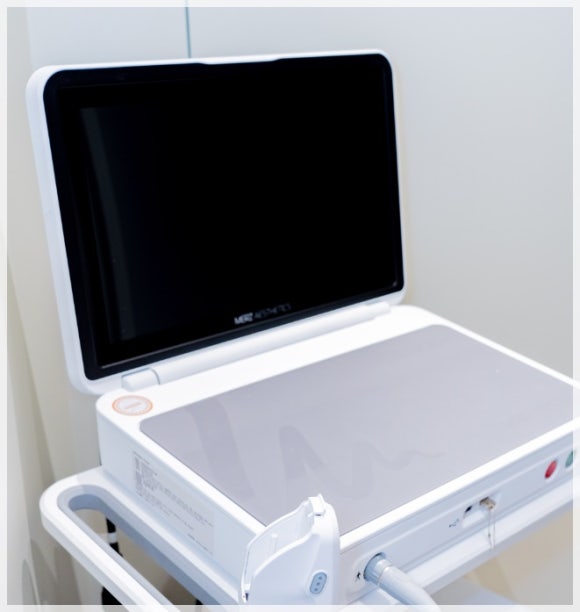
Ultherapy is an upgraded version of Ulthera and uses HIFU (High-Intensity Focused Ultrasound).
Unlike regular ultrasound, its feature is that it concentrates energy into point-like spots and delivers it deep into the skin.
In particular, it targets the SMAS layer (the fascia) beneath the skin, which is the area directly tightened in facelift surgery as well.
Ultherapy creates tiny thermal coagulation points in this layer using only ultrasound, without incision, causing the tissue to contract and inducing collagen regeneration over time.
As a result, the loosened facial line is pulled upward and a lifting effect appears.
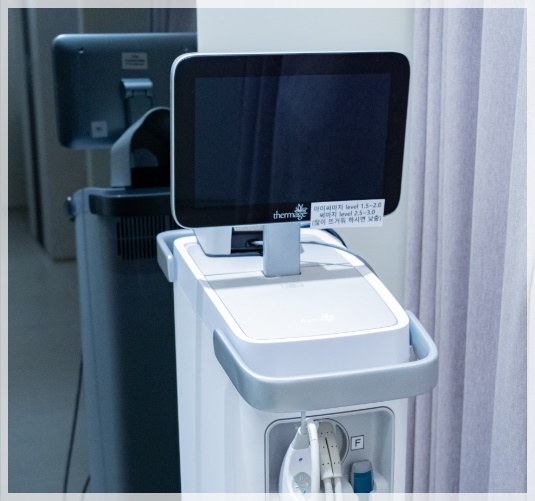
Thermage uses RF (radiofrequency) energy.
Radiofrequency delivers heat evenly throughout the dermis.
The dermis is the layer rich in collagen and elastin, which are responsible for skin elasticity and thickness.
Thermage stimulates this layer with heat of around 40 to 45°C, contracting existing collagen and promoting the production of new collagen and elastin.
In other words, the skin becomes thicker and more elastic from within, and as a result, fine lines and pores are improved as well.
In summary, Ultherapy works by reaching the fascia layer and lifting the facial line, while Thermage works by regenerating the dermis to restore skin elasticity and texture.
Ultherapy Thermage
What is the difference in lifting effects?
Earlier, we talked about how the principles of Ultherapy and Thermage are different. That difference in principle leads directly to a difference in effect.
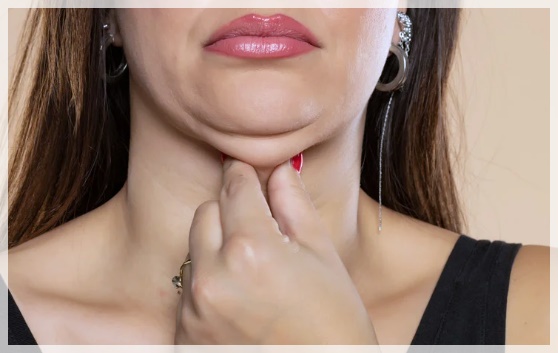
Ultherapy has effects such as structurally lifting the facial line, improving the jawline, reducing double chin, and improving cheeks and buccal fat pads.
That is why after an Ultherapy procedure, the V-line often becomes more defined.
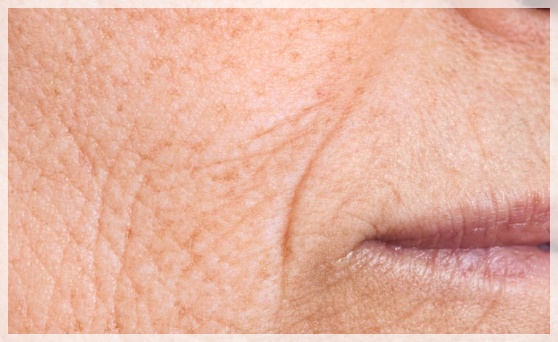
On the other hand, Thermage can produce effects that come from collagen regeneration, such as improving skin texture, reducing fine lines, and restoring elasticity to sagging skin.
It increases skin thickness and density, giving an overall firmer feel.
In other words, Ultherapy differs in that it lifts the contour line, while Thermage differs in that it strengthens skin texture and elasticity.
Ultherapy Thermage
Differences in pain and side effects
Because the procedure principles are different, there are some differences in pain and side effects as well.
Since Ultherapy delivers ultrasound to the fascia layer, there can be stinging or a heavy, aching pain during the procedure.
It can be controlled to some extent with anesthetic cream, but people who are sensitive to pain sometimes receive the procedure under sedation.
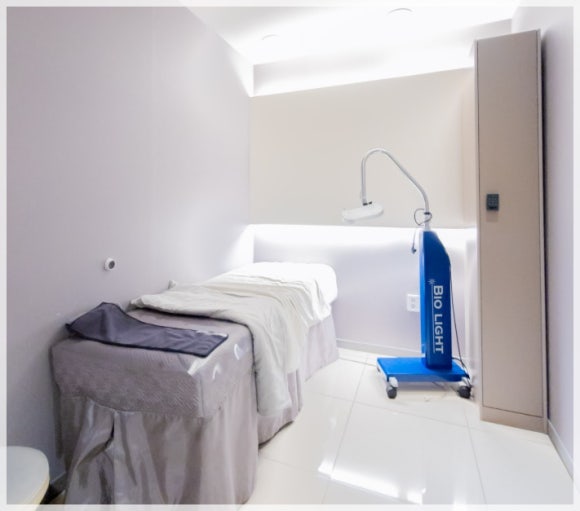
Thermage involves less energy than Ultherapy, and because it delivers heat evenly rather than concentrating it, there may be pain that feels hot or burning across the skin.
Most people say it hurts less than Ultherapy. However, some people who are more sensitive to heat have said that Thermage hurt more.
Both Ultherapy and Thermage can cause temporary redness or swelling after the procedure.
These usually disappear within 2 to 3 days, and in some cases there may be downtime for up to about a week.
Today, we compared Ultherapy and Thermage in terms of principle, effect, and pain differences.
In fact, because the two lifting treatments are different from the start, Ultherapy may be more suitable for some people, while Thermage may be more suitable for others.
Or it may be more effective to combine the two procedures depending on the area of the skin.
So I hope you choose a procedure after first considering your own skin condition.
Thank you. This was Yeongdeungpo UNNI.^^
< Criteria for choosing a dermatology clinic in Yeongdeungpo >
< Directions to Yeongdeungpo UNNI >