'It's a problem even without makeup,
but when I put on makeup, the pores in my butterfly zone
stand out so much that it's stressful.
I'm thinking about getting Fraxel,
but I'm worried because there are quite a few stories
about pain and side effects...'
If pores enlarge anywhere on the face, there is no area you wouldn't notice, but the butterfly zone stands out even more.
The butterfly zone has far more sebaceous glands densely concentrated than other areas of the face, and it also produces more sebum, so it is an area where pores tend to enlarge more easily.
On top of that, when ultraviolet exposure, dry skin, and reduced elasticity are added, the pores gradually become wider and appear more elongated vertically.
That is why some people consider Fraxel procedures, but when they hear about pain or side effects, they quietly change their minds.
Today, we will honestly and in detail discuss the pain and side effects that many people worry about regarding Pico Fraxel treatment for pore reduction.
Butterfly Zone Pore Fraxel
-
Why do pores in the butterfly zone enlarge easily?
-
The principle of Pico Fraxel and pain
-
Redness after the procedure is not a side effect
-
Did pigmentation develop after the procedure?
Butterfly Zone Pore Fraxel
Why do pores in the butterfly zone enlarge easily?
There are many people whose pores are fine everywhere else, but only the pores in the butterfly zone are especially problematic.
The butterfly zone is part of the T-zone, and compared with other areas of the face, its sebaceous glands are more densely developed.
In other words, it means there are simply more pores, which are the outlets for sebum.

When sebum production increases, pores naturally enlarge along with it. To use an analogy, it is similar to how a river becomes wider when the amount of flowing water increases.
On top of this, when ultraviolet rays, a dry environment, and reduced collagen and elastin due to aging lower the skin’s elasticity around the pores, the pores change from a round O shape into a gradually more elongated oval shape.
Also, since this is an area where blackheads can easily form, forcefully squeezing out sebum with extraction tools can be another factor that loosens the skin around the pores.
It may feel refreshing for a moment, but if you keep squeezing forcefully, it can make the pores even larger, so you should be careful.
Butterfly Zone Pore Fraxel
The principle of Pico Fraxel and pain
When enlarged pores are a concern like this, one method that can be used to reduce pore size is 'Fraxel.'
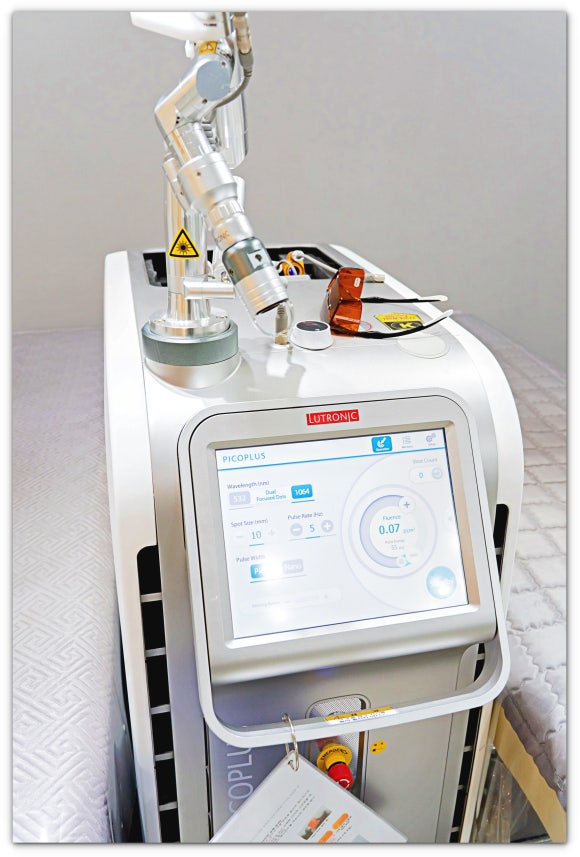
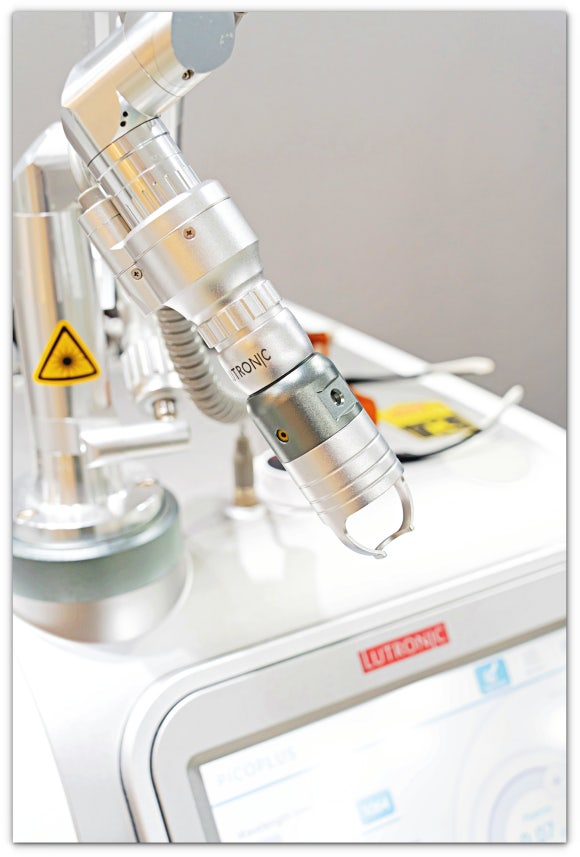
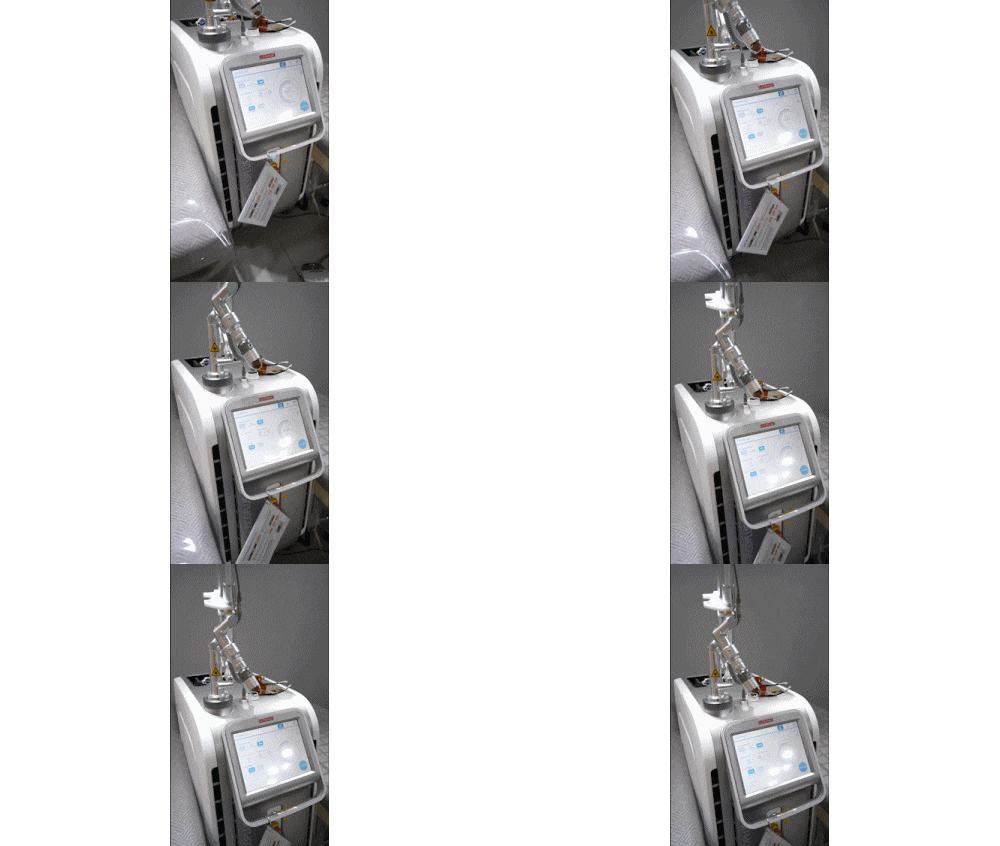 Pico Plus Fraxel
These days, the Pico Plus device is often used, so it is commonly referred to as 'Pico Fraxel.'
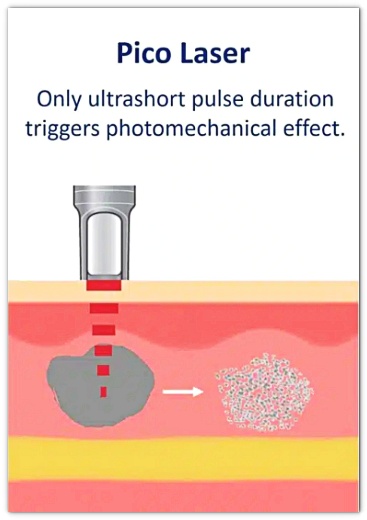
The laser is applied to the dermis layer of the skin to create microscopic damage, and as the body repairs this damage, it rebuilds skin tissue including collagen, which helps narrow the pores.
Simply put, you can think of it as the process of a wound forming a scar and new skin filling in.
And now, let’s talk about pain. Honestly, I was surprised because I saw quite a few people saying the pain was fairly significant.
Most people who have had the treatment say they received it comfortably.
Even among those who said they felt pain, many generally said they felt only very mild stinging.
If you feel discomfort after the procedure, using a cold compress at home on the day of treatment can help.
Do not apply ice directly; wrap it in a towel and gently apply it for about 10 minutes at a time, several times.
Butterfly Zone Pore Fraxel
Redness after the procedure is not a side effect
After the procedure, the face may become red, and surprisingly many people mistake this for a side effect.
Redness after Pico Fraxel is a natural response that appears during the skin regeneration process.
Although it varies by individual, it usually lasts about 2 to 3 days, and for sensitive skin, redness may remain for up to a week.
Activities that raise the skin temperature, such as saunas, jjimjilbang, hot baths, and intense exercise, increase blood circulation and can make redness last longer, so it is best to avoid them for about a week.
Butterfly Zone Pore Fraxel
Did pigmentation develop after the procedure?
Sometimes, after Fraxel, some people say pigmentation developed on their face and come to regard Fraxel as an evil force(?) that should never be received.
In this case, there is a very high possibility that there was a problem with aftercare.
Pigmentation after the procedure can occur in the following cases.
-
When the treatment intensity is too high
-
When there is a lot of ultraviolet exposure after the procedure
-
When the skin is subjected to secondary irritation
-
When the person naturally has darker skin tone or is constitutionally prone to scarring that turns dark
In summary, the key to preventing pigmentation is thorough sun protection. This cannot be emphasized enough.
After the procedure, if you go outside, you should carefully reapply sunscreen every 2 to 3 hours, and if possible, it is best to avoid outdoor activities.
Even indoors, there is ultraviolet light coming through windows, so sunscreen is still essential.
During recovery, scabs or flakes that form should be allowed to fall off naturally, and if you pick them off forcefully, the risk of pigmentation increases significantly.
Today, we talked about Pico Fraxel treatment for butterfly zone pores.
I think this was a time to correct the stories floating around so that you can plan your treatment with more accurate information.
I hope you use today’s information as a reference and achieve successful results with less pain and fewer side effects, while getting the benefits.
Thank you. This was Yeongdeungpo U&I^^
< What are the criteria for choosing a dermatology clinic in Yeongdeungpo? >
< Yeongdeungpo U&I consultation hours >
Weekdays: am 10:00 ~ pm 08:30
Weekends: am 10:00 ~ pm 05:00
(No lunch break)
< Directions >
U&I Clinic Yeongdeungpo branch is
located near Exit 5 of Yeongdeungpo Station.