Ulthera and Onda lifting differences compared,
What if you get both?
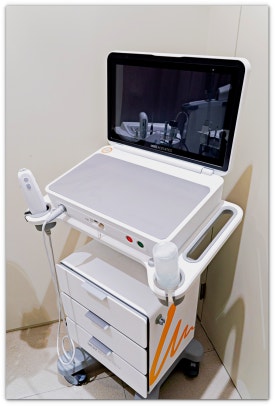
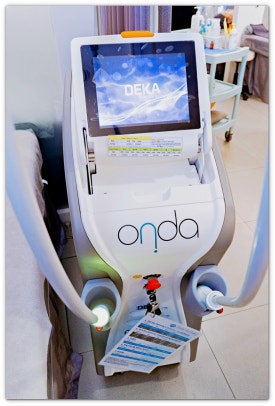
“Ulthera is something a lot of people get—does it work well?
Or what about Onda lifting?
It’s hard to choose which one would be better... ”
Ulthera is now a very well-known lifting procedure, and Onda lifting has also become popular, so I often get requests to compare the two.
But they are not really something to pit against each other, and I also think the idea of comparison is somewhat meaningless.
Because in the end, the right lifting is the one that suits me best.
So today, I’ll take a detailed look at the principles and effects of Ulthera and Onda lifting separately, and also discuss in depth what happens when you get them together.
Ulthera Onda
Ulthera Onda
The principle and effects of Ulthera
First, let’s look at Ulthera.
Ulthera is a procedure that delivers high-intensity focused ultrasound (HIFU) energy to the SMAS layer.
When the energy is delivered, heat is generated only at the focal point, and it does not affect the surrounding areas, so you do not need to worry about damage to the outer skin.
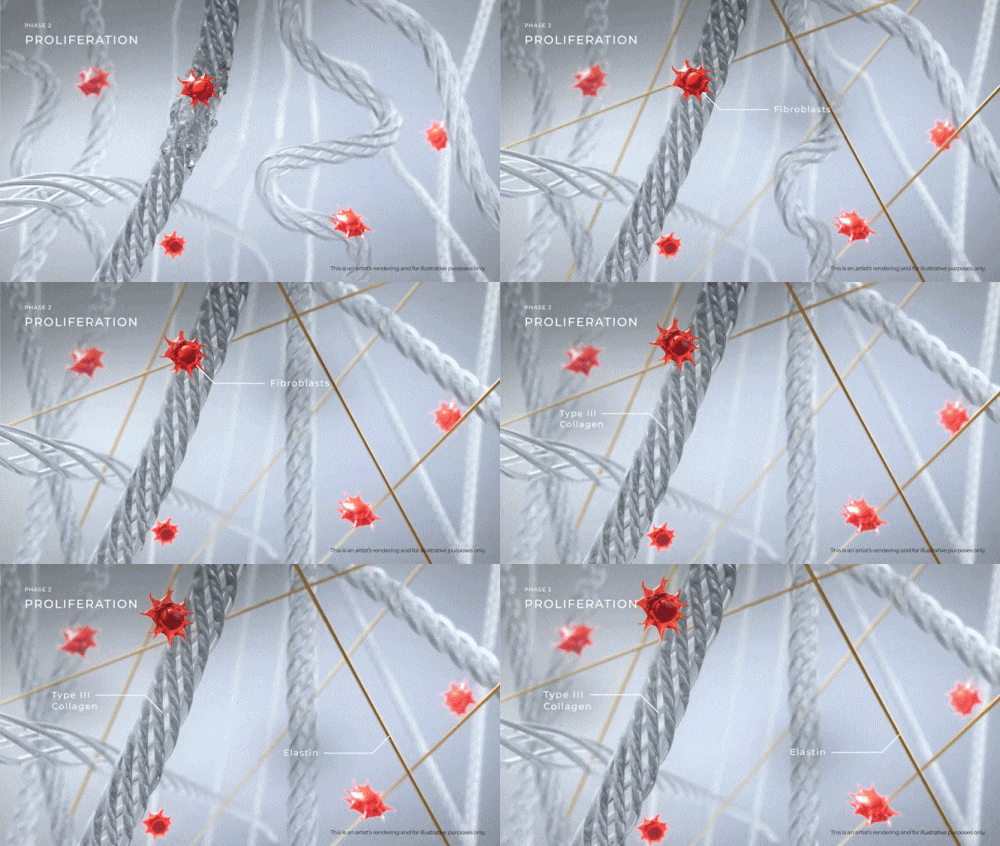
It is a procedure based on the principle that as the skin in the SMAS layer receives energy and regenerates, new collagen and elastin are replenished and firmness is restored.
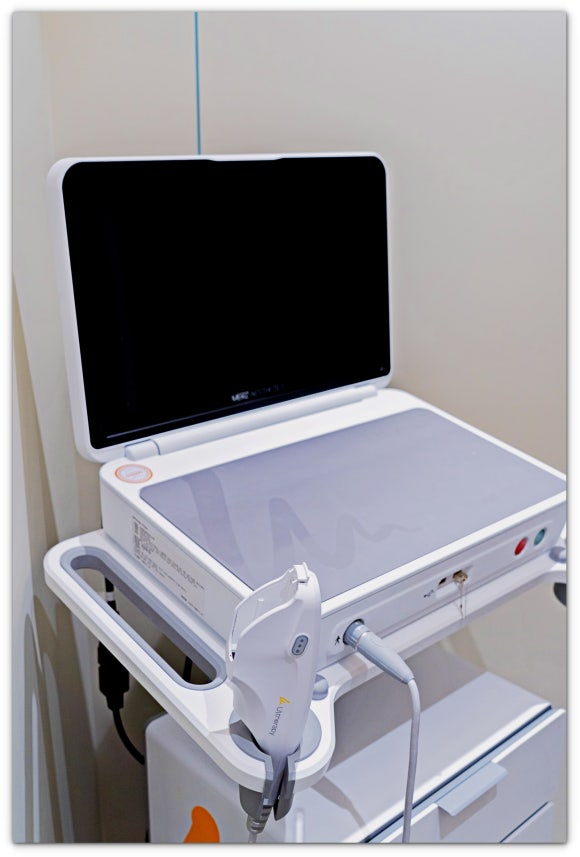
These days, many procedures are performed with Ulthera Prime, an upgraded version of Ulthera.
The existing Ulthera could only check the skin layers up to 4.5 mm, but Prime allows viewing up to 8 mm.
The screen resolution has also improved, making it possible to distinguish the fat layer and SMAS layer more clearly.
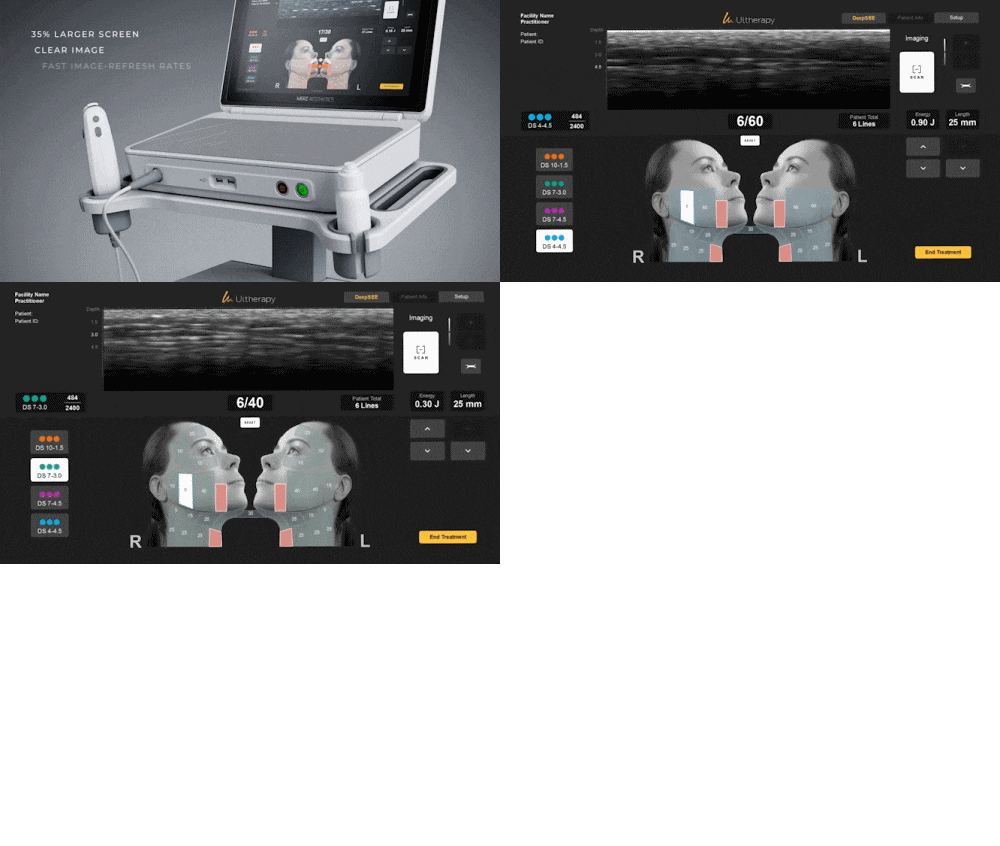
The reason this is important is that skin thickness and structure are different for every face.
Even if you have thick skin or a clearly distinctive skin characteristic such as a protruding area in a certain part of the face, it has become possible to look more closely and send energy more accurately to the desired area.
Ulthera
The principle and effects of Onda lifting
Then let’s take a look at Onda lifting as well.
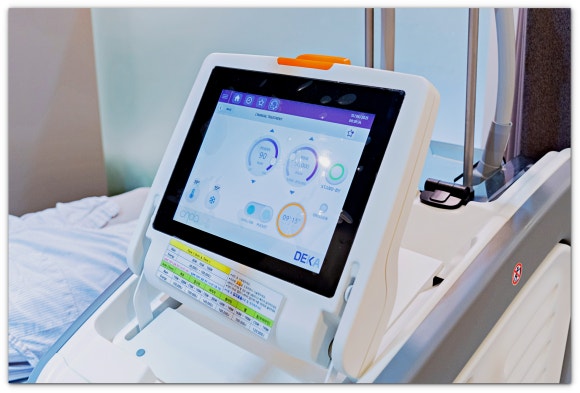
Onda lifting uses microwave energy. Yes, it is the same microwave used in a microwave oven.
Because it does not affect the surface of the skin and only warms the inside, you can think of it as causing very little skin damage.
Onda uses handpieces with two depths, 3 mm and 7 mm.
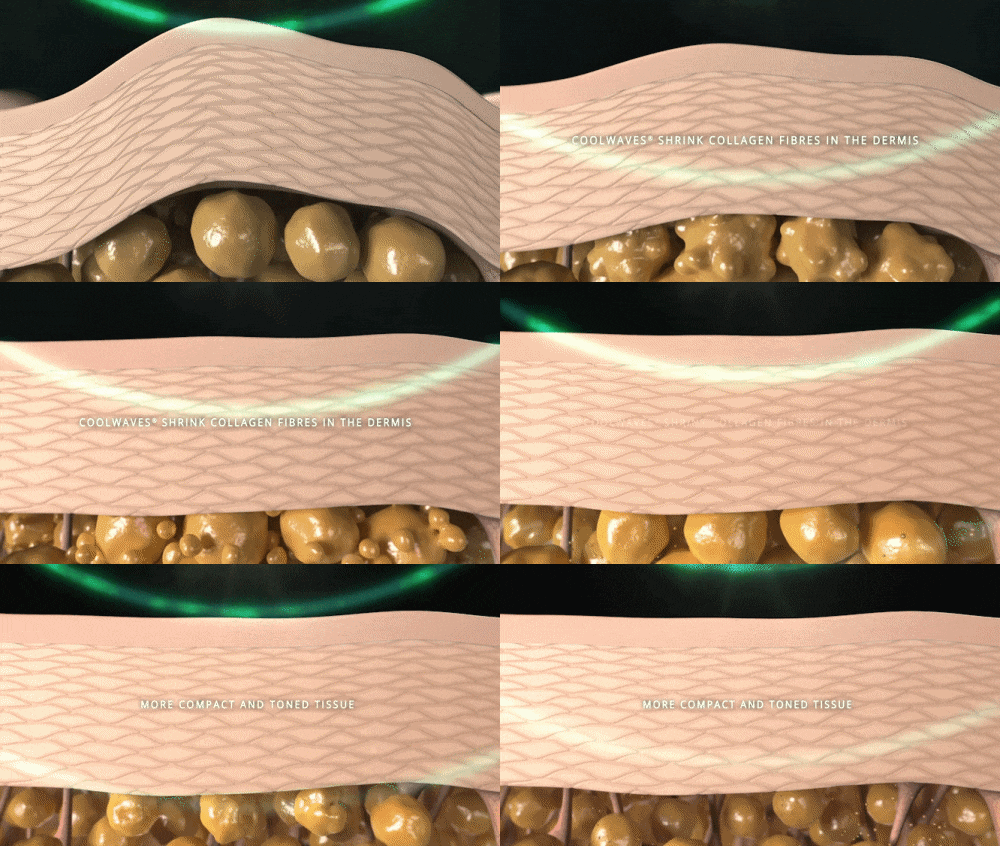
The 3 mm handpiece is used on thin skin or the shallow dermis to provide a lifting effect through collagen regeneration, while the 7 mm handpiece is used mainly on the fat layer to help break down fat cells.
One of the major advantages of Onda lifting is that it causes relatively little pain.
It has a cooling system, which helps cool the skin during treatment.
That is why it is also well known as a procedure that can be done without anesthesia.
Ulthera Onda
What if you get both?
Many people also ask whether Ulthera and Onda can be done together, and what effects that might have, so let’s organize that as well.
First of all, the skin layers targeted by the two procedures are different.
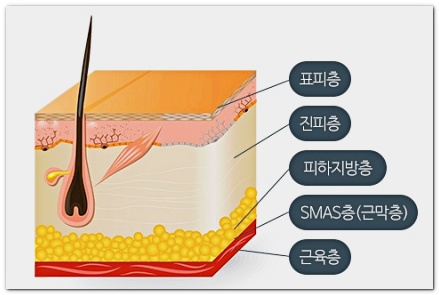
Ulthera targets the 4.5 mm SMAS layer, while Onda targets the dermis and fat layer at depths of 3 mm and 7 mm.
In other words, Ulthera deals with the SMAS layer that supports the skin from deep within, while Onda works on the skin or fat layer at a shallower depth.
So if you get them together, you manage multiple skin layers, which can make the lifting effect feel more distinct.
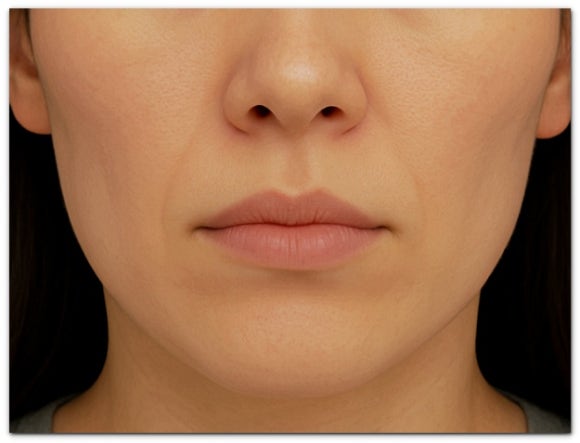
Also, in cases such as hollowing in the cheeks, which can be considered one of Ulthera’s representative side effects, carefully designing Onda lifting together may make the treatment safer.
For example, you can combine them by using Ulthera in areas that need deep lifting, such as the jawline, and Onda in areas like the cheeks or forehead where there is little fat and tightening is needed.
So the ratio can also be adjusted depending on age and the degree of aging.
For someone in the early 30s, the proportion of Onda may be increased a bit, while for someone in the late 40s, the proportion of Ulthera may be increased.
The more severe the SMAS layer sagging, the more Ulthera is needed, and if skin tightening alone is sufficient, Onda may be enough.
Today, we looked at Ulthera and Onda lifting separately and also at what effects they can have when done together.
The two lifting procedures differ in the skin layers they affect and the energy they use, so depending on the purpose of improvement, you can choose just one or combine them.
When you have a consultation, you will probably hear the treatment plan from the medical staff.
At that time, rather than just jumping straight to discussing the number of shots, I hope you will make sure they carefully examine things like skin thickness and tissue distribution, and check whether they are providing a customized plan for each treatment area with enough precision.
There is nothing else to lifting. Since everything comes down to accurately understanding the anatomical structure of your face and delivering energy precisely to the needed areas, please keep this in mind.
Thank you. This was Yeongdeungpo UNI^^
< Criteria for Choosing a Dermatology Clinic in Yeongdeungpo >
< Yeongdeungpo UNI Clinic Hours >
Weekdays: am 10:00 ~ pm 08:30
Weekends: am 10:00 ~ pm 05:00
(No lunch break)
< Directions >
UNI Clinic Yeongdeungpo branch is
located near Exit 5 of Yeongdeungpo Station.