영등포여드름피부과 treatment,
How Can Recurrence and Scarring Be Prevented?
'When I take medication, it gets better for a while,
but after some time, the acne comes back...'
If acne comes back after treatment, you may start to wonder whether there is nothing more that can be done.
In fact, because acne is mostly caused by excess sebum, simply suppressing the symptoms for a short time makes it difficult to prevent recurrence or scarring.
So today, let’s talk about why acne occurs, why it recurs, how to prevent scarring, and also about NeoBeam and Agnes, which help control the sebaceous glands themselves.
Yeongdeungpo Acne Dermatology
(Department: Dermatology)
-
Why does acne occur?
-
Why does it keep recurring, and why does it leave scars?
-
Dry out the sebaceous glands - NeoBeam and Agnes
Yeongdeungpo Acne Dermatology (Department: Dermatology)
Why does acne occur?
The biggest cause of acne is 'excess sebum production.'
If the skin is in a normal condition, sebum produced by the sebaceous glands is naturally discharged through the pores.
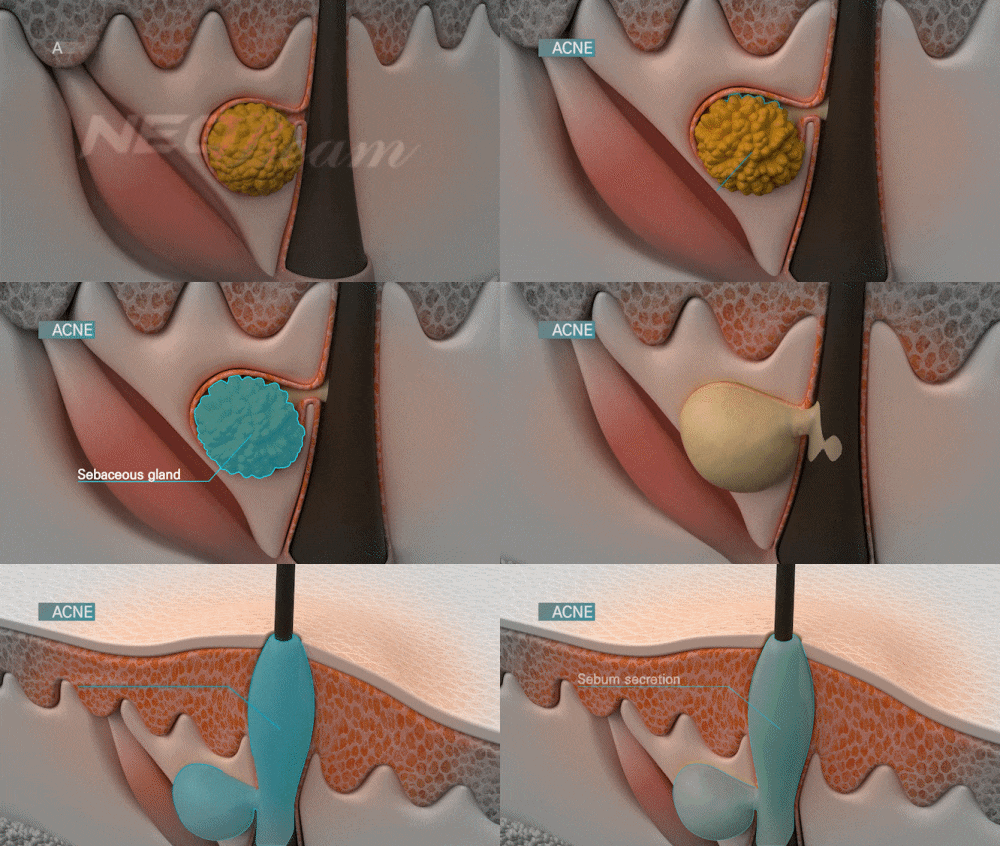
If too much sebum is produced, it clumps together with keratin and blocks the inside of the hair follicle.
Inside this blocked follicle, acne bacteria (C. acnes) multiply actively.
These acne bacteria use sebum as food, breaking it down and producing substances that irritate the skin.
During that process, the follicle wall becomes irritated and an inflammatory reaction occurs, leading to the red, swollen acne we commonly know.
Yeongdeungpo Acne Dermatology (Department: Dermatology)
Why does it keep recurring, and why does it leave scars?
Among people struggling with acne, there are probably none who have never worried about recurrence and scarring.
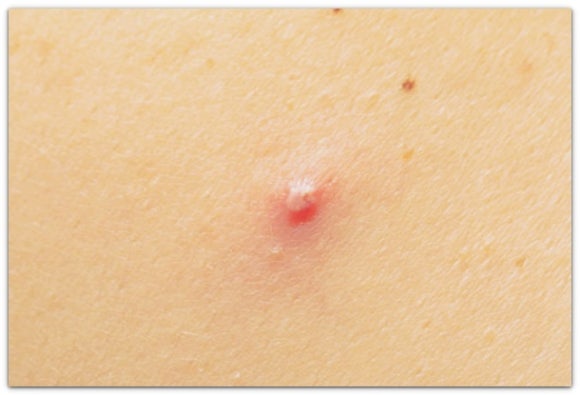
Some acne becomes quiet while you are receiving treatment or taking medication, then seems to come back as if by magic when you stop for a while.
Depending on the type, medication can sterilize acne bacteria and reduce inflammation. There are also medications that temporarily suppress sebum production.
However, these medications do not eliminate the sebaceous glands that produce sebum or permanently regulate them.
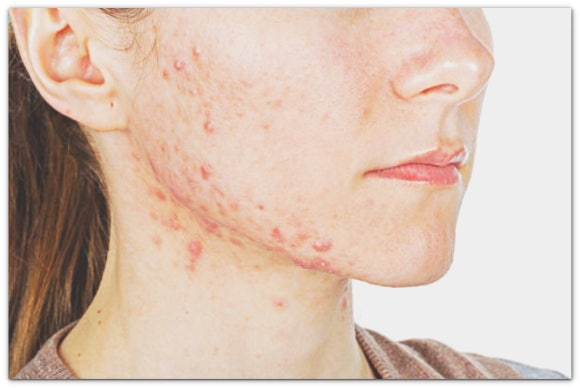
There are also many reviews saying the skin became dry after taking medication. In such cases, the skin may have become temporarily dry or the skin surface may have dried out, but the activity of the sebaceous glands has not been fundamentally regulated.
So when the medication is stopped, the sebaceous glands become active again, sebum production returns to its original state, and acne recurs.
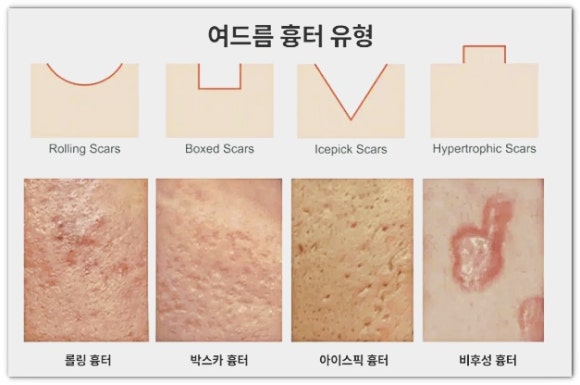
As for scars, they form when severe acne inflammation or improper squeezing causes the follicle wall to rupture, allowing inflammatory substances to spread into the surrounding dermis.
The damaged dermis cannot regenerate into a normal skin structure and instead becomes hardened into scar tissue.
That is why it is important to respond quickly and correctly before inflammation becomes severe.
If you squeeze it the wrong way or let it worsen, it can develop into a troublesome problem.
Yeongdeungpo Acne Dermatology (Department: Dermatology)
Dry out the sebaceous glands - NeoBeam and Agnes
Then you may be wondering what kind of treatment should be used to manage acne. If the sebaceous glands causing the problem are dried out, acne can be dealt with more effectively.
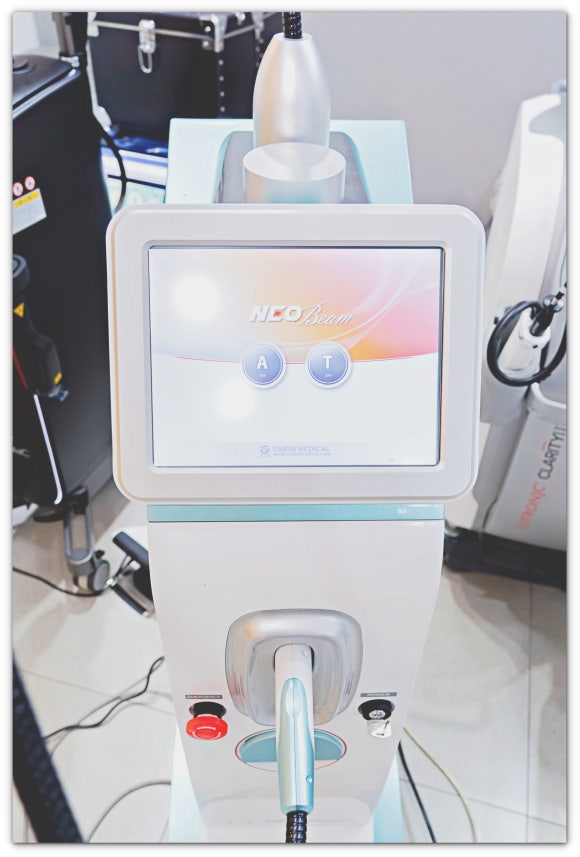
Representative examples are NeoBeam and Agnes. Both methods selectively control overactive sebaceous glands to help prevent acne recurrence.
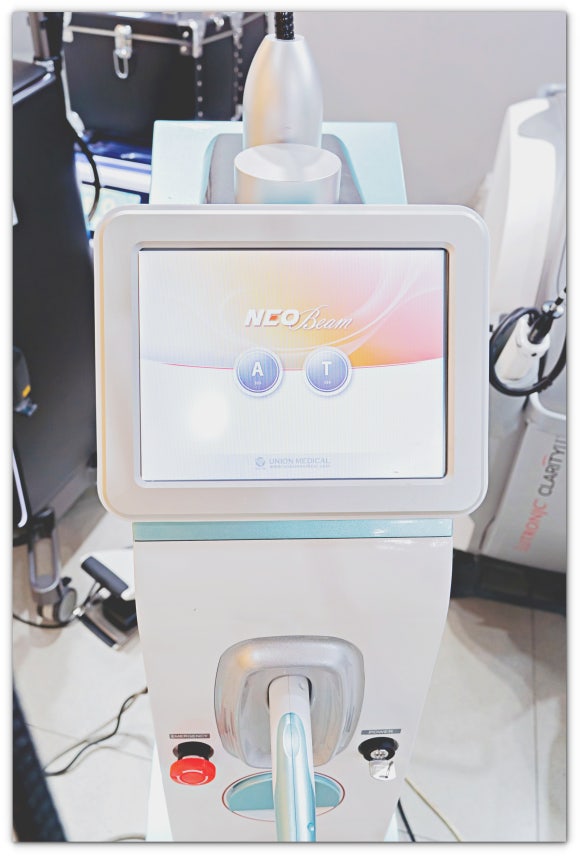
NeoBeam is a procedure that uses a 1450nm diode laser.
The laser reaches the depth where the sebaceous glands are located and selectively destroys them using thermal energy.
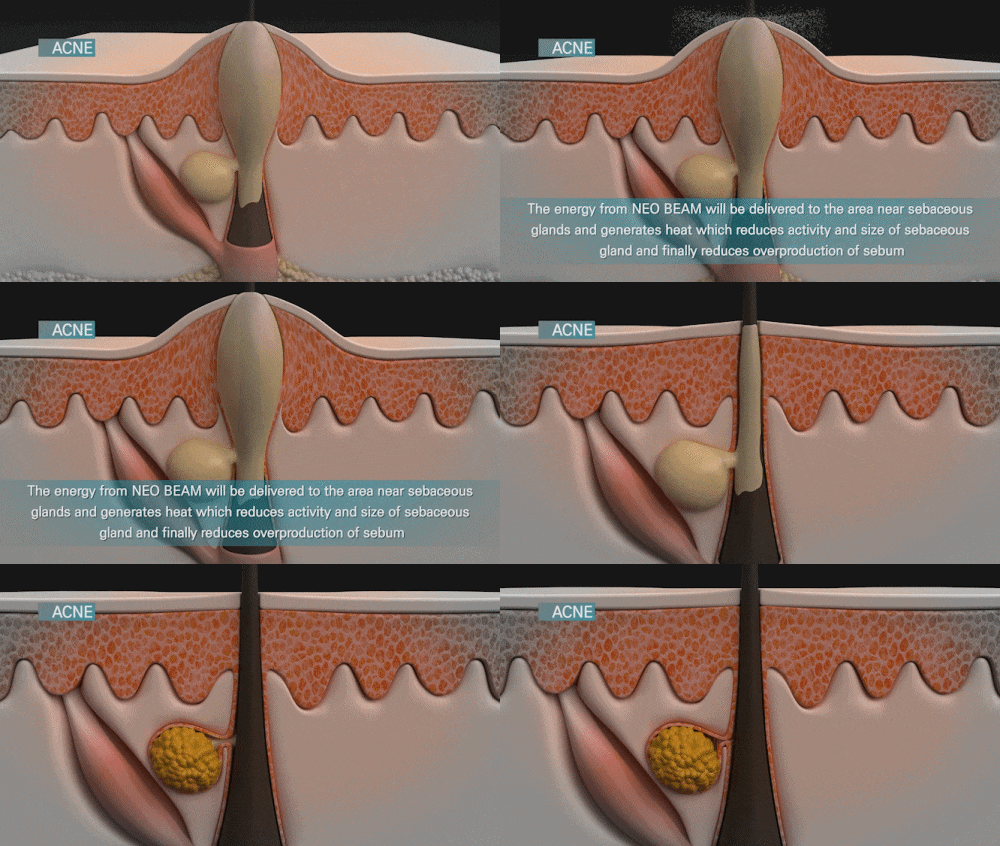
Thanks to the cooling system, there is almost no pain, and it can be used for a variety of acne concerns, from comedonal acne to inflammatory acne, small bumps, and pustular acne.
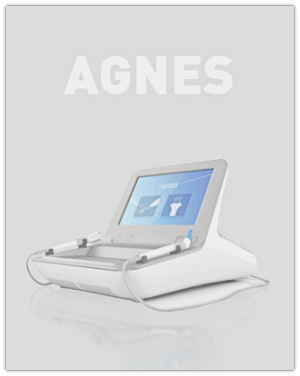
Agnes is a method in which a high-frequency (RF) micro-insulated needle is inserted directly into the skin.
When the needle reaches the depth of the sebaceous gland, radiofrequency energy is delivered to coagulate the gland.
The difference from NeoBeam is the targeting method.
While NeoBeam irradiates a wide area, Agnes inserts needles directly into each acne lesion and destroys the sebaceous glands individually.
That is why it is especially effective for people who repeatedly get acne in the same area.
Today we looked at the causes of acne, how to prevent recurrence and scarring, and also the NeoBeam and Agnes procedures at Yeongdeungpo Acne Dermatology (Department: Dermatology), which help dry out the sebaceous glands.
When you see yellow, fully matured acne, you may feel the urge to squeeze it more than a million times a day(?), but the problem can be kept from getting worse if you respond the right way.
If acne keeps recurring, it is worth considering whether the sebaceous glands in that area are overactive.
If you are thinking about treatment, please start with a consultation and choose a place that will help you achieve good results by comprehensively considering your acne progression and lifestyle habits.
Thank you. This was U&I in Yeongdeungpo.^^
< What are the criteria for choosing a dermatology clinic in Yeongdeungpo? >
< Yeongdeungpo U&I Clinic Hours >
Weekdays: am 10:00 ~ pm 08:30
Weekends: am 10:00 ~ pm 05:00
(No lunch break)
< Directions >
U&I Clinic Yeongdeungpo Branch is
located near Exit 5 of Yeongdeungpo Station.