Ultanium (Ultherapy + Titanium) effect,
why get two treatments at once?

'Can I ask about this?
I noticed that a lot of lifting treatments are done in pairs,
is there really a reason to get them together?'
I get this question often during lifting consultations. In fact, people ask it even when they are not specifically consulting about lifting, just because they have been curious for a while.
Rather, I’m glad when people ask this kind of question. It shows that they are thinking deeply about how it may affect their skin, and it also allows me to address every question without leaving anything unresolved.
These days, Ultherapy and Titanium lifting are often combined so frequently that they even have the nickname “Ultanium.”
Many people wonder why they should “go out of their way” to get two lifting treatments, so today I’ll organize the principles and effects of Ultherapy and Titanium lifting, and also look at the effects of combining the two.
Ultanium (Ultherapy + Titanium) effect,
why get two treatments at once?
Ultanium
The principle and effects of Ultherapy
First, let’s look at the principle and effects of Ultherapy.
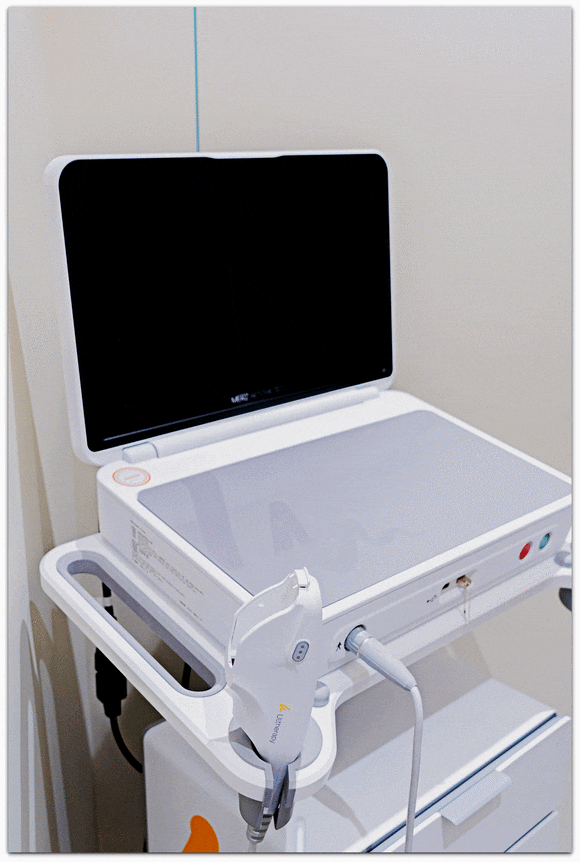
Ultherapy is a procedure that uses HIFU, or high-intensity focused ultrasound energy.
It concentrates ultrasound energy at a single point to create tiny thermal coagulation points in the fascial layer beneath the skin.
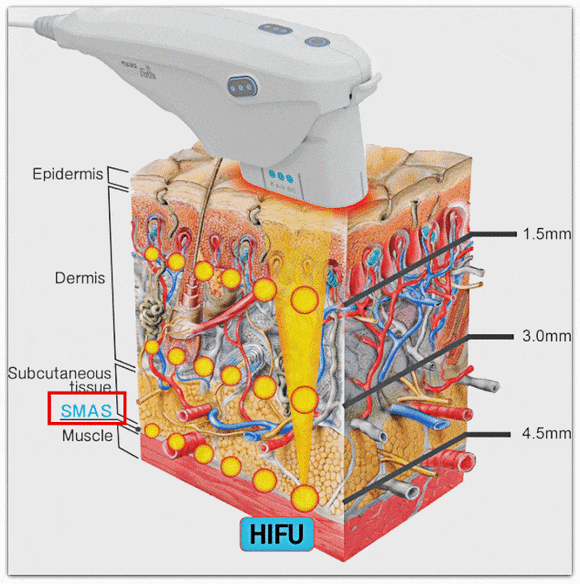
This fascial layer sits between the skin and the muscle, and you can think of it as a key area that supports the skin.
When thermal coagulation points form here, the existing loosened collagen contracts due to heat.
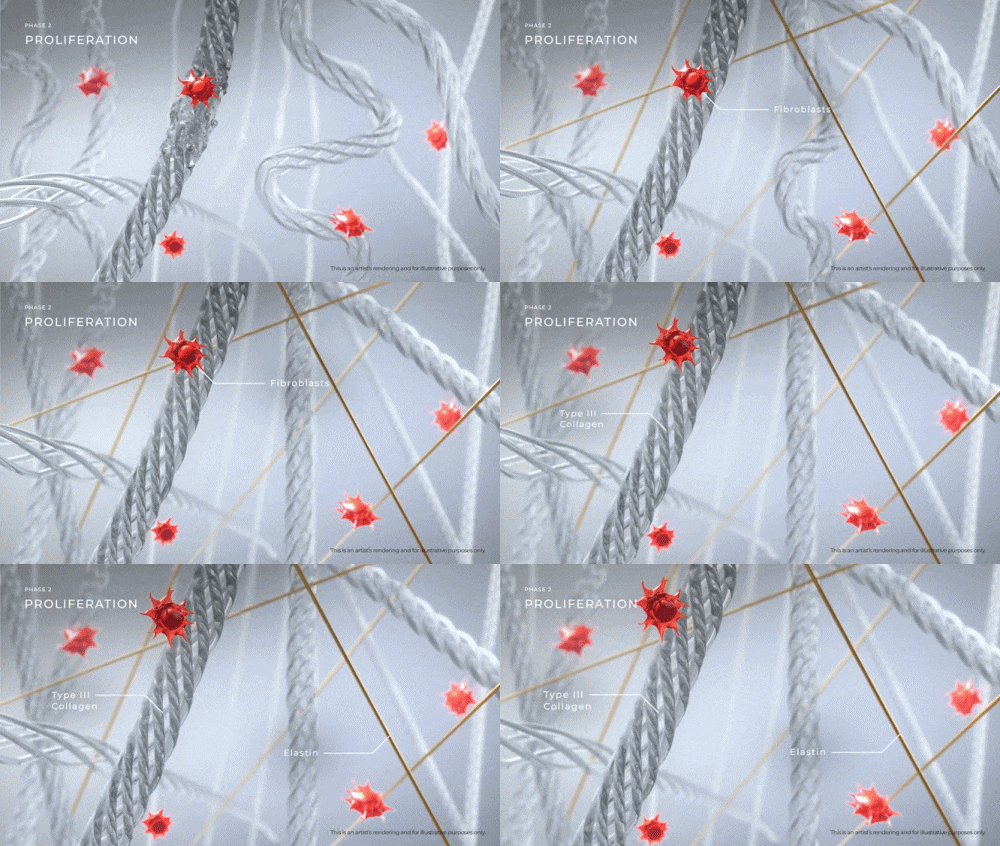
As the thermal coagulation points heal, new collagen fills in the area.
This process takes time, so the effects of Ultherapy usually begin to appear gradually about one month after treatment rather than immediately.
However, because Ultherapy focuses on lifting sagging in deeper areas, it is difficult to expect improvements in skin texture or skin tone at the surface.
Ultanium
The principle and effects of Titanium lifting
Now, let’s take a look at Titanium lifting as well.
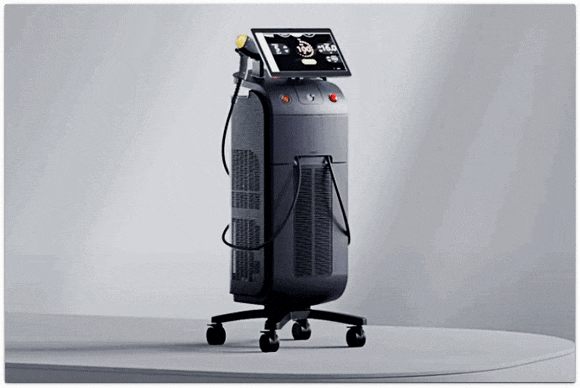
Titanium lifting is a procedure that uses laser energy. The device was originally developed for hair removal, but its use changed after its lifting effects were confirmed.
Its defining feature is that it simultaneously delivers laser energy at three wavelengths (755 nm, 810 nm, and 1064 nm).
Because each wavelength acts on a different depth of the skin, thermal energy is evenly delivered across a depth of 2 to 8 mm, from the skin surface to the dermis and the supporting ligament layer.
Heat stimulates collagen across various layers of the skin at the same time, promoting improved firmness and elasticity.
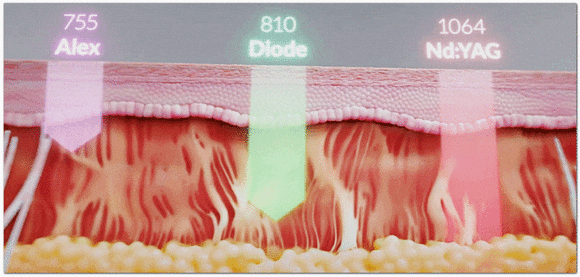
In particular, the 1064 nm wavelength is also used in toning, so it can provide an additional skin-tone improvement effect.
In addition, compared with other lifting procedures, it tends to provide noticeable results relatively quickly.
However, since the real effect comes from the collagen regeneration process, changes are often felt more clearly when looking at the condition one month later rather than immediately after the procedure.
Also, Titanium lifting is generally focused on tightening effects such as improving fine lines and shrinking pores.
Ultanium
Why get two treatments together?
Now that we’ve looked at both procedures, let’s address today’s main topic: whether there is meaning in getting both together.
To put it first, Ultherapy and Titanium lifting act on different skin layers, use different kinds of energy, and aim for different effects, so combining them can increase the overall result.
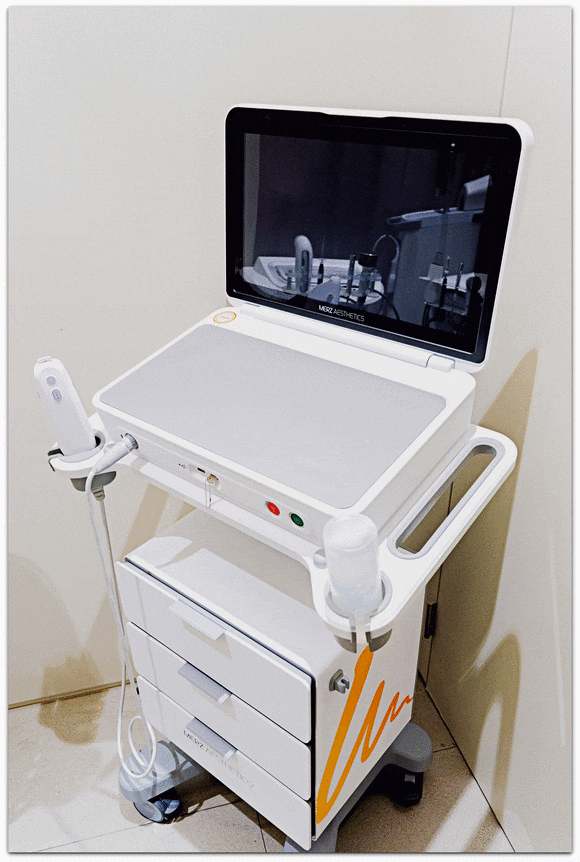
Ultherapy targets the fascial layer and takes on the role of lifting deeper skin that sags downward due to gravity.
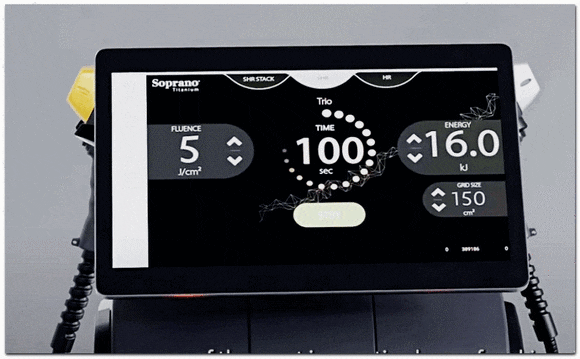
By contrast, Titanium lifting mainly acts on the dermis and supporting ligament layer, and is strong at improving elasticity and density from the surface down to the middle layers of the skin.
Seen this way, Ultanium makes sense because the two treatments complement each other’s limitations, which explains why people choose to get them together.
In addition, Ultherapy uses ultrasound while Titanium lifting uses laser, so the energy used does not overlap, which is another reason they work well together.
This is because they are relatively free from the problems of overlapping stimulation, side effects, or excessive skin burden.

Today, we looked at why Ultherapy and Titanium lifting are combined as Ultanium and what effects they offer.
To summarize, Ultanium works because it acts on different layers with different energy sources, and each treatment fills in what the other cannot reach.
However, this should not be taken to mean that getting them together is always effective.
It is important to plan strategically according to your skin and at a level your skin can handle, so during the consultation process, please make sure to receive a thorough skin analysis first and proceed in a way that is appropriate for you.
Thank you. This was Yeongdeungpo UNI & I^^
< What are the criteria for choosing a dermatology clinic in Yeongdeungpo? >
< Yeongdeungpo UNI & I clinic hours >
Weekdays: 10:00 am ~ 08:30 pm
Weekends: 10:00 am ~ 05:00 pm
(No lunch break)
< Directions >
Yeongdeungpo branch of UNI & I Clinic is
located near Exit 5 of Yeongdeungpo Station.