Pico Fractional on the Butterfly Zone,
Curious About Its Effects and Side Effects?
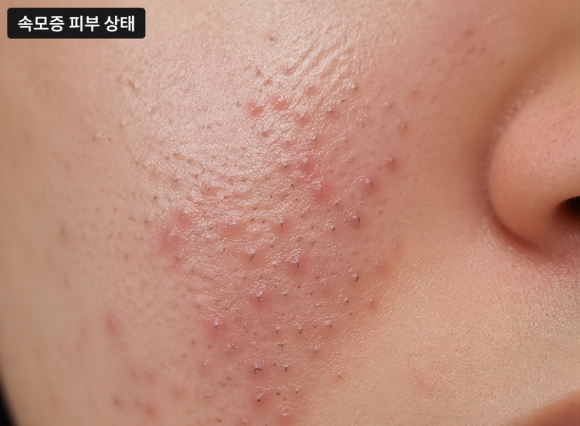
"The pores beside my nose are so large
that they seem even more noticeable even when I put on makeup..
I’m thinking about trying pico fractional,
but does it really work??
Once the pores in the butterfly zone start bothering you, they’re the first thing you notice every time you look in the mirror.
You may wash your face carefully, use pore-care products, and keep up with mask packs, but this one area often doesn’t change easily, which can feel frustrating.
Especially in the butterfly zone between the nose and cheeks, sebum production is high and the skin texture can be uneven, so even with makeup it may stand out more.
Naturally, you start looking into procedures. But the more you learn, the more concerns come up.
There’s the hope that it will really become clearer, but at the same time, stories like “the redness lasts a long time” and “it causes pigmentation” get mixed in.
So today, I’ll explain as realistically as possible what effects pico fractional has on the butterfly zone, and how much downtime and side effects to expect.
Table of Contents
What is pico fractional for the butterfly zone?
First, let’s talk about the butterfly zone, the area so many people worry about.
The butterfly zone refers to the area that extends from the nose to the cheeks on both sides.
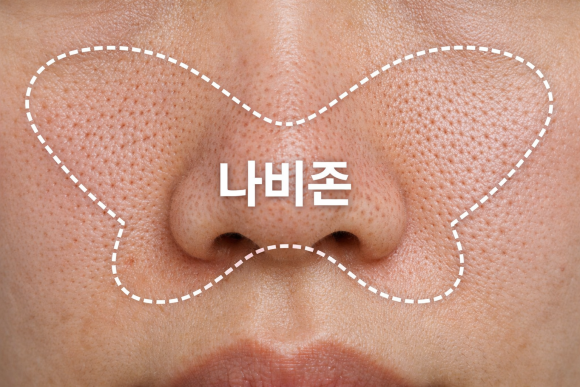
If you look at the face, it’s the section that spreads out like a butterfly shape, which makes it easier to understand.
The problem is that this butterfly zone is one of the areas with the highest concentration of sebaceous glands on the face.
Because the sebaceous glands are densely packed there, the pores are more likely to become enlarged.
That’s why the pores beside the nose often stand out more, and one procedure that can help in such cases is pico fractional.
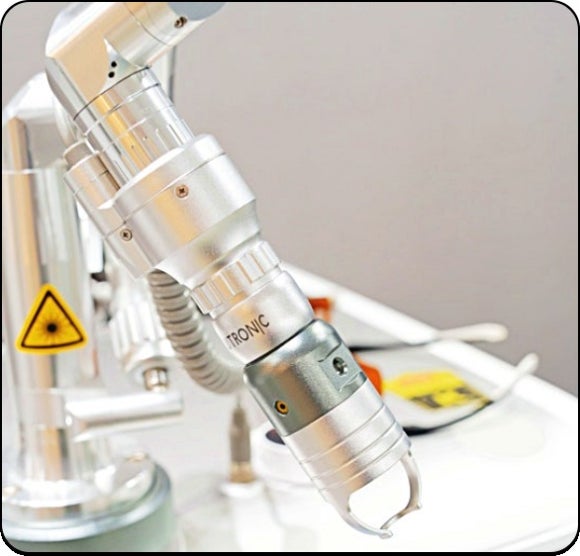
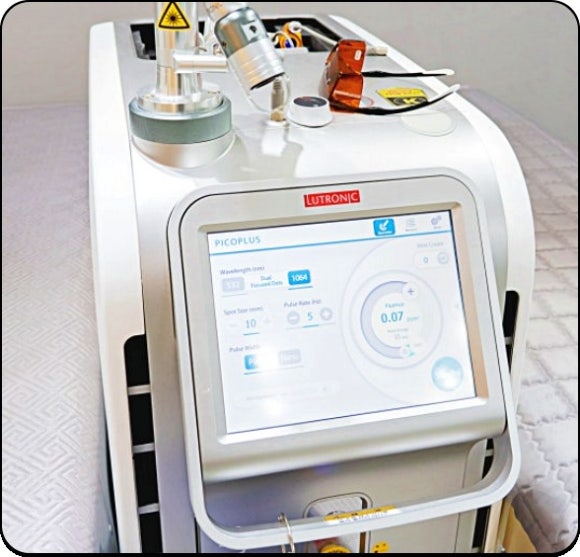
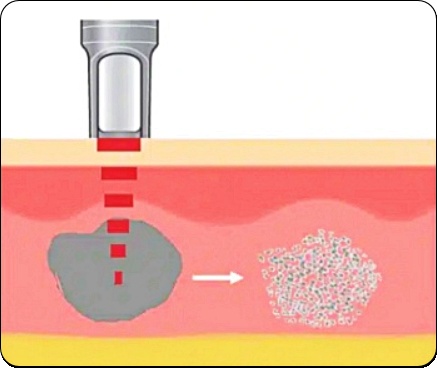
Pico fractional is a procedure that uses picosecond lasers to deliver tiny amounts of stimulation to the dermis.
In this process, very small spaces called LIOB (Laser Induced Optical Break down) are formed inside the skin.
This subtle stimulation acts like a kind of “regeneration signal” for the skin.
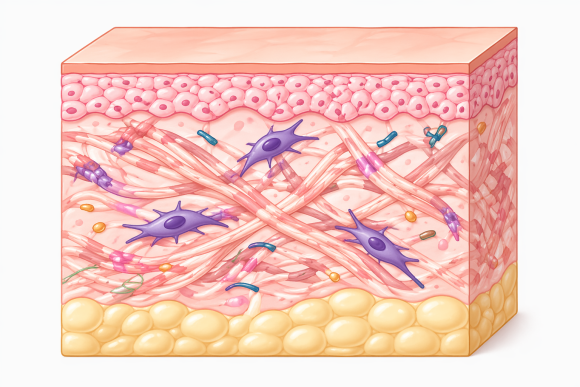
As the skin recovers from the damage, collagen and elastin are newly produced.
Accordingly, the tissue around the pores gradually regains elasticity, and as a result, the pores become smaller.
In simple terms, tiny stimulation is created within the skin, and during the recovery process, the skin fills back in and tightens.
Pico Fractional on the Butterfly Zone
Who can it help?
Pico fractional may be helpful especially in the following cases:
-
When the pores beside the nose or in the butterfly zone are especially large
-
When the pores are stretched vertically rather than round
-
When pores become more noticeable while wearing makeup
-
When depressed acne scars are a concern
However, if the skin is in a very sensitive state, even small stimulation can cause redness or warmth to last longer, so it is important to adjust the treatment intensity and method.
That’s why it’s better not to proceed with treatment unconditionally, but to first check the current condition of the skin and approach it in a way that matches that condition.
Some people ask whether pico fractional also helps with fine hairs inside the pores, commonly called ingrown hairs.
Pico fractional can help improve skin texture and pores, but since it is not a procedure that removes hair itself, it is difficult to expect a major effect on ingrown hairs.
Therefore, if fine hair is the main concern, a method such as laser hair removal may be more suitable, while pico fractional may be considered when pores and skin texture are the concern.
Pico Fractional on the Butterfly Zone
Downtime: Is it okay for office workers?
This is the most realistic concern.
If you think back to older fractional procedures, many people remember experiences where scabs or oozing made daily life uncomfortable.
That was often because the procedure involved lightly resurfacing the skin surface.
Pico fractional, on the other hand, is a little different.
As mentioned earlier, it works by creating tiny holes inside the skin to induce regeneration.
So the downtime is relatively short, and for about 3 to 5 days after the procedure, redness, a burning sensation, and some dryness may occur.
However, oozing or thick scabs are rare, so daily life or going to work is often not greatly affected.
Although it varies by person, redness usually subsides gradually over 1 to 2 weeks.
During this period, the skin is more sensitive, so it is best to pay a little extra attention to moisturizing, soothing care, and sun protection.
Today, I explained pico fractional for the butterfly zone.
Because pores in the butterfly zone are strongly influenced by structural factors, dramatic changes are less likely from a single session, and improvement often happens gradually over multiple sessions.
Although it depends on the skin condition, more stable changes can usually be expected through repeated treatment of about 3 to 5 sessions or more.
What matters most is not the number of sessions, but adjusting the intensity and interval to suit your skin condition.
I hope today’s information helps you make a more accurate decision when considering pico fractional for the butterfly zone.
Thank you. This has been Yeongdeungpo UniU&I^^
< Criteria for choosing a dermatology clinic in Yeongdeungpo >
< Yeongdeungpo UniU&I clinic hours >
Weekdays: am 10:00 ~ pm 08:30
Weekends: am 10:00 ~ pm 05:00
(No lunch break)
< Directions >
UniU&I Clinic Yeongdeungpo Branch is
located near Exit 5 of Yeongdeungpo Station.