Sensitive skin: a skin type beyond oily and dry skin

There are probably many people worried about sensitive skin..!
Today, we’ll cover related information once,
and next time, we’ll gather the related procedure information and look at everything overall!
What is sensitive skin?
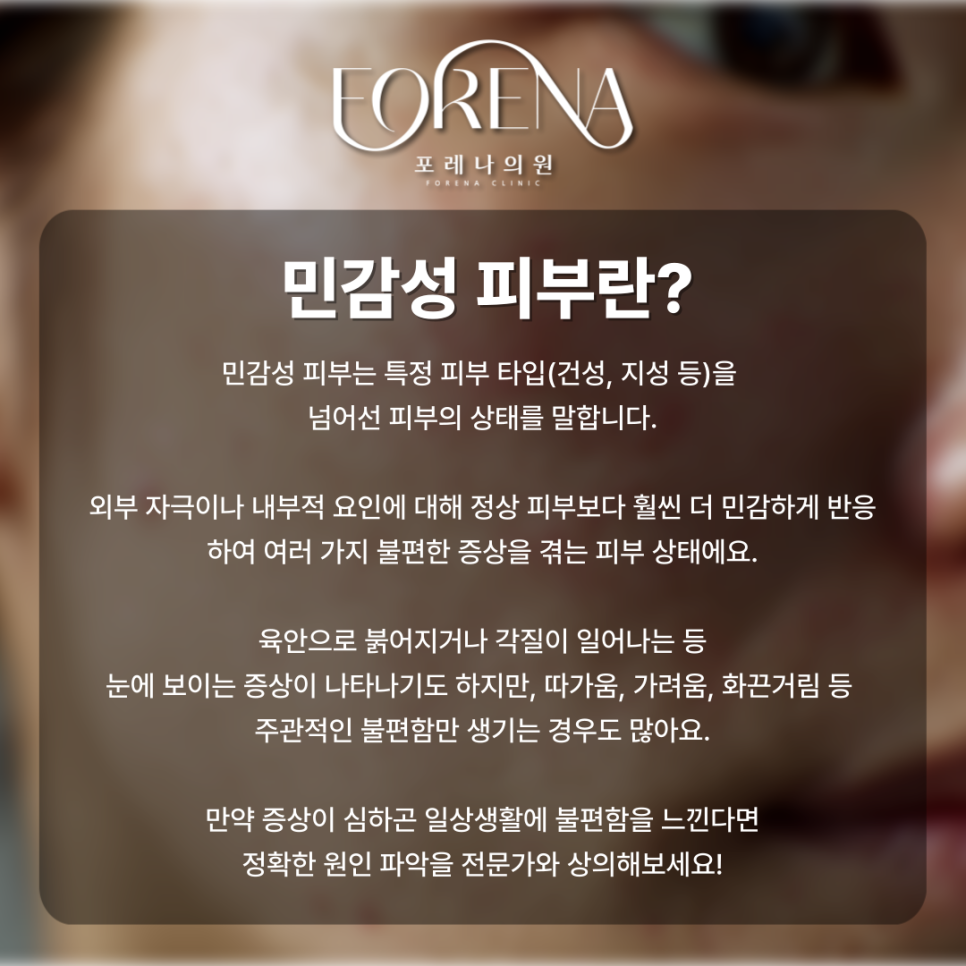
Sensitive skin refers to a skin condition that goes beyond specific skin types (dry, oily, etc.).
It is a skin condition that reacts much more sensitively than normal skin to external stimuli or internal factors, causing various uncomfortable symptoms.
Visible symptoms such as redness or flaking may appear to the eye, but in many cases there is only subjective discomfort such as stinging, itching, or a burning sensation.
If the symptoms are severe and interfere with daily life,
please consult a specialist to identify the exact cause!
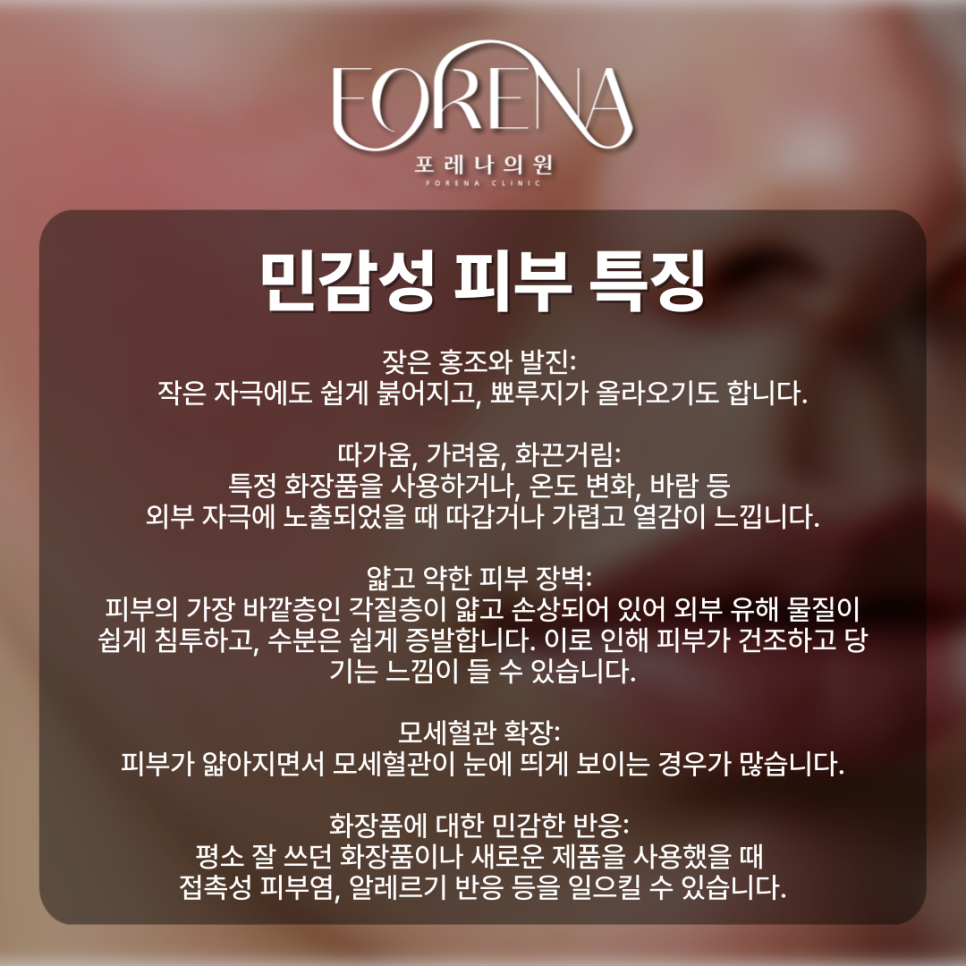
Characteristics of sensitive skin
Frequent redness and breakouts:
It easily turns red even with small刺激, and bumps may also appear.
Stinging, itching, burning:
When using certain cosmetics or being exposed to external stimuli such as temperature changes or wind,
it may sting or itch and feel hot.
Thin and weak skin barrier:
The outermost layer of the skin, the stratum corneum, is thin and damaged, so harmful external substances can easily penetrate and moisture evaporates easily. As a result, the skin may feel dry and tight.
Dilated capillaries:
As the skin becomes thinner, capillaries are often visibly noticeable.
Sensitive reactions to cosmetics:
When using cosmetics you normally use well or trying a new product,
it may cause contact dermatitis or an allergic reaction.
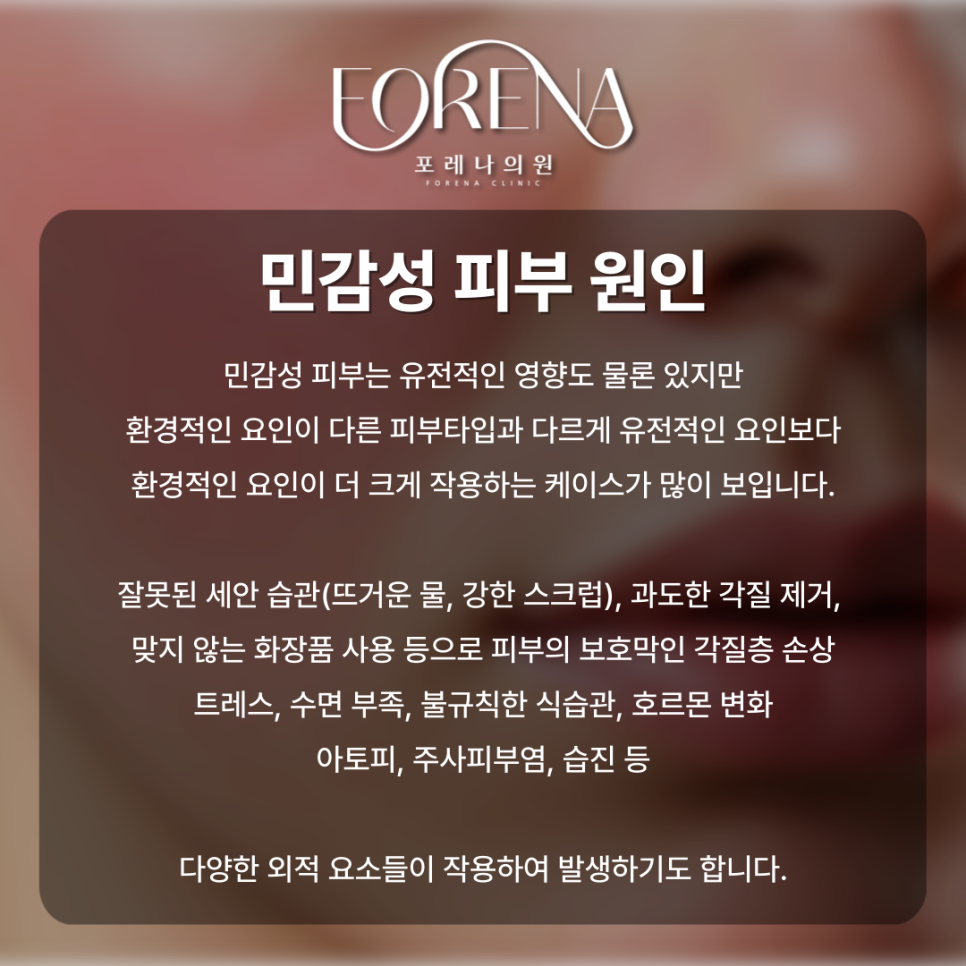
Causes of sensitive skin
Of course, sensitive skin can also be influenced by genetics,
but compared with other skin types, environmental factors often seem to play a larger role than genetic factors.
Damage to the stratum corneum, which is the skin’s protective barrier, due to improper cleansing habits (hot water, harsh scrubbing), excessive exfoliation,
or use of unsuitable cosmetics
Stress, lack of sleep, irregular eating habits, hormonal changes
Atopic dermatitis, rosacea, eczema, etc.
It can also occur due to a variety of external factors.
How to care for sensitive skin
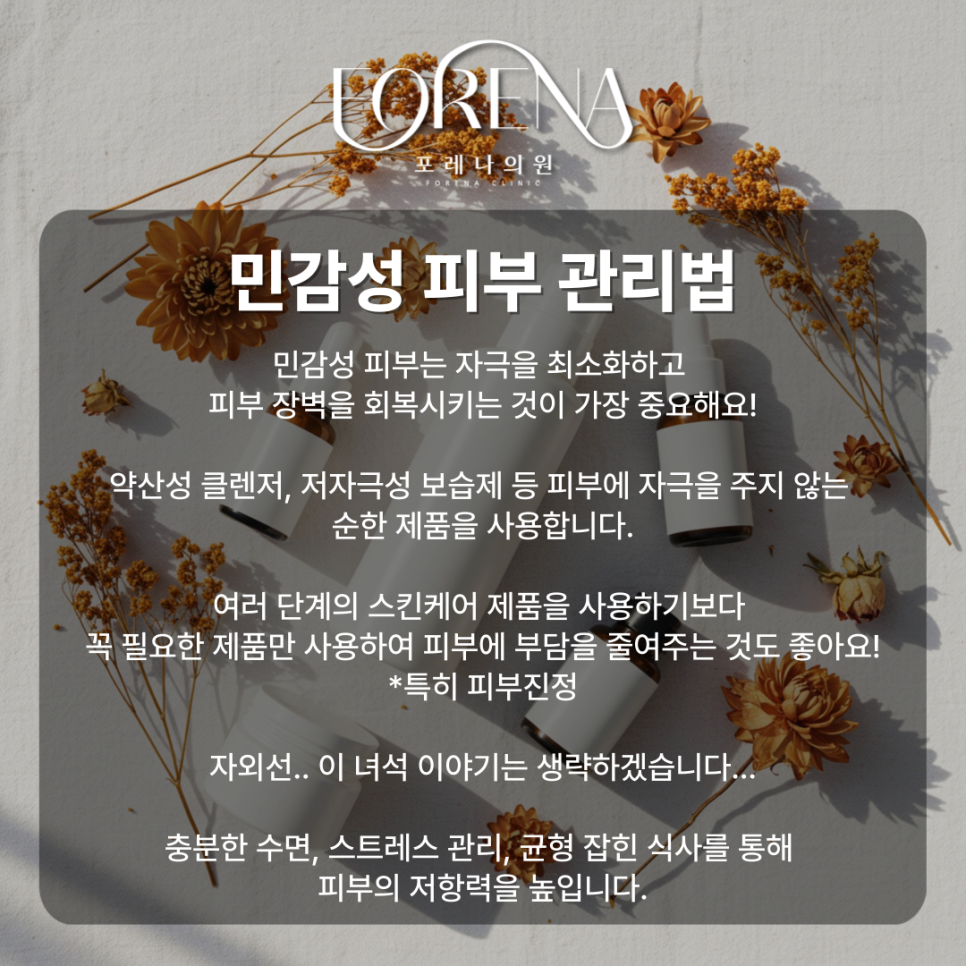
For sensitive skin, minimizing irritation and
restoring the skin barrier is the most important thing!
Use mild products that do not irritate the skin,
such as mildly acidic cleansers and low-irritation moisturizers.
Rather than using multiple steps of skincare products,
it’s also good to reduce the burden on the skin by using only the products that are truly necessary!
*Especially skin soothing
UV rays.. I’ll skip talking about that one...
Increase the skin’s resilience through enough sleep, stress management, and a balanced diet.
Today, at Mapo Forena Clinic, we’ve looked at a total of five skin types!
We’ll come back next time with a summary and related procedures, so please look forward to it~
It’s gotten so hot these days, and I hope everyone has a healthy day!
Always be careful with UV rays!
👇UV rays are the skin’s biggest enemy!👇
👇For those worried about dark circles👇
👇What are milia?👇
👇Last week’s popular post👇
👇Naver Place reservation shortcut👇
👇Naver Map directions👇
✅This post was written directly by Forena Clinic for the purpose of providing medical information in compliance with Article 56, Paragraph 1 of the Medical Advertising Act.
✅ Because patients’ skin conditions and clinicians’ clinical experience can vary greatly, please make your decision after 충분한 consultation with a doctor.
✅The treatment photos in this post were taken with the patients’ consent. The before/after photos were not altered, and were taken under the same conditions.
✅Please use this article for personal reference only. For detailed information, we recommend visiting a medical institution directly for consultation and treatment.
✅All procedures performed after visiting the clinic may cause minor or major side effects depending on the individual. After consulting with a medical professional, please fully understand the side effects and precautions before proceeding.