I have a keloid-prone skin type, so it’s really hardㅠ

Today, let’s talk about scars!
This is a story about keloid-prone skin!
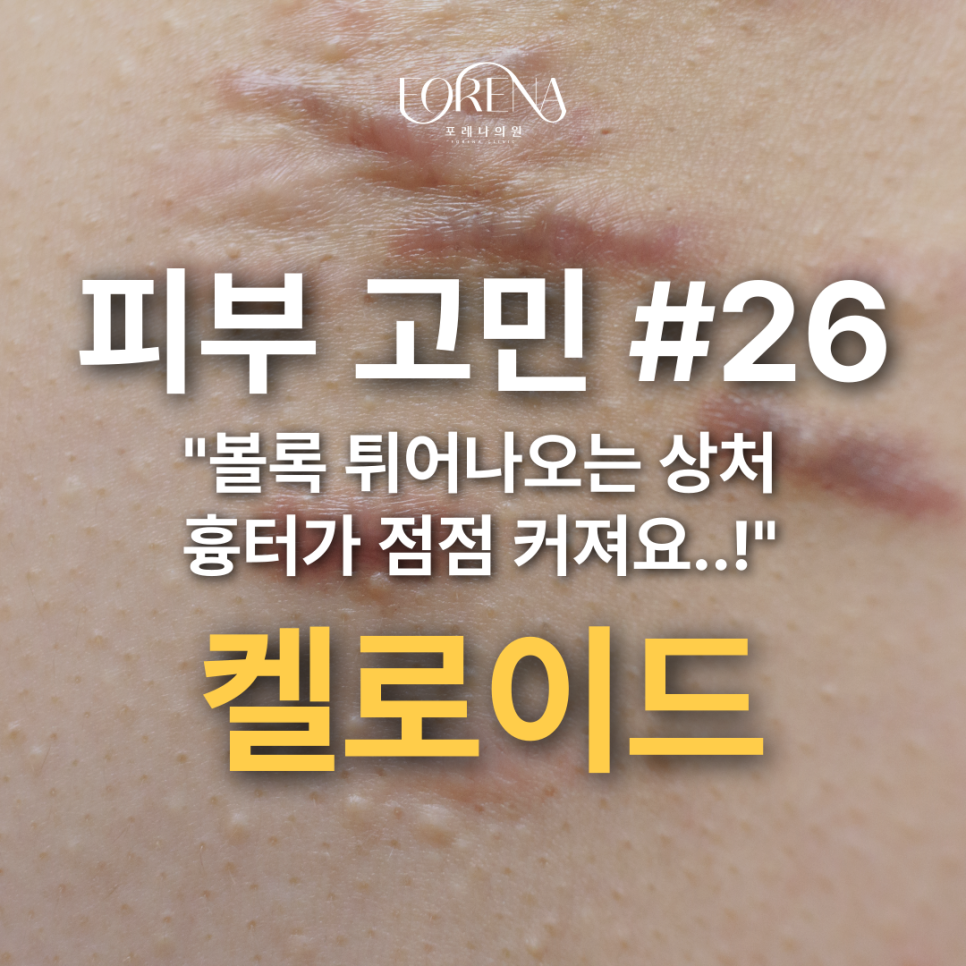
It’s always important to be careful with wounds, but things don’t always go the way we want!
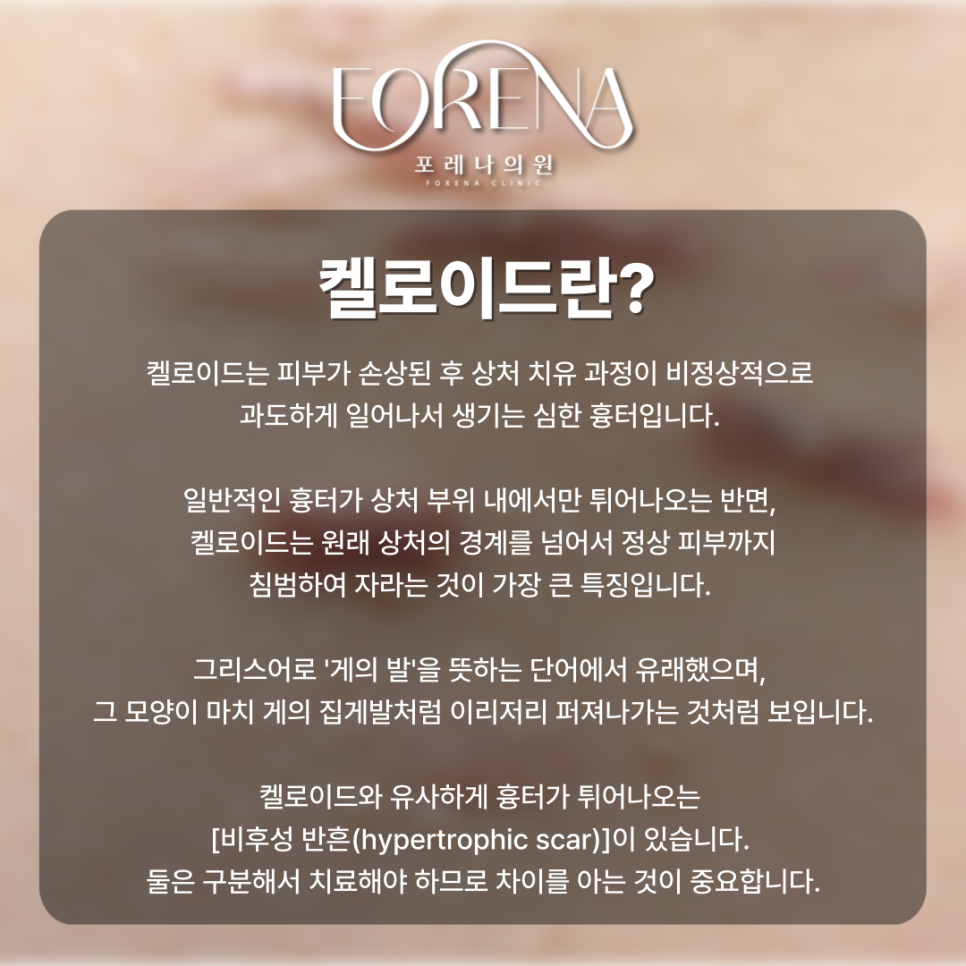
There may be information here that you didn’t know!
A keloid is a severe scar that forms when the wound-healing process becomes abnormally and excessively active after the skin is damaged.
While ordinary scars only rise within the wound area,
keloids are characterized by growing beyond the boundary of the original wound and invading normal skin.
The term comes from a Greek word meaning “crab’s claw,”
and its shape looks like it spreads out in many directions, almost like a crab’s pincers.
There is also a scar that protrudes similarly to a keloid:
[hypertrophic scar].
Because the two must be treated differently, it is important to know the difference.

These are some of its characteristics!
Size increases:
Over time, the scar does not disappear or shrink on its own,
but instead gradually becomes larger.
Irregular shape:
It rises in a hard, irregular shape,
and the surface is often smooth and glossy.
Color changes:
At first it may appear red or purple, and over time
it may turn brown or black.
Itching and pain:
As keloids form, many people experience
severe itching, pain, or tenderness in the area.
Common locations:
They often occur in areas with high skin tension or where inflammatory reactions
are more likely to happen.
Ears (piercing sites), earlobes, the center of the chest (sternum area), shoulders, upper back, and more
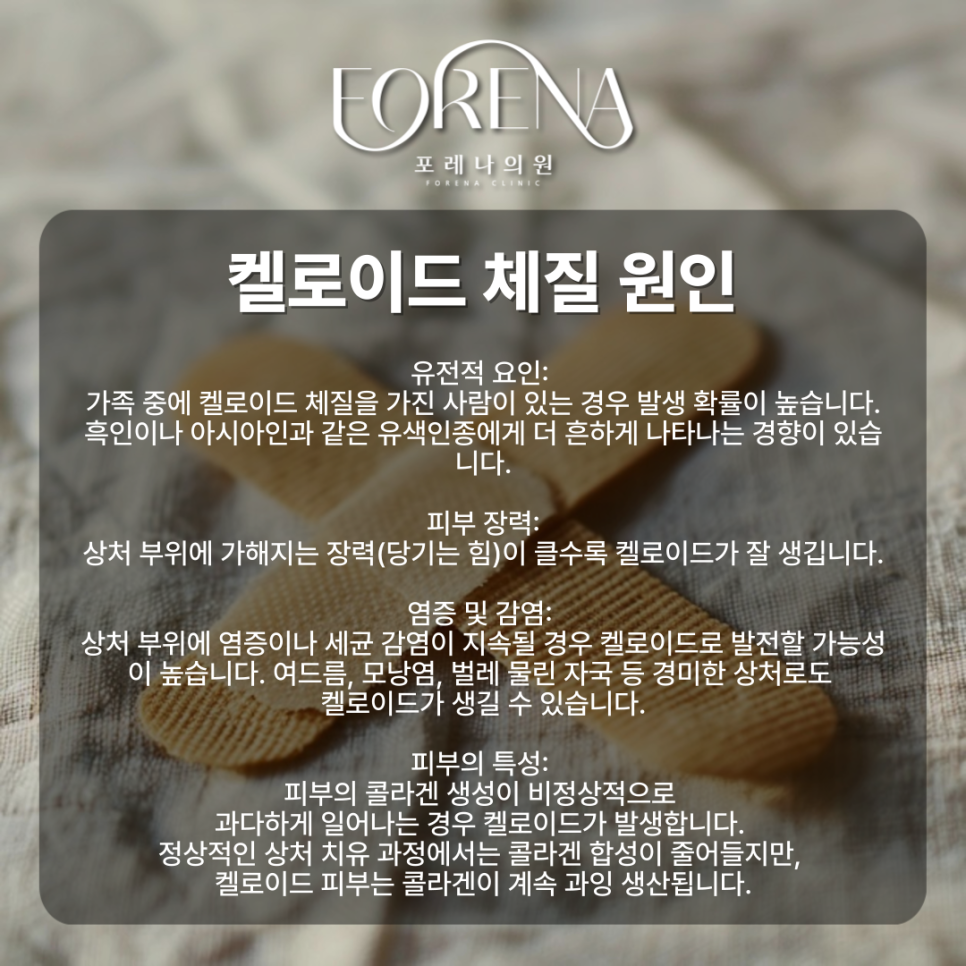
What are the main causes?
Genetic factors:
If someone in the family has keloid-prone skin, the likelihood of developing it is higher. It tends to occur more commonly in people of color, such as Black people or Asian people.
Skin tension:
The greater the tension (pulling force) applied to the wound area, the more likely a keloid is to form.
Inflammation and infection:
If inflammation or bacterial infection continues in the wound area, the likelihood of developing a keloid increases. Even minor wounds such as acne, folliculitis,
or insect bites can lead to keloids.
Skin characteristics:
Keloids occur when collagen production in the skin becomes abnormally excessive.
During normal wound healing, collagen synthesis decreases, but keloid-prone skin continues to overproduce collagen.

Related dermatologic procedures include the following!
Steroid injections:
Steroid components are injected directly into the keloid lesion to reduce inflammation in the scar tissue and suppress fibrosis.
Laser treatment:
Laser procedures are effective at reducing the redness of keloids
and helping suppress recurrence.
Representative examples include CO2 laser and Fraxel laser.
Keloids are difficult to improve with just one method, so multiple procedures are often used in combination!
Also, when considering dermatologic procedures, please do not make the decision on your own;
consult a specialist! In cases caused by complex factors, professional guidance is necessary.
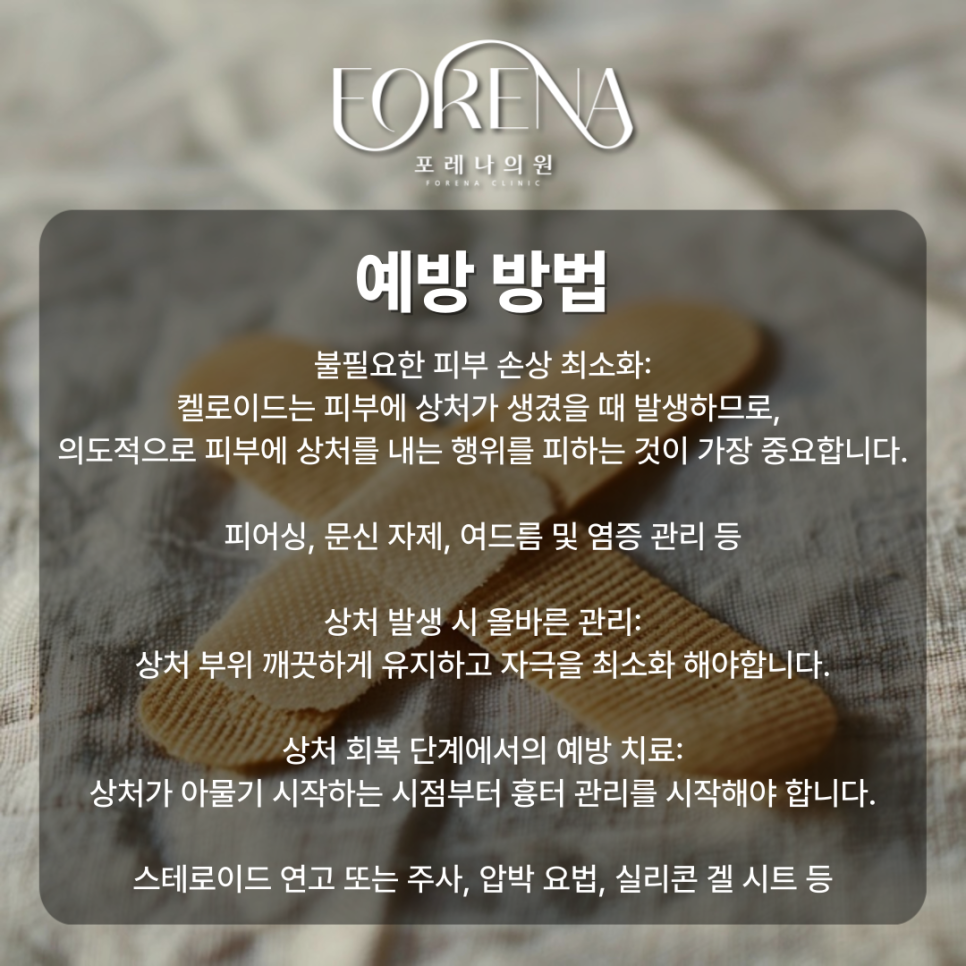
Prevention methods
Minimize unnecessary skin damage:
Since keloids occur when the skin is wounded,
it is most important to avoid intentionally injuring the skin.
Avoid piercings and tattoos, manage acne and inflammation, etc.
Proper care when a wound occurs:
The wound area should be kept clean and irritation should be minimized.
Preventive care during wound healing:
Scar care should begin as soon as the wound starts to heal.
Steroid ointment or injections, compression therapy, silicone gel sheets, etc.
Today, we learned about keloid-prone skin at Mapo Forena Clinic!
If this was useful information, please leave a comment and a like!
Autumn is slowly approaching,
so get ready for it well and be careful not to catch a cold!
👇What is a CO2 laser?👇
👇Let’s learn about various skin types👇
👇Let’s learn about double chins👇
👇Why sunscreen is important👇
👇Go directly to Naver Place reservation👇
👇Naver Map directions👇
✅ This post was written directly by Forena Clinic for the purpose of providing medical information, in compliance with Article 56, Paragraph 1 of the Medical Advertising Act.
✅ Because results vary greatly depending on the patient’s skin condition and the clinician’s experience, please make your decision after sufficient consultation with a doctor.
✅ The treatment photos in this post were taken with the patients’ consent. The before-and-after photos were not altered and were taken under the same conditions.
✅ Please view this post for reference only. For detailed information, we recommend visiting a medical institution in person for evaluation.
✅ All procedures performed after visiting the clinic may cause varying degrees of side effects depending on the individual. Please consult a medical professional and fully understand the side effects and precautions before proceeding.