
Aging often becomes
particularly noticeable
first in terms of
our outward appearance.
As wrinkles begin to form
and the skin starts to sag,
the shape of the eyes
may gradually change,
which often leads to
discomfort and stress.
The various symptoms
caused by reduced elasticity
are natural, but because
everyone hopes to maintain
a more vibrant and youthful
appearance, it is also natural
to look for ways to correct
or improve these changes.
In this post, we will explain
when lower eyelid fat
repositioning may be needed,
how to identify the areas
that require improvement,
and what results may be
expected when the procedure
is performed accordingly.
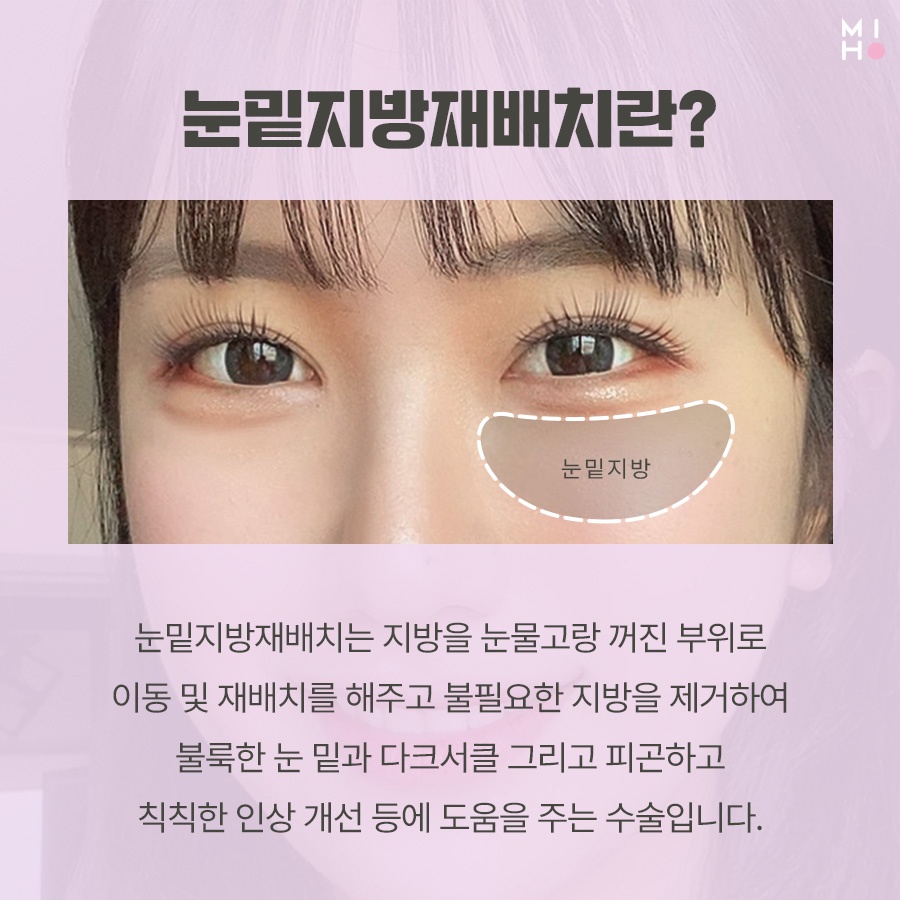
As aging progresses, the eyelids
may droop or the shape of the
eyes themselves may change.
In addition, excess orbital fat
may develop, sometimes creating
a dark, worried-looking appearance.
This is generally noticed after
middle age, but depending on
the circumstances or cause,
it may also occur in younger adults.
As a result, people may wonder
how lower eyelid fat repositioning
is performed, whether the fat
should simply be removed, or whether
it is possible to use the separated
fat to slightly improve areas
that have become hollow.
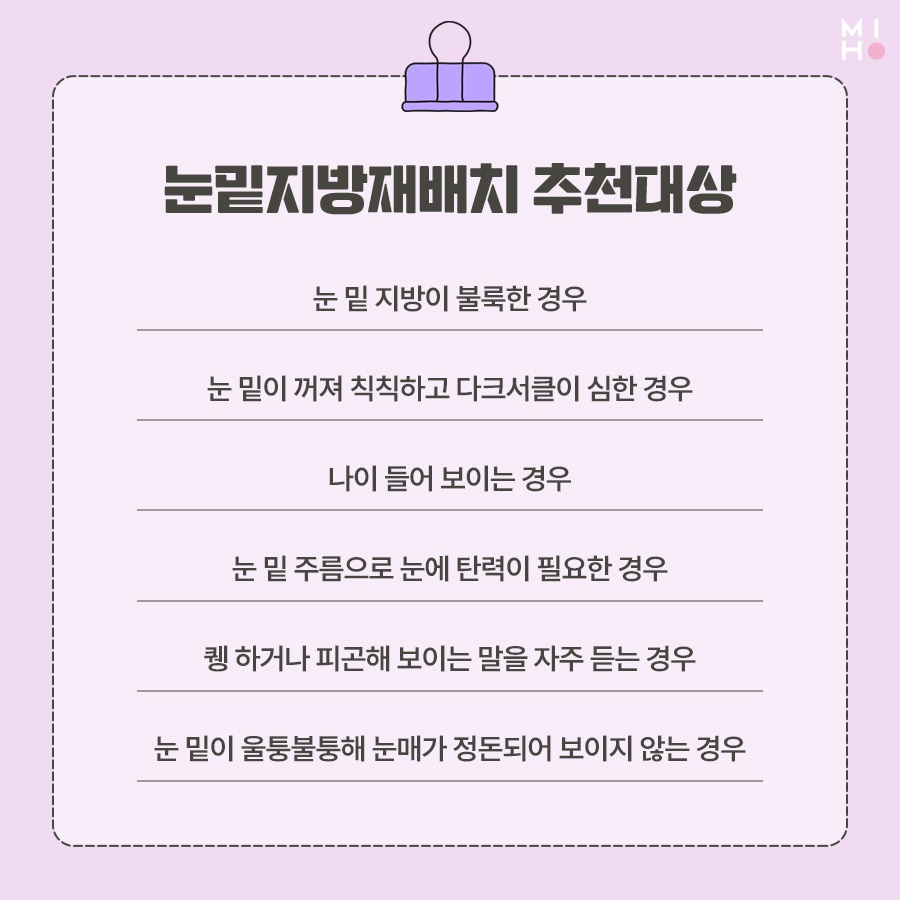
If there is excessively little fat
beneath the eyelids, the face may
lose its dimensionality, making
the overall expression appear dull
and flat.
Conversely, when too much fat
accumulates, a bulging shape
may become visible beneath the skin.
It may also extend widely toward
the cheek area, resembling a large
dark circle. This can create not only
an aged appearance but also lead
others to comment that you always
look tired.
Because the heavy accumulation
of fat can further worsen sagging,
lower eyelid fat repositioning must
involve a detailed assessment of
the areas requiring improvement,
while also carefully reflecting each
individual’s characteristics in order
to anticipate a favorable result.

If the lower part of the eyes
suddenly feels as though it has
become droopy, other causes should
also be considered. However, in some
cases, a problem with the orbital fat
may be present as well.
This usually develops gradually
in people in their 40s and older.
Whether the fat protrudes outward
or sits unevenly, it is important
to avoid excessive dissection,
carefully consider each person’s
facial volume, and reposition the fat
appropriately.
To do so, a meticulous plan that
reflects both functional and
aesthetic factors must be established
in advance.
The causes of aging beneath
the eyes are not simple.
As mentioned earlier, the septum
may age, allowing the orbital fat
within it to loosen and descend,
creating an unpleasant contour.
Conversely, it may cause hollowness
beneath the eyelids.
In some cases, the septum, which
serves a supporting role, weakens
and allows the fat to protrude.
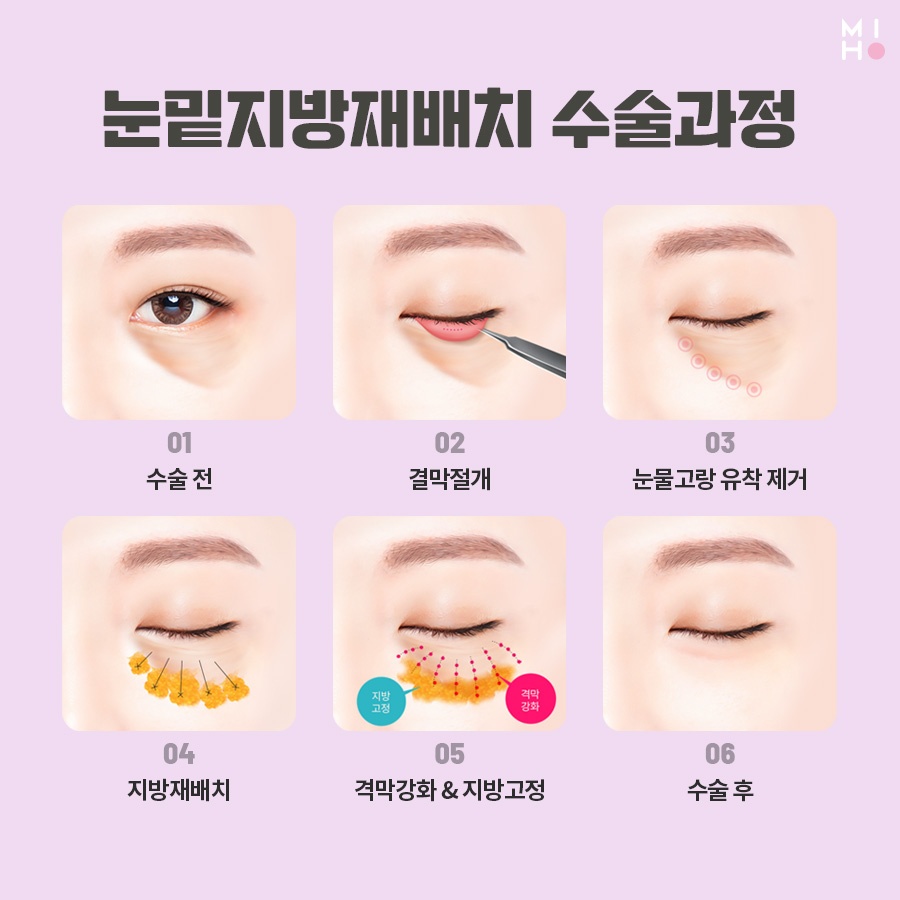
In such cases, the septum is tightened
and the orbital fat is returned to
its original position.
The tear trough ligament beneath
the eyes also gradually ages along
with the skin. As it changes, the area
beneath the eyes may become overly
bulging, while a sunken-looking mark
remains beside it.
This differs in both cause and symptoms
from cases in which the fat is excessive
and corrected through fat removal, or
from cases in which lower eyelid fat
repositioning is performed to improve
areas with deep shadows at the same time.
While preserving an appropriate amount
of fat, the ligament is first separated
only in the area where the change has
occurred. A small amount of fat is then
grafted into that area for improvement.
If separating the fat is difficult,
a filler may also be considered to restore
volume to areas affected by hollowness.
As such, not every case requires
the same plan simply because the
dark-circle area appears wider or
the area beneath the eyes looks
unbalanced and bulges outward.
Before making an incision in the septum,
the surgeon must carefully determine
whether the tear trough is adhered and
consider whether any ligament adhesions
also need to be addressed, then identify
an approach that contributes to an
appropriate result.
It is also necessary to consider how much
fat should be removed and how strongly
the septum should be reinforced to secure
the fat firmly and help prevent recurrence.
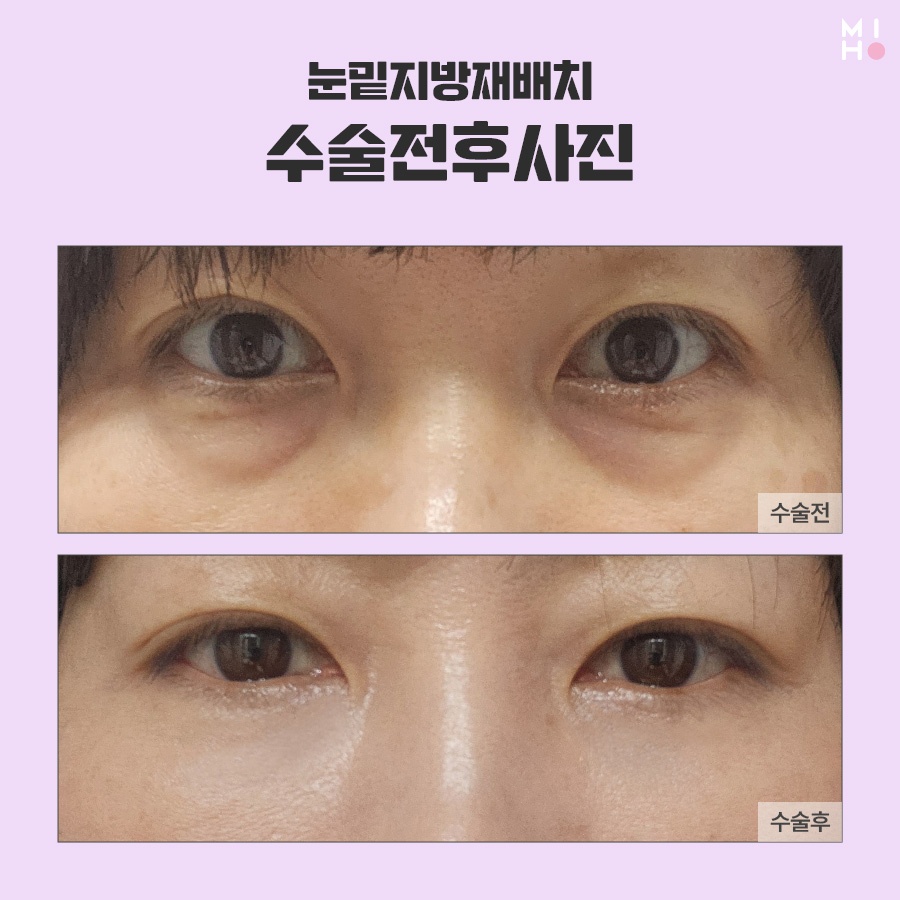
The result of lower eyelid fat
repositioning may also vary depending
on the technique planned.
This is because the approach that
contributes to improvement differs
according to the area and the cause.
Therefore, rather than using only one
method, several approaches may be used
as appropriate to correct the symptoms
that have caused discomfort and improve
the outward appearance.
A lower eyelid procedure may also be used.
When sagging is severe, a lifting procedure
may be performed according to its degree,
or the upper part of the face may also be
addressed through an upper eyelid procedure.
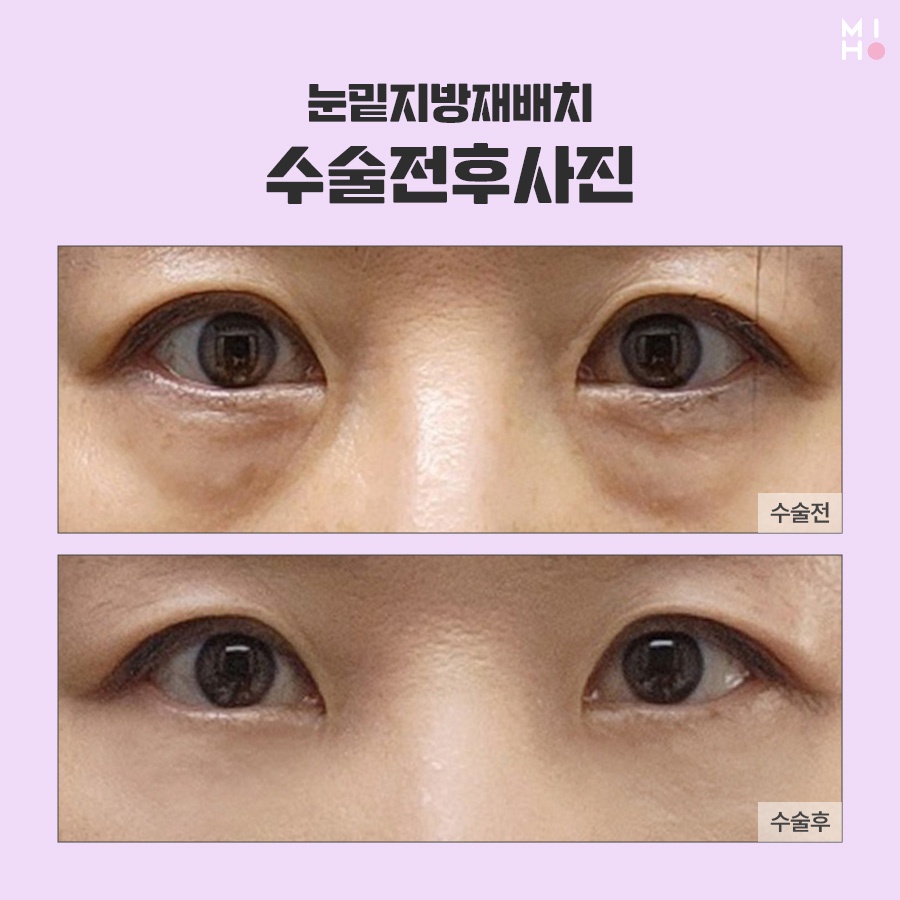
Regardless of the plan or how it is carried
out, the most important consideration is
to determine how to reflect each person’s
original eye shape and desired aesthetic
image, and then perform repositioning or
grafting using an appropriate approach.
Because incisions cannot be avoided,
it is also important to identify where
they will be made so that scars do not
become prominent on the outside and
are left as minimally as possible.
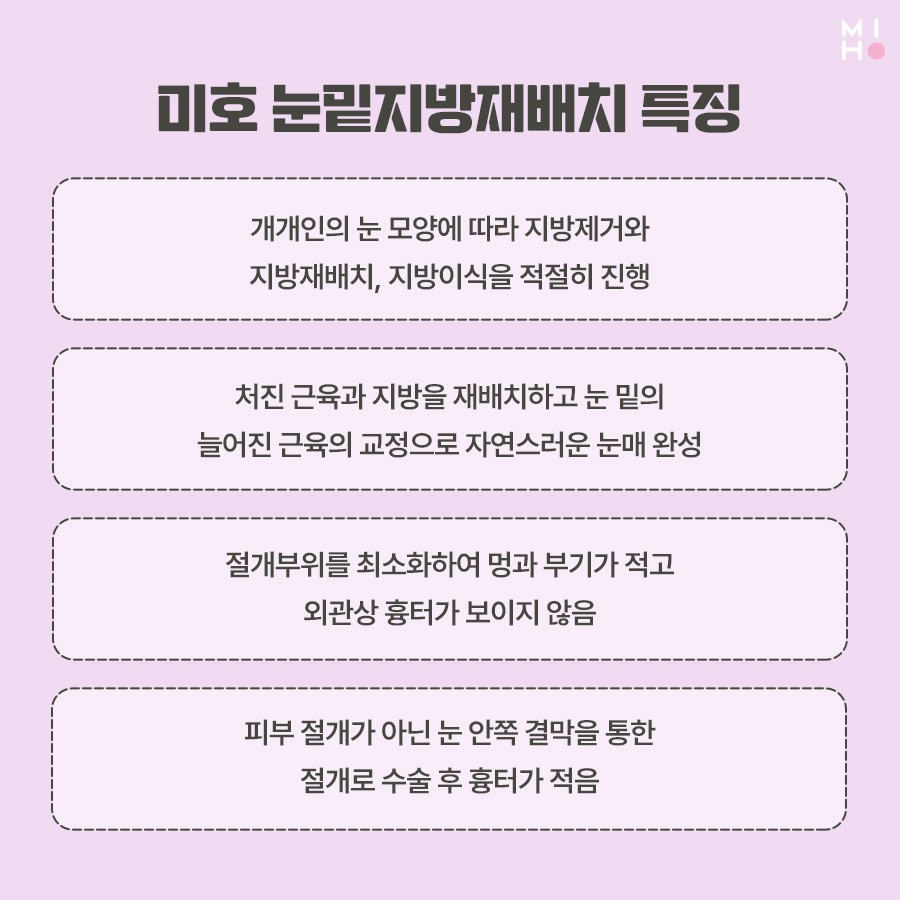
When the incision is made in the inner
conjunctiva of the eye, the mark is not
visible externally during recovery.
Because the incision area is limited,
there may also be less swelling and
bruising, allowing a more natural result
without placing as much burden on the patient.
Although the concerns may appear similar,
please remember first that the approach
that contributes to a favorable result may
differ from person to person when examined
in detail.
Lower eyelid fat repositioning should be
decided on carefully after first determining
what caused the change in each individual
case and whether a plan can be established
that would also provide aesthetic value when
additional procedures are performed.
We recommend carefully checking whether
the treating surgeon explains and performs
the procedure from beginning to end before
making this important decision.


Previous image
Next image