
A slim, straight nose is often
called the epitome of a
refined image and is
one of the facial features
that cannot be overlooked
when it comes to a person's
overall appearance.
Although standards of beauty
may be said to exist, it is
also necessary to consider
the eyes, mouth, face shape,
and other features together
to find a height and shape
that suit the individual in
order to achieve a natural
result.
There are various methods
that can be used for the nose,
depending on which area is
being corrected.
Some procedures may be
possible without an incision,
while others may be addressed
through an incision or with
minimal-incision alar reduction
to help achieve a favorable
result.

When the naturally occurring
shape of the nose differs from
the desired appearance,
the approach is planned
differently depending on the
cause. Therefore, it is first
necessary to examine each
person's current appearance
and inherent characteristics
in detail. However, even if
the bridge of the nose is
reasonably well-shaped and
formed, an aggressive or
unrefined impression may
suggest an upturned nose or
a bulbous nose.
Minimal-incision alar reduction
is used to correct the nasal
alar rather than the bridge of
the nose. The procedure is
planned according to a shape
that is proportionate to the
current height of the nose.
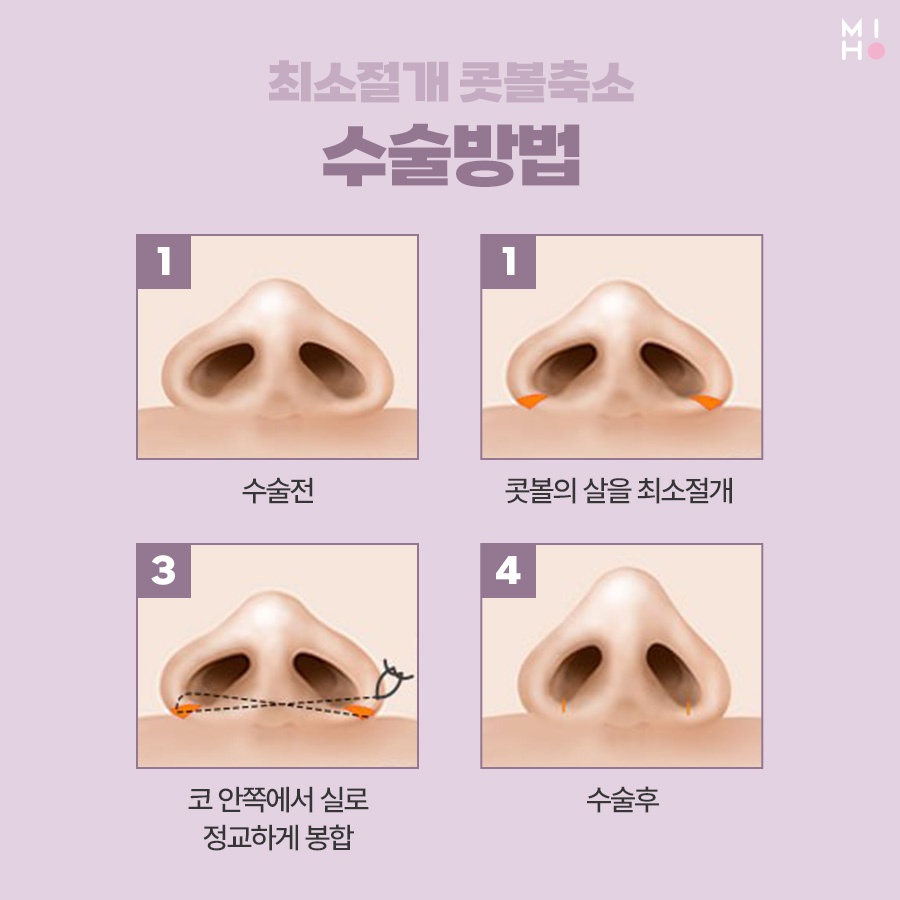
Minimal-incision alar reduction,
as the name suggests, refers
to reducing the size of the
nasal alae in various ways
using only a small incision.
It can help change a broad,
flat shape into a slimmer,
more refined one.
It may be suitable for people
who are concerned about the
width of the nose or whose
nasal alae are noticeable from
the front and wish to reduce
their appearance.
The procedure is performed
after carefully considering
aesthetic factors, including
the nasal line that suits the
bridge of the nose.
Although an incision is made,
it differs from conventional
incisional reduction in that
the incision is handled in a
location that is barely visible
and is designed to be difficult
to see.

The size is reduced through
medial incisions on both sides
of the nasal alae. Unlike the
shorter-lasting results that can
be a limitation of non-incisional
methods, this approach is
intended to provide lasting
results, although a certain
recovery period is required.
Because the incisions are made
on the inside, scars are barely
visible. The treatment area is
also limited, so recovery is
relatively quick.
Because the tissue is not fixed
with threads or similar materials,
there is no sensation of a foreign
body. Above all, the design can
be adjusted and refined in detail
according to the original plan,
which can be more helpful in
achieving a natural appearance.

If the nasal tip has previously
been asymmetrical, its shape
can also be adjusted to improve
symmetry.
Because the procedure does not
simply reduce size, cases in
which the shape did not blend
well with the bridge of the nose
may be adjusted to create a
smoother connection and a more
refined appearance.
Since the overall facial
proportions and the position of
the nose are carefully assessed
in advance and a plan is made
accordingly, the procedure may
also help address a blunt-looking
nose, nostrils that appear large,
or a nose that appears broad and
spread out.

Before undergoing minimal-incision
alar reduction, you should first
have a detailed consultation with
the operating surgeon to review
the scope and method of the
procedure and whether any
additional procedures should be
considered.
This is because the design that
suits each person can differ.
Careful planning is also needed
to determine whether there are
any areas that require additional
correction.
If you are also concerned about
a low nasal bridge, reducing only
the nasal tip or alae will not
resolve the issue.
It is necessary to carefully
consider which implant, if any,
will be inserted and to refine the
shape so that it blends smoothly
with the altered nasal alae.
Considering the matter from
multiple angles should come first.

Although the incision area is
relatively small, this is not a
non-incisional procedure, so you
must also pay attention to your
recovery afterward.
Immediately after the procedure,
it is important to be careful in
your daily activities and rest for
about one to two weeks.
You should be cautious about
wearing glasses for up to six
weeks. Swelling and bruising may
occur for a while, but if you
carefully follow the recommended
compresses at home, recovery may
proceed relatively quickly.
For the first three days, sleep
with your face positioned slightly
higher than your body to help
reduce swelling. Use cold
compresses for three days, then
alternate warm and cold
compresses afterward.
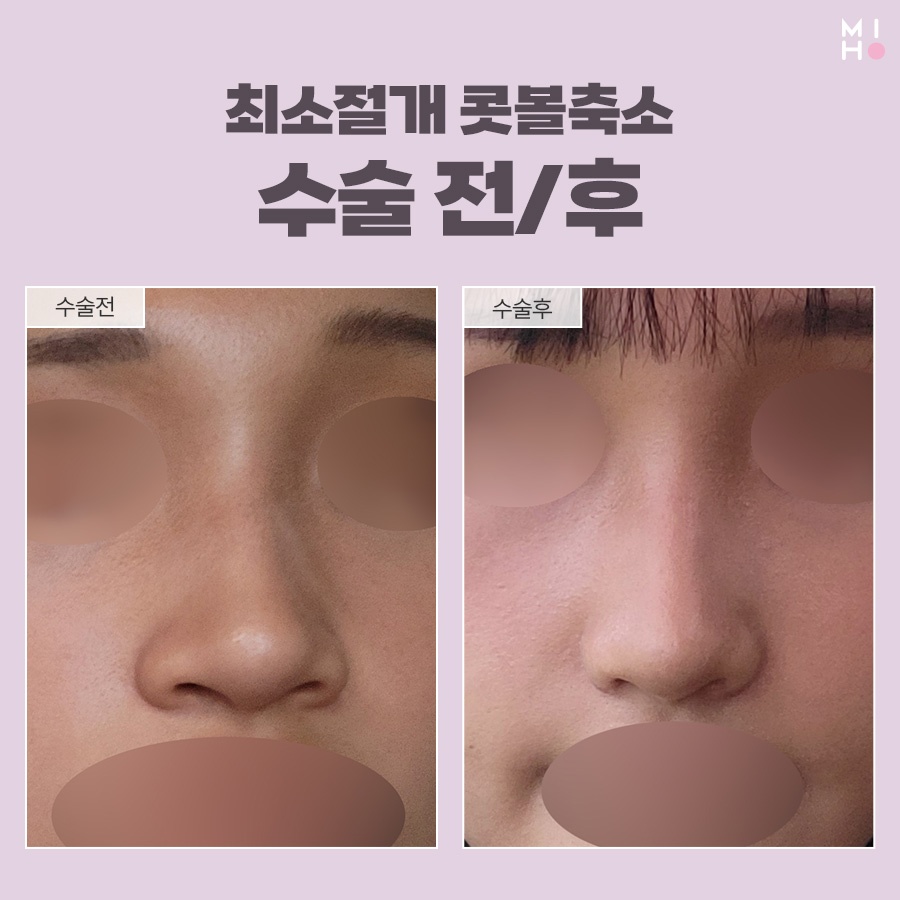
In addition to at-home care,
if you have first confirmed that
the clinic provides a structured
aftercare program following
minimal-incision alar reduction,
you can receive appropriate care
to help prevent the wound from
becoming prominent during
recovery.
Depending on each person's
circumstances, the operating
surgeon may prescribe additional
care afterward, so this should
not be taken lightly.
Some discomfort or a feeling of
awkwardness may continue for a
few weeks. Therefore, refrain
from drinking alcohol and smoking,
rest as comfortably as possible,
and focus fully on your recovery.
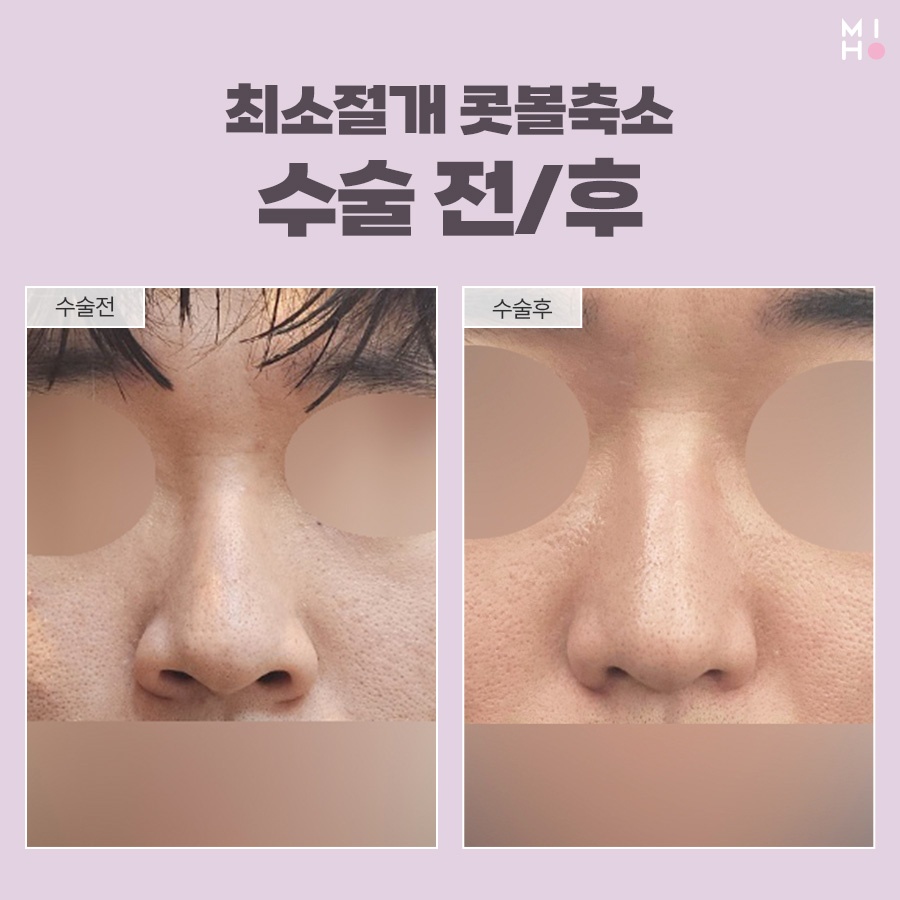
Anyone can wish to live with a
somewhat improved appearance.
However, please keep in mind
that the result after making the
decision and undergoing the
procedure may be quite different
from what you expected.
If the procedure is performed
with a design that does not suit
you, if too much is reduced, or
if the incision scars become
noticeable and bothersome, an
attempt to improve your appearance
can sometimes result in additional
inconvenience instead.
Therefore, before making a
decision, have a careful
consultation and sufficiently
consider whether the approach
truly suits your current situation
and what results it may bring.
Making your choice afterward is
the appropriate course of action.
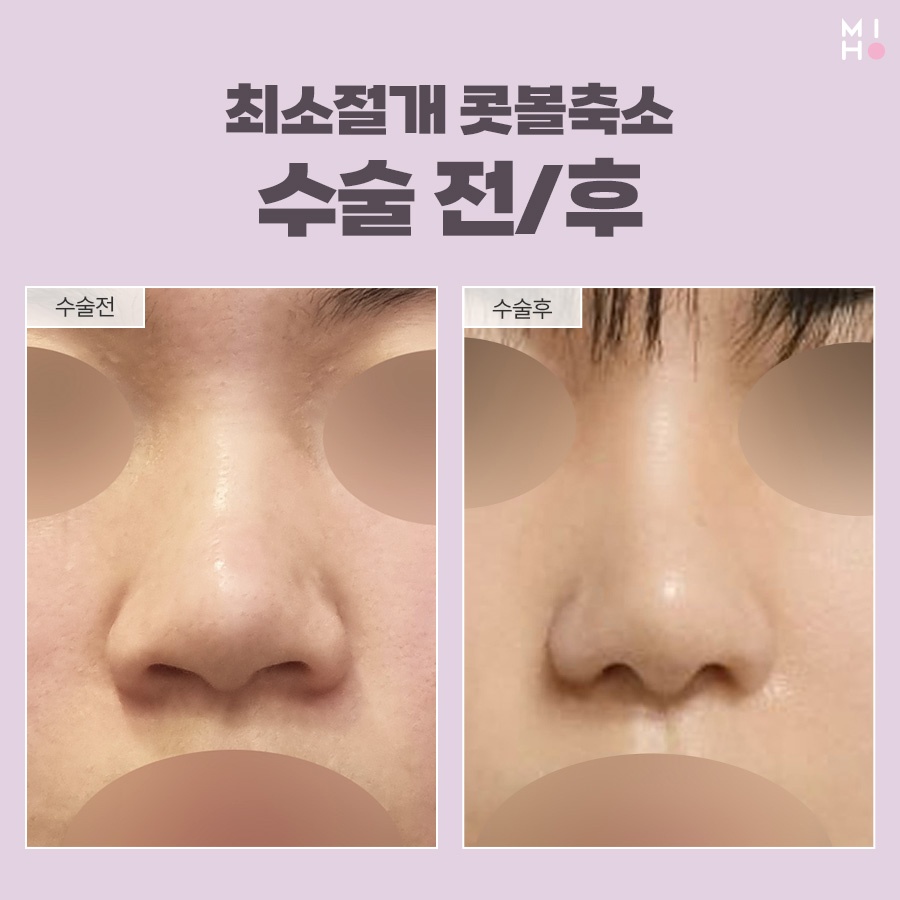
Minimal-incision alar reduction
is generally helpful when the
nostrils are large, the nasal
wings spread widely, or the
shape appears broad rather than
slim and gathered.
It may also be considered when
the overall shape of the lower
part of the nose itself appears
blunt.
In addition to the fact that the
incision area is small and begins
on the inside, making it difficult
to see while allowing for a
natural-looking result, you should
carefully consider that a certain
recovery period is still required
and that an incision is ultimately
made.
If you do so, you should be able
to find a clinic that can provide
a method and plan suited to you.




Previous image
Next image