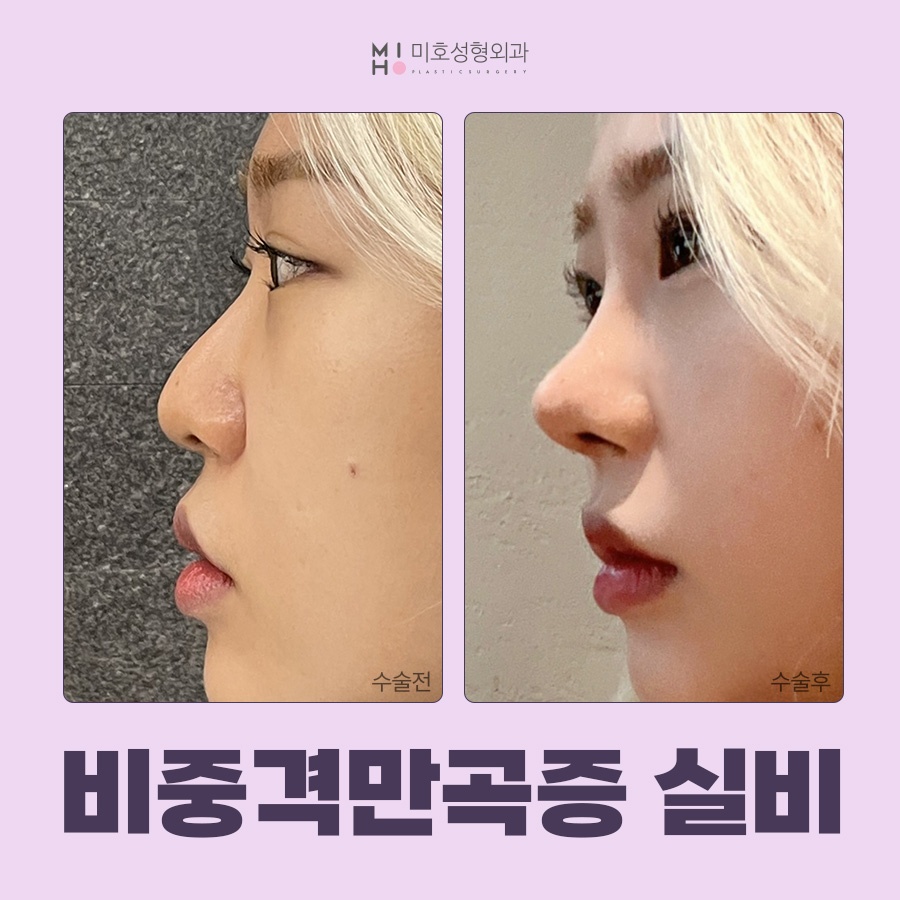
In addition to smelling,
the nose plays the important
role of breathing.
When a problem develops
inside the nose and makes
breathing difficult,
quality of life can be
significantly reduced.
The most common case
is a deviation of the
cartilage inside the nose.
When the cartilage known as
the nasal septum becomes deviated,
the size of the two nostrils differs.
After breathing only through
the wider nostril for a while,
it becomes overloaded, and the
mucous membrane can swell and
become blocked as well.
If you are suffering from
nasal congestion, a runny nose,
headaches, or snoring,
it is advisable to improve
the condition, even with the
help of actual-expense coverage
for a deviated septum.
Hearing that a surgical
procedure involving an incision
is required can understandably
make you feel frightened.
Compared with conservative treatment,
the recovery period is longer
and the cost is higher,
so many people hesitate.
Even though the procedure is
performed to treat a condition,
many people also worry that it
may be regarded as cosmetic and
therefore not covered by insurance.
However, if the requirements are met,
you may receive actual-expense insurance
benefits for a deviated septum and
resolve the discomfort at a
relatively low cost.
First, let us look at the
requirements for actual-expense
coverage for a deviated septum.
Actual-expense insurance is insurance
that can reimburse part of the costs
paid for outpatient or inpatient care
due to illness or injury.
If an abnormal structure inside
the nose is the cause of a condition
and treatment is required, insurance
coverage may be available.
If chronic sinusitis or maxillary
sinusitis is caused by a deviated
nasal septum, nasal valve stenosis,
nasal polyps, or similar conditions,
making surgical treatment unavoidable,
part of the cost may be covered.
However, please be aware that procedures
such as raising the nasal tip with
remaining cartilage or improving a
crooked nose may be excluded.
What, then, is a deviated septum,
and what problems can it cause?
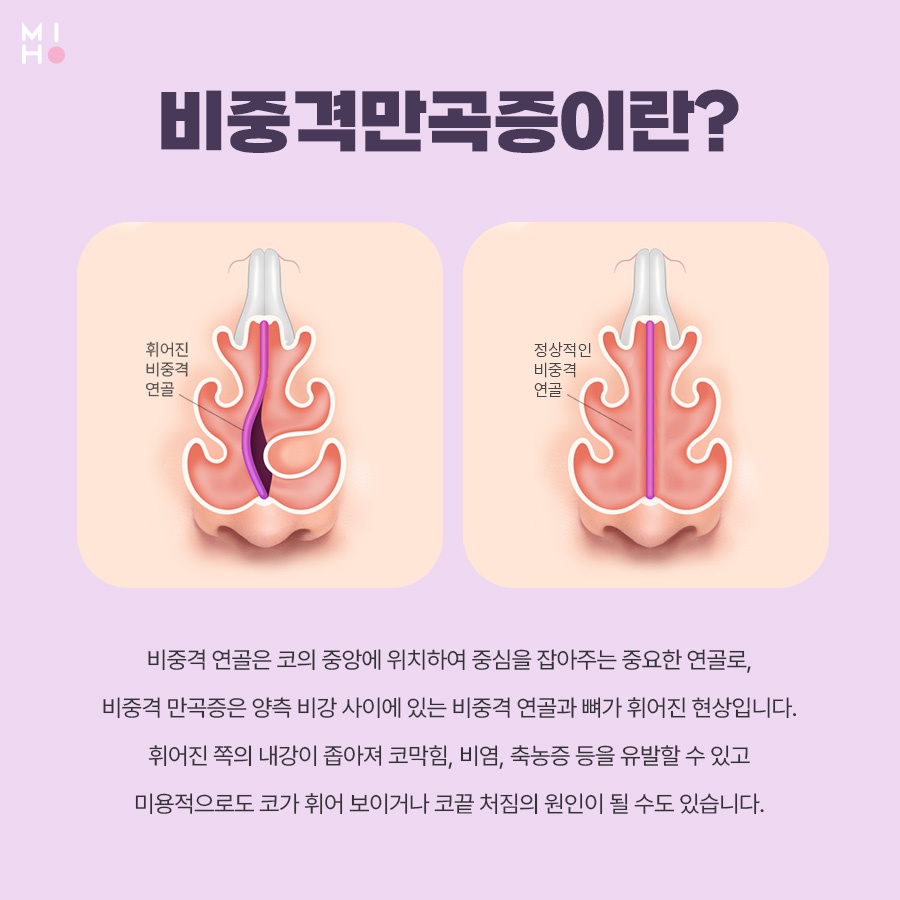
At the exact center of the nose
is cartilage that serves as a pillar.
Since it functions as a pillar,
it would normally be straight,
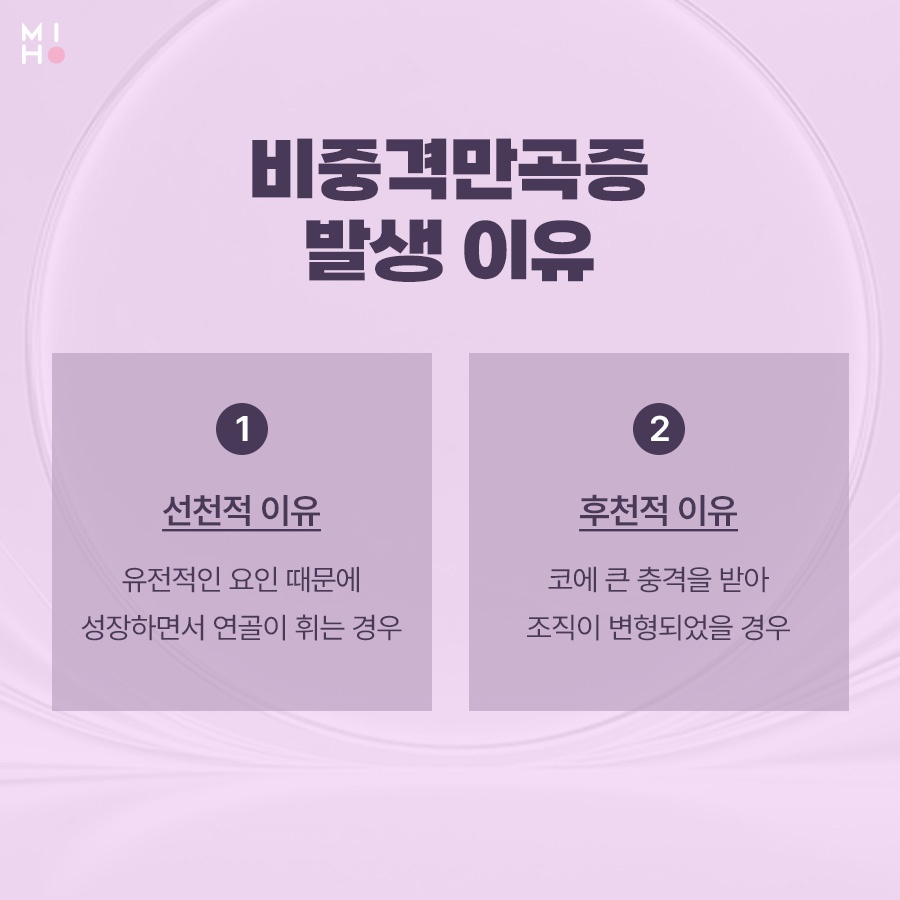
but if it curves and becomes deviated
due to congenital or acquired factors,
it is referred to as being “deviated.”
It is an extremely common condition,
present in more than half of adults
in Korea.
However, simply having this condition
does not necessarily mean that
treatment is required.
When the deviation is severe,
it may make the nose appear crooked.
In particular, a significant difference
in the size of the two nasal passages
often leads to various
ear, nose, and throat conditions.
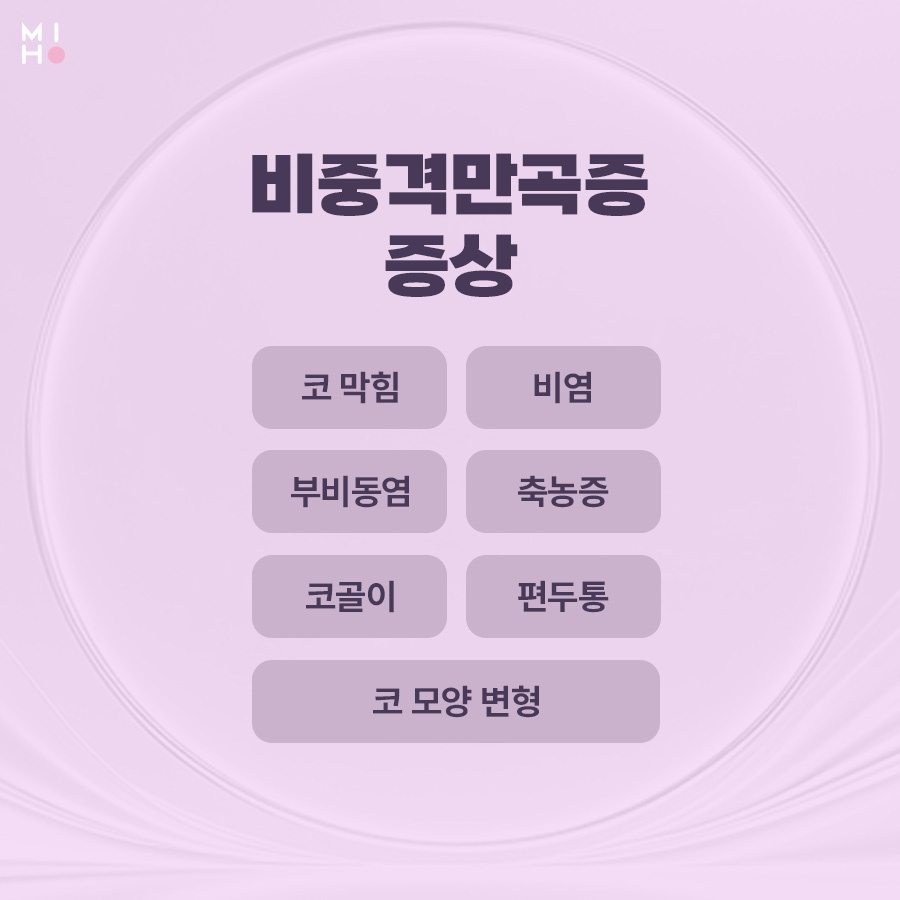
The most common problem is nasal
congestion, because air passes through
only one nostril, significantly reducing
the amount of oxygen entering.
This can gradually lead to a runny nose,
snoring, headaches, and reduced
concentration.
Sleep apnea caused by nasal congestion
can have a serious impact on life,
so the condition should be corrected,
even with the help of actual-expense
insurance coverage for a deviated septum.
The symptoms mentioned above do not
necessarily mean that the nasal septum
is deviated.
Nasal valve stenosis or another
structural abnormality may also
be present.
Because the cause cannot be clearly
determined from appearance alone,
our clinic performs various examinations.
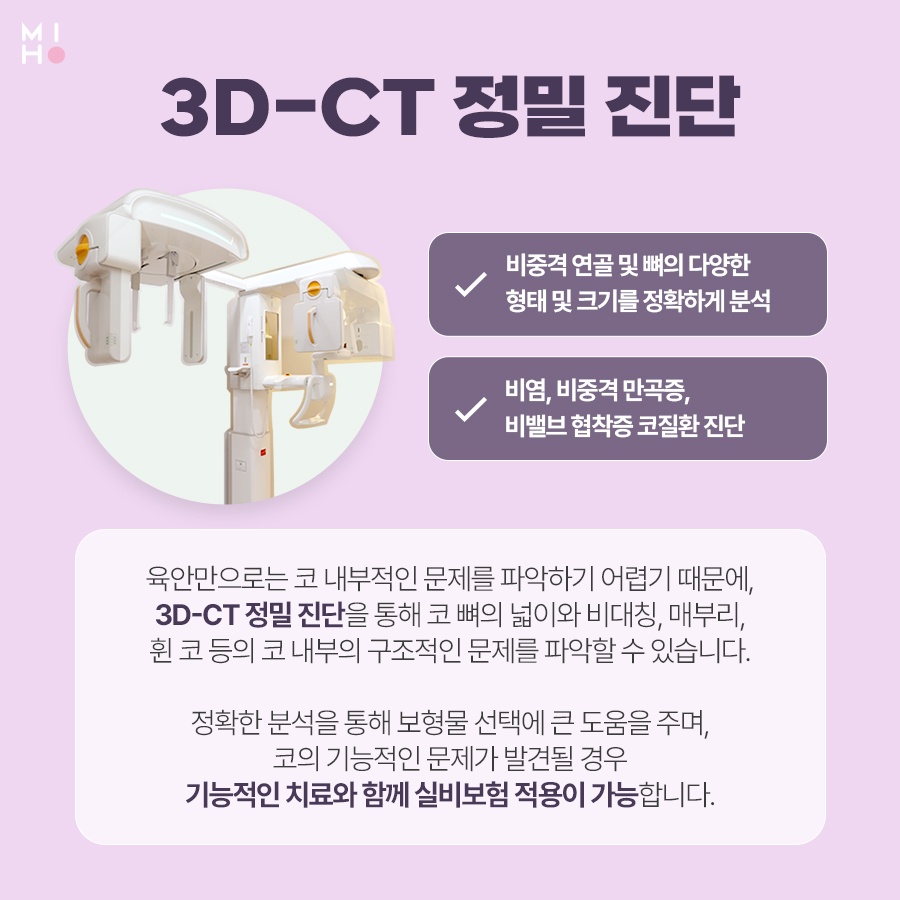
First, we use an endoscope to assess
the degree of narrowing in the nasal
passages, and then perform a 3D CT scan
to examine the internal structures
in detail.
If the cartilage deviation is minor,
medication or conservative treatment
may improve the condition.
However, if the deviation is severe
and no improvement was seen with
previous treatment, the structure itself
needs to be corrected.
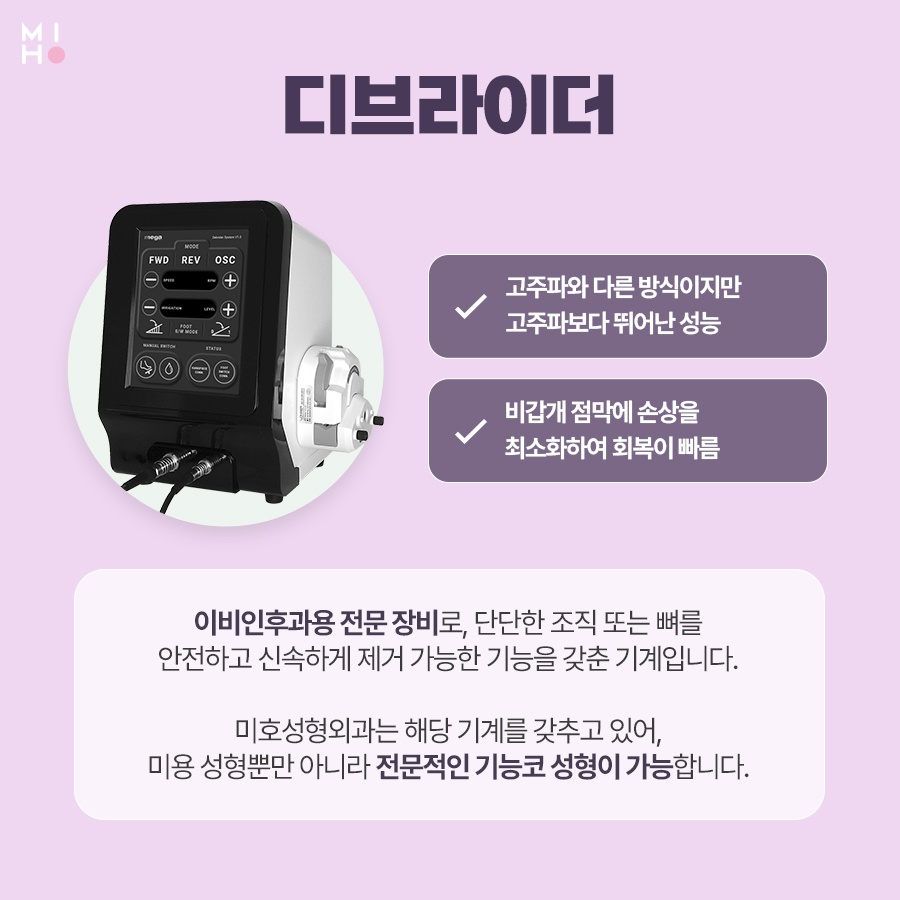
During correction, either a complete
incision or a partial incision is selected
according to the degree of cartilage
deviation.
If the nasal septum is severely deviated
and difficult to correct, a complete
incision is performed.
Nasal congestion may improve after
this treatment, but please be aware
that a runny nose caused by allergies
or a common cold may continue.
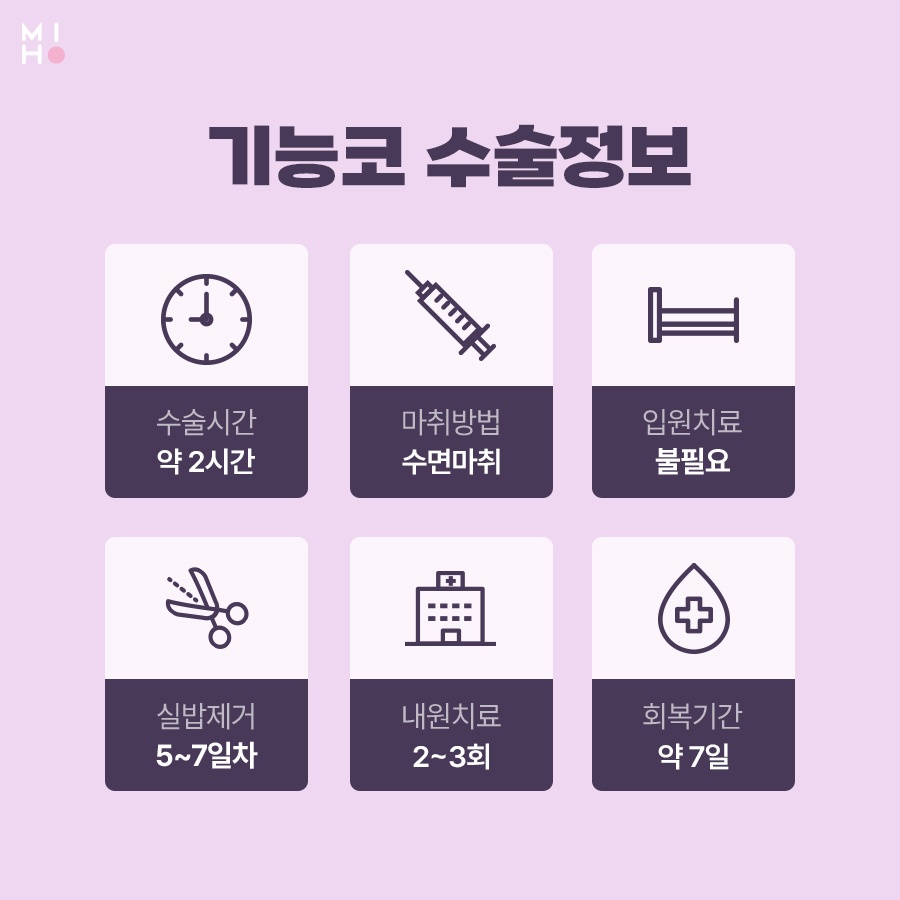
A nasal packing is placed inside the nose
to control bleeding and is kept in place
for two to three days. During this time,
you will need to breathe through your mouth,
and your nose may appear larger than usual.
The cost of rhinitis surgery is determined
differently according to the diagnostic
classification of Functional Type 2 or
Functional Type 3.
This includes the costs of examinations,
the equipment and medications used during
treatment, and follow-up care.
However, additional options may be charged
depending on the institution.
If you are considering actual-expense
insurance coverage for a deviated septum,
you should check in advance whether the
estimated costs and treatment items are
eligible for insurance processing.
You can also contact your insurance company
with the diagnostic code to find out whether
coverage is available.
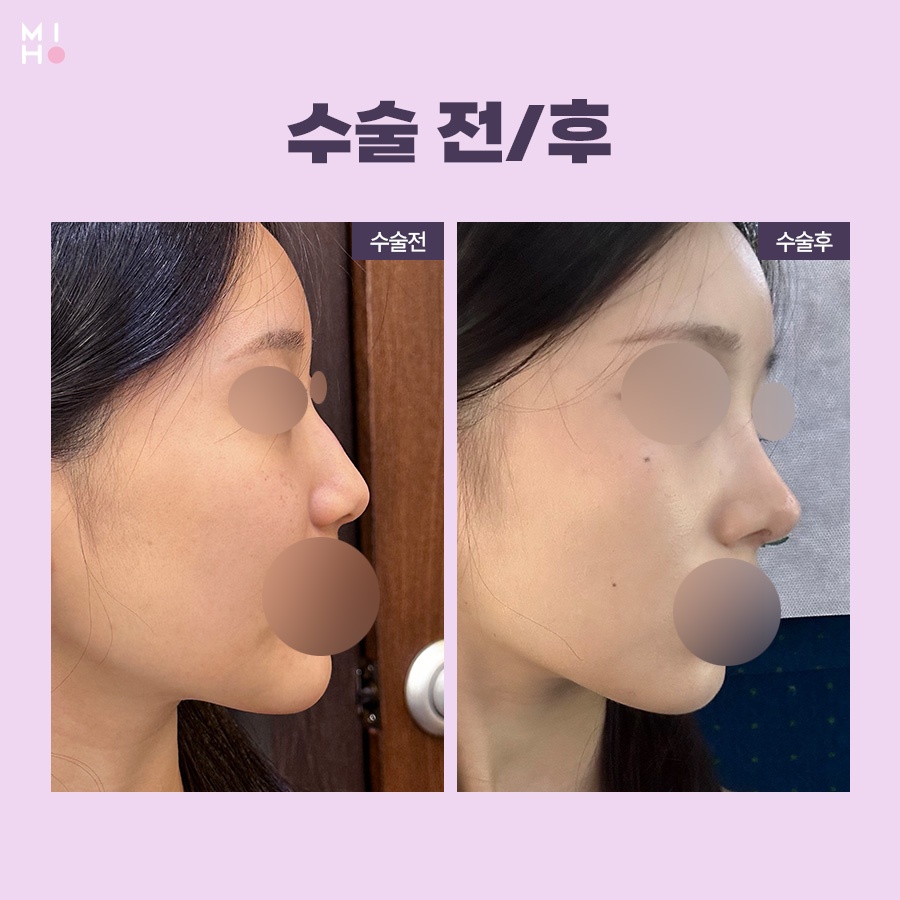
The recovery period is
approximately one to two weeks.
The nasal packing is removed after
two to three days, and the stitches
are removed after one week.
Because there is a risk of infection
before the incision has healed,
it is very important to keep the wound
clean and properly cared for.
If tissue was taken from the ear,
ribs, or another area for grafting,
that area also needs to be dressed.
Until the corrected area has healed,
you should rest and avoid impacts
or strong pressure.
If you want to reduce swelling quickly,
alternate cold and warm compresses
and avoid bending your head down.
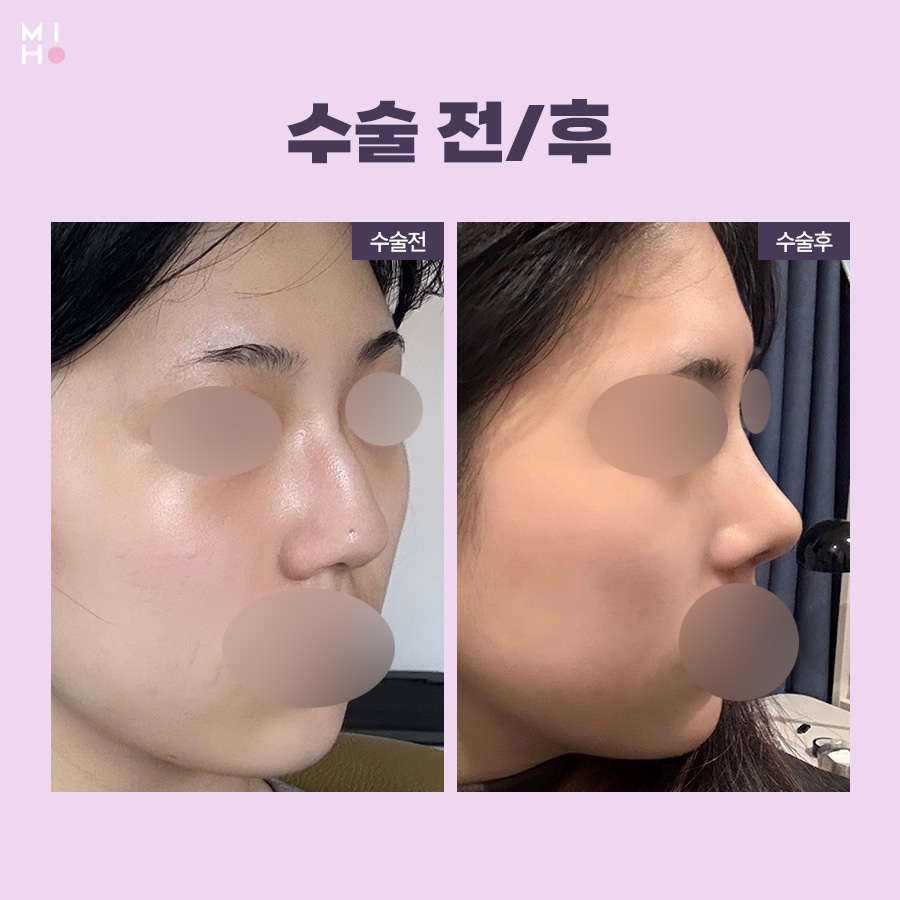
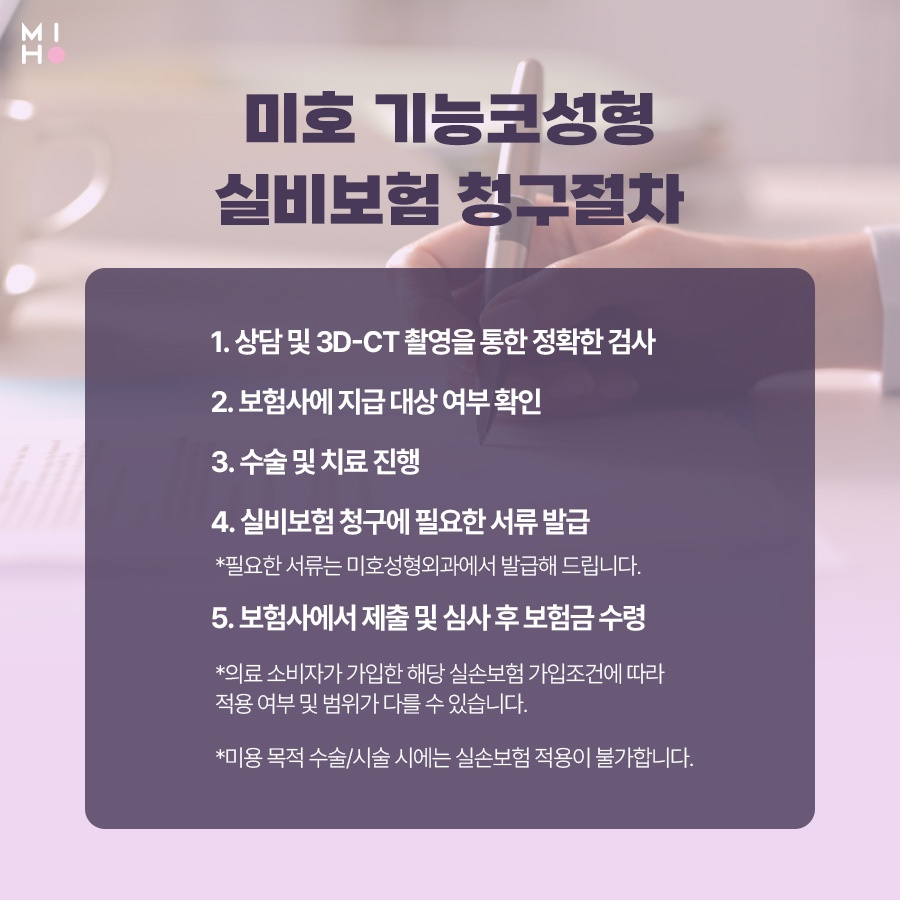
Because the processing of actual-expense
insurance claims for a deviated septum
differs by insurance company, it is best
to receive confirmation in advance
before proceeding.
If you wish to be reimbursed for part
of the cost after treatment, carefully
collect and submit documents such as
the treatment record, medical opinion,
and receipts.
Nasal congestion may not seem like
a major problem right now, but the
longer it is left untreated, the more
various complications it may cause
and the more it may reduce quality of life,
so correction is advisable.
If you suffer from a runny nose and
nasal congestion throughout the year,
regardless of allergies, or if there has
been no improvement despite taking
medication and undergoing conservative
treatment, address the underlying cause.



Previous image
Next image