The nose, commonly described as being
located in the center of the face,
is considered a major feature
that determines the overall
appearance.
But which part is more
important here—
the nasal bridge,
or the tip and nostrils?
Recently, many people
have been focusing on the latter.
No matter how prominent
the bridge of the nose is,
if the nostrils spread widely,
more attention is naturally
drawn to that area.
This shape is also called
a “bulbous nose,”
and many people actually
feel self-conscious about it.
As a result,
inquiries about nasal tip
cartilage suturing have also
been increasing recently.
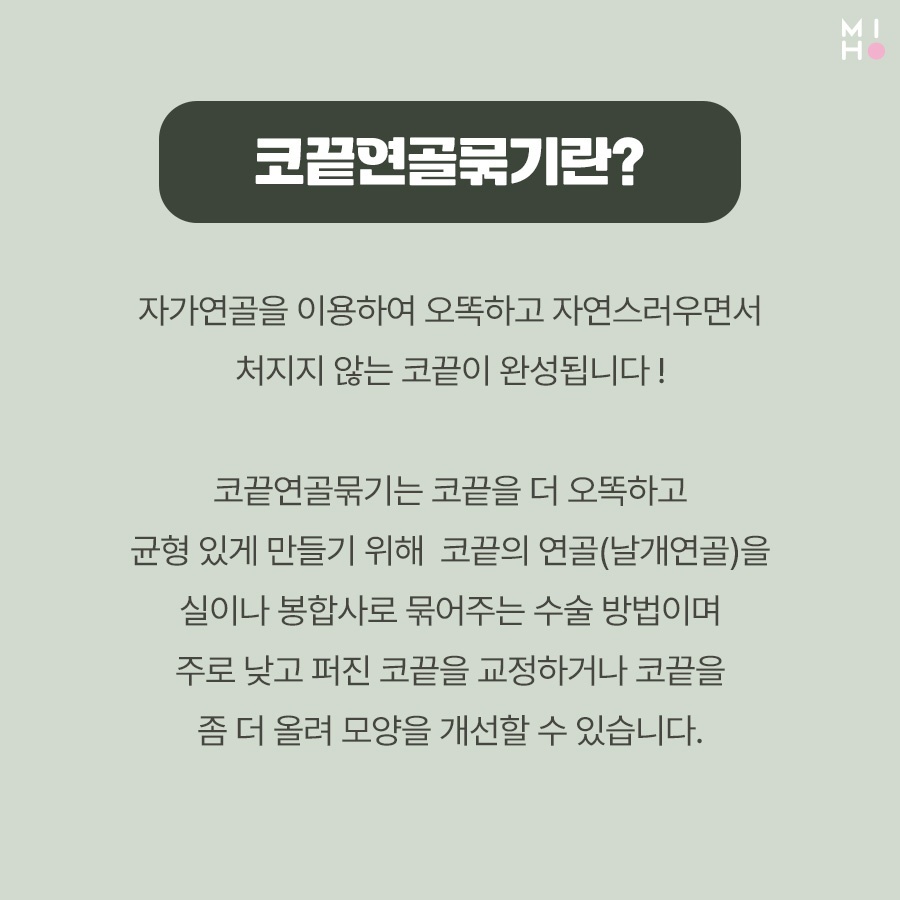
There are several ways
to change the shape of
the nostril area.
They are broadly divided
into two methods: bringing
the cartilage together using
sutures, and reinforcing it
with a support structure or
implant.
The former is called
nasal tip cartilage suturing
or the suture method.
Compared with the latter,
it is true that this method
is less likely to produce
a dramatic change.
However, when used appropriately,
it can adjust the shape of the
nostril area or rotate it by
a subtle angle.
It is particularly often chosen
when the cartilage is relatively
small and weak, or when a more
natural change is desired.
One of the areas where nasal tip
cartilage suturing is widely used
is the correction of a nose that
appears round and spread out—in
other words, a bulbous nose.
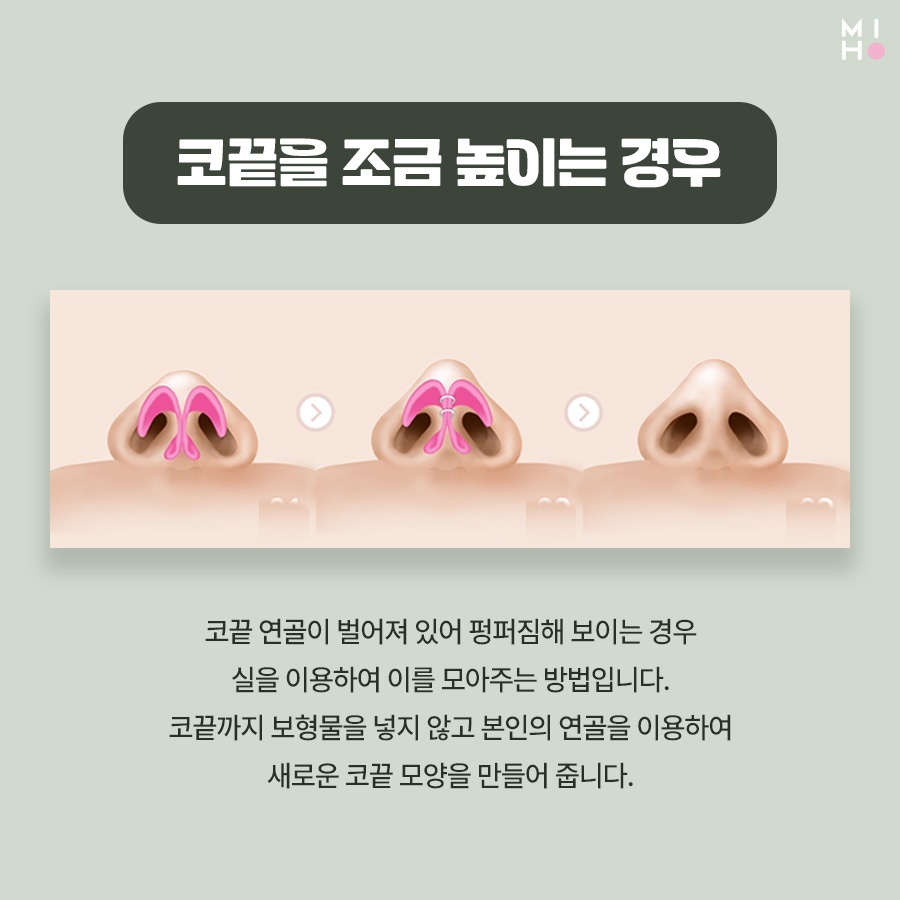
The cartilage in the nostril area
is basically divided into two sides.
It resembles the shape of
a butterfly spreading its wings.
The wider this separation is,
the wider and rounder the nostrils
are likely to appear.
However, bringing them together
using the suture method narrows
the angle between the separated
parts and can create a more
refined impression.
In such cases, please note that
the lateral crural interdomal
suture method, which brings the
lateral angles together, is also
frequently selected.

When correcting a bulbous nose,
it is more important to create
natural three-dimensional definition
than simply raising the nasal bridge.
Simply making the bridge higher
can actually make the nose look
unnatural.
Therefore, the ideal approach is
to create a natural indentation
slightly above the tip while
reducing the area above the nostrils.
Applying the suture method can help
the three-dimensional definition of
the entire nose come into harmony,
leading to a more natural result.
The fact that no additional implant
is used can also contribute to
creating a natural shape.
The simplicity of the procedure
is also one of the important factors
considered by people seeking
nasal correction.
Nasal tip cartilage suturing generally
has a relatively quick recovery,
so there is no need to be overly
concerned.
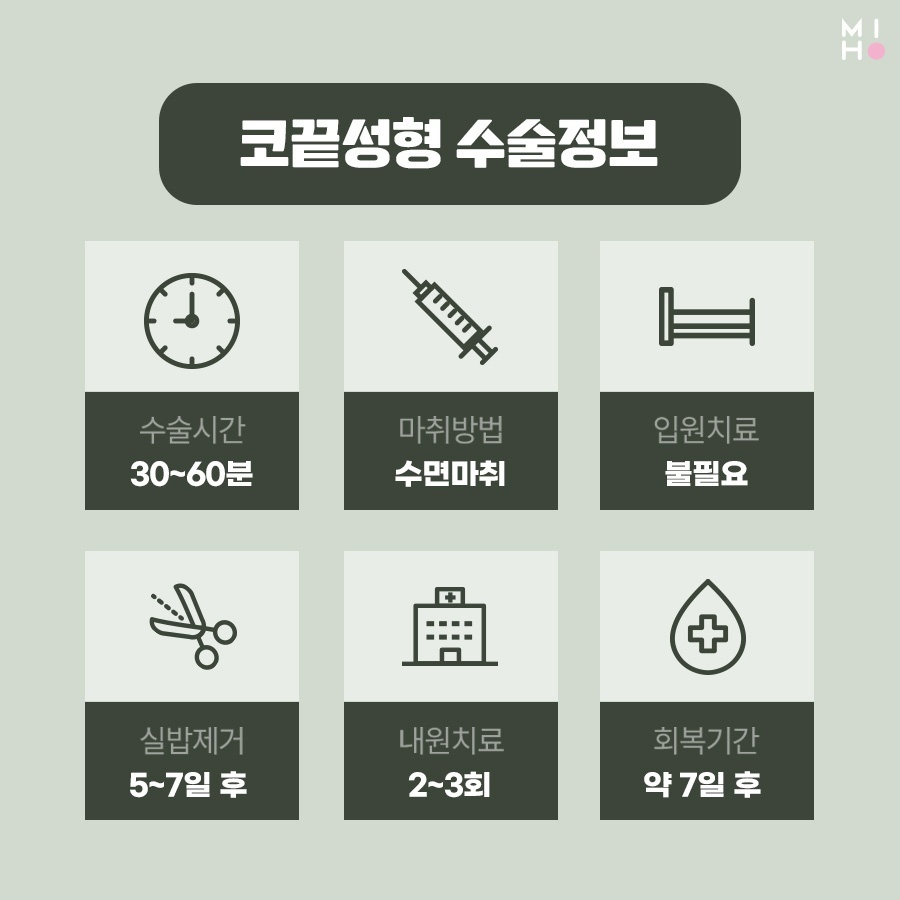
The procedure takes only about
30 minutes to 1 hour,
and hospitalization is not required.
Because sedation anesthesia is used,
concerns about pain can also be reduced.
The sutures can be removed after
5–7 days, and since only two or
three additional visits to the
medical institution are needed,
the overall burden may be limited.
Of course, do not forget that
you must care for the area properly
according to your medical provider’s
instructions.
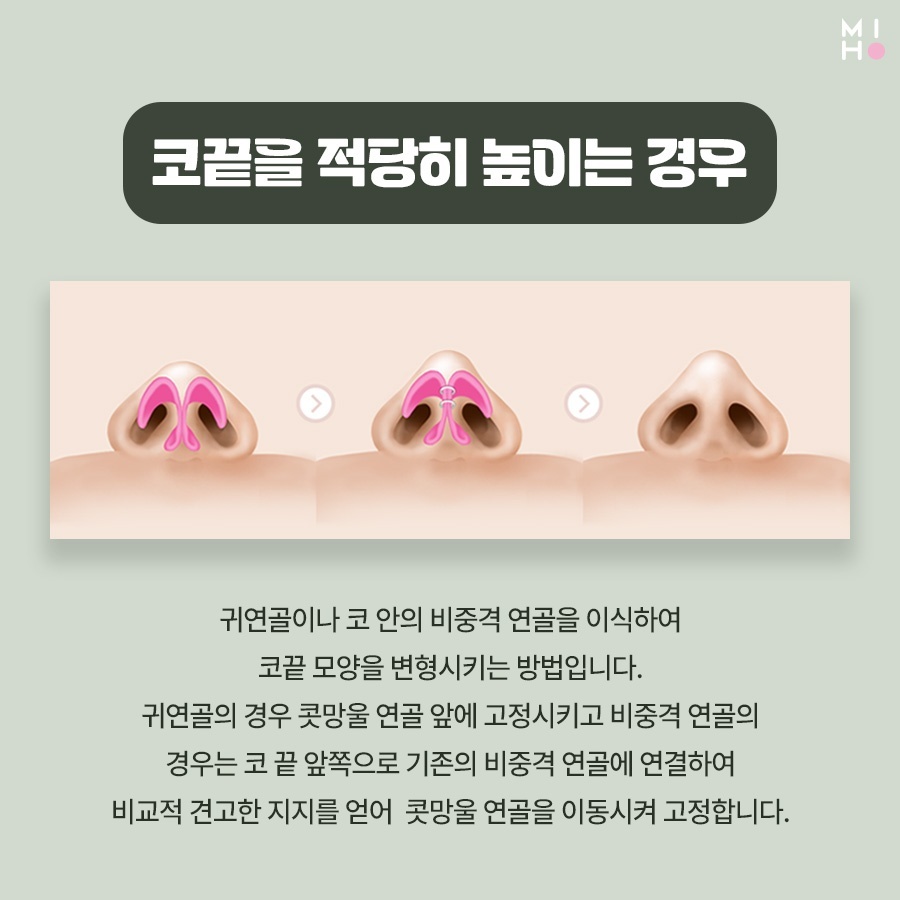
First, you should understand that
it takes some time for swelling to
subside after the procedure.
During this period, it is recommended
to keep your head elevated as much
as possible, even while sleeping.
You should also be careful to avoid
excessive force for a while, and be
aware that blood may stain the treated
area for approximately 1–2 days.
Even if there is discharge, it is better
to gently wipe it away rather than
blowing your nose or placing tissue
or gauze inside your nostrils.
Applying cold and warm compresses
appropriately according to your
medical provider’s instructions may
also help with recovery.
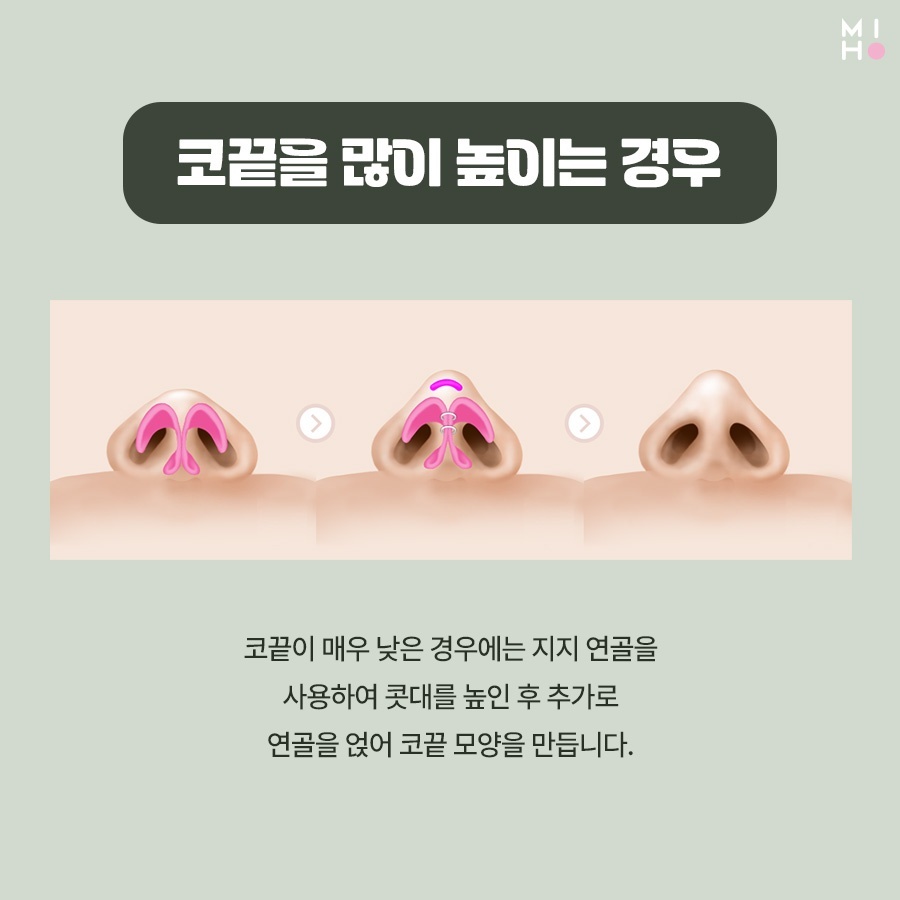
However, it is important to be aware
that unexpected results may occur if
nasal tip cartilage suturing is performed
incorrectly.
If it is done excessively, the nostrils
may appear overly pointed.
Because this can look as though the
area has been pinched with a clothespin,
it is sometimes described as a “pinched nose.”
In some cases, the nasal wings may also
be pulled upward, causing the nostrils to
appear excessively large—a condition
known as alar retraction.
If the cartilage is sutured too close
together, abnormal rotation may occur,
which carries the risk of making the
midface appear longer.
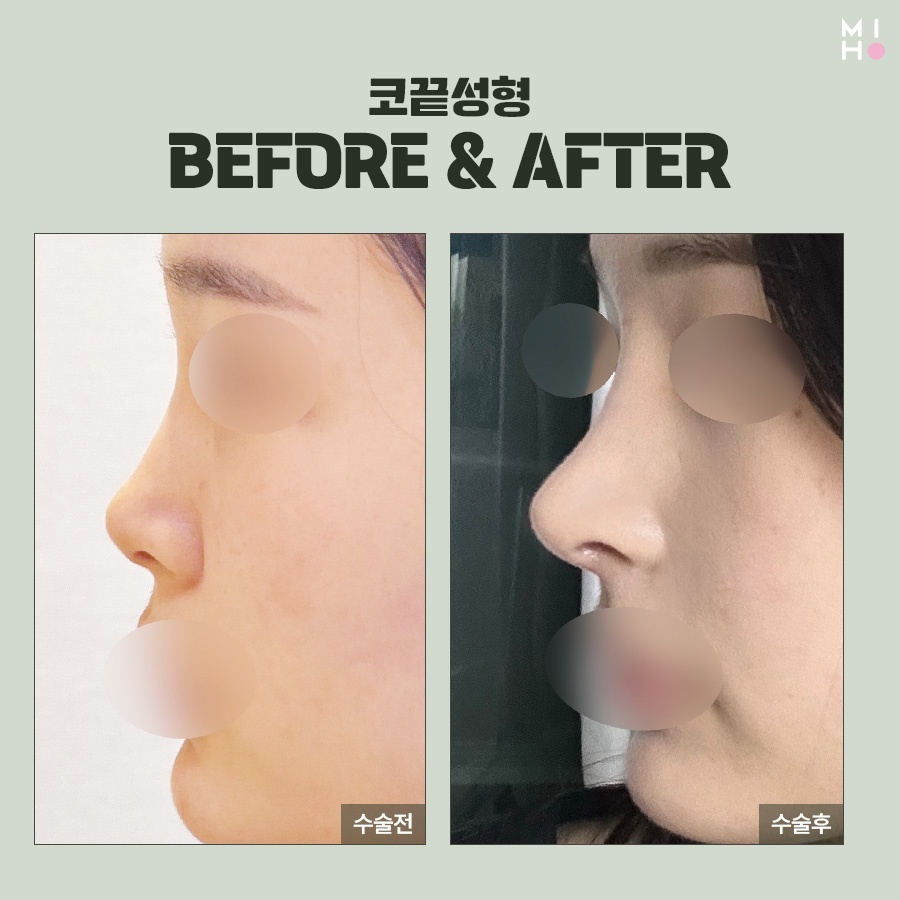
For these reasons, choosing an experienced
medical provider becomes especially important.
There are additional reasons why you should
carefully select a medical institution.
One is that it can provide careful guidance
when choosing the type of suture to use.
Sutures are generally divided into two types:
absorbable and non-absorbable.
The former has the advantage of being naturally
absorbed by the body over time, but its long-term
stability may be relatively limited.
The latter can help maintain the shape over time,
but if removal is desired, the process may be
somewhat more complicated, which can be a drawback.
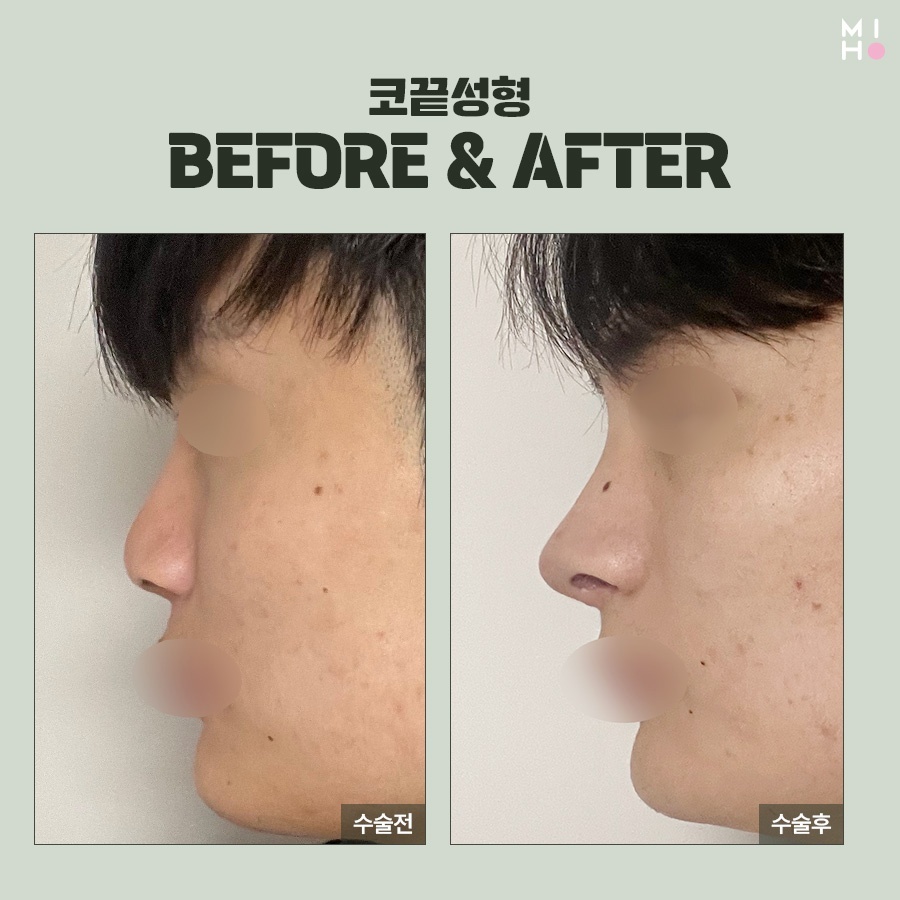
Although the suture method may appear simple
in theory, it actually requires a delicate approach
depending on the individual’s nasal structure and
cartilage condition.
In particular, it is important to carefully analyze
the cause and severity of the bulbous nose, as well
as the strength of the cartilage, before choosing
an appropriate method.
If the nostril area is too weak or there is no suitable
area to suture, it may be difficult to achieve the
desired result with the suture method alone.
In that case, another method of reinforcement may
also need to be considered.
For this reason, it is recommended to find a medical
institution that can provide precise examinations and
detailed guidance.
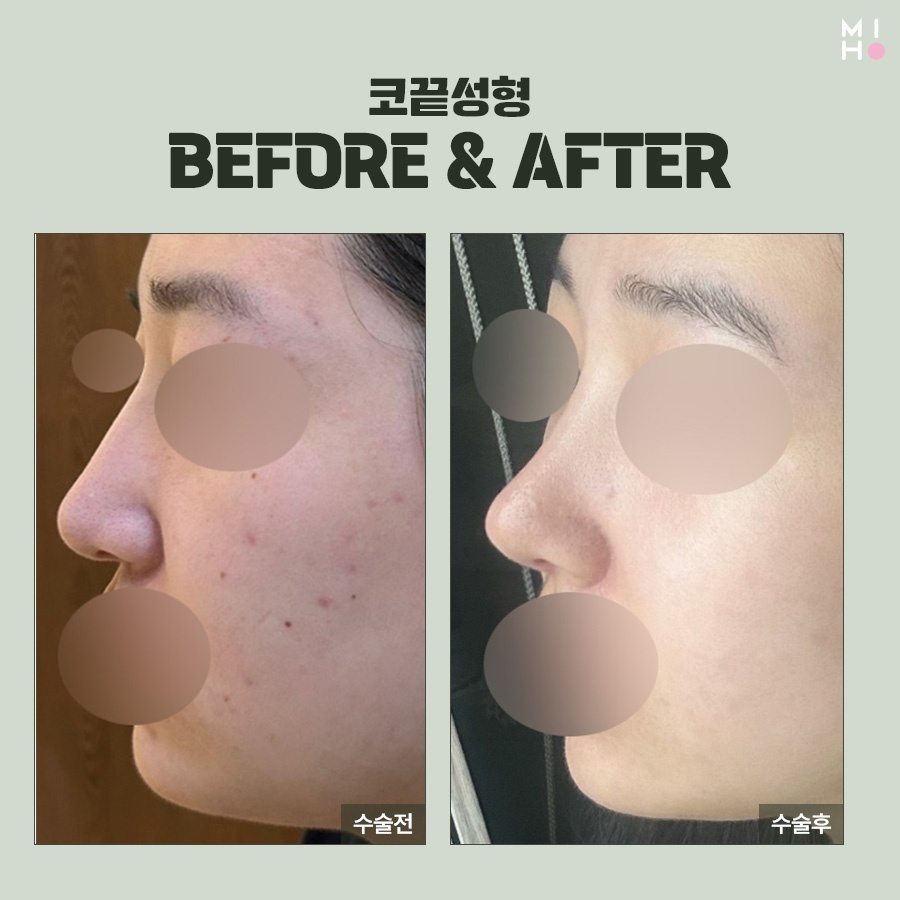
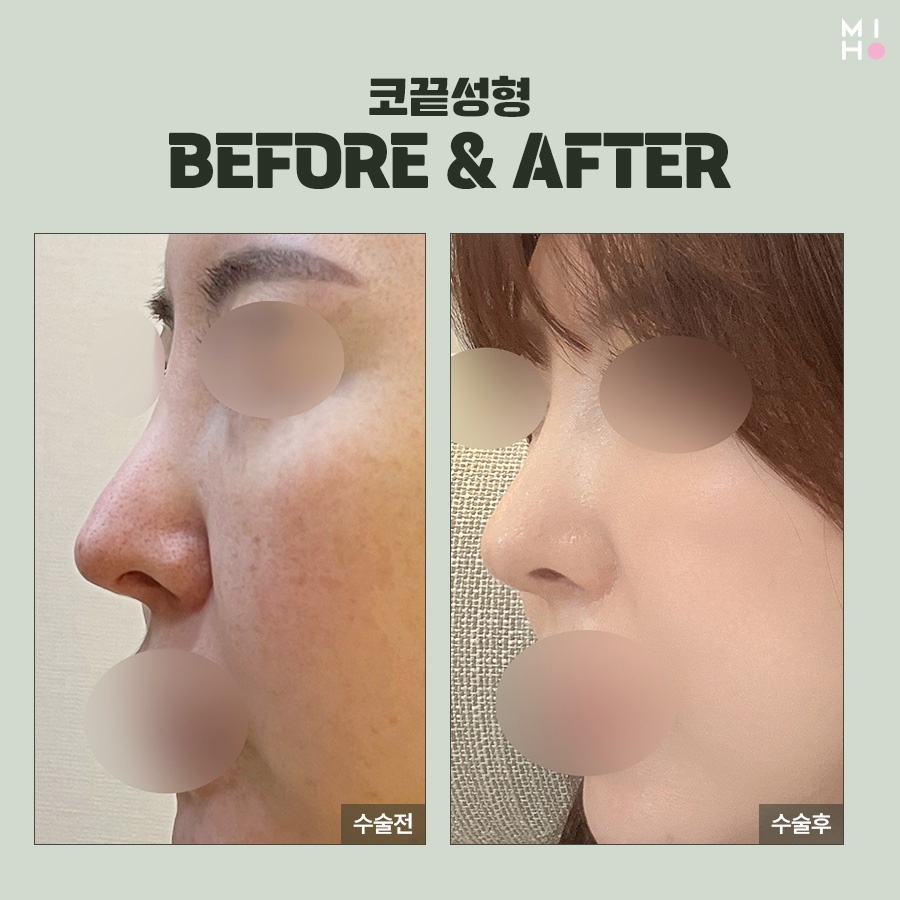
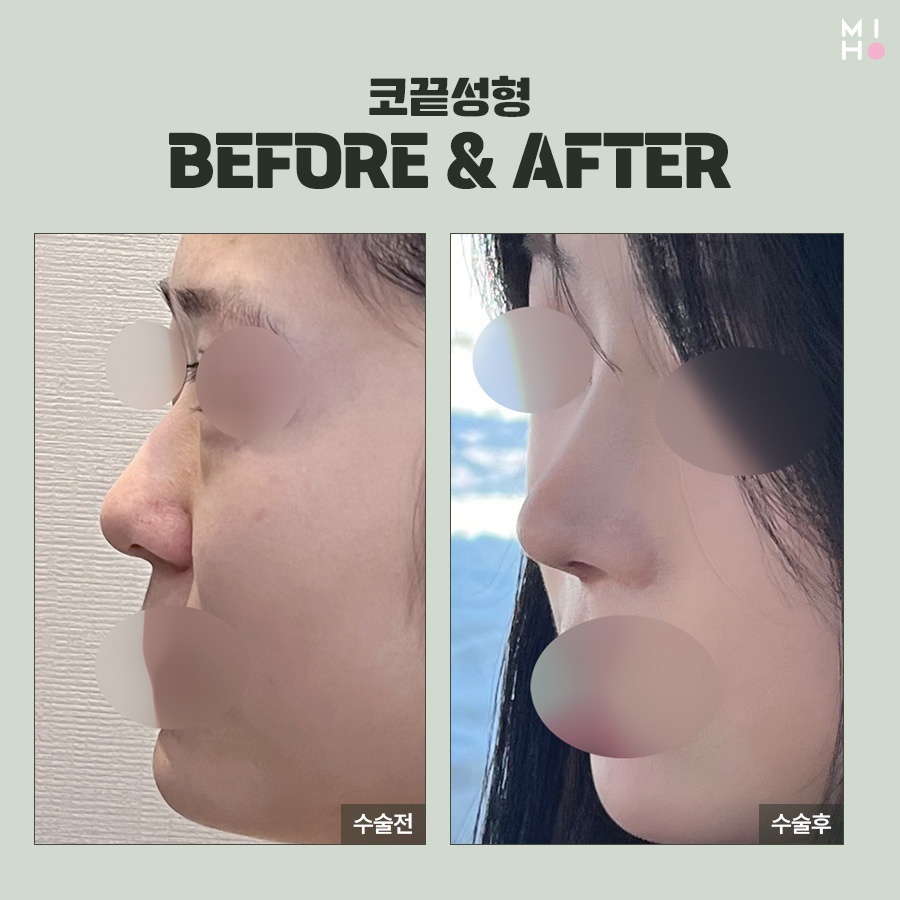
Nasal tip cartilage suturing is a relatively simple
method, but I hope you now understand that the
delicacy developed through extensive experience
is essential.
Rather than simply raising the nasal bridge,
it is necessary to consider the overall balance
to achieve a more natural result.
If you would like to choose an appropriate method
based on your current condition and desired direction,
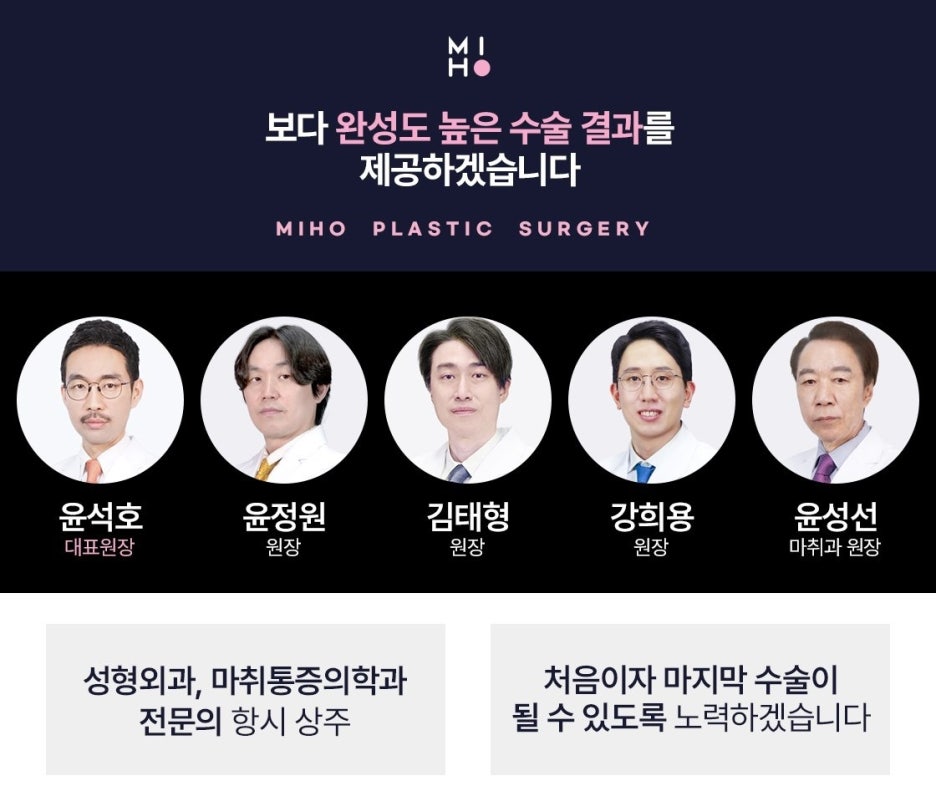
we recommend visiting 미호성형외과, where you can
have a thorough consultation with a trusted medical
provider.
We will guide you toward finding the look you seek
while creating harmony with your individual features,
beyond a simple cosmetic change.
Previous image
Next image