
Koreans tend to have a considerable amount of fat in the upper eyelids,
so many people experience ptosis,
in which the eyelids cover the pupils.
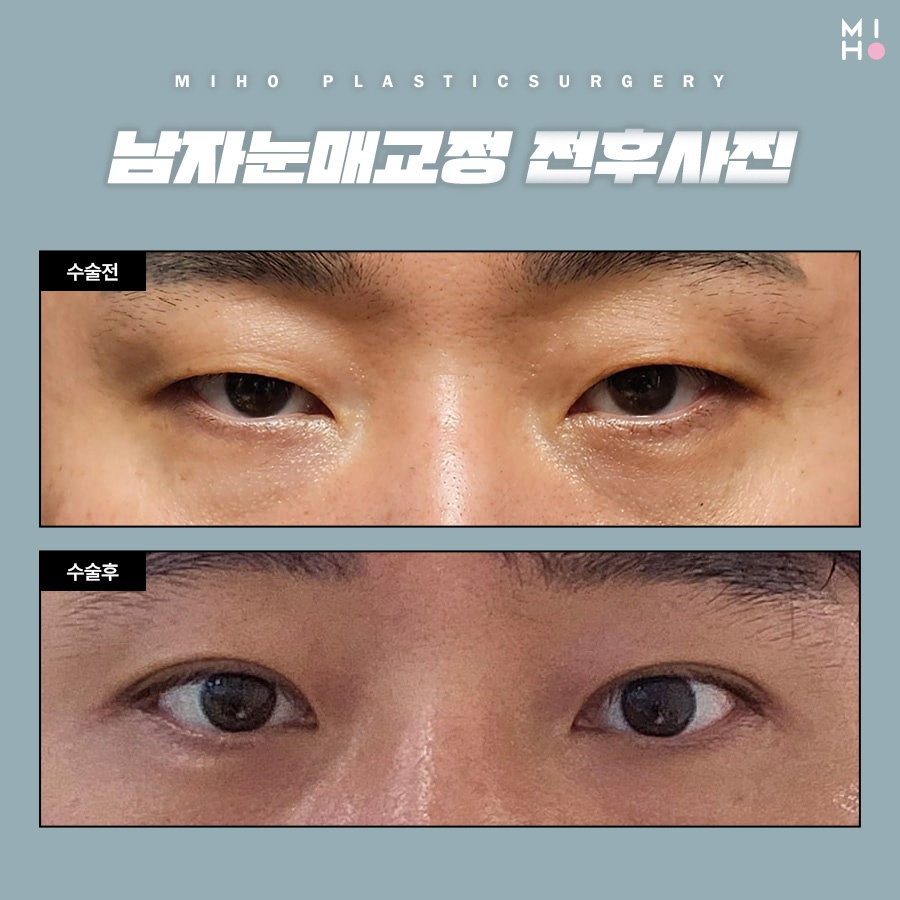
As a result, more people are undergoing male eye shape correction
to enlarge the eyes
and reveal the pupils more clearly.
Today, focusing on the needs of men,
I would like to provide a detailed introduction to
the design differences between monolids, inner double eyelids, and double eyelids,
as well as incisional and non-incisional surgical methods.
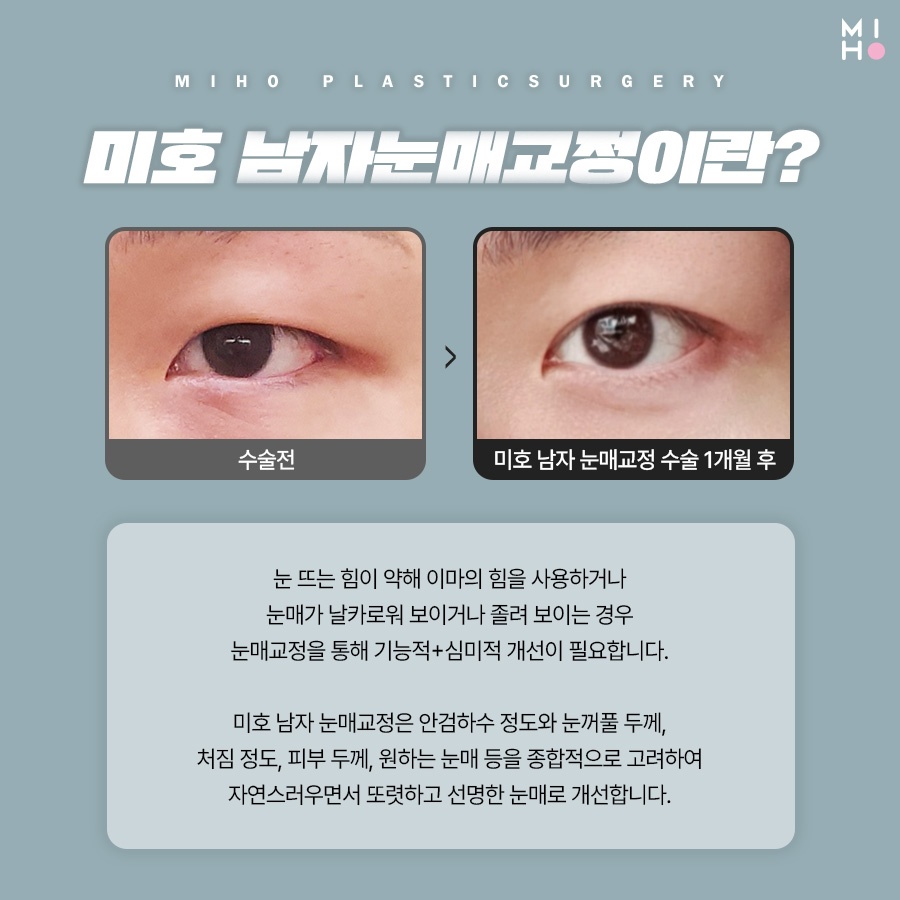
Monolids can be divided into a design with no double eyelid at all
and an inner double-eyelid design,
in which a small crease forms at the outer corner of the eye.
When male eye shape correction is performed with a complete monolid,
it is attractive because it preserves
the characteristically strong impression of a man
while strongly emphasizing a natural appearance.
Considering that very few people can detect signs of surgery
when looking at eyes without double eyelids,
many people also choose the monolid design.
Although no crease forms on the eyelid,
the eyes become larger,
the pupils are revealed more clearly,
and an intelligent impression can be emphasized.
Male eye shape correction that creates an inner double eyelid
maintains an overall masculine image,
but has the advantage of softening the impression
because a small crease is hidden at the outer corner of the eye.
Although they value naturalness and masculinity,
some people want a touch of charm when the inner double eyelid
at the outer corner of the eye becomes visible,
so this design is often chosen by those seeking a contrasting appeal.
The key to inner double-eyelid eye shape correction
is carefully adjusting the height and shape of the hidden crease,
as well as the point at which the crease begins to appear.
If your eyes are horizontally long
or you have been told that your eyes look sharp,
you may also consider creating a double eyelid.
Double eyelids make the eyes rounder
by increasing their vertical length,
giving them a kind and lovable appearance.
There are also various double-eyelid designs,
so naturalness can be emphasized
by actively considering the patient’s facial features
and overall image before applying a suitable shape.
Satisfaction tends to be higher
when the design avoids making the eyes look excessively prominent
and instead emphasizes a kind, gentle impression.
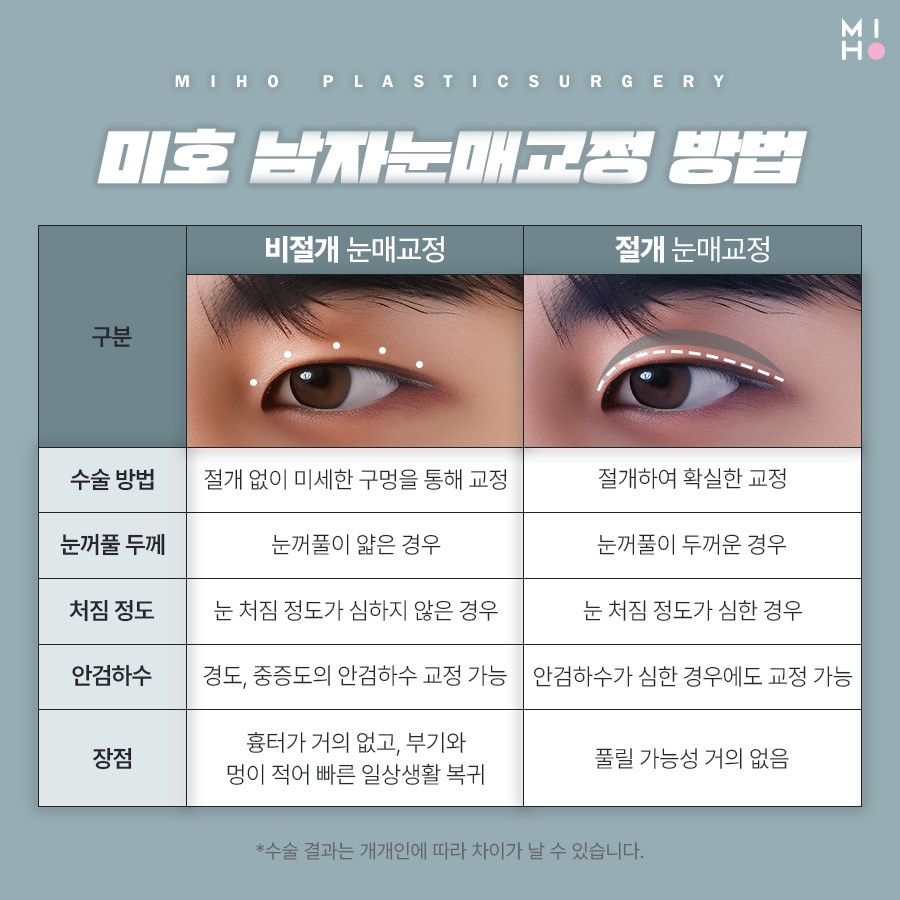
Male eye shape correction surgery
is divided into two types: incisional and non-incisional procedures.
If there is not much fat in the eyelids
and the skin is not excessively thick,
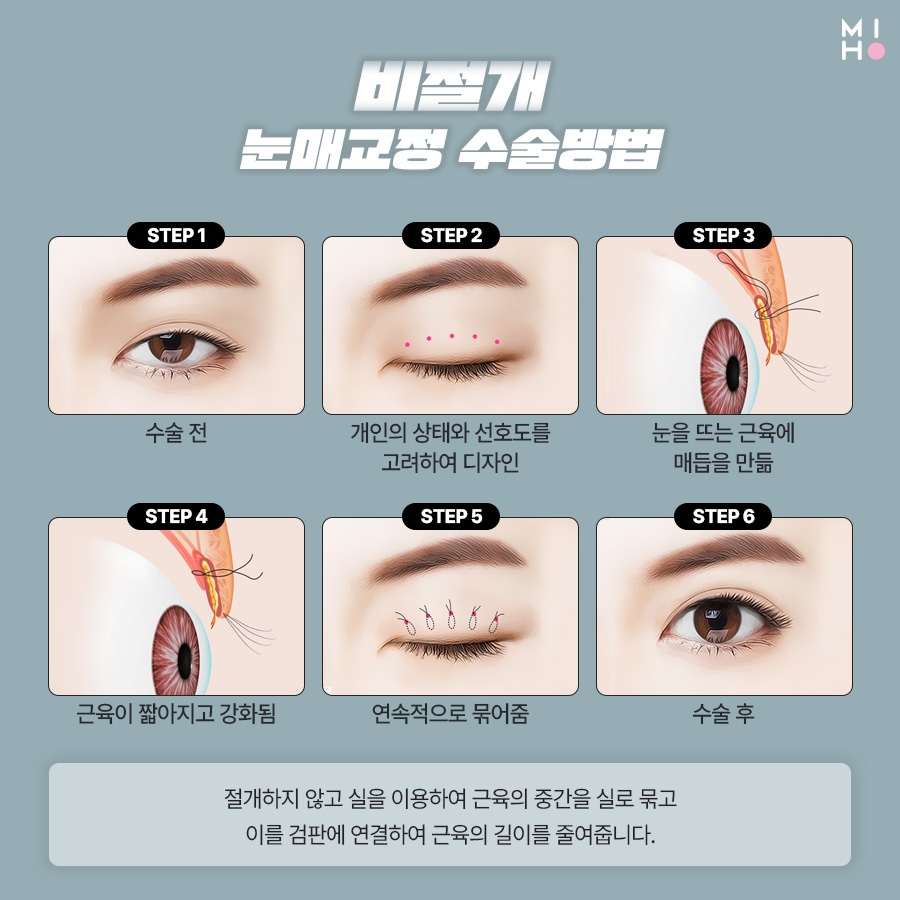
the eyes can be enlarged using a non-incisional method
that creates a small groove inside the conjunctiva
and sutures the muscle.
Because the procedure is performed inside the conjunctiva
without directly irritating the skin,
there is no need to worry about scarring,
and no awkward areas should be visible
even when the eyes are closed.
In addition, because the likelihood of bleeding is low,
swelling and bruising may be minimized,
and the recovery period can also be shortened,
reducing both physical and psychological burdens.
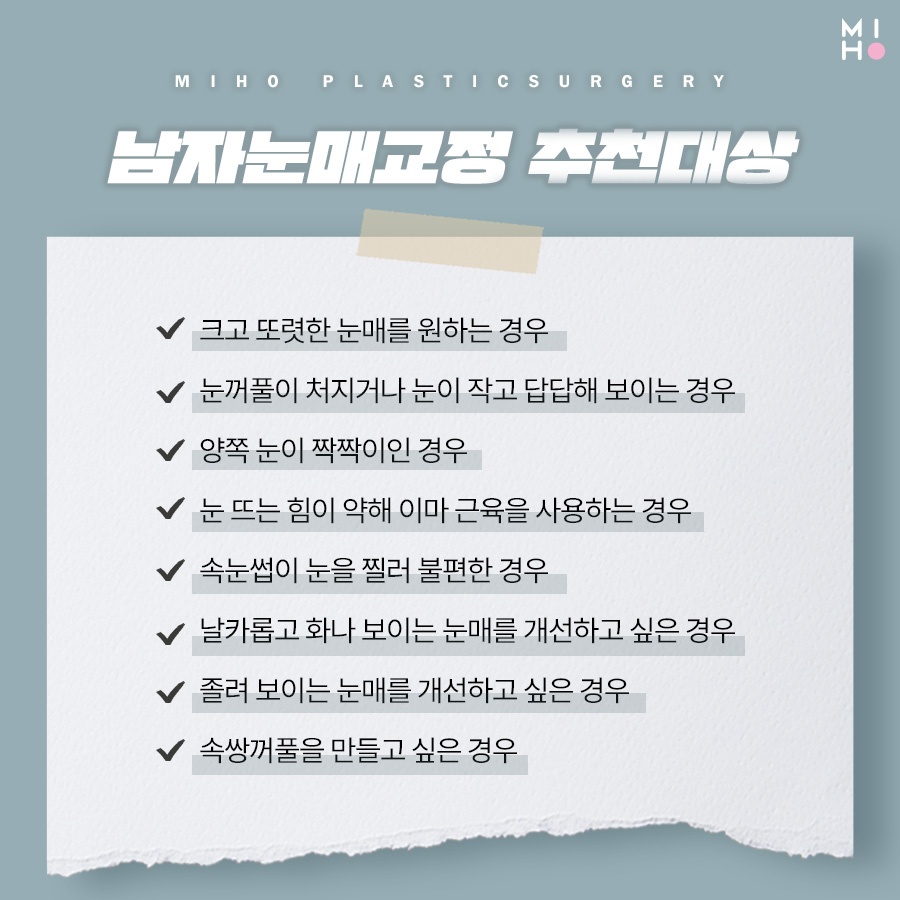
The non-incisional method can be used
for double-eyelid designs as well as monolids.
However, when using the non-incisional method for double eyelids,
small holes are made in the skin,
and knots are tied with the inserted thread.
Because the skin is not directly incised,
there is no need to feel concerned about scarring,
and the eyes can have a natural appearance
when opened or closed.
Since there are fewer signs such as bleeding, swelling, and bruising,
you may be able to return to daily life
after a short recovery period.
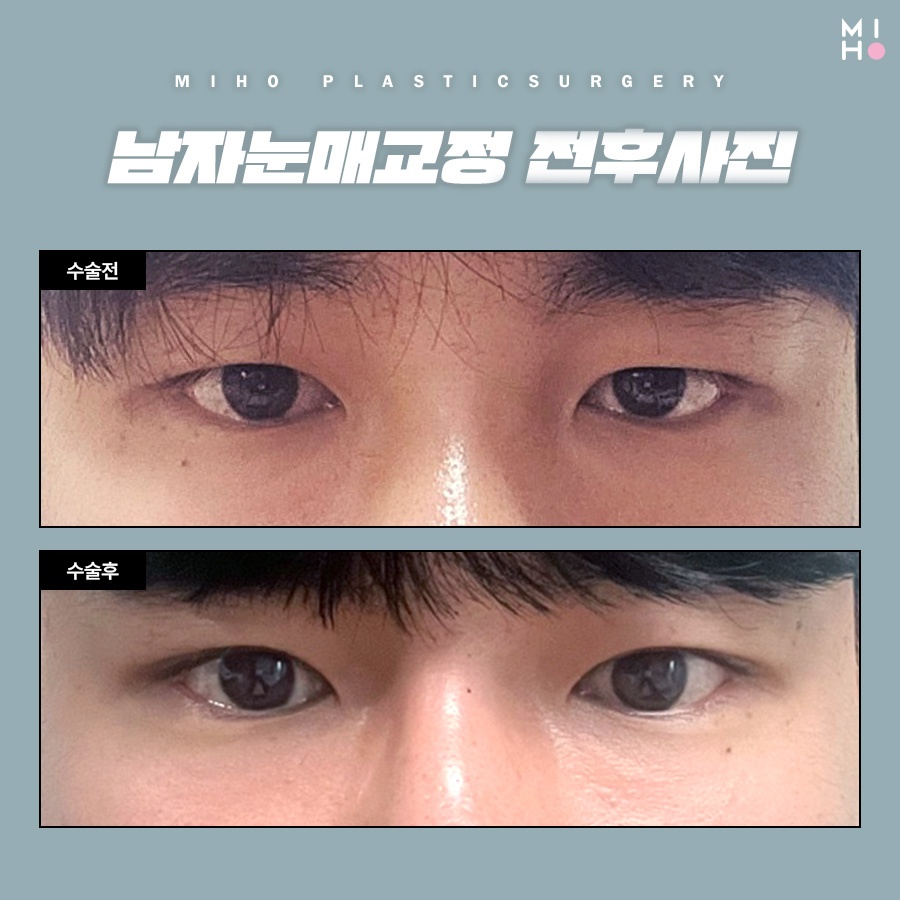
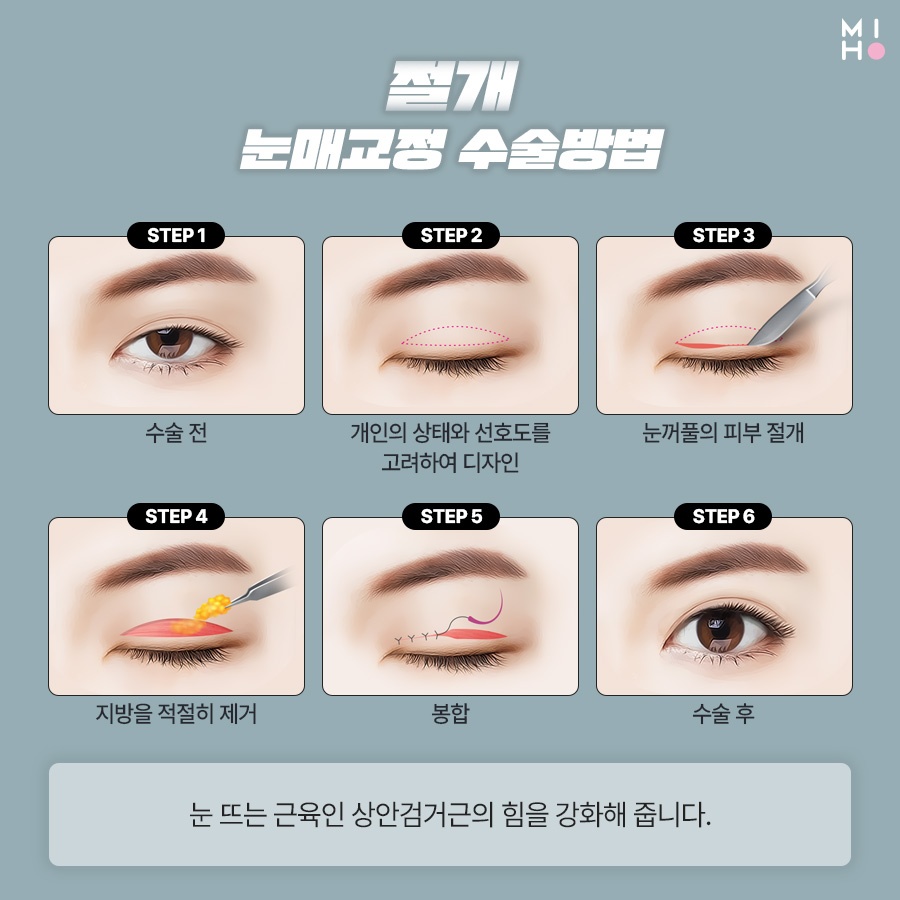
If the eyelids contain a lot of fat and feel heavy,
an incisional method should be used.
After examining the internal structure,
the medical staff may reduce the amount of fat
or remove part of the muscle.
Excess skin may also be removed,
which may be helpful when the eyelids have already become droopy.
Although many people prefer the non-incisional method,
some believe that the incisional method
can produce a higher level of design refinement
because it allows the medical staff to correct the shape of the eyelids in detail.
Therefore, it is difficult to categorically say
which is better, non-incisional or incisional surgery,
and each patient’s individual circumstances and physical condition
must be carefully considered.
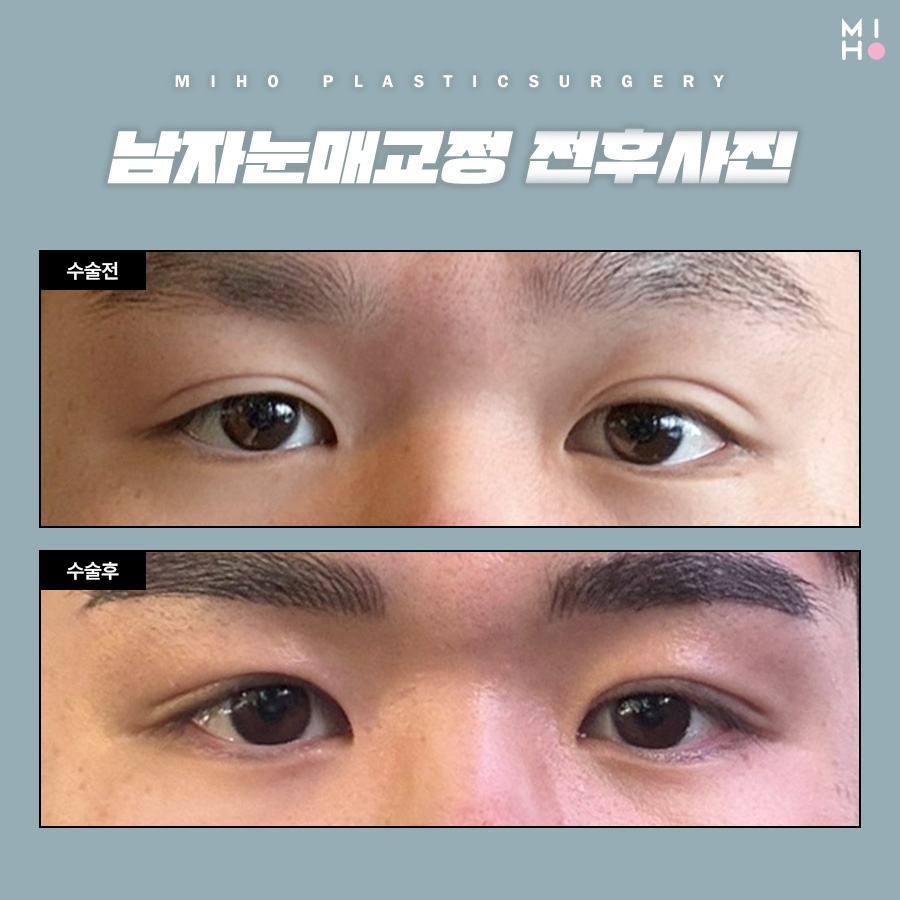
After undergoing male eye shape correction,
you should focus on aftercare
while taking care not to irritate the eyes.
From immediately after surgery through the first three days,
it is important to reduce swelling with cold compresses.
After that, it is advisable to begin warm compresses
to increase blood flow.
Warm compresses may also have a positive effect
in reducing inflammation
or preventing abnormal reactions.
However, you must pay careful attention to hygiene
to prevent water from entering the wound
or infection problems from occurring.
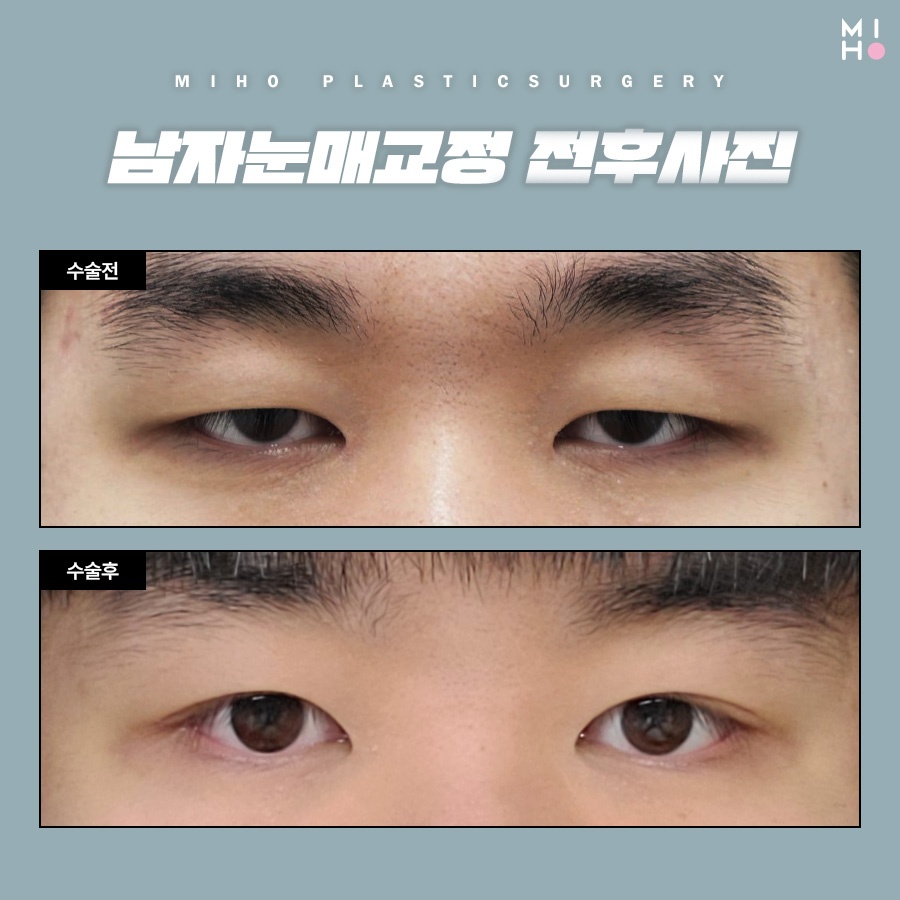
It is also important to take particular care
not to cause physical irritation inadvertently.
You must not rub or touch your eyes,
and even if you feel a foreign-body sensation or discomfort,
you should not force your eyes wide open
or squeeze them tightly shut.
Some patients occasionally misunderstand
and believe that repeatedly closing and opening the eyes
will not strain the eyelids,
but forcibly moving the eye muscles
does not aid recovery.
When putting in contact lenses,
excessive force may be applied to the eyelids,
and cases sometimes occur in which the tissues do not adhere properly.
Therefore, you should also refrain from using contact lenses.
If you have decided to undergo male eye shape correction,
you should check whether an experienced medical professional
will perform the procedure
in a stable surgical environment.
You may feel reassured if you confirm that the facility
has a real-time monitoring system
and can respond promptly to changes
in the patient’s physical condition.
It is also wise to choose a facility
where you can clearly confirm who will perform the procedure
and where the surgical process is recorded on CCTV
to help prevent disputes.
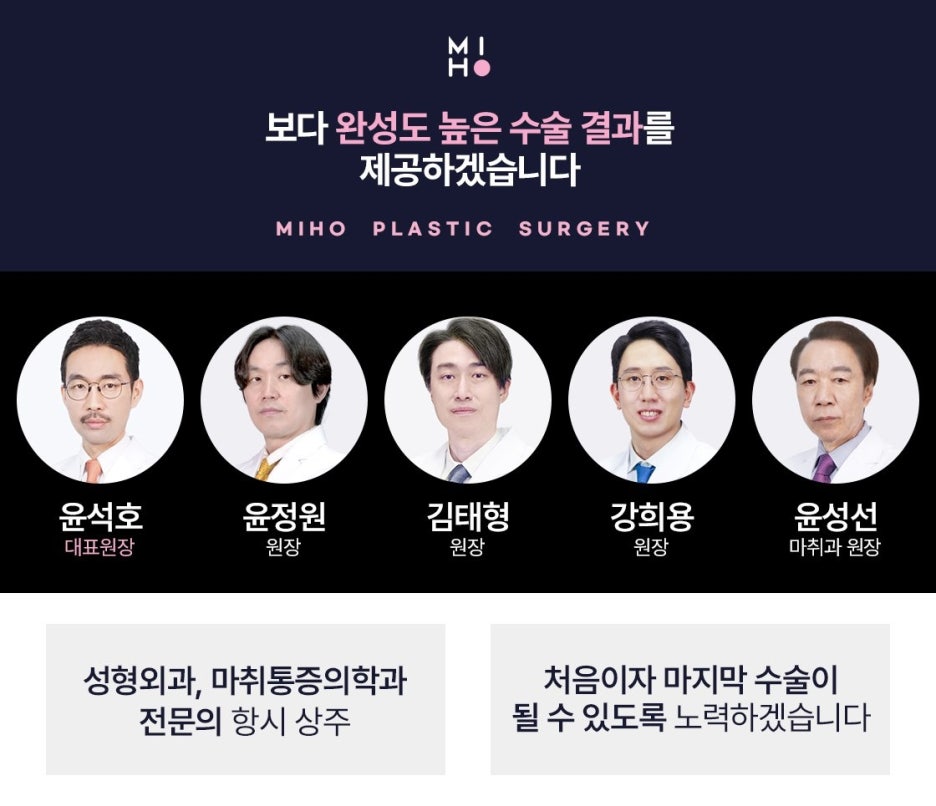
You should also make sure that there is an effective division of responsibilities:
the procedure should be performed by a plastic surgeon,
while anesthesia should be administered by a medical professional
who majored in anesthesiology and pain medicine
and has completed the necessary training.
Finally, rather than leaving the aftercare process entirely to the patient,
you should choose a facility that improves convenience
by providing items such as an aftercare kit,
so that you can expect a smooth recovery.


Previous image
Next image