
The nose, located at the center of the face,
plays a major role in creating
bilateral symmetry and dimension.
As it helps determine a person's overall impression,
it has long received considerable attention.
After the period when
artificial implants such as silicone
and AlloDerm were inserted,
implant-free approaches using
a person's own tissue
began to gain popularity.
�0
The types of autologous tissue include
ear cartilage, which many people are familiar with,
as well as septal cartilage, autologous dermis,
and rib cartilage. In this article,
we will focus on autologous rib cartilage rhinoplasty.
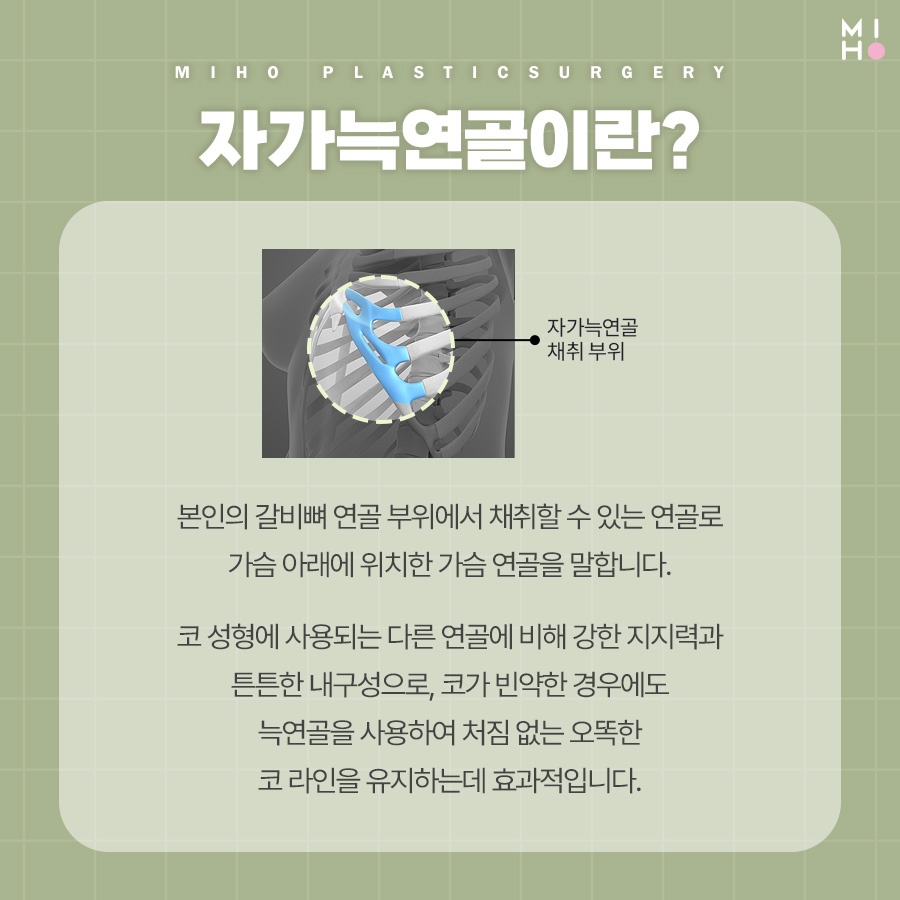
This procedure refers to an approach
that uses tissue from one's own body
or tissue donated by another person
instead of artificial materials such as silicone.
Because part of one's own body
is processed and inserted,
the risk of immune or inflammatory reactions
is low, and it also has the advantage
of producing a natural appearance.
�0
Because of these advantages,
many people choose it
when attempting surgery again
after an unsuccessful first procedure.
In particular, autologous rib cartilage rhinoplasty
is an approach recommended for people
who want to raise the bridge of the nose
while maintaining both a natural appearance
and firm support.

Although the proportion of people
receiving autologous rib cartilage rhinoplasty
has increased recently,
this approach is not always
the right answer.
Artificial implants may instead be suitable
for people who prefer a more dramatic appearance.
On the other hand, there are also cases
in which rib cartilage is unavoidable.
Rib cartilage may be harvested and inserted
when a particular area requires strong support
or when the cartilage in the nose or ears
has already been fully used.
�0
As suitability differs from person to person,
and the materials that can be used
also vary considerably,
it is essential to have a thorough discussion
with the physician in charge
before proceeding with the approach.

Next, let us look at the types of autologous tissue
and their purposes.
The body tissues used in implant-free approaches
include ear cartilage,
septal cartilage, rib cartilage,
and autologous dermis.
Ear cartilage is, as the name suggests,
harvested from the ear,
while the septum is the tissue
located in the midline inside the nose.
Rib cartilage comes from the area around the ribs,
and autologous dermis is harvested
from the buttocks, where fat is abundant.
�0
Because these tissues come from one's own body,
immune or inflammatory reactions
rarely occur. However,
because the outcome varies depending on
how the tissue is processed,
the medical team's experience
and technical expertise are essential.
The septum primarily uses tissue
left over after treatment for a deviated septum.
Because it is harvested by excision
from inside the nose,
it does not leave much of a scar,
but the amount available is limited.
It is mainly finely ground or processed
and inserted into the nasal tip
to create a more defined nose shape.
�0
Ear cartilage is autologous tissue
that has been frequently used for a long time.
It is less likely to show through the skin,
and one of its advantages is
that the improved shape looks natural.
Autologous dermis is used to provide additional volume
when the skin on the nasal bridge is thin
and an implant shows through,
or when soft tissue is insufficient.

Autologous rib cartilage rhinoplasty
uses rib cartilage.
It is obtained from the chest area
and has the greatest hardness
among the materials mentioned above.
Because it is very firm,
it is used to raise the nasal bridge,
and it also has the advantage
of being less likely to deform easily.
�0
It offers the benefit of being more abundant
than cartilage from the nose or ears,
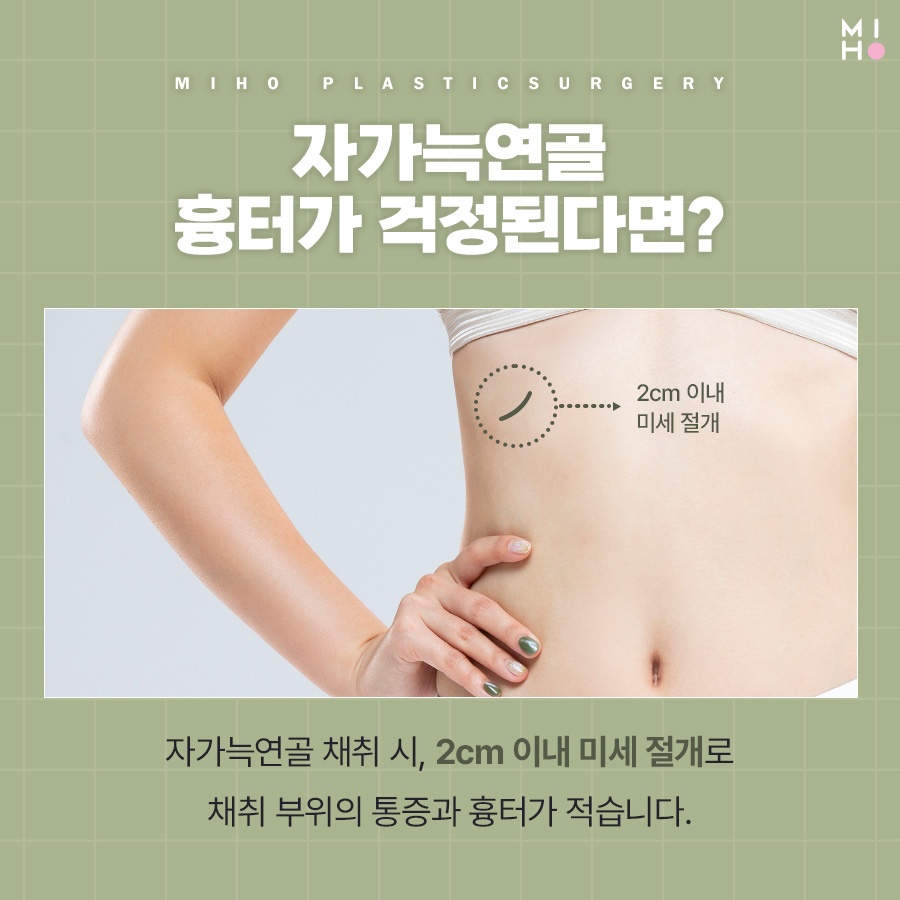
but a scar may remain near the ribs.
The mark gradually fades,
but depending on the nature of the skin,
it may become discolored
or protrude as a keloid.
This should be understood in advance.
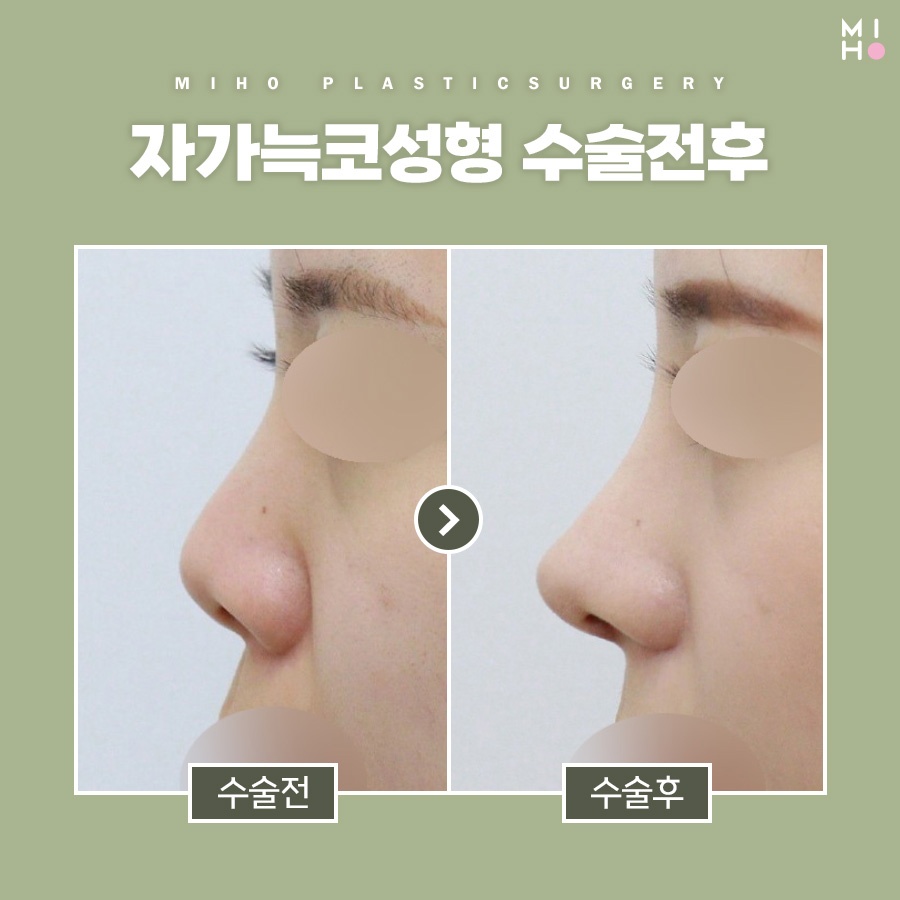
In the past, autologous rib cartilage rhinoplasty
was generally performed as a revision procedure
after an unsuccessful first attempt.
Recently, however,
more people have wanted an approach
using rib cartilage from the beginning.
This is because a high and dramatic shape
can be created using only autologous tissue,
without silicone or AlloDerm.
Because rib cartilage is as firm as an artificial implant,
it can be used to create a more Western-style nose.
�0
Another reason is that the amount of material
that can be harvested from the ear or septum
is limited.
Septal cartilage generally needs to measure
at least 30 mm in both width and height
to provide a sufficient amount for harvesting.
If it is smaller than this,
the amount may be insufficient,
resulting in an outcome that is
worse than not undergoing the procedure.
For these reasons, rib cartilage
has become increasingly preferred.
In addition, its popularity continues to rise
because of its low absorption rate
and versatility.
Autologous tissue has the advantage
of rarely causing allergic reactions
or a foreign-body sensation,
but one disadvantage is
that some of it may be absorbed.
�0
For this reason, after an implant-free procedure,
the nasal bridge may become
slightly lower after some time has passed.
Rib cartilage has a relatively low absorption rate,
so the changed appearance can be maintained
for a longer period.
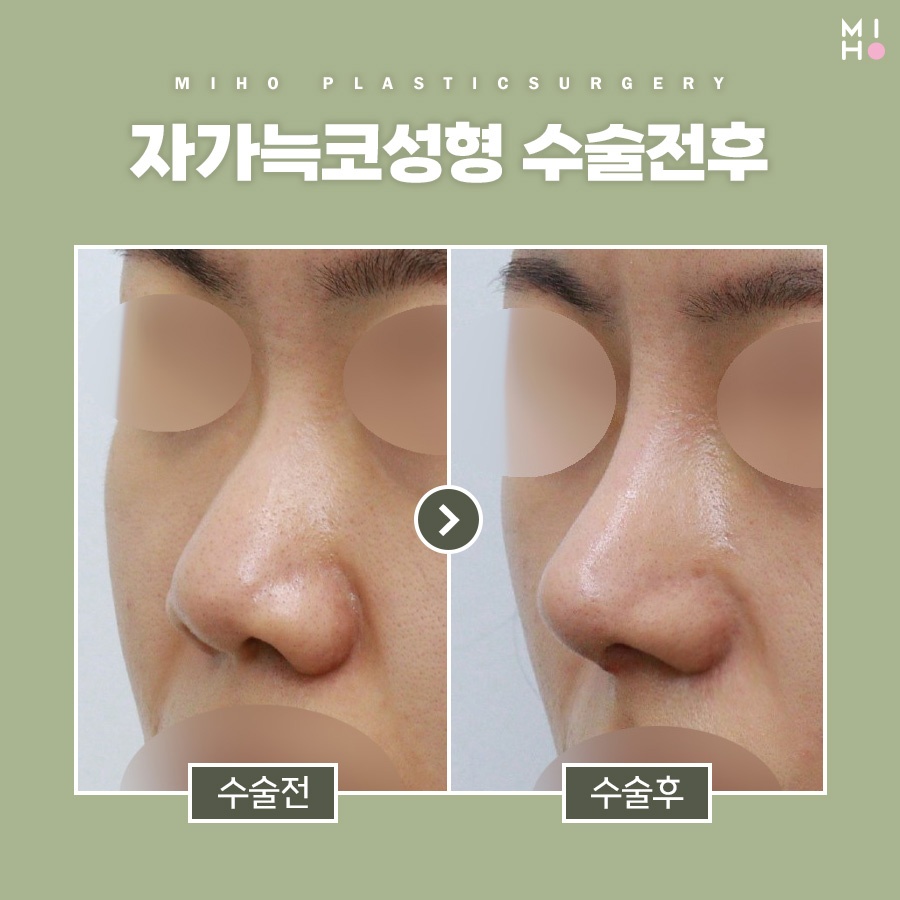
Its uses are also very diverse.
It can improve most nasal concerns,
including not only a broad nasal tip,
such as a bulbous nose,
but also an arrow-shaped nose,
a hump nose, an upturned nose,
and a contracted nose.
To maintain the changed appearance
without complications,
thorough postoperative care is necessary.
�0
As long as you follow the instructions
provided by the medical institution,
you generally will not experience
adverse effects.
Until the tissue has stabilized,
care must be taken to prevent strong pressure
from being applied to the area.
You should also avoid blowing or rubbing
your nose forcefully.
Alternating cold and warm compresses
may also help relieve swelling
and speed up recovery.
Sleeping while reclining at an angle
of about 45 degrees can also help
reduce swelling.
Autologous rib cartilage rhinoplasty
is a highly complex approach involving
multiple stages, from tissue harvesting
and processing to insertion.
Therefore, the medical team's expertise
should be considered the top priority.
�0
Although the financial aspect cannot be ignored,
you should thoroughly investigate
whether the physician in charge
has extensive experience and expertise
with this procedure,
whether they develop and propose
a personalized design,
and how the postoperative care process
has been established,
before making a careful decision.



Previous image
Next image
�0