
Many people are considering tip rhinoplasty because even a properly aligned nose can make the entire face appear
cleaner and more refined.
However, some people become flustered after experiencing unexpected symptoms or noticing a sensation that feels different from usual when touching the area.
Even if you are planning the procedure because of an aesthetic concern, the nose is an organ responsible for the important function of breathing. Therefore, rather than considering only its appearance, it is important to find and undergo an approach that fully suits your own structure and circumstances.
Because the inside of the nose has a highly complex structure, it is advisable to consider all of these factors, as well as the height and overall shape, and determine whether the nose suits the proportions and image of your face when viewed from the side before making a decision.
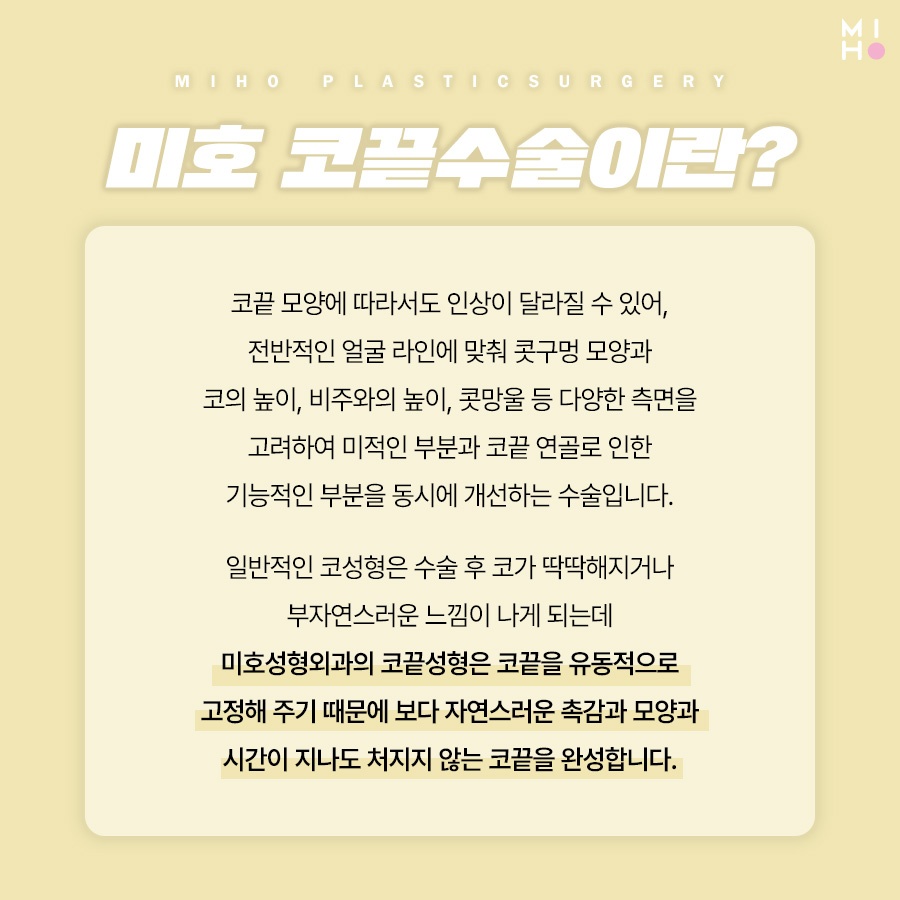
In most cases, people consider tip rhinoplasty to improve functional problems as well as concerns such as a dorsal hump, insufficient height, an upturned nose in which the nostrils are exposed more than necessary, a broad, bulbous nose, or an arrow-shaped nose with a sharply gathered tip.
Because many nerves pass around the nose and its structure is complex, the possibility of problems with breathing cannot be ruled out. You should therefore check whether a surgeon with extensive experience treating the same symptoms will take responsibility for the entire process, from the consultation onward.
The shape and height of a nose that suit a person vary from one individual to another.
Just as having only a high nasal bridge does not necessarily look beautiful on a compact face, the design for tip rhinoplasty is created by considering every element of the overall face.
By considering not only the size and width of the eyes but also the position of the lips, the cheekbones, the forehead, and the chin, it is possible to determine an appropriate nasal bridge and nostril-wing line. Since balance is the most important factor, the first step is to understand what type of nose you currently have.
Some people undergo the procedure to create a more refined image in the center of the face, only to be surprised when the tip of the nose becomes stiff.
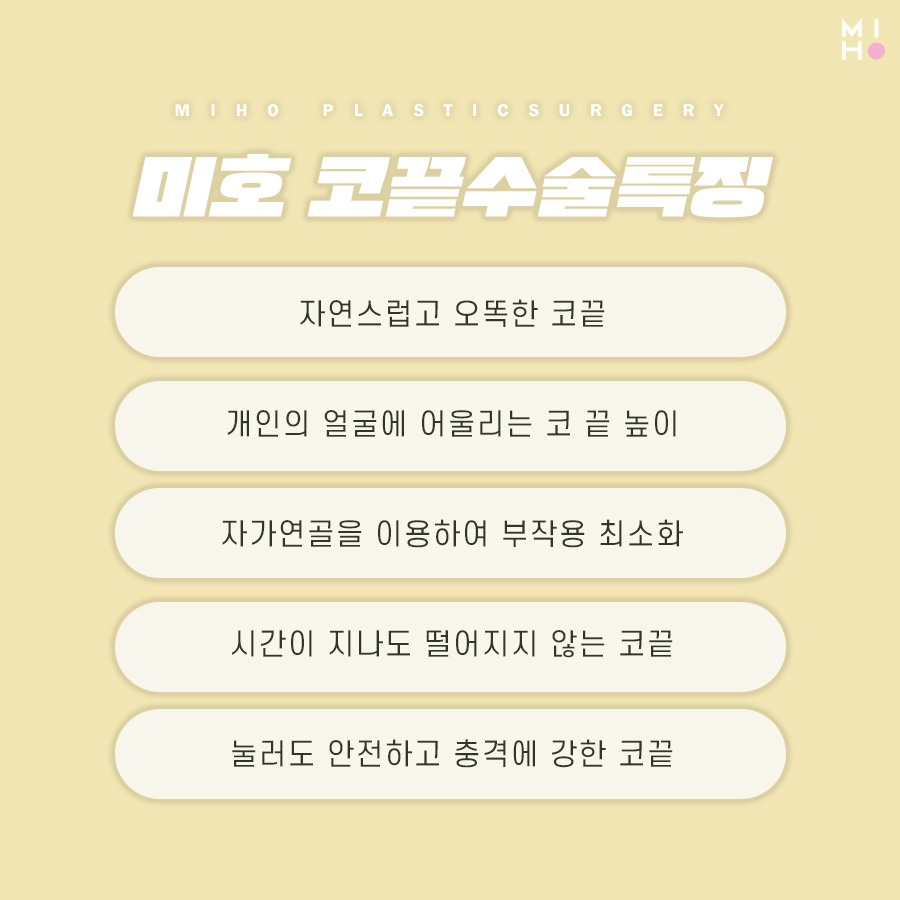
One way to assess whether the result looks natural is to check whether the nose can be lifted and bent into a pig-nose shape. To add a natural appearance while keeping the tip defined and preventing it from drooping, autologous cartilage can be used.
This approach can address both functional and aesthetic aspects. It can maintain a sleek rather than blunt shape while keeping the texture and movement soft and natural, which is why it is used in many cases.
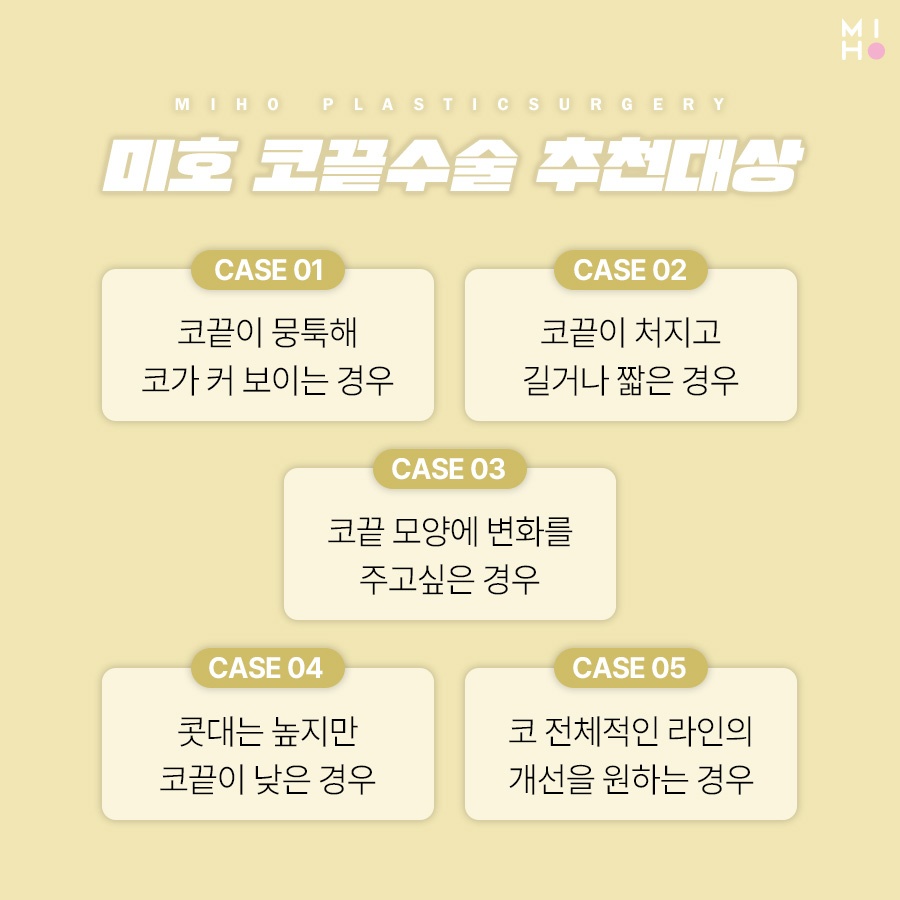
This approach is suitable for people whose nasal bridge is already relatively high but whose nostril wings are comparatively low and spread out. It can also be applied when the tip is blunt like a bulbous nose or when its length is not well proportioned.
It may contribute to a positive result when the tip is excessively short or long compared with the existing nasal bridge. When correcting the overall nasal line to suit aesthetic considerations, an individualized design is planned according to the person’s proportions.
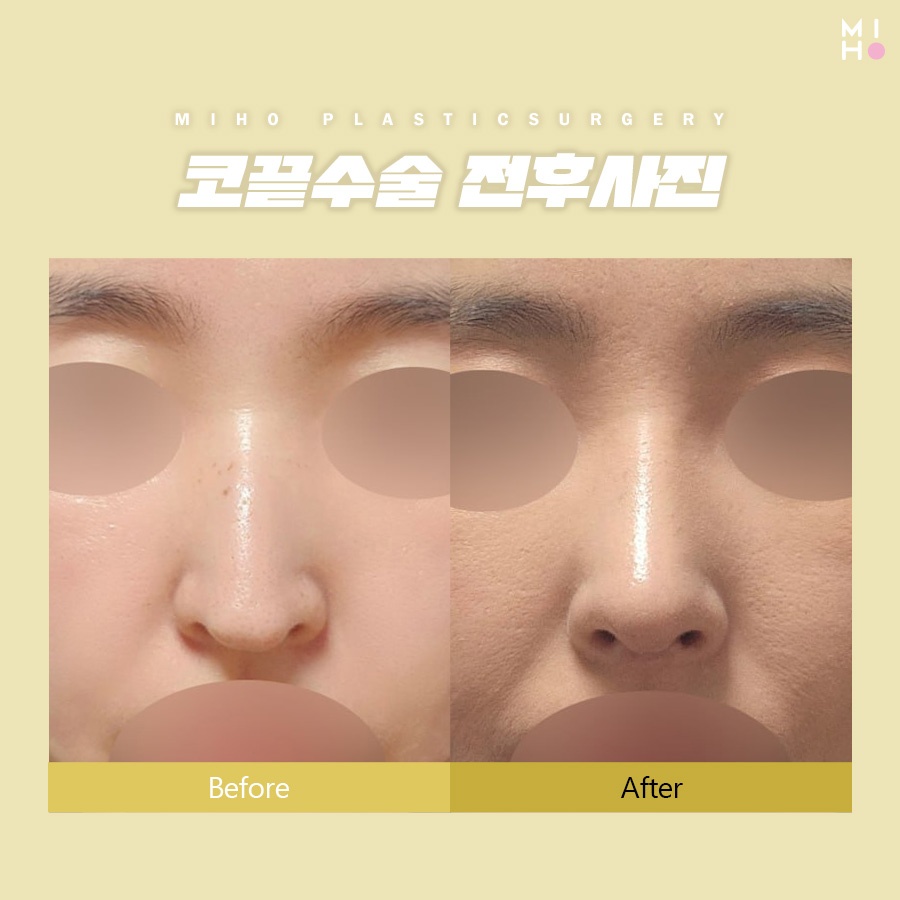
Tip rhinoplasty is characterized by a texture similar to the nose’s natural state, with good movement, rather than an unnatural, hard feel. For this reason, artificial implants are not used.
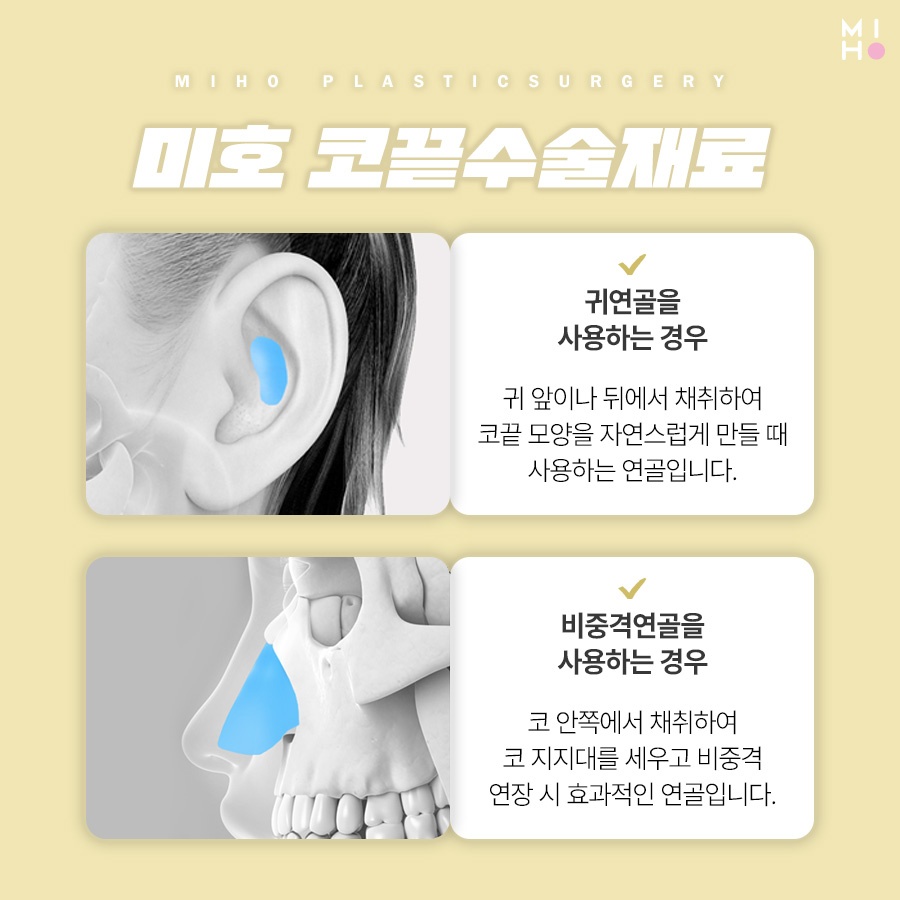
If autologous material is not used, the risk may increase, and there may be a greater possibility of an inflammatory reaction, which can lead to deformation or contracture. Therefore, ear cartilage or septal cartilage is usually harvested and appropriately inserted.
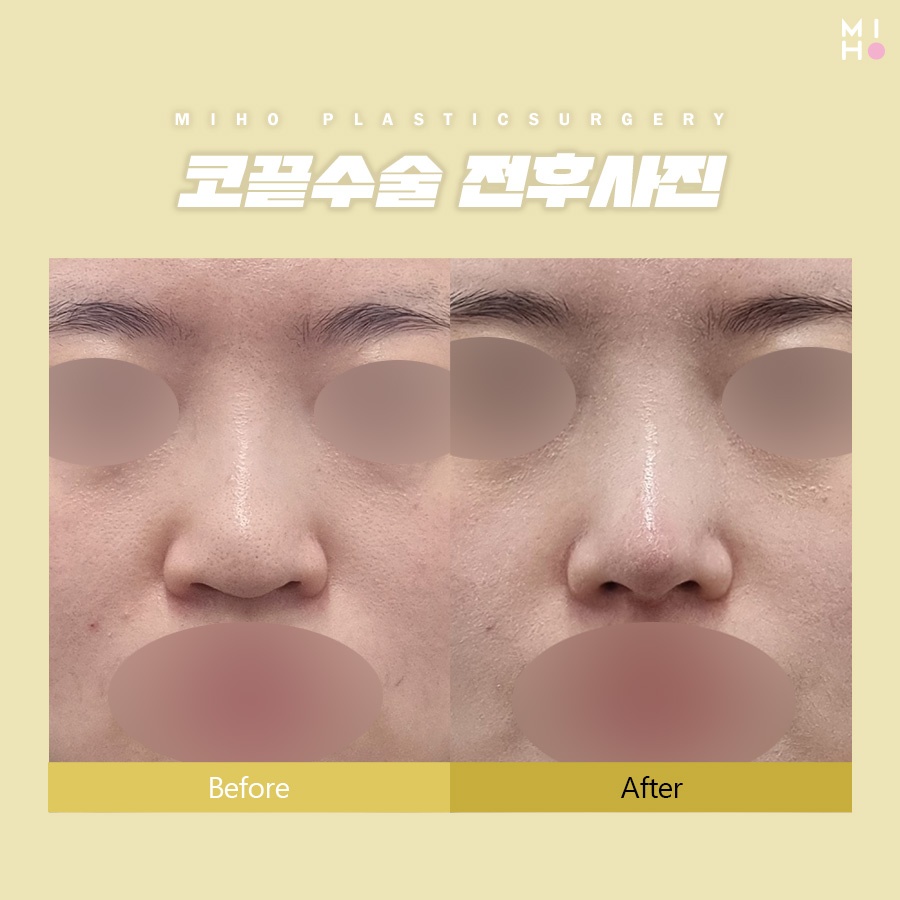
If only the shape or height of the tip needs to be slightly improved, cartilage taken from the ear is used. Septal cartilage is used as a support when extending the septum. In addition, the method and plan may vary somewhat depending on how much the nostril wings need to be raised.
If the tip is only slightly spread out, it can be gathered toward the center with sutures without inserting an implant.
This can naturally create a sleek and defined tip using only the person’s own cartilage. Since the end is not hard but soft, there is no distinct foreign sensation when touched.
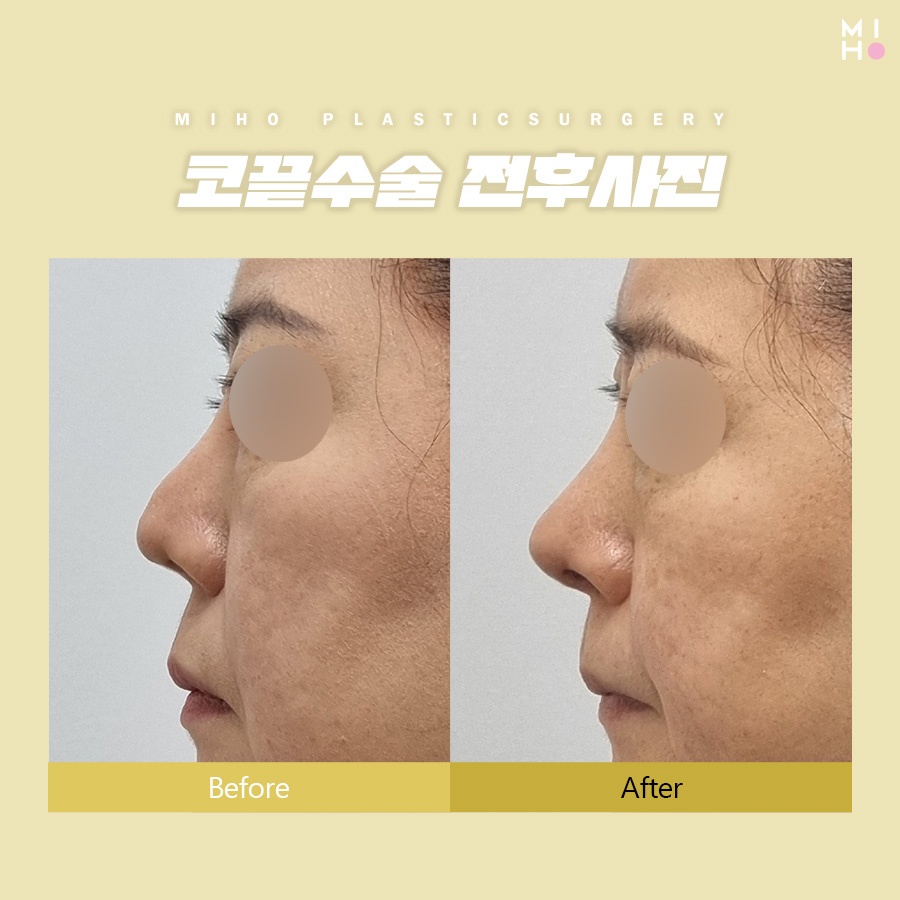
When the height is somewhat insufficient and needs to be increased beyond a certain level, autologous cartilage is grafted for tip rhinoplasty.
Both types may be used: ear cartilage shapes and raises the nostril wings, while septal cartilage is connected to the existing cartilage to create a firm support layer.
If the nostril wings are much lower than the nasal bridge and need to be raised accordingly, the shape can be set higher using supporting cartilage.
Since there are various methods, carefully considering facial harmony, aesthetic factors, functional aspects, and every other relevant factor can be considered one positive way to move toward an appropriate result.
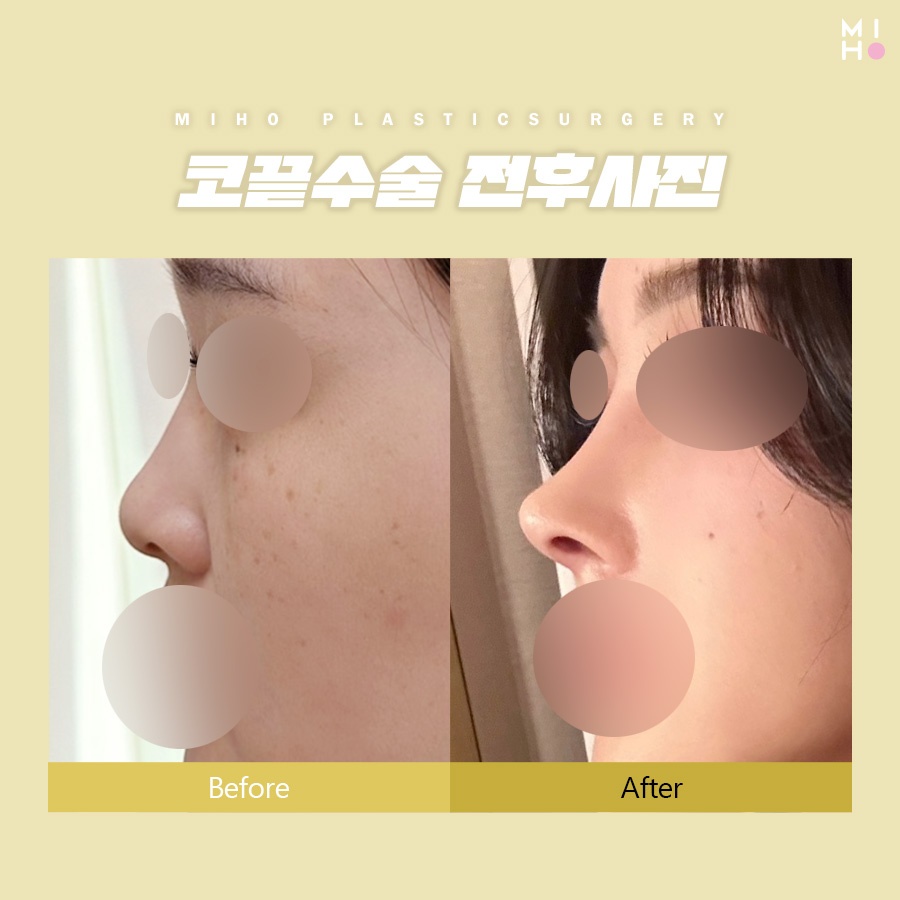
Implants can be useful when used appropriately, but the tip of the nose is naturally soft rather than hard. If it feels firm, a pronounced foreign sensation is unavoidable.
There is also a risk of internal damage from impact, and over time, the raised area may gradually descend from its original position, changing the shape that was initially improved. Autologous cartilage is the person’s own tissue, so it can reduce this burden, while creating a naturally sleek shape that remains flexible and moves well, making the improvement particularly meaningful.
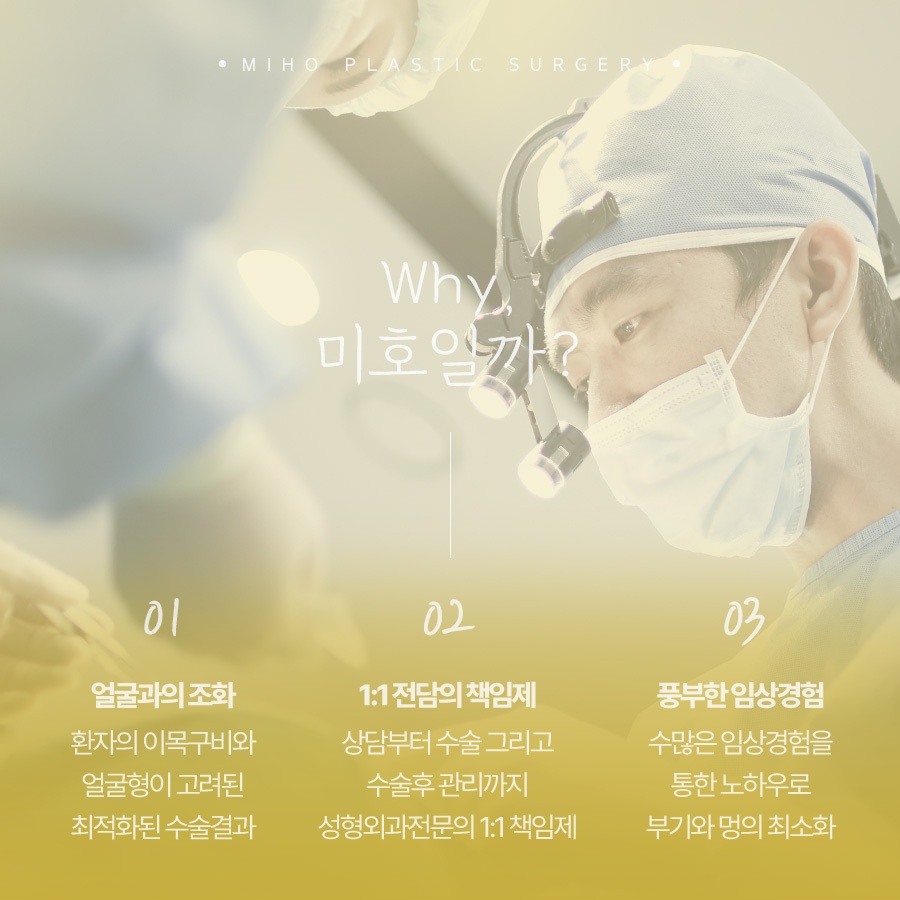
Even so, you should first carefully examine whether postoperative care is thorough, whether problems are properly identified through appropriate examinations and a suitable plan is established, and whether the process is conducted safely and meticulously.
You should also closely check whether the provider examines whether you have a deviated septum or other symptoms, and whether it tailors the aesthetic aspects to you on a one-to-one basis in a way that contributes to a positive result.
Depending on the situation, tip rhinoplasty can help change your overall image by improving only the tip without altering the nasal bridge. Take time to learn about the procedure carefully, make your choice, and move forward confidently with the appearance you seek.

Previous image
Next image