
The eyes can appear different in size
depending on the vertical width between
the upper and lower eyelids.
When it comes to the overall impression,
the length from side to side
affects how they look.
If the eyes are short in length but
only tall in height, they may also
look unnatural. Conversely, when
the length is greater than the height,
they can give the impression of
squinting, which may lead to concerns
of its own.
Because the appearance of the eyes
is influenced by several factors that
must be considered together in line
with each person’s natural shape,
various methods, such as epicanthoplasty
and lateral canthoplasty, may be used
together when creating a new double-eyelid
crease or reworking an existing line
in order to make the eyes appear
larger and more open.
Although this is a widely used method,
if it was performed in a way that did
not suit the individual, revision
epicanthoplasty can be considered to
close the area again and reopen it
in a new position.
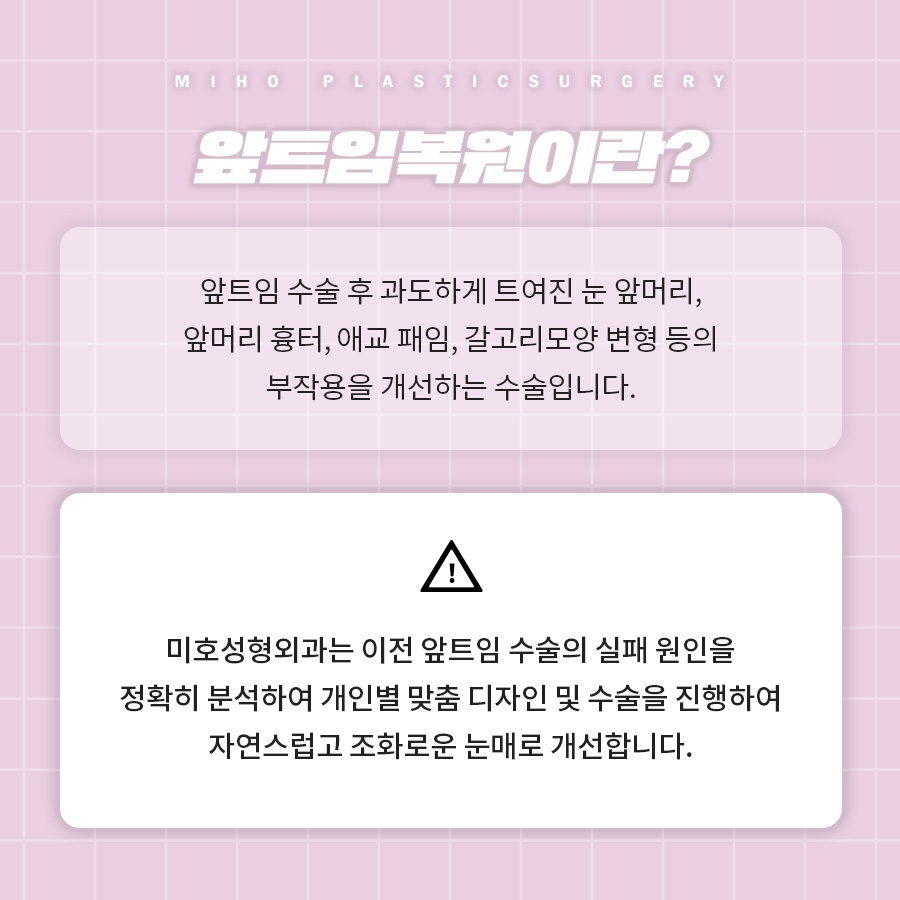
In particular, the reason many East
Asians have a constricted inner corner
of the eye is the presence of the
Mongolian fold. When the hook-shaped
area is opened to an appropriate degree,
the previously closed-looking eyes can
appear more open, and the horizontal
width of the eyes can also become
wider than before. For this reason,
it is often performed together with
double-eyelid surgery.
As a result, more people are looking
into and considering revision
epicanthoplasty. Even a slight
difference in the width created during
the incision can lead to both aesthetic
and functional problems.
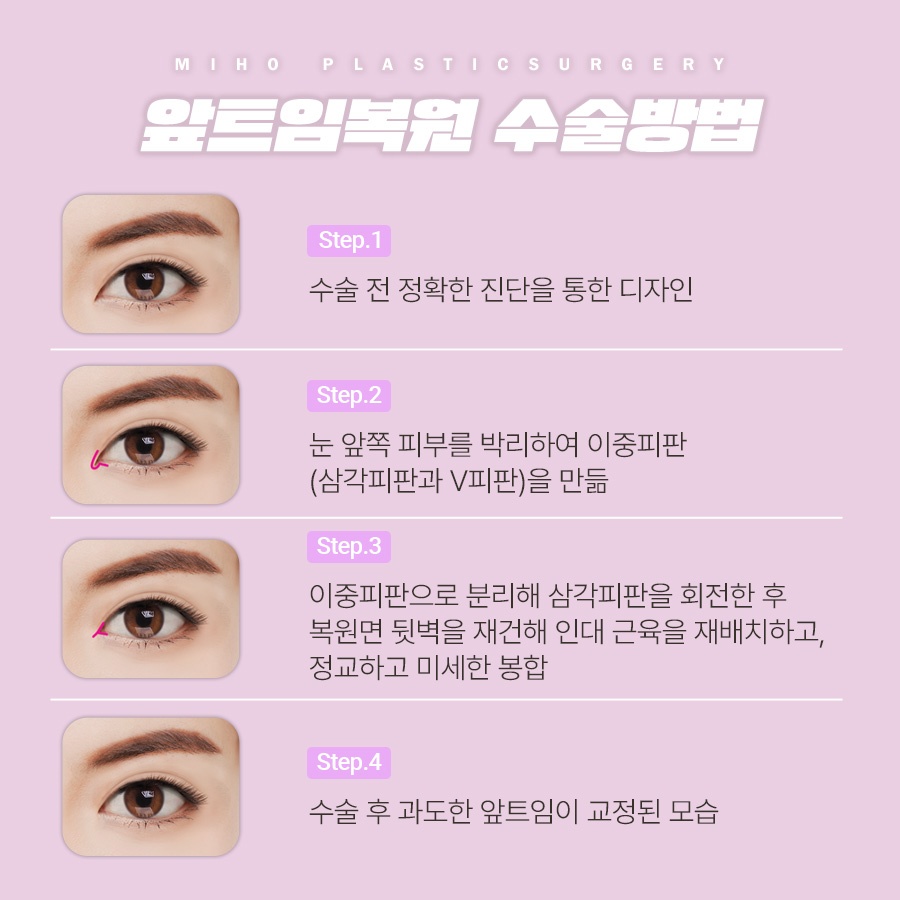
It may also be performed to address
problems such as redness of the eye
caused by the lacrimal lake becoming
exposed outside the skin. However,
if a firm, pale scar remains after
the incision, the area may be excised
again and sutured in stages to remove
it.
Because delicate technique is required,
revision epicanthoplasty may also be
considered when the shape settles
differently from what was expected
after the first procedure. If excessive
incision has made too much of the
inner corner visible, creating a sharp
appearance, or if the area was closed
in a stuffy, square shape that does
not meet aesthetic expectations,
it is necessary to make a careful
decision while considering the method
of treatment and the recovery period.
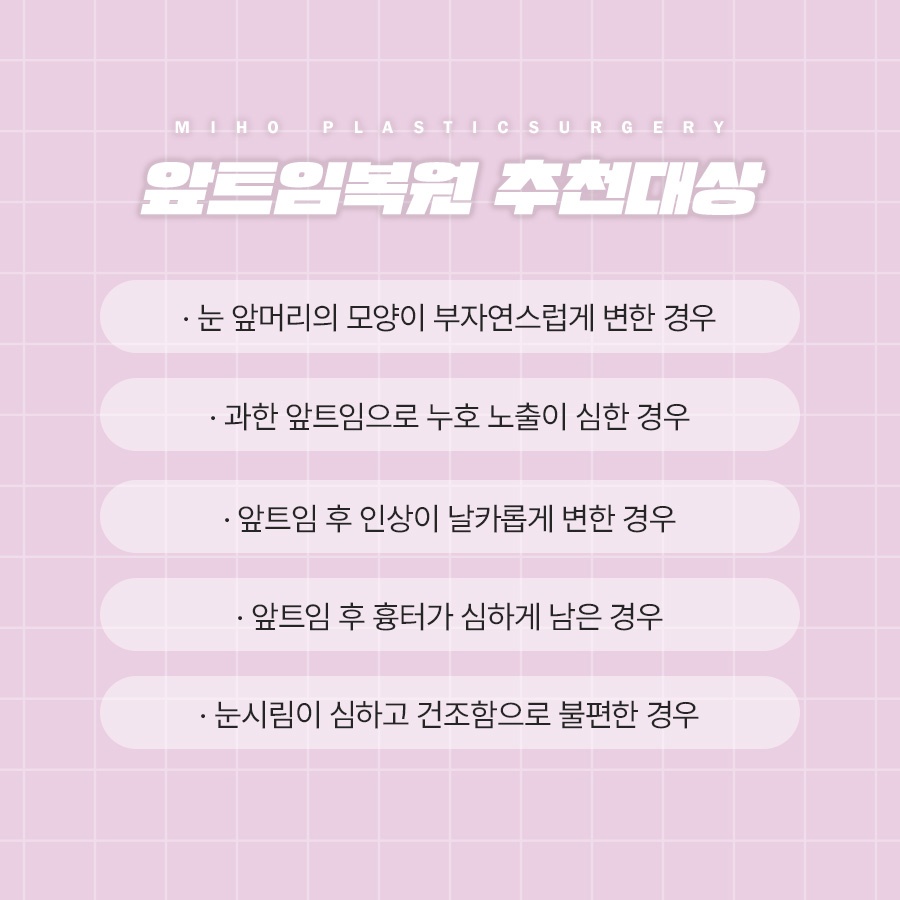
Since even a slight difference can
change the appearance of the eyes,
it is important to check in advance
whether a meticulous micro-incision
method, approaching the procedure
down to 0.01 mm, is used and whether
the surgeon has sufficient clinical
experience with both epicanthoplasty
and revision procedures.
Because this is more difficult than
creating a double-eyelid crease and
has a greater effect on the eventual
result, you should also confirm whether
the procedure is performed precisely
to reduce errors, how much the risk
of future scarring can be reduced by
anticipating its development, and what
support is provided during recovery.

The reason it is particularly important
to anticipate the outcome and proceed
carefully is that reconstruction is the
primary purpose of the procedure.
Even if it is not visible on the surface,
there may already be signs of tissue
damage left from the first procedure,
or the tissue may still be weakened
because it has not fully recovered.
If the area is treated before it has
healed properly, a depressed scar may
appear, so caution is required.
When reconstructing an incorrect result,
it is important to proceed slowly and
in stages, while also considering how
the appearance can be improved later.
A double-flap technique is used to
correct both the shape and function.
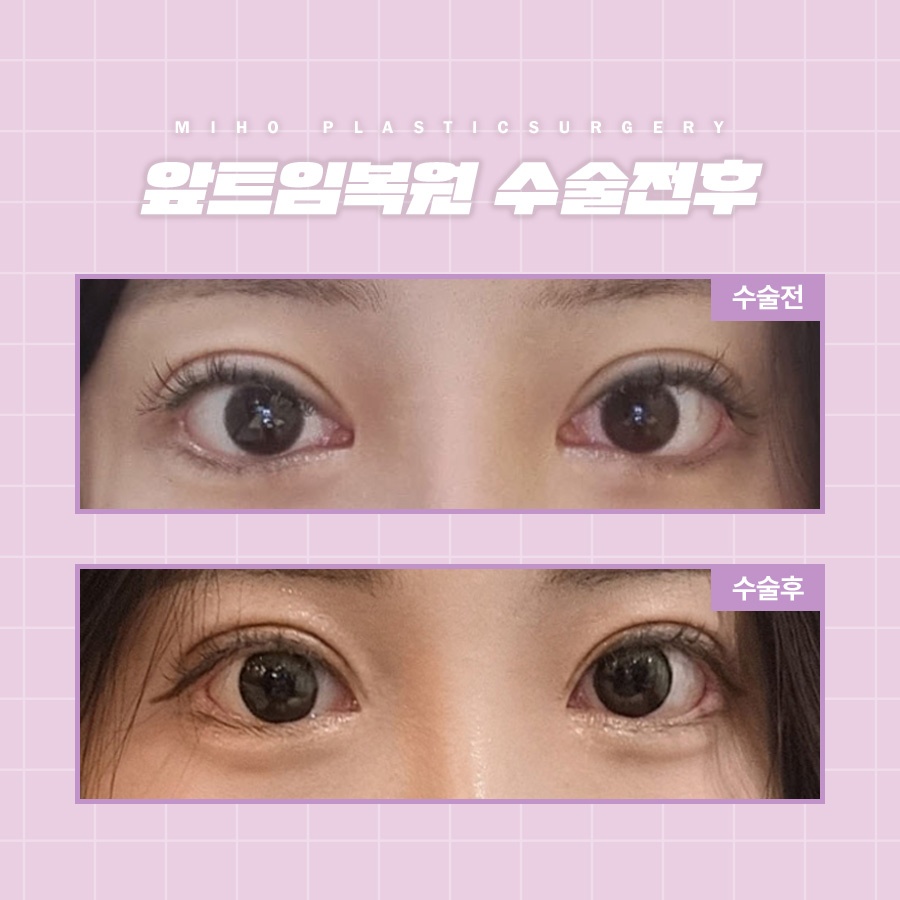
The double-flap reconstruction method
used to help the area settle into a
new position begins by checking whether
there is any damaged internal tissue
before revision epicanthoplasty.
A precise examination is performed
first because the existing skin tissue
must be usable both above and below
the area. This makes it possible to
partially close an excessively opened
eye shape and then reopen it again
to correct the aesthetic appearance
as well.
Because the eyes move frequently,
there is a possibility of deformation
during recovery. The incision is
therefore planned from the beginning
so that the scar can heal as naturally
as possible throughout the healing
process.
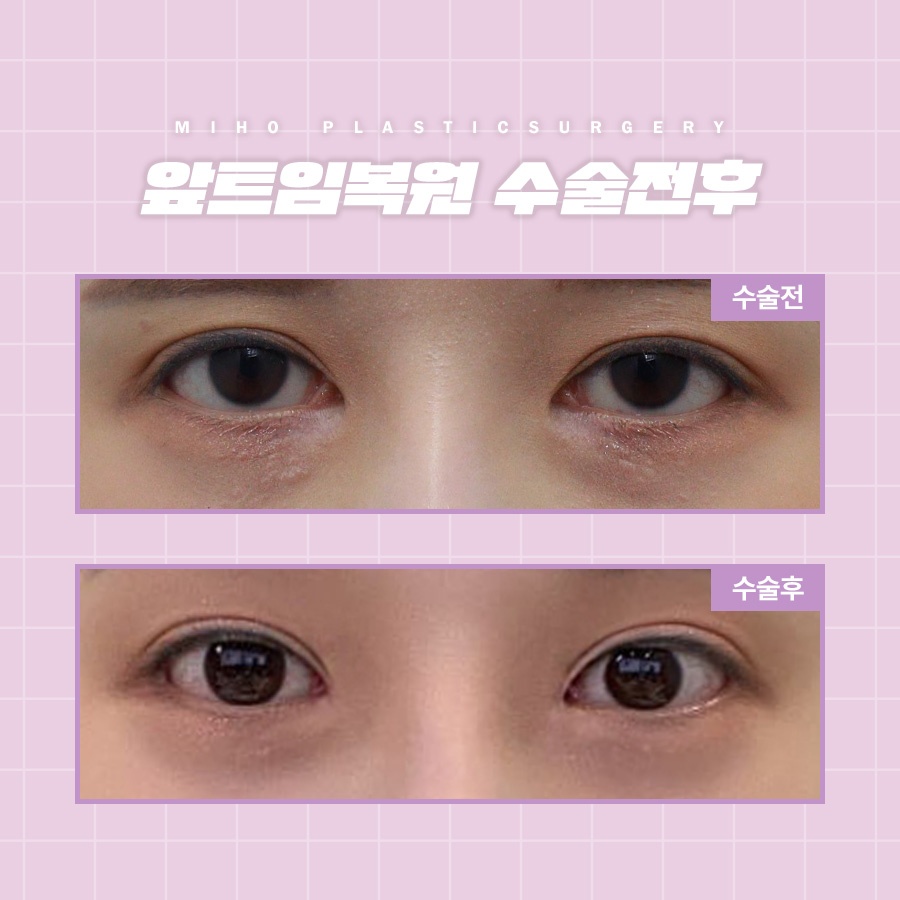
This requires particular caution because
this is a technically challenging area,
making it relatively difficult to achieve
a proper improvement without precise
incisions and suturing.
If the inner corner was opened sharply
forward, exposing the lacrimal lake
and making it appear red, the area may
be closed using the remaining skin
tissue. However, if it closes in an
unnatural shape, new problems can
arise, such as the eyes appearing
farther apart and more constricted.
It is therefore important to overcome
these issues with a surgeon who has
expertise in precise incisions and
suturing.
If the Mongolian fold was originally
pronounced, strong pulling forces may
continue to act internally even after
reconstruction, and a strongly
hook-shaped fold may form again at
the inner corner.
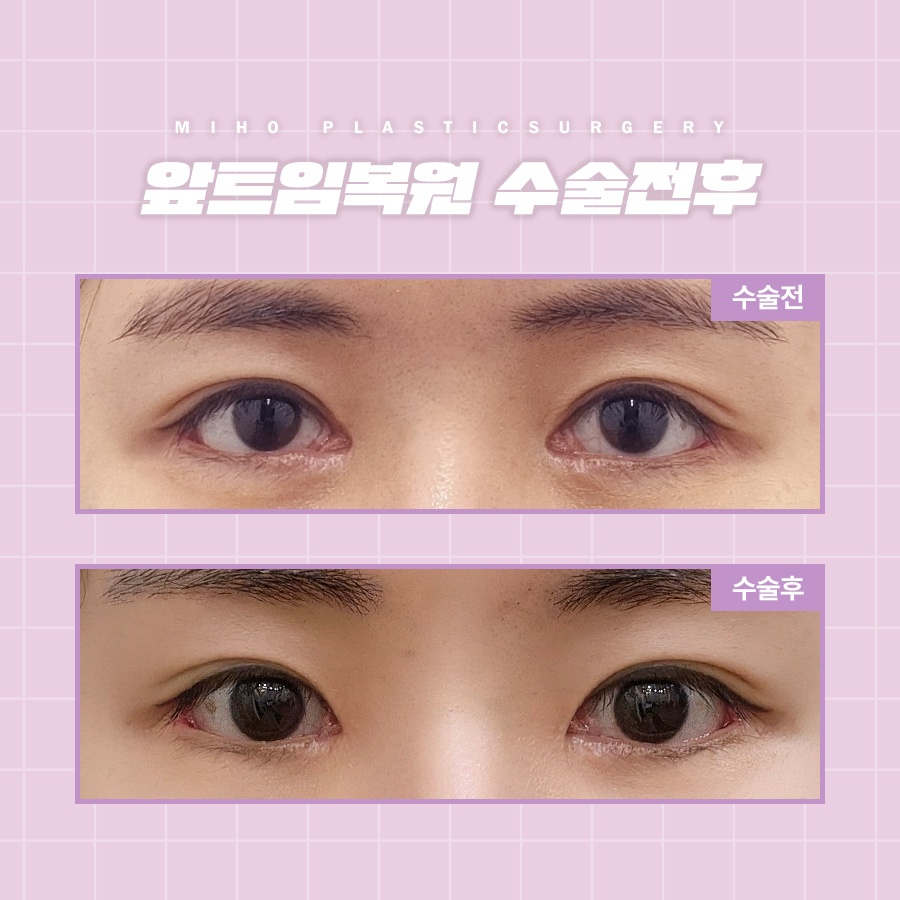
For this reason, revision epicanthoplasty
requires more than simply focusing
on suturing the outer skin. Internal
muscle adhesions must also be assessed
carefully to reduce problems that may
arise during recovery.
The procedure should be planned in
detail to prevent sharp Mongolian folds
from forming again due to adhesions
during healing, while creating an inner
corner shape that suits each individual
at an appropriate degree.
At this stage, every factor affecting
the appearance of the eyes should be
considered, including the precise width,
the length appropriate for the height,
and symmetry.
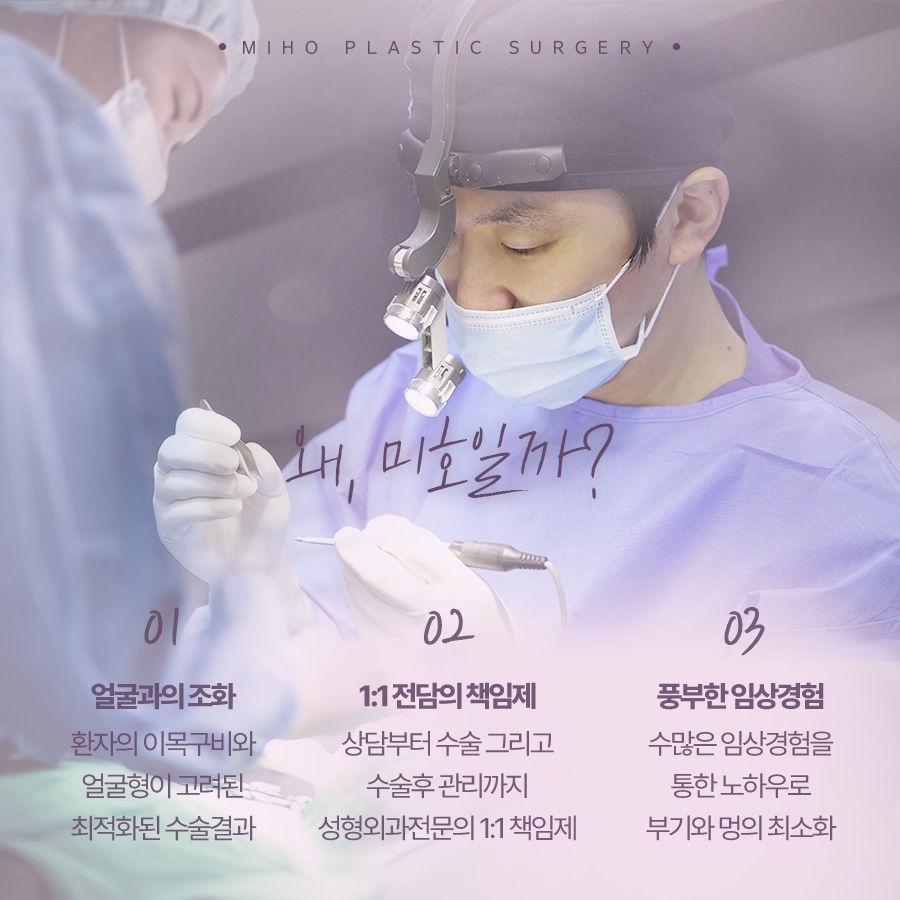
Reconstruction should account not only
for the damage that occurred previously,
but also for measures to address scars
that have already formed.
Because the various aspects must be
assessed and treated delicately, it is
appropriate to proceed carefully after
hearing the opinion of a physician with
extensive clinical experience in this
field.
Although internal and external damage
and discomfort are addressed together,
this is still a revision procedure.
To avoid discomfort or anxiety during
future recovery, it is important to
undergo a detailed examination in
advance, explain the difficulties you
have experienced and what you want,
and discuss them thoroughly.

Solid facilities and equipment are of
course also necessary. However, since
the outcome of revision epicanthoplasty
can vary significantly depending on
the surgeon’s meticulous technical
differences, it may be helpful to check
whether the clinic has a resident surgeon
with extensive experience handling
difficult cases.
In particular, procedures requiring
incisions can significantly affect future
results depending on how properly the
recovery process is managed. You should
therefore also look carefully into whether
a systematic care program is in place.


Previous image
Next image