
The area where signs of aging are particularly noticeable
and problems progress quickly
among the various parts of the face is around the eyes.
This is because the area moves frequently,
and its elasticity also declines
relatively faster than in other areas.
As a result, loose skin
may cause various aesthetic concerns,
while excessive fat accumulation
or, conversely, a lack of fat
may make the complexion look dull
and the skin texture appear uneven.
When the area of dark circles
extends from beneath the eyes,
even making the complexion look dark
when a person is not tired,
people around them may notice it first
and tell them that they look tired.
Unlike in the past, when this occurred
mainly in people in their 50s and older,
it has recently also appeared
among people in their 20s and 30s,
leading more people to consider
under-eye fat repositioning.

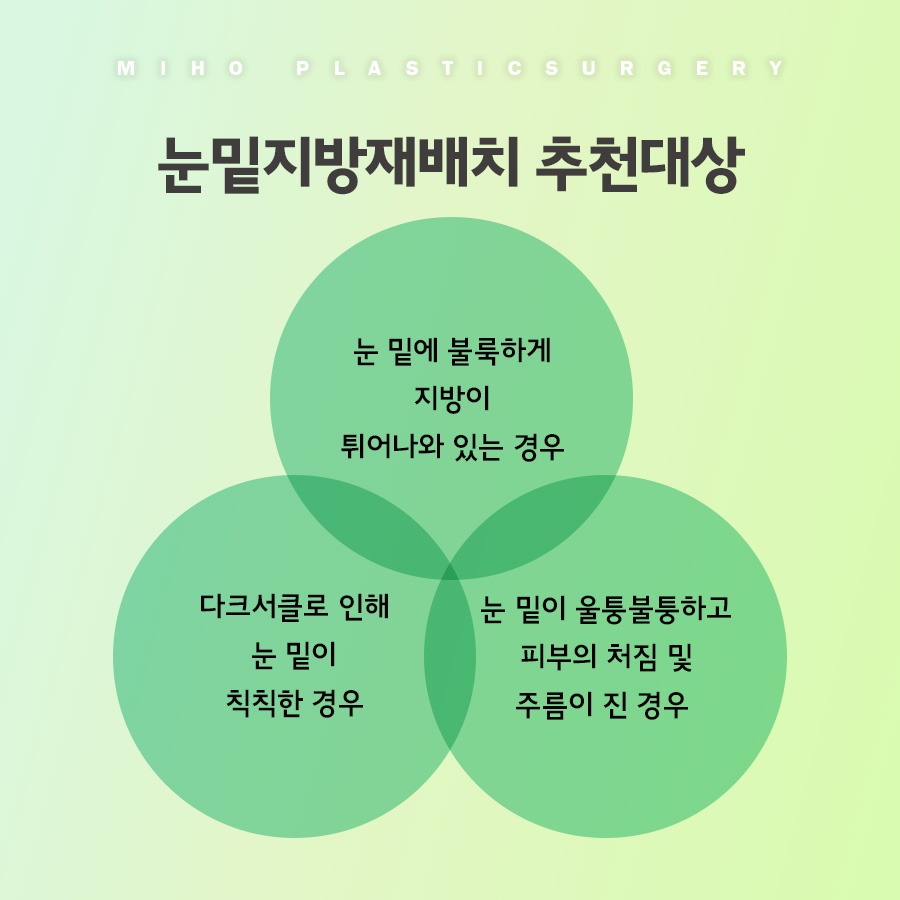
The fat layer can protrude outward
instead of remaining in its proper position
because aging has occurred not only in the skin
but also in the tissues beneath it,
including the muscles and tear trough area.
When the strength of these areas decreases,
the fat layer inside
gradually gets pushed outward.
Unlike drooping eyelids,
this generally does not significantly affect
opening or closing the eyes,
so it does not usually cause functional discomfort.
However, aesthetically,
it can cause considerable psychological distress.
In this case, under-eye fat repositioning
is used to remove the protruding portion,
then the excess fat extracted during the procedure
is reinserted into areas where hollowing is pronounced,
helping create an overall
smoother and more natural appearance.

When the area beneath the eyes looks uneven
and the dark circles also appear pronounced,
many people assume that most cases
can be addressed through lower blepharoplasty.
Lower blepharoplasty
involves the internal tissues more extensively
than under-eye fat repositioning,
addressing not only the fat and orbital septum
but also the muscles and skin layer
at the same time.
Although this can have a positive effect
on improvement in various respects,
it also requires allowing sufficient time
for recovery and monitoring the progress.
Therefore, it is important to consider
all the precautions and plan the procedure
in a way that suits the individual
without overcorrection.

For people in their middle and later years,
when signs of aging appear to varying degrees
across most areas of the face,
lower blepharoplasty may be considered
after a detailed examination,
according to the symptoms and as a way
to address further aging.
For younger people whose other facial areas
show no serious symptoms,
but who have protruding fat beneath the eyes,
simply removing and repositioning it
may provide greater aesthetic balance,
so there is no need to attempt excessive correction.
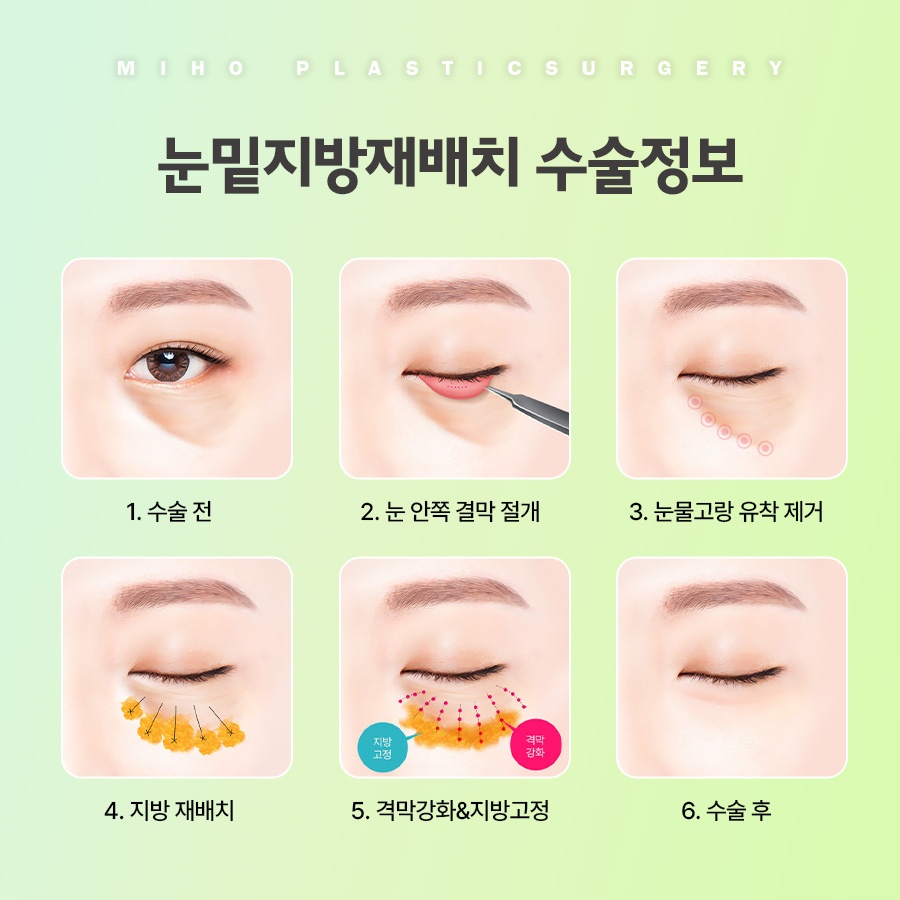
To perform repositioning,
the condition of the loose tear trough area
must first be examined,
after which the area is dissected.
The bulging fat is removed
and hollow areas are filled,
so that the area beneath the eyes
looks smooth and orderly overall.
The weakened orbital septum
is then incised from the inner side
and securely fixed in a double layer.
Because the speed of healing
and the extent of scarring vary from person to person,
it is important to carefully determine
an incision location that will be as inconspicuous as possible
from the very beginning of the procedure.
For this reason, the procedure begins
on the inner side of the conjunctiva.
When attempting under-eye fat repositioning,
if there are many areas that need to be filled
but only a small amount of tissue is available
from dissection,
fat extracted from another area
may be transplanted.
It is usually harvested from the abdomen
or thighs, where fat is relatively abundant.
However, fat from areas other than the face
may have different-sized particles,
which can affect the rate of fat survival.
If hollowing is severe,
fat from another part of the individual’s body
may need to be transplanted
during the process of repositioning fat within the face.
It is advisable to first determine
whether the provider has extensive clinical experience
with this type of procedure,
including taking these characteristics into account
and attempting to promote successful fat survival.
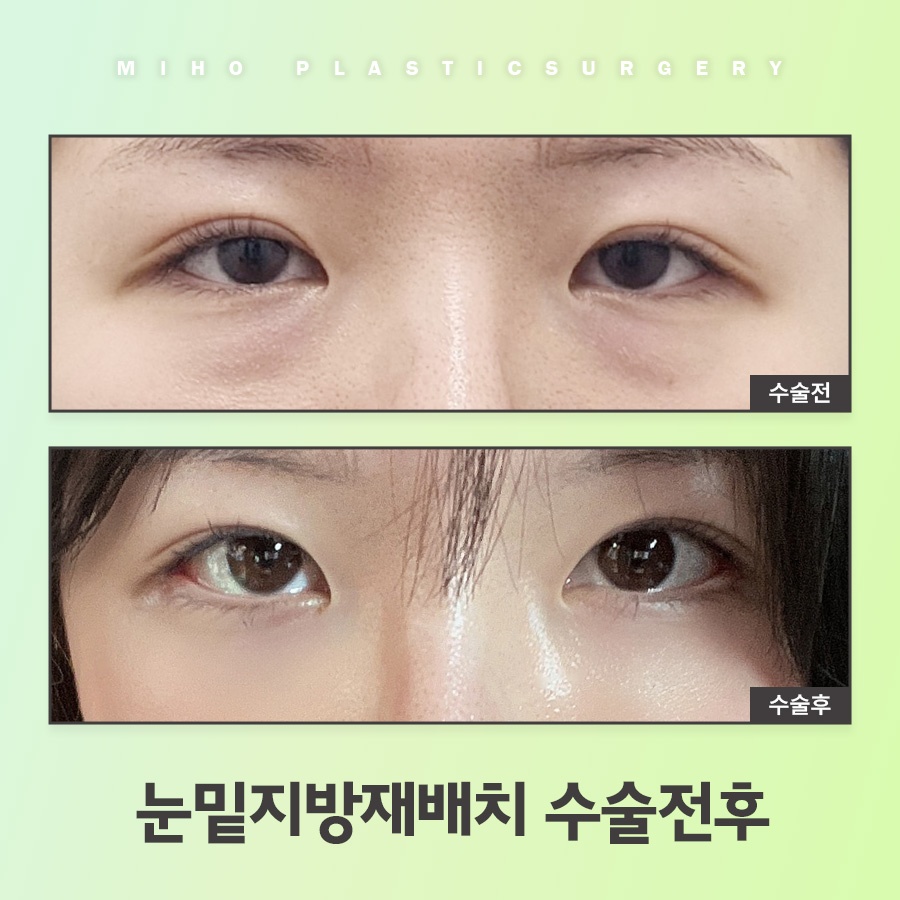
When fat leaves its proper position and protrudes,
then accumulates further as aging progresses,
the uneven skin beneath the eyes
can worsen sagging.
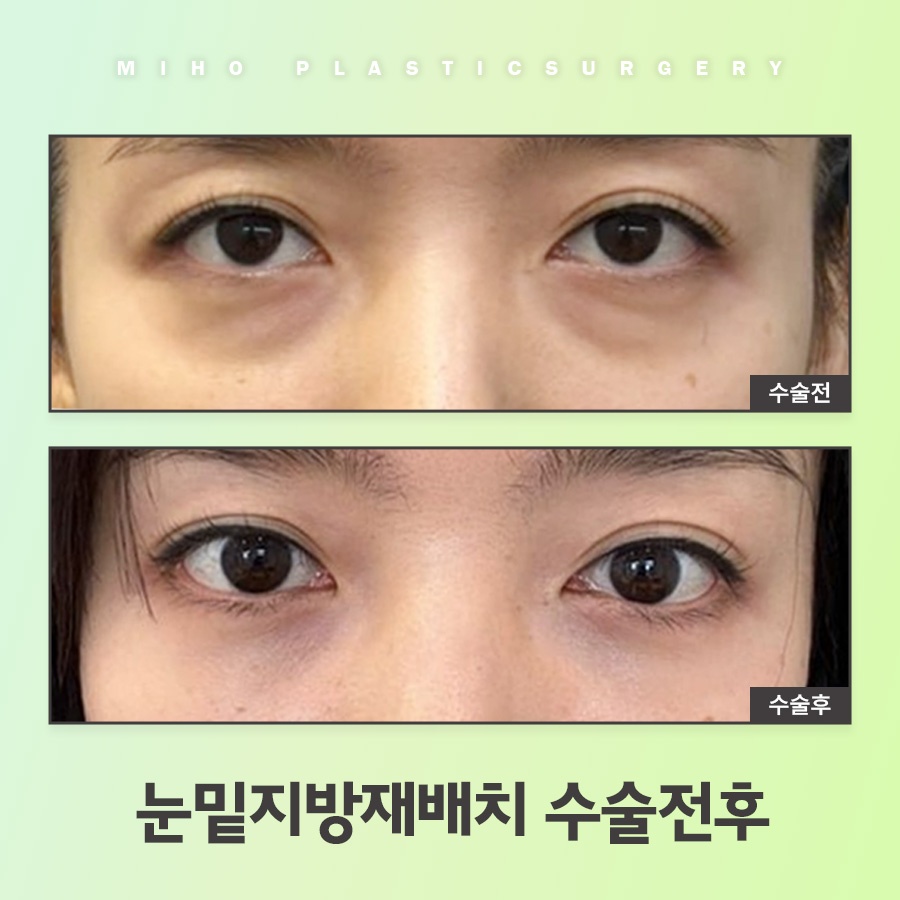
These symptoms may appear on both sides of the face,
although certain areas may be more severely affected
depending on the individual.
Correcting only the more severely affected area
is realistically possible,
but in most cases,
both sides are addressed at the same time.
There may be only a difference in severity,
and when asymmetry is present,
more fat may actually be needed
on the opposite side.
Therefore, it is appropriate to design the treatment
while considering the overall balance and symmetry
of the face and address both sides together.
If you are planning under-eye fat repositioning,
it may be helpful to learn in advance
how long the recovery period may take.
Scars are generally not very noticeable,
while prominent swelling may need to be observed
for up to a month.
Minor swelling may continue after that,
so do not become impatient.
Observe the gradual recovery process
for approximately three to six months
and check whether any concerning symptoms appear.
You should follow daily precautions carefully
to prevent infection of the wound.
Avoid alcohol, strenuous exercise, smoking,
wearing contact lenses, and swimming
to prevent adversely affecting
the incised conjunctiva.
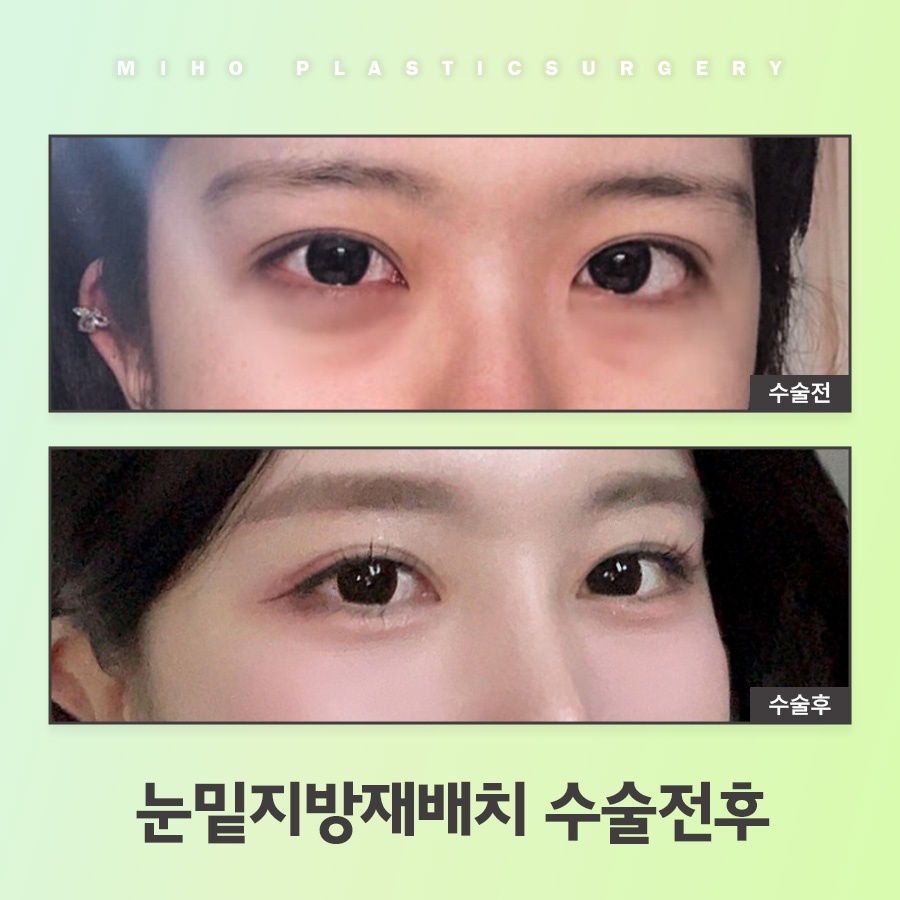
If, after the procedure,
the skin does not finish with a smooth contour
and symptoms such as indentations or hollowing occur,
or if ectropion develops,
in which the lower eyelid turns outward,
please seek assistance immediately.
If the procedure is approached carefully
and tailored to each individual’s causes and characteristics
without overcorrection,
these unfortunate outcomes may be prevented.
Even if this was not the case,
it is important to visit a provider
that can respond to the situation
and receive reconstructive treatment.
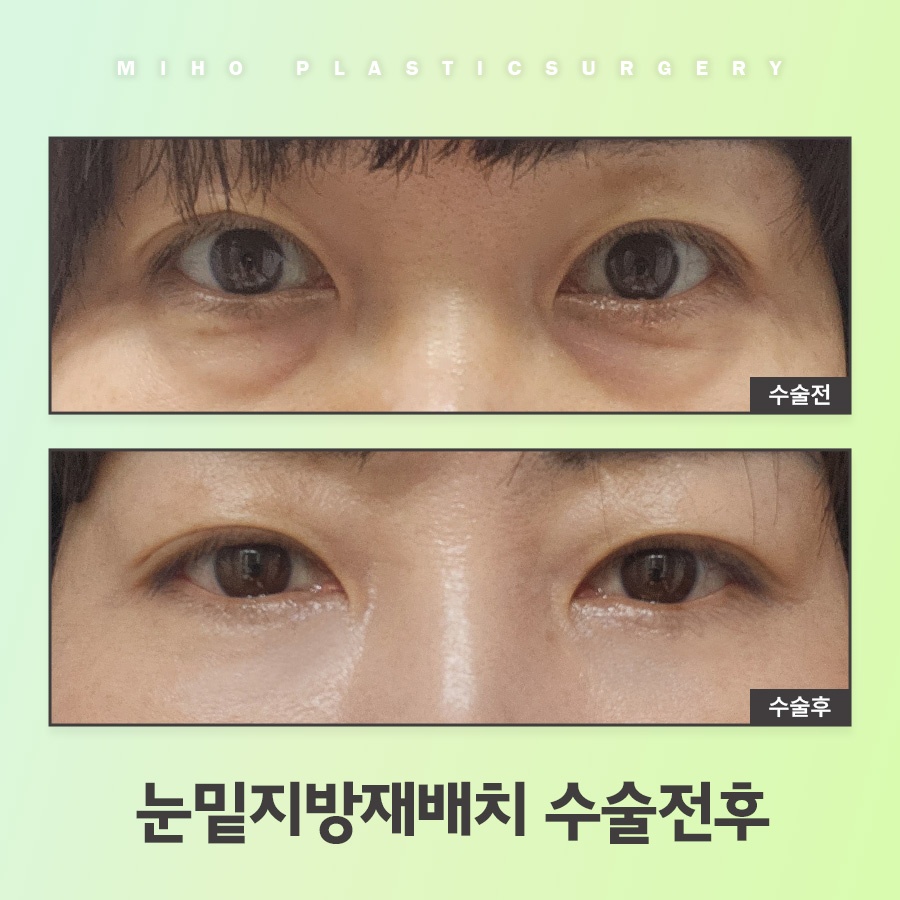
Aging cannot be prevented,
but if certain noticeable discomforts
become prominent,
you can use an approach suited to the extent
of the changes and maintain
a brighter, more refined eye area.
Under-eye fat repositioning generally involves
relatively little concern about scarring
and a shorter recovery period.
Therefore, it may be considered
if you want to care for the area around your eyes properly
without disrupting your daily life.
However, as with any approach,
routine care and habits are important.
You should reflect on whether you repeatedly engage
in behaviors that accelerate aging
and make an effort to maintain your current condition.


Previous image
Next image