As one or two years passed,
both deep and fine wrinkles increased,
and the skin began to sag.
Every time you noticed these changes,
you likely felt stressed.
The more makeup you applied,
the stronger or oddly more stuffy
your impression may have seemed,
which could have been very concerning.
In particular, sagging in the upper face is difficult to lift through home care or
aesthetic treatments,
so interest in forehead lifts naturally
increased.
In this post, we will look at how this procedure is performed,
who it is recommended for, how long it takes, and
what aftercare involves.

A forehead lift, like other lifting procedures,
was a solution for lifting sagging skin in the upper face.
At the same time as smoothing deeply etched wrinkles,
it also lifted the position of the eyebrows.
Through this, a stuffy and stern impression
could be improved, helping restore a lively,
youthful-looking appearance.
Aging usually begins in the early 20s,
after growth has ended,
and accelerates by the mid-30s.
This was due to a slowing rate of elastin
and collagen regeneration within the skin.
Although signs of aging appeared throughout the face,
there were cases in which they were particularly concentrated
in the upper face.
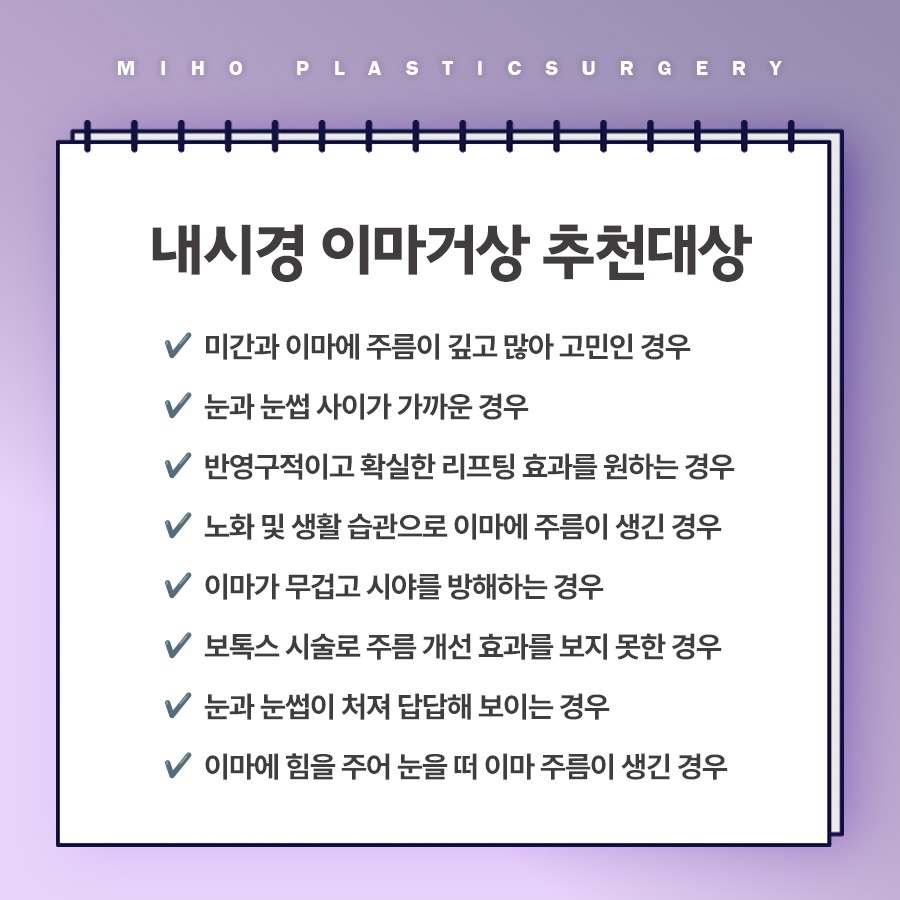
If you are experiencing functional discomfort or a change in appearance due to
deep horizontal wrinkles in the center of the upper face,
wrinkles between the eyebrows, or
sagging eyebrows, a forehead lift
could be used to improve these concerns.
There were several ways to lift the skin.
Unlike lasers or thread lifting,
lifting procedures basically involved incisions.
The procedure could be categorized according to
where the incision was made.
An incision could be made along the hairline,
or the temples could be incised and dissected
to perform the lift.
The reason several methods existed
was that the degree of sagging differed from person to person,
and the length and width of the forehead varied considerably.
Among the various methods, the appropriate procedure was devised and applied
to produce the most satisfactory result with minimal scarring.
If upper eyelid sagging accompanied forehead wrinkles,
it was advisable to address both at the same time.
This could improve obstructed vision caused by drooping eyelids,
as well as a stuffy and stern impression,
which could lead to greater satisfaction.
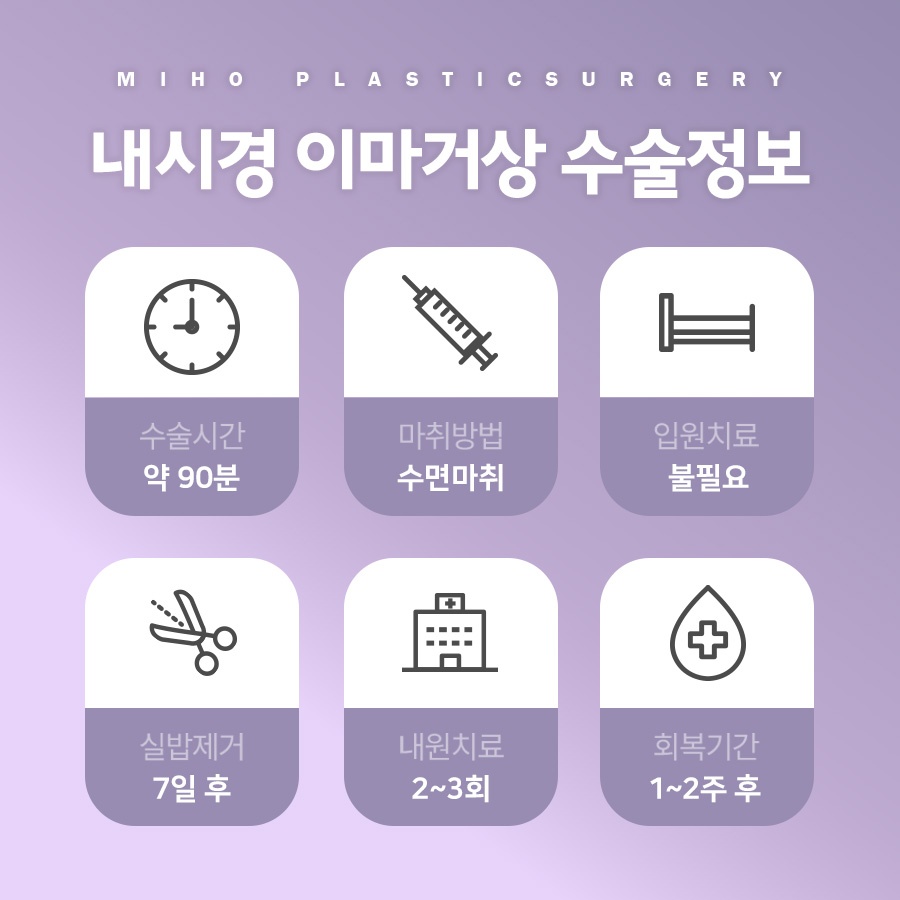
If a forehead lift was performed alone,
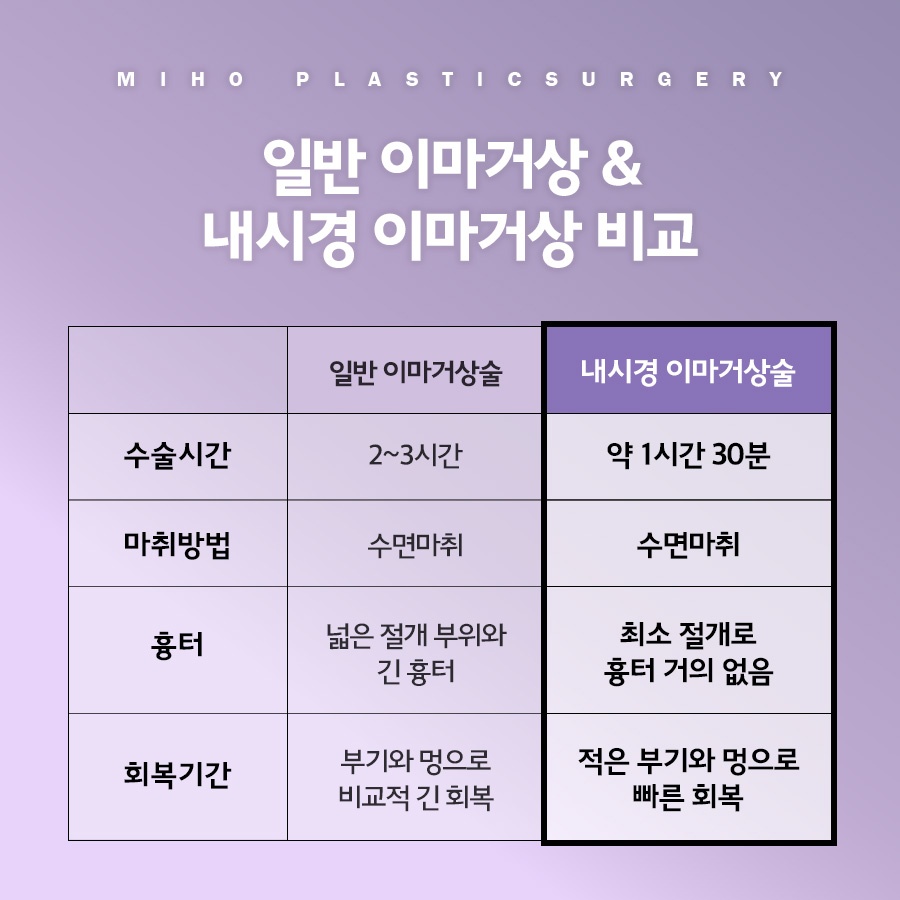
it was expected to take approximately one and a half hours.
When performed together with an upper eyelid procedure,
it could take between two and two and a half hours.
Anesthesia was administered as local or sedation anesthesia,
depending on the patient's condition.
The cost varied depending on the medical institution
and the method used for the procedure.
The endoscopic method generally cost around
3 to 6 million won,
while the hairline incision method
could cost between 5 and 8 million won.
Please note that additional costs could be added
if an upper eyelid procedure or another procedure
was performed at the same time.
The reason for the price difference
was that the procedures were performed differently.
Because endoscopic surgery was performed through small incisions,
you might expect the cost to be lower
based solely on the size of the procedure.
However, it required a high level of technical skill,
which made the price relatively higher.
The hairline incision method involved a wider incision area
than the endoscopic method,
which made it easier to secure visibility.
Although it allowed for precise dissection,
a drawback was that the scar could be noticeable.
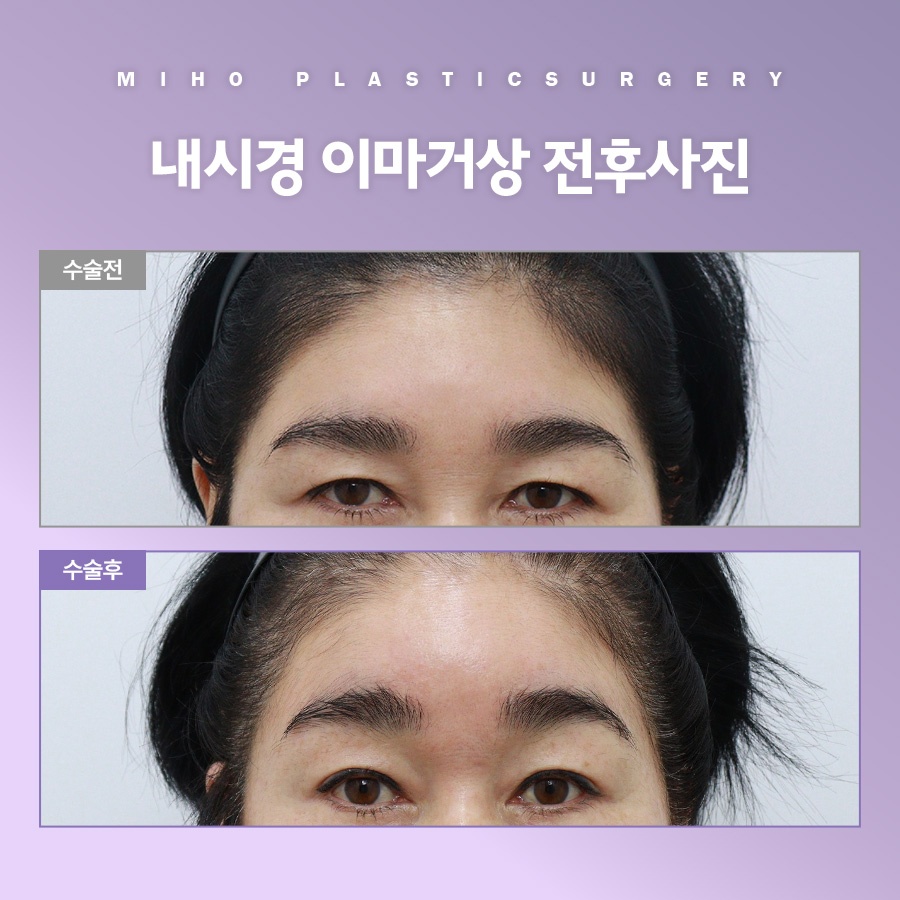
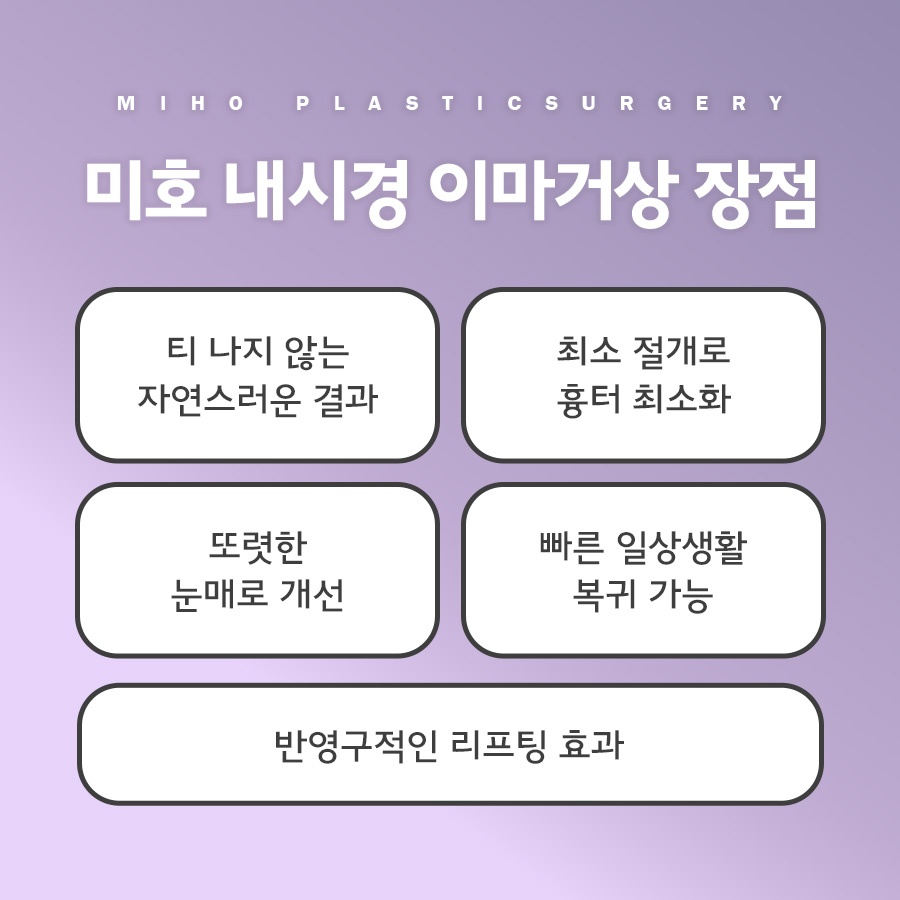
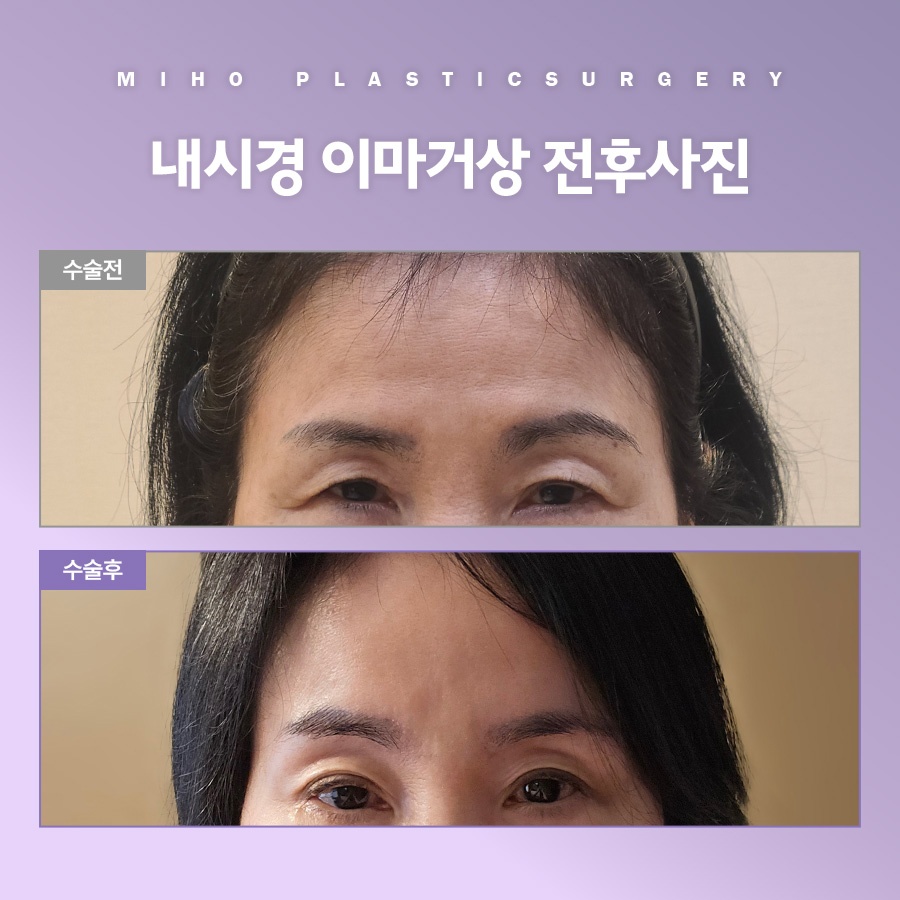
At our clinic, forehead lifts were performed
using an endoscopic camera.
Although the small incision made it impossible
to see the treatment area with the naked eye,
dissection was performed while viewing it
with a Full HD camera, offering the advantages
of delicate and safe treatment.
The procedure was performed while avoiding nerves and blood vessels,
so there was relatively little swelling or bruising after the procedure,
and headaches were also uncommon.
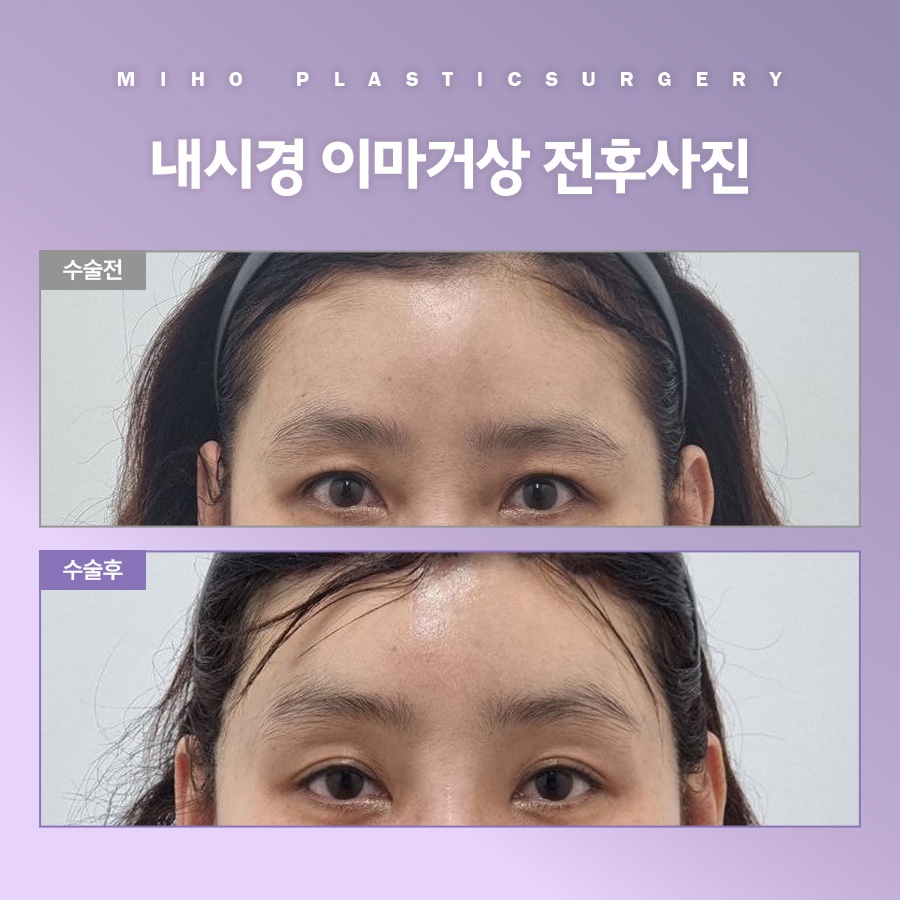
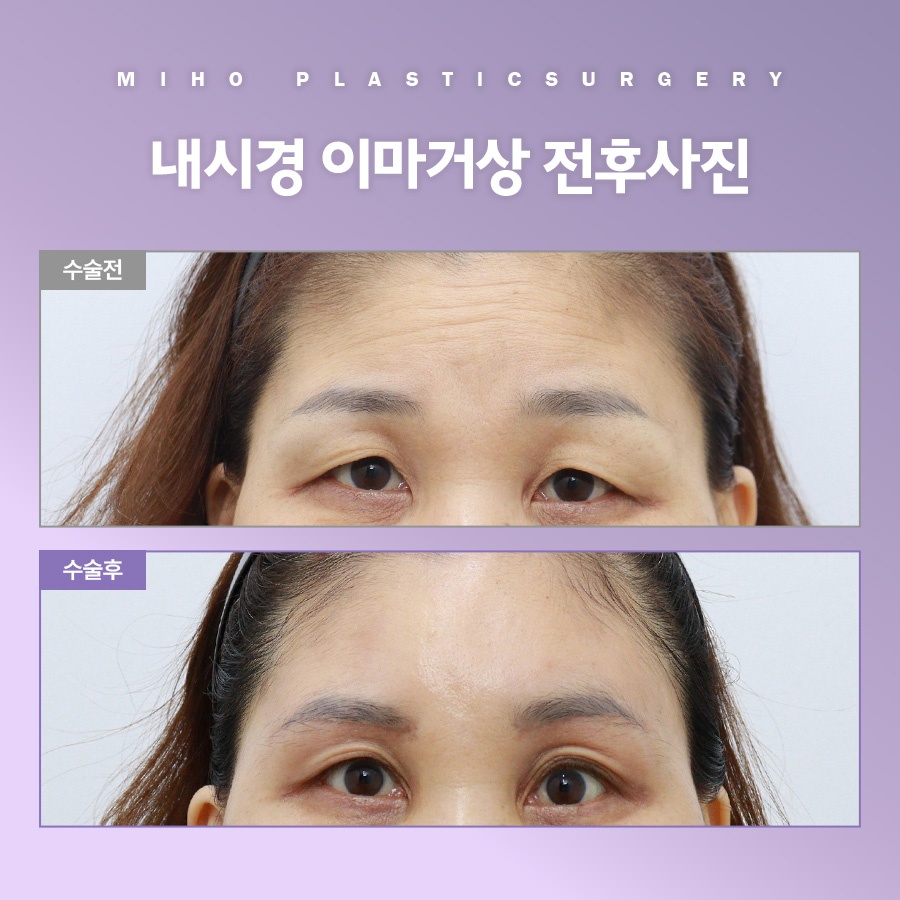
One aspect that received particular attention
was the position of the eyebrows.
Efforts were made to find a balance between
the forces that lift and lower the eyebrows,
so they would be positioned correctly.
Even if aging had not progressed significantly,
this method could also be suitable for people
whose eyebrows were naturally positioned low.
To achieve both a safe procedure and satisfactory results,
thorough preparation was necessary beforehand.
Patients were instructed to stop taking medications
and health supplements that interfere with blood clotting
starting two weeks before the procedure.
These included warfarin, aspirin,
vitamin E, and omega-3 supplements.
For prescription medications,
it was advisable to decide whether to stop them
after consulting with the prescribing doctor.
To support a smooth procedure and recovery,
smoking and drinking alcohol also needed to be avoided
before and after the procedure.
Nicotine and alcohol can increase the risk of infection
and tissue necrosis and can delay recovery.
When consulting with the doctor,
it was also important to clearly communicate your needs.
Rather than following the medical team's recommendations absolutely,
satisfaction was higher when your own preferences were communicated
and incorporated into the design.
When describing what you wanted,
it was better to be specific rather than abstract.
Instead of simply saying that you wanted to look younger than you do now,
you could tell the medical team to raise the eyebrow position
by a specific number of millimeters,
which would make it easier for them to create a plan.
For two to three days after the lifting procedure,
swelling and bruising could be significant.
To recover quickly,
it was necessary to make various efforts at home.
While sleeping, it was advisable to keep the head elevated above the heart.
During the initial period, cold compresses could be applied,
followed later by warm compresses,
which could help relieve swelling.
Until the stitches were removed,
care had to be taken to keep the wound area clean
and free from contamination.
Even after removal, strong pressure and impacts needed to be avoided
so that the incision would not reopen.
After the stitches were removed,
you could resume almost all daily activities.
However, strenuous exercise, swimming, saunas,
and similar activities needed to be avoided
for one to two months.
By combining your own efforts with the forehead lift aftercare program
provided by the medical institution,
you could accelerate recovery
and see the desired results sooner.


Previous image
Next image