
Even when someone’s facial features are not close to the standard proportions,
the reason their first impression and appearance can still be perceived positively
is that all parts of the face are well balanced overall.
Among them, the nose serves as the central axis of the face.
It plays an important functional role,
but aesthetically, it is also an especially significant feature that cannot be overlooked.
An appropriate height gives the face dimension,
while a nasal tip that connects naturally from the bridge creates a refined image.
Even if the height of the bridge is satisfactory,
if there are significant aesthetic concerns,
this may indicate that the shape around the alar wings and nostrils is not harmonious.
If you have been wondering how to make your nostrils look smaller,
I hope this article provides answers about what to consider
and what precautions to take when improving them.

Because aesthetic standards are influenced to some extent by trends,
what people seek changes slightly each year.
Rather than being swayed by these changes,
you should find a design that makes the most of the strengths of your existing facial features,
so that it can settle more naturally even as you age.
The nose is located at the exact center of the face,
and because it has height, its characteristics stand out even more from the side than from the front.
As a result, when the nostril wings are large,
the overall impression may look somewhat unsophisticated from every angle.
Through methods for making the nostrils look smaller,
the aesthetic aspects can be improved.

When the nose appears wide and blunt,
the nostril wings are generally reduced and corrected
to make the widened nostrils smaller.
When this approach is used,
the size of the nostrils is reduced from the front,
and the width of the broad nostril wings is reduced as well,
changing the overall appearance.
The available methods for making the nostrils look smaller,
along with their advantages and disadvantages,
vary depending on the incision technique.
Depending on the extent of the incision,
there can be differences in the procedure time,
the recovery period,
whether scarring and a sensation of foreignness occur,
how long swelling and bruising last,
and whether the issue recurs.

A non-incisional alar reduction procedure takes about 20 minutes,
so the procedure is relatively short,
and the recovery period is also relatively brief at about one week.
However, a sensation of foreignness, swelling, and bruising may occur,
and there is a relatively high possibility that the issue may reappear later.
The fact that it does not leave a scar is a positive point,
but the same issue may recur after six months to one year,
so it is necessary to consider this carefully.
An incisional procedure takes about one hour,
so the recovery period must also be taken into sufficient consideration.
Allow at least two weeks for the area to recover.
Although this method generally causes little sensation of foreignness,
it leaves a scar and is not a permanently lasting method.
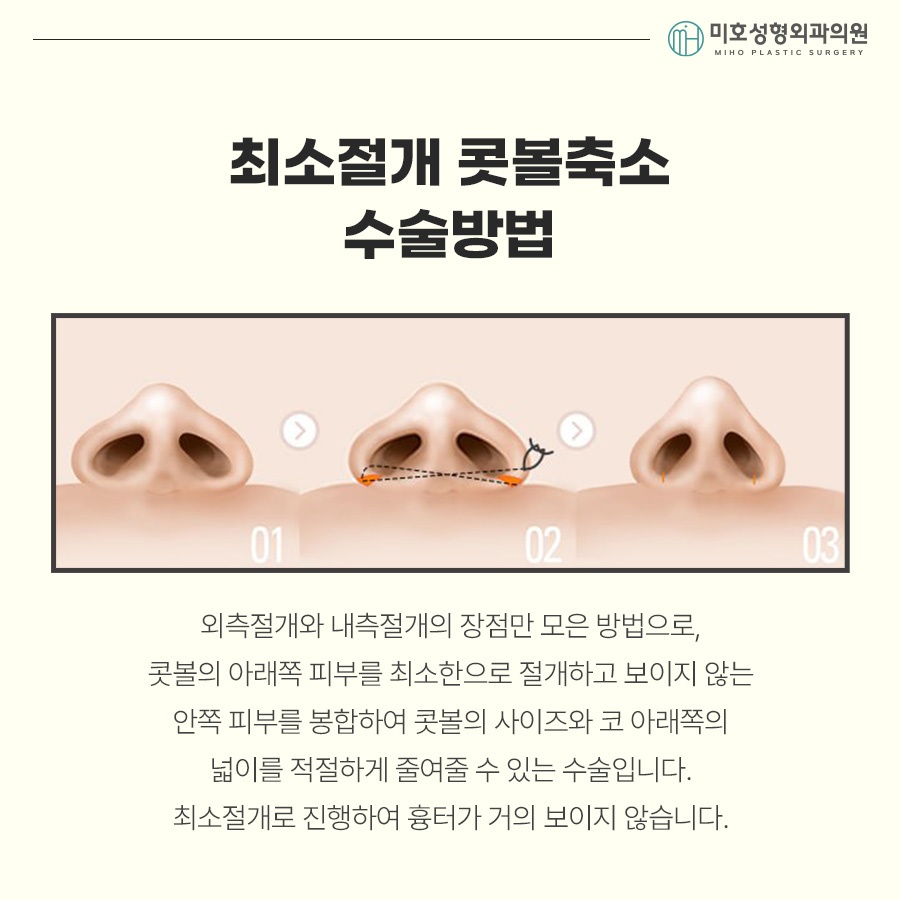
For this reason, a minimal-incision alar reduction method has recently been used,
combining the advantages of both approaches
while reducing their disadvantages.
This helps maintain the correction results
while significantly reducing the burden associated with scarring,
the sensation of foreignness, recovery, and other factors.
The procedure takes only about 20 minutes.
Small incisions are made in areas that are as inconspicuous as possible,
so the scars are barely visible.
Visible swelling and bruising vary from person to person,
but in most cases they are either barely noticeable
or relatively minor.
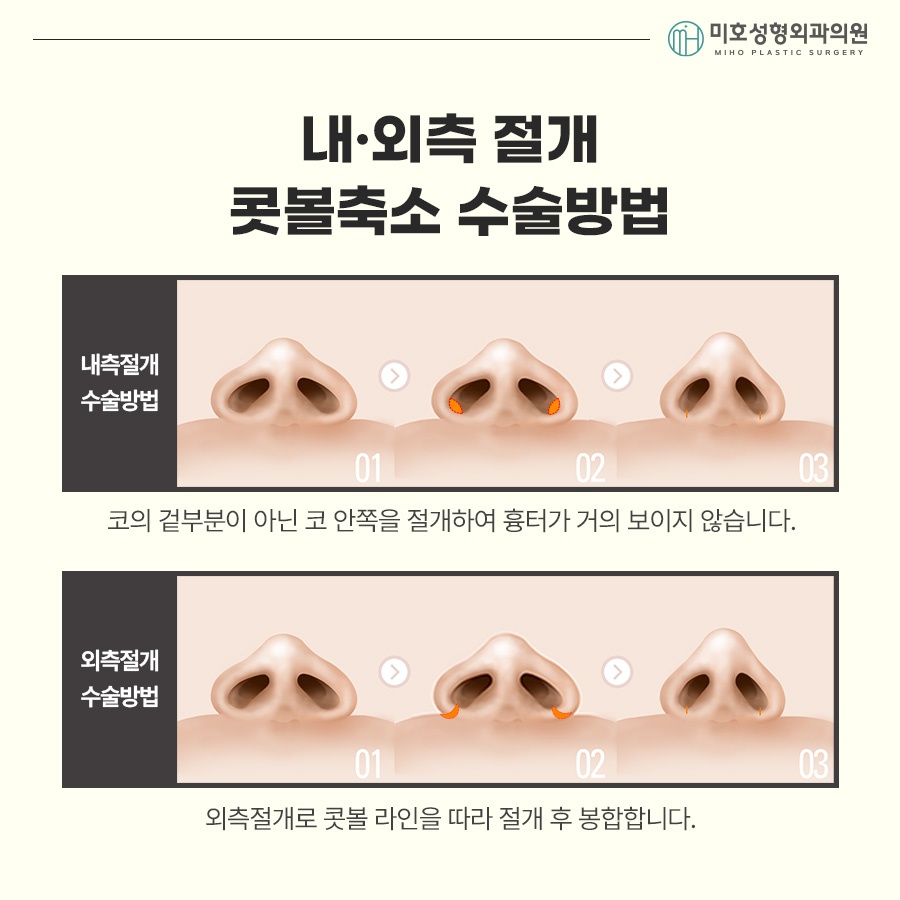
The minimal-incision alar reduction used to make the nostrils look smaller
does not involve an incision on the outer part of the nose.
It uses an internal incision method that begins near the entrance of the nostril,
on the inner area where the nose meets the face.
This keeps the scar invisible from the front,
allowing you to return quickly to daily life and continue your normal routine.
Unless the shape of the nasal bridge also needs improvement
or a functional issue is being addressed at the same time,
it may be possible to return to work without significant difficulty.
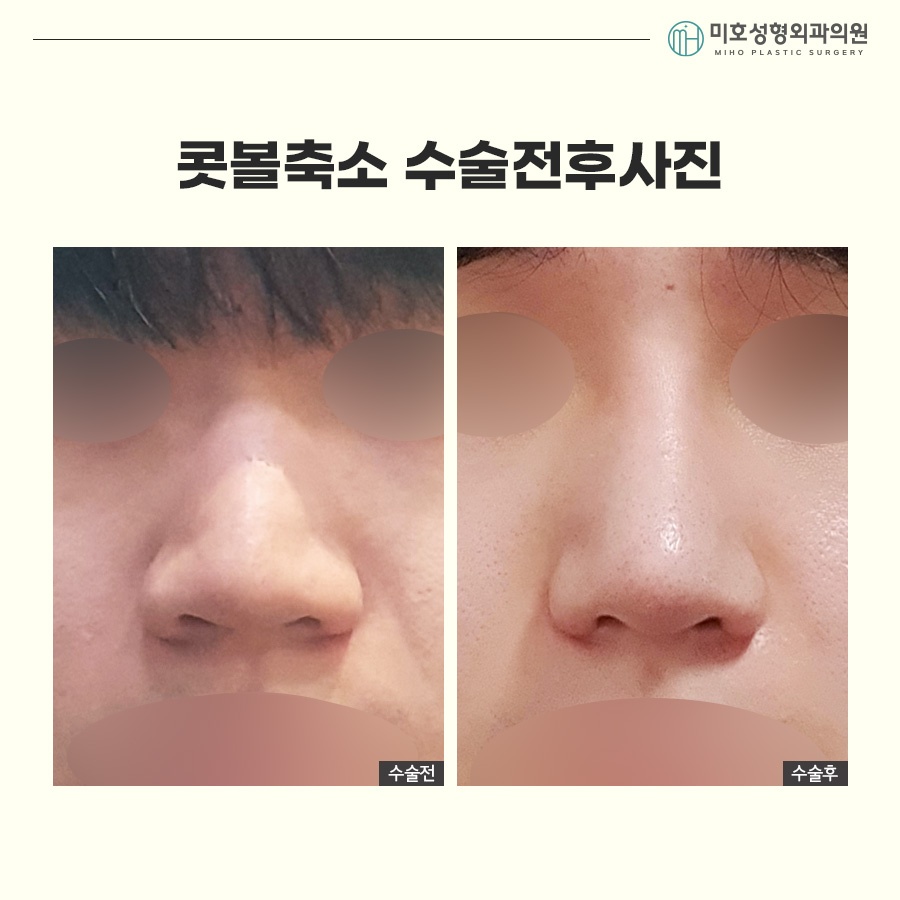
When treating only the nostril wings,
it is especially important to carefully determine the width and shape
that suit your facial shape, overall image,
and existing nasal bridge.
Because this approach leaves the existing facial features unchanged
while precisely correcting and supplementing only a specific area,
a different design must be applied to each individual
for the results to be positive.
Since the results are intended to last permanently once performed,
the procedure should be planned to correct the appropriate area
with the smallest possible incision
and to allow for a rapid recovery.
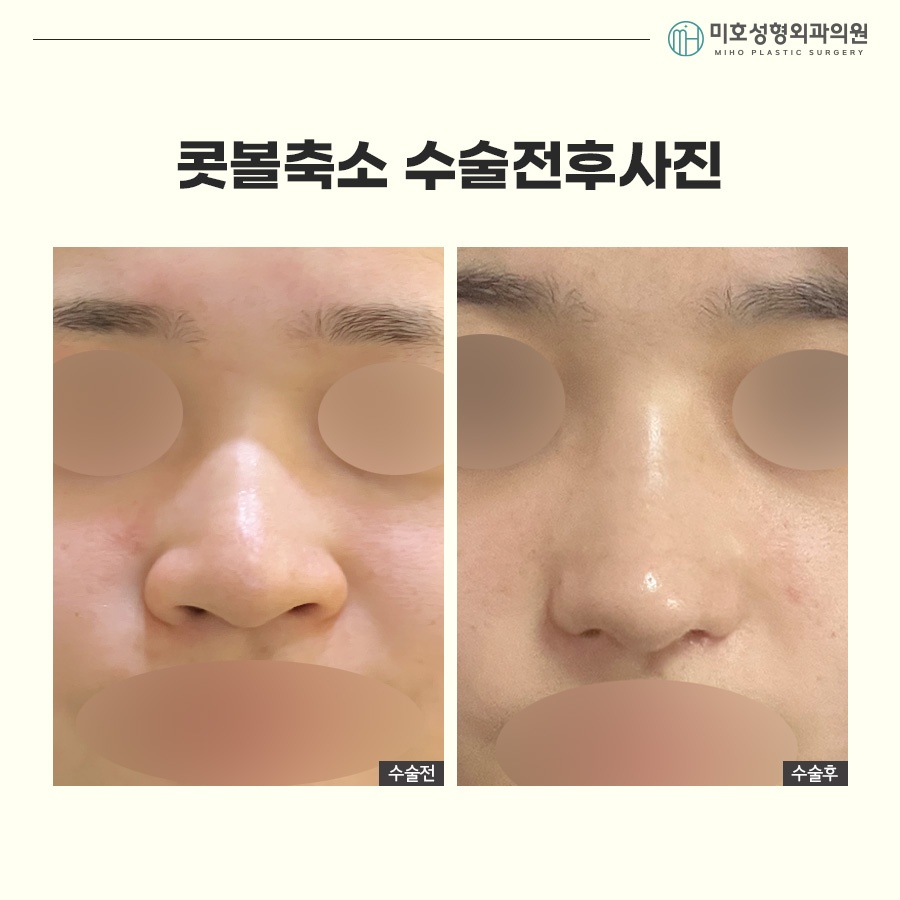
To undergo a procedure for making the nostrils look smaller
in a way that suits you,
you should find a clinic that fully considers and respects
your own aesthetic standards and desired outcome,
explains the process and method in detail,
and, as the operating surgeon, clearly explains their professional opinion
about areas that are unnecessary and helps you make adjustments.
The nose affects aesthetic factors significantly
even through subtle differences in shape,
as well as serving a functional role.
Therefore, through consultation, you should carefully determine
whether the provider has both clinical experience
and appropriate aesthetic standards and perspectives.
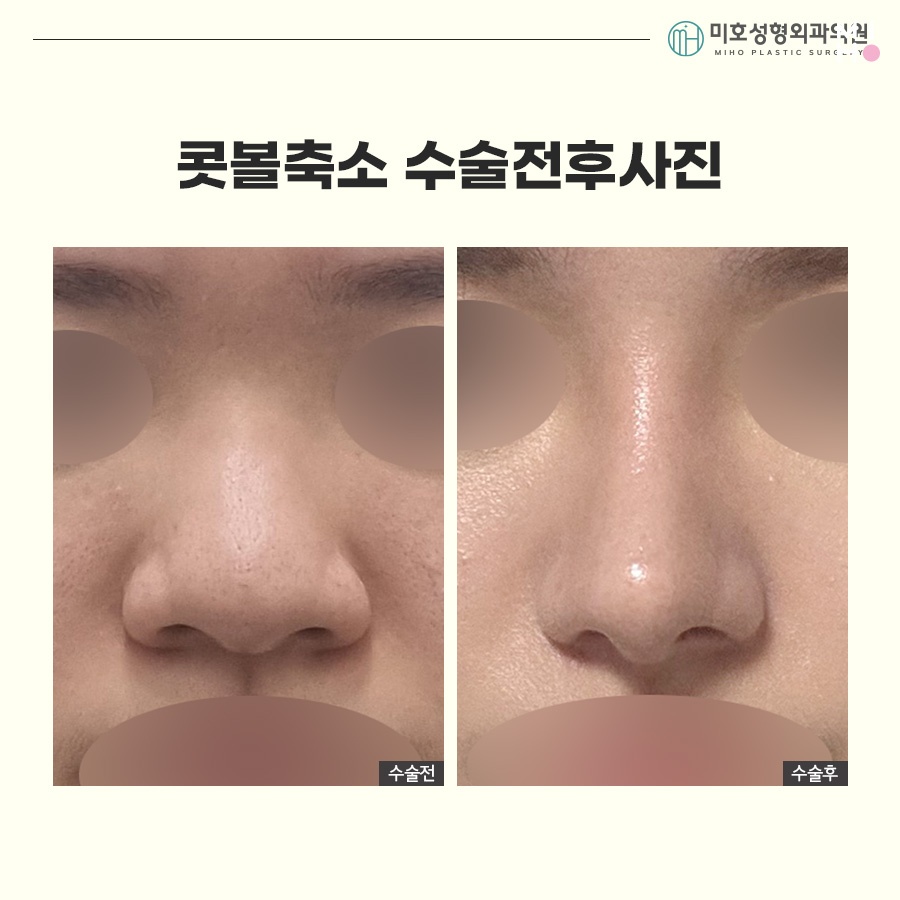
Even if the incision area is small,
the internal tissue has still sustained some necessary damage,
so be sure to get adequate rest and follow proper care instructions.
The first week requires particular caution.
In addition to the care program,
make sure you understand and follow all precautions
that you need to observe on your own at home.
Detailed instructions will be provided regarding when to use cold and warm compresses,
sleeping with your face slightly elevated for three days,
and other precautions.
The more carefully you follow them,
the faster your recovery may be.
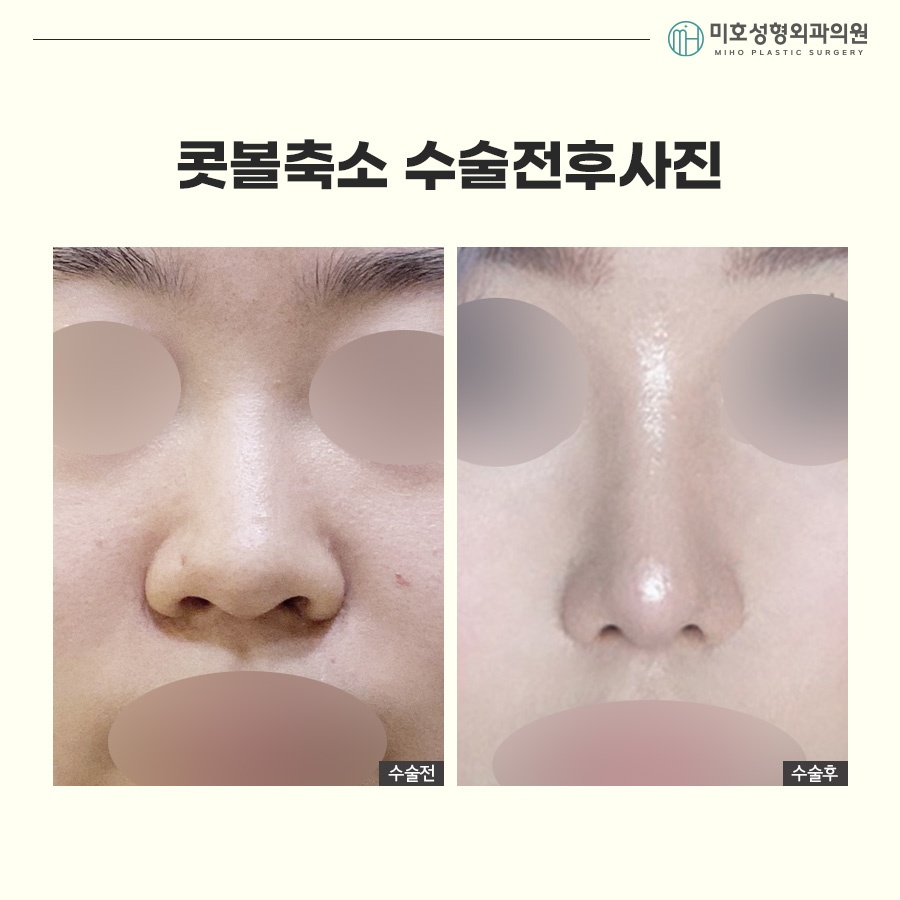
The inside of the nose has a complex structure
composed of various functional areas.
Even when reducing the size of the nasal wings, nostrils, or nostril wings,
it is important to consult a provider with sufficient anatomical knowledge
and experience addressing the area from multiple angles,
then carefully determine a design suited to your face.
In addition,
carefully check in advance whether the clinic has the appropriate systems and equipment
to safely carry out the procedure for making the nostrils look smaller.
Make your decision carefully,
and work toward an improvement that maintains appropriate results for a long time
without leaving you concerned about scarring.




Previous image
Next image