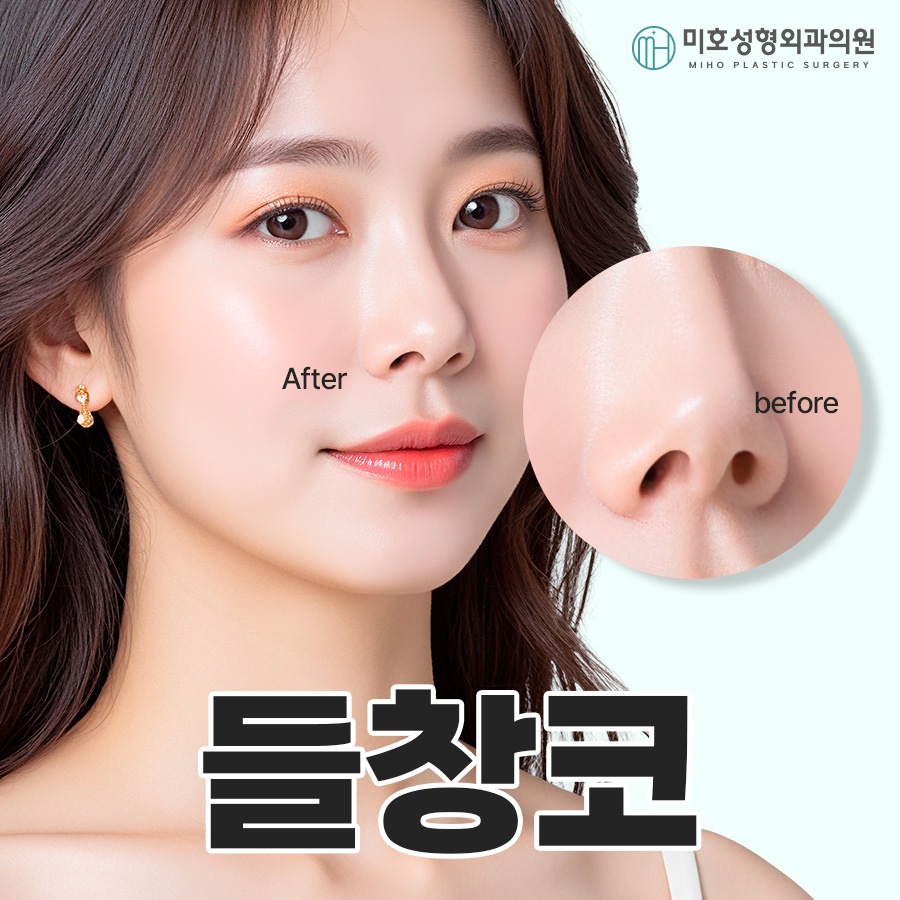
Often referred to as a “pig nose,”
an upturned nose
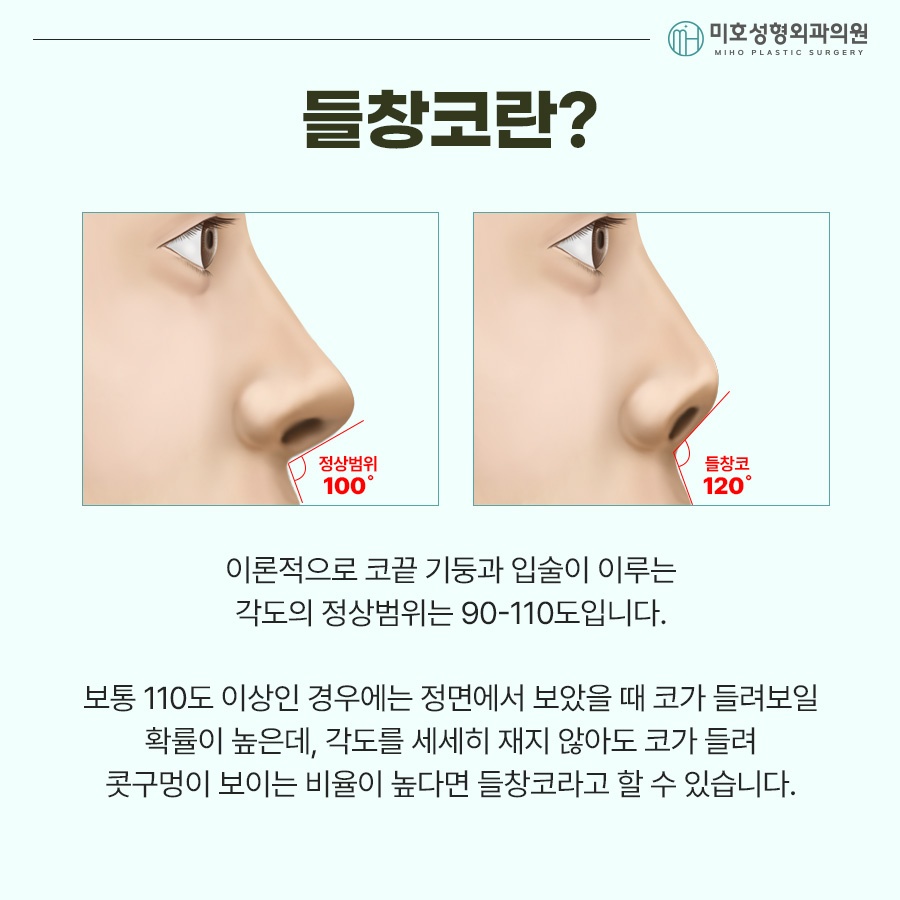
is characterized by nostrils that are clearly visible from the front
and a tip that points upward,
which can make the bridge of the nose appear shorter.
In addition, the nostrils may appear relatively large,
leading many people to consider correction.
Depending on the overall shape of the face, it can create a cute
and lively impression,
but more people seem to feel self-conscious about it
because it can make the face look larger or resemble a pig.
For those who feel that correction is necessary,
we will organize some points that may be helpful to know.
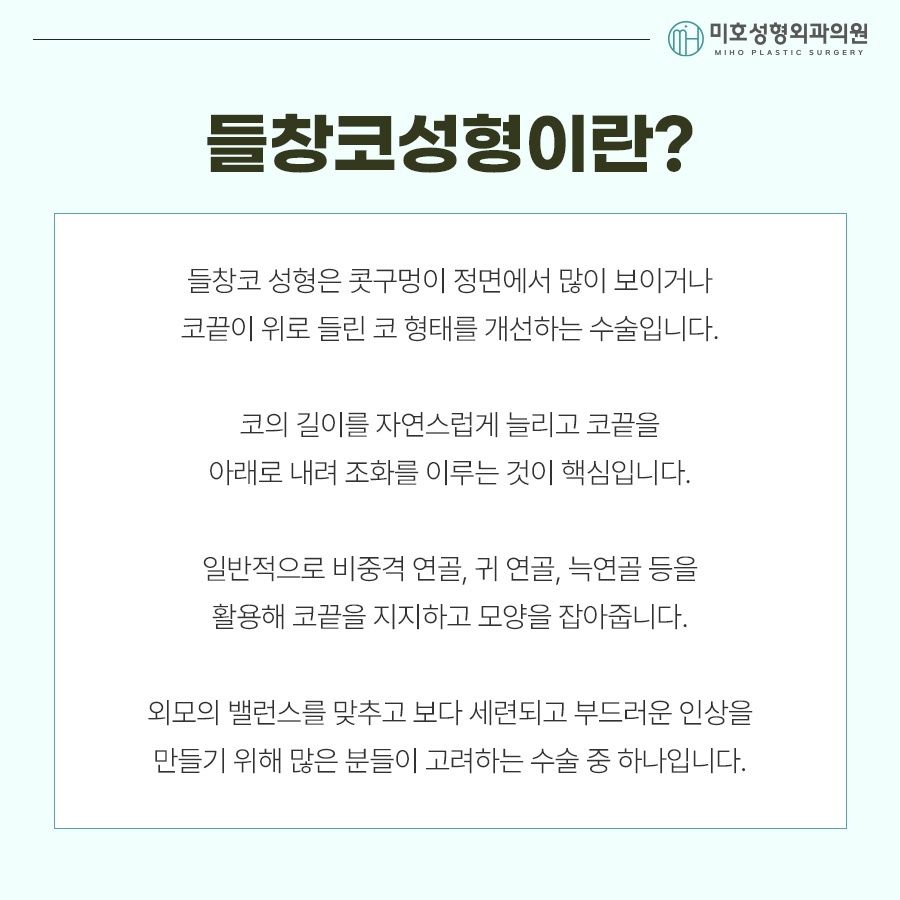
In physiognomy, an upturned nose is also considered
to allow a lot of money to slip away.
Because it is regarded as having more disadvantages than advantages,
improving it as soon as possible is considered beneficial in the long term.
There are several causes of this nasal shape.
First, it is often caused by insufficient development
of the surrounding cartilage or bones from birth.
The cartilage may not have developed sufficiently at birth
or may have grown abnormally,
causing the tip to turn upward or become twisted.
In most cases, it can be considered congenital.
Since major procedures are difficult at a young age,
simple nasal-tip correction is generally recommended.
An upturned nose can also develop for acquired reasons.
In rare cases, among people who have undergone procedures for other reasons,
the cartilage supporting the tip may weaken,
causing it to turn upward.
In addition, deformation and twisting may occur
when an implant has not been properly adjusted over time
or repeatedly shifts position.
Because this occurs more often than one might expect,
it is not necessarily considered a major complication,
but it can understandably be bothersome.
Correcting it promptly can be a way to improve satisfaction.
Finally, aging can also be another cause of change.
As people age, their skin naturally loses elasticity,
and the surrounding tissues also weaken.
As a result, the structures supporting the nose may sag,
or the cartilage may degenerate,
causing the shape of the tip to deteriorate.
Because it occurs alongside many other problems caused by aging,
one disadvantage is that natural improvement can be difficult.
Nevertheless, if the shape is properly established from an early stage,
it may instead provide firm support for the surrounding tissues
and help delay other age-related changes.
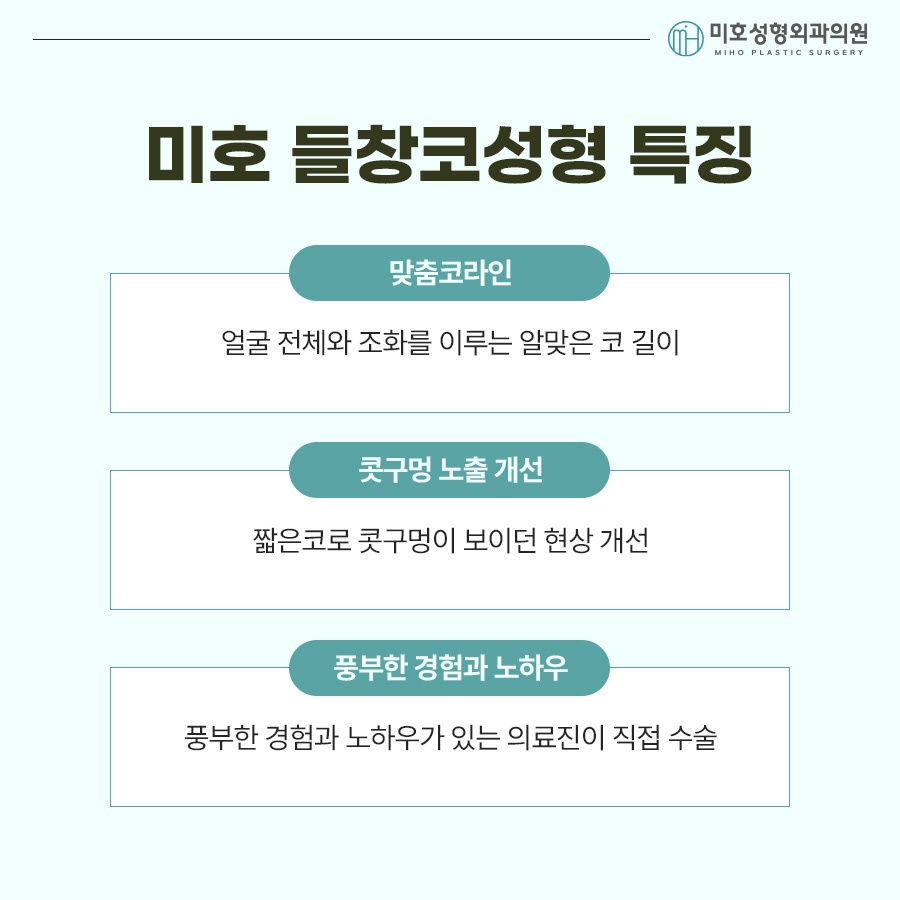
An upturned nose that develops for these various reasons
can cause not only aesthetic concerns
but also functional problems.
The most representative issues include nasal congestion
and facial asymmetry.
If nasal congestion is experienced from a young age,
it may naturally lead to mouth breathing
and even alter the oral structure,
so early action is necessary.
Facial asymmetry may also cause a person to use the muscles
on one side of the face more frequently,
which can ultimately lead to more asymmetrical muscle development,
so caution is needed.
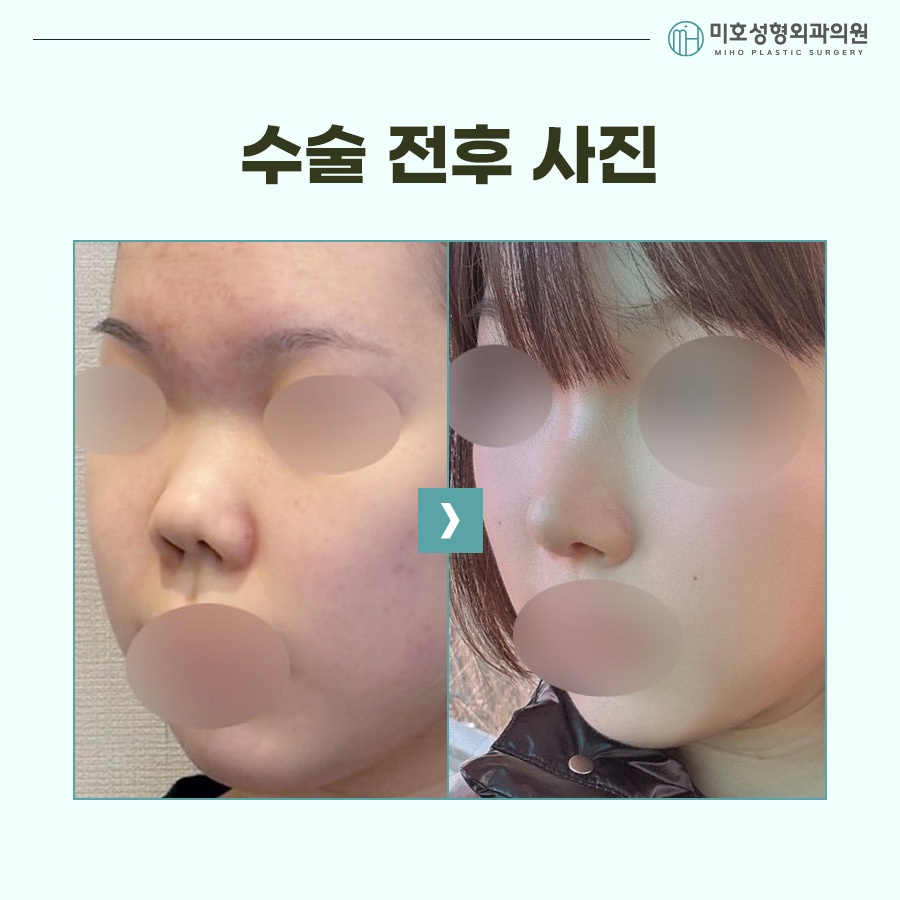
If you are concerned about an upturned nasal tip,
it is worth considering a nasal-tip procedure
or implant insertion.
If only the tip is a concern, the former may be appropriate.
If the nose is generally short and you feel that aesthetic improvement is needed,
we recommend considering the latter.
However, because the nose is located at the center of the face,
its appearance can change significantly depending on the result.
Please carefully review the following considerations
before making a decision.
Be cautious, as making a hasty decision simply because you want to change
or become more attractive may lead to regret.
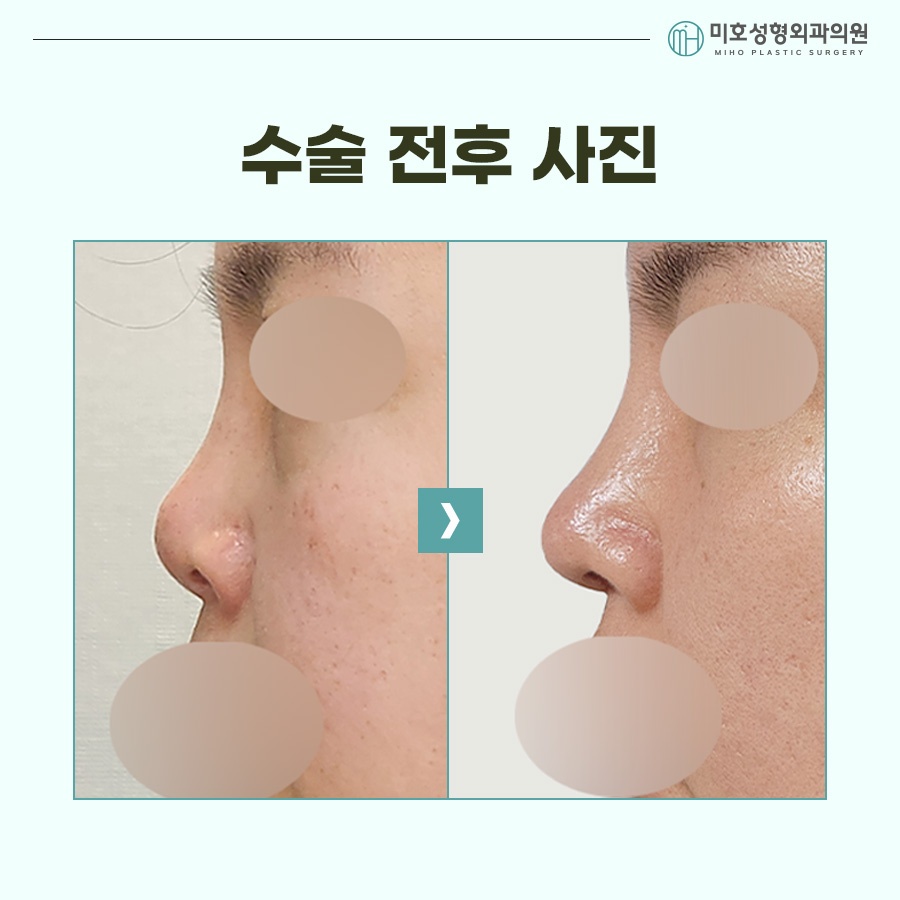
First, with procedures for an upturned nose,
the nose often becomes hard or the procedure becomes noticeable.
Therefore, you should carefully consider and decide
which method will be used.
To reduce the issue of a noticeable result,
you should find a clinic that uses autologous cartilage
and secures it in a flexible manner.
If cartilage harvested from your own body is used for the procedure,
it is possible to achieve a more natural feel
and maintain the shape more naturally.
This allows aesthetic concerns to be improved
while also addressing functional issues at the same time.
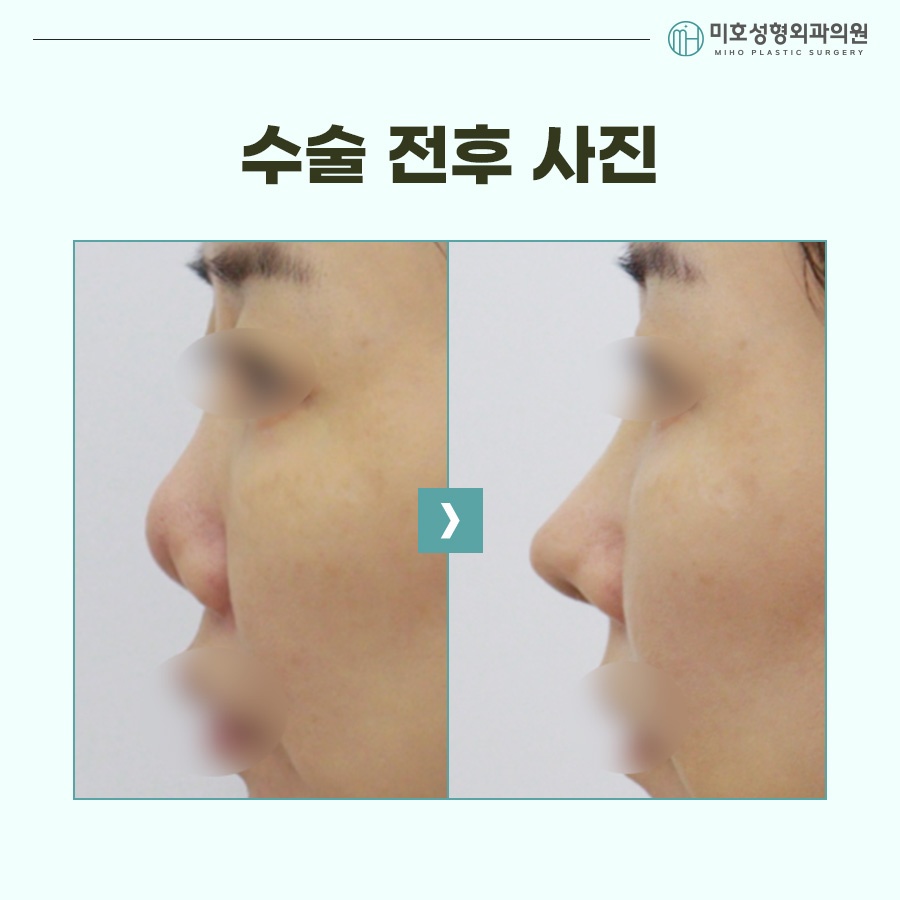
The method may also vary depending on your current condition
and the result you want.
If a slight change is sufficient,
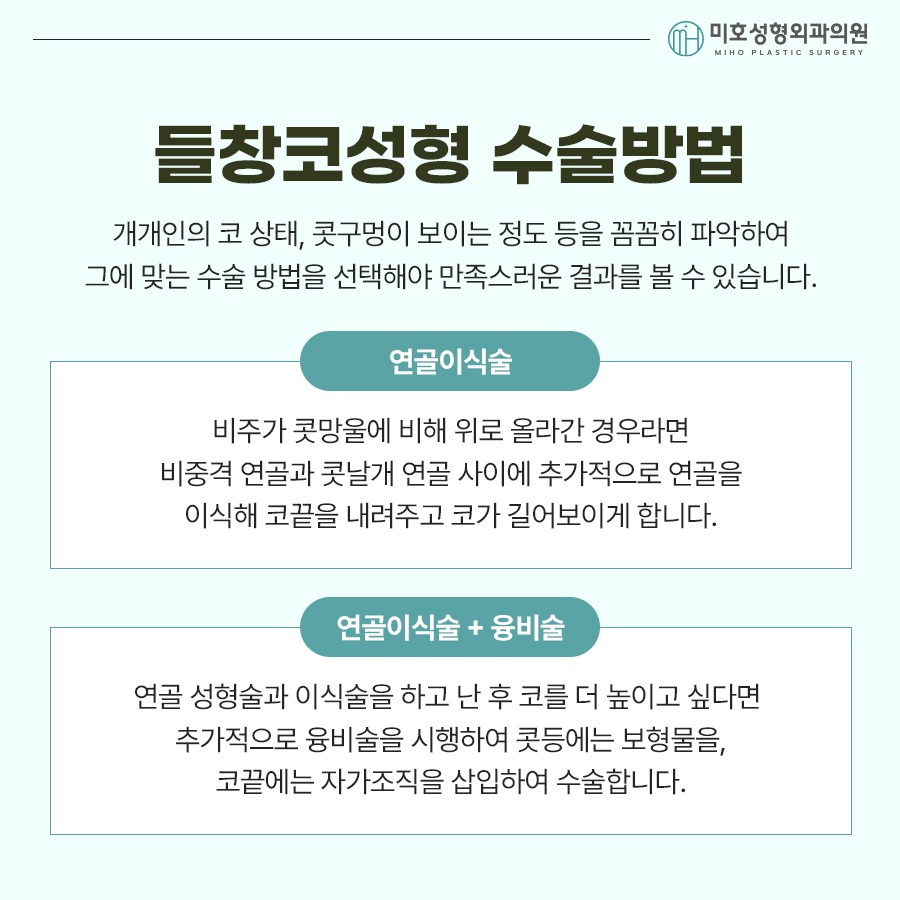
threads may be used to bring the tip together.
However, if you want a somewhat sharper and higher shape,
ear cartilage or septal cartilage from inside the nose
may be grafted to create the tip's shape artificially.
In this case, it may create a more refined and slender impression.
However, it may look slightly more artificial than a procedure using threads alone,
so it is also recommended that you review before-and-after results
to see whether the outcome looks natural.
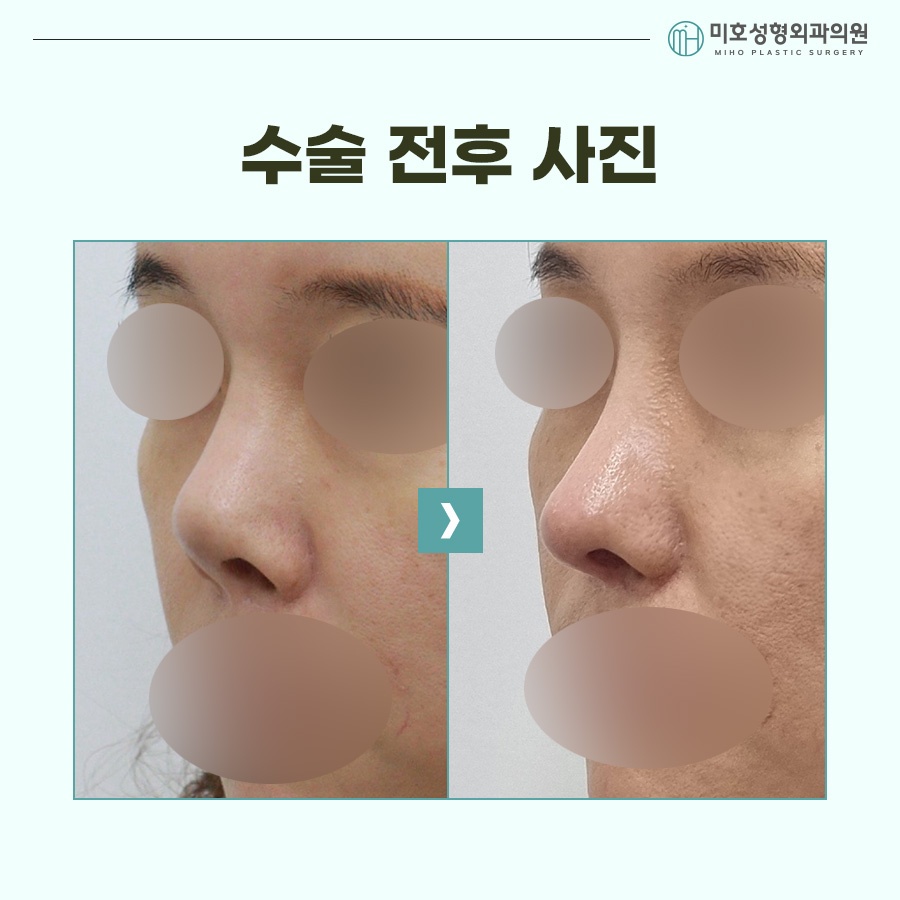
If nasal-tip correction alone is insufficient,
an implant may need to be inserted to raise the bridge
and make the nose appear longer.
Even in this case, several points require attention
for satisfactory improvement of an upturned nose.
First, check whether the clinic creates a design
that suits the shape of your face.
The shape of the nose has a greater influence on a person's impression
than one might expect,
so uniform procedures that do not take each individual's facial shape into account
can lead to unsatisfactory results.
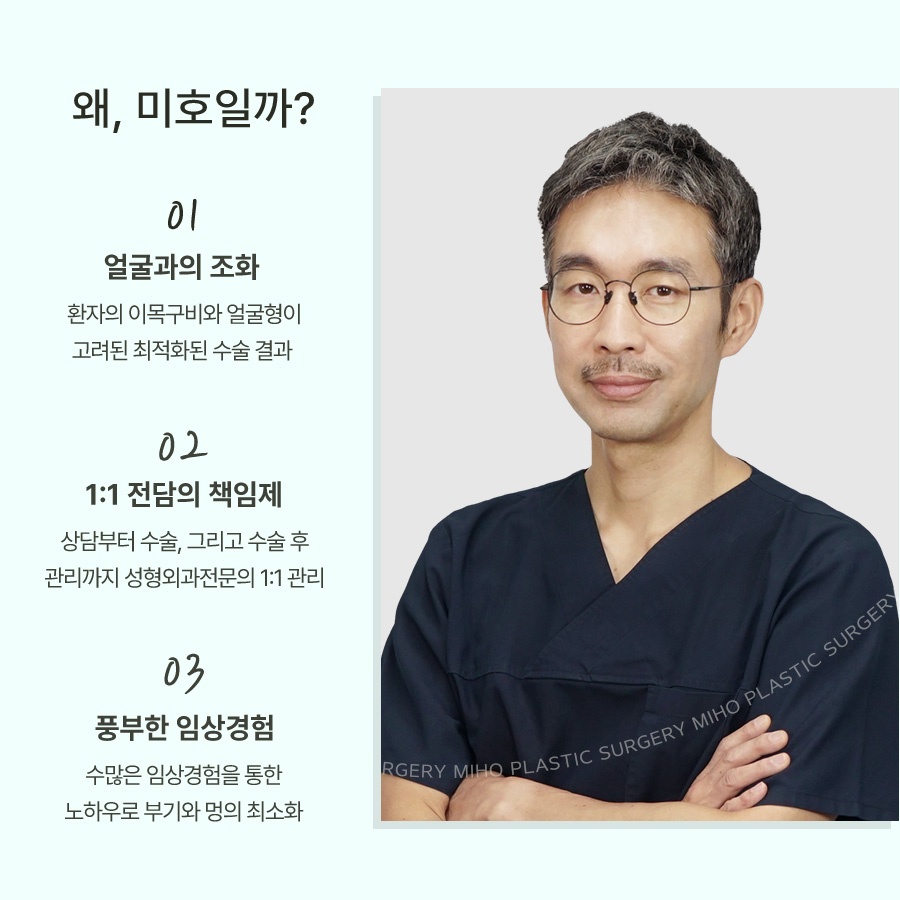
To create a result that harmonizes with your overall image,
it is very important to use an implant suited to the shape
of each individual's bones, cartilage, and soft tissue.
In fact, many clinics use pre-manufactured implants as they are,
rather than customizing them for each individual.
Be cautious, as the finished appearance may be more unnatural than expected.
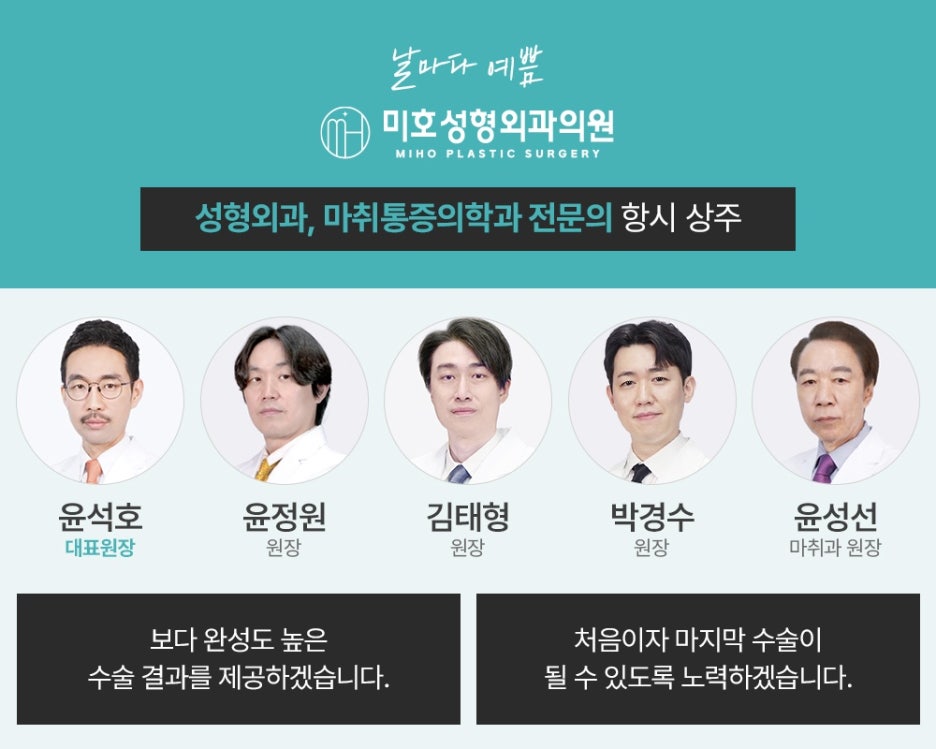
At Miho Plastic Surgery, we understand that many people are concerned
about an unnatural result.
Therefore, we use implants created through 3D simulation
based on individual photographs and CT scan results.
As a result, the silicone can settle naturally
without bending or lifting.
Since it has received FDA approval,
we use precise analysis to suggest the appropriate height and angle
for safely and naturally improving an upturned nose.


Previous image
Next image