
People who look significantly older than their actual age
often have extensive dark circles under the eyes,
or areas that should have a moderate amount of volume
become noticeably sunken,
creating a dull and dark appearance.
The skin and muscle tissue around the eyes
are especially prone to weakening.
Compared with other areas of the face, the skin here
is thinner, and fat is also lost sooner.
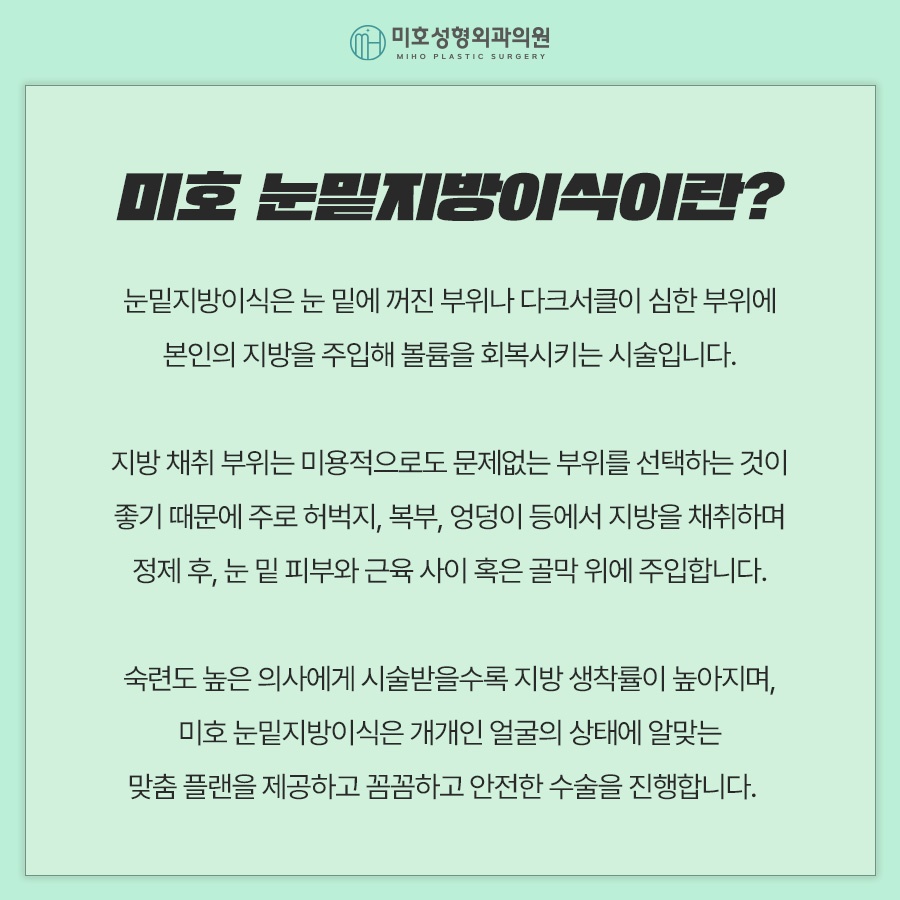
Under-eye fat grafting is used to fill sunken areas
and restore a more youthful appearance.
Excessive fat under the eyes can cause problems,
but having too little fat—enough for the underlying vessels
to become visible—can also create an older-looking appearance
and make the face look constantly tired and dark,
making it difficult to create a positive impression.
Dark circles may appear more extensive
when the fat layer is excessively thin,
or, conversely, when it is overly abundant.
These are among the problems that become apparent
as the elasticity of the skin layers and internal tissues
declines with age.
When the muscles and ligaments weaken,
the skin on the outer side also begins to sag.
What starts as fine lines can develop into deeper wrinkles,
creating not only an older-looking appearance
but also various functional inconveniences.
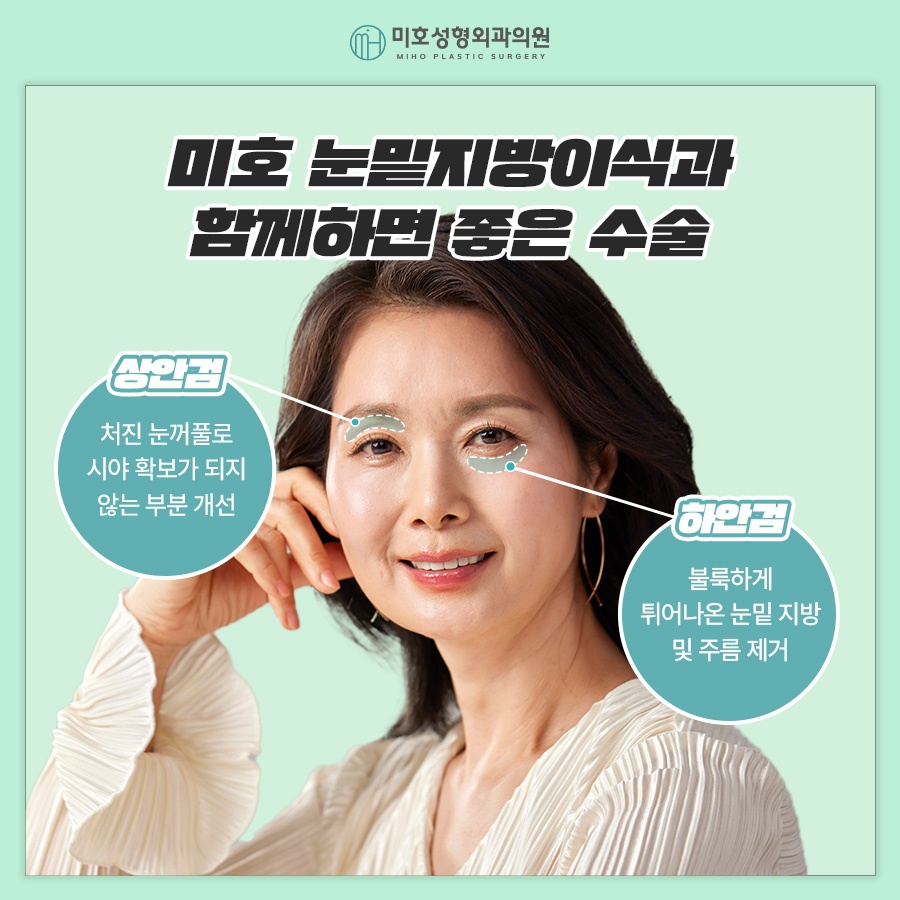
When considered together with under-eye fat grafting,
procedures such as upper and lower eyelid surgery,
which correct excess skin through excision,
may help create a brighter, cleaner appearance
closer to a youthful look.

If under-eye fat grafting is needed,
this approach may be worth considering.
Nano-fat grafting can be used to fill
sunken areas beneath the eyes.
It is applied when fat is needed but has been lost,
causing capillaries to show through the skin.
By harvesting a small amount of fat
and placing it where needed,
insufficient volume can be restored.
This can reduce features that made the face look older
and may also help improve pronounced dark circles,
while also offering aesthetic benefits.
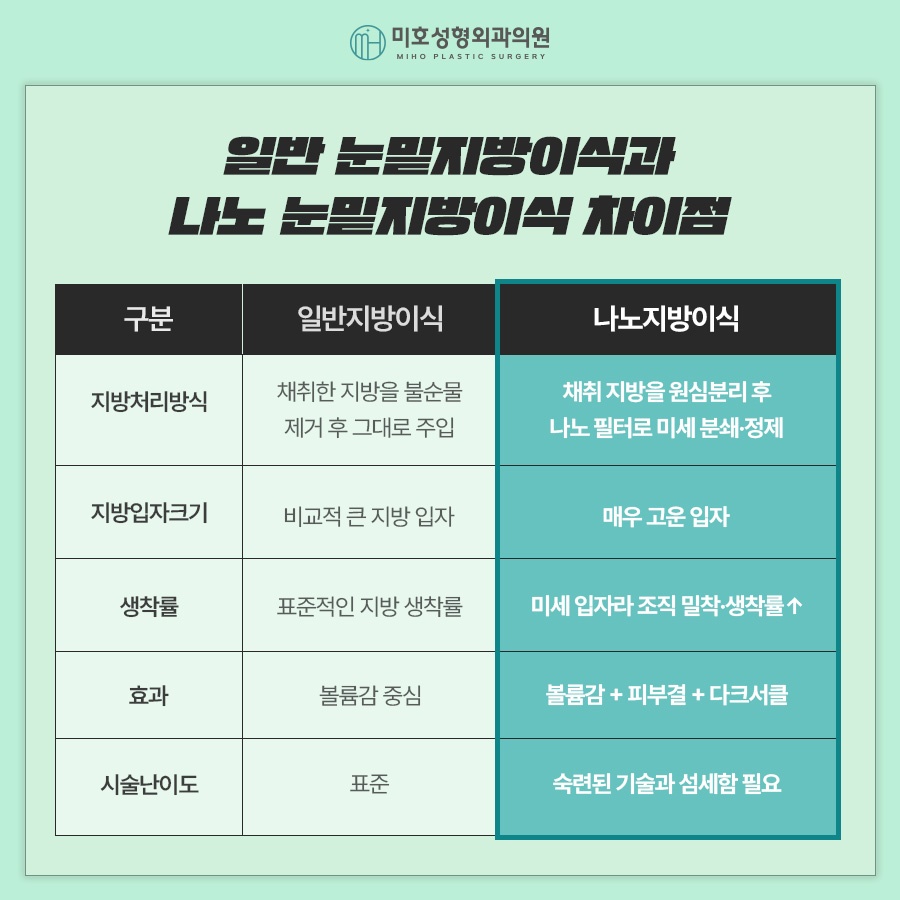
To improve the precision of fat grafting,
nano-fat grafting, which finely breaks down fat cells,
is widely used.
In this method, the harvested fat is first centrifuged,
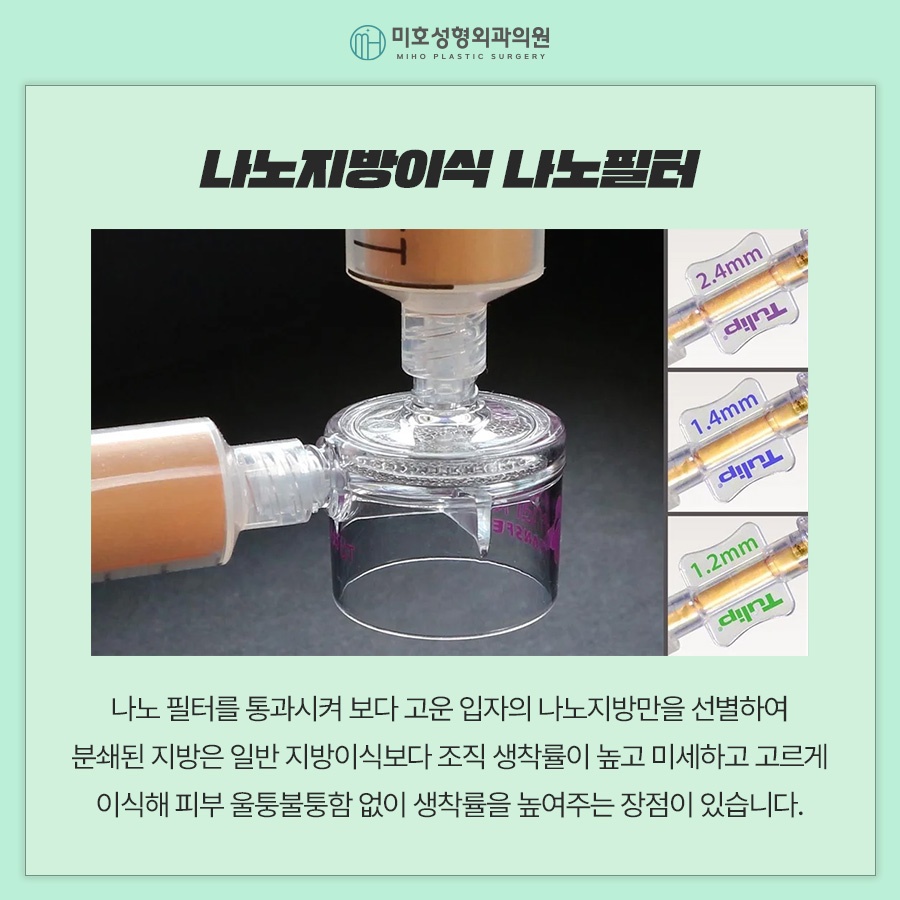
then passed through a nano-filter
that selectively removes larger particles
according to fat-cell size,
leaving finer nano-fat particles for use.
The processed fat has a higher tissue take rate
than conventional fat grafting,
and its fine, even placement offers the advantage
of helping improve fat retention.
These days, regardless of age,
dietary and lifestyle habits can cause
certain areas to age more quickly than others.
Rather than focusing on age,
it is necessary to identify the current cause
of concern in the affected area
and plan an approach suited to the resulting condition.
For middle-aged patients,
rather than simply adding fat,
fat repositioning is used to remove excess fat
and place it in deficient areas,
providing comprehensive correction.
When the orbital septum weakens,
orbital fat tends to move out of its original position,
protrude outward, and accumulate.
This is why the area beneath the eyes
becomes more puffy with age.
As the amount of protruding fat increases,
unnecessary contours develop in the area
and cast shadows when exposed to light.
This can make the dark circles appear widespread
and the complexion look dull.
However, removing all the fat
could instead create a need for under-eye fat grafting.
Therefore, it is necessary to carefully analyze and plan in advance
how much fat should be dissected
and whether it can be used to improve sunken areas,
in order to achieve a favorable result.
Fat repositioning is a method that can positively address
both functional and aesthetic concerns
when multiple issues are present beneath the eyes.
When protruding areas make the complexion look even duller
and create an older-looking appearance,
this method can address those areas
while also taking aesthetic considerations into account
and preserving insufficient volume where needed.
Although it can therefore be helpful,
it requires an equally delicate approach,
so careful consideration is important.
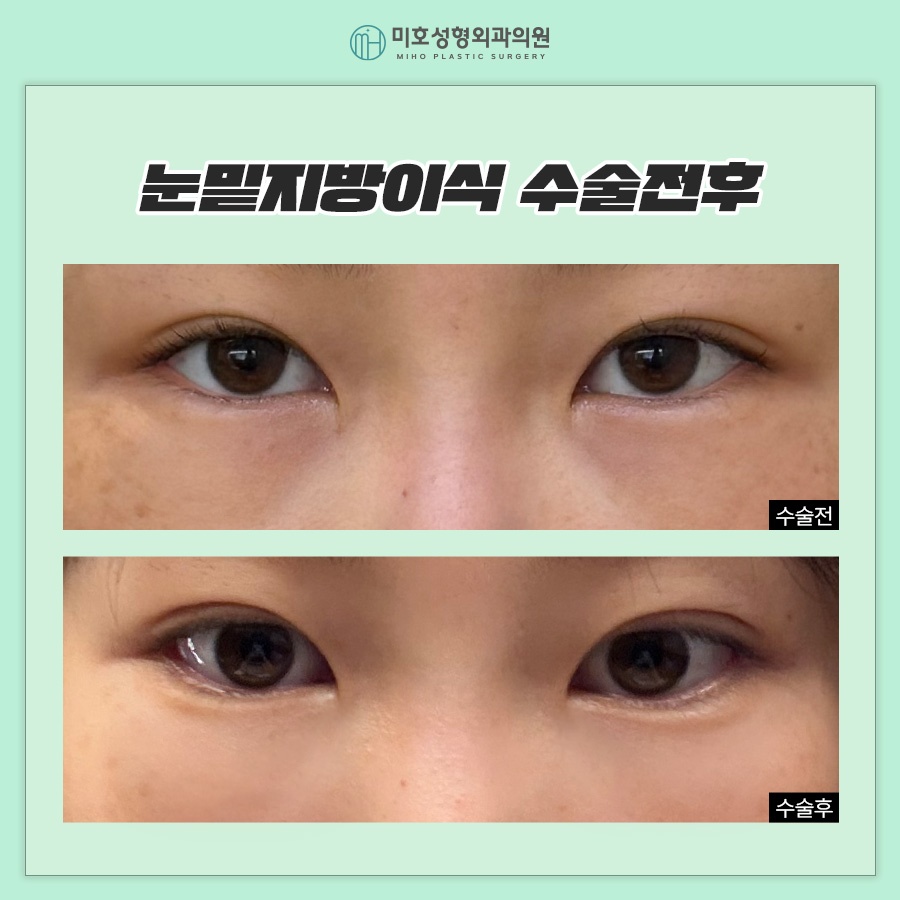
Contours in the tear trough are treated
by making an incision in the conjunctiva
and first addressing adhesions of the internal ligaments.
The fat dissected from areas with excess volume
is then appropriately placed in the deficient areas.
Once the weakened septum is secured again
so that it does not easily stretch and sag,
the problem area is corrected,
making the expression look softer
and the overall appearance cleaner.
However, it is important to take care
that the incision does not leave a significant scar.
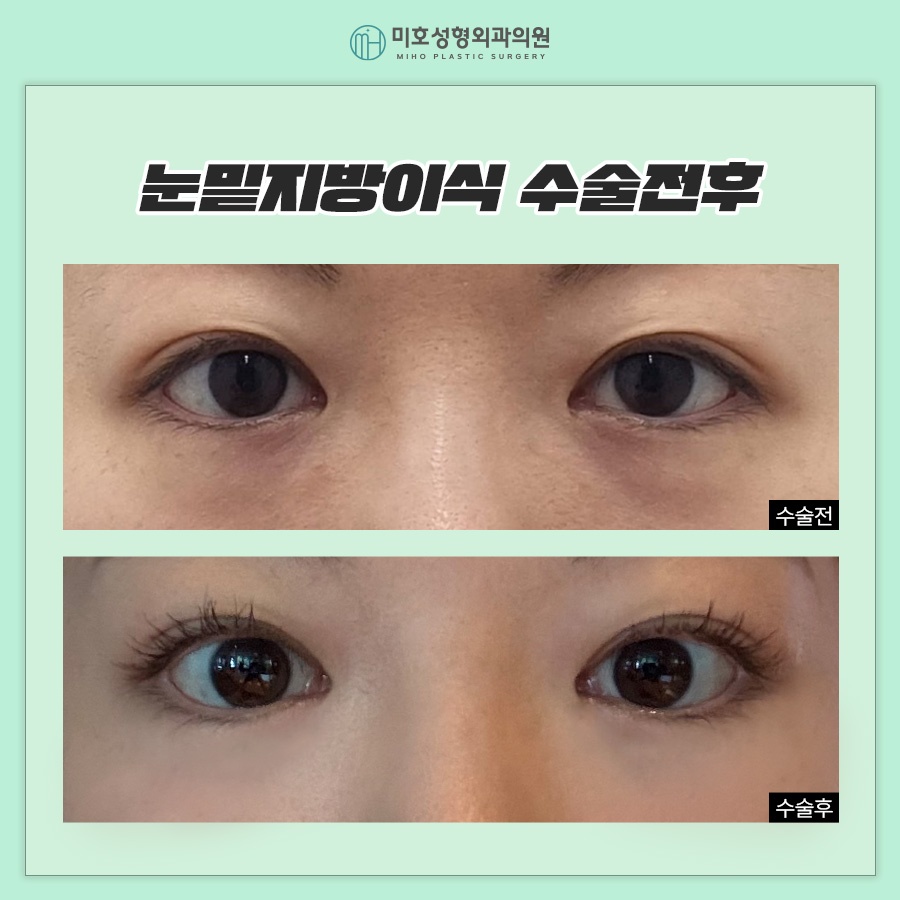
It is fortunate if under-eye fat grafting
can improve the overall impression more positively.
However, if the eyelids have sagged severely,
or the surrounding skin has been damaged
and vision has also been affected as a result,
other approaches—including upper or lower eyelid surgery
and a facelift—may be needed
to correct the additional issues in a harmonious manner.
There are various approaches that may help,
and the appropriate option differs depending on
what causes and circumstances are currently present.
Therefore, sufficient consideration through
detailed examinations and consultation is necessary.
An appropriate plan may differ from person to person.
Since there are many details to consider,
including structural concerns and harmony
with the other facial features,
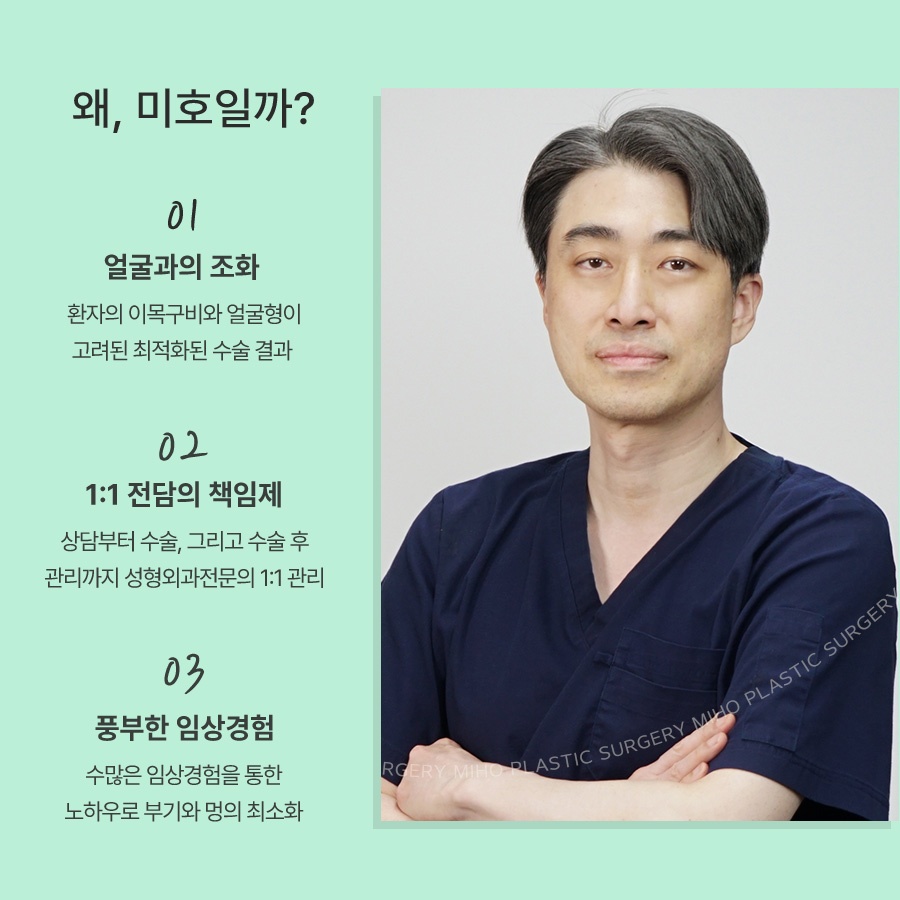
you should carefully assess the surgeon’s capabilities
and clinical experience.
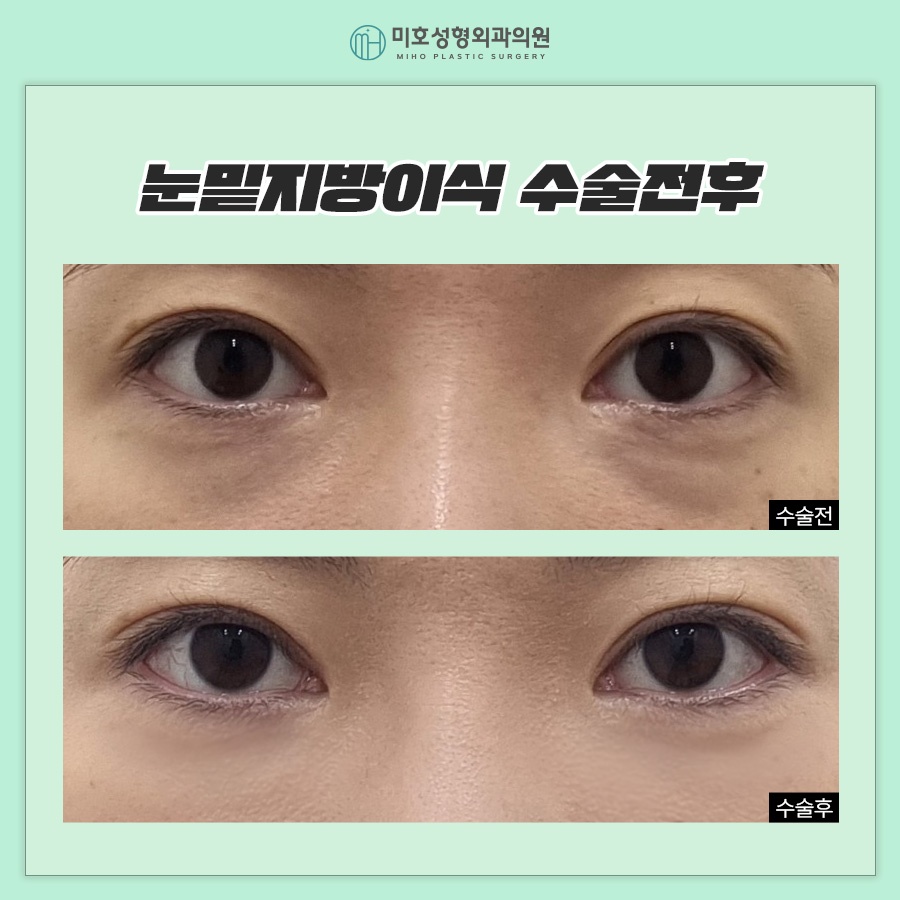
For office workers, the amount of time needed
for recovery is also an important consideration,
so be sure to examine this in detail.
Generally, initial swelling lasts for five days.
Because the internal tissues are also treated,
proper healing depends on postoperative care,
and inflammation may occur,
so caution is required.
If the clinic has a well-established care program,
you can receive appropriate assistance during recovery.
Therefore, check what kind of follow-up care
will be provided and recover properly.
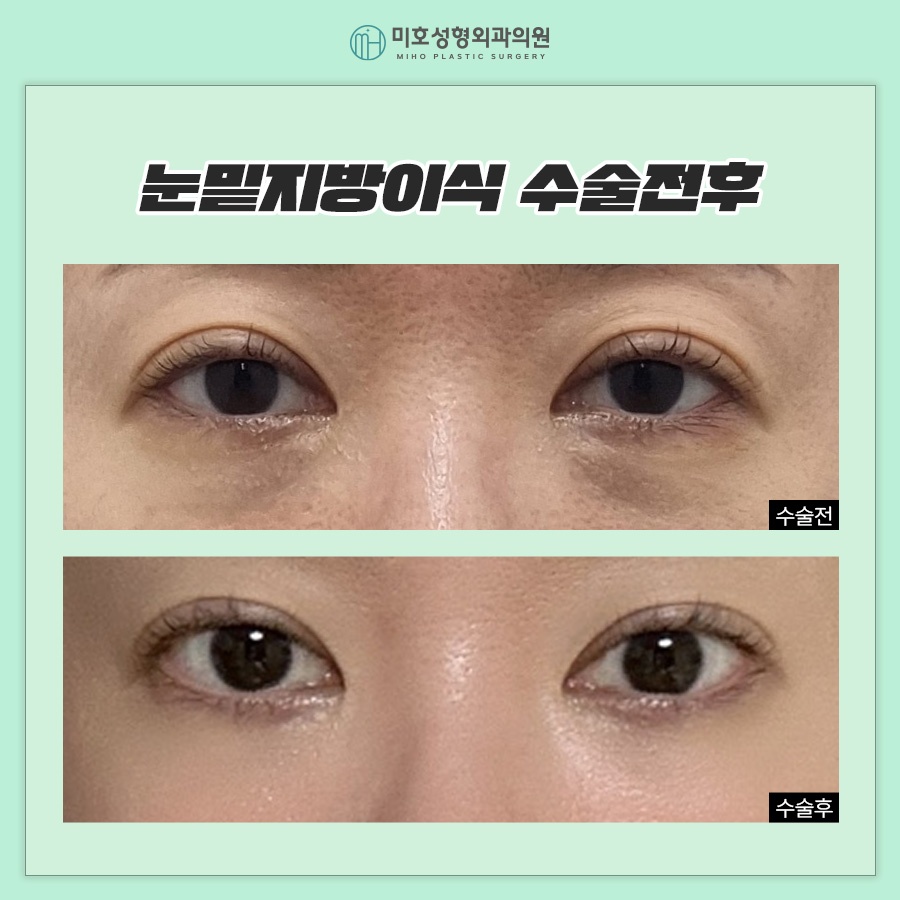
Discovering that aging has suddenly progressed
in your own appearance can inevitably feel stressful.
However, there are various approaches that may help,
and you can receive appropriate assistance suited
to your individual circumstances.
Consider your options carefully before making a decision.
With under-eye fat grafting, placing too much fat
can disrupt a natural appearance.
Likewise, removing too much during repositioning
can also cause problems.
Therefore, above all, it is important to consider
the overall harmony of the face first.
Take sufficient time to determine whether the provider
can present a plan suited to your circumstances
and guide you toward an appropriate result
based on extensive clinical experience.
Make your decision after thorough consideration,
and move forward with your life with the appearance
you hoped for.



Previous image
Next image