
Although aging is a natural phenomenon
that appears in everyone,
in the case of the face, where the
facial muscles move frequently,
the pace of aging and its effects may
be accelerated depending on everyday
habits or skin characteristics, sometimes
leading to concerns that people keep
to themselves.
Among these areas, the skin around the
eyes and on the forehead is thin and
easily becomes lax. This can cause not
only aesthetic concerns but also problems
such as increasingly drooping eyelids,
narrowed vision, and irritation around
the surrounding area, so care is needed.
In such cases, it is necessary to make
corrections using an appropriate method
that can positively improve sagging. Of
the various options, I would like to
explain in detail the situations in which
reviewing forehead lift surgery experiences
may be helpful.

When the skin loses elasticity, the
strength of the skin tissue and muscles
naturally weakens over time, causing them
to sag downward. Wrinkles may also become
more pronounced in areas that move often,
or volume may be lost, creating a sunken
appearance.
There are various ways to improve both
wrinkles and hollowness. Methods that
provide rapid assistance by injecting
fillers, for example, may see the issue
reappear over time, so they should be used
selectively and only where truly needed.
Among lifting procedures that more directly
pull up sagging areas, forehead lift surgery
is suitable for correcting sagging in the
upper third of the face. It can offer
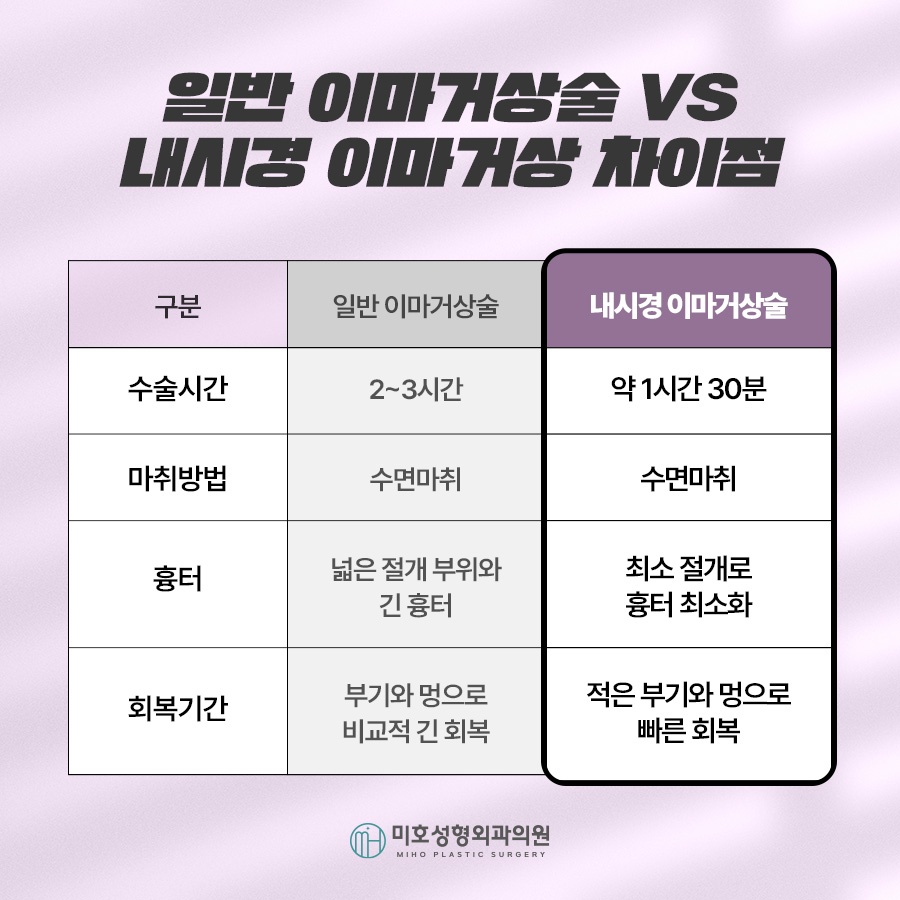
long-lasting results, and endoscopic lifting
can reduce the burden during recovery by
reducing the extent and visibility of scars.
The reason wrinkles develop more easily
and the skin becomes lax in the upper
part of the face than in other areas is
that our facial muscles move constantly,
not only when speaking with others but
also when we are alone—even when we are
unaware of it.
Because this is an area with especially
thin skin, wrinkles may develop according
to the overall aging process even when
the area has been well cared for. Reduced
elasticity and weakened muscle strength
may occur together, leading to aesthetic
and functional problems at the same time.
If this is not properly corrected, the
strength used to open the eyelids may also
weaken. This can lead to the bad habit of
using the forehead excessively to open the
eyes, and if it continues for a long time,
the likelihood of developing deep forehead
wrinkles may also increase.
This is why it is important to review
forehead lift surgery experiences in advance
and proceed at the appropriate time based
on a suitable method and plan.

A lifting procedure involves making
incisions, pulling the lax tissue firmly,
and securing it in place, so the results
afterward are also permanent.
However, because areas must be incised
and dissected, the associated burden and
recovery period must also be considered.
After carefully identifying which areas of
the face are aging particularly quickly,
the procedure should be adjusted to avoid
overcorrection.
Although this varies from person to person,
scars may sometimes be excessive, so
incisions are often made near the scalp.
Occasionally, however, this can damage the
hair roots, which is why interest in
endoscopic lifting—which more noticeably
reduces the potential risk of tissue damage—
has gradually been increasing.
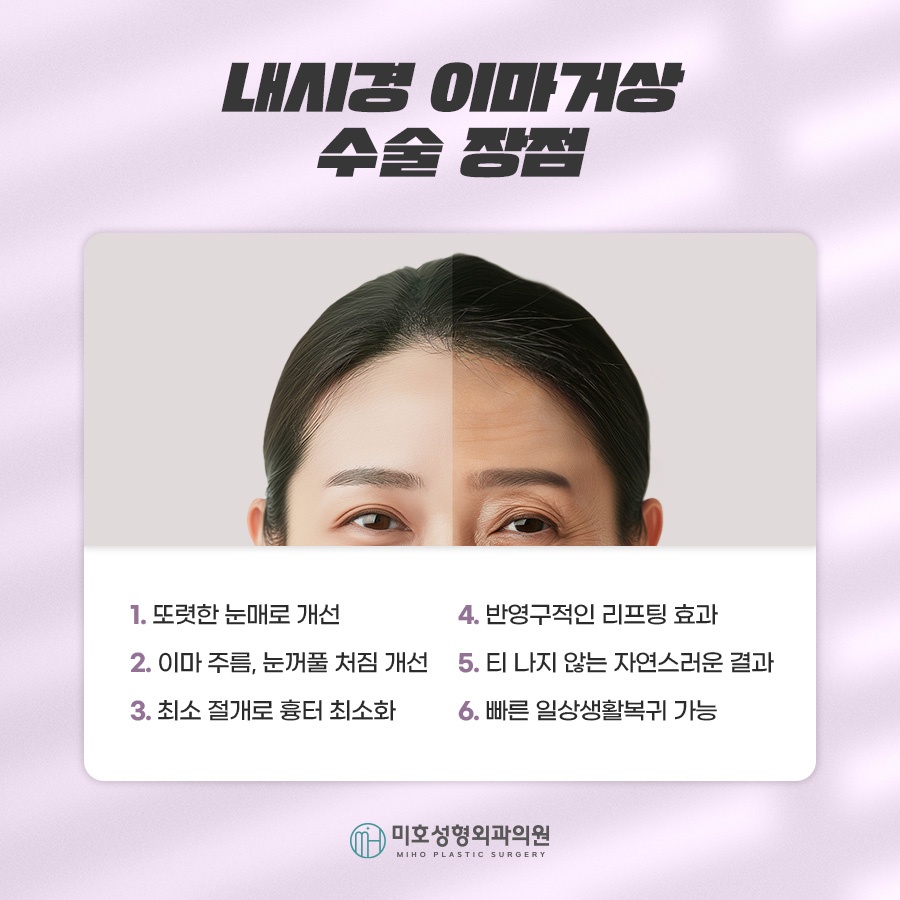
The reason endoscopic lifting is receiving
attention among forehead lift surgery
experiences is that it allows instruments
to be inserted through only a few small
incisions in areas that are barely visible,
then used to firmly lift and secure the
muscle layer and sagging skin.
It can address various signs of aging in
the upper part of the face, including the
outer eye area, the area between the
eyebrows, and the forehead. It is also
noteworthy that weakened internal tissue
is physically lifted and secured, allowing
the result to remain similar to its initial
appearance even as time passes.

To keep the scars from being visible,
three to five small incisions are made
slightly inside the hairline, just large
enough for the thin instruments to pass
through. Depending on the situation, some
cases can be improved with only three
incisions.
Using endoscopic equipment, the surgeon
carefully examines even areas that cannot
be seen directly, lifts the muscle layer
upward, and then secures it firmly with
sutures so that it does not easily sag
again even if aging progresses.
Because the face has many contours and
three-dimensional structures, including
front and side views, each area must be
designed in detail and corrected with an
appropriate amount of tension to achieve
a natural result.
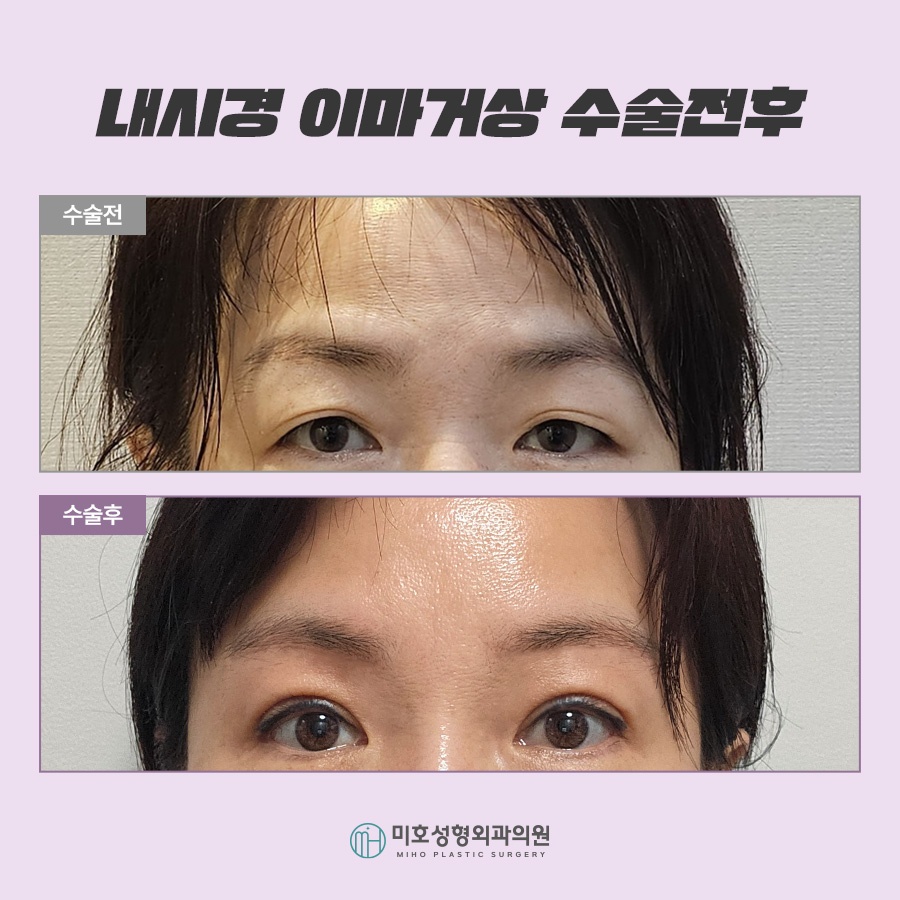
Because this method requires delicacy,
you should consider whether the surgeon
has extensive clinical experience in the
field and a solid understanding of anatomy
before making a decision.
The face contains closely and intricately
connected structures requiring care,
including nerve cells and blood vessels.
When equipment is inserted for correction,
injury must be avoided. Since the process
involves handling various areas, including
the skin and retaining ligaments, it is
complex, and results can differ considerably
depending on the surgeon's expertise.
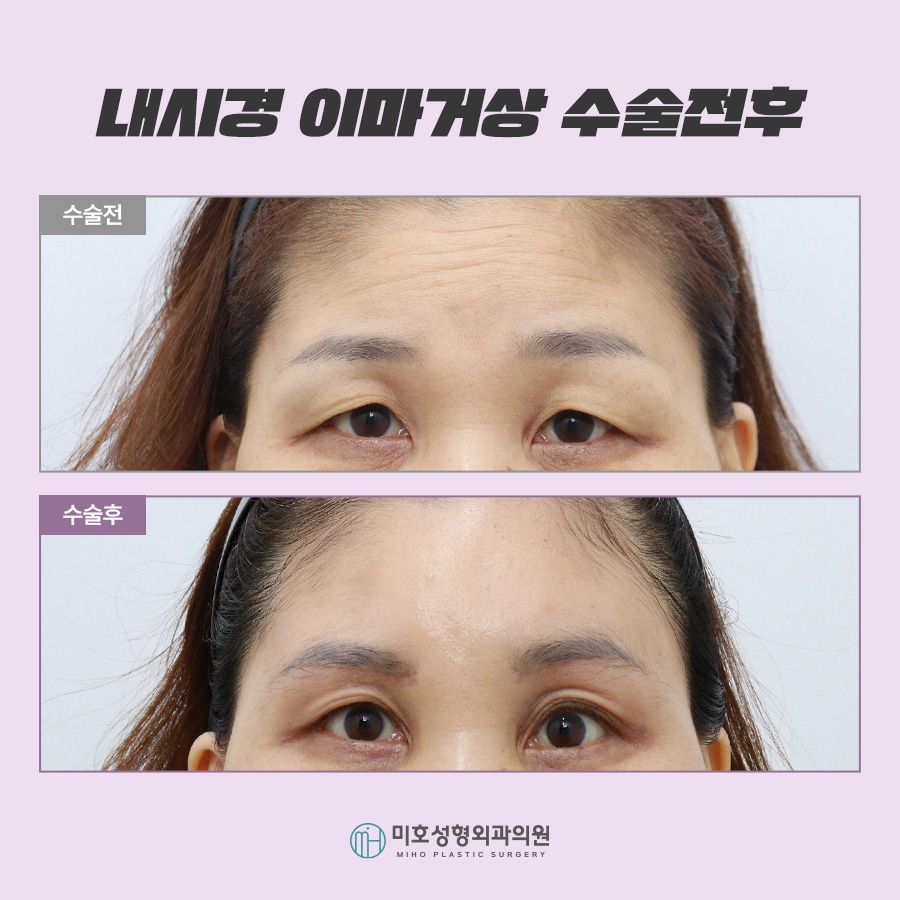
When reviewing forehead lift surgery
experiences, it may also be helpful to
look into the method used to secure the
tissue before making a decision.
To maintain the correction for a long time,
it is necessary to consider in advance
whether a method was used to secure the
tissue with appropriate tension and without
deformation, helping to prevent sagging
of the forehead and eye area in the future
as well.
The tissue can be secured by applying the
necessary degree of tension to the skin and
muscle layers, and the fixation is maintained
internally without losing strength even if
the pace of aging gradually accelerates.
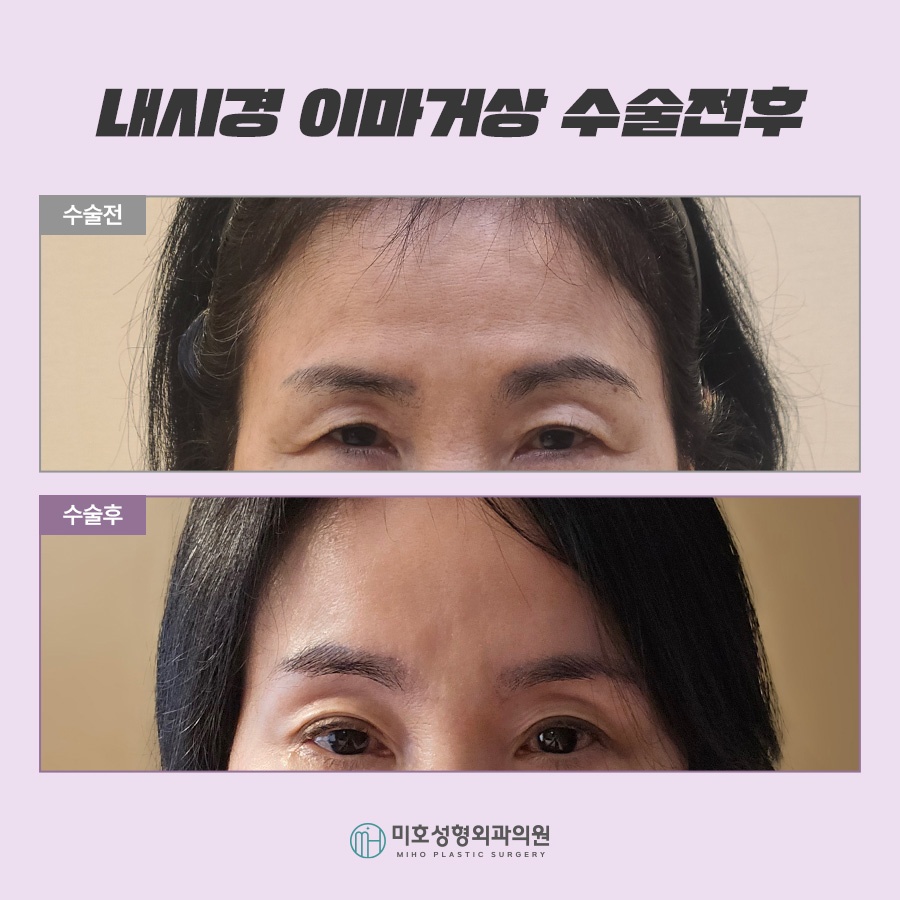
Because the incisions are made only as
small as necessary for the instruments to
pass through, recovery is also faster. The
incisions begin slightly inside the hairline,
so they are not easily visible immediately
after the procedure and returning to daily
life is generally not particularly burdensome.
However, for some individuals, this alone
may not produce a result that meets their
desired aesthetic requirements. In such
cases, various options may also be considered,
such as combining the procedure with lower
eyelid surgery to address areas that need
additional improvement.
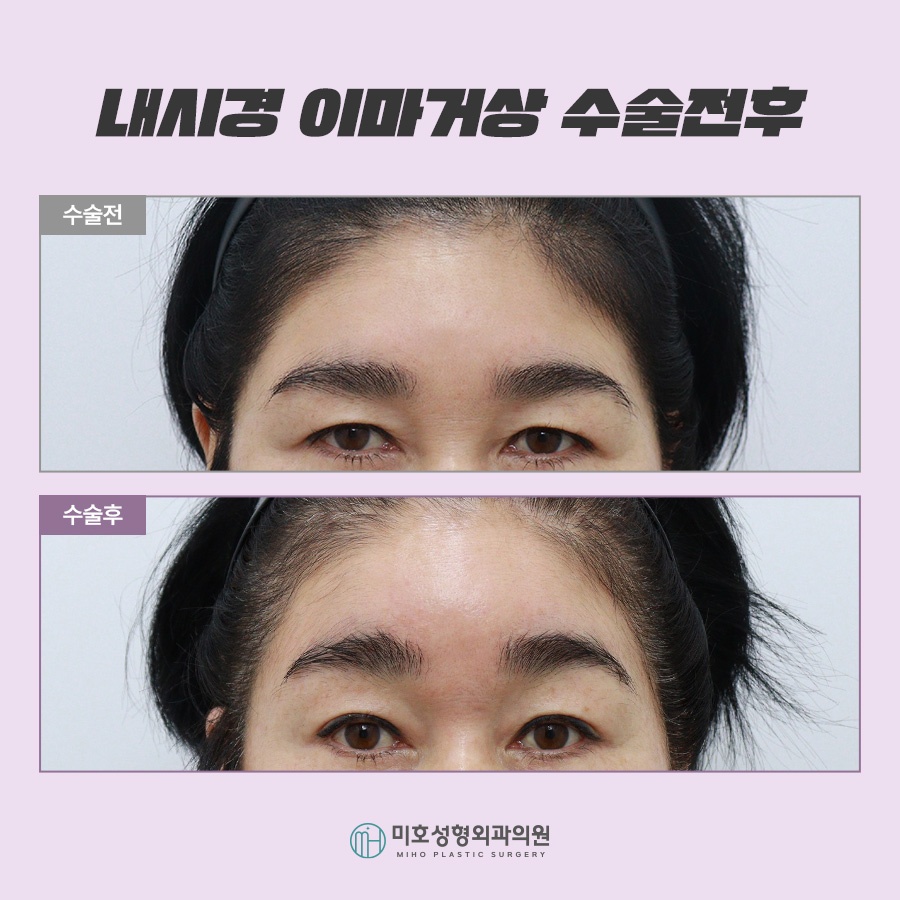
For those whose signs of aging are
progressing faster than those of others
and who are carefully looking for a suitable
way to address concerns they keep to
themselves, when considering forehead lift
surgery experiences, first determine whether
the provider carefully examines and explains
the current situation, each person's distinct
structural features and appearance, the
degree of sagging, and the different stages
of aging in each area.
Through this, I hope you can achieve a
cleaner and brighter appearance while also
working to improve the inner concerns that
may have been caused by feeling hurt over
your outward appearance.



Previous image
Next image