
As our bodies undergo
various changes over time,
you need to make preparations in advance.
Aging tends to appear quickly in the tissues that make up the body,
including the skeleton and skin tissue.
As the functions of each area decline,
even simple movements can become burdensome.
Among these areas, the eyes have a thinner
layer of skin than other parts of the body,
and they receive considerable stimulation
because of frequent blinking and the extensive use of facial muscles.
Because problems such as wrinkles and sagging
can develop easily,
the number of people undergoing
lower eyelid fat repositioning has increased significantly.

Generally, when signs of aging appear around the eyes,
the subcutaneous fat layer located below may sag,
which often leads to various accompanying inconveniences.
If gravity causes the position of the fat to change,
the affected area may appear particularly prominent,
while hollowing may also occur,
making dark circles more pronounced.
As this can lead to a noticeable change in one’s appearance
and may create an unfavorable impression on others,
more people are urgently looking into
lower eyelid fat repositioning.

In particular, a sharp decline in skin elasticity
can lead to more burdensome circumstances,
as fine lines deepen during this process
and may cause various problems.
Therefore,
it is important to carefully examine how
lower eyelid fat repositioning is performed,
how much it costs,
and whether you meet the relevant criteria,
then make a prompt decision.
In general, when fat pockets lose elasticity
and sag, wrinkles and laxity in the lower area
become apparent quickly, worsening the situation.
For this reason, improvement through an
anti-aging technique may be needed,
and this is also a technique primarily performed
for older patients.

Although each patient differs,
a corrective procedure that begins below the eyelashes
and uses an incision approximately 1–2 mm in length
is known as lower blepharoplasty.
It addresses overall lower-eye aging
by removing sagging skin, weakened muscles,
and unnecessary fat.
This procedure fixes the muscle tissue in the sagging area
to the periosteum, then removes a measured amount
from the area around the wrinkles
and sutures it closed to prevent separation.
In contrast, lower eyelid fat repositioning
is performed through an incision in the inner conjunctiva.
It repositions bulging fat into hollow areas
to improve dark circles or the tear trough,
making it suitable when there is not much skin sagging.
Looking at the overall process,
both methods involve complex treatment.
Because they require the medical professional’s skill,
experience, and technique,
it is advisable to have a consultation.

By performing an anti-aging technique
and repositioning the lower eyelid fat
in an appropriate location,
elasticity may return to its previous state,
which can lead to a stable result.
However, because each person has a different design and structure,
these must be assessed before the procedure is planned
to achieve a stable result.
Therefore, the situation should be examined in detail
and an appropriate plan established.
To determine the patient’s individual characteristics,
it is important to carefully assess everything
from skin type and appearance
to the thickness and type of internal tissues.

These factors can be divided into three types
to determine the appropriate corrective procedure
and establish a detailed treatment direction.
First, when elasticity in the lower area has declined,
substantial changes may occur even after removing
only part of the skin,
making it easier to obtain an advantage from the procedure.
The same applies to patients with overly developed muscles:
it is especially important to remove
an appropriate amount of the relevant tissue.
This process can create a natural design
while establishing a stable direction for improvement,
making it more useful overall.
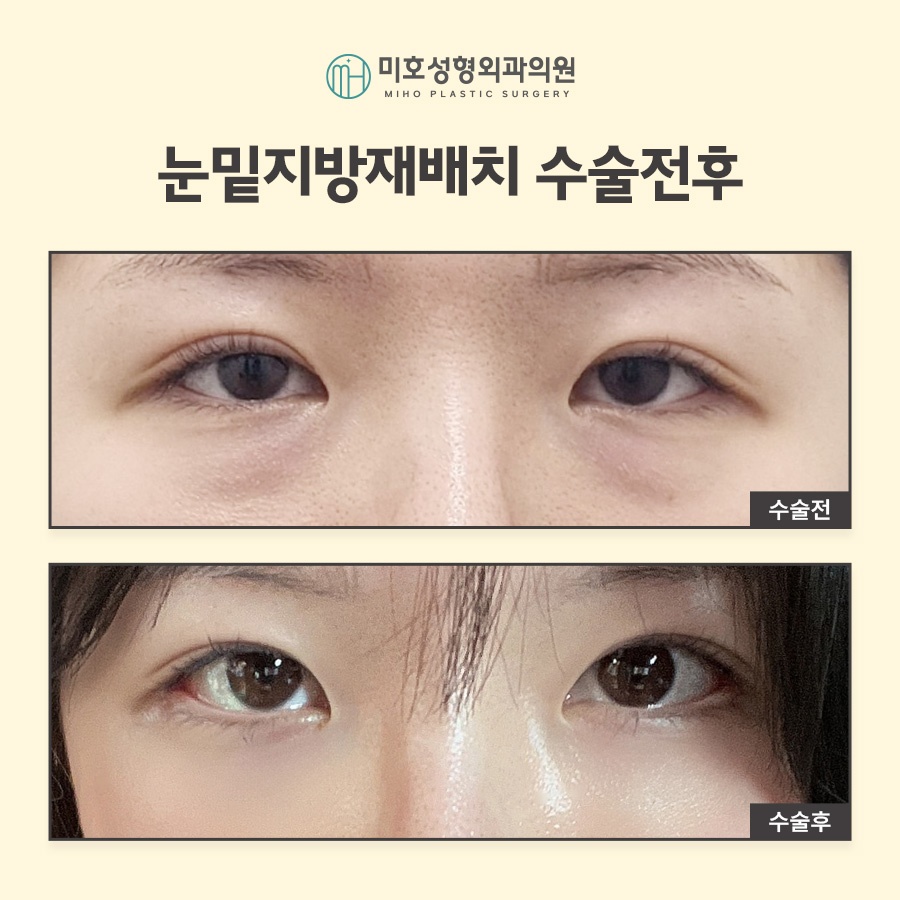
However, caution is necessary if an overly extensive incision
is performed by setting a wider range than initially discussed,
as this may worsen the situation.
In fact, the eyelids or eyebrows may turn outward,
which can affect eye condition.
Conversely, some people have good elasticity
but particularly prominent subcutaneous fat.
In such cases, instead of an external incision,
an opening can be made in the inner conjunctiva
and the localized area can be corrected.
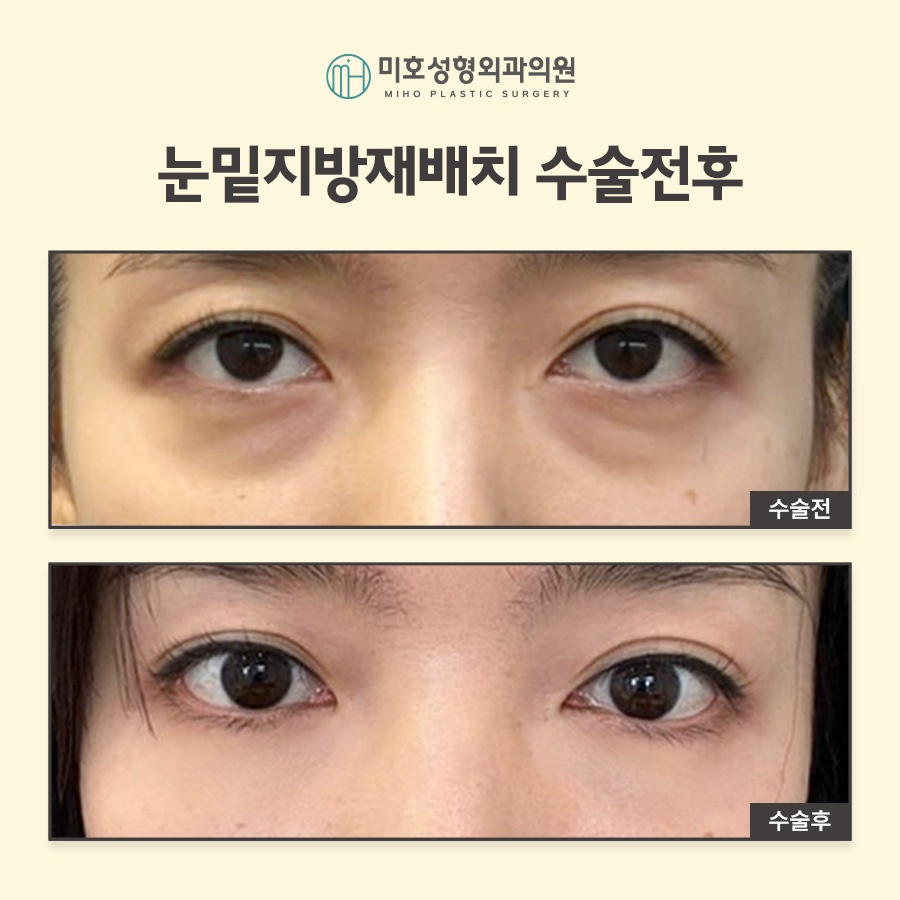
When this procedure is performed,
any external scar is minimal,
and bruising and swelling are also not very visible,
which can make it easier to return to daily activities quickly.
Therefore, even with a busy personal schedule,
recovery may be pursued promptly,
allowing for a satisfactory result without having to rearrange
the schedule extensively.
Beginning at the planning stage,
it is advisable to examine the individual’s needs
and determine which conditions the solution should be tailored to,
then make a careful decision.
In this regard,
you can make a decision by checking whether
various restrictions or additional considerations
arise when undergoing lower eyelid fat repositioning.
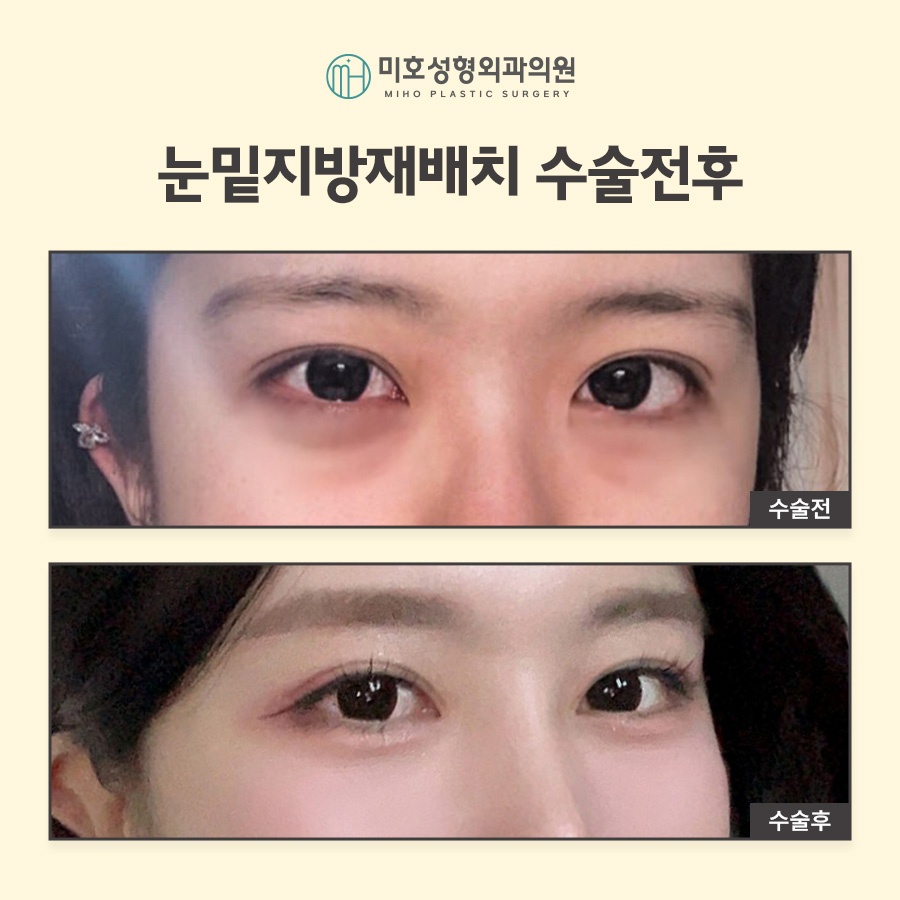
On the other hand, if the internal structures have sagged
and the fat layer appears prominent,
care must be provided under more challenging conditions,
which can increase the burden.
Generally, the key point is to remove the skin layer and fat
at the same time after making an incision in the lower area.
If this is not done properly,
however, the situation may worsen.
After removing the internal tissue,
areas with reduced elasticity must be excised.
If the excision range is set too broadly,
however, the person may instead appear older.
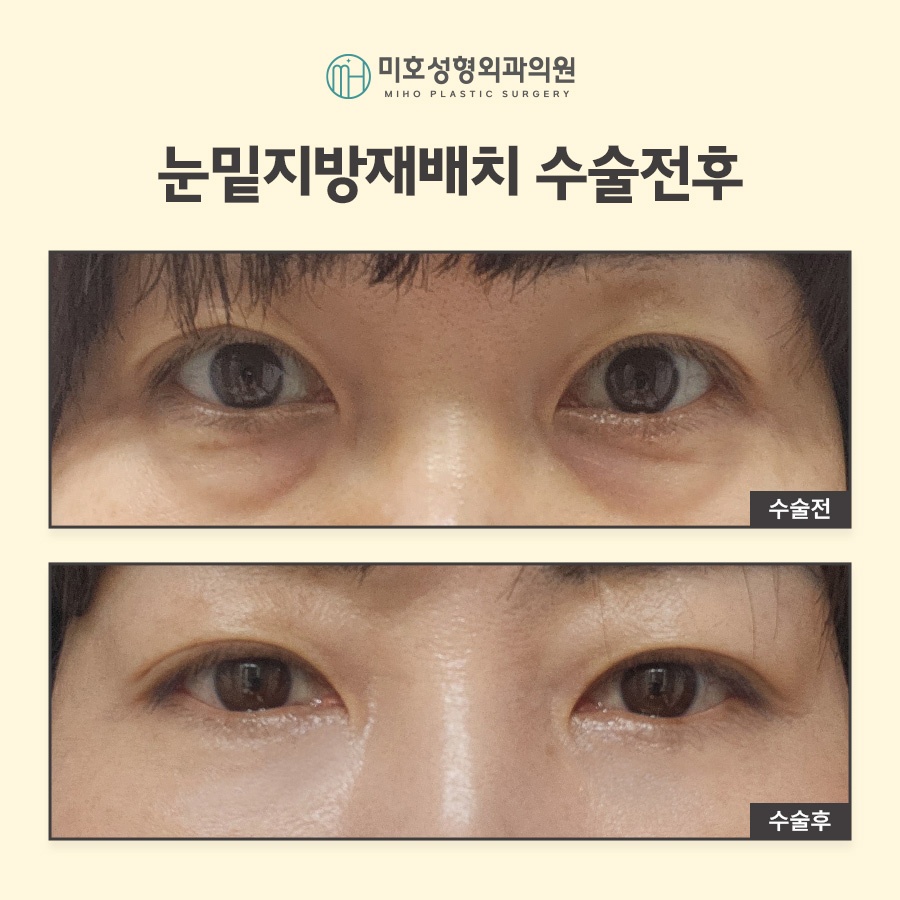
Because the associated risks may feel burdensome,
it may be helpful to consider lower eyelid fat repositioning
as part of a remodeling procedure
with the aim of achieving a prompt change.
In particular, when abnormal symptoms appear
from a functional perspective,
prompt care may help open the field of vision more fully,
which can be beneficial.
With this in mind,
review the points above
and consider how best to plan the procedure.



Previous image
Next image