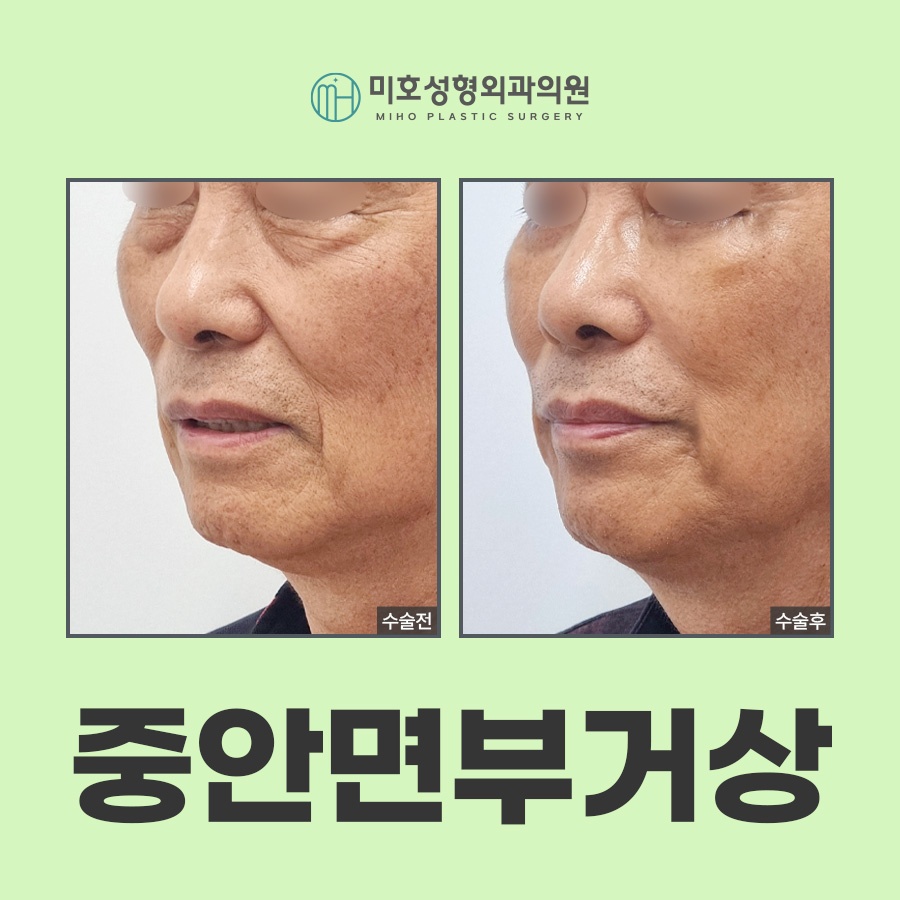
The image each person seeks
may differ slightly depending on personal preference,
but the desire to look even a little younger
than one’s actual age
and to appear radiant
is shared by people of all ages and genders.
Therefore, when aging progresses
faster than is typical for one’s age group,
it is only natural for the concern
to become more serious.
Even if you put considerable effort
into caring for your appearance,
aging cannot be stopped entirely.
In some cases, it may progress relatively slowly,
but because the extent and causes
of sagging skin differ,
the symptoms should be addressed
according to their causes.
Compared with other ethnic groups,
East Asians tend to experience sagging
in the midface area particularly early,
with noticeable sagging of the deep cheek area
as well as hollowing and sagging of the front cheeks.
In such cases,
these concerns can be corrected
with a midface lift.
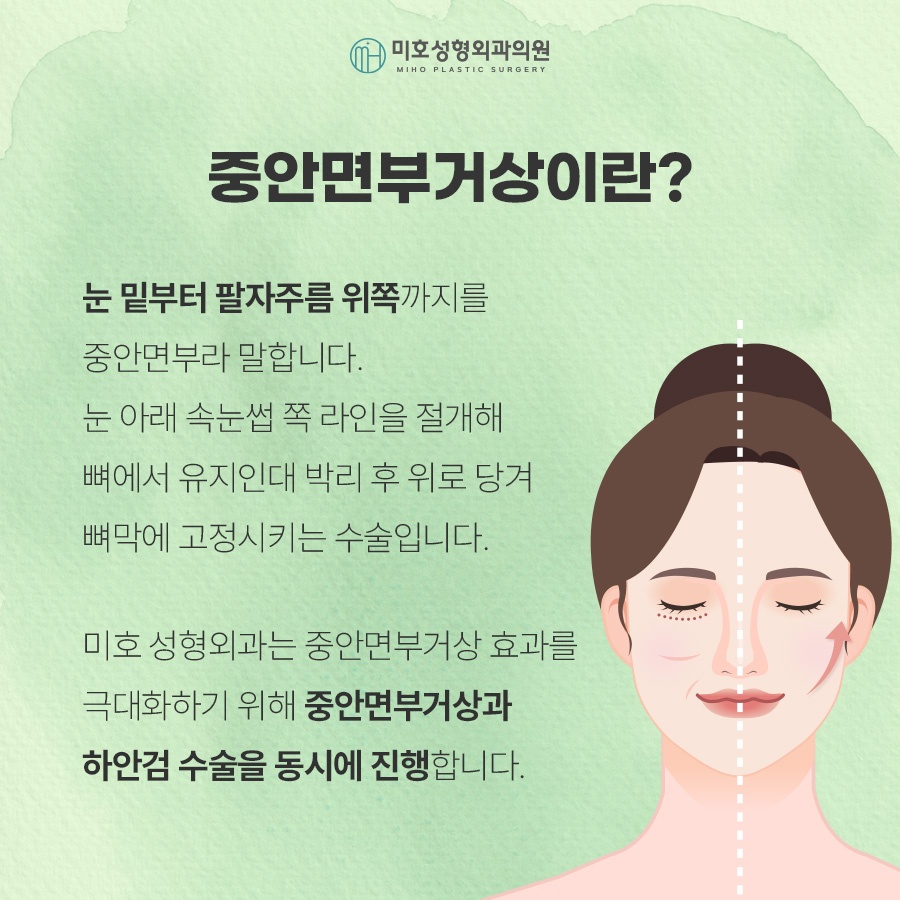
A midface lift is a method that improves
symptoms in which the skin has lost elasticity
and sagged downward from within,
particularly in the area beneath the eyes—
in other words, where the front cheeks
and nasolabial folds are located.
As people grow older,
tissues throughout the body gradually weaken.
The skin not only loses elasticity,
but the muscles, fascia, and fat
also descend downward.
As a result, the volume of the front cheeks,
which naturally gives the face
a lively, youthful appearance,
gradually disappears.
Conversely, the nasolabial folds become deeper,
making the person look older.
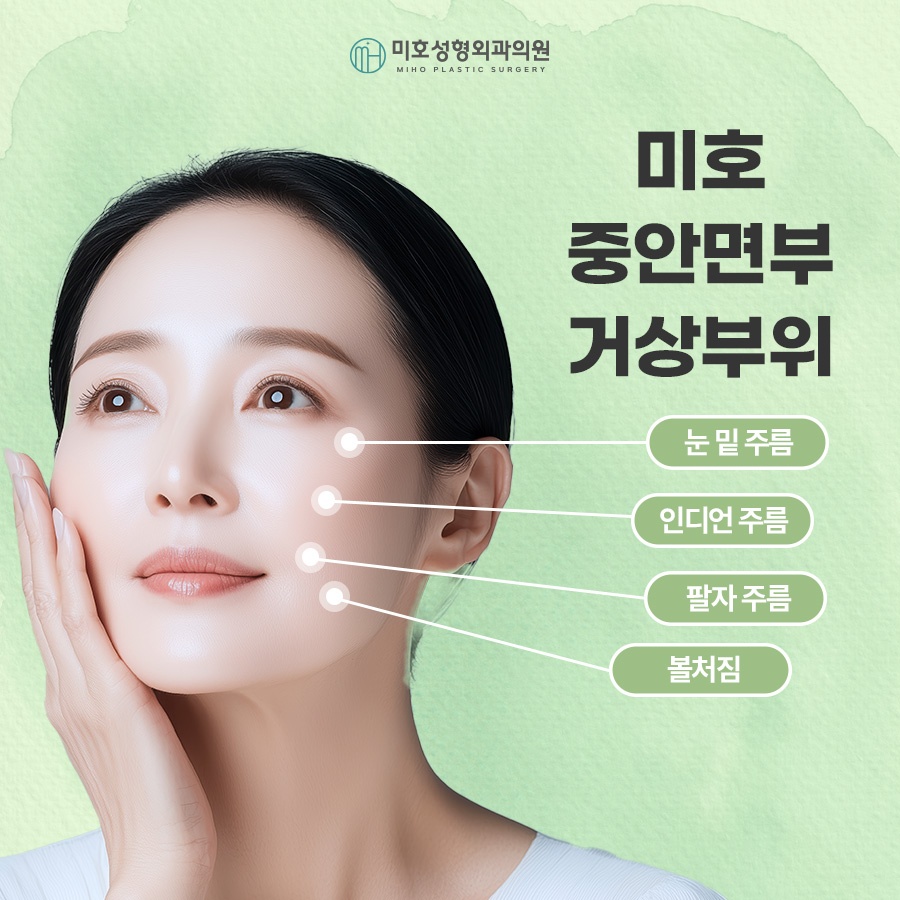
A midface lift does not simply pull up
loose skin.
Instead, it focuses on the aging changes
that make the face appear sagging overall,
carefully considers all the internal tissues,
returns them to their original positions,
and secures them firmly so that the lifting result
can be maintained without significant change
for a longer period.
When this approach is used,
sagging beneath the cheekbones can improve,
changing the overall facial impression
into a more lively one.
The three-dimensional definition that had disappeared
can return, and the midface can become
noticeably firmer.

When the skin sags, the cheek fat also descends,
making the nasolabial folds deeper.
A lifting procedure helps return these tissues
firmly to their proper positions,
which can soften the shadows of the nasolabial folds
and make a previously dull facial impression
appear brighter.
In addition to the outer skin,
the SMAS layer, loosened muscles, and fat
are also returned to their proper positions.
This helps avoid unnatural areas
when making facial expressions
during everyday activities.

When the central area of the face loses support,
the connected corners of the mouth also sag,
making them appear as though they are forming
a frown.
As the front cheeks are improved and lifted,
the corners of the mouth can also rise
to their proper positions,
changing a previously gloomy impression
into a more positive one.
Unlike thread lifting,
which involves relatively simple fixation,
when there is an excessive amount of orbital fat,
it may be dissected as needed.
The tissues are analyzed layer by layer,
and a comprehensive plan is developed
to help the face settle into an improved appearance.
This can allow the results to last longer
while also correcting the areas of concern.

Before deciding on a midface lift,
it is especially important to first determine
whether it is appropriate for you.
If the front cheeks are excessively hollow
and you are often told that you look tired,
or if attempts to fill the contours
with implants or similar methods
for prominent nasolabial folds
have produced an unnatural result
or only temporary improvement,
a lifting procedure may be beneficial.
When sagging and hollowing occur at the same time,
fat grafting may be needed in small areas.
If excessive fat has accumulated beneath the eyes,
making dark circles appear darker and more defined,
a plan may include lower blepharoplasty
to reposition the fat beneath the eyes
while also addressing an aged appearance.
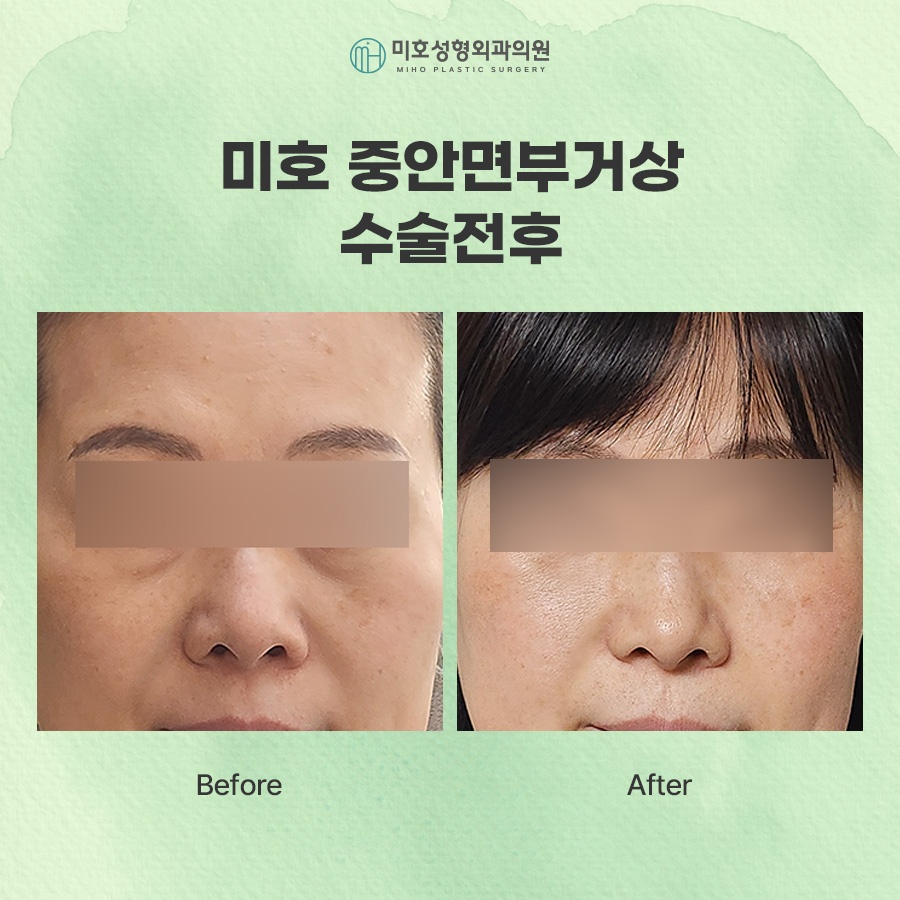
Because aging does not occur in only one area,
if it is progressing faster than in other people,
there is also a possibility that the signs of aging
beneath the eyes are relatively advanced.
If skin elasticity has declined significantly
as you enter middle age,
unnecessary skin may need to be removed,
and loosened septa may need to be reinforced
to improve problems caused by orbital fat
protruding or shifting outward.
In general, when sagging develops in the midface,
weakening of the tissues beneath the eyes
also occurs at the same time,
including bulging fat.
Therefore, a plan that addresses both areas together
is commonly used.
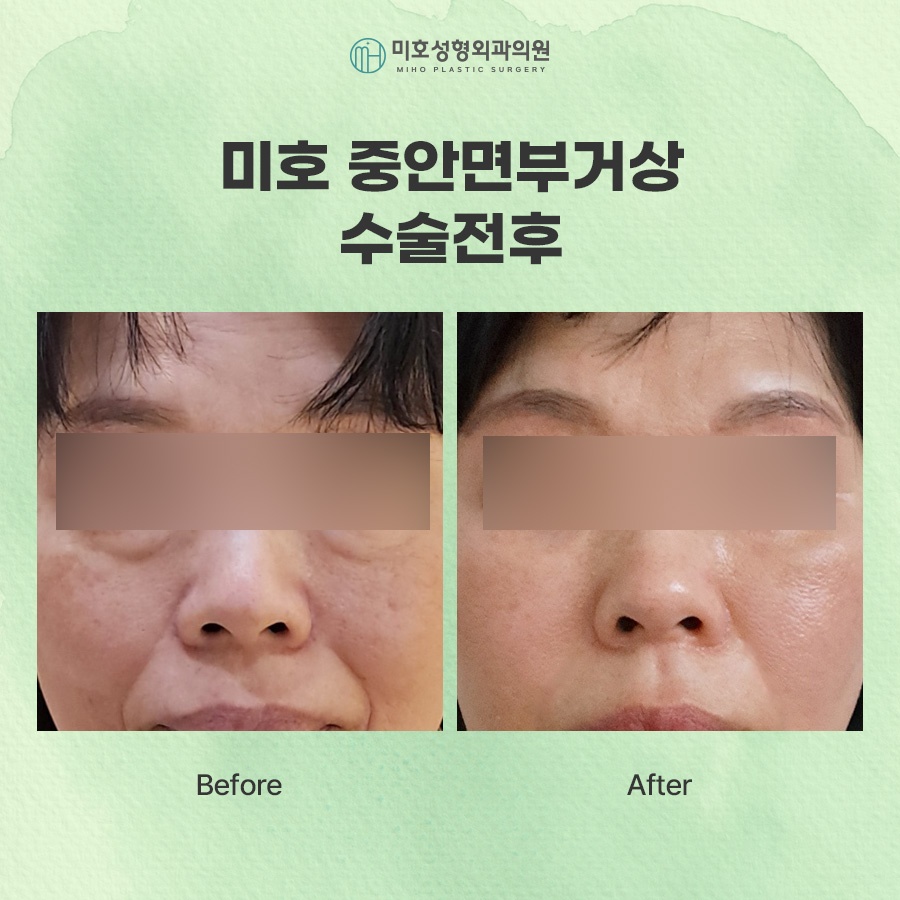
The procedures commonly performed
alongside a midface lift
include lower-eyelid fat repositioning
and lower blepharoplasty.
Both methods involve making a precise incision
in the inner conjunctiva of the eye
or close to the lower eyelashes,
then pulling the loose tissues upward,
securing them firmly, and suturing them
to correct the problem.
Only unnecessary fat is removed as appropriate,
while areas that have become excessively hollow
and require additional volume
are addressed through repositioning.
This approach addresses the factors
that contribute to an aged appearance.
Sagging in the middle of the face
is closely connected with aging beneath the eyes.
Addressing both areas together
can produce a more natural result
that is closer to a youthful appearance.
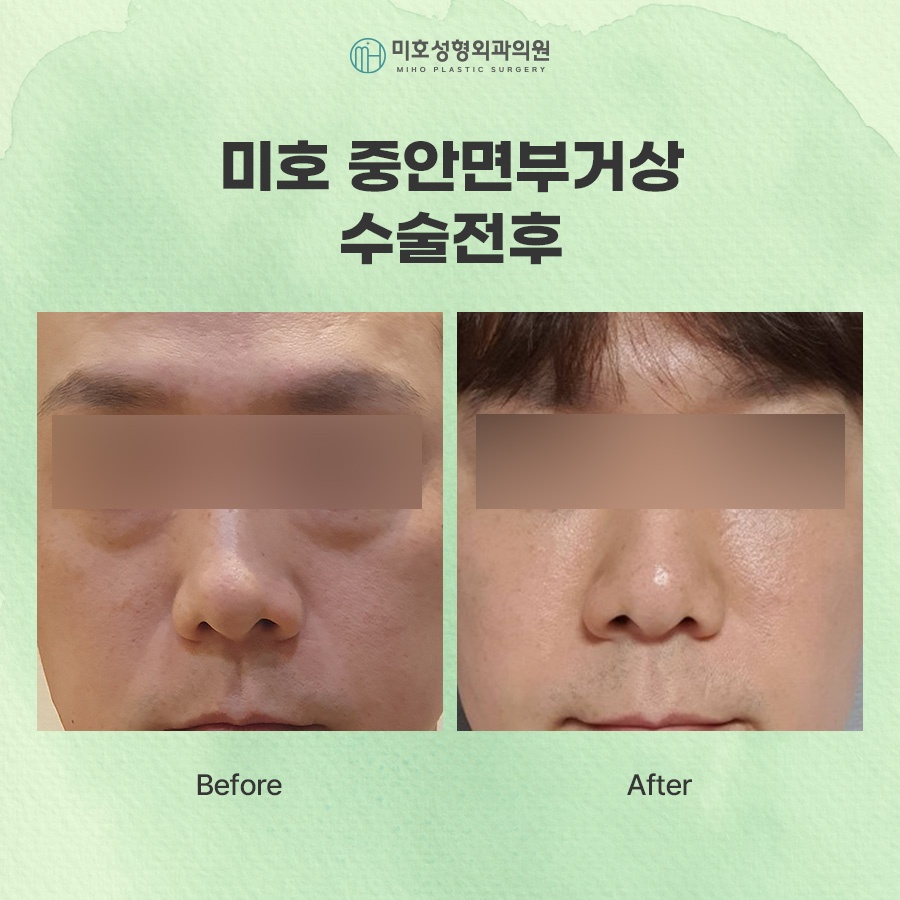
Even among younger adults,
if aging has already progressed considerably,
it is important to determine in detail,
based on preliminary examinations,
whether the procedure is necessary
and to discuss the matter with the surgeon.
For middle-aged individuals,
sagging may occur in various areas of the face,
so it is important to find a clinic
that can address the concerns comprehensively.
The septa, muscles in various areas of the face,
orbital fat, and tissue tension
will inevitably differ according to each person’s
progression and characteristics.
Therefore, it is important to carefully determine
whether the clinic closely considers and plans
which areas require dissection
and whether repositioning is needed
before proceeding.
You should also check in advance
whether aftercare programs are available
and whether prompt action can be taken
if an unexpected situation arises.
If you undergo a midface lift,
care afterward is also important.
Based on the instructions you receive,
follow the precautions carefully
so that you can recover properly.
Initial swelling generally subsides
to some extent after about three to five days.
Be sure to follow the recommended timing
for cold and warm compresses,
and take care not to unconsciously scratch
or rub the incision area.
The time required for scars to heal
and the extent of any marks
may vary depending on how well
they are cared for afterward.
It is advisable to receive systematic care
at a clinic that provides an aftercare program.



Previous image
Next image