
When interacting with others, an impression of sleepy eyes
can make you appear to be someone who is always tired
and lacks enthusiasm, leaving a serious blemish
on your first impression.
There are more negative than positive aspects,
and it is not simply a matter of disliking
the appearance. As the condition persists,
functional symptoms may also develop,
so it is important to analyze the factors
that cause ptosis and receive assistance
suited to your individual circumstances.
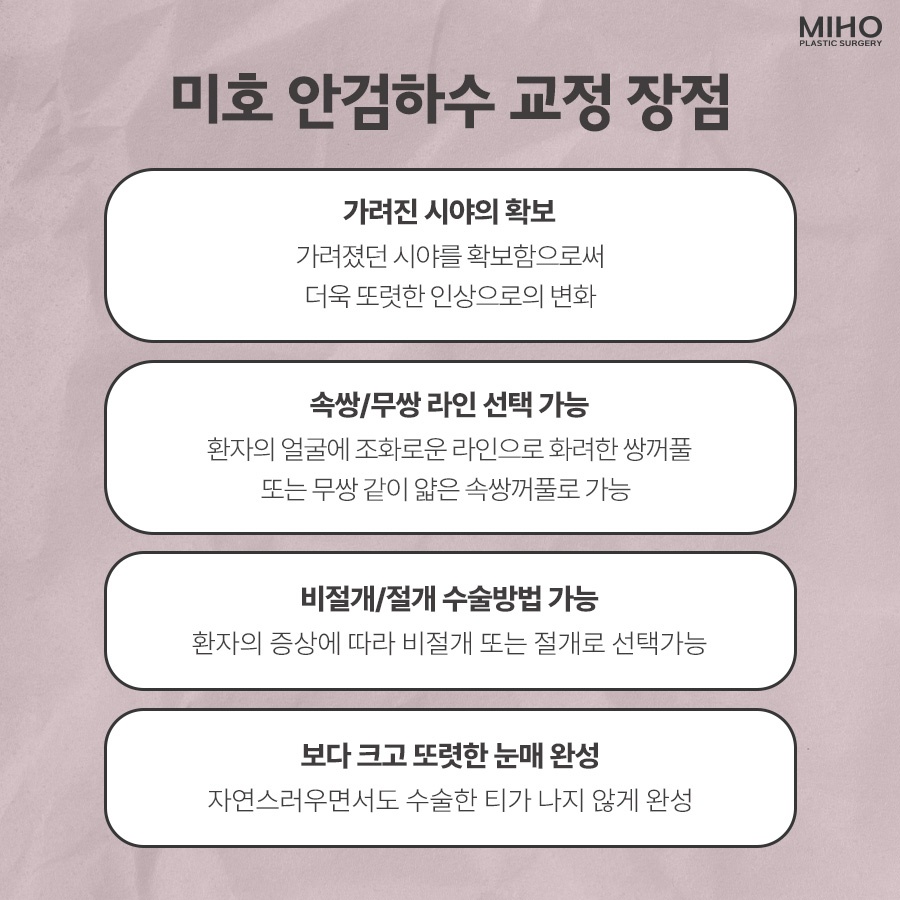
To help your once-heavy eyelids feel lighter
and make it easier to open your eyes,
while also correcting the shape of your eyes
and achieving a more appealing image,
above all, you should find a provider
that offers detailed consultation,
sets an appropriate treatment approach,
and provides a thorough explanation
of the related procedures.
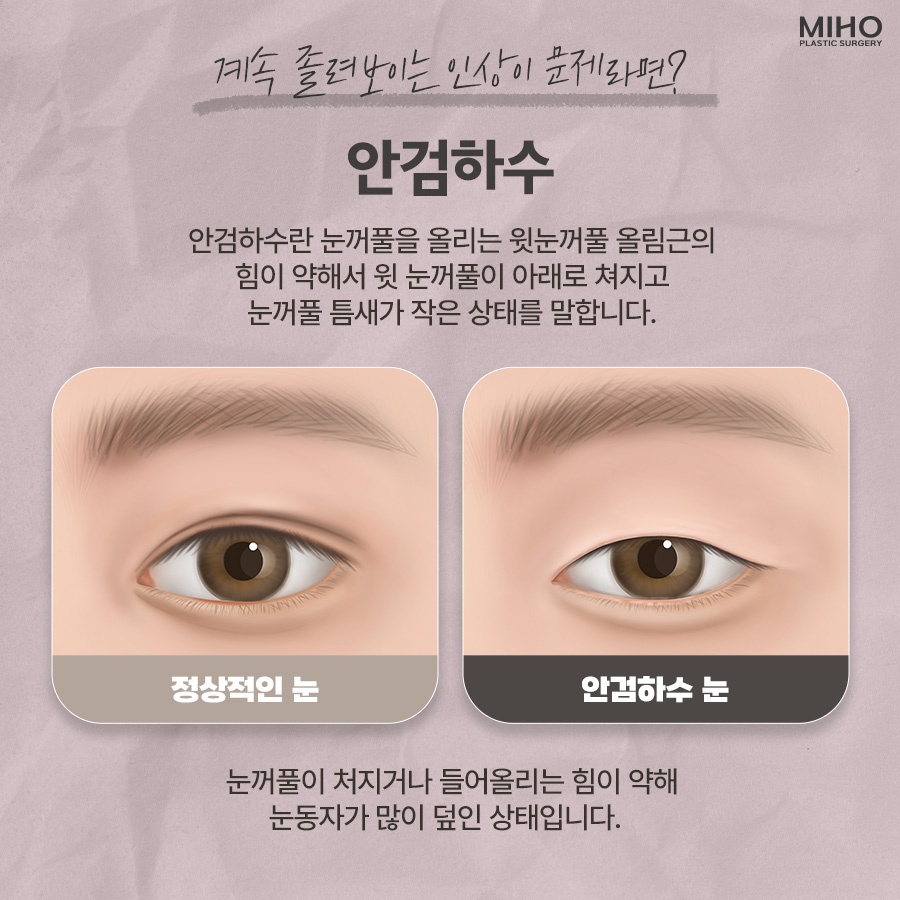
Ptosis is a condition in which the levator muscle
becomes weakened, making it difficult to look straight ahead.
Because of the drooping eyelid, the eyes may give
a somewhat closed-off impression, and in reality,
nearly half of the pupil may be covered,
causing difficulties in daily life.
It may occur congenitally, or the upper eyelid
may droop because the muscle has weakened
due to acquired factors. Since there are various types
and each person has a different natural eye shape,
it is advisable to consider multiple aspects,
including the degree of aging in the internal tissues,
the characteristics of the skin,
the features of the face shape,
and the desired image.
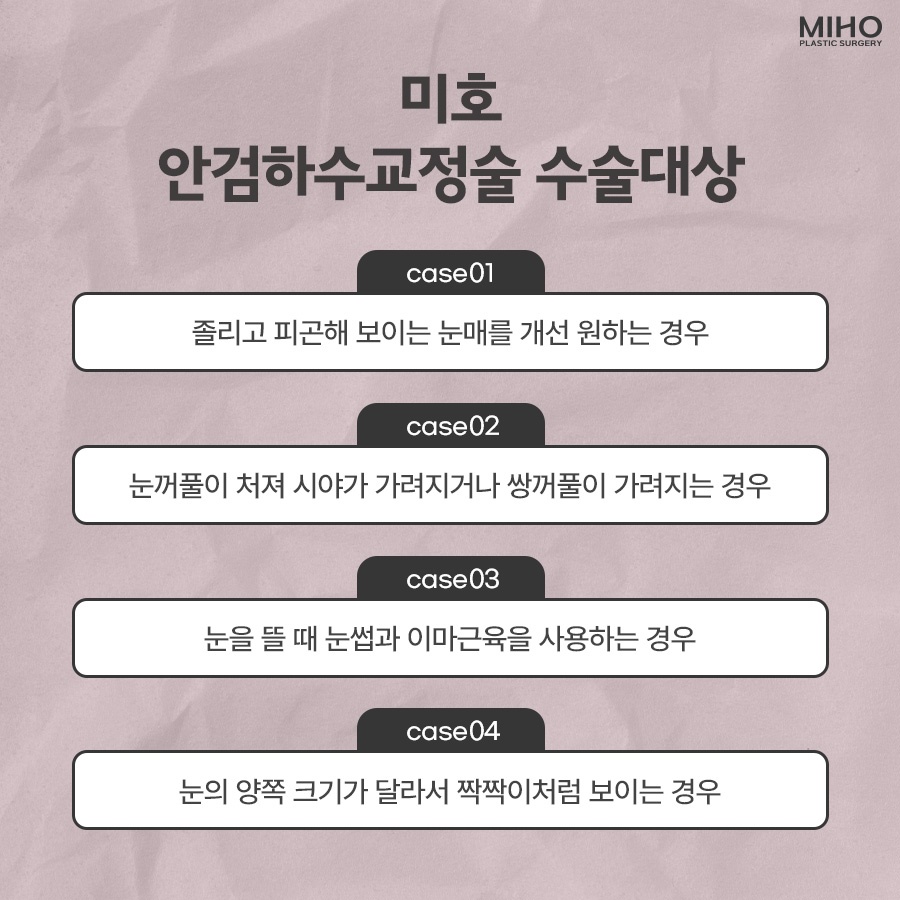
When your eyes are open and you look straight ahead,
if about 80% of the pupil is visible,
it falls within the normal range. However, even if
the pupil is adequately visible, using excessive force
from the forehead or eyebrows to lift the eyelids
may indicate ptosis.
If more than 30% of the pupil is covered,
correction may be considered necessary.
If more than half is covered, your field of vision
may be obstructed, causing previously good eyesight
to decline rapidly. Other problems may also occur,
such as developing a habit of straining the forehead,
which can lead to wrinkles.
Because the eyelids do not open properly,
the skin around the eyes is constantly exposed to friction,
which may cause irritation and chafing. The degree
of muscle weakness also varies, and the longer
the condition persists, the possibility of asymmetry
between the two sides cannot be ruled out.
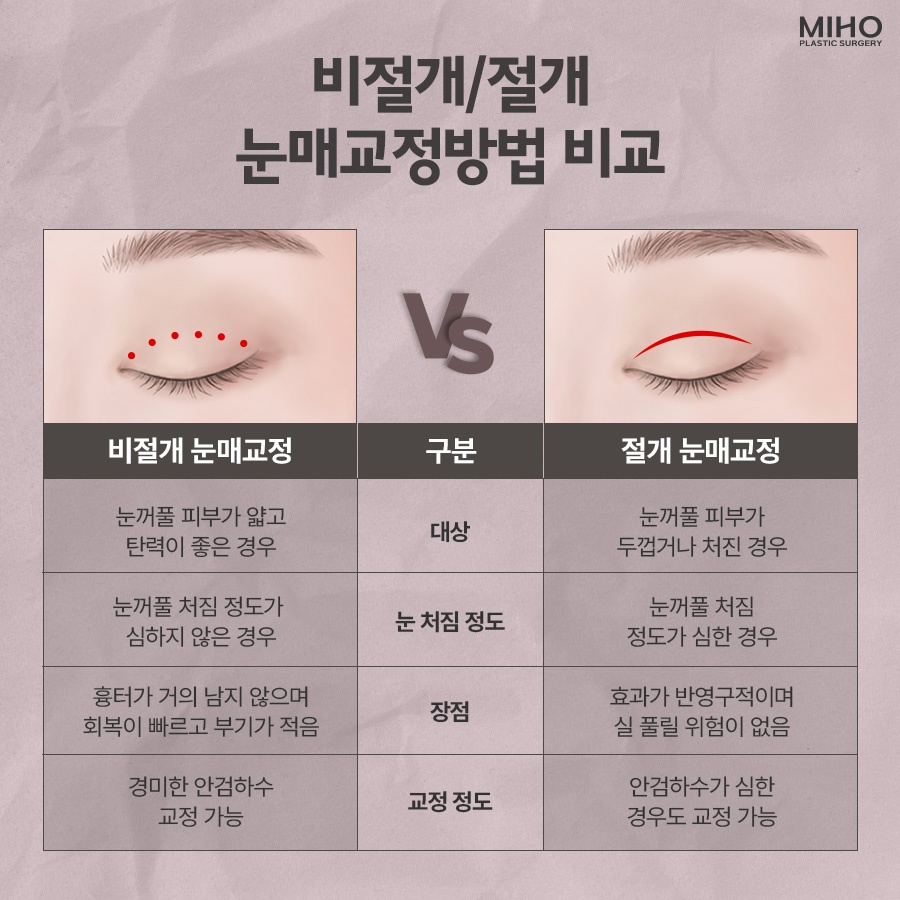
Procedures that may help in this situation
include incisional and non-incisional correction
of the eye shape. Since the appropriate method
and the resulting outcome may differ according
to the severity of the symptoms, an individualized
plan is essential.
The non-incisional method can produce positive results
when the condition is below a moderate level,
there has been no accumulation of orbital fat due to aging
that would require fat removal, and the eyelid skin
is relatively thin, making fixation with sutures
relatively straightforward.
It helps naturally improve the shape of the eyes
by correcting the weakened eye muscles with sutures,
and because no incision is made, there is less concern
about scarring.
Without removing skin, the procedure uses sutures
to firmly tie the tissues used to open the eyes
and connect them to the tarsal plate, shortening
the length of the stretched muscle. This allows you
to open your eyes comfortably while maintaining
your existing eye shape.
Since only the areas where the sutures are tied
are visible, scarring is minimal. Because no incision
is made, there is also less swelling and recovery
is faster. Therefore, people with mild ptosis
or thin skin may consider this approach.
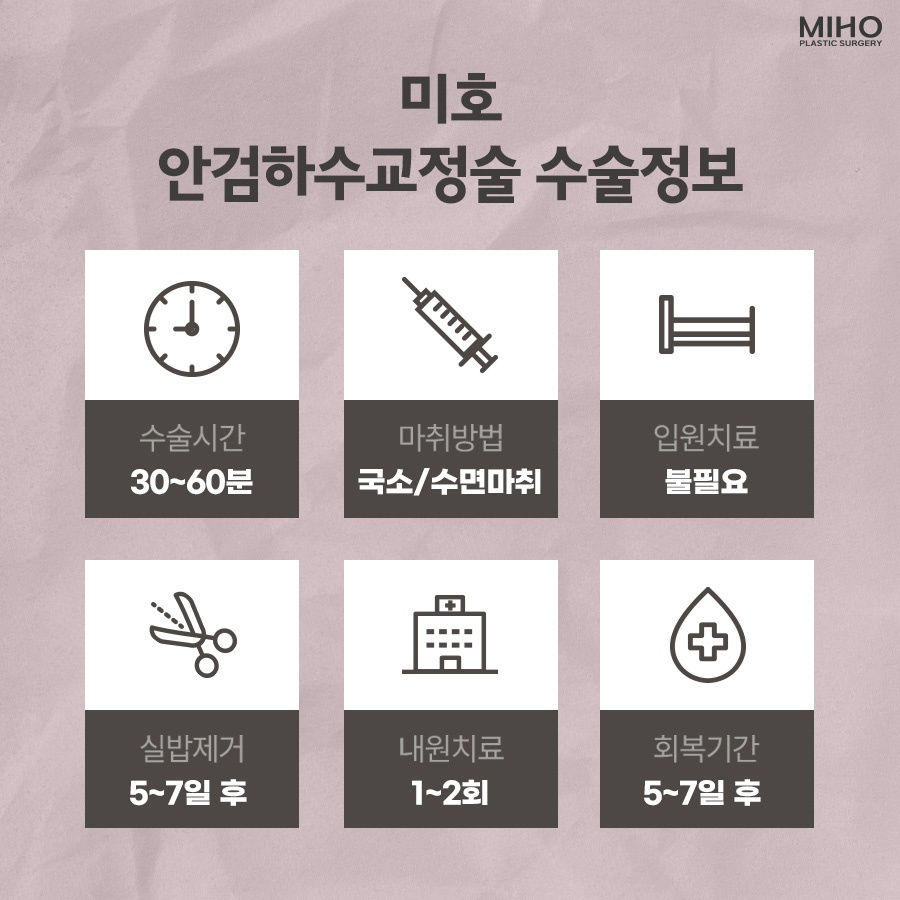
When the symptoms of ptosis are relatively severe
and the eyelids are thick with substantial fat,
incisional correction of the eye shape may be used.
In this case, the eye shape can also be made clearer.
Orbital fat that has accumulated thickly above the eyes
and could become problematic as aging progresses further
can also be removed, which may help the correction
remain stable afterward.
This method can also help correct a thick,
unnaturally positioned double-eyelid crease,
so it may be applied when a second procedure
is needed after the first attempt resulted
in an overly swollen-looking crease.
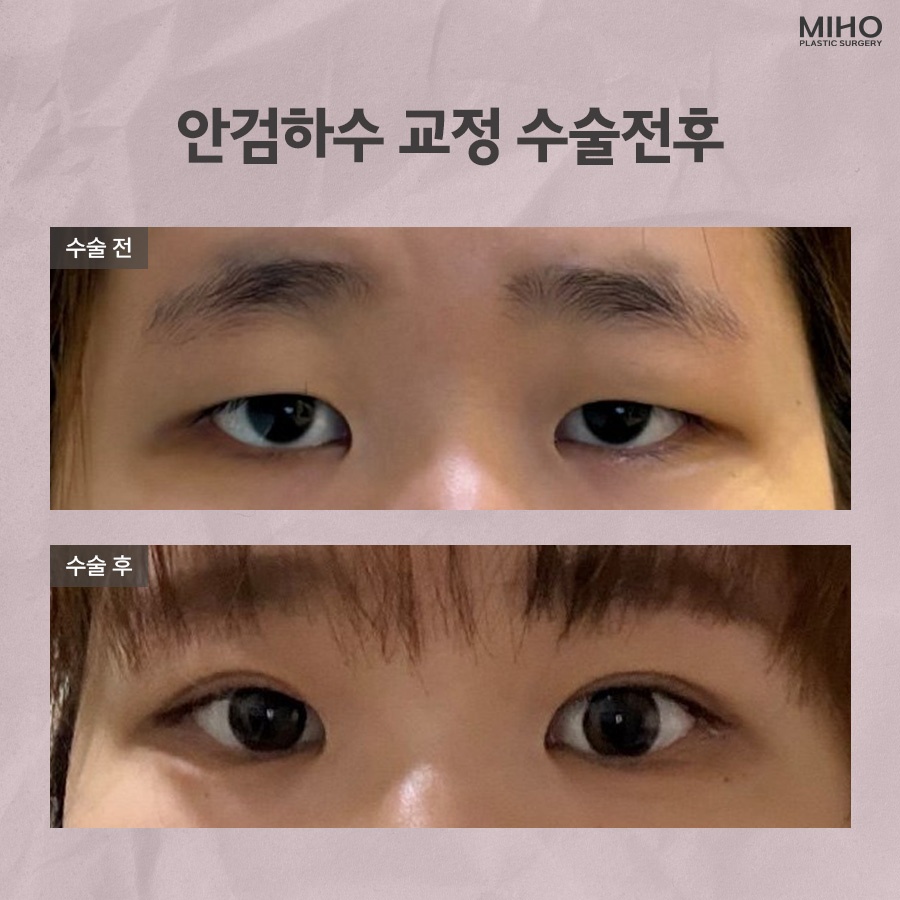
To correct the condition and help prevent
similar problems from recurring, an incision is made
to reinforce the strength of the levator muscle
located inside the upper eyelid. Unnecessary fat
is also removed, and the incision is closed
according to the double-eyelid shape established
based on each individual’s aesthetic preferences.
Because this is not a method that relies on tying sutures,
there is no concern about them loosening over time.
As the force used to open the eyes becomes stronger
than before, the habit of straining the forehead
also gradually subsides naturally.
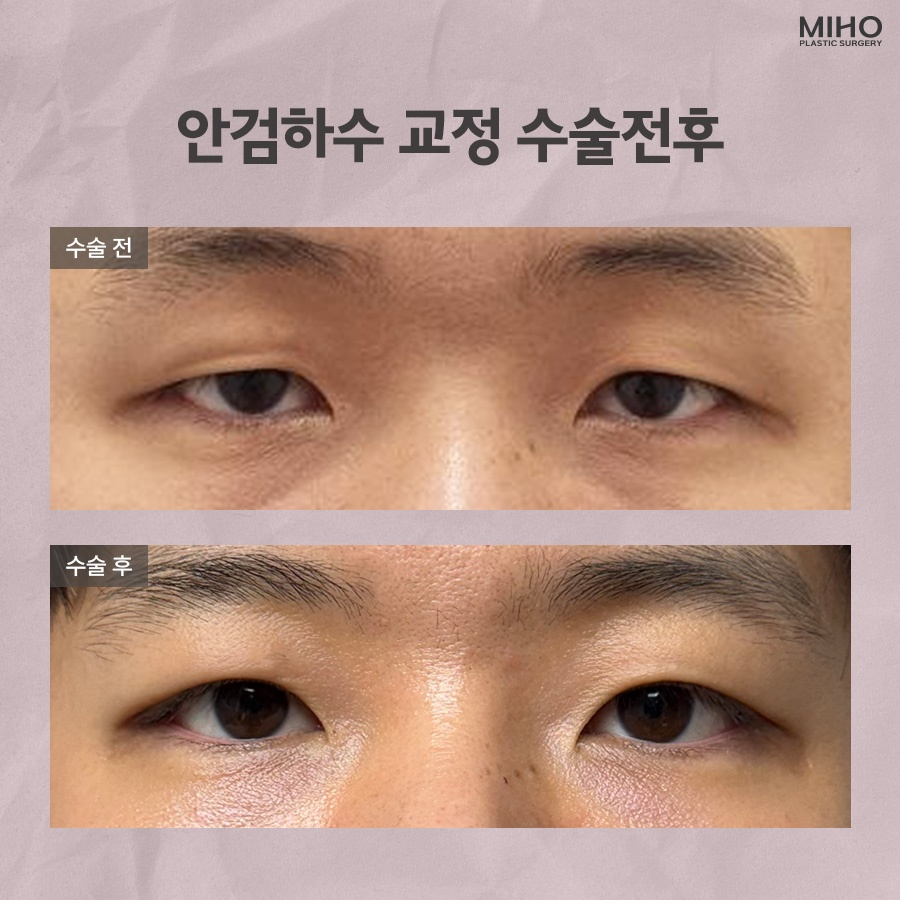
After ptosis correction, the eye size can also be adjusted
slightly further according to the face shape and desired image,
creating an eye shape that looks more open and defined.
If the crease was set at an overwhelming width,
its width can be reduced to help create
a softer and more natural impression.
Double-eyelid crease types are divided in detail
into types such as parallel, tapered, in-out,
and semi-out lines. Since the design that best suits
the desired image and the original eye shape differs
from person to person, it is important to find
the right balance through consultation with the surgeon.
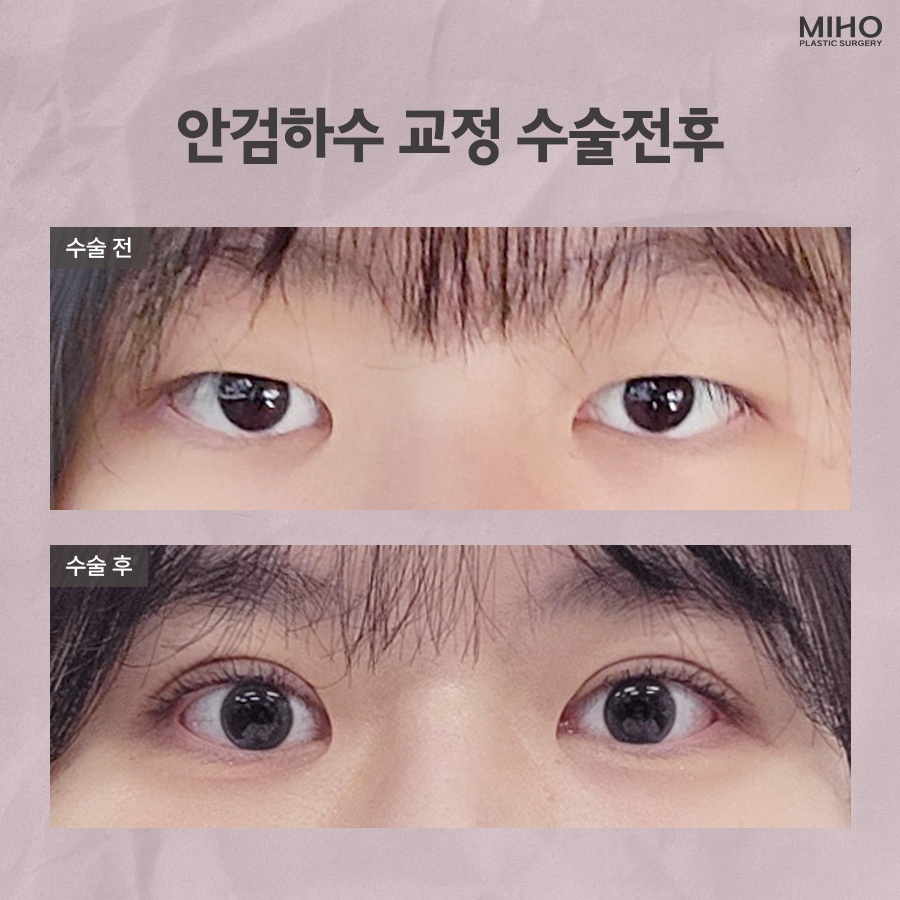
A thinner double-eyelid crease tends to suit
Korean features well, and correction of the male eye shape
is sometimes performed without a crease, preserving
a monolid appearance.
The procedure may improve the eye shape while preserving
the appeal of monolids and avoiding unnatural elements,
or it may create a hidden crease that is usually concealed.
When the goal is to make the eyes more defined
while keeping them natural, the non-incisional
and incisional methods can be selected
and performed in detail according to the individual case.
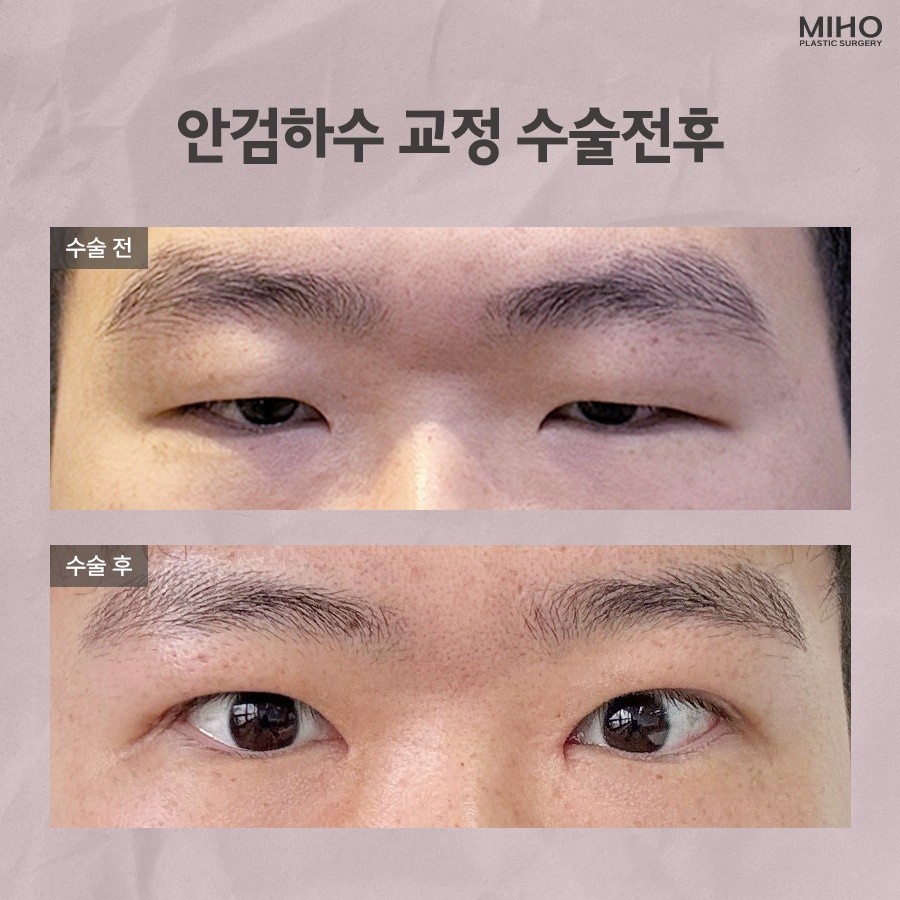
As each person has different individual characteristics,
including the thickness of the fat, the degree of muscle weakness,
the eyelid skin, whether they have monolids or double eyelids,
and their usual appearance, it is essential to assess
these factors precisely, establish a plan likely to produce
a positive result, and proceed with correction accordingly.
If you are concerned about scarring,
first undergo an examination to determine whether
non-incisional ptosis correction is suitable for your situation
and listen to the findings. You can then carefully consider
a method that may provide an appropriate outcome.
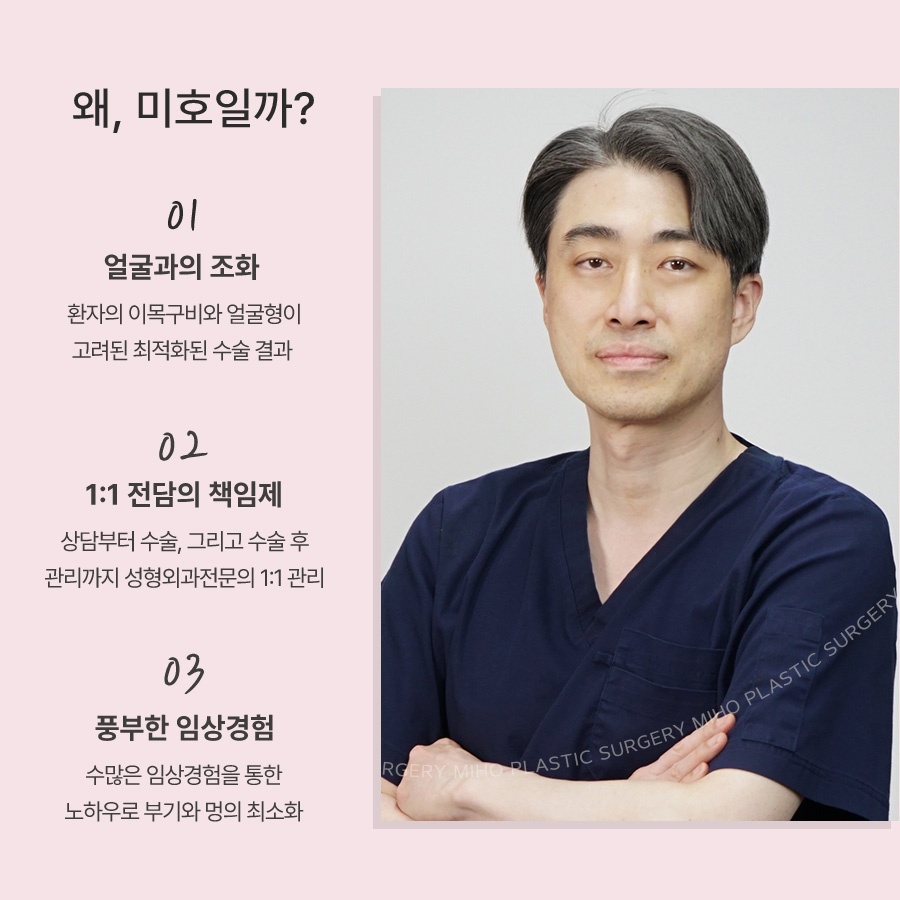
It is also worth considering whether practical consultation
is available with a surgeon who has extensive clinical experience
and provides thorough pre- and post-procedure care.
This can be helpful in achieving a satisfactory result
without regret.



Previous image
Next image