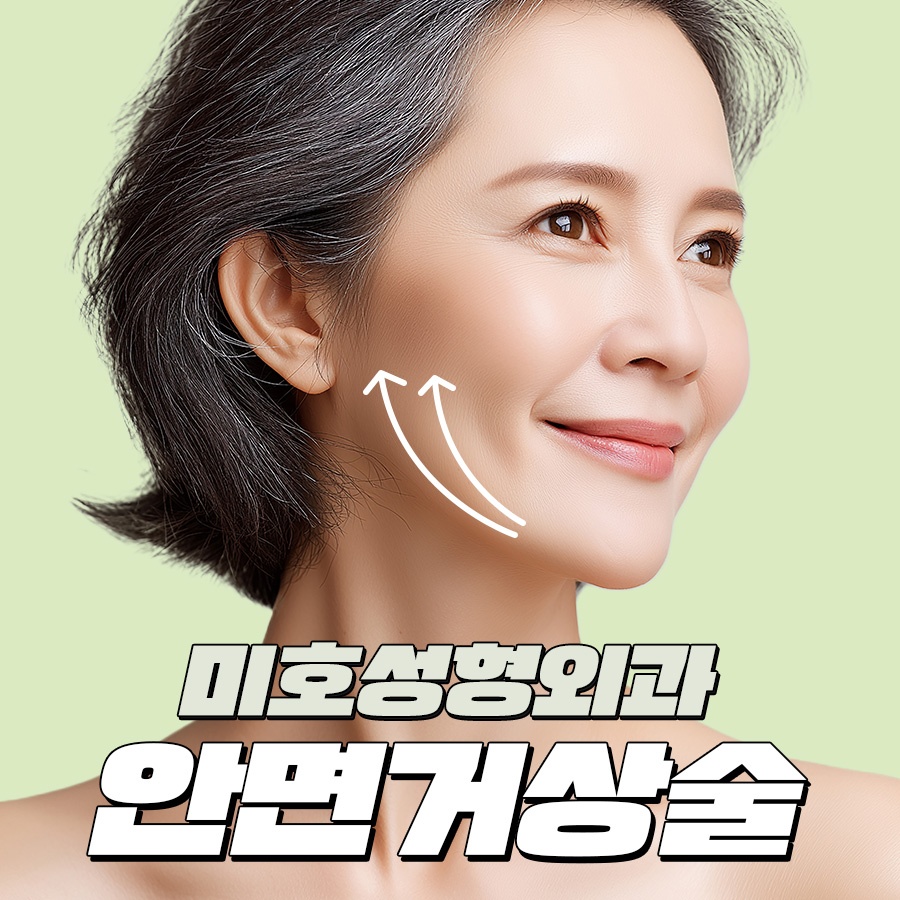
As time passed, I began to feel
unfamiliar with the way I looked,
and my confidence naturally began to decline.
There are many forms of aging,
but changes in my facial contours
were particularly troubling to me.
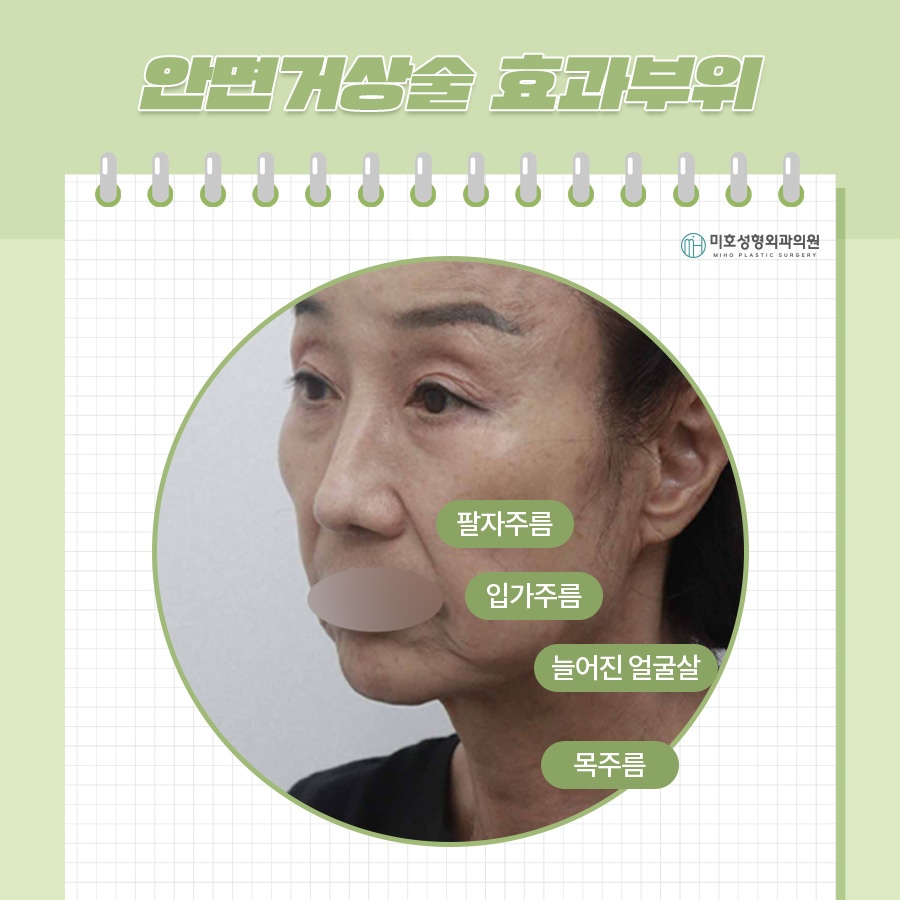
My skin was no longer as firm as before.
As it lost its tension and began
to sag, my jawline also started to collapse.
�20
I tried various methods
to return to my previous appearance.
There were Botox, fillers, thread lifting,
and lasers, but these tended to have
short maintenance periods,
so eventually
I began looking into a facelift.
There are many ways to
briefly restore the skin's firmness,
but their short duration
was also a drawback.
Even those methods were not very effective
for deep wrinkles or significant sagging.
�20
If previous attempts had not produced
the desired results, or if you wanted
to maintain the changes for a long time,
a facelift could be recommended.
Because this procedure includes incisions,
I hoped that you would carefully consider
whether it was truly necessary for you
through a thorough consultation beforehand.
People often
thought of a facelift
simply as a surgical procedure
that pulls up the skin's surface
to make it taut.
A method that lifts only the surface
could not produce long-term,
stable results.
�20
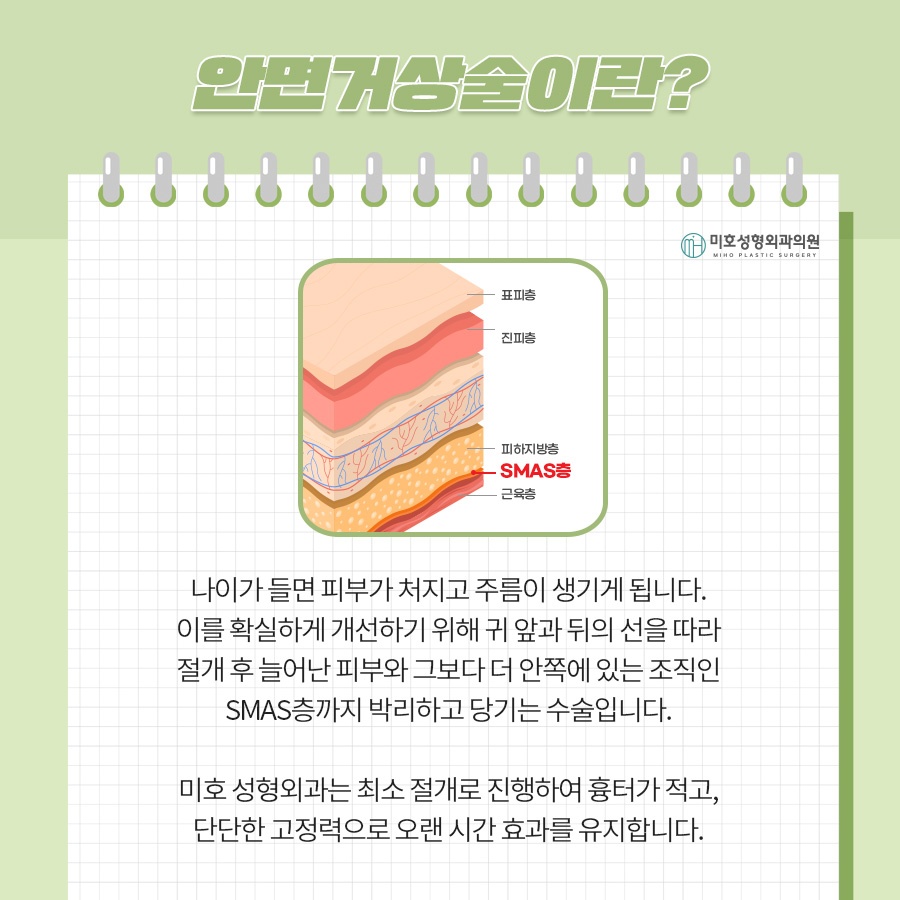
To address this, our clinic simultaneously
lifted the tissue located deep beneath
the skin, along with the fascia,
and secured it firmly.
The fascia is commonly called the SMAS.
It is tissue that supports the skin layer.
Since it is also one of the fundamental causes
of sagging, correcting this area was necessary
to achieve noticeable changes.
Because this solution involves
very deep dissection, it was necessary
to visit several clinics and compare
and analyze the different methods
and procedures they offered.
Items to check included
how the physician performed dissection
down to the fascial layer,
as well as how the separated skin layer
was lifted and secured.
�20
You also needed to determine whether
the clinic applied one or two methods
uniformly to everyone,
or whether it created a customized design
by considering each individual's facial bone structure
and tissue condition.
One of the key points of this solution
was the treatment of the supporting ligaments
beneath the skin.
In some cases,
people found it awkward to make facial expressions
after a facelift, or the movement
of their facial muscles became noticeably limited.
This occurred when a problem arose
during the treatment of the ligaments.
Since no one can remain expressionless all the time,
the ligaments were adjusted carefully
to help the face make natural expressions.
�20
At the same time, an appropriate amount of tension
was applied to lift the tissues at the proper angle.
This process had to be carried out smoothly
so that the facial contour would not look unnatural.
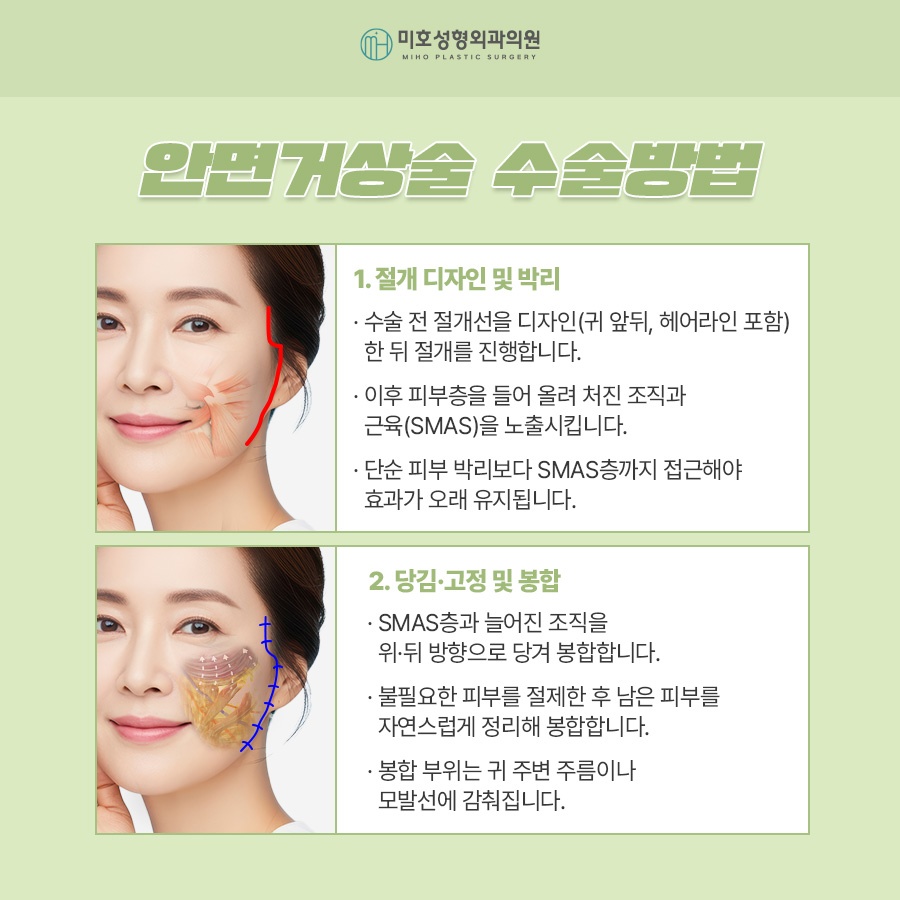
The excess tissue remaining after the lift
was excised, and the incision sites
were sutured to complete the procedure.

Since the incisions were made in visible areas,
there was understandably concern
about scars or other marks.
The incisions were made inside the hairline
or along the ears,
so the scars could be concealed naturally.
In fact, unless they were mentioned,
they were difficult to notice.
�20
The skin needed to be secured firmly
during the final stage to maintain
the lifted appearance for a long time.
However, as long as we live on Earth,
we cannot avoid the effects of gravity,
so the tissues could gradually descend again over time.
Even so, the duration was much longer
than with other methods,
and if desired, additional methods
could be applied to smooth the facial contours.
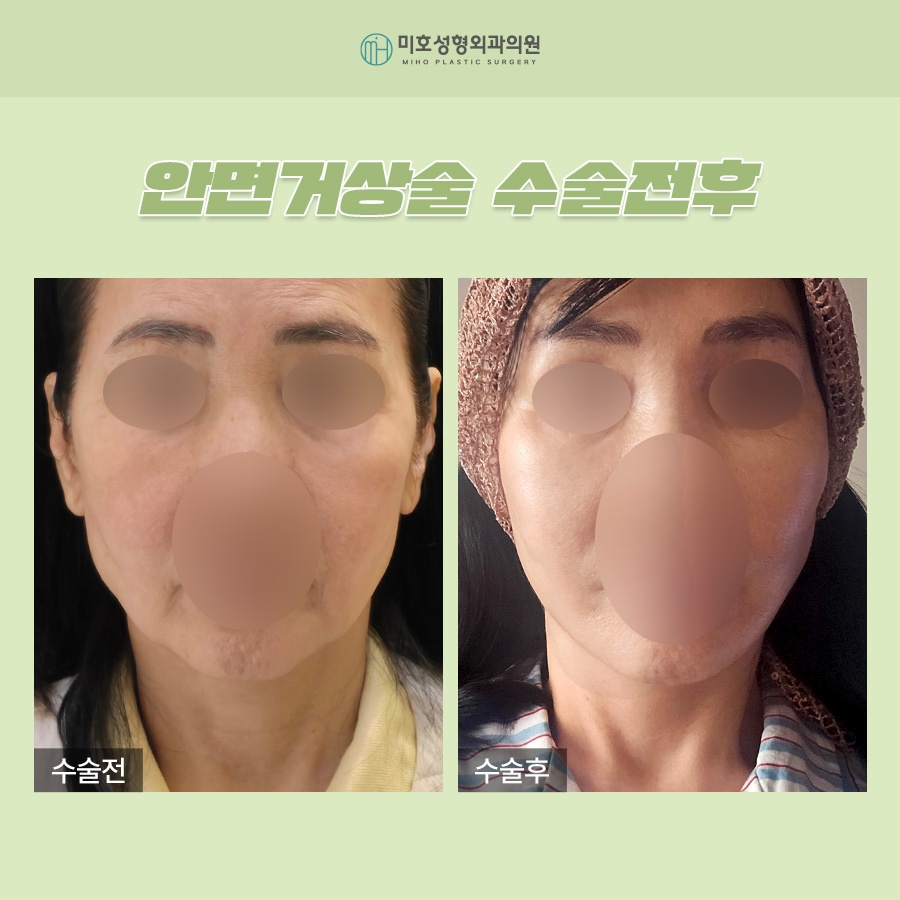
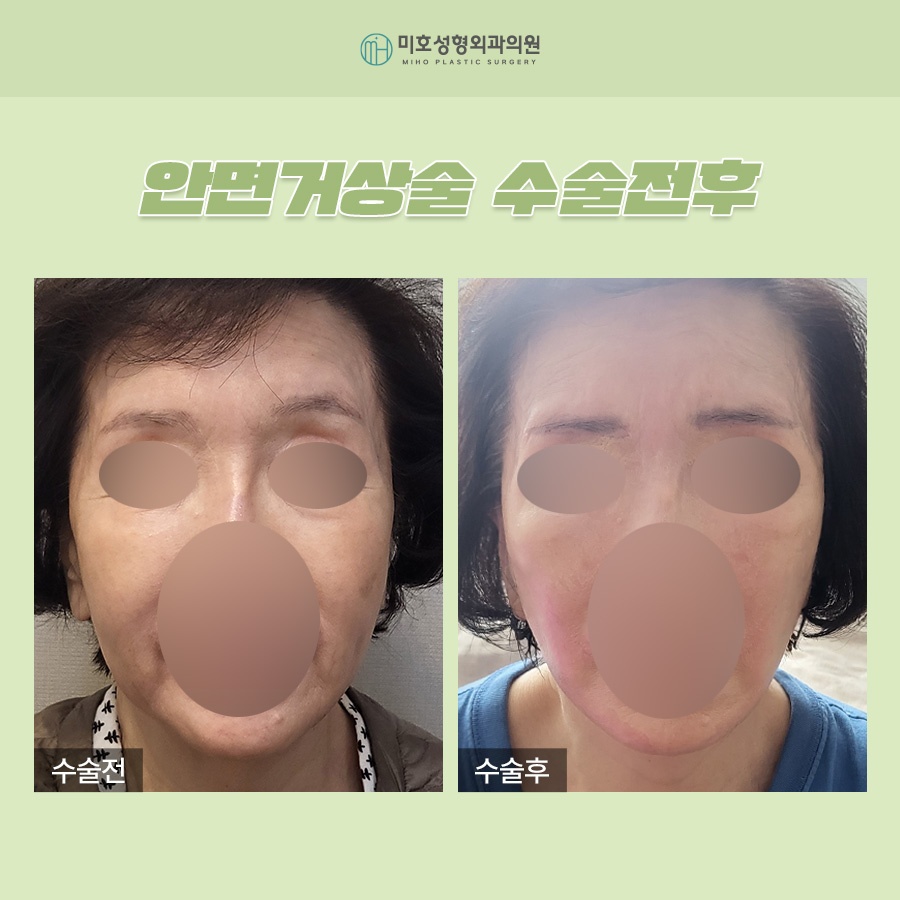
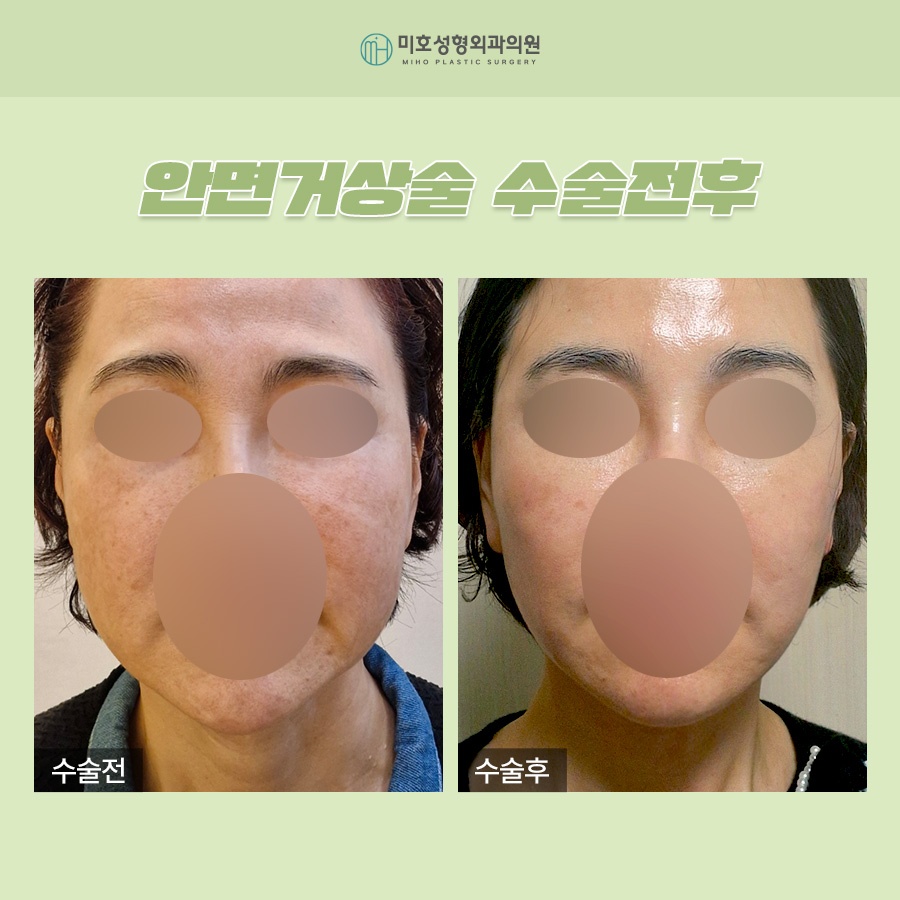
Immediately after a facelift, bruising
or swelling may occur,
which gradually subsides over time
as the facial contours become more defined.
�20
Possible side effects included
excessive bleeding or reduced sensation
due to damage to blood vessels and nerves,
as well as nerve compression.
The frequency of these complications
had become considerably lower
with the introduction of endoscopic cameras.
However, because this is a procedure
that involves incisions,
it was important to thoroughly review
the possibility of side effects
and each individual's condition
before deciding to proceed.
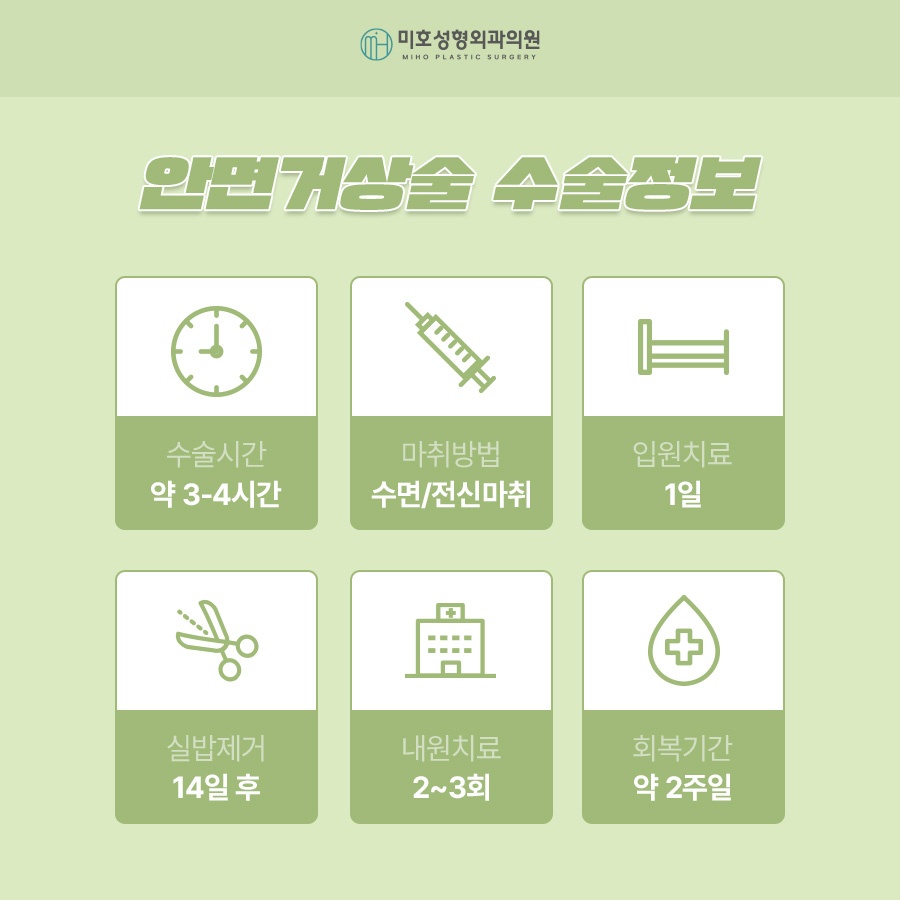
The procedure took approximately
two to three hours,
and you could be discharged immediately
without hospitalization.
Reduced sensation may appear
in the dissected areas right afterward,
but this was temporary
and returned to normal during recovery.
�20
Recovering quickly and returning
to daily life is important,
but to maintain the results for a long time,
it was necessary to care for yourself at home
according to the instructions provided
by the medical institution.
You should alternate cold and warm compresses
as appropriate, avoid getting water
on the incision sites until the stitches were removed,
and keep the areas clean.
If medication had been prescribed,
it should be taken according to the instructions.
For a while, it was advisable to avoid
saunas and swimming pools.
It was also advisable to avoid strenuous exercise
that caused heavy sweating,
as well as massage treatments involving strong pressure.
Smoking and drinking alcohol can cause inflammation,
so they should be avoided for at least one to two weeks.
It was also better to avoid behaviors
that accelerate skin aging for the future.
�20
Dry conditions can cause fine lines,
so applying moisturizer regularly was advisable.
It was recommended to apply sunscreen
to the neck as well, throughout the year.
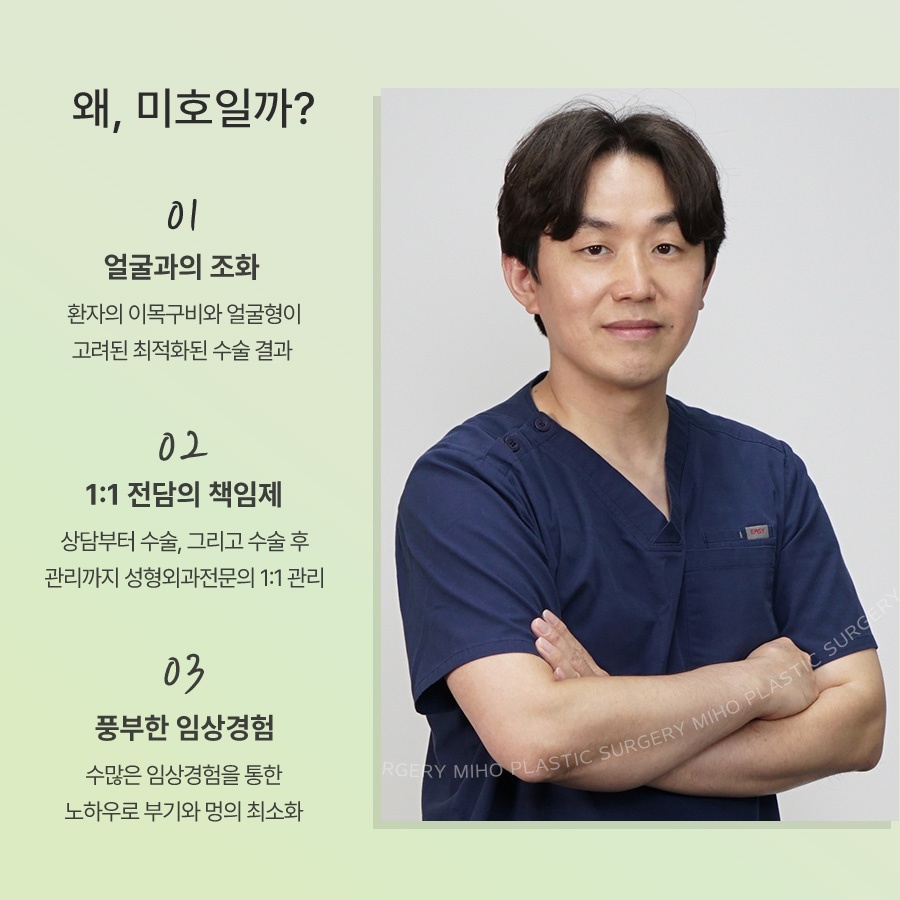
If you are considering a facelift,
it was advisable to make a careful decision
after comprehensively considering
your age, skin elasticity, and degree of sagging.
By assessing each individual's bone structure
and tissue characteristics and applying
an appropriate method,
it was possible to reduce side effects
while achieving favorable results.
�20
This procedure was not limited
only to people in middle age or older.
Even if you were still relatively young,
if you had particularly pronounced nasolabial folds,
sagging cheeks, or noticeable loss
of facial definition,
this solution could provide assistance.
I hoped that you would decide whether to proceed
after having a sufficient consultation
and conducting your own research.



Previous image
Next image
�20