When the swelling period has passed, but
the crease is still set too thick and the eyes
look puffy and swollen,
we call this “sausage eyes.”
This eye shape was one of the 대표적인 side effects
that can occur after double eyelid surgery.
When the result differs from what was expected, or
when you hear many negative comments from people around you,
you may start considering revisional surgery for sausage eyes.
You may think about trying again because the line or shape
doesn’t look natural, but it is also performed for corrective purposes.
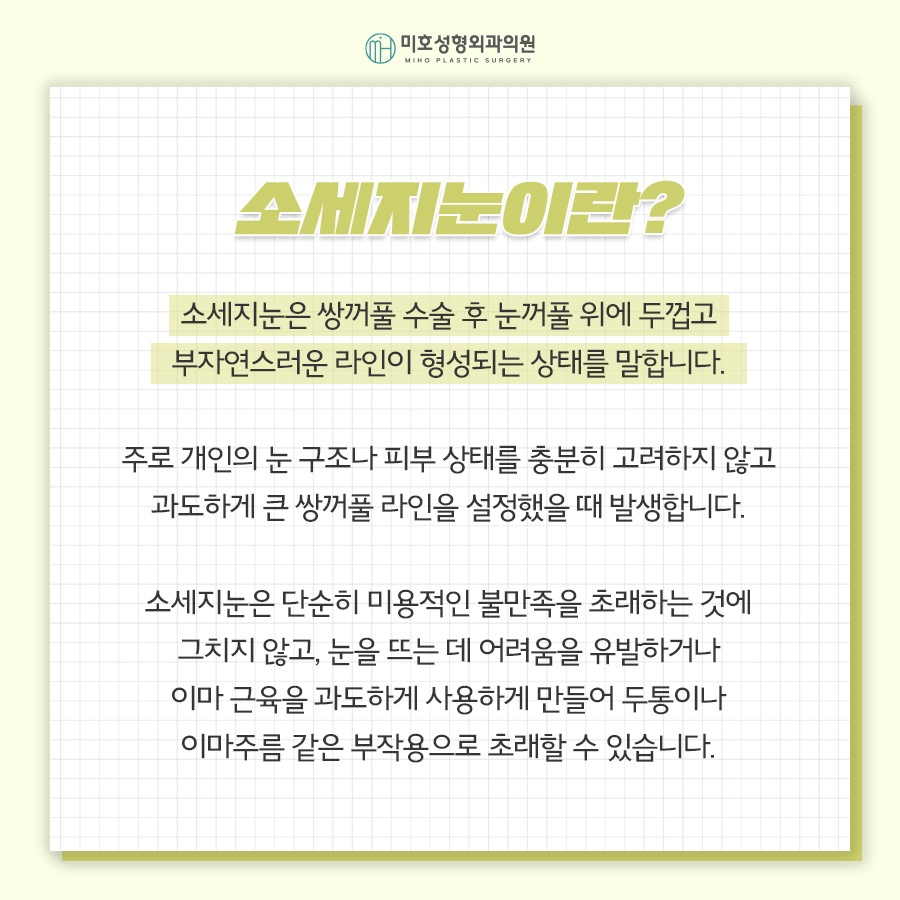
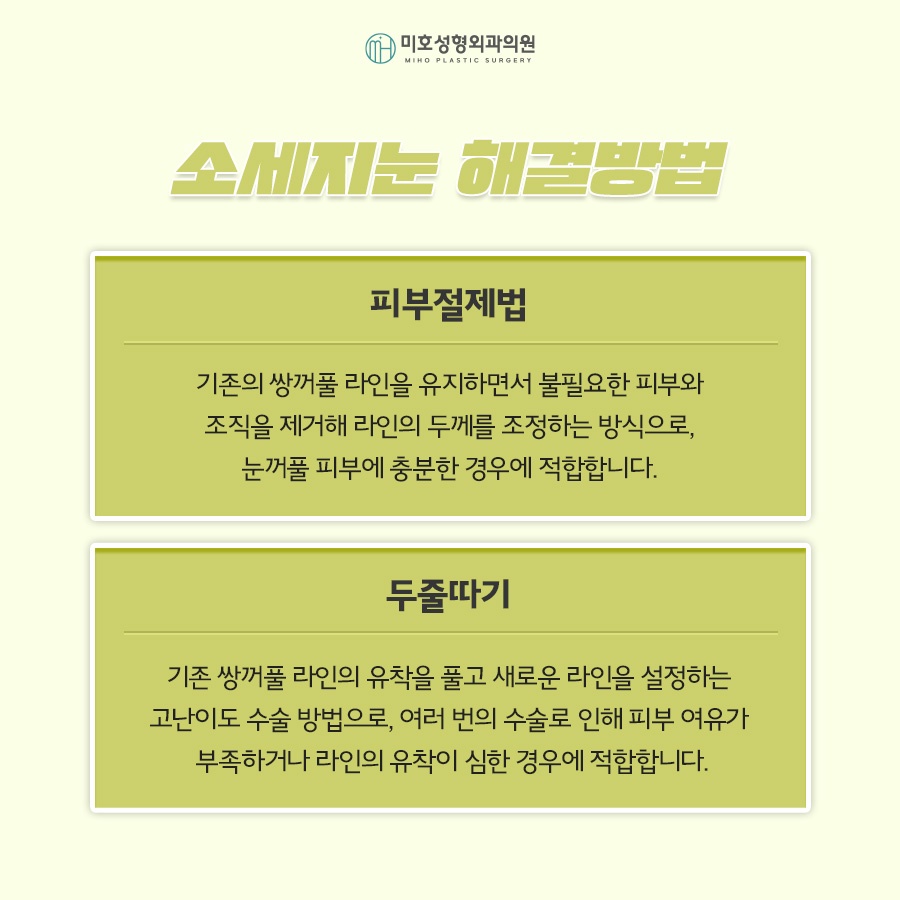
Cases in which revision is performed include
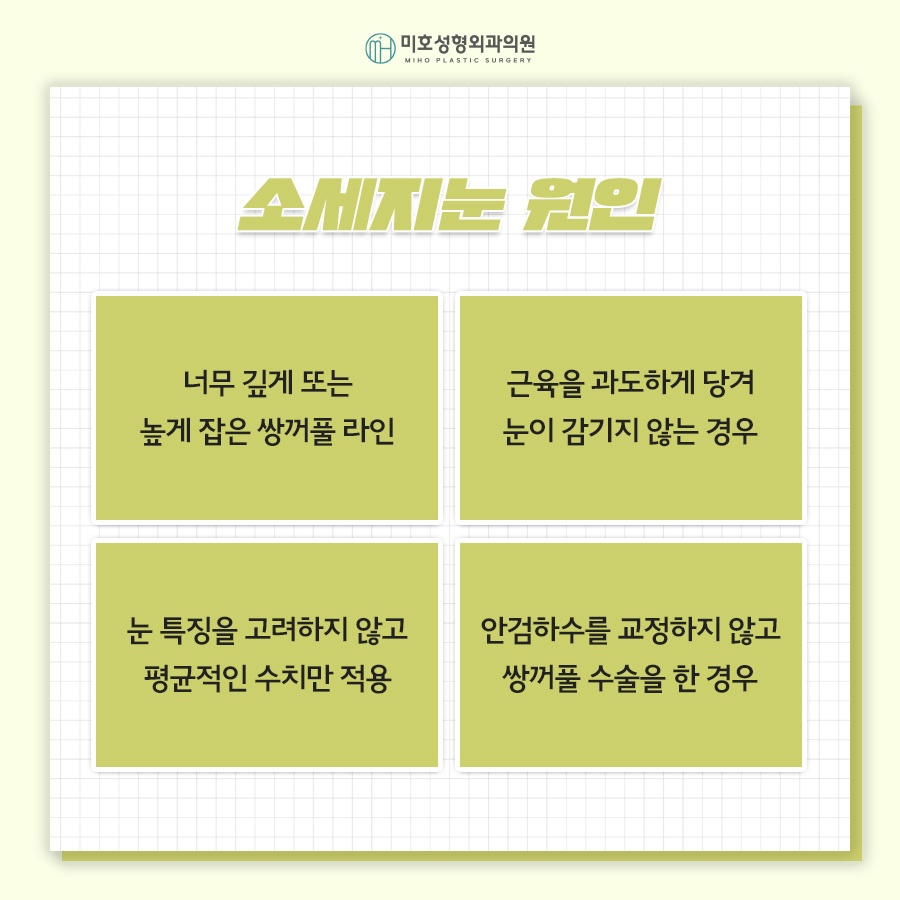
when the crease is excessively wide,
or when it looks deeply sunken,
and when a scar remains clearly visible
every time the eyes are closed.
Revisional surgery for sausage eyes focuses on
identifying the cause of the problem and correcting it
so that the eye shape suits me well.
Because an incision has already been made once
and tissue has been damaged,
the level of difficulty is higher than the first procedure.
To prevent a second or third revision,
it is necessary to make a clear diagnosis
based on a careful analysis before proceeding.
At our clinic,
medical staff with extensive know-how and experience
in revisional surgery for sausage eyes handled the procedure directly.
Only by closely understanding and analyzing
the problems from the first surgery and
what the patient is dissatisfied with
can the current condition be improved stably.
Rather than focusing only on making a thick crease thinner,
we considered each person’s image and desired direction
to develop and apply a customized design.
In addition, we finished with fine suturing
to help reduce scarring.
If the double eyelid line is too thick,
if scars remain severe,
or even if inflammation has occurred,
it can still be corrected if the cause is clearly identified
and addressed properly.
The key point of this solution
was to remove the artificial look and create
a natural eye shape.
Revision or a first attempt for the inner or outer corner of the eyes
could also be performed at the same time.
If the inner or outer corner had been opened too much,
part of it could be closed.
Conversely, by opening it more clearly,
we could enlarge the eyes and make the overall image
appear more striking.
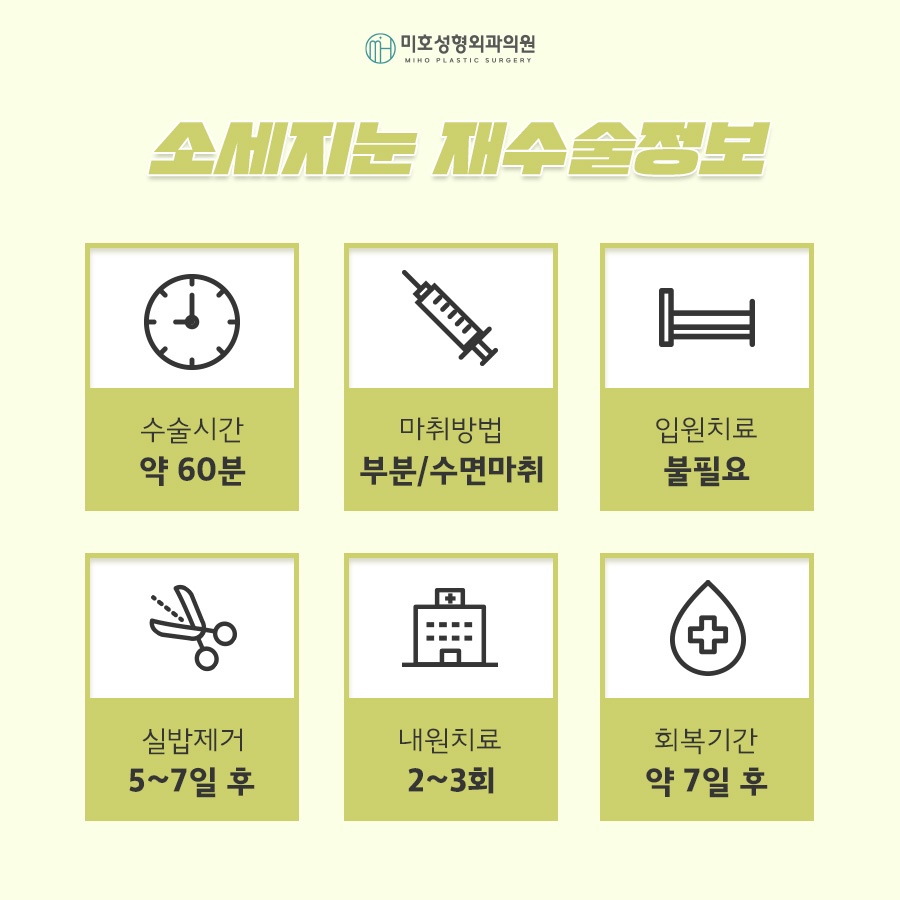
Not only revisional surgery for sausage eyes,
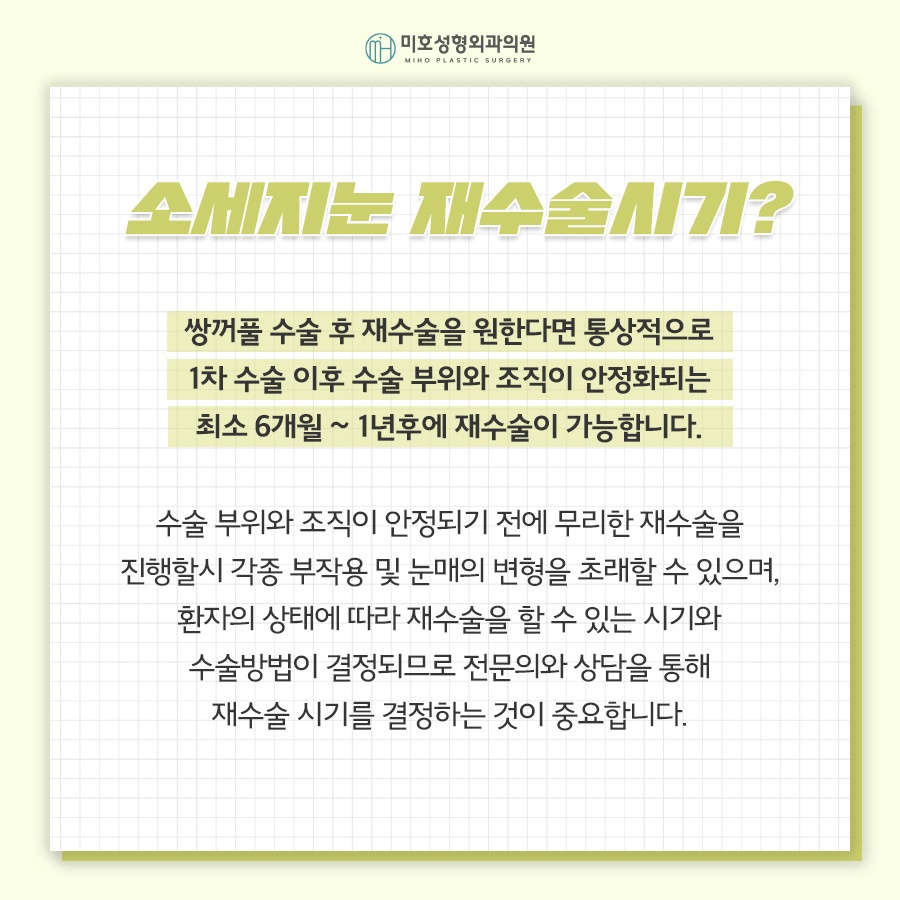
but any type of revision had to be done only after at least 6 months.
On average, it takes about half a year for the tissue
to stabilize sufficiently,
and if it is incised too hastily before then,
adhesions or scarring may occur.
If an inflammatory response develops,
you should take anti-inflammatory medication
to help the red, swollen area subside.
However, if tissue changes caused by necrosis begin to appear,
the affected area must be incised again without delay
to correct the problem.
If pain and swelling do not improve after the procedure
and instead become progressively worse,
the likelihood of inflammation or necrosis is high.
In that case, you should visit a medical institution immediately.
The situations in which revision is desired or needed
are very diverse.
Cases included when the line was formed in an overly burdening way,
or when it was so close to the eyelashes
that it was barely noticeable,
and cases where a buried-suture method was used
but then loosened and returned to the previous state.
There were also cases where the double eyelid became two or three layers,
or where the left and right eye shapes were different.
Even when there was no visible problem,
some people chose to try again because they themselves
were not satisfied.
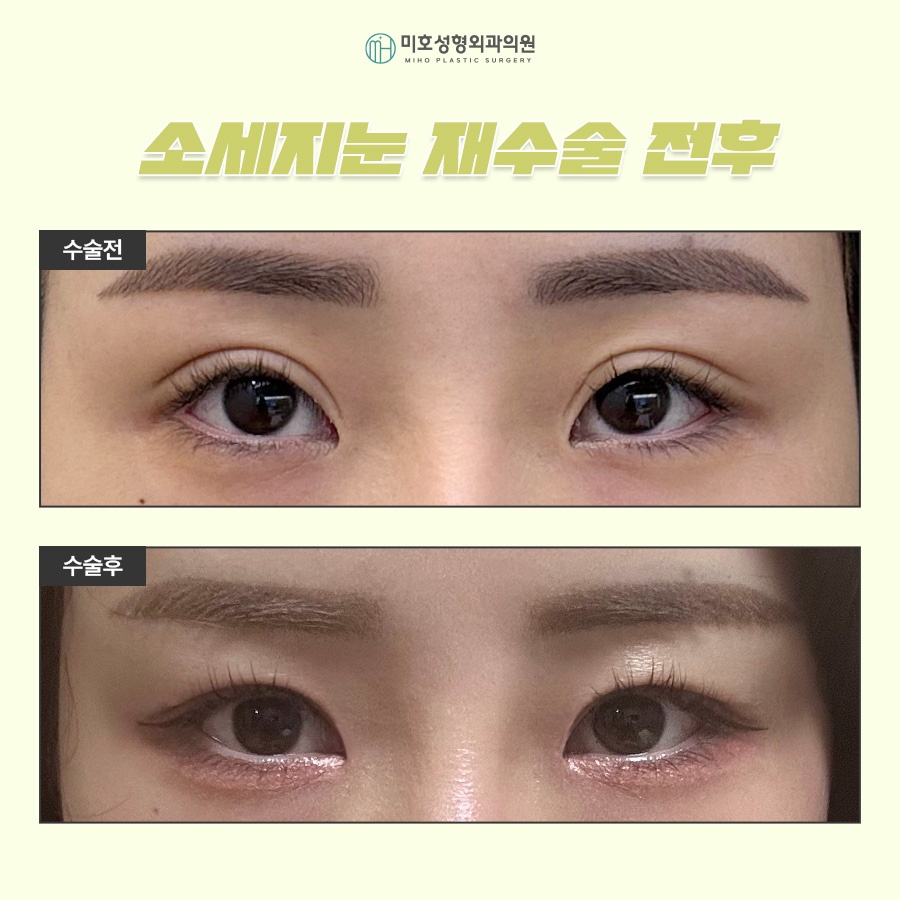
Revisional surgery for sausage eyes had to be approached
more carefully than the first procedure.
Because an incision had already been made once,
it had to be performed delicately along that line
so that multiple eyelid folds would not form.
There was also the issue of deep scarring.
It may look fine when the eyes are open,
but when closed, a deep incision mark
like a chop wound from an axe can remain.
To create a beautiful appearance both when the eyes are open and closed,
it was necessary to improve the previous problems
while also enhancing the overall result.
Since the eyes are especially one of the most important
parts of the face, our clinic assigned medical staff
with abundant experience and excellent technical skill in this area.
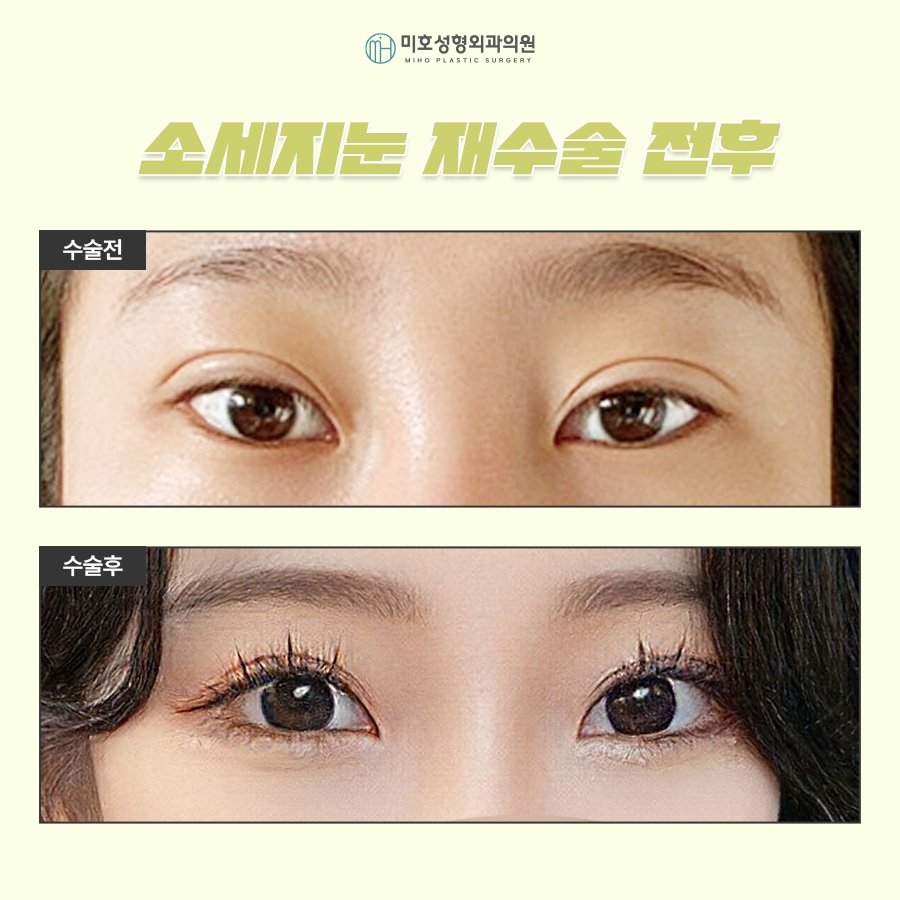
The procedure time could take a little longer than the first attempt,
but it was usually completed in about 1 to 2 hours.
The recovery process after the procedure was
almost the same as after the first surgery.
For the first few days, swelling and pain may be felt,
and depending on the person, bruising could spread widely
around the area.
Within 1 to 2 weeks, you can resume daily life as before,
and after the stitches are removed,
light face washing and makeup are possible.
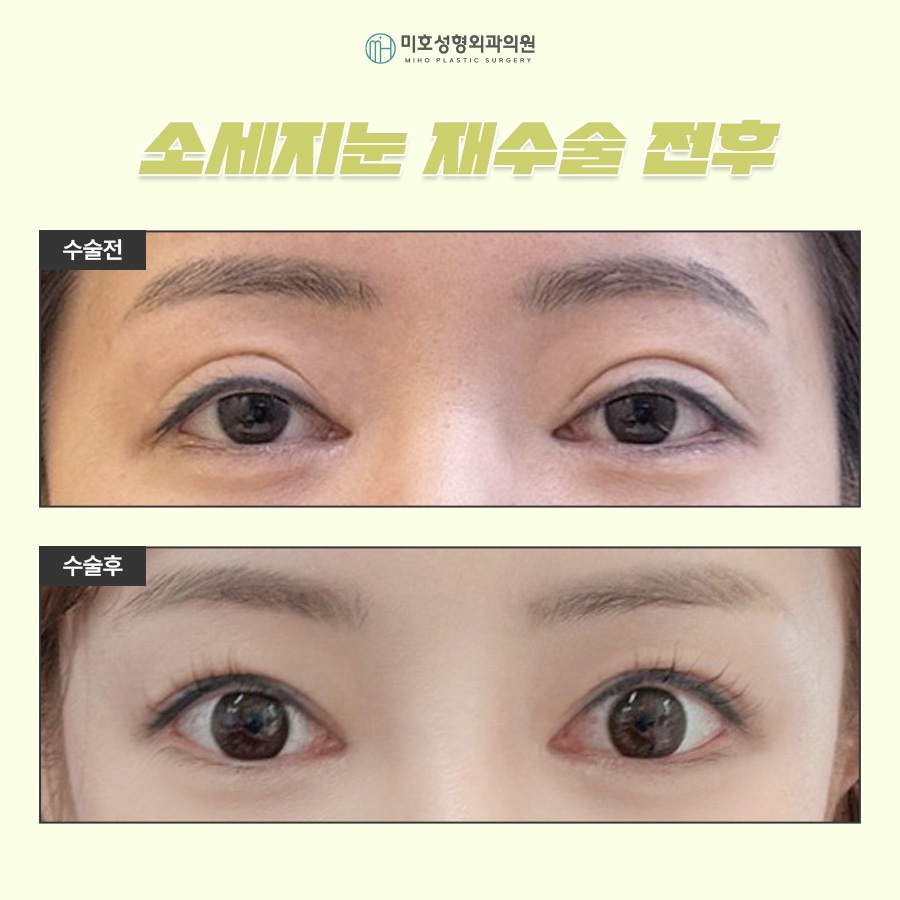
It is important to correct the failure of the first attempt,
but the best course is to avoid needing a revision in the first place.
If you carefully choose the medical institution and medical staff
from the beginning, clearly express your needs,
and proceed with the surgery,
I thought you would be less likely to be deeply disappointed
with an undesired outcome.
Even during consultation, rather than asking for a trendy shape
or telling the surgeon to design it however they see fit,
you should clearly identify the characteristics of your own face
and ask them to suggest a shape that suits you well.
If you have something you want, actively expressing it
is also a good approach.
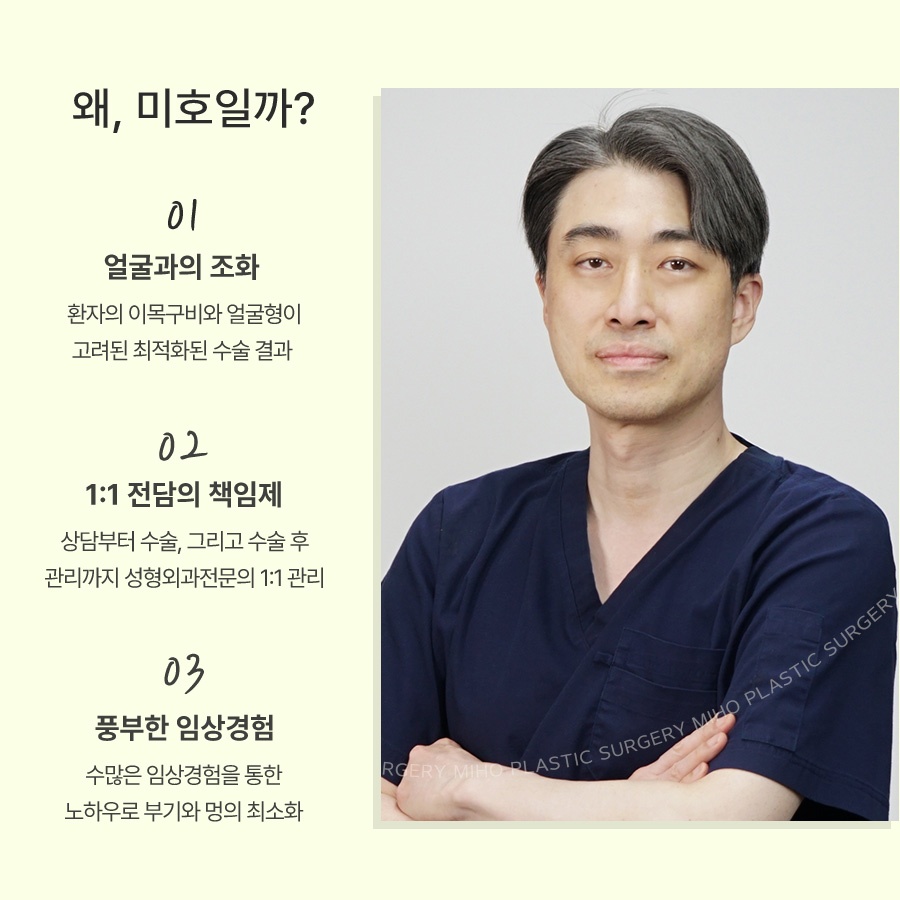
At our clinic, the attending doctor was directly responsible
for everything from consultation to the procedure
and aftercare.
Even for revisional surgery for sausage eyes,
we identified why such a result occurred
and suggested an appropriate alternative.
If the nose, mouth, and chin are compact and appear traditionally East Asian,
but only the double eyelid line is dark and thick,
the overall balance can be disrupted and look awkward.
If deep, dark incision marks are also left on the eyelids,
they can feel burdensome to others as well.
If you are deeply concerned about these issues,
we hope you will take plenty of time to think it over
before deciding and work toward improving your eye shape.



Previous image
Next image
�