
When the nose is viewed from the front and from the side,
the parts that stand out especially differ,
so the areas people worry about vary widely.
The bridge of the nose does not stand out from the front
unless the height is significantly low,
but the nostrils tend to look noticeably flat
or thick even from the front.
If concerns about nostril reduction become deeper,
it is first necessary to identify which areas need improvement
and what points should be noted
to achieve a natural result.
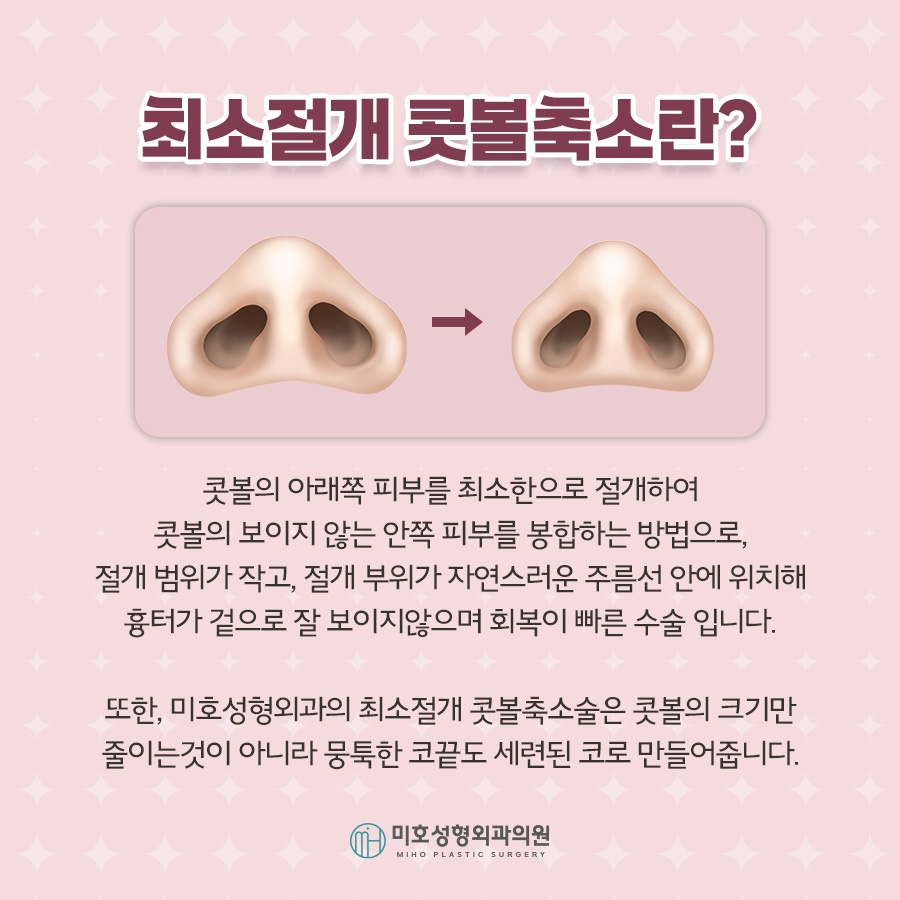
Among those considering nostril reduction,
the majority have a bulbous nose.
A bulbous nose refers to a nose shape in which the tip spreads wide
and forms a round shape,
and it is also called a pug nose.
Rather than giving a refined impression,
it can create an image of being plain
or unsophisticated, so many people see it as a concern.
In the past, it was strongly perceived as a full and fortunate-looking nose,
so it was not a shape that was disliked as much as it is now.
However, in modern society, many people feel that it does not quite suit current aesthetics,
and it has come to be regarded as a complex.
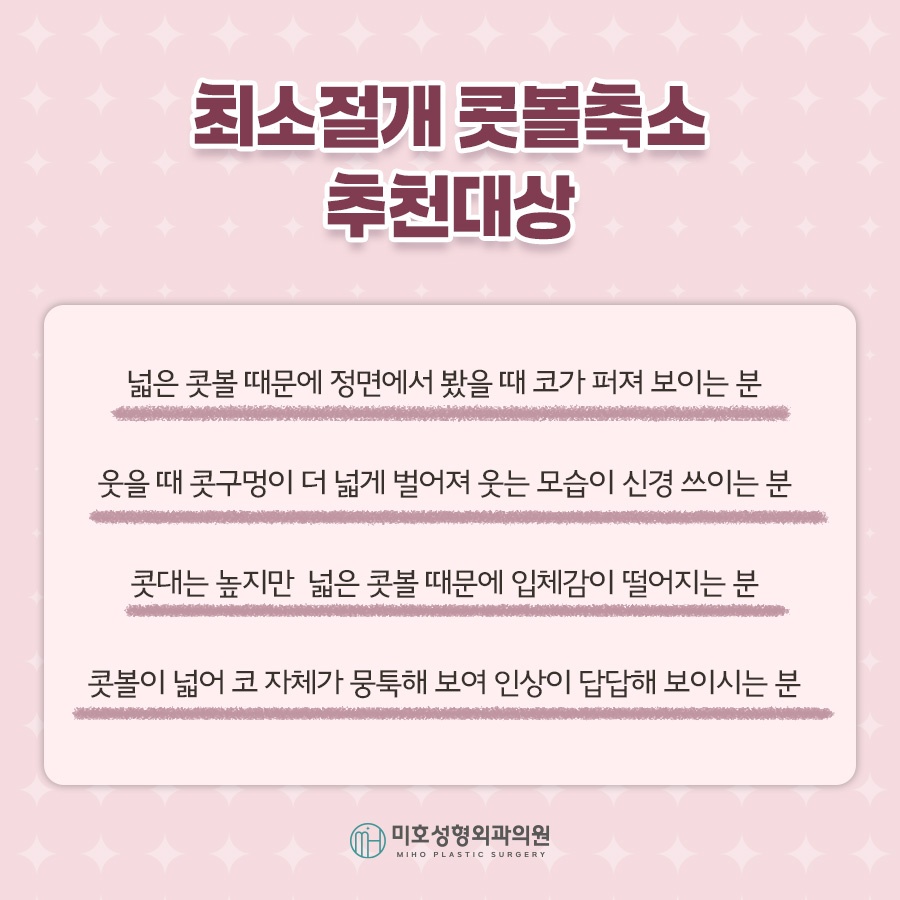
The reason this issue occurs is that the structural characteristics
of the naturally shaped nasal tip differ from person to person.
If there is an aesthetic issue serious enough to require considering
a nostril reduction method, there may be excess soft tissue
and the skin itself may be thick,
which is a relatively common condition among East Asians.
There are also cases where the cartilage is spread apart,
or where the nose is larger than normal in its natural size,
making the nostrils appear blunt and wide.

A round and somewhat heavy-looking nasal tip shape
can even make the entire nose look lower.
The nose is, above all else, an important part of giving the face dimension
and a sharp impression,
and simply having a well-defined central axis
can make the overall image look much more refined.
It is important not only as an aesthetic element,
but also as a functional area, so if you wish to correct it,
examine both the front and side views,
find a shape that blends naturally,
and then apply the appropriate method.
If you have a normal nose height,
there is no need to raise it using an artificial implant or autologous tissue.
However, if reducing the nostrils would result in poor proportions,
or if you want to improve the image by adjusting the sense of dimension,
you should have an in-depth examination and consultation with the doctor in charge
to determine the proper correction range and design.
There are several methods, including incision and non-incision approaches,
and each has points to watch for as well as time and burden involved in the recovery stage,
so careful consideration is appropriate.
If you feel burdened by an incision,
first find out whether improvement is possible with a non-incisional
nostril reduction method
and then decide.
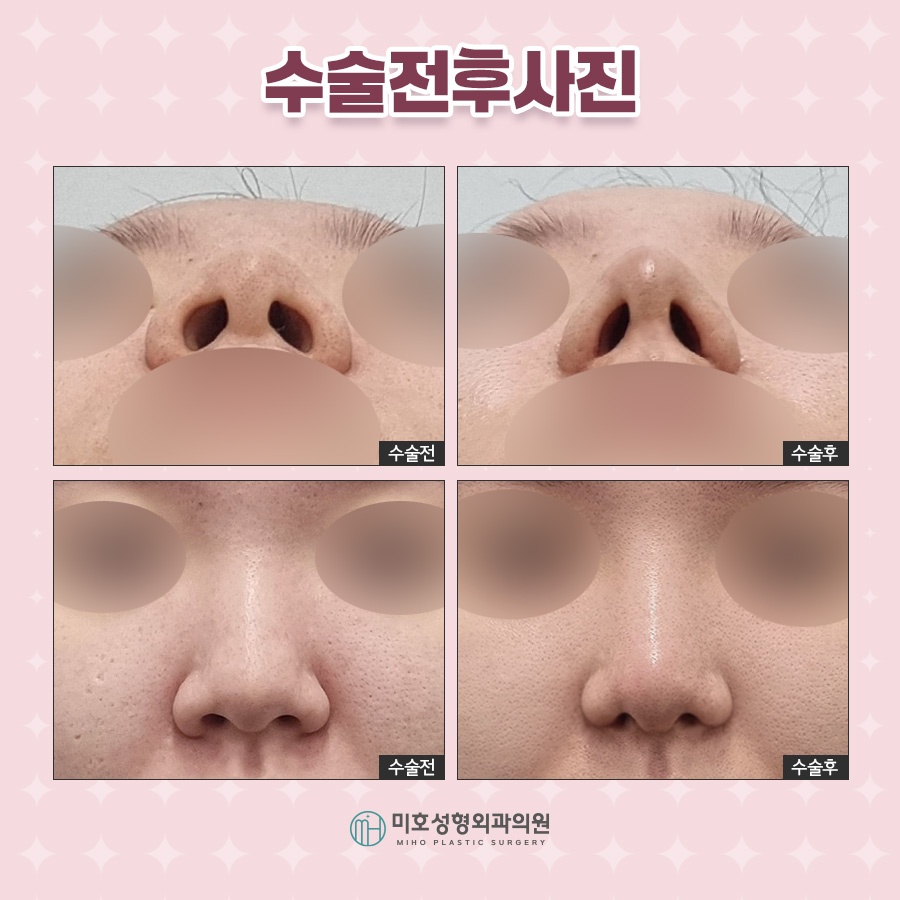
The non-incisional method is useful for tying together spread cartilage, etc.,
and adjusting and correcting the width that has become excessively wide.
If the cause of the bulbous nose is the cartilage,
it is possible to refine the nostrils to look narrower and more polished than before
without making an incision,
and the initial swelling and bruising also tend to subside relatively quickly.
Since there are cases where improvement is possible with incision alone,
it cannot be applied to every case.
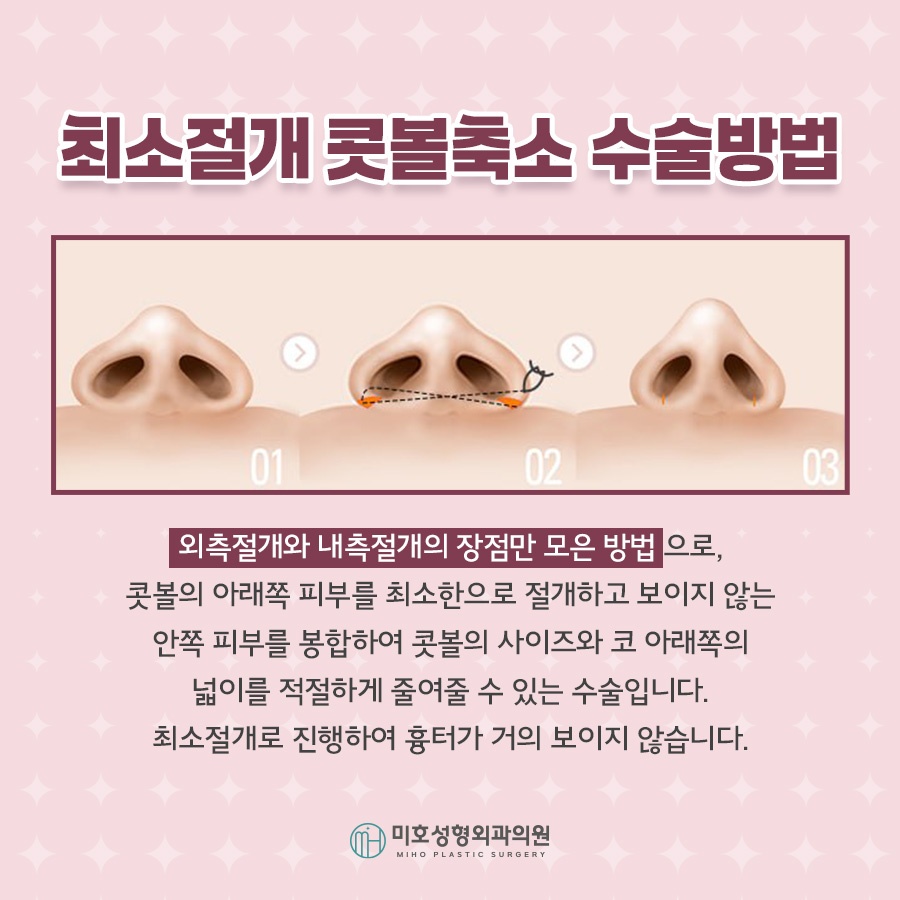
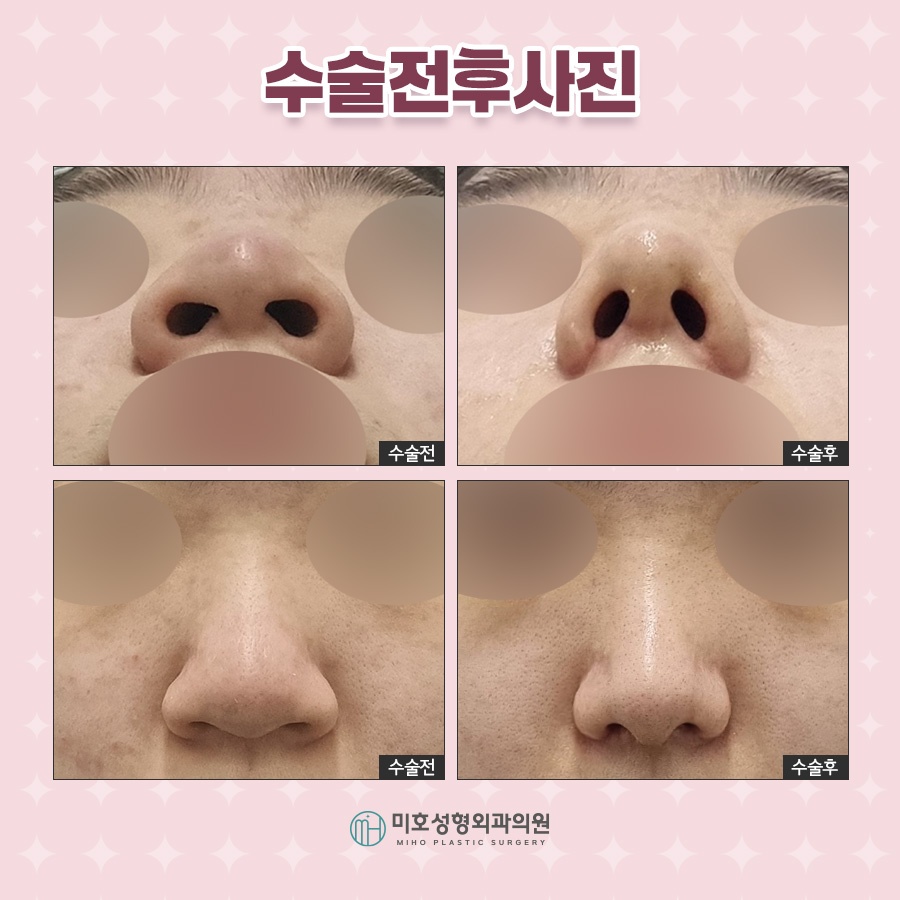
If there is also a problem of thick soft tissue itself,
it is difficult to reduce the shape simply by tying the inside.
In such cases, the incision range is kept as limited as possible
so that the resulting scar will not be visible as much as possible.
If the bridge of the nose also needs improvement,
the appropriate implant is selected by considering the amount that can be harvested and the support it provides,
and it is carefully matched so that it blends well with the altered nasal tip shape,
enabling aesthetic concerns to be addressed as well.
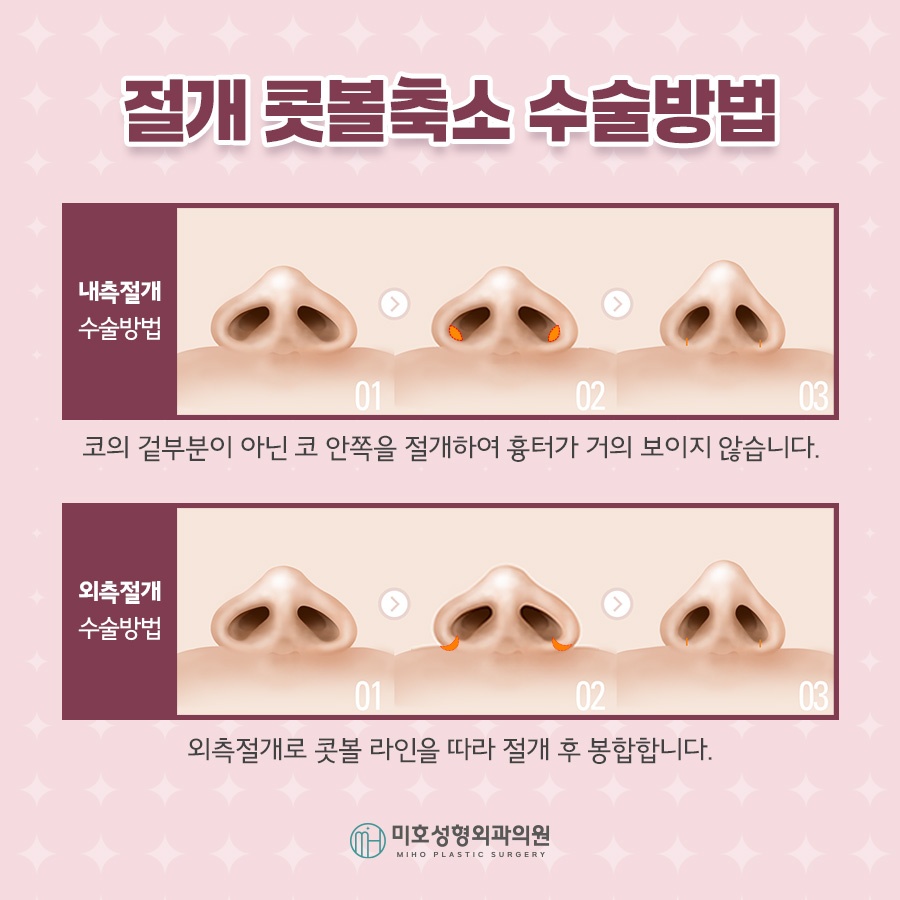
If incision nostril reduction has been performed,
there is also some concern about scars,
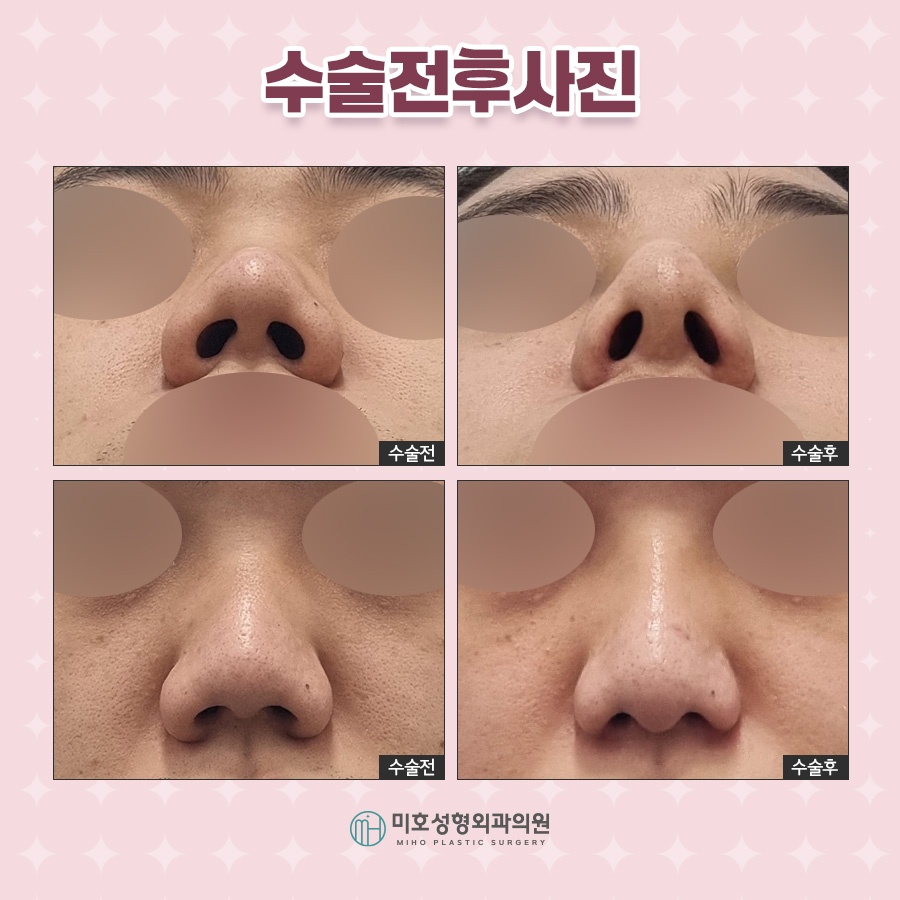
but recently dissection has been started from the inside to reduce this as well.
The internal incision method, which makes the incision inside the nose rather than on the outer part of the face,
helps reduce the burden during recovery.
Even if aftercare is not carried out properly,
the range of visible scarring is smaller compared with cases where the incision is made on the outside.
Unless you tilt your head back,
it is in a location that is difficult for others to notice,
so it is also noteworthy that returning to daily life is not difficult.
Since there are many points to consider even in the method used,
it is necessary to hear a detailed explanation first.
If the procedure requires general anesthesia first,
it is especially important to check whether the facility is equipped to handle possible complications well
before making a decision.
Malignant hyperthermia is rare,
but if it occurs, it can become a serious condition,
so immediate response is essential.
If the facility has dantrolene, which also helps prevent symptoms,
they can respond quickly.
Since recurrence usually occurs within 6 hours,
you should find out in advance so that help can be provided immediately when needed.
It is also important to check whether the recovery care provided afterward is systematic,
because that reduces the risk of additional problems such as inflammation or tissue damage.
So it is necessary to look into things carefully and thoroughly.
The period during which swelling and bruising are noticeable after nostril reduction is one week.
During this time, cold compresses should be applied for the first 3 days
to bring down the major swelling first,
and during the remaining days it is important to alternate warm and cold compresses
to reduce bruising.
When sleeping, the first 3 days are also a period when swelling becomes more severe than usual,
so it helps to sleep with your face positioned higher than your heart.
Makeup and face washing are possible immediately afterward,
but discomfort may be felt for a while,
so please be as careful as possible and focus on recovery,
so that you can meet the naturally changed result with a positive appearance.



Previous image
Next image