
Soft, clear eyes
can make the overall impression of the face
look much more lively.
However, when unnecessary folds
start to overlap around the eyelids,
they can create a tired appearance
and disrupt the overall balance.
Such changes go beyond an aesthetic issue
and are also linked to functional problems,
such as weaker eyelid opening force or reduced vision.
As a result,
inquiries about correction for multiple eyelid folds
are increasing,
and different solutions are being suggested
depending on the structural characteristics of the eyes.
This time, let’s take a step-by-step look
at the causes of multiple eyelid folds
and the direction for improvement.
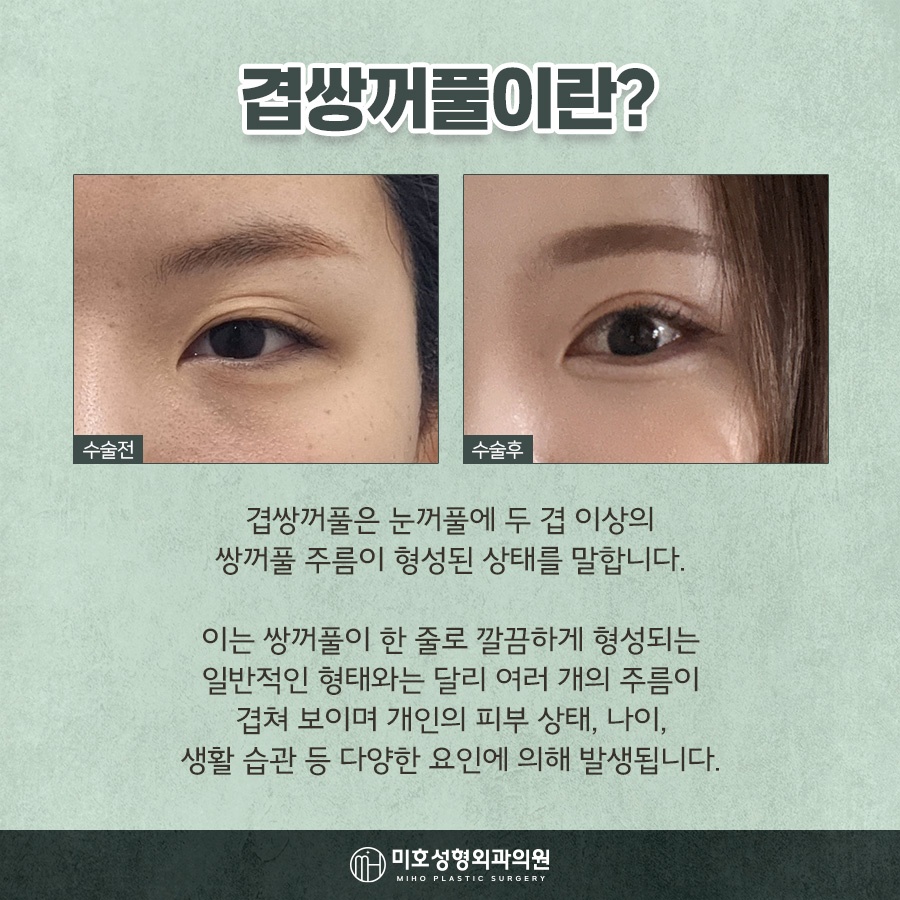
Multiple eyelid folds do not have a fixed number or shape,
and the areas where they form vary,
such as the inner or upper part of the eye.
In cases where there is a double eyelid,
they often appear above the existing line,
and all lines except the main double-eyelid line
are regarded as multiple folds.
If they naturally settle into place in some cases,
they can create an attractive impression,
but in most cases that is not what happens,
and they tend to progress in a negative direction,
such as causing the existing double eyelid line to loosen.
The later it is addressed, the more pronounced it becomes,
so if multiple lines are visible on the eyelid
and are thought to negatively affect the appearance,
it is advisable to seek correction early.

Among the causes of multiple eyelid folds,
aging accounts for a large portion.
As people get older,
the skin around the eyes gradually becomes thinner
and its elasticity decreases,
and as the volume of the fat layer also decreases,
the remaining skin folds over.
There are also congenital factors.
A similar pattern can appear if the eye area
has naturally poor elasticity
or if the levator palpebrae superioris muscle,
which is used to open and close the eyes,
is weak.
Recently, cases requiring correction of multiple eyelid folds
have become more common even among younger people.
The main causes are rapid weight loss over a short period
or a misaligned line after cosmetic procedures.
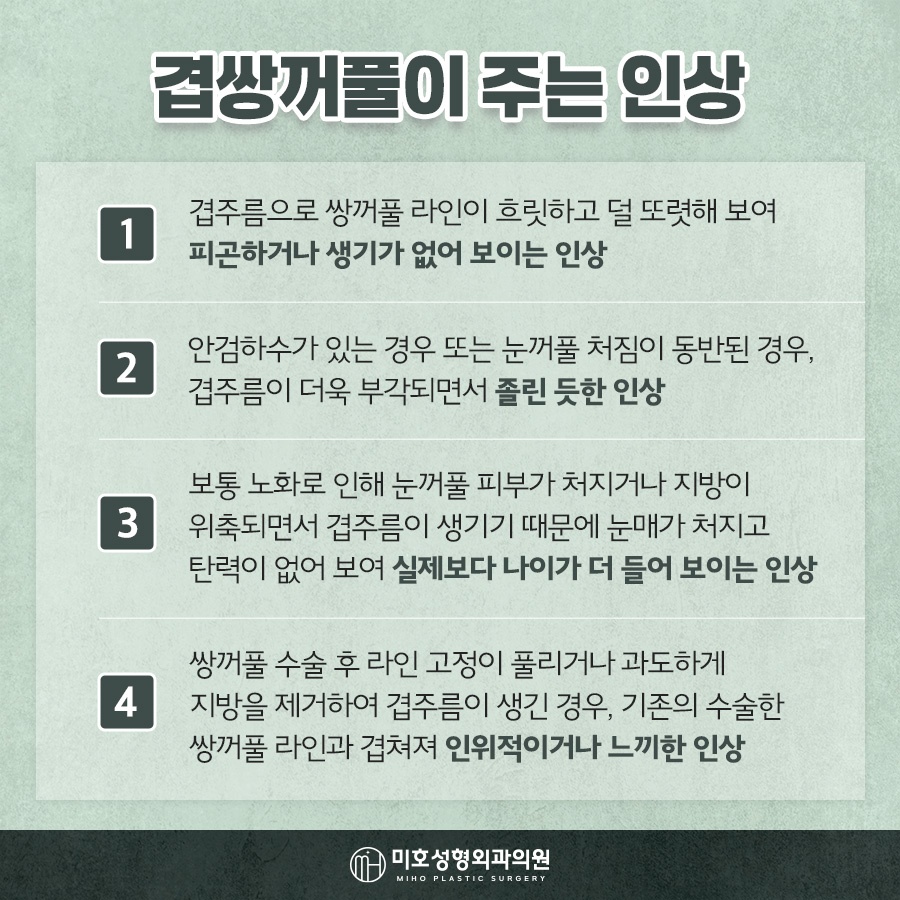
If the eyelid is thick
or has a large amount of fat,
and it is adjusted to a high-set line,
the boundary becomes unstable over time.
Even after correction using a buried-suture method,
a new fold line can form
due to changes in tissue looseness or adhesion.
If too much fat has been removed,
the upper eyelid surface may fold unevenly.
In addition, if scars or similar marks are present,
they can also cause folds.
Ultimately, the causes mentioned above can be interpreted
as the result of an imbalance between
the amount of excess skin and fat,
and the collapse of balance in the eyelid structure.
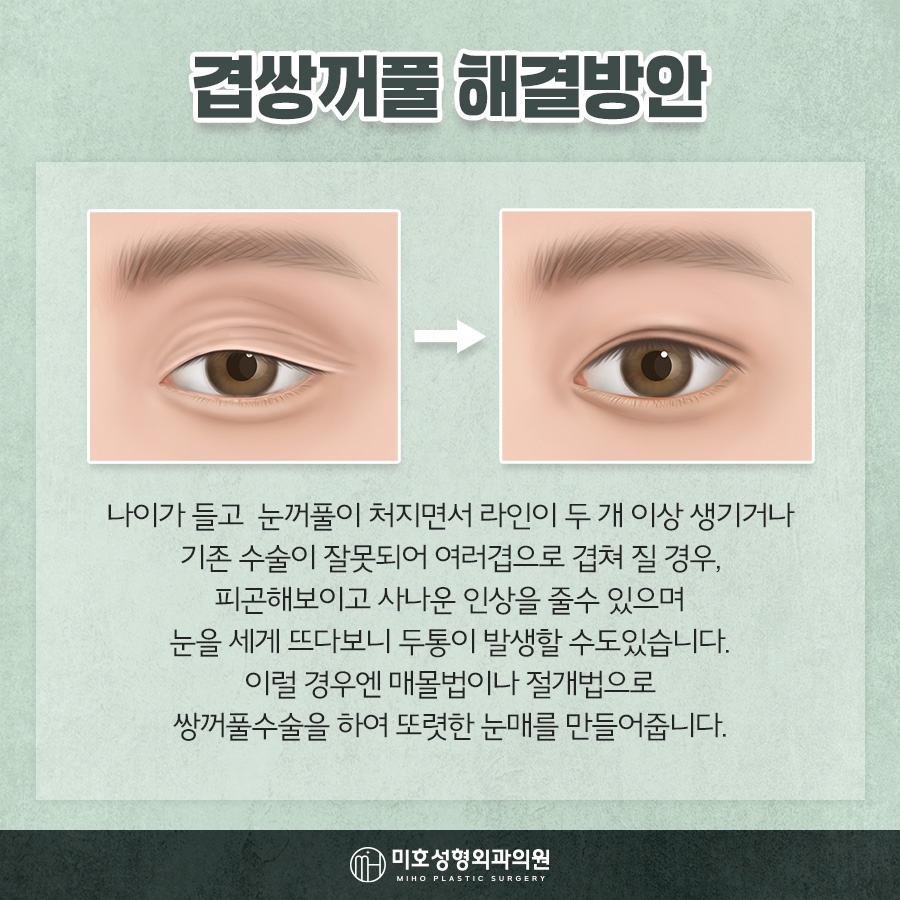
Therefore, when trying to improve this condition,
the focus should not be only on the outward appearance,
but also on structural factors such as
skin thickness, fat distribution,
and the tension of the levator palpebrae superioris muscle,
as well as the time of onset and whether a double eyelid is present.
Only after examining these aspects carefully from multiple angles
can the proper direction be determined.
In most cases, surgical treatment is involved,
and external harmony should also be considered,
including the individual’s facial shape, eye size and shape,
and the distance between the eyebrows and the eyes.
Above all, it is necessary to find an appropriate balance
between the image the patient expects
and the result that will actually be achieved.
If the tissue changes are significant
or there is a large amount of excess skin,
multiple eyelid fold correction through incisional surgery
often produces a clearer result.
This method precisely removes unnecessary skin,
the orbicularis oculi muscle,
and excess fat to refine the structure.
If there is a history of previous correction,
the tissue that has become adhered due to that procedure is released
and prepared to create a new boundary.
A single crease line is formed
by re-adhering the skin and tarsal plate
at an appropriate height.
If reduced eye-opening strength is observed,
ptosis correction is performed at the same time
to help the eyelid open sufficiently.
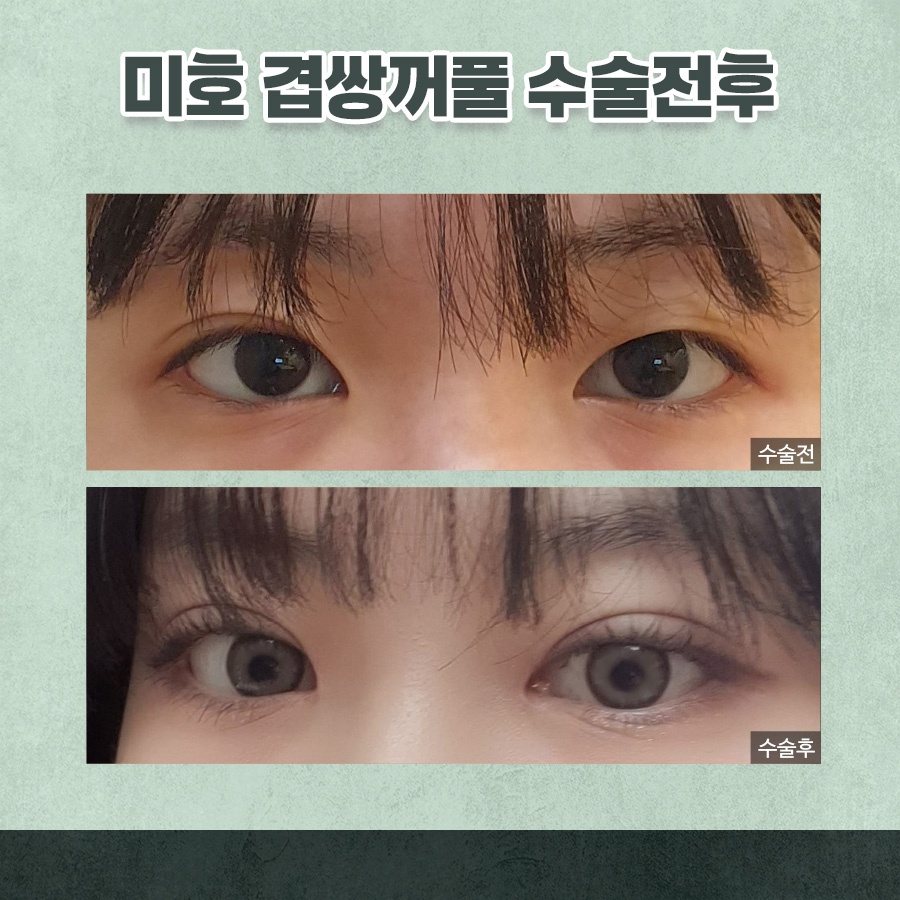
If there is a lack of fat in the upper eyelid area,
causing a hollow appearance or folded skin,
fat redistribution into the sunken area
or fat grafting may be considered.
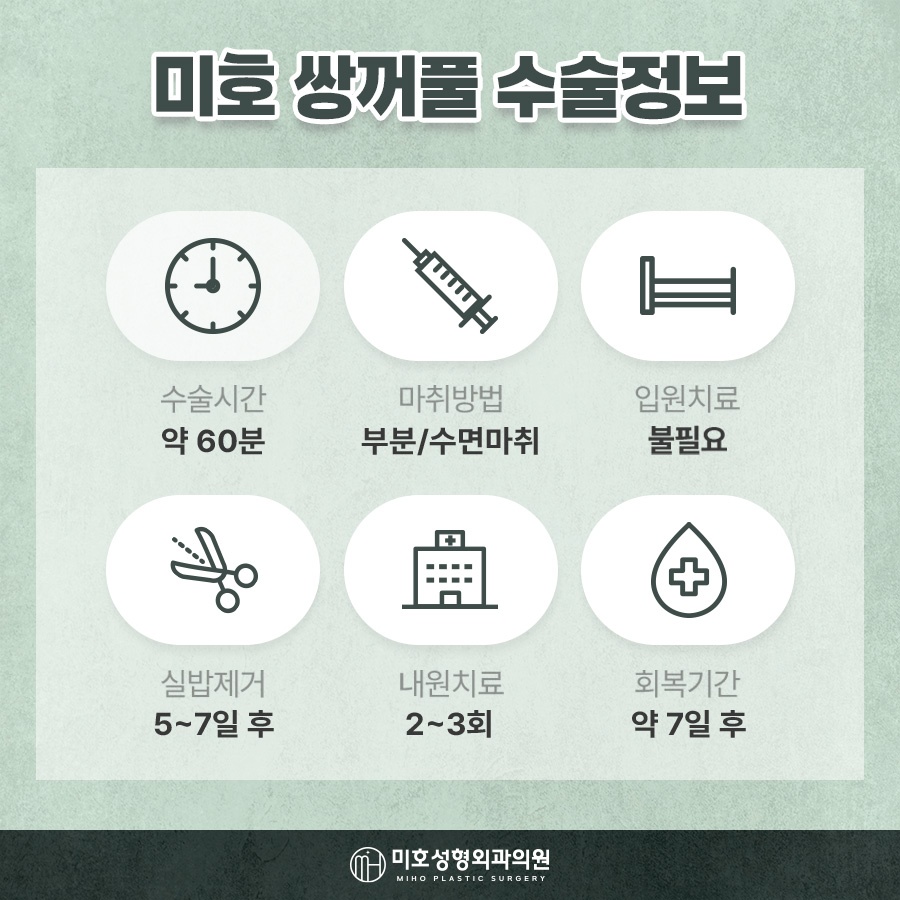
About 1 to 2 weeks after the procedure,
bruising and swelling gradually subside,
and the stitches can be removed,
allowing light daily activities.
However, it takes about 3 to 6 months
for everything to settle completely.
During the first 72 hours,
cold compresses can help reduce swelling,
and sleeping with two pillows,
so that the head is positioned higher than the heart,
is also part of recovery care.
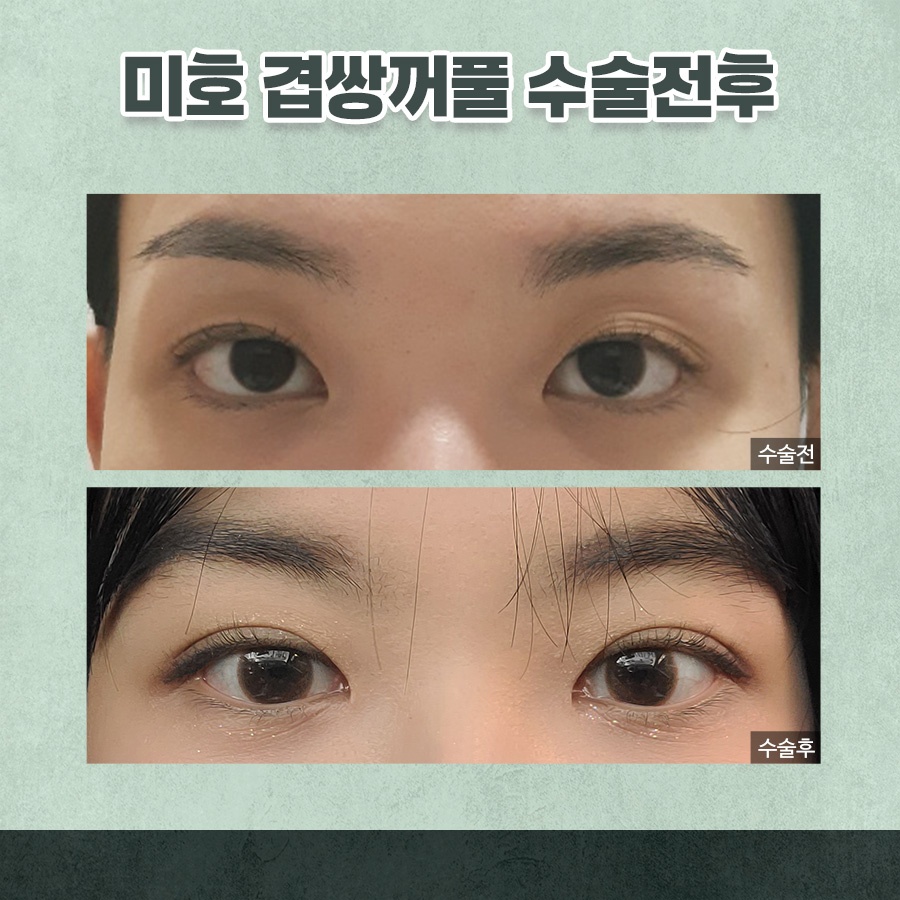
Rubbing the eyes, squeezing them shut tightly,
or making facial expressions too forcefully should be avoided,
and alcohol, smoking, and contact lens wear
should also be avoided for one month.
Simple makeup is possible after two weeks,
but false eyelash application and eyeliner
should be attempted cautiously only after one month,
after observing the recovery progress.
Strenuous exercise,
as well as visits to saunas and jjimjilbangs,
should also be avoided during the same period.
If eye drops or oral medications were prescribed
after multiple eyelid fold correction,
they should be used regularly according to the instructed schedule,
and regular follow-up visits are also
a necessary part of the process.
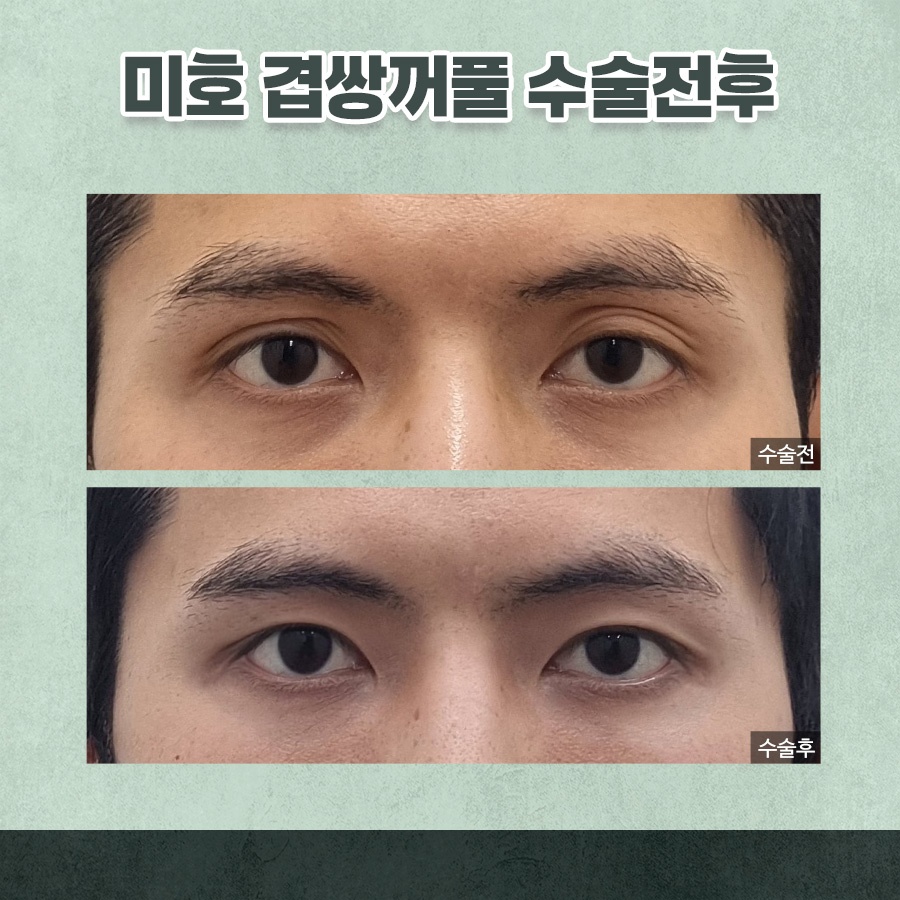
As emphasized several times already,
the individual’s characteristics must be carefully assessed
and treatment must be tailored accordingly.
This is directly tied to the prevention of side effects.
If this part is not handled properly,
it can lead to unsatisfactory eye shape,
including asymmetry or uneven eyes,
as well as adhesion, scarring,
and discomfort around the eyes.
In rare cases,
sebaceous cysts can form at the incision site,
or the function of the eyes may be affected.
Therefore, if any abnormality appears,
an immediate response is necessary,
and if re-correction becomes unavoidable,
it is safer to seek a medical team with extensive experience
and a high level of skill.
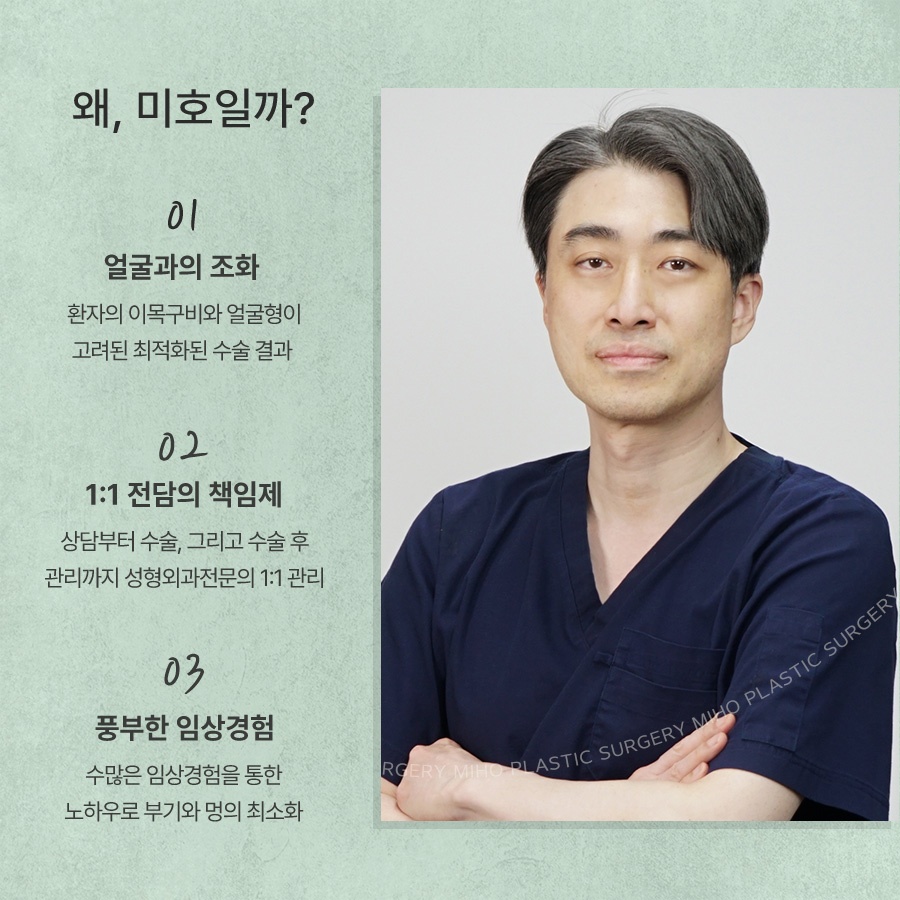
In general, re-correction is usually performed after 6 months,
once the tissue has stabilized.
However, it is technically more difficult than the first procedure,
and damage may accumulate,
so careful judgment is required.
It is important to clearly understand
what can be improved and what the limitations are.
In this way,
the success of multiple eyelid fold correction
comes from balancing several factors.
It receives particular attention from middle-aged and older adults
who want to improve their appearance through eyelid correction.
Please also keep in mind that this procedure
cannot remove all fine wrinkles around the eyes,
and after sufficient consultation,
it is best to increase satisfaction by choosing a design
that suits your own face.



Previous image
Next image