
Male noses should be approached differently from female noses
so they can be improved naturally.
This is because the standards for the height of the tip
and the bridge of a man's nose
must be applied differently from the start.
The bony structure is often thicker and the skin is also
thicker in many cases, and it is proper to proceed by
considering many factors such as facial size,
facial shape differences, and overall proportions.
Otherwise, the result may become more feminine,
so the proportions need to be adjusted with greater precision.
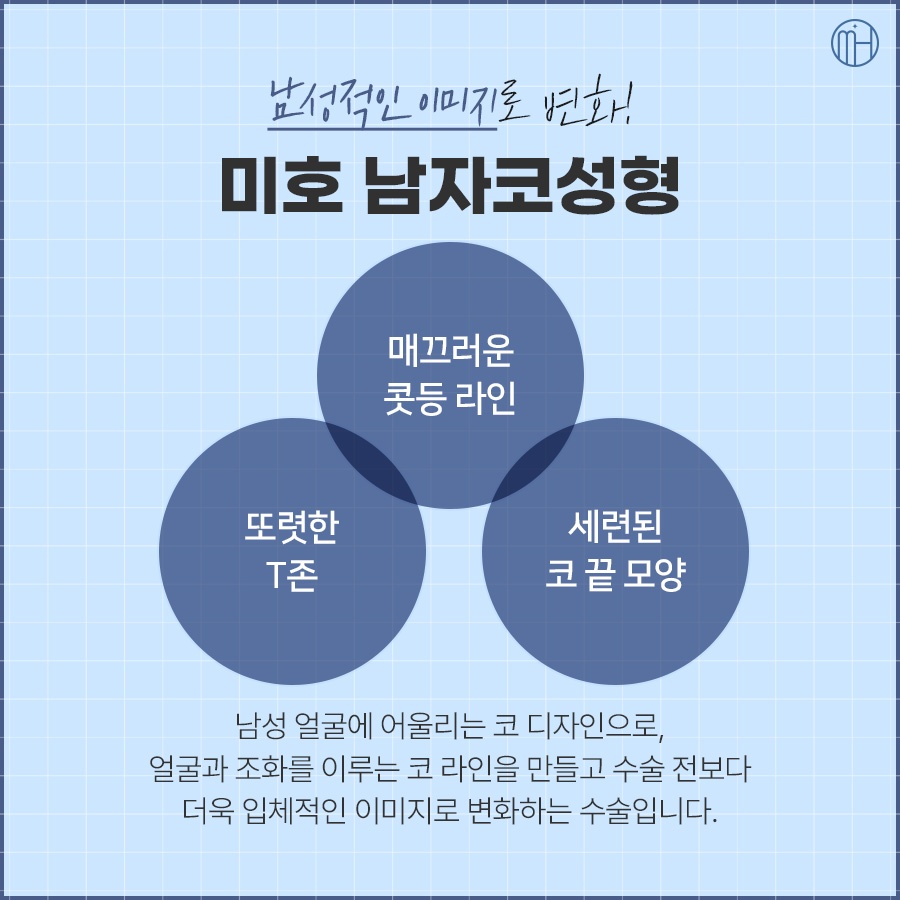
Most men have thicker and larger bones,
and the skin layer covering them is also usually thick.
Because of this, rather than focusing on raising the bridge too much,
it is important to improve the male nose by carefully considering
the facial skeletal framework and steadily setting the nasolabial angle
and the columellar angle.
Female noses are often shaped with soft curved lines,
but male noses, on the contrary, suit straighter lines better.
So rather than raising the tip, the key is to design it
in a way that brings out a masculine impression.

Because each person wants a different image
and has different aesthetic preferences,
designing a male nose involves dividing the approach in detail
according to the impression the person wants.
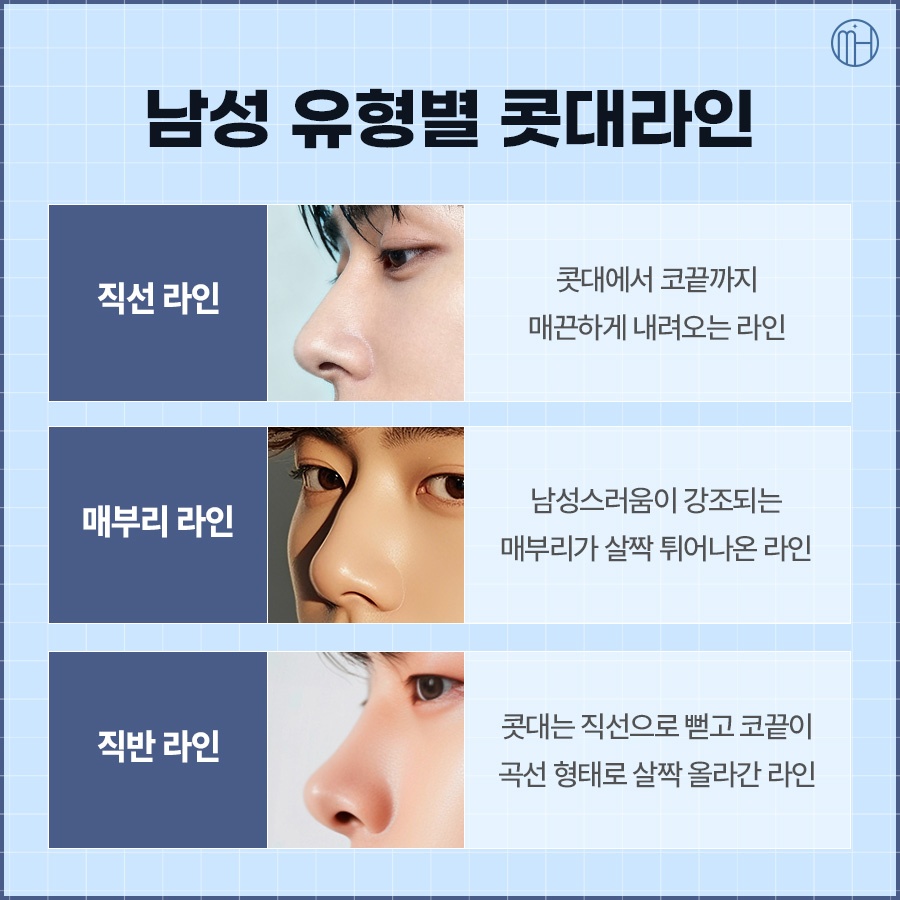
To emphasize a natural look while still revealing a masculine atmosphere,
sometimes it is performed by applying an aquiline line
that highlights the bridge.
If a softer impression is needed by applying a somewhat neutral feel
because of a naturally strong image,
a straight bridge line is used to create the shape naturally.
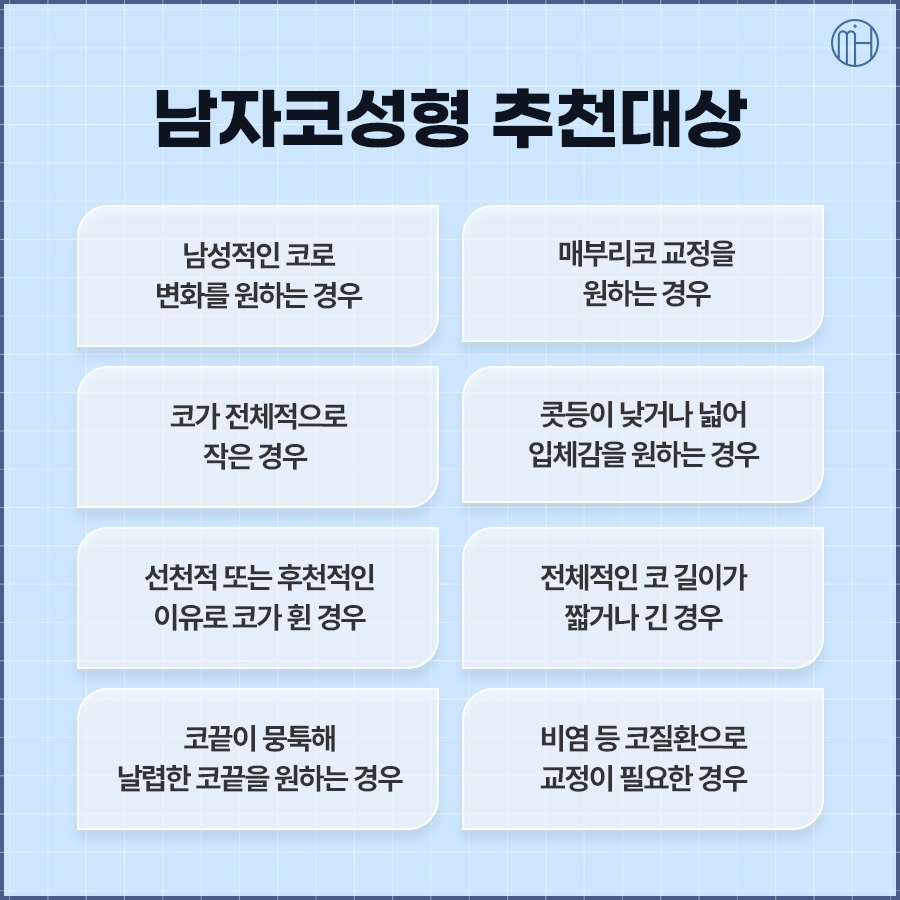
As such, since many aspects differ from the standards that suit women,
the first step is to look into a prosthesis design that fits you
through a surgeon with a high level of understanding of nose design
made specifically for men.
Because the desired nose shape and the impression felt on the face
differ from person to person, a detailed examination is performed before the procedure
to check the internal tissue and bone structure, then the bridge, line,
and even the shape of the tip are adjusted in detail.
To naturally improve a male nose while also finely adjusting
the bridge and the nose line so the shape is not uniform,
a prosthesis suited to each individual's face is more important than anything else.
A masculine image is defined by a straight line extending from the glabella to the nostrils,
so a custom-made 3D prosthesis is used to properly fill in areas where height is lacking.
In the case of a typical artificial implant,
processing is difficult and fine adjustments are hard,
so it is difficult to create the T line.
A one-to-one custom 3D prosthesis is literally a customized implant made for only one person,
so it is suitable for creating a nose shape that is both natural and masculine.
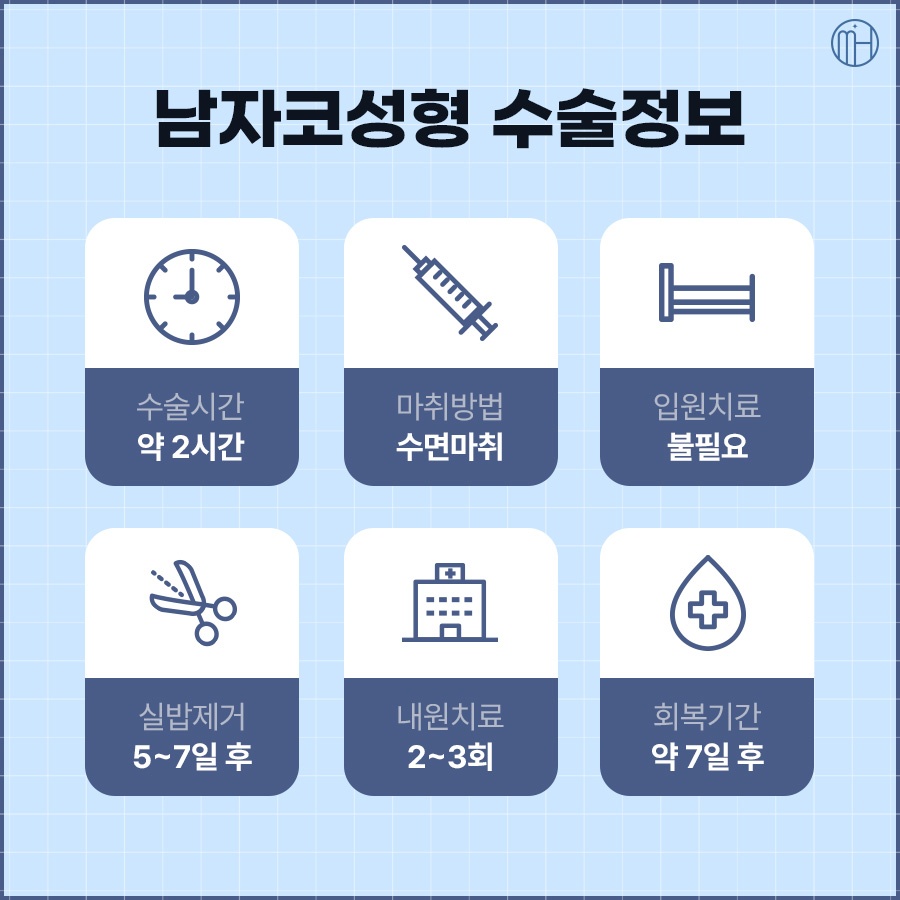
A masculine feeling often begins with a bridge that is straight
and has some thickness, so adding a slight aquiline shape to adjust the angle
often leads to a more natural result.
If the length is short, length is added to shape it more delicately
and in greater detail.
In this way, 3D CT is used to create a custom implant suited to the individual.
For each person, structural and functional issues are identified,
such as whether there is asymmetry in the nasal structure,
the actual width of the nasal bone, whether there is an aquiline nose or a crooked nose,
whether there is a fracture, and whether there is a deviated septum
or inferior turbinate hypertrophy.
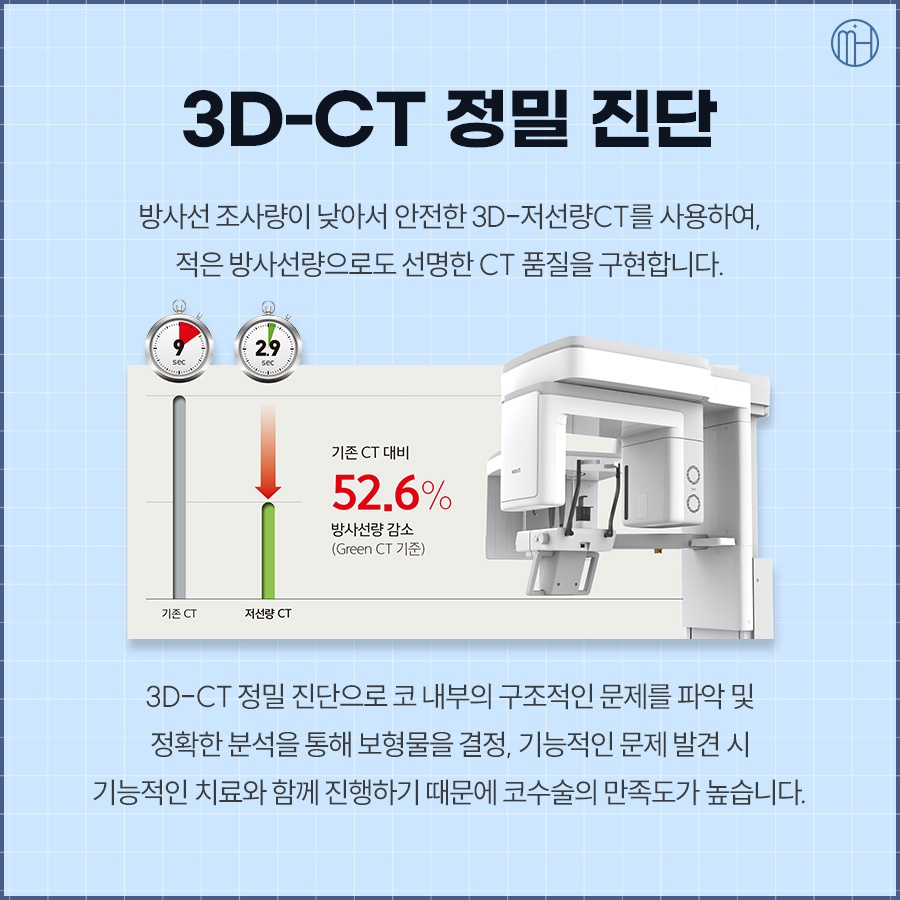
This helps in selecting the right implant
and also allows confirmation of whether septoplasty
or inferior turbinate reduction is needed.
It also makes it possible to create a plan to correct functional problems
at the same time and improve discomfort as well.
In addition, it is useful because the bridge length and width,
the shape of the nasal line, and the T line can all be finely adjusted
to match the desired image while bringing out a masculine feeling.
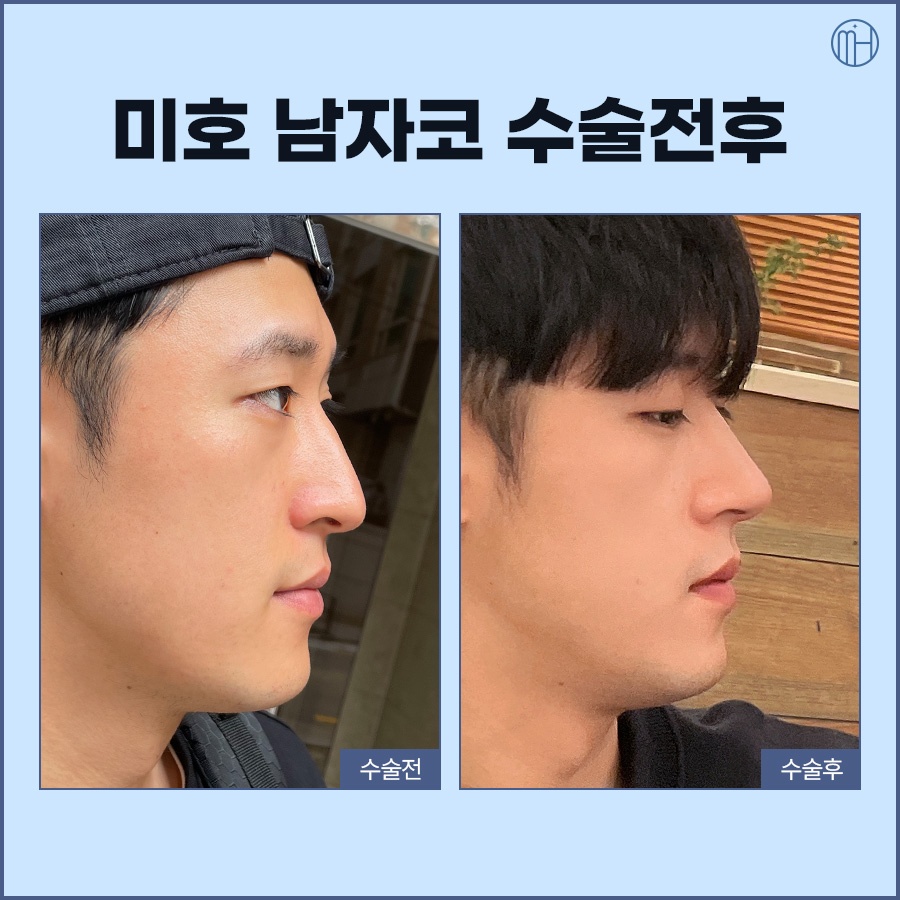
The 3D silicone made in this way is also called Fit Me Nose,
and unlike ordinary silicone that is carved by hand,
it can be manufactured into a complex shape that fits the individual's nasal bone precisely without lifting.
As a result, even though it is an artificial implant,
the likelihood of problems such as bending or inflammation caused by lifting is low.
Depending on the situation,
autologous tissue is sometimes used to improve a male nose.
Soft ear cartilage is mainly used when naturally raising the height of the nasal tip,
and it is also applied when reconstruction of the alar cartilage is needed.
Septal cartilage is suitable for creating support for the nasal tip.
Fascia or autologous dermis is used to compensate when cartilage or an implant
becomes visible through the skin.
In some cases, several layers are stacked and then inserted alone into the tip or bridge,
and it can also be used in various ways with costal cartilage harvested from the rib
or autologous rib cartilage.
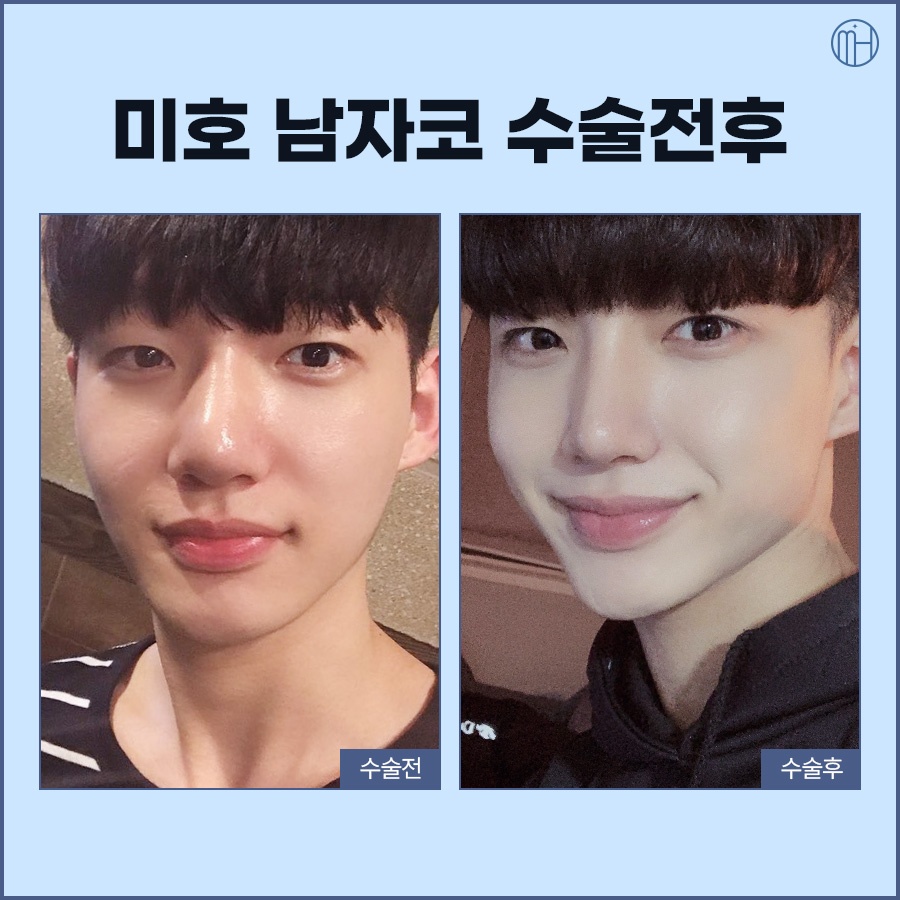
Because some people think the design can be relatively simpler than for women
and try it without much concern,
the line may end up becoming feminine instead,
so it is important to have the procedure done by a place with a high level of understanding of male noses.
Even with the same design, the thickness of the skin,
the condition of the cartilage, and the skeletal structure differ from person to person,
so even if the shape looks the same, the approach is entirely different.
Since the scope and how it is carried out are also divided in such detailed ways,
it is necessary to create the right line for men at a place that can vividly realize a straight impression.
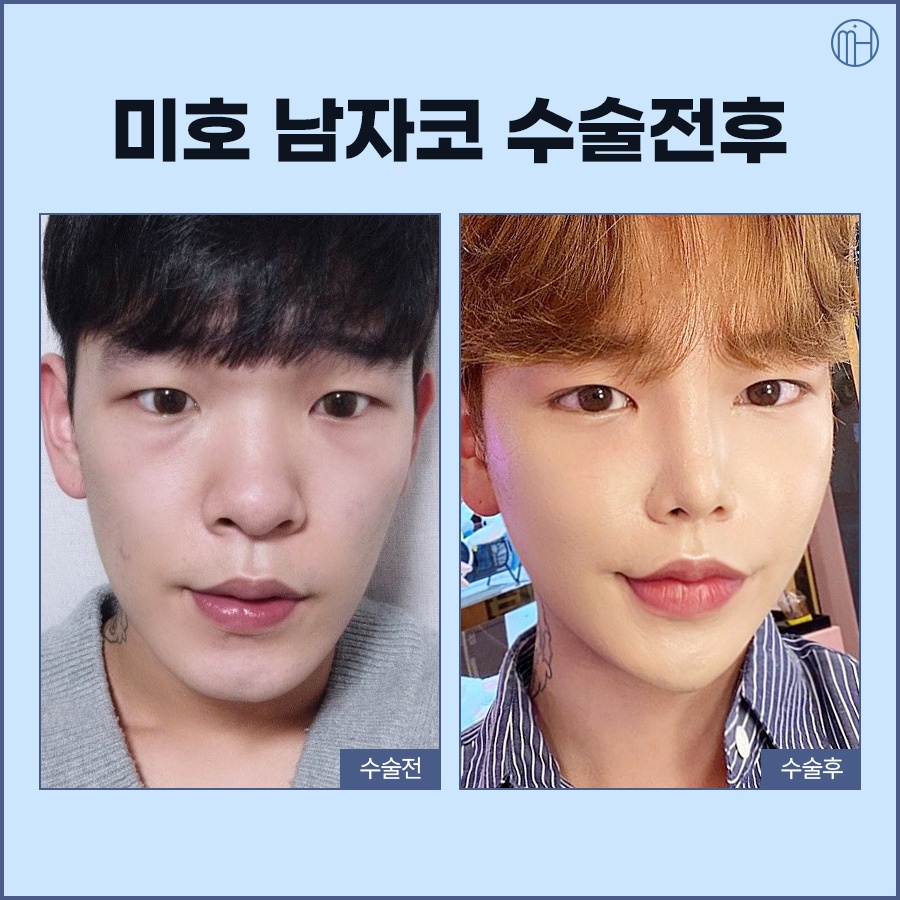
Because the way to approach a male nose is not simple from the start,
please check whether the clinic treats it separately from the methods and plans used for women,
and make your decision carefully.
Also make sure to check whether they provide a recovery period and aftercare program,
and see whether they are making efforts to achieve the proper result before choosing to proceed.
Depending on the person, septoplasty may need to be performed,
or the inferior turbinates may be enlarged and need to be removed or reduced,
so we hope you can resolve preexisting symptoms through a surgeon
who can also handle functional issues.


Previous image
Next image