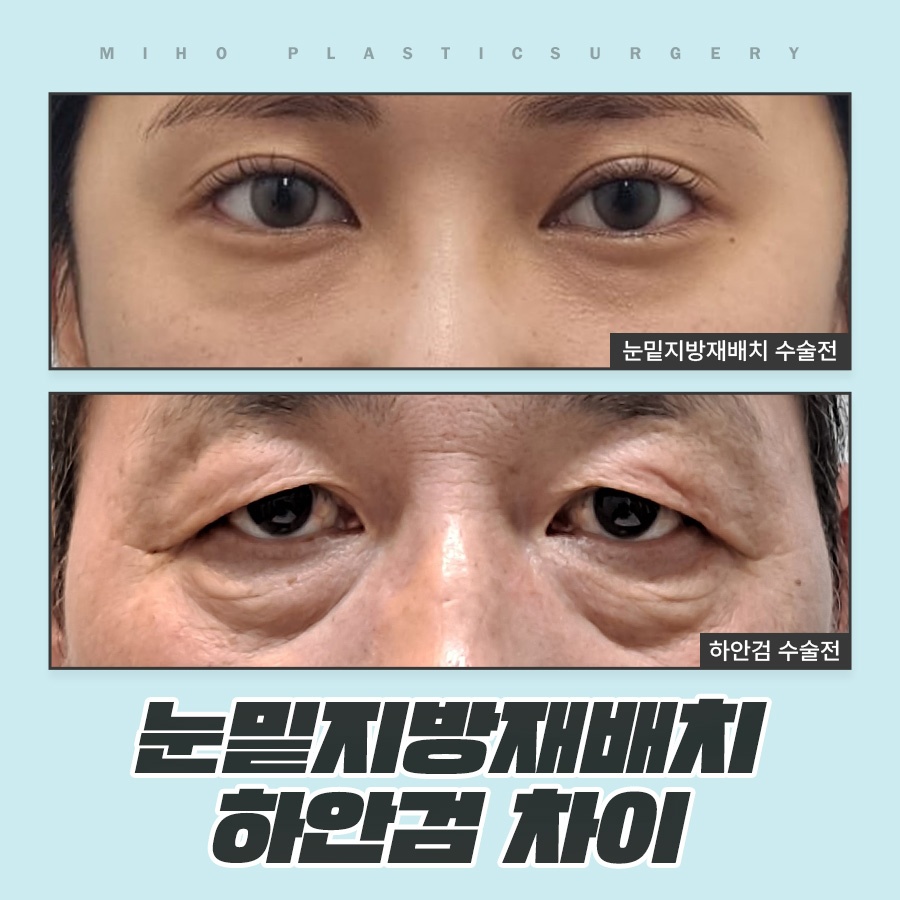
Even when you do not feel especially tired,
you may keep hearing that you look tired,
or look notably older than your actual age.
The fundamental reason is the eye area.
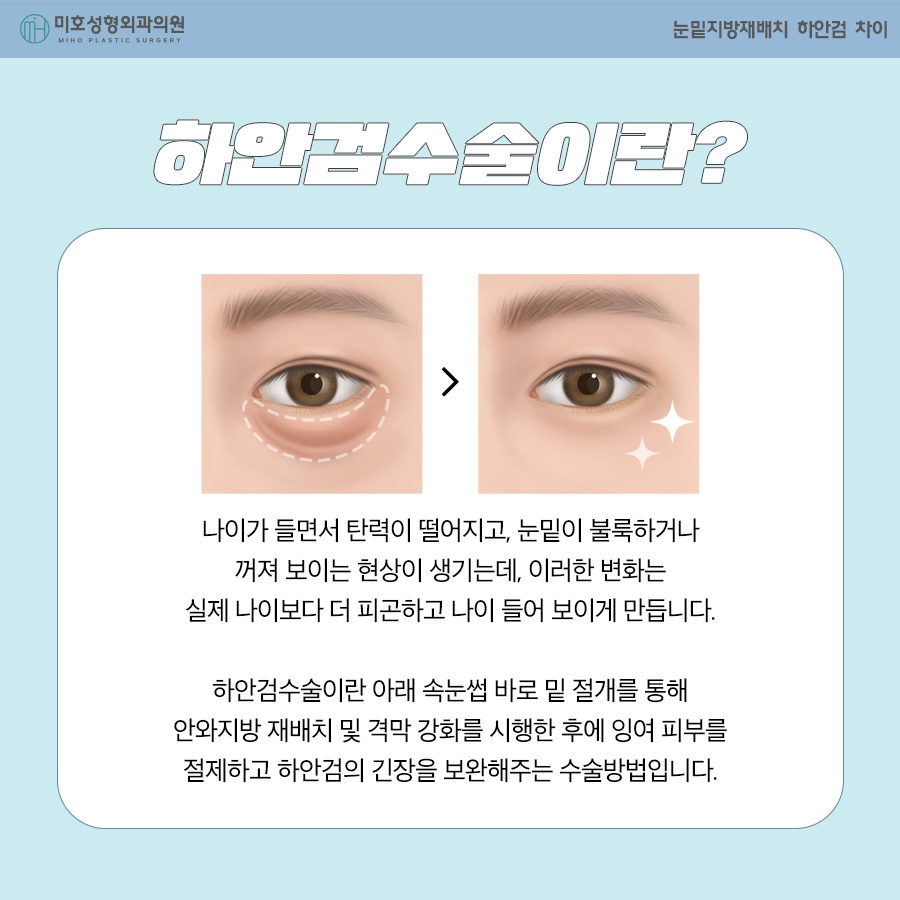
As skin function and elasticity decline,
it becomes more pronounced and bulges out,
creating shadows and contours that settle
deeply, like those of Hwang Hui.
If you make good use of the difference between
under-eye fat repositioning and lower blepharoplasty,
you can restore a lively, bright face.
Both are useful for removing unnecessary areas
and addressing dark circles, but the choice varies
depending on each person’s aging pattern and
characteristics, so you need to know the features
before deciding.

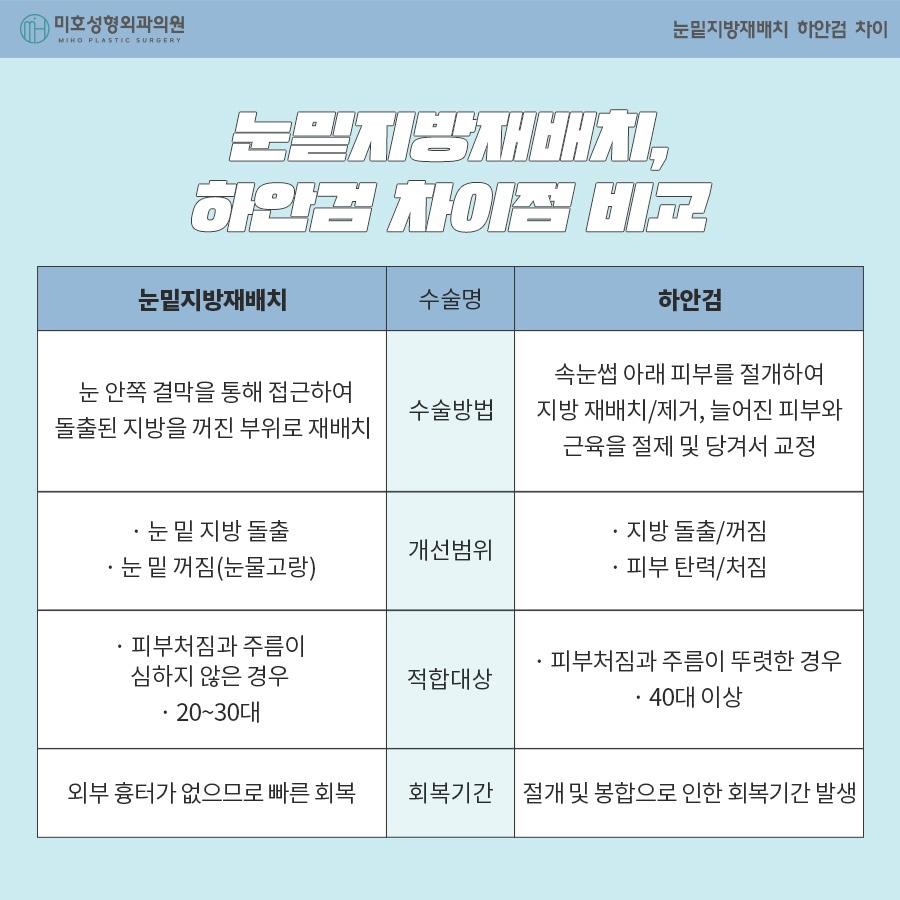
- The incision site is different
From a patient’s perspective, the easiest
way to understand this is probably by the
incision site.
It is also directly related to practical aftercare,
such as scarring, recovery time, and stitch removal.
In plain terms, the difference is sometimes
explained by whether there is a skin incision.
The repositioning procedure uses an approach
through the conjunctiva under the eyelid,
while lower blepharoplasty typically enters
just below the eyelashes.
The difference between under-eye fat
repositioning and lower blepharoplasty
ultimately comes down to the purpose,
which changes the approach site.
The principle is explained below.
- The scope of improvement is different
The reason many people get confused is largely
because repositioning is often mentioned alongside
both procedures.
With lower blepharoplasty as the standard, the
procedure includes comprehensive changes such as
removing sagging skin and tightening the muscle.
So the decision depends on whether you need to
improve multiple symptoms at once—such as sagging,
wrinkles, and puffiness—to restore a firm contour,
or whether it is enough to simply smooth out the
protruding tear trough.
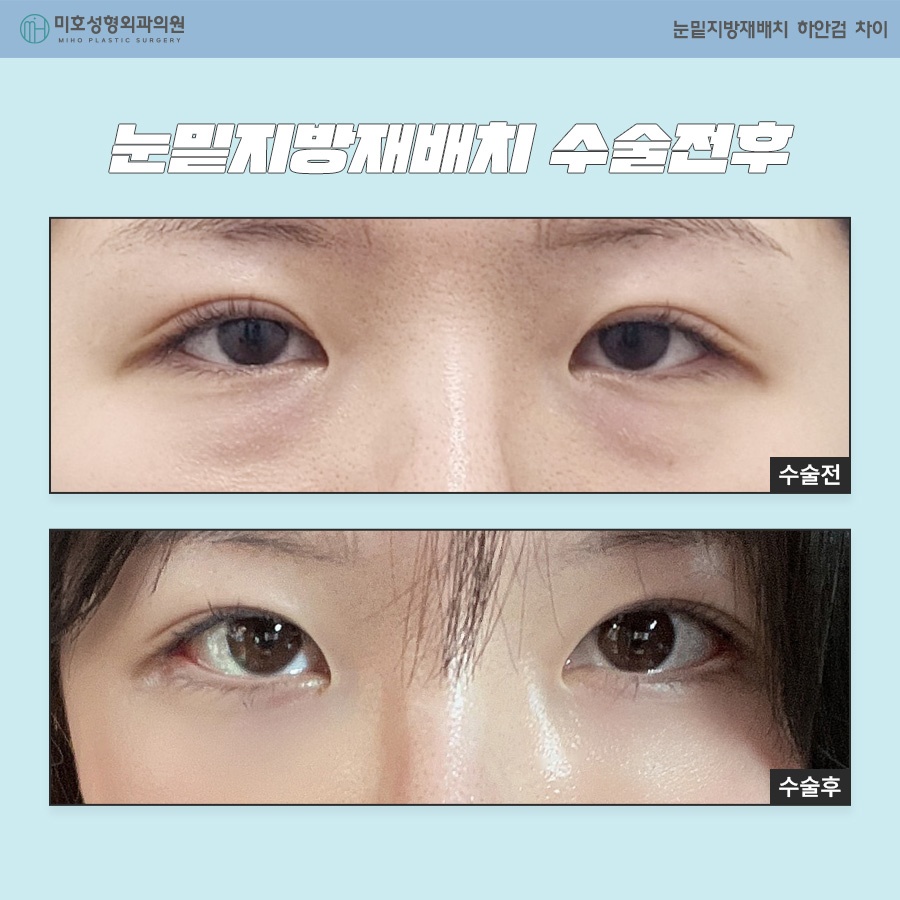
The difference between under-eye fat repositioning
and lower blepharoplasty depends on the scope of
improvement.
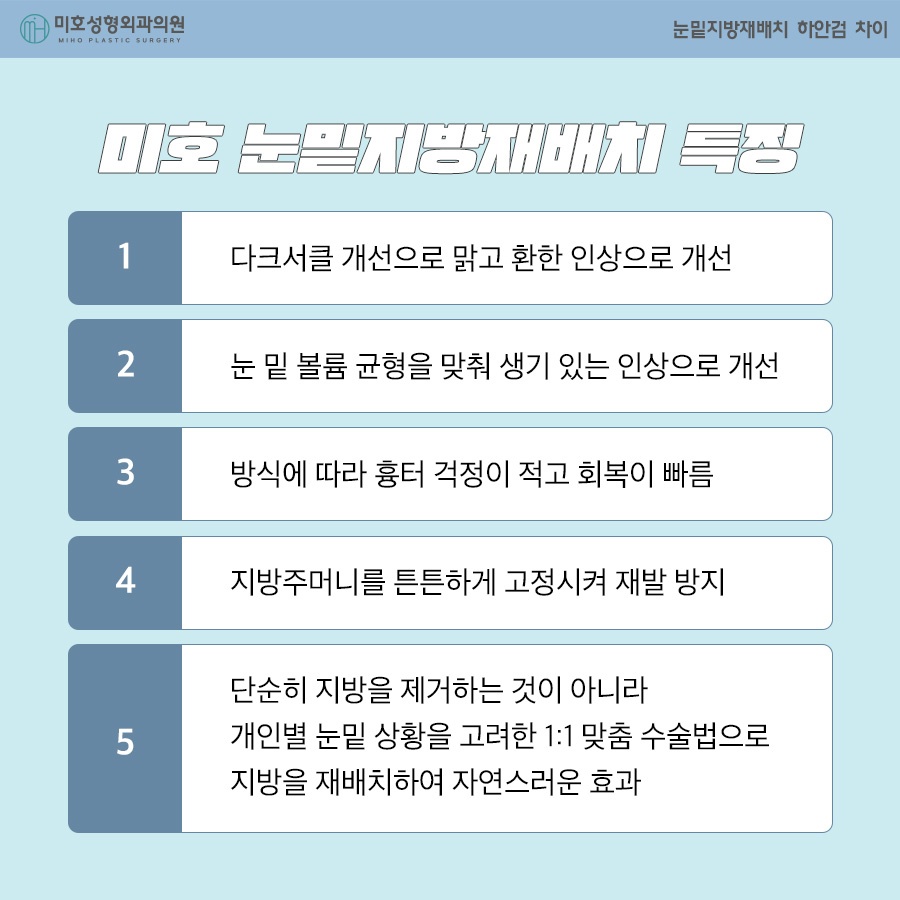
To explain fat repositioning more specifically,
if the skin elasticity is still very good but an
unnecessarily bulging area is the problem, the tissue
is moved into the sunken tear trough to create a
flatter surface, and unnecessary portions are removed.
The key is restoring balance.
It is common for lower blepharoplasty to be performed
in middle-aged patients and fat repositioning in
younger patients.
However, because the degree and pattern of aging
vary greatly from person to person, the tissue must
be analyzed by layer and an individualized strategy
must be established for satisfying results.
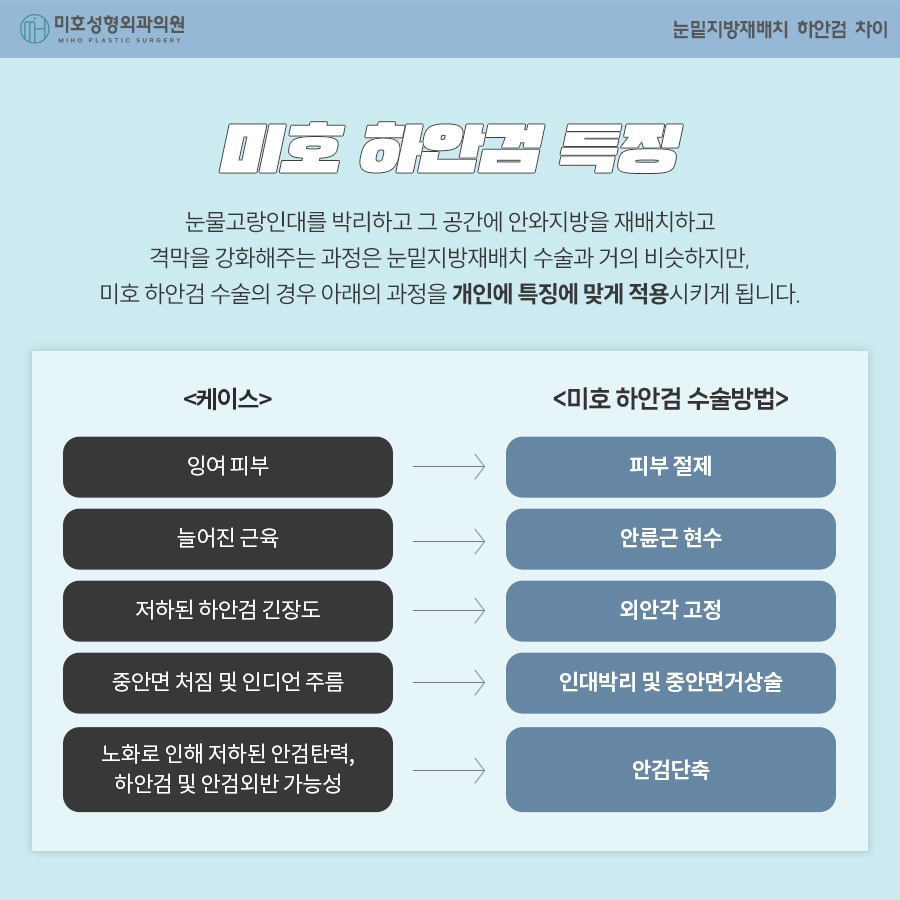
- We approach it by analyzing each tissue layer
Consultation and choosing how you want to improve
your appearance are important, but you first need to
understand your current condition to know which
method is right for you.
At our clinic, we perform detailed examinations by
layer, dividing the area into the skin layer, muscle
layer, fat layer, septum, and skull.
First, as the skin ages, the layer becomes thinner,
which naturally reduces elasticity.
As a result, capillaries become more exposed, leading
to dark circles.
There is a difference between under-eye fat
repositioning and lower blepharoplasty, but if the
thinned skin is supplemented to look fuller, it can
be improved.
Next is the septum, the protective membrane that
surrounds and supports the tissues under the eyes.
It is a very important structure that firmly supports
the shape, and if it becomes weak or loose, bulging
contours appear, creating shadows and dark circles.
If it is strengthened, tightened, and restored to its
proper position, the area can return to a flatter look.
The orbital fat protected by the septum unfortunately
tends to lose volume as aging progresses, which can
cause sunken eyelids.
Of course, it is also the main cause of contour
displacement.
Its position is adjusted, and it is either removed or
reinforced through grafting.
The tear trough ligament helps support the skin so
it does not sag.
The problem is that while other areas all age,
this one alone stays firm, which can actually make
the area look more hollow.
Depending on the degree of change, only the sunken
volume may be improved, or removal, insertion, and
adjustment may be done at the same time.
Finally, if the maxilla, which is part of the skull, is
underdeveloped, or if the soft tissue that determines
the shape of the cheeks is weak, the area can look
deeply sunken, so even slight aging may appear more
pronounced.
Regardless of the difference between under-eye fat
repositioning and lower blepharoplasty, adding volume
can help restore vitality.
- The procedure and recovery are different
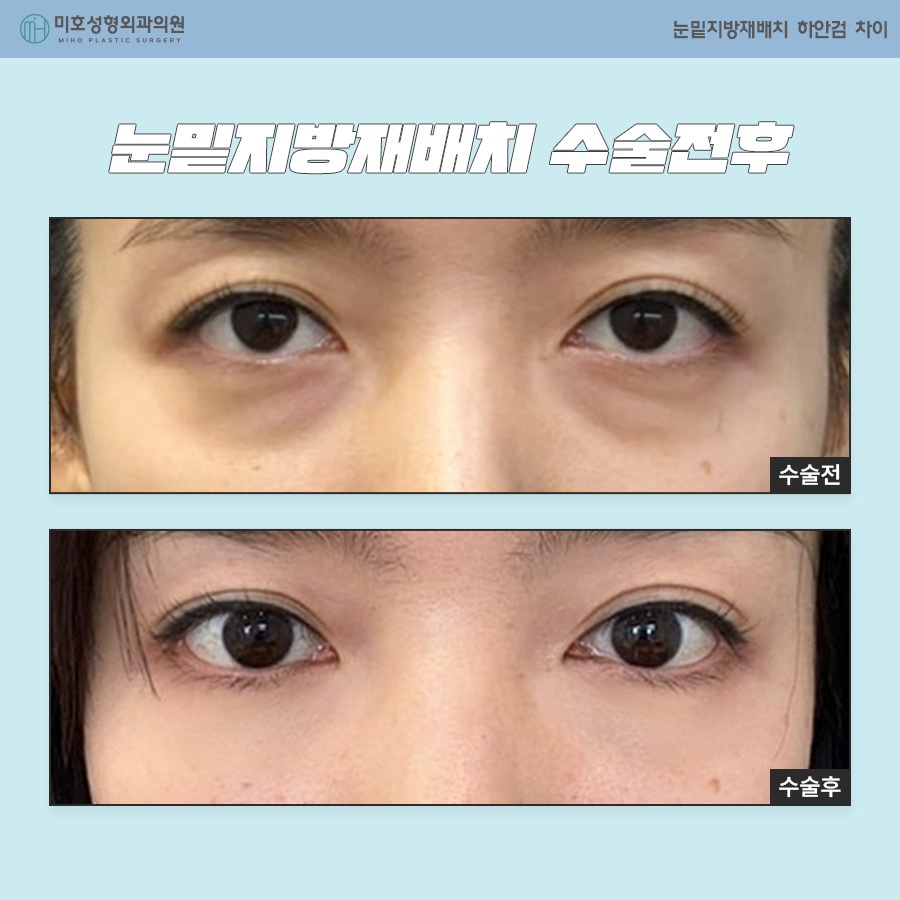
As explained earlier, fat repositioning involves an
incision in the conjunctiva on the inside of the eyelid.
Adhesions of the tear trough ligament are released,
unnecessary tissue is removed or moved to the sunken
area, and the surface is flattened.
To help prevent recurrence later, the tissue is
reinforced and firmly fixed.
It is usually completed in a short time, within one
hour, and you can be discharged the same day.
Swelling and bruising vary by individual, but they
typically subside in 2 to 3 days, and daily life can
usually resume within a week.
There is no visible scar, which is a defining feature,
but important outside activities are safer after 1 to 2
weeks.
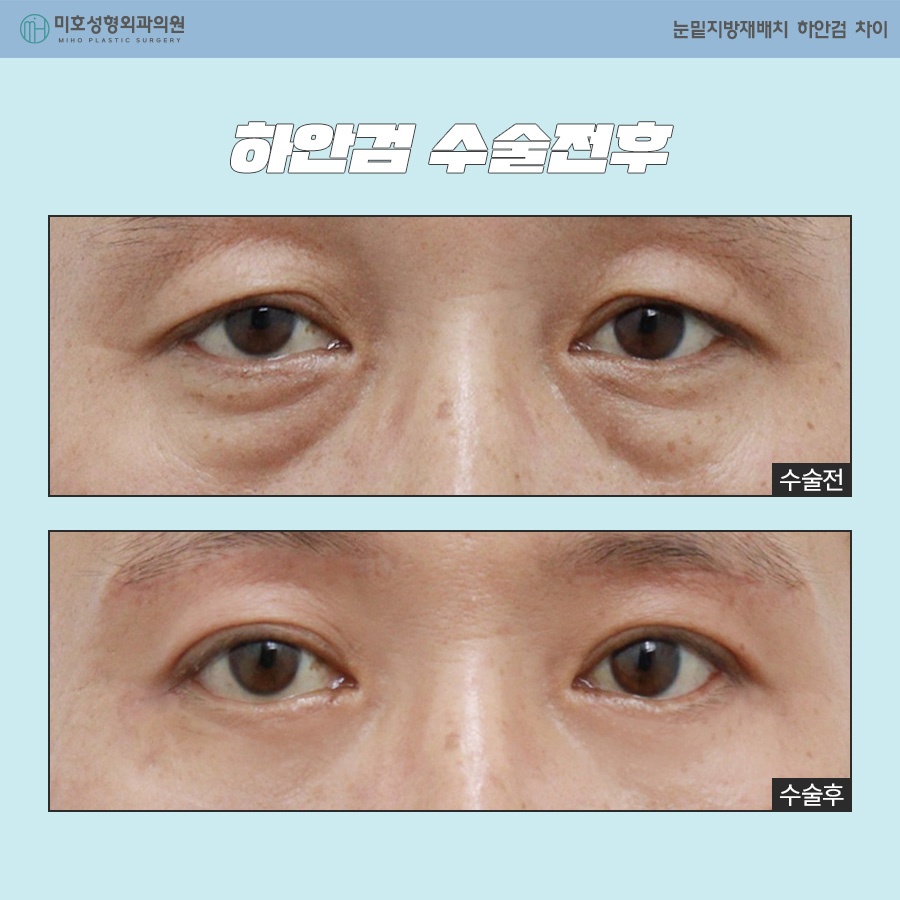
Lower blepharoplasty uses an approach through the skin
below the eyelashes, and the process of removing or
moving protruding tissue to a sunken area is similar.
In addition, sagging skin is excised, and the drooping
orbicularis oculi muscle is fixed to improve lost
elasticity.
Because the skin is pulled upward and sutured, the
stitches are removed after a week.
The procedure takes about 1 to 2 hours, and you can
be discharged the same day.
Swelling and bruising usually take 1 to 2 weeks to
subside, so it is best to schedule social activities
after that period.
Recovery speed differs from person to person, but at
around one month the scar may be noticeable; after 2
to 3 months, it naturally stabilizes and settles in.
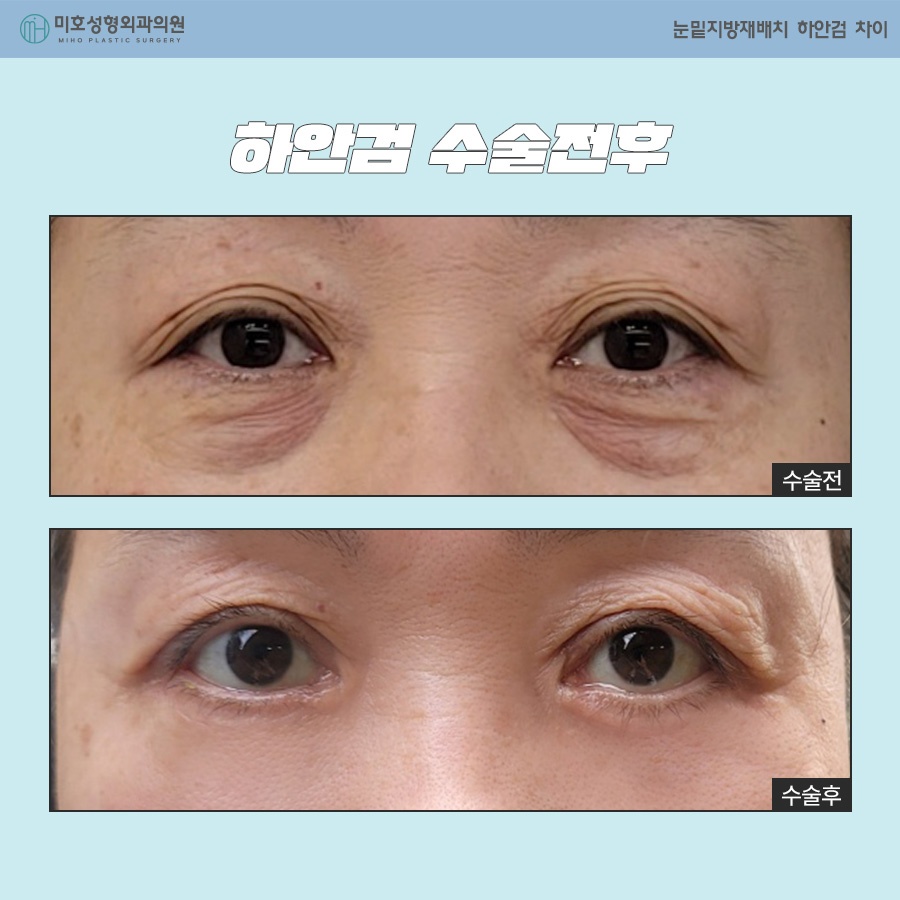
Rather than taking a one-size-fits-all approach, a
careful strategy must be developed because each person
has different physical features, facial shape, and
degree of aging.
At our clinic, we carefully analyze tissue by layer
while focusing on restoring the original image and
beauty.
We hope this has been helpful for those who were
curious about the difference between under-eye fat
repositioning and lower blepharoplasty. If you are
looking for a medical clinic with many cases and know-how,
as well as real-name accountability, CCTV installation,
an anesthesiology doctor, and thorough aftercare,
please visit for a consultation.



Previous image
Next image