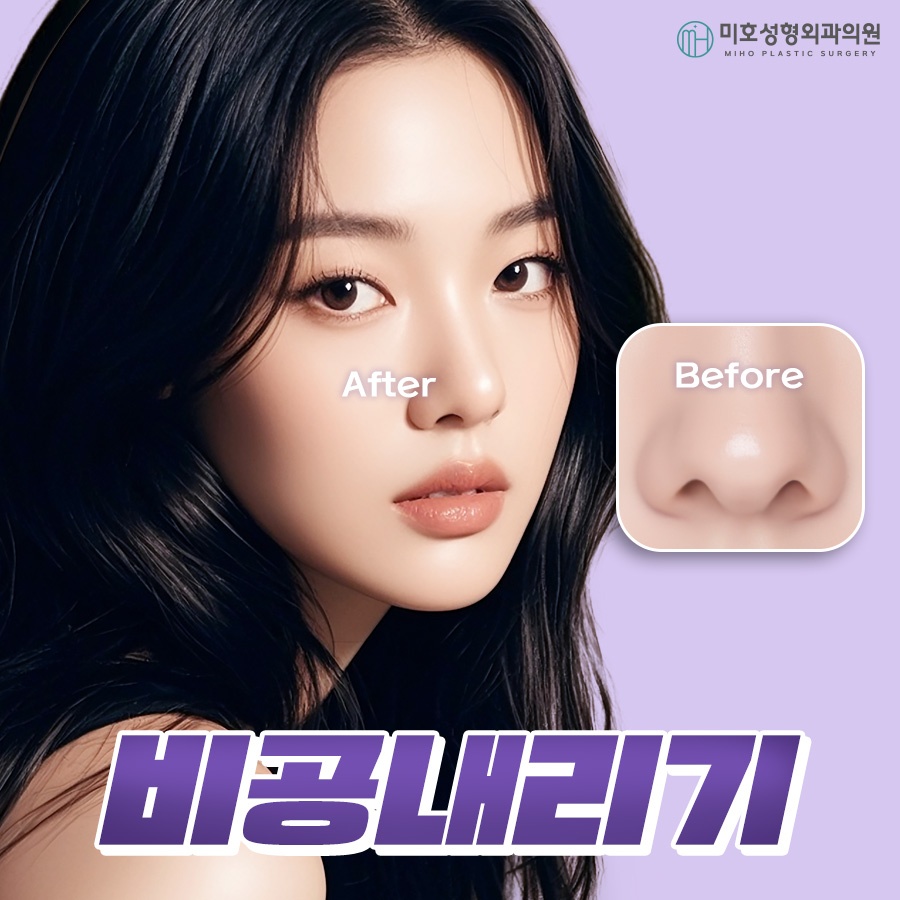
A nose tip looks natural
when the angle is neither too high nor too low.
If it is excessively high,
there may be various functional discomforts,
and the nostrils become overly exposed,
which can also make a person self-conscious
when interacting with others.
From an external standpoint, because the proportions
look unnatural, the impression may seem
harsh or become a target of teasing,
which can lower an individual’s self-esteem.
Nose lowering is performed to correct problems
caused by structural factors, so it is important
to adjust even the smallest proportions.
The outcome depends not only on simply lowering
the height, but also on how the internal tissues
and cartilage are used and supported,
so anatomical knowledge and clinical experience
must accompany the procedure.
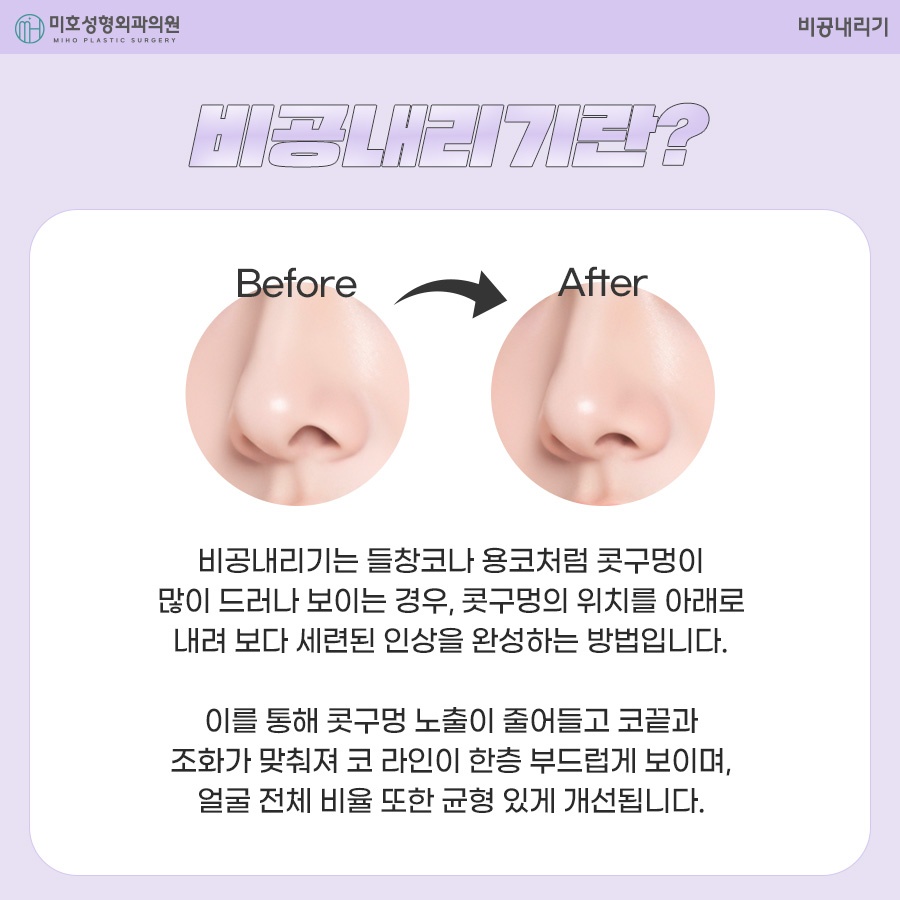
The nose type widely known by the friendly name
"upturned nose" refers to a symptom in which
the nose tip extends upward beyond the average angle.
Even when the nose is short, it can appear
similar to this, and when the angle of the tip itself
points somewhat abnormally toward the sky,
it is also considered a condition that may require
nose lowering.
This problem occurs because the cartilage
that supports the inside is short, causing it to lift upward.
The same symptom can also occur when the alar cartilage
is pulled upward. In some cases, the issue is due to
inherent cartilage problems, but it can also appear
after procedures that were performed to improve the shape
of the nose, so careful examination is necessary.

Nose lowering is a method that pulls a unnaturally
upturned nose tip downward to make the nose line
and the front and side views look natural.
To improve situations where the nostrils are exposed
and the nose tip rises upward, the internal structure
is examined, support is added to deficient areas,
and a plan is made to help the cartilage fully perform
its function.
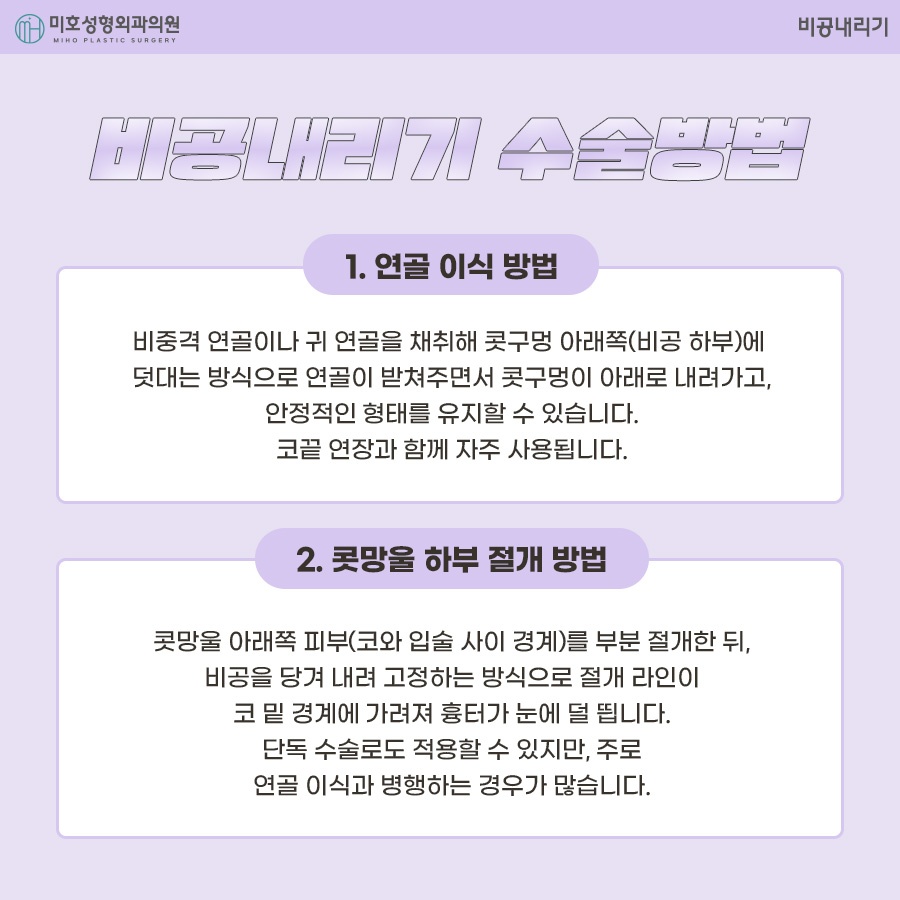
Although it can move as naturally as an original nose,
cartilage such as septal cartilage and ear cartilage
is generally used so that the proper height and angle
can be maintained well over time.
Autologous cartilage has a limited amount that can be harvested,
but it is a material that is more than sufficient for improving
the shape of the narrow nasal tip.
Because it settles in naturally and has a low likelihood of causing
other problems such as inflammation, it is used appropriately and fixed
as a pillar to support the height or to lower the angle and refine
the upturned nose shape.
The thickness and firmness of the skin differ from person to person,
and the structure of the facial bones and nasal bones, as well as the
condition and position of the cartilage, also vary, so great care is taken
when using it.
If the skin is relatively thin, the autologous cartilage used may show through
or appear slightly uneven, which can be a concern.
Although rare, the cartilage used as support may continue to press against
the skin and protrude through the outer skin, so it is important to plan
an appropriate height that does not lead to such an unfortunate outcome.
If the skin does not stretch easily, it is necessary to consider that lowering
an upturned nose tip may cause problems due to excessive tension.
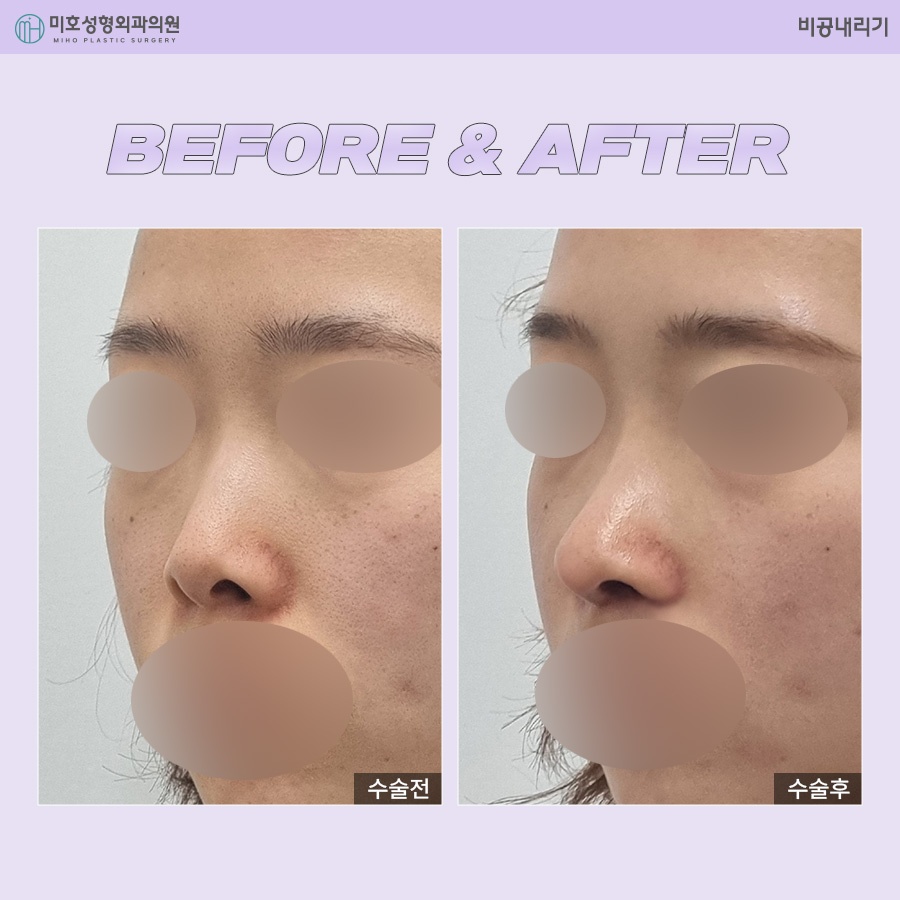
Nose lowering is not simply about lowering an upturned nasal tip;
it also contributes to creating a positive impression while considering
nostril asymmetry, harmony with the bridge of the nose, and a level that
does not damage the existing image of the face. For that reason, all details
must be taken into account without omission.
If an upturned nose occurs after the first attempt and a second procedure
is needed, there is also the possibility that the internal tissues were damaged
and the support structure collapsed, so the skin and cartilage conditions
must be examined in detail and the procedure handled with even greater care
to achieve a positive result.
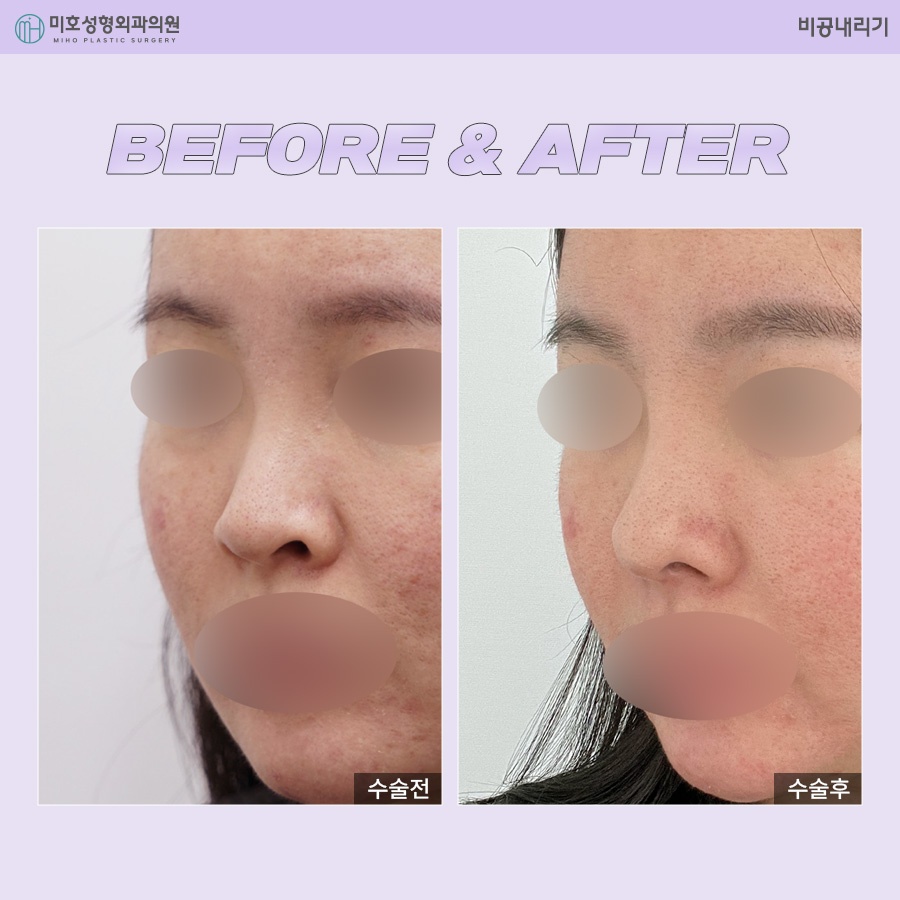
Because overall proportions matter more than shape alone, if alar reduction
is also needed, it is appropriate to consider and perform it together.
Since the nose and nostril shape suitable for each person’s face are different,
all aspects must be considered carefully, not only aesthetic standards but also
the functional part of the nose, which performs the important role of breathing,
so that nothing important is lost.
A blunt and wide alar base is usually addressed using an internal incision
method so that scars are not visible, and even then it is important to keep
the incision as conservative as possible.
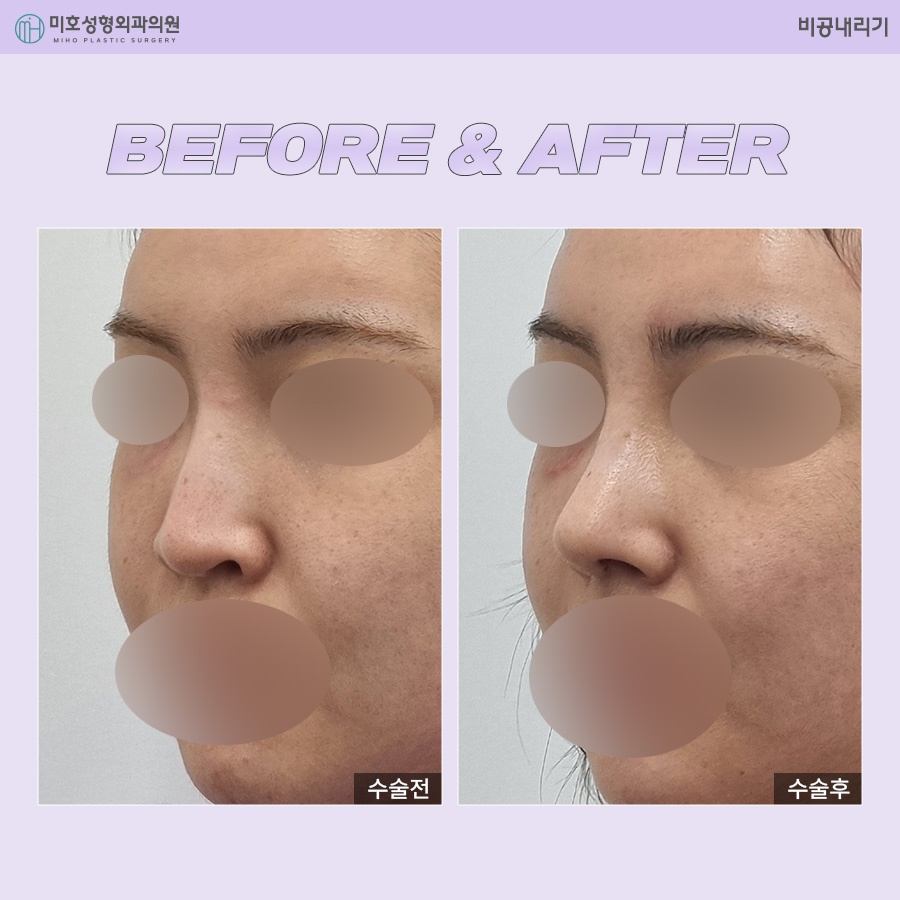
If nose lowering is not performed correctly and is done excessively,
scar tissue from the internally made incision becomes visible and acts as
another source of stress.
Therefore, if the situation requires improving both the upturned shape and
the spread-out appearance at the same time, it is advisable to think even
more carefully.
The appropriate width of the alar base also differs slightly from person to person,
so listening carefully to explanations about whether scar concerns and design
have been considered in detail can be one alternative.
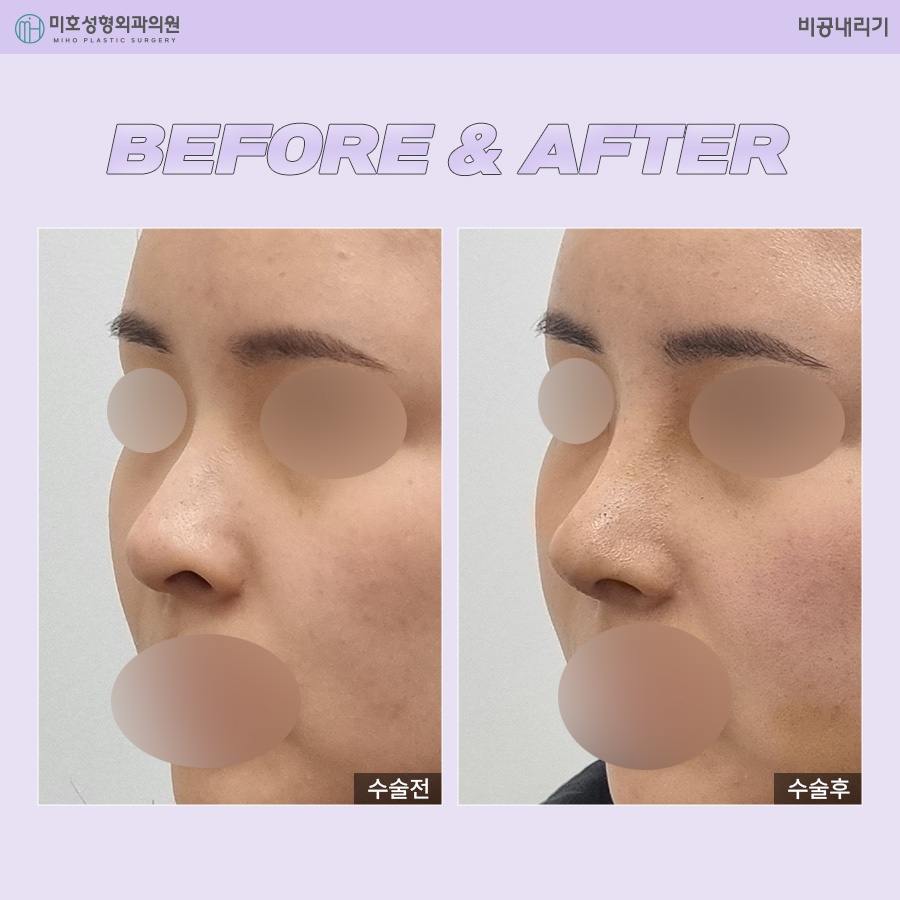
Because both the anatomical structure and the properties of the skin covering
it must be considered, the surgeon’s skill is required, and only with a precise
diagnosis can it be properly handled.
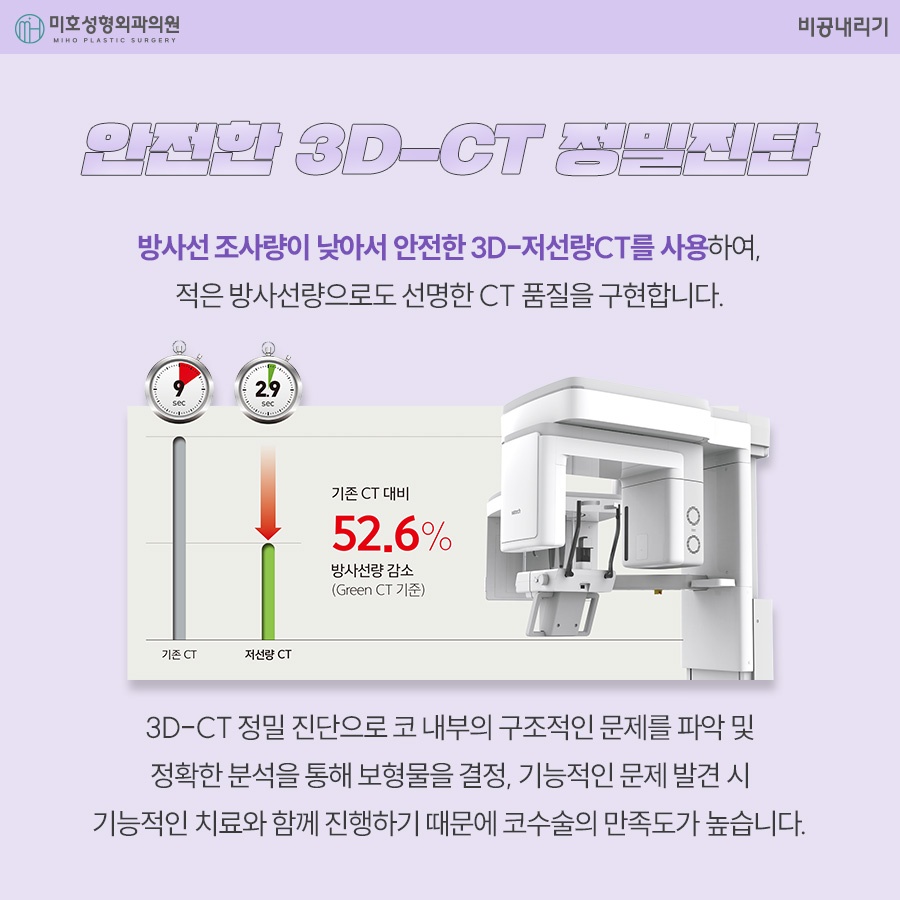
To determine the current state of the internal structure, 3D CT and other tools
are used to identify each person’s different skin condition, cartilage, nasal bones,
and other structures, and to determine how much height is appropriate and how
much cartilage can be harvested.
If another implant is unavoidably needed, that should also be considered and
approached carefully.
In the early stage of nose lowering, because the procedure was performed with
the healing process in mind, during which the shape changes little by little,
the angle of the nose tip may feel as if it has dropped a little more than expected.
It takes as little as 3 months and as long as 6 months or more to heal properly,
and if you consider the period until the minor swelling also subsides, you can
observe the shape settling slowly and naturally for up to 1 year.
Recovery speed can vary from person to person, but during the period when the
used cartilage is gradually absorbed and firmly settles into place, it is most
important to monitor progress and consistently receive a management program
in order to recover well.



Previous image
Next image