
Unlike women, men generally
do not want a thick crease and instead
usually prefer only to make their eyes
look bigger.
If you are worried about looking sleepy
or were born with weak eye-opening strength,
correction without a crease was a good alternative.
�
As the eye shape changes without feeling burdensome,
eye-opening strength is improved and the eye area
looks clearer, which made it a popular choice.
This procedure is not simply meant to
create a double eyelid crease; its purpose is to
improve muscle function.

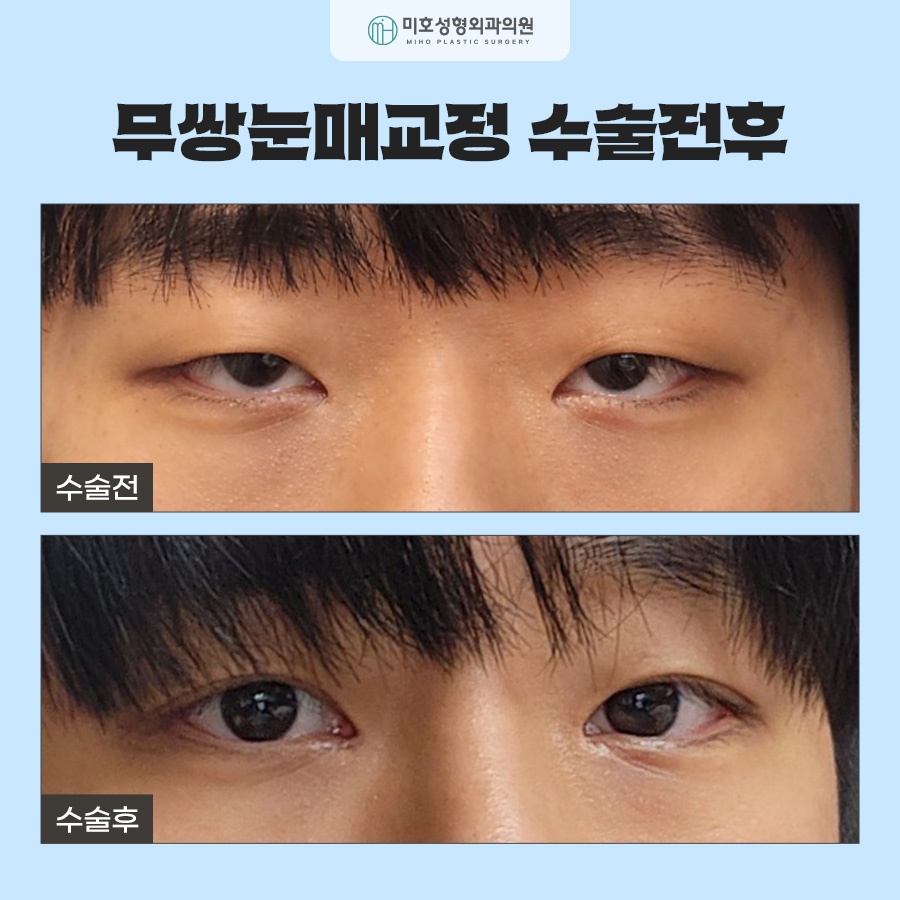
By creating openness without a crease, more of the
iris becomes visible, and the tired,
sleepy-looking impression was improved.
There are differences in skin texture between women and men,
and the thickness of the fat layer is also different,
so the approach had to be different from the start.
�
The key to the no-crease correction method was
enhancing or adjusting the function of the
levator palpebrae superioris and the Mueller muscle.
If muscle strength is naturally improved,
the external change does not appear drastic,
while only the eye area becomes more defined.
Because of this characteristic, it was highly preferred
by those who wanted to improve their appearance
without standing out to others.

The biggest reason men prefer
correction without a crease
more than women is that it can create
a natural change that looks almost unnoticeable.
In Korea, a very pronounced double eyelid
often carries a strong image of being somewhat
overdone or flashy, but this procedure adds only
more openness without changing the existing
eye shape too much.
�
For this reason, it can give others
an impression that is not burdensome,
and instead can create a refreshing, friendly,
and likable image.
At our clinic, we considered the characteristics of men's muscles and
skin tissue and designed a customized plan to
adjust eye-opening strength.
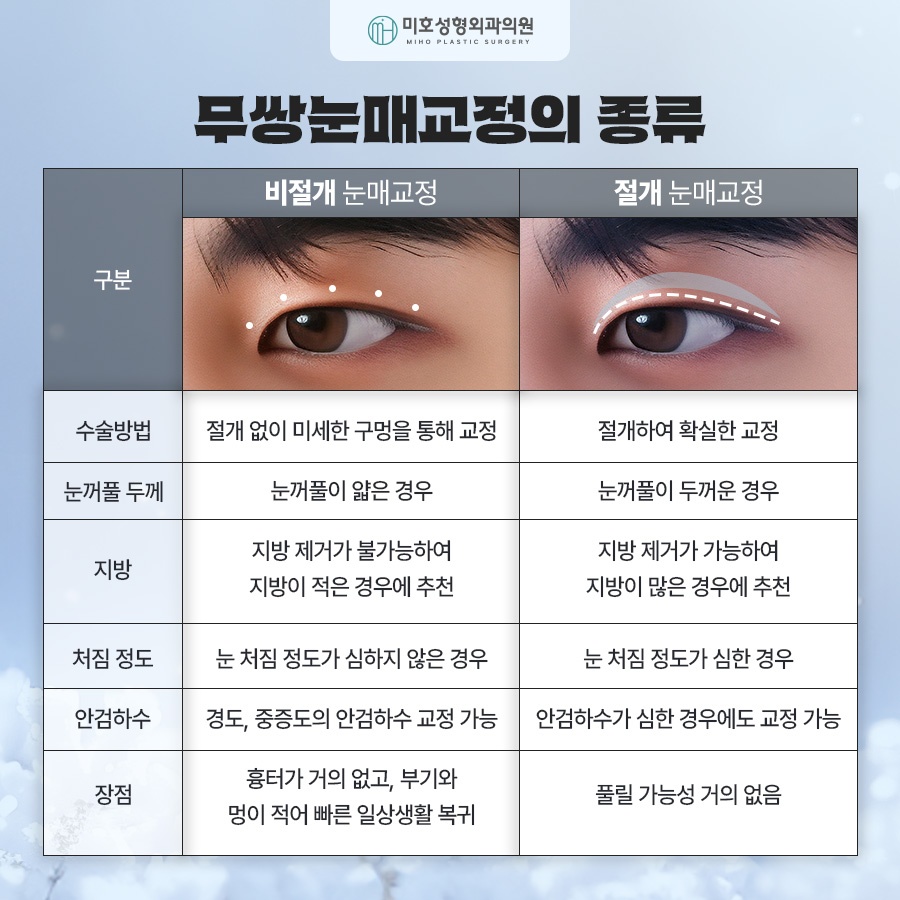
The solution was divided into incision and
non-incision methods.
The incision method directly treats the muscles by
making an incision in part of the skin layer,
while the non-incision method uses sutures to indirectly
enhance strength or fix the position.
�
Neither method can be said to be better or worse;
the more appropriate method was applied according to
each person's condition.
If the muscle strength is somewhat strong
and correction without creating a crease is desired,
the non-incision method was recommended.
If the fat layer is thick and the strength is very weak,
there was no choice but to proceed with the incision method.

In this way,
the procedure method for correction without a crease
was decided after measuring the thickness of the eyelids and fat layer,
as well as the strength of the muscles.
If someone ignored their own eye structure and pushed ahead with the non-incision method because it recovers quickly and is less noticeable,
the before-and-after difference might barely appear,
or it could easily come undone.
�
Therefore, it was best to refer to the medical team's judgment in this part.
The procedure took about 1 hour to 1 hour and 30 minutes,
and was performed under local or sleep anesthesia.
Immediately afterward, swelling, stiffness, and bruising occurred,
and in the case of incision procedures, it was common for the eyes to swell more for three to four days before gradually going down.
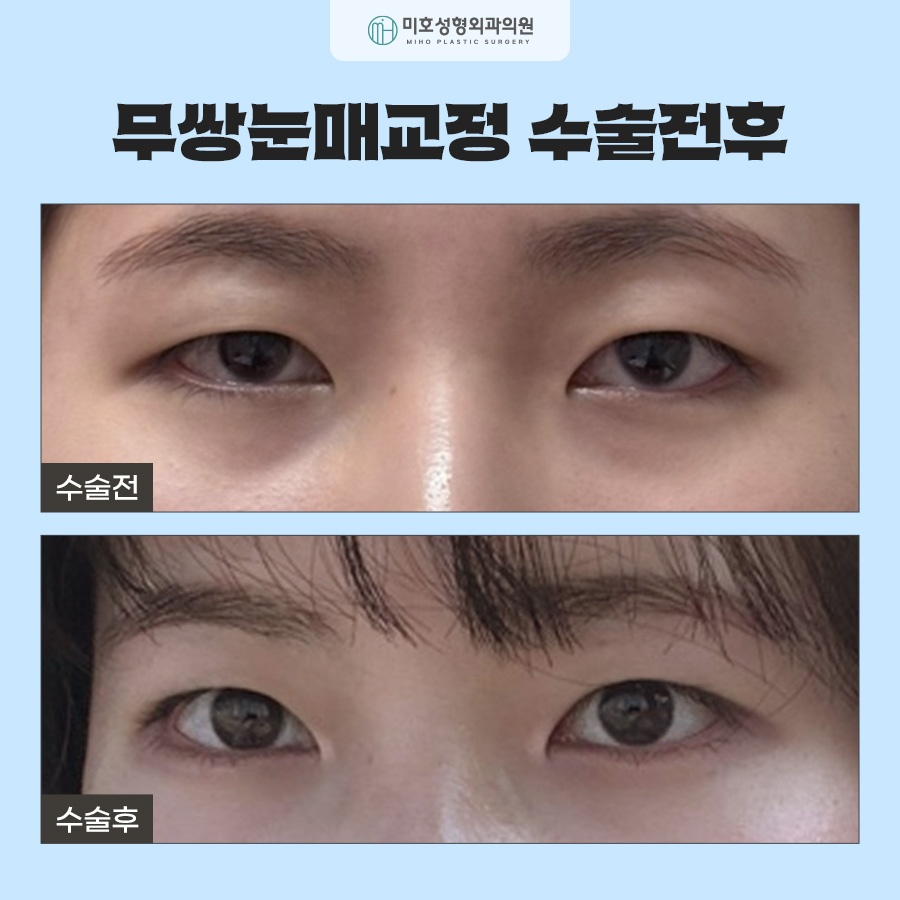
Recovery speed differs depending on each person's constitution,
and also varies depending on whether the procedure was incision or non-incision.
Generally, swelling, bruising, stiffness, and slight pain were reported for 3 to 5 days.
�
In incision cases, swelling tended to be worse 3 to 4 days
after the procedure rather than immediately afterward.
This is a natural phenomenon, and if you alternate cold and warm compresses
and follow the aftercare instructions given by the medical institution,
the shape naturally settles within 1 to 3 months.
The non-incision method recovered faster,
allowing a return to daily life in 1 to 2 weeks.
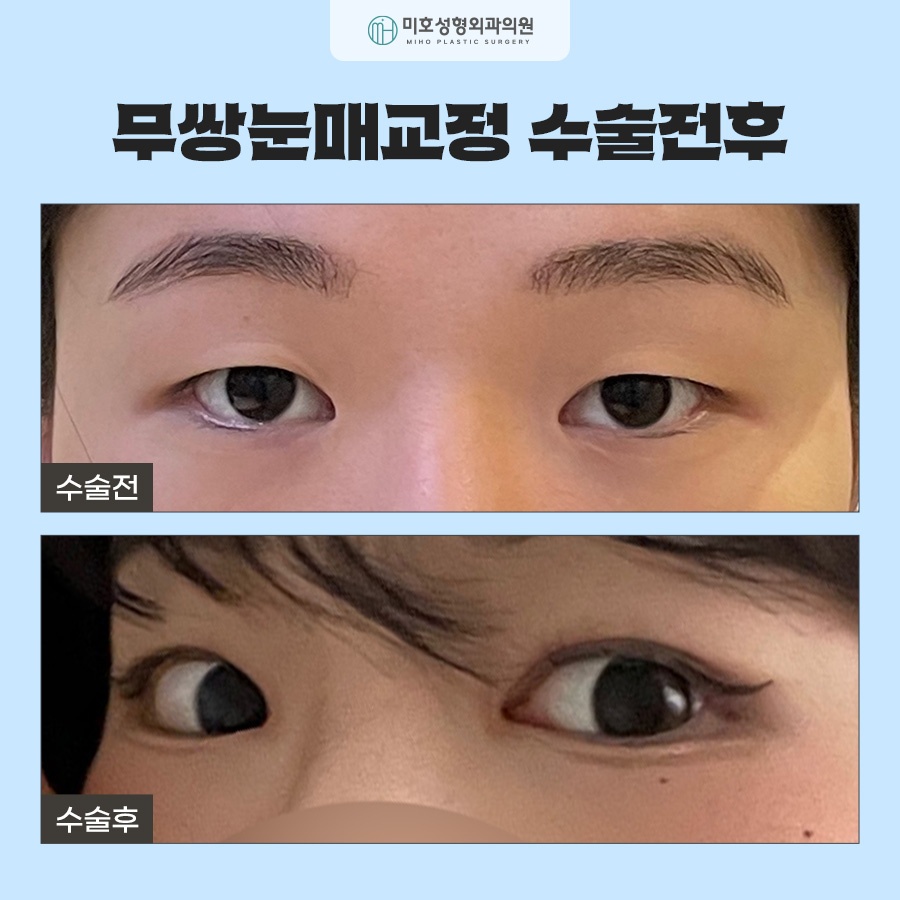
To avoid experiencing side effects after correction without a crease,
it was important to strictly follow the medical institution's instructions during recovery.
Touching the incision site with contaminated hands,
applying strong pressure, exercising excessively,
or rubbing the eyes had to be avoided.
�
Before the solution, a precise diagnosis was also needed to clearly understand the condition of the muscles
so that overcorrection or undercorrection would not occur.
If overcorrection happened, the eyes would remain open too wide like a constantly surprised rabbit,
and conversely, undercorrection meant there would be almost no visible before-and-after difference.
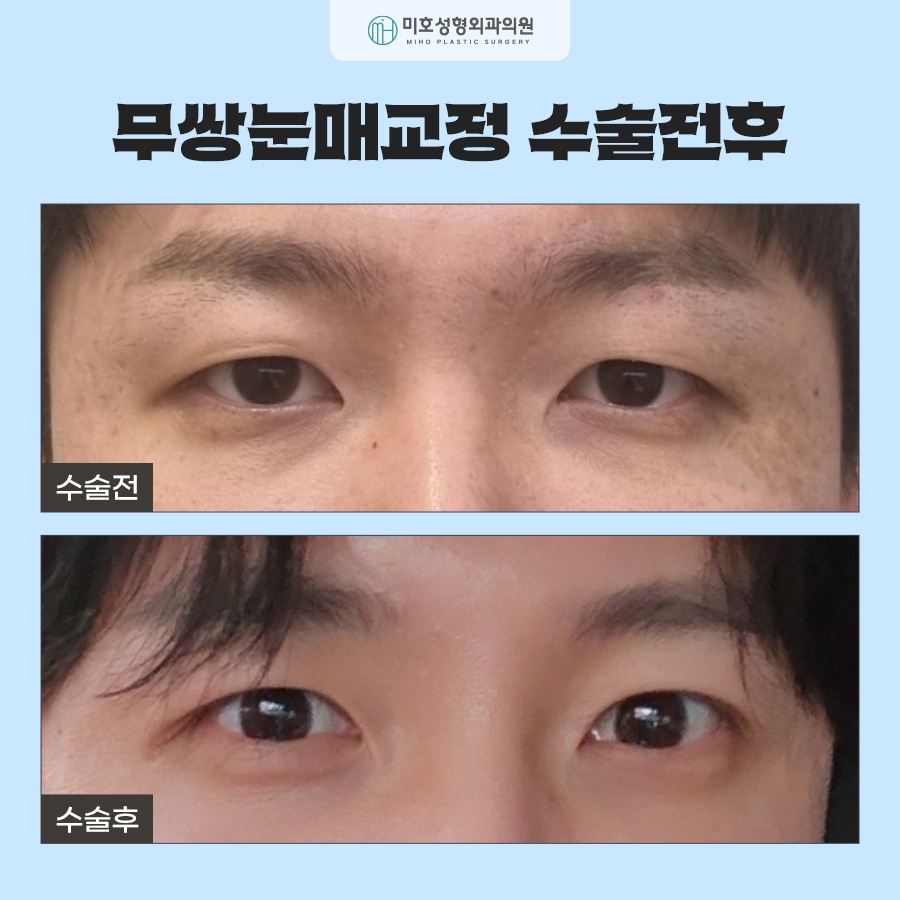
In men, the skin is thicker than in women,
and fat tends to accumulate more heavily, so the procedure is relatively more difficult.
If it is performed by a medical professional who does not fully understand these characteristics,
the chance of correction not being done properly is high.
�
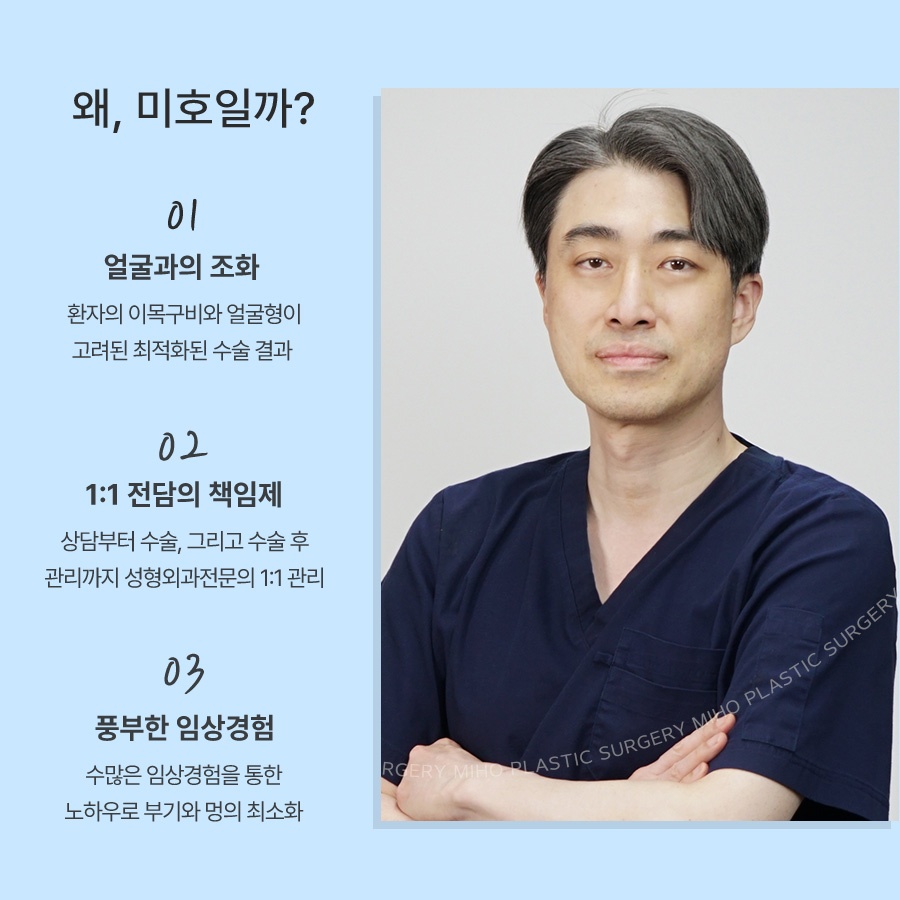
Therefore, it was essential to find a skilled and experienced doctor
who has handled many cases similar to mine.
During consultation, it was also necessary to check whether they design a customized plan
only for my eyes.
To improve satisfaction, it was important not to simply accept the medical team's opinion,
but to clearly express your own needs and have them reflected in the plan.
Many people also wonder how much it costs.
The price varied depending on the size of the medical institution,
the experience of the doctor in charge, and whether the procedure was incision or non-incision.
An expensive price does not automatically mean better quality,
and places that emphasize only very low prices also need careful review.
�
Price should be one of the selection criteria,
but you should also consider whether the surgeon has abundant experience,
and whether they operate with a systematic process from consultation to the procedure and aftercare,
while taking responsibility throughout.
To summarize,
correction without a crease was suitable for those who wanted to strengthen the muscles around the eyes
and increase the eye size itself without a dramatic external change.
It could be a good alternative for those who wanted to improve a tired,
sleepy-looking impression without creating a burdensome crease.
�
The key to success is properly adjusting the function of the orbital muscles,
so precise diagnosis and a customized design plan determined the outcome.
Because each person’s current condition is different,
we hoped they could undergo a personalized procedure and transform into a clearer,
more open-looking eye area.



Previous image
Next image
�