
"Is the nasolabial angle really that important?"
The nasolabial angle is the term used to describe
the angle where the columella and the upper lip meet.
If this angle is too narrow,
the mouth can easily look protruded,
and if the nasolabial angle is too wide,
the nostrils may be visible from the front,
which can lead to awkward situations.
If there are no obvious flaws in the bridge, tip, size, or height of the nose and lips,
but the side profile looks especially flat,
or smiling feels awkward,
it is a good idea to consider nasolabial angle correction.
With careful angle adjustment,
the nose and mouth can connect naturally,
creating a harmonious impression.

"Who should receive nasolabial angle correction?"
Many people do not immediately notice
whether the nasolabial angle is narrow or wide.
Instead, even when the nasal bridge is relatively high,
they often say they feel frustrated because
the face does not look three-dimensional,
and the midface appears compressed.
In addition, some people mistakenly think they have a snub nose
and ask for the tip to be lowered,
while others say they went in for correction because their mouth seemed protruded,
only to be told that the oral structure is normal.
Most people who feel upset by an awkward-looking impression
but cannot find the cause
have a nasolabial angle issue.

"Why a comprehensive assessment is needed"
Usually, when people hear nasolabial angle correction,
they misunderstand it as a limited procedure that
only adjusts the angle between the columella and the philtrum,
and many express disappointment.
In fact, when adjusting the nasolabial angle,
the position of the nasal tip, the length of the columella and philtrum,
the degree of upper lip protrusion, the direction of the columella,
and the position of the alar base are all considered.
This is because simply adjusting the angle mechanically
cannot create a natural and harmonious impression.
After comprehensively analyzing all factors that can affect
the line connecting the nose and mouth,
an appropriate customized plan must be established.

If the nasal tip, which is the starting point of the columella, is low,
even if the angle is adjusted well,
the before-and-after difference may not be easily felt,
and satisfaction can be low.
In this case, it is better to move the nasal tip forward
using autologous cartilage or an implant
and enhance a more defined appearance.
If the nasal tip is raised neatly
while the nasolabial angle is adjusted appropriately,
the line connecting the nose and mouth
will look refreshing and clean.
At this time, the alar base may be slightly pulled inward,
which can make the nostrils appear smaller,
and this can sometimes create a pleasant illusion
that the face looks smaller.

Adjusting the angle connecting the nasal tip and the lips
does not make the philtrum longer.
However, to normalize the nasolabial angle,
if the downward-sloping alar base is lifted
or a sunken columella is reconstructed,
it may feel as if the philtrum has suddenly become longer.
Because the angle at which the philtrum is exposed can change,
the perceived length can also change,
so when performing nasolabial angle correction,
it is also necessary to consider these factors comprehensively
and prepare countermeasures such as combining it with a philtrum reduction procedure.
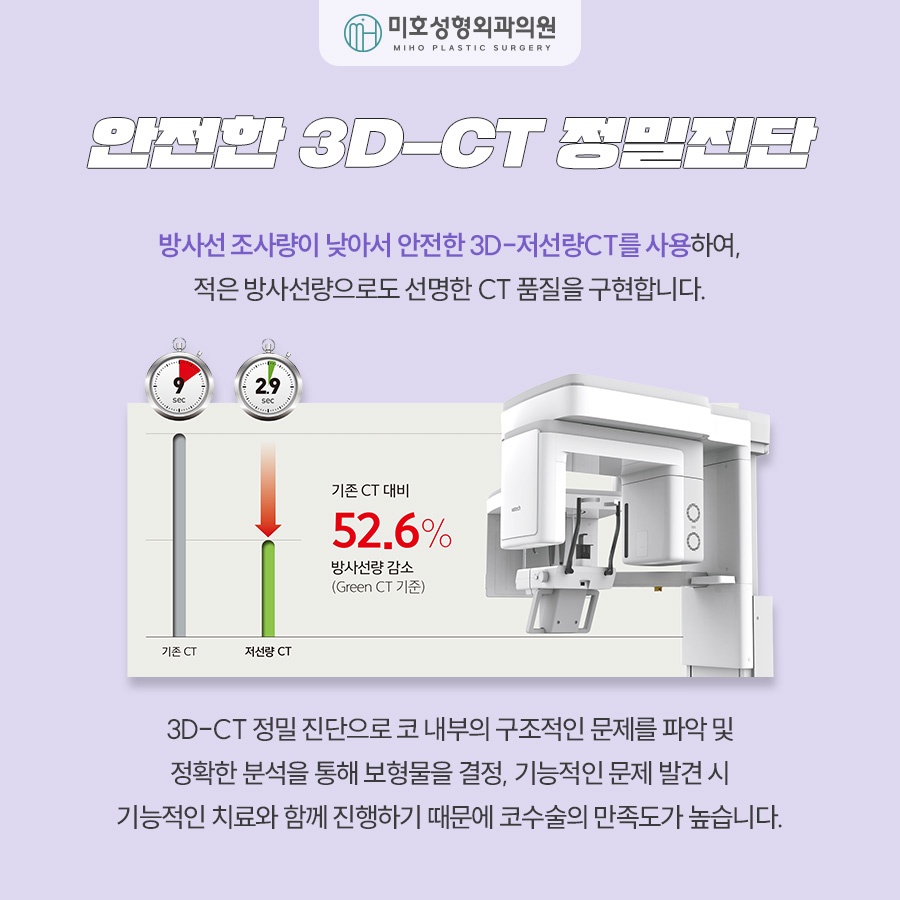
People who value beauty often care more about visible changes
than about theoretical or conceptual explanations.
So from the planning stage onward,
it is necessary to explain in detail
how the shapes of the nose and mouth will change after adjusting the nasolabial angle,
and how the impression or overall mood may change.
And among the expected changes,
it is wise to identify elements that may need additional adjustment
and prepare preventive measures in advance.
Rather than mechanically explaining that the philtrum has not actually become longer,
it is better to have a serious discussion about
how to prevent it from appearing longer than before.
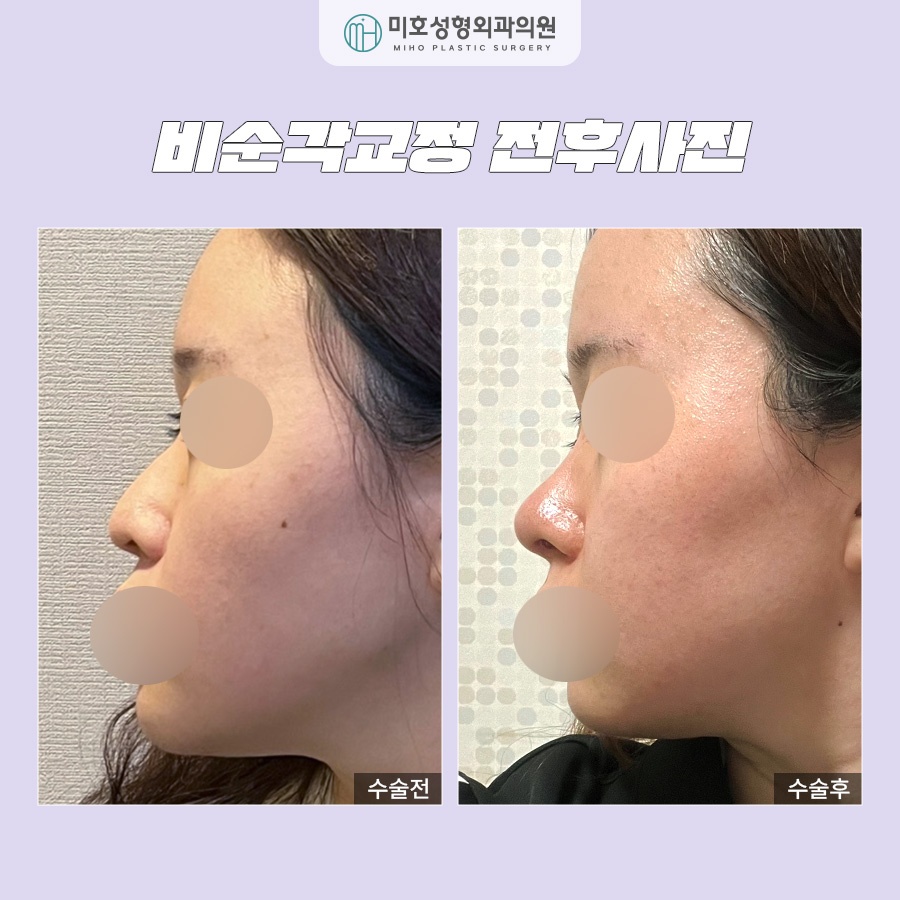
"Do I need aftercare as well?"
When performing angle adjustment,
it is important to carefully plan the process of fixing and maintaining it.
If fixation is not done properly,
the angle may widen over time,
or the tissue may contract,
resulting in an unexpected shape.
Therefore, while keeping the feel of the main tissues soft and supple,
it is necessary to create a support structure that helps the angle remain firmly fixed.
Places that provide thorough aftercare
usually also establish careful measures for maintaining the structure.
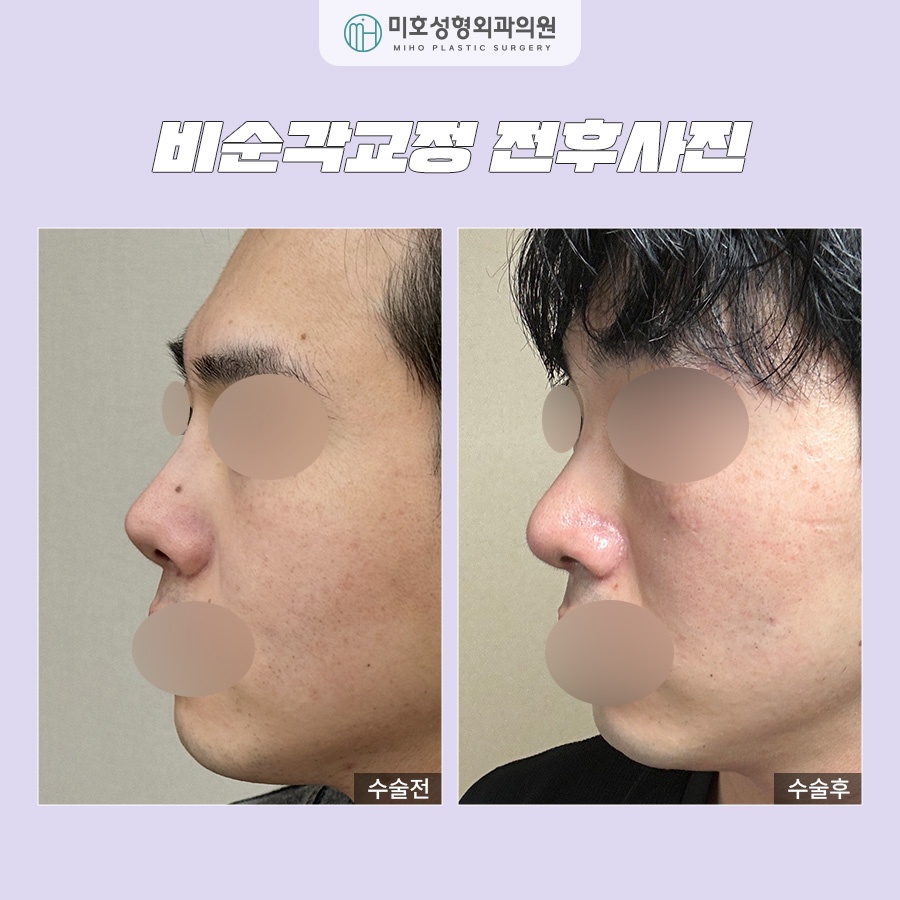
"In a trustworthy environment"
Nasolabial angle correction is a complex and delicate procedure
that designs the nose, philtrum, and lips together,
so it is difficult to explain the detailed process or procedure in a standardized way.
However, one important point is that
a careful examination and analysis process must be followed
to create a 1:1 customized plan,
and it is very important to work with skilled medical staff
who can carry out the plan exactly as intended.
Therefore, when choosing a medical institution,
it is advisable to check whether the examination and analysis process is very thorough,
and who will be responsible for the procedure in advance.
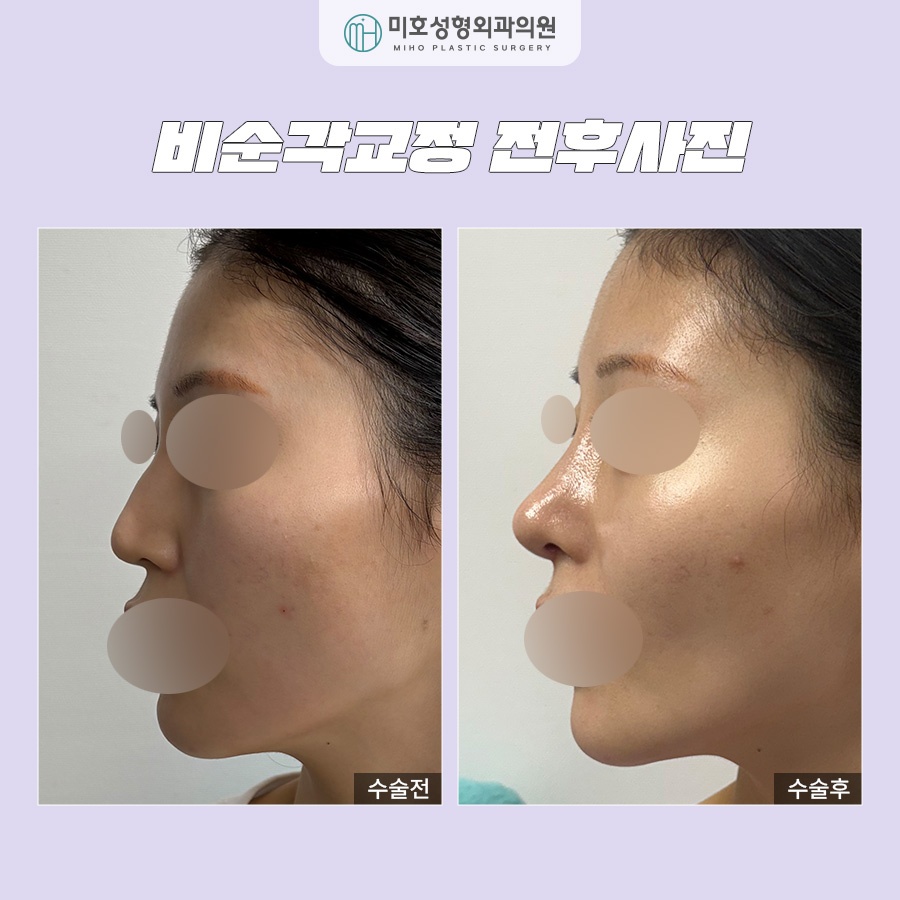
If the number of medical staff involved increases,
responsibility may be dispersed,
so you should check whether the surgeon in charge
handles the entire process from start to finish
to feel reassured.
In addition, it is necessary to check in advance
whether there is an anesthesiology specialist
who manages the patient's condition.
You should also find out whether 1:1 monitoring is being provided
and whether various emergency safety devices are available
to help respond without panic if an emergency occurs.
When the environment is stable,
the patient can relax,
and because aftercare can be provided more comfortably,
satisfaction is bound to increase.
These days, more and more people are seeking
a natural, comfortable, yet refined impression.
As a result, many people pay close attention
to how the area connecting the nose and mouth looks.
Nasolabial angle correction naturally connects the midface and lower face,
while also adjusting the side-profile shape of the face,
achieving a beautiful impression with no obvious drawbacks
from any angle.
If you want to create a better impression,
check and correct the nasolabial angle.



Previous image
Next image