
As average life expectancy has increased,
the period of social activity has also grown,
and accordingly, there has been a clear trend
across society to maintain an energetic image
for as long as possible.
A lively impression comes from the eyes,
but if the eye area is dark and sagging,
even if that is not actually the case,
it can unintentionally give a tired impression.
To improve this, many people looked into
reviews of lower eyelid fat repositioning,
the recovery period, and the types of side effects.
One of the reasons people refer to reviews
of lower eyelid fat repositioning is to prevent
problems during the recovery period.
If swelling or bruising becomes severe,
returning to daily life may be delayed,
and it can even affect one's work and finances.
Therefore, it was advisable to carefully consider
not only the procedure itself,
but also the possible types of side effects
and the time required for recovery before deciding.
Right after the procedure and the following day,
swelling and bruising were usually at their worst.
Although it varied by individual, that state could
last for 2 to 3 days,
and pain might also be felt.

As you read reviews of lower eyelid fat repositioning,
you could also find useful aftercare tips.
For the first 48 hours after the procedure,
it was good to apply cold compresses to reduce
swelling and inflammation.
After that, switching to warm compresses
could help soothe the affected area.
After about 1 to 2 weeks,
the major swelling and bruising would subside,
and the incision site would also stabilize.
Pain may be felt around the eyes,
but using a transconjunctival approach
could help reduce discomfort.
Since the course can differ depending on the
approach even in the same area,
it was advisable to refer to many opinions,
compare them, and then make a choice.

It was important to take sufficient time for
preliminary research and carefully decide on
the doctor and medical institution in charge.
If the first attempt goes wrong,
it can actually leave you looking older,
and situations worse than before can occur.
To be satisfied with the results,
the process of visiting in person for consultations
had to be included as well.
Even if the concern was the same lower eyelid area,
the approach differed depending on the structure
of the facial skeleton, skin thickness,
and degree of sagging.
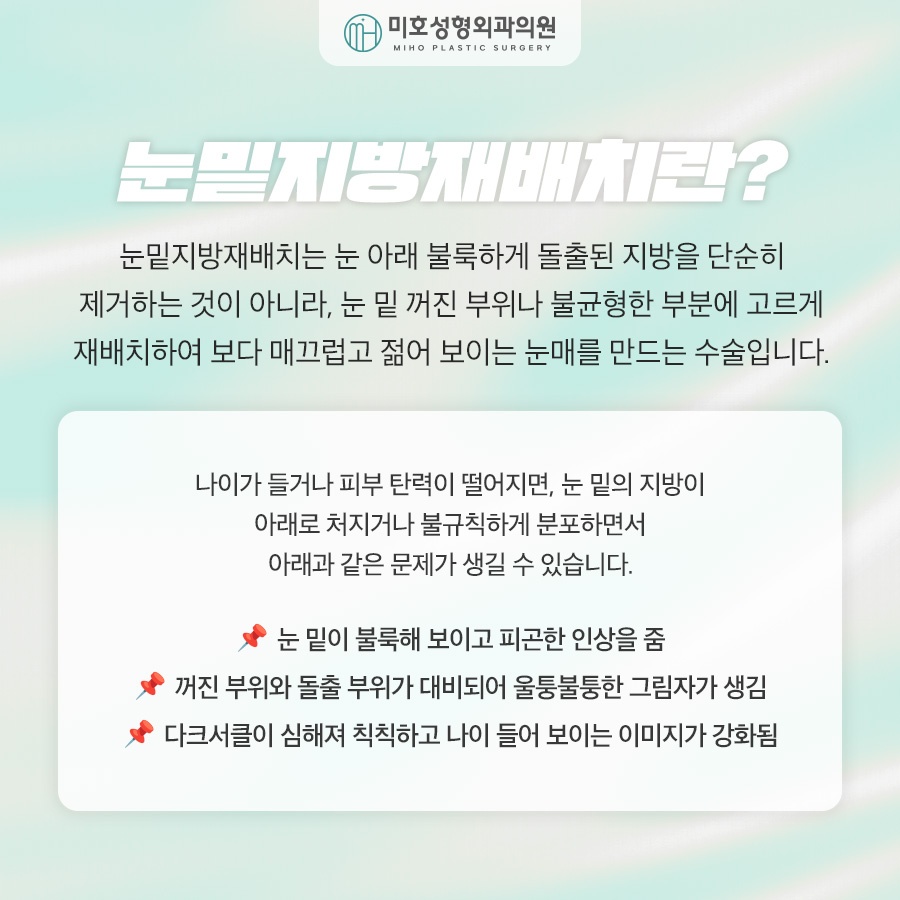
At our clinic, the procedure was divided into
fat repositioning and lower blepharoplasty,
depending on the pattern of sagging.
First, the under-eye tissue was analyzed in detail
layer by layer, and the necessary solution
was applied to each layer.
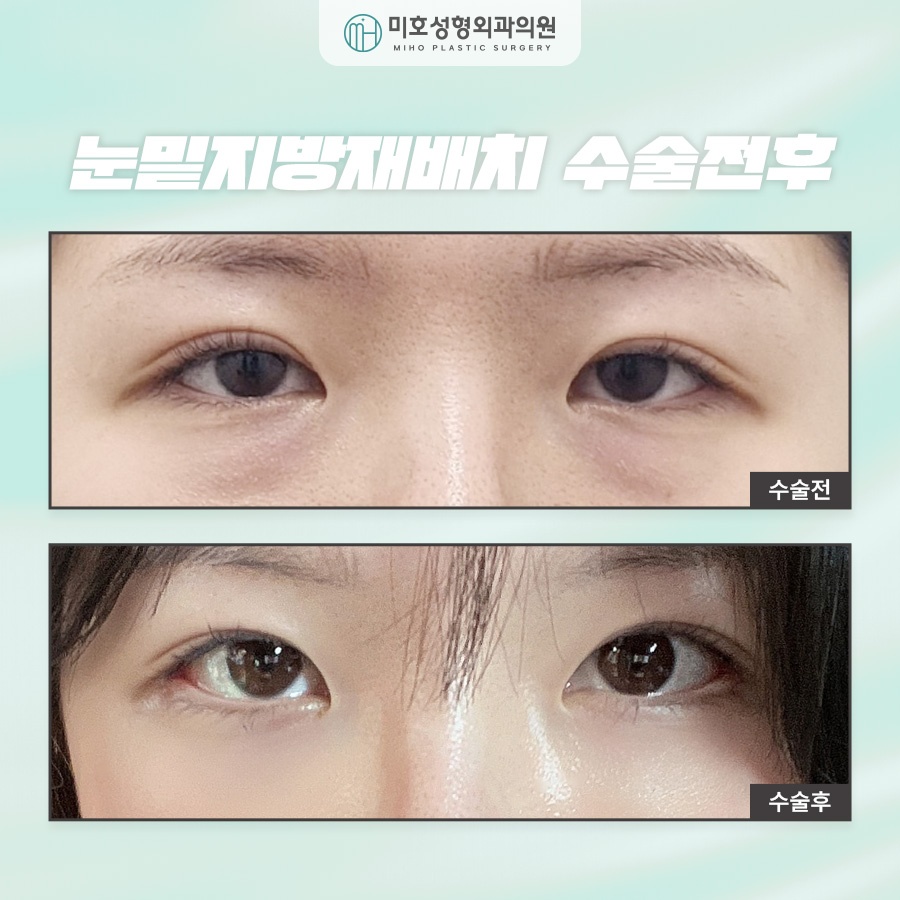
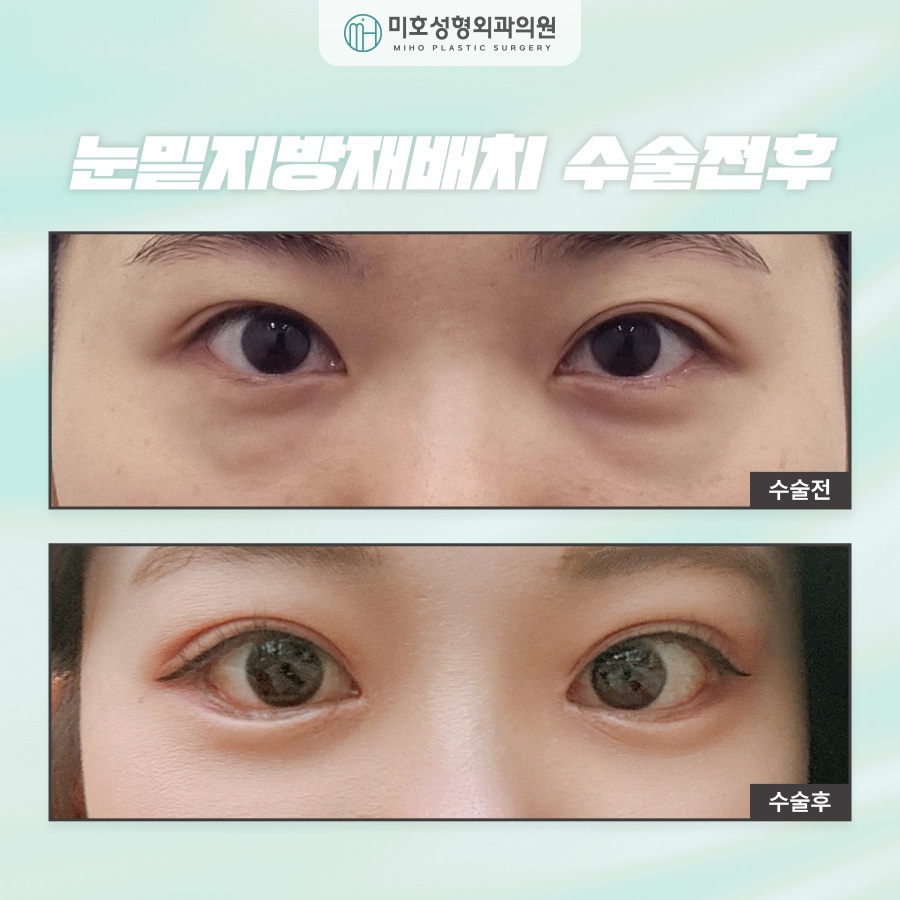
That is why the contents of reviews of
lower eyelid fat repositioning varied slightly.
First, problems caused by thinning skin
and reduced elasticity could be improved
by grafting or repositioning fat
to create a less tired-looking impression.
If the sagging was not severe,
lifting support could be provided with threads,
radiofrequency, or ultrasound.
In most middle-aged and older patients,
sagging was severe and excess skin was present.
If necessary, part of it could be removed.

Even when the strength of the septum had weakened,
orbital fat could protrude and create
contours and shadows.
By strengthening the loosened septum,
the orbital fat could be returned to its original
position and the protruding area could also
be flattened.
If the amount of fat itself was large,
some of it could simply be removed.
If the protrusion was significant and the shadow
was deep, or if it even caused a tear trough
deformation, fat could be taken out and used to
fill the volume in the area for repositioning.
In this way, at our clinic, fat and the septum
were manipulated according to the pattern of
hollowing to create a more lively appearance.
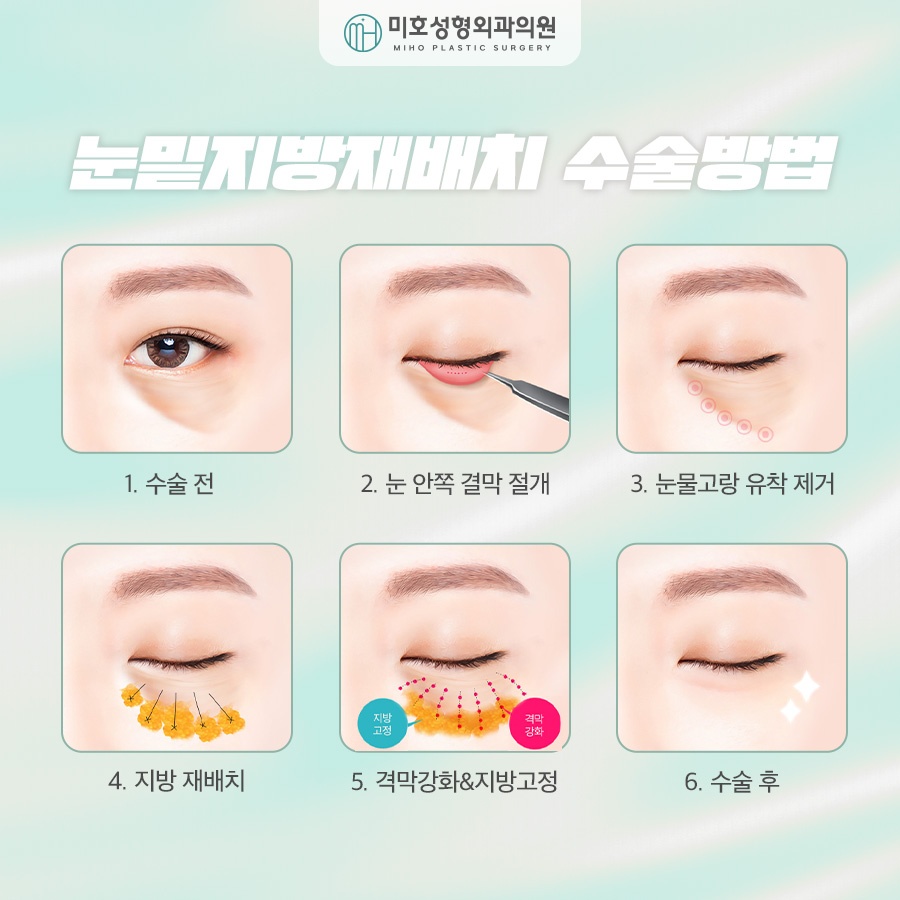
Not only reviews of lower eyelid fat repositioning,
but also knowing the general procedure in advance
could be helpful in many ways.
First, after identifying the shape of the under-eye area,
the conjunctiva on the inside of the eye was incised.
If there was adhesions of ligaments in the sunken area,
these were removed, and fat that had protruded
in inappropriate places was repositioned
around the trough to form the shape.
If the procedure ended there, the structure would
not be fixed and recurrence could occur,
so the solution was completed by strengthening
the septum and firmly securing the fat.
The difference from lower blepharoplasty was that
it did not include the process of incising
loose skin.
Lower blepharoplasty also involves removing
or repositioning some of the fat,
but the incision site is exposed externally.
In the case of fat repositioning, because it is
performed through the conjunctiva,
there is the advantage of reducing concerns
about scarring.
For this reason, there are cases where people insist
on repositioning only even when lower blepharoplasty
is needed, but if aging has progressed significantly
and changes have occurred in the soft tissue
of the midface, a combined approach is necessary.
At our clinic, the incision line is placed directly
below the lower eyelashes, so the traces are
relatively less noticeable.
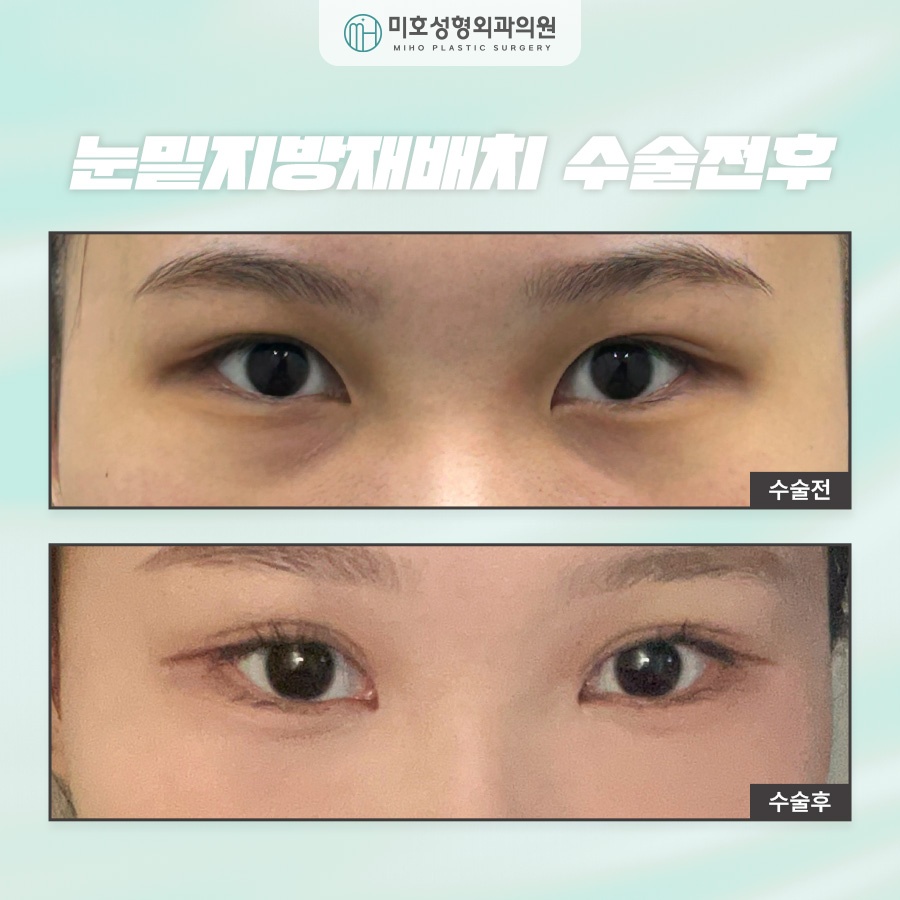
For procedures in middle-aged and older patients,
we carefully reviewed not only facial structure
and anatomical analysis, but also blood test results.
This was because if the patient had diabetes
or problems with clotting function,
they could face difficulties during recovery.
For a stable procedure, we asked whether
they were taking any medications, and if those
medications could interfere with the procedure,
they might need to temporarily stop taking them
after consulting with the doctor in charge.
As such, it was very important to closely assess
each individual's condition and make a plan
accordingly.
For at least 2 weeks after the procedure,
saunas, swimming pools, makeup,
and strenuous exercise should be avoided.
Wearing contact lenses should also be avoided
during that time, and since smoking and drinking
can delay recovery and cause inflammation,
we recommended abstaining from both alcohol
and tobacco.
If non-dissolvable sutures were used,
you would need to return to the clinic after
about a week, while dissolvable sutures are
naturally absorbed by the body, so you could
rest at home.
If you often hear from others that you look tired
or seem unmotivated,
it would be good to improve the condition by
referring to reviews of lower eyelid fat repositioning.
We hope you will carefully choose a place that
can suggest a solution tailored to your current
condition.



Previous image
Next image