
A person’s image is not formed by just one part of the face,
but is often determined by the overall
harmony and balance.
At the center of that balance is
the nose, because it is located
right in the middle and is the
most prominent feature on the face.
Even a slight difference in length or angle
can change the overall impression.
If you often hear that you look unremarkable or
that your impression seems dull, considering an image change
through costal cartilage nose surgery can be a good option.
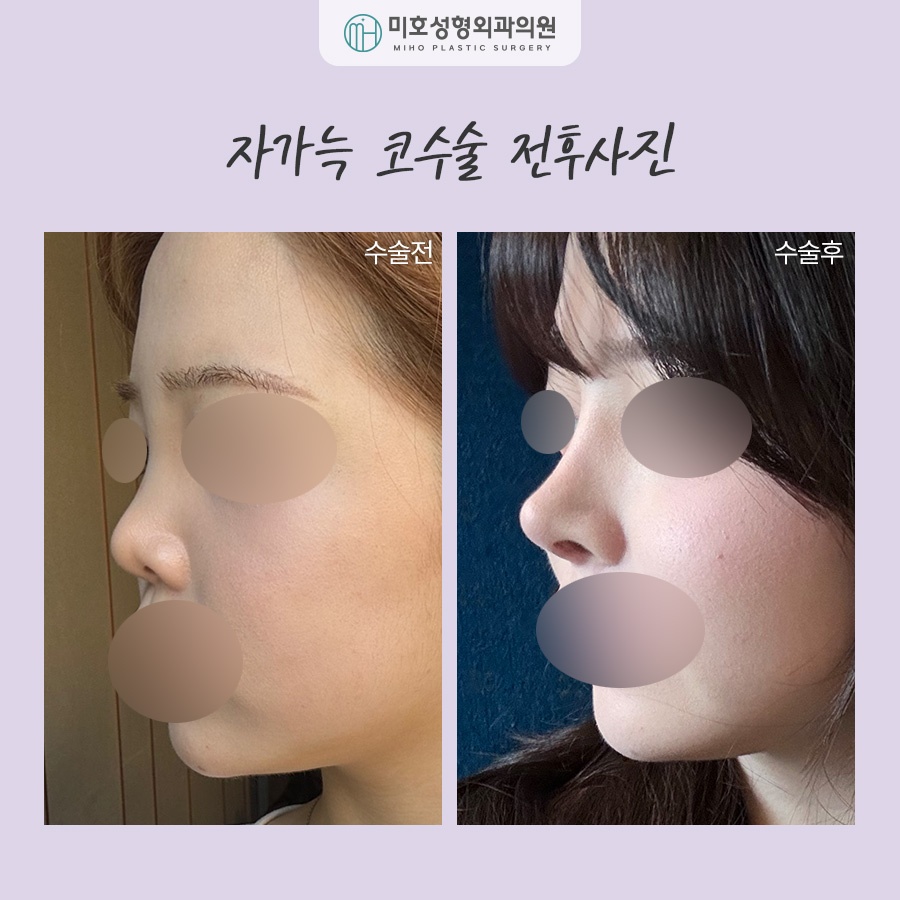
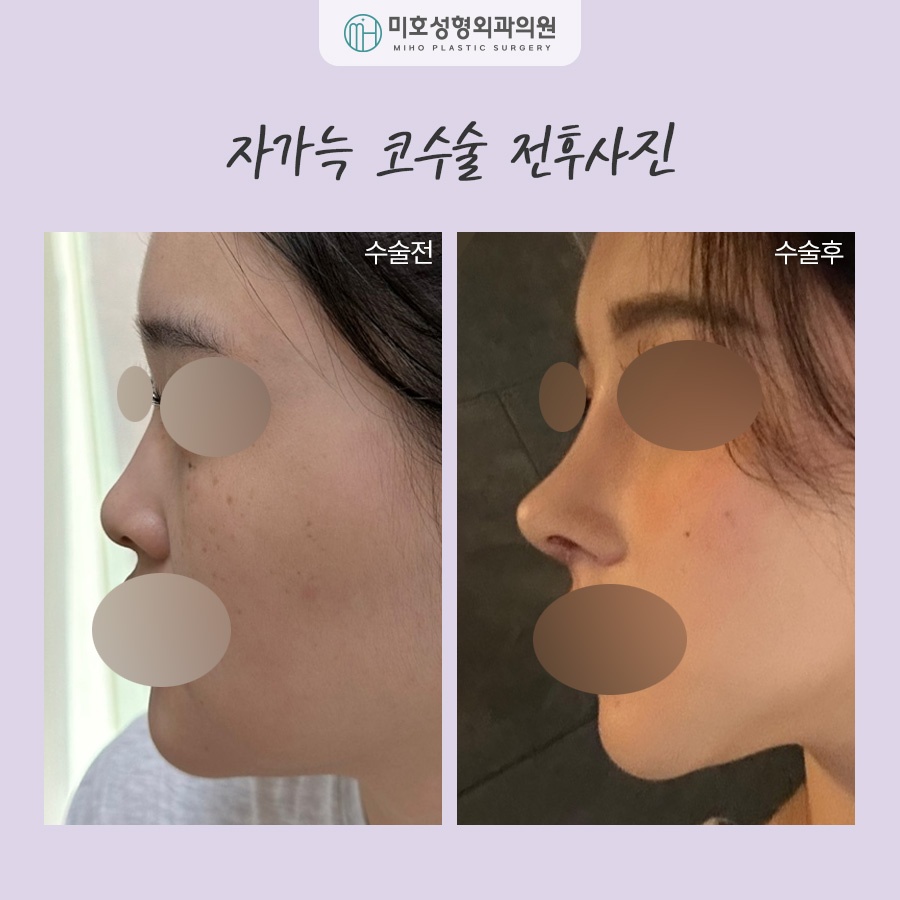
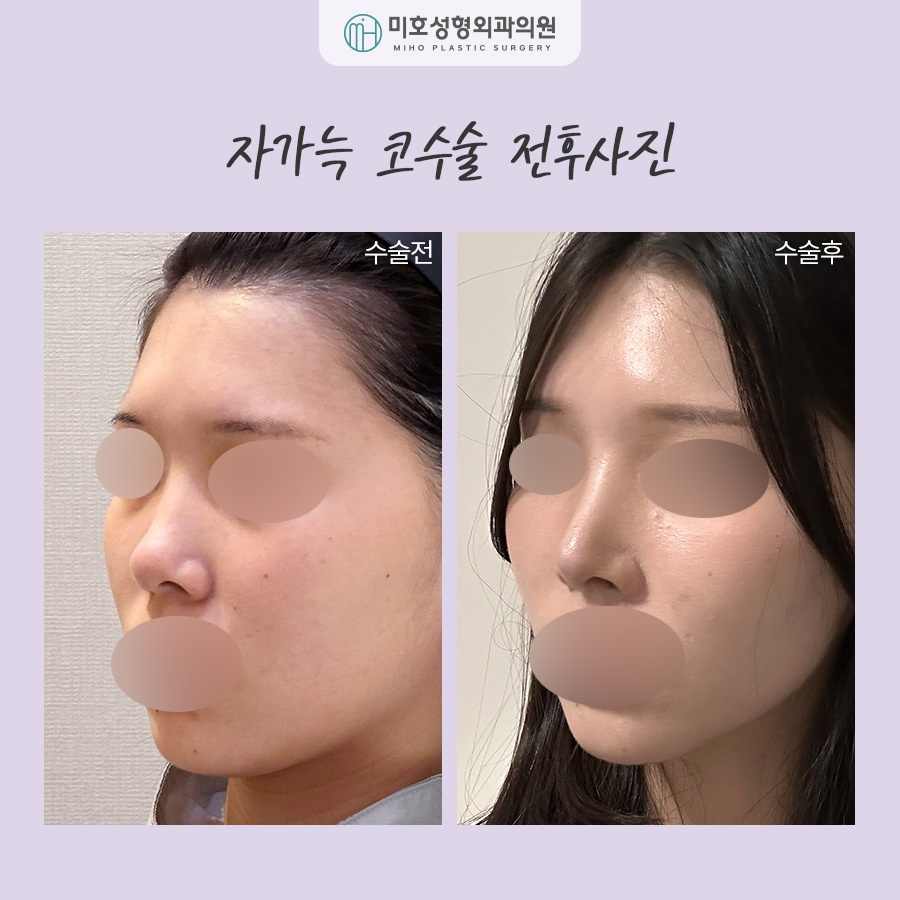
Raising a flat, plain nasal bridge and tip
even slightly can greatly enhance dimensionality,
and the presence of the surrounding facial features
also becomes more noticeable.
Although the nose influences each person’s image,
it also plays an important role in breathing,
so it must be approached carefully,
with anatomical characteristics in mind.
Because everyone has different natural bone structure, skin thickness,
and cartilage shape, a uniform approach should be avoided.
When a customized design is developed and applied
in a way that brings out your natural appeal,
satisfaction with the result of costal cartilage nose surgery
will also be higher.

At our clinic,
before performing costal cartilage nose surgery,
we go through a process of carefully analyzing not only
the visible shape of the nose,
but also the line running from the forehead to the nasal bridge
and down to the tip of the chin.
In addition, we design the procedure by using 3D-CT imaging
to assess the shape of the bones and cartilage,
as well as the condition of the soft tissue.
Only after such detailed analysis and examination
can we precisely determine the measurements
that are best suited to each individual.
At this point, the key is not to aim for excessive changes out of greed,
but to plan in a way that considers harmony with the eyes, nose, and mouth
and brings out your own individuality.
In the past, glamorous, large, Western-style faces were popular,
but these days, a natural look that appears almost untouched
is in the spotlight.
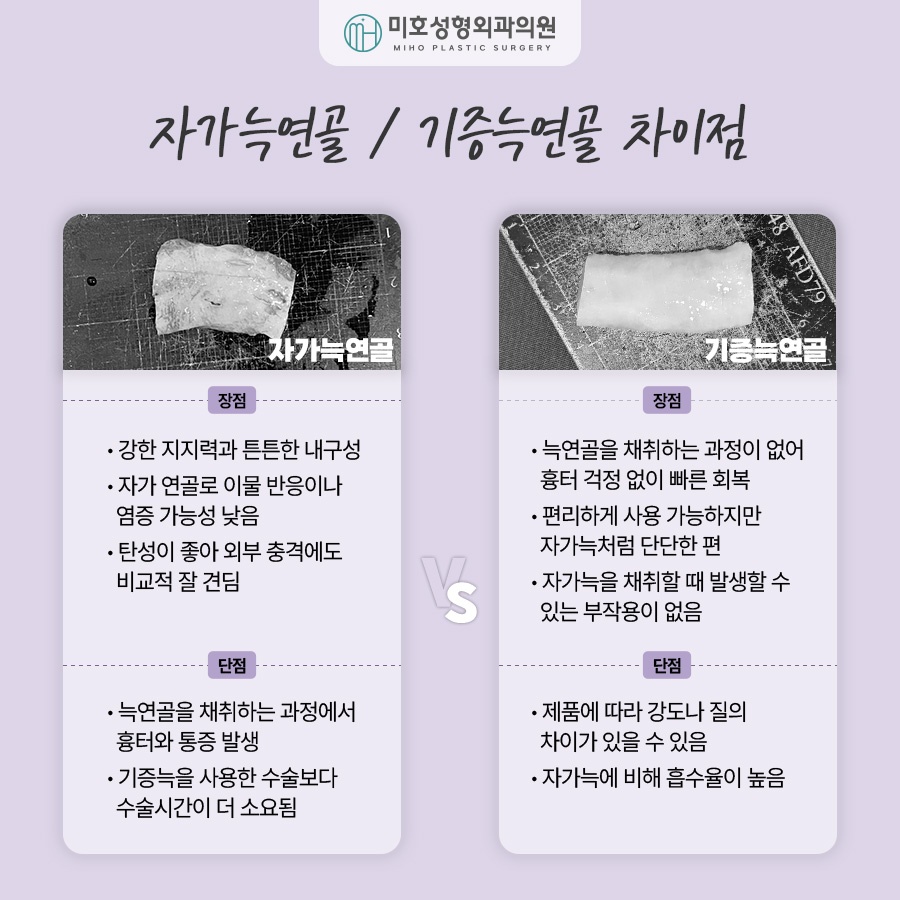
As a result, solutions using autologous tissue rather than
artificial implants such as silicone have gained attention.
Representative autologous tissues used frequently include
septal cartilage, ear cartilage, autologous dermis,
and costal cartilage from the rib area.
Their characteristics, such as quantity and hardness,
differ depending on where they are harvested,
so they are used appropriately according to the situation.
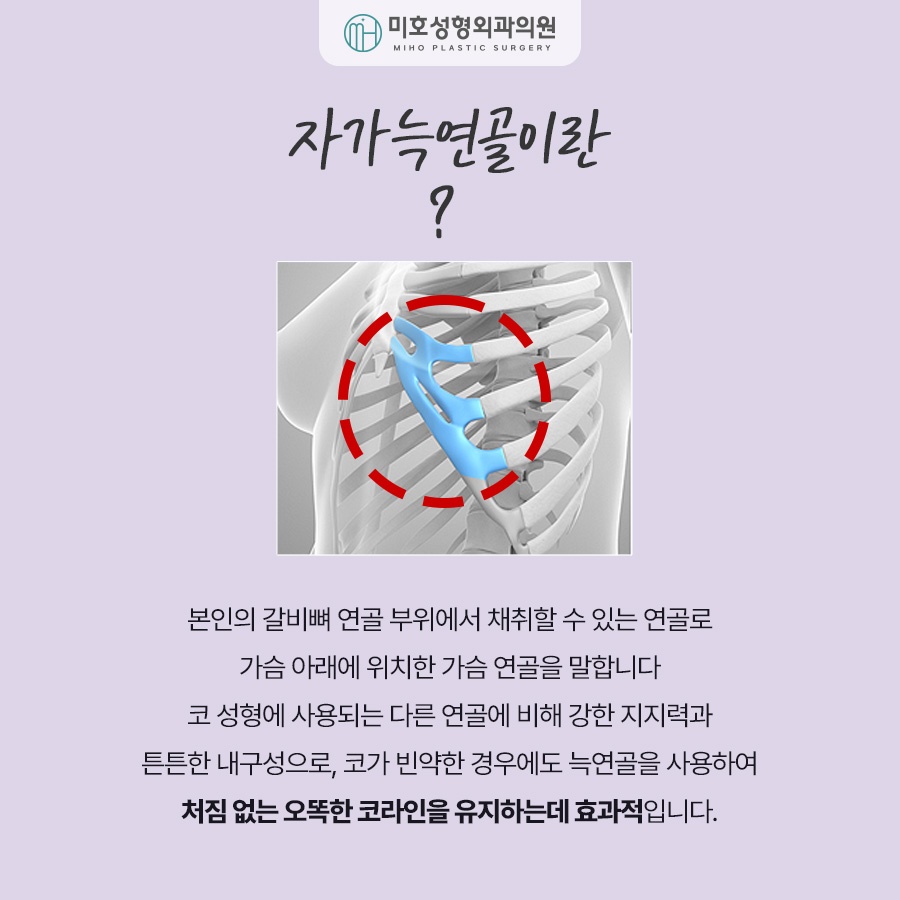
Costal cartilage used in costal cartilage nose surgery
is harvested from the ribs, and it has the advantage of being
available in greater quantity than ear cartilage or
septal cartilage.
It is also the hardest among autologous tissues,
making it well suited for areas that require strong support,
such as the nasal bridge.
When cartilage is difficult to obtain from another area,
or when correcting an upturned nose, a short nose, or a contracted nose,
costal cartilage is inserted.
It is also used when the nasal bridge needs to be raised
by 8 mm or more.
A major advantage of a non-implant solution is that it is relatively
free from side effects.
Because it comes from your own body,
it is less likely to be recognized as a foreign substance,
and side effects such as inflammation, contraction,
or visibility are less common later on.
The appearance is also natural, so it does not stand out even when you make facial expressions.
Although this solution has many advantages,
many people hesitate because of the risk of scarring.
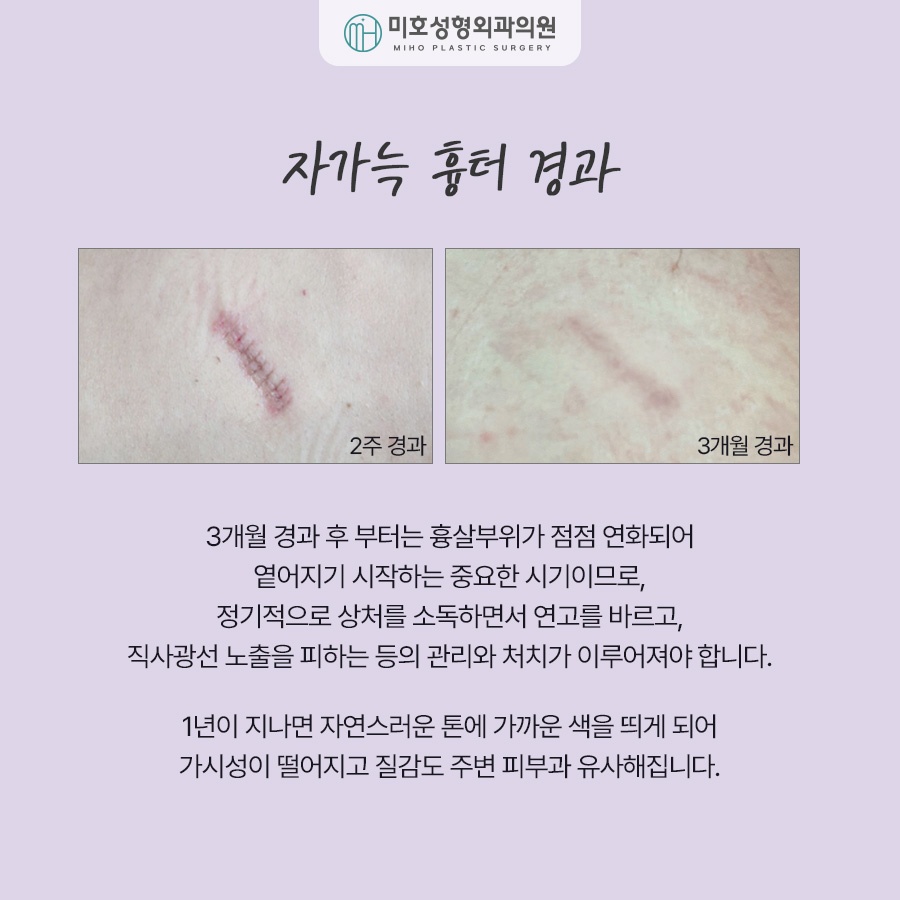
Depending on skin type, visible marks may remain
at the area where the cartilage was harvested,
but they gradually become less noticeable,
and with proper aftercare at a medical facility,
recovery to an appearance similar to the original is possible.
If this is a concern,
it is advisable to carefully ask during the consultation for costal cartilage nose surgery
whether an aftercare system is in place.
Scars can be removed with lasers or surgical excision,
but the best method is to harvest the cartilage in a way that leaves minimal trace.
The smaller the incision, the less likely a scar is to remain,
and when suturing, the wound should be delicately finished with fine stitches
so that it can heal well.
After the incision has healed,
the decision is made based on the appearance of the mark
whether to treat it with a laser,
or to partially excise the area and suture it again.
If you are very worried about this part,
donor rib cartilage can also be used.
Let me briefly introduce the process of raising the nasal bridge
with costal cartilage.
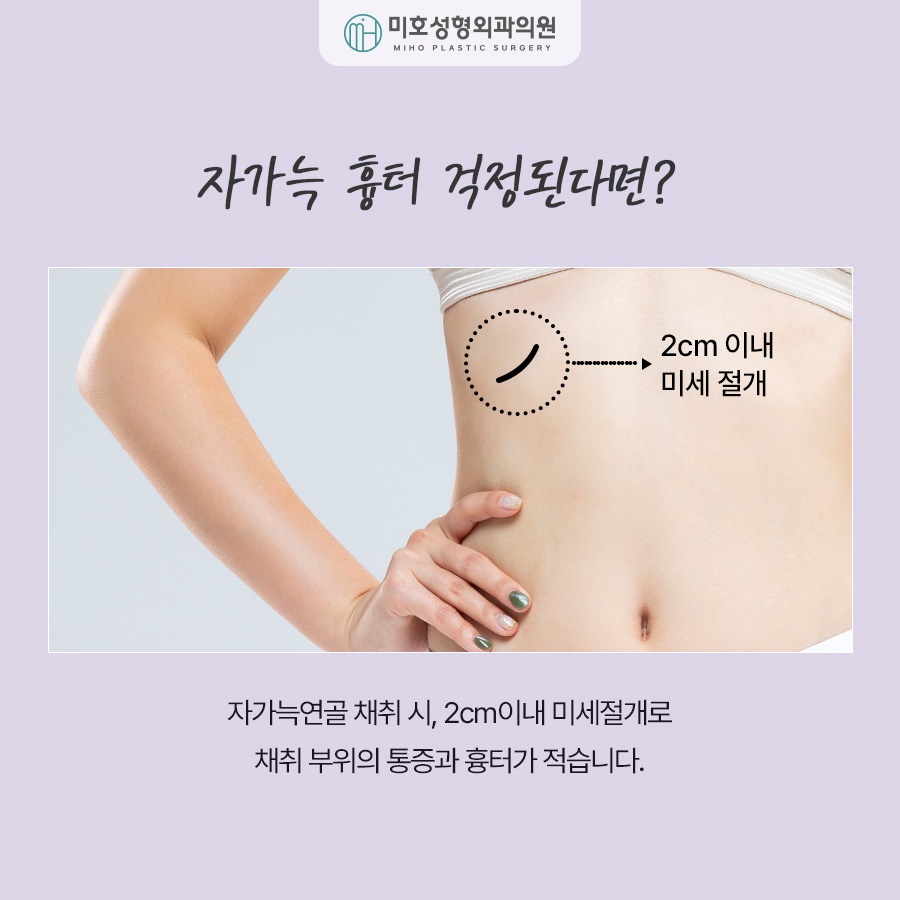
First, an incision is made below the chest,
and cartilage from the 8th or 9th rib is harvested.
The harvested cartilage is processed according to the designed shape
and inserted; it is either finely minced and reshaped
or cut into an appropriate size for use.
The reprocessed cartilage is inserted into the nasal bridge or tip
to improve the shape of the nose.
As mentioned earlier, because it is the strongest among living tissues,
a firm nasal line can be formed,
and the risk of foreign-body sensation or inflammation is low.
Many people worry that problems may occur
at the area where the cartilage was harvested.
It is harvested within a range that does not interfere with daily life,
and if you get enough rest,
you can recover without difficulty.
After the procedure, you should manage it at home
while following the instructions provided by the medical facility.
Until the implant settles in place,
you must be careful to avoid strong pressure or impact
to the area, and it is necessary to keep the incision clean
so that it does not become contaminated.
Excessive disinfection can actually cause damage,
so rather than trying to do something to the incision,
it is enough to keep it from becoming contaminated.
The recovery period after costal cartilage nose surgery,
like other solutions, takes about 2 weeks to several months.
However, one difference is that the cartilage harvest site also needs care,
and this too can be managed carefully so that the suture site does not become contaminated or open.
In addition, if you actively use the costal cartilage scar aftercare system
provided by the medical facility,
you can naturally raise the nasal bridge without noticeable marks.
We recommend proceeding by choosing a medical facility
with abundant know-how and technical expertise in this area.



Previous image
Next image