
Just as everyone has a different appearance,
each person also has their own unique
appeal, and that varies widely.
It would be nice if everyone were satisfied
with their appearance, but because ideals and reality differ,
disappointment can also arise.
In particular, if you are not satisfied with the shape of the nose,
which is located at the center of the face, satisfaction with the other
facial features can also inevitably decline.
The topic covered in this article is
a hooked nose,
which refers to a long bridge and a pointed nasal tip
drooping downward.
Because the nasal bridge is long, the midface naturally appears
extended, and the overall length of the face
also looks longer.
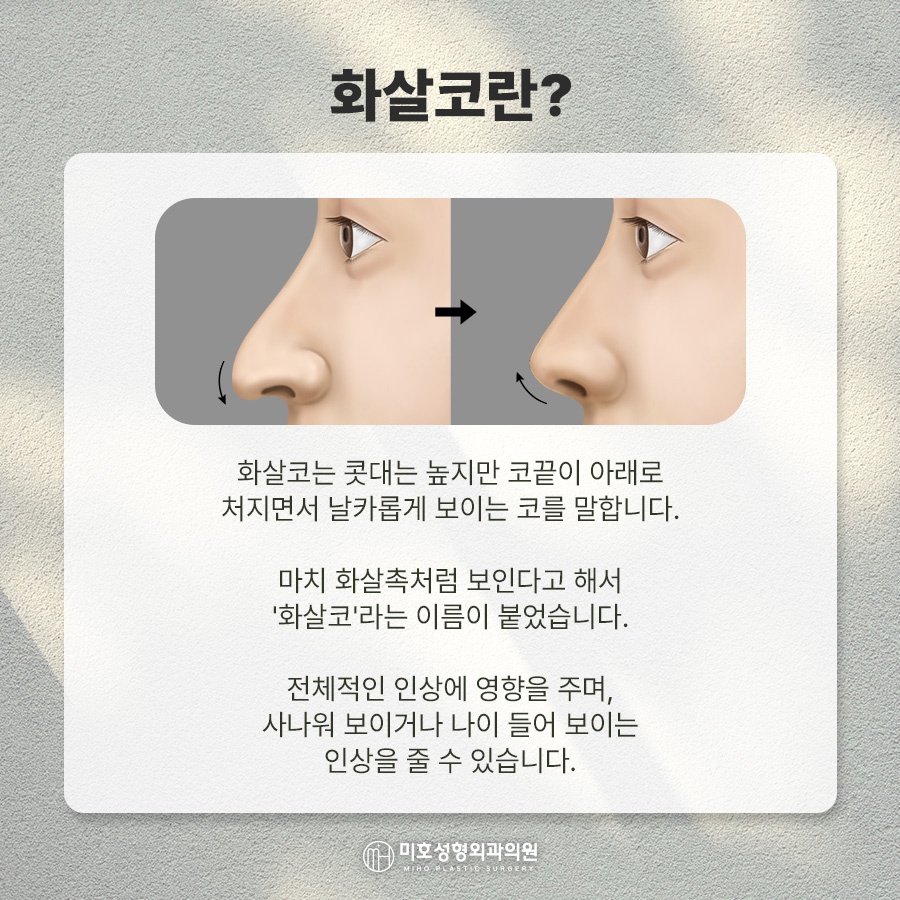
A long midface was a factor that made a person
look older than their actual age.
For women, it could sometimes
create a somewhat masculine
image.
When viewed from the front, if the nose
points downward like an arrow and
the nostrils are not visible,
it can be considered a hooked nose.
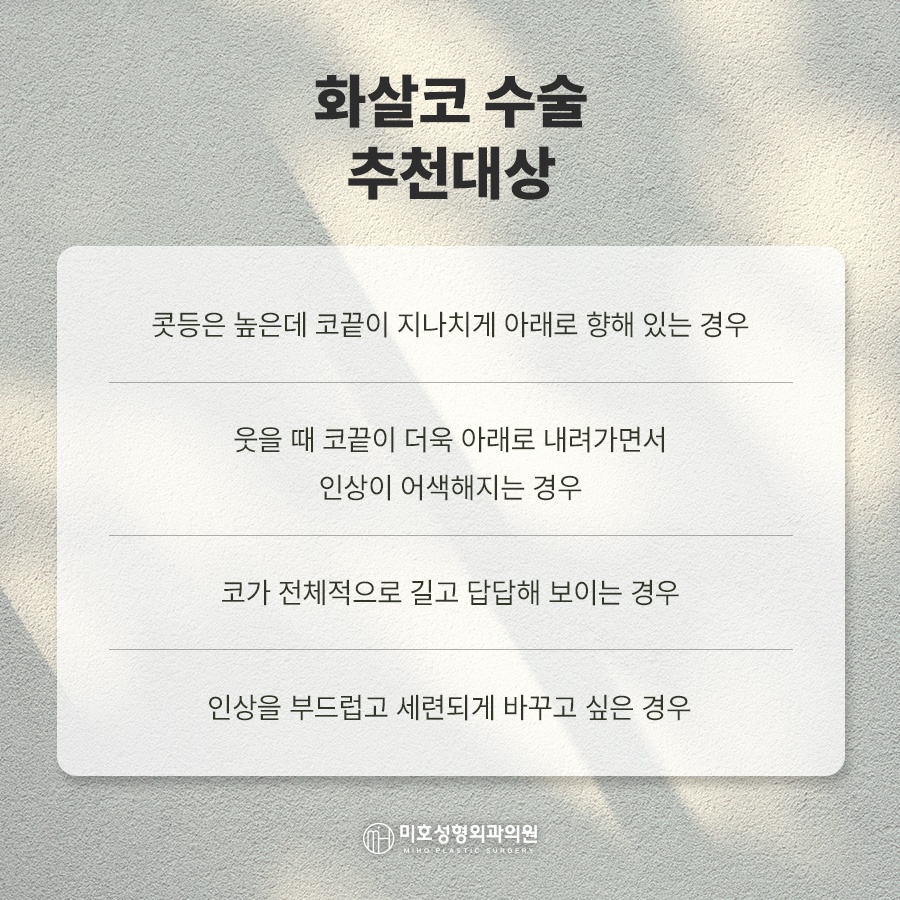
A drooping nasal tip tends to look even lower
when smiling or making facial expressions.
What this tells us is that the shape of the nose is influenced not only by bone and cartilage
but also by the facial muscles.
In such cases, correction should take into account not only the anatomical structure
but also the movement of the muscles,
so that the result can
appear natural.
There are various reasons why a hooked nose develops.
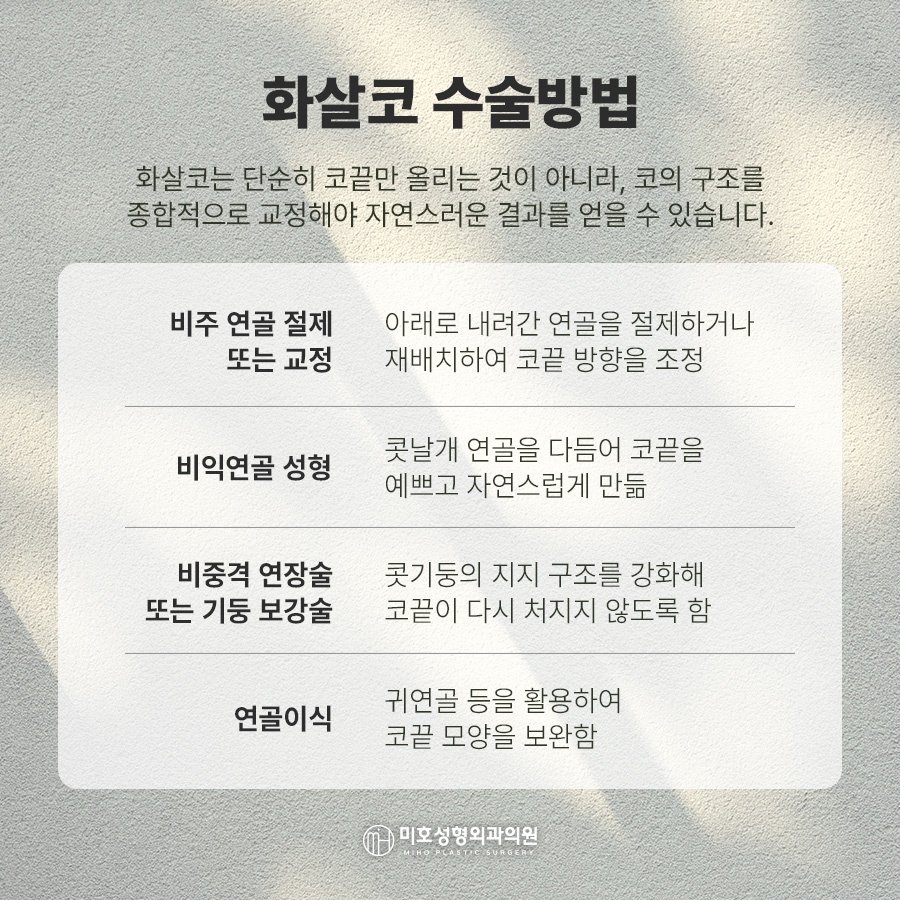
The septal cartilage may be long
or protrude downward,
and there are also cases in which the alar cartilage,
which supports the nasal tip,
has rotated downward.
If the columella is drooping downward,
the tip can descend even further when smiling.
It may droop due to aging,
and its shape may also change permanently
after external trauma.
In some cases, the properties of the soft tissue change due to previous treatment,
causing the shape to gradually change over time.
In other words, this type of nose can develop not only for congenital reasons
but also because acquired factors are involved.
Because multiple elements such as cartilage, the surrounding soft tissue, muscles,
and skin movement act together,
it is necessary to thoroughly analyze the cause
and approach it carefully.
If the cartilage at the tip of the nose or
the columella is drooping downward,
if the alar cartilage rises excessively upward
when speaking or smiling,
or if the vertical length of the septal cartilage
is excessively long, it may also be good to remove part of it.
By correcting the line of the nasal bridge and tip,
it is possible to improve an aged or masculine
image.
Many people
think that when correcting a hooked nose,
the main issue is simply lifting the drooping tip.
Of course, that process is included,
but the essential goal is to resolve the fundamental problem of cartilage drooping.
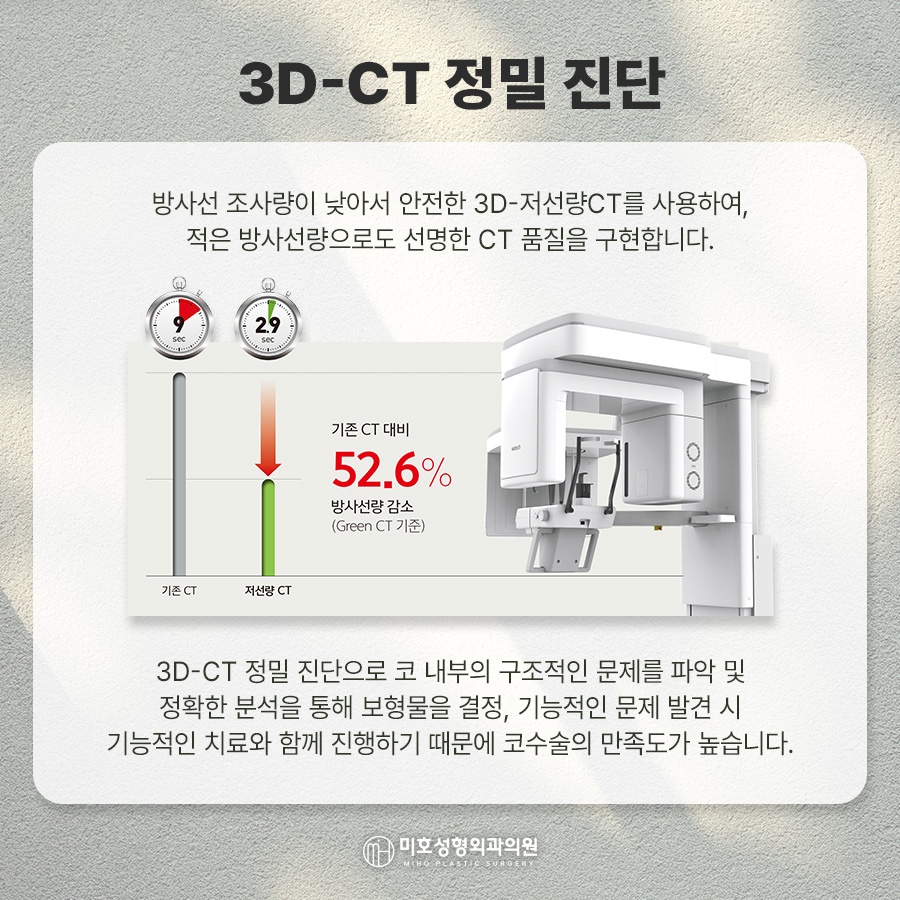
First, a strong supporting pillar was built using the septal cartilage.
This pillar must be sturdy so that the nasal tip
does not fall back down.
In addition, the angle of the tip
can be raised naturally.
Next, depending on the situation, the alar cartilage was
tied or repositioned upward
to raise it to the appropriate angle.
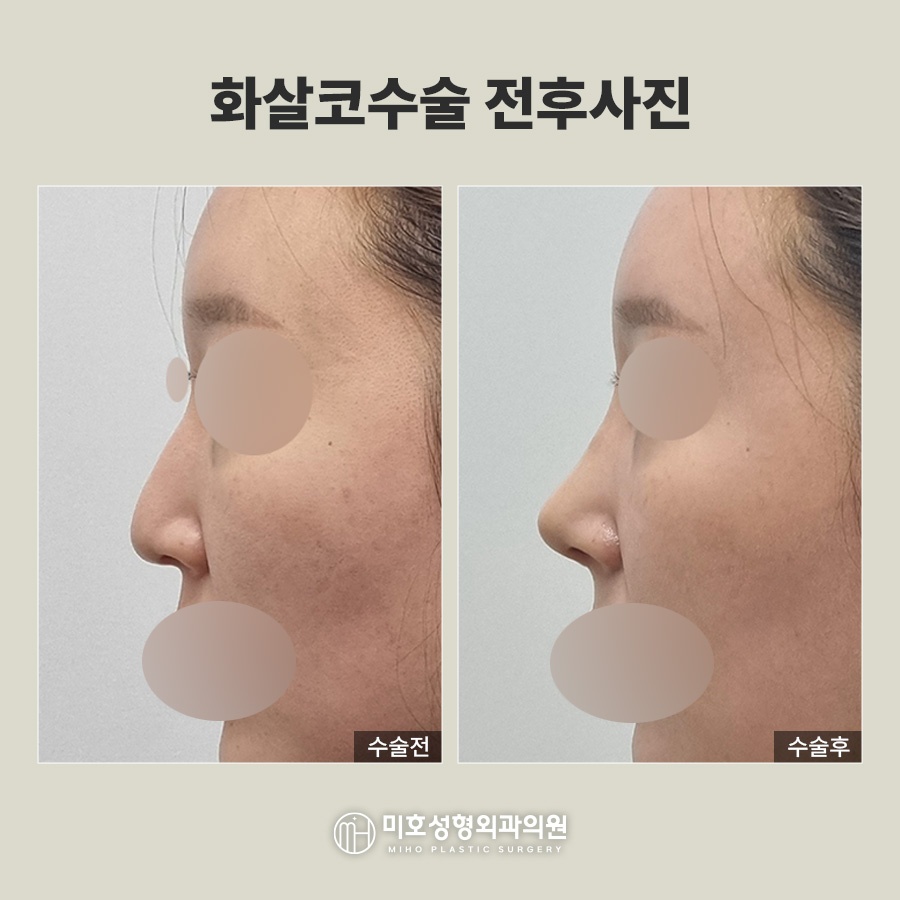
If the columella is severely drooping,
part of it can be removed to adjust the length appropriately.
When the septal cartilage is too long,
the vertical length is shortened to reduce the midface.
If the procedure is performed through an incision inside the nose,
the burden of scarring can be reduced.
As with any solution,
it is not advisable to overdo this procedure
in an effort to force correction.
It is important to adjust it while considering harmony with the other facial features,
to bring out the person’s natural appeal.
Otherwise, the nostrils may become
too exposed and the nose could appear
like a turned-up nose.
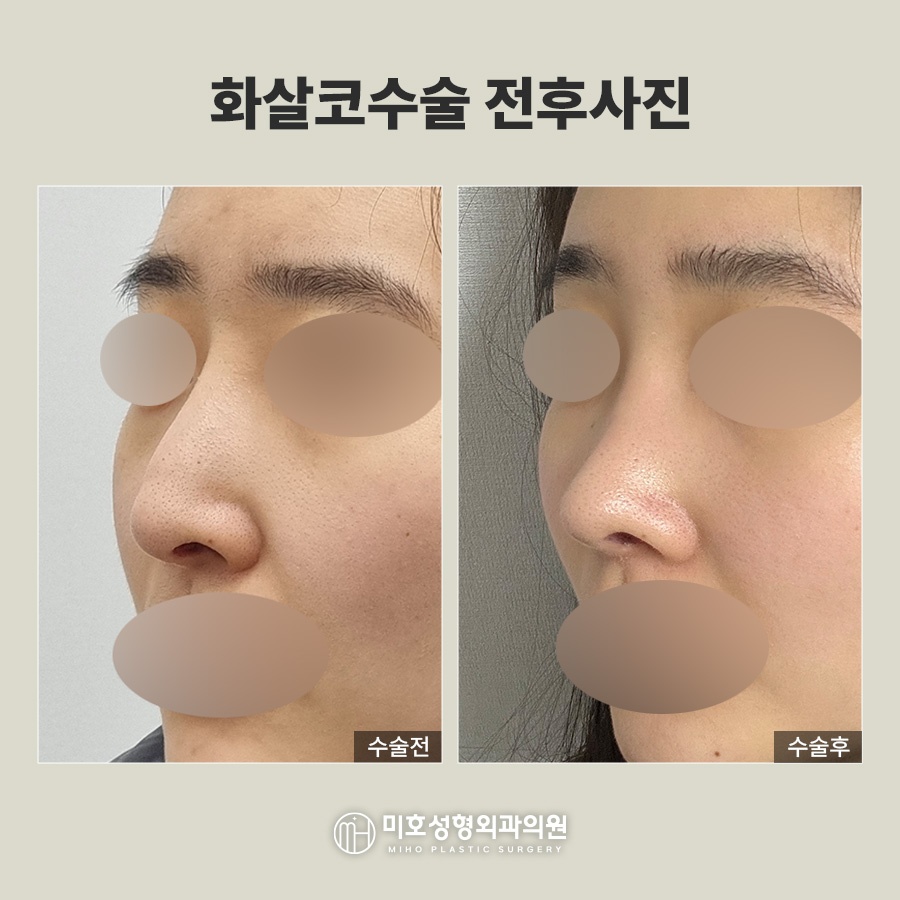
Sometimes,
after correcting a hooked nose,
there are cases where the nasal tip
descends again.
To prevent recurrence,
it is necessary to maintain the strength of the septal support structure
firmly.
If the pillar is weak, support also decreases,
and the nasal tip droops again.
The more incisions are made,
the higher the likelihood that the structural stability
of the soft tissue will decrease,
so it is important to form it sturdily from the start
to avoid repeated attempts whenever possible.
For this purpose, our clinic developed and used a variety of methods.
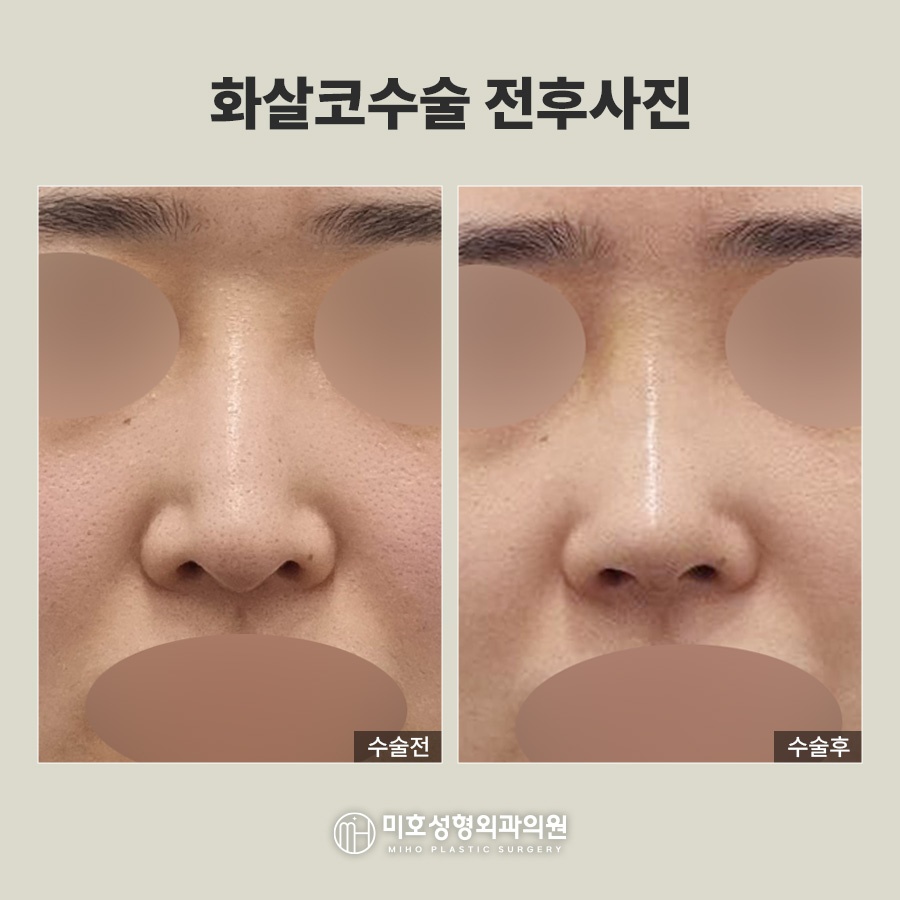
We also increased structural strength
by layering the cartilage in two layers
or widening the horizontal width.
If it is formed this sturdily,
it generally does not droop easily.
Although it may droop slightly over time
due to aging and the effects of gravity,
it does not return to the same shape
as before.
As mentioned earlier, the goal of this solution
is not simply to lift the nasal tip,
and it is also not just to shorten the vertical length.
This is only one step along the way toward the final goal.
The key was to pursue refined and natural beauty
by properly adjusting the length and angle.
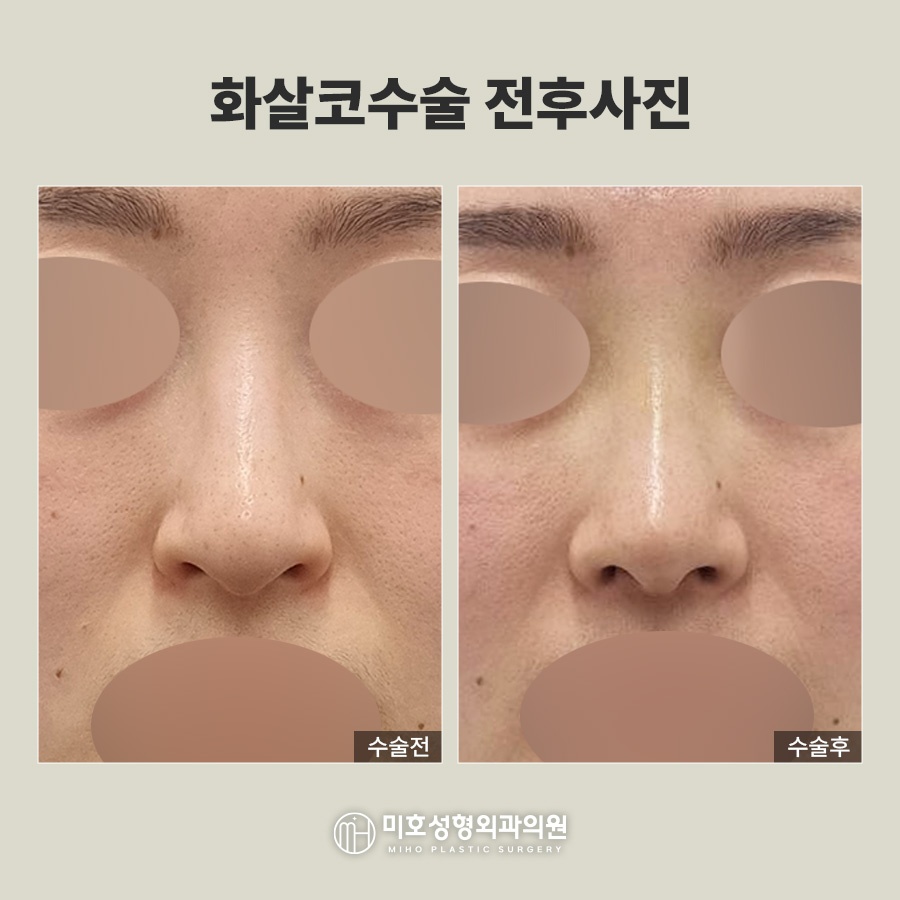
When setting the design of the side profile line,
the patient’s needs, harmony with the facial features,
and each individual’s appeal were comprehensively considered
and used to establish the plan.
If the face is long vertically,
the starting point between the eyebrows can be set slightly higher
to make the nose look shorter,
and by harmonizing the alar base and the nasal tip,
a youthful and refined image can be created.
If you want a soft and natural impression,
a straight-but-slightly-upturned line,
with the tip slightly higher than the bridge,
is appropriate, and for men,
a straight shape was recommended.
Hooked nose correction surgery is planned differently
depending on each person’s cartilage shape
and the condition of the soft tissue.
The length and thickness of the septal cartilage, its position,
the movement of the muscles that changes when smiling,
and even the thickness of the skin
all had to be comprehensively considered
and analyzed.
Even if the nose shape is the same type,
for some people, removing only the septum may be enough,
while in other cases, columella reduction and
cartilage suturing may also be necessary.
Therefore, rather than simply thinking about lifting the drooping part,
it was necessary to design the shape
while considering the proportions and how it changes
when making facial expressions.
Through careful analysis, extensive know-how,
and excellent technical skill,
we hoped to help you form a natural and stable line again.



Previous image
Next image