
The nose is one of the factors that determines a person’s impression,
so it is only natural to be highly interested in its shape.
If you want a clear and refined impression,
you were told to focus on the nose first.
Although demand and interest are high,
finding a solution that truly suits you
was harder than expected.
To design a shape that harmonizes with the facial features
and brings out your natural charm,
enough time had to be spent.
Recently, one solution that has been gaining attention
is nose surgery without implants.
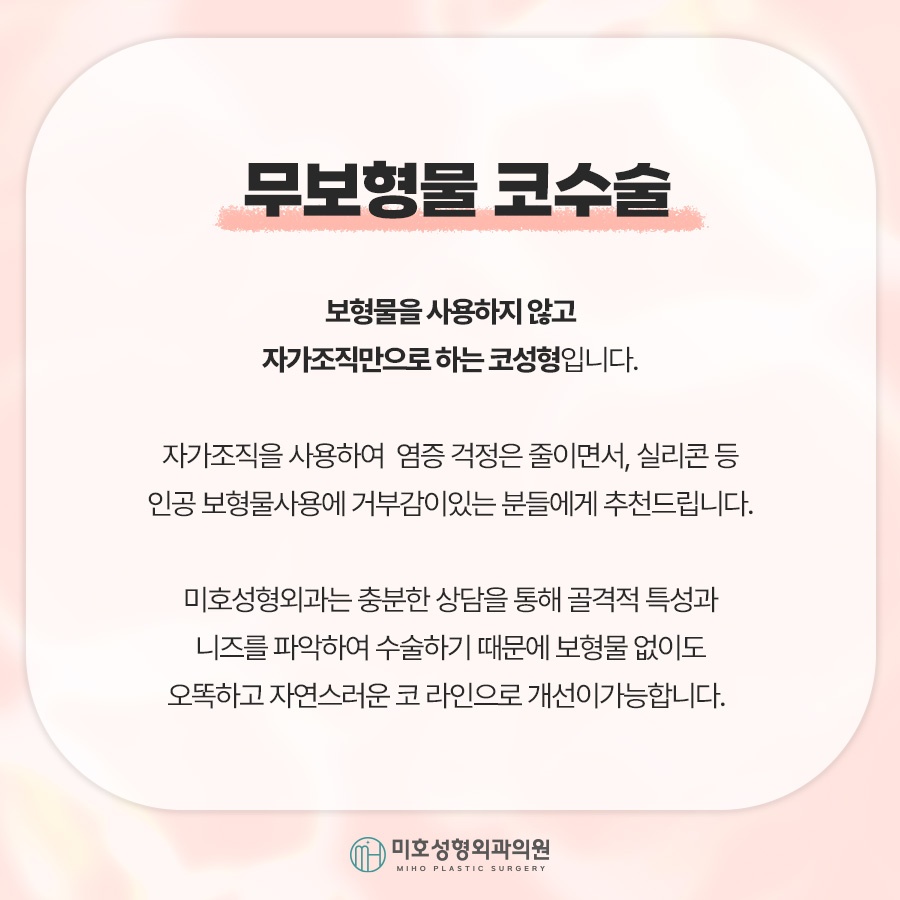
In the past, artificial implants such as silicone or Gore-Tex
were used to create a more dramatic design.
As the preference shifted toward a natural look
that feels polished without looking overdone,
the popularity of nose surgery without implants increased.
This is a solution that uses tissue collected from your own body
or donated tissue,
and it was characterized by a natural-looking result
and a reduced risk of side effects.
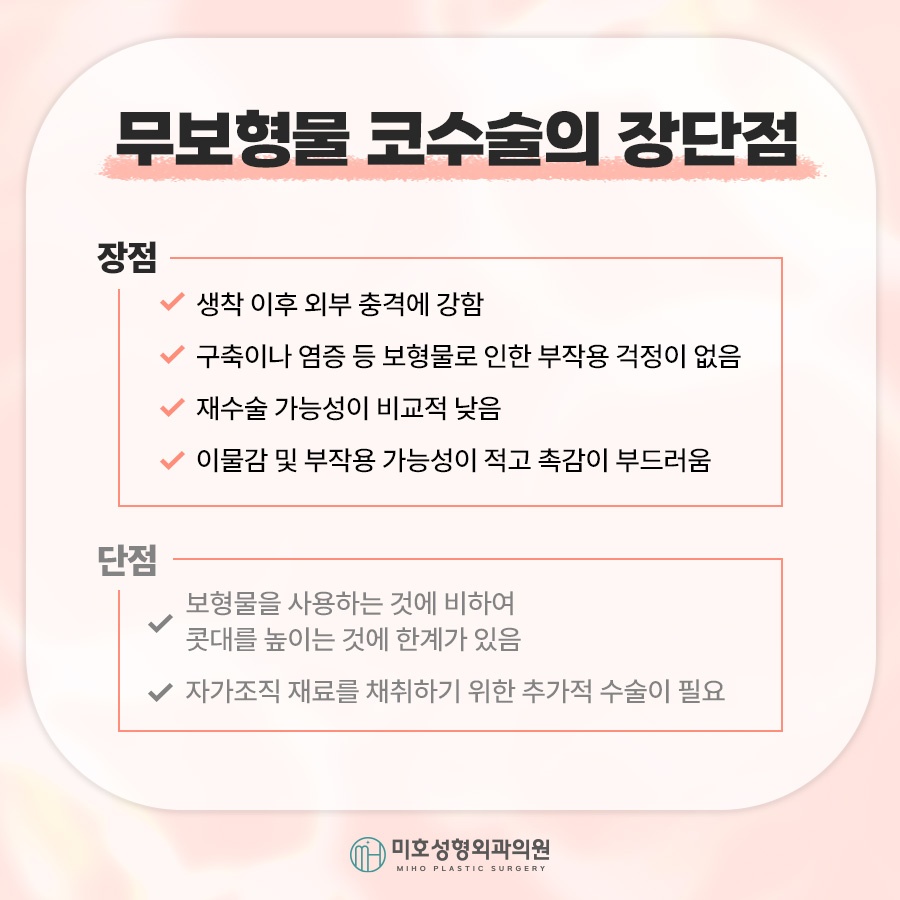
When artificial implants are used,
the skin may become thinner, causing the implant to show through,
or an inflammatory reaction may occur.
By contrast, the risk of visibility and inflammation could be reduced.
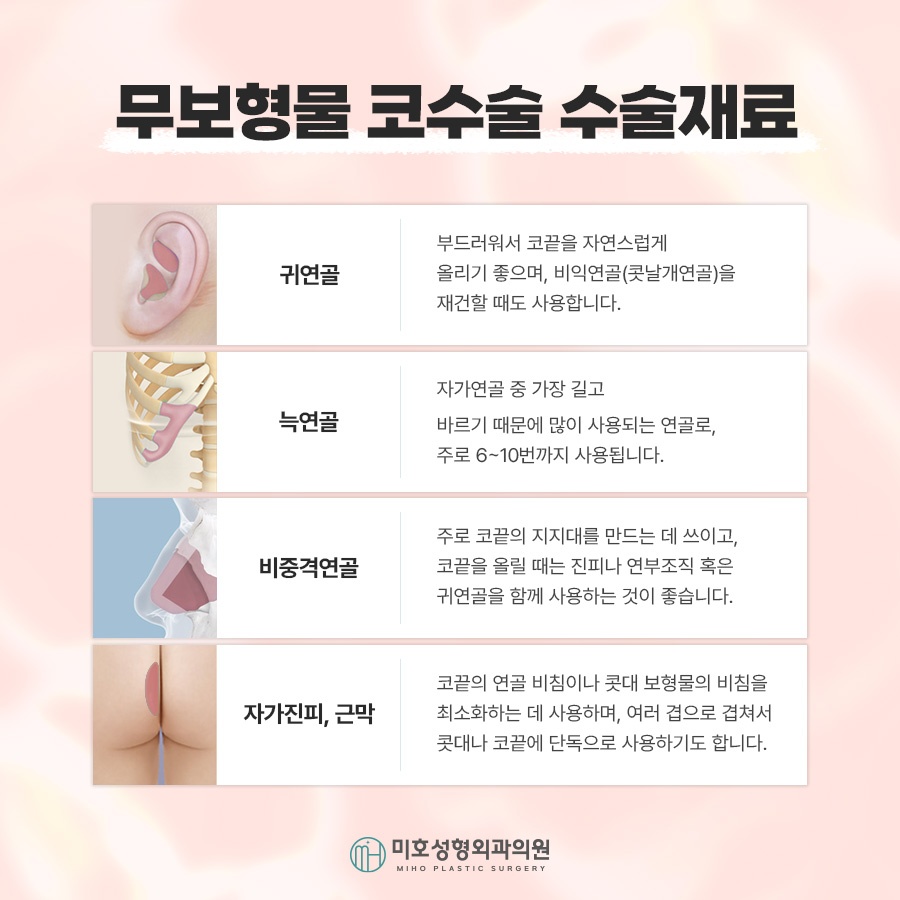
There are several types of autologous cartilage used in nose surgery without implants.
Because each material has different characteristics,
it had to be used appropriately according to the current condition and purpose.
For example, septal cartilage has a wide range of uses
and can be applied broadly from the nasal tip to the bridge.
However, since the amount is limited,
there may not be enough material.
Ear cartilage is specialized for creating curved lines
and was used to adjust the shape of the nasal tip.
Because each tissue has different characteristics
and a different range of applications,
careful consideration was necessary before applying it.
To create a natural and harmonious side profile,
it was necessary to expand the design area
from the forehead to the bridge, nasal tip, and philtrum.
At this time, if rib cartilage, which is the hardest cartilage,
was used to form the bridge,
it could provide sturdy support.
Since it is tissue taken from the patient’s own body,
it was relatively free from immune reactions,
foreign-body reactions, and inflammation.
However, there were cases in which this method could not be applied.
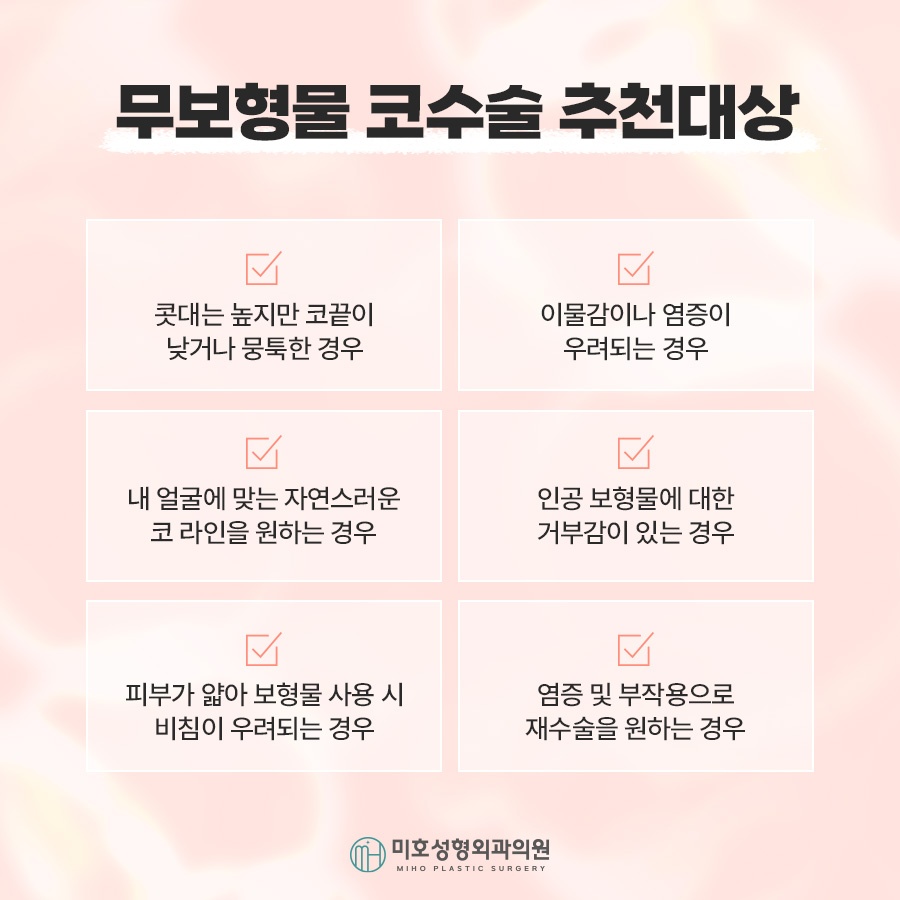
If there was insufficient tissue or the skin was too thick,
an artificial implant had to be used.
In addition, the harvested area needed extra care,
and depending on the situation,
the recovery period could become longer.
If you hastily proceed after only hearing that
the reputation of nose surgery without implants is good,
you may face unexpected situations
and end up with lower satisfaction.
To prevent this, it was advisable to take enough time
to think it through in advance
and receive help step by step.
Medical institutions had to inform patients in advance
about how to care for the area after tissue harvesting
and that temporary pain, swelling, and bruising may occur.
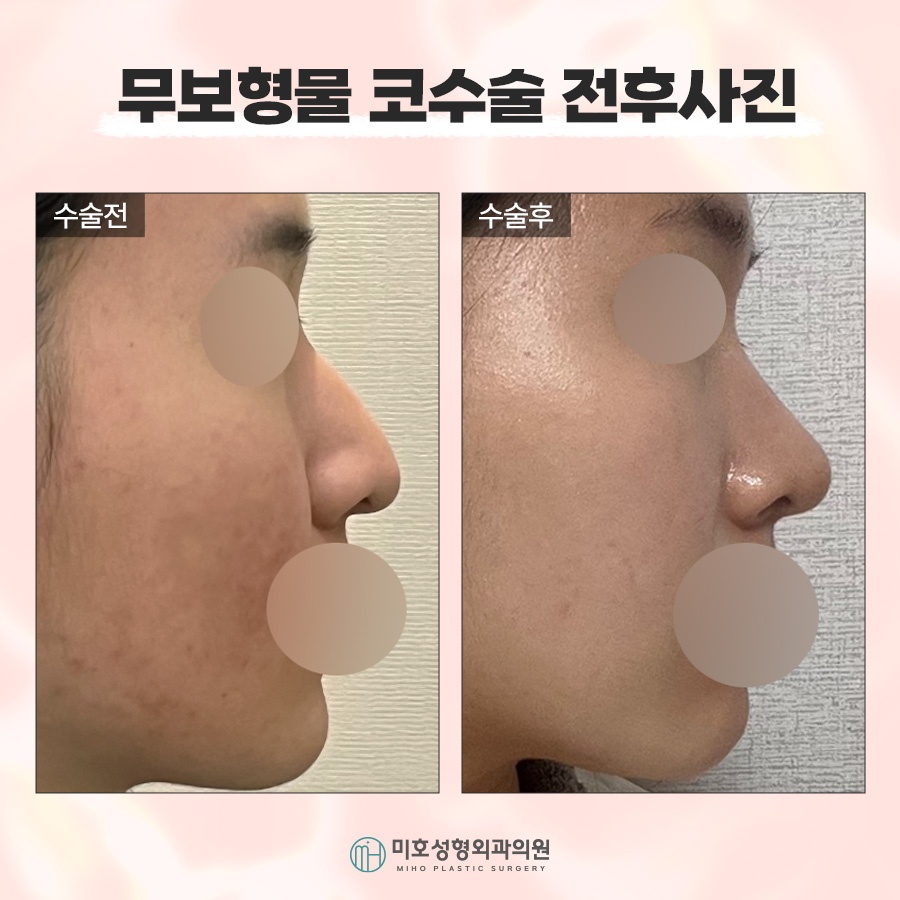
The procedure took about 1 to 2 hours.
If multiple reattempts were needed, it could take longer than this.
From immediately after the procedure up to two weeks,
significant swelling and bruising may occur,
which was a normal reaction.
Pain is also felt in the early stage,
but taking the medication prescribed by the medical institution
according to the instructions could help relieve discomfort.
A common misconception is that if artificial implants are not used,
you can return to daily life more quickly.
If recovery is fast, that may be possible,
but the time of return was not very different from when silicone was used.
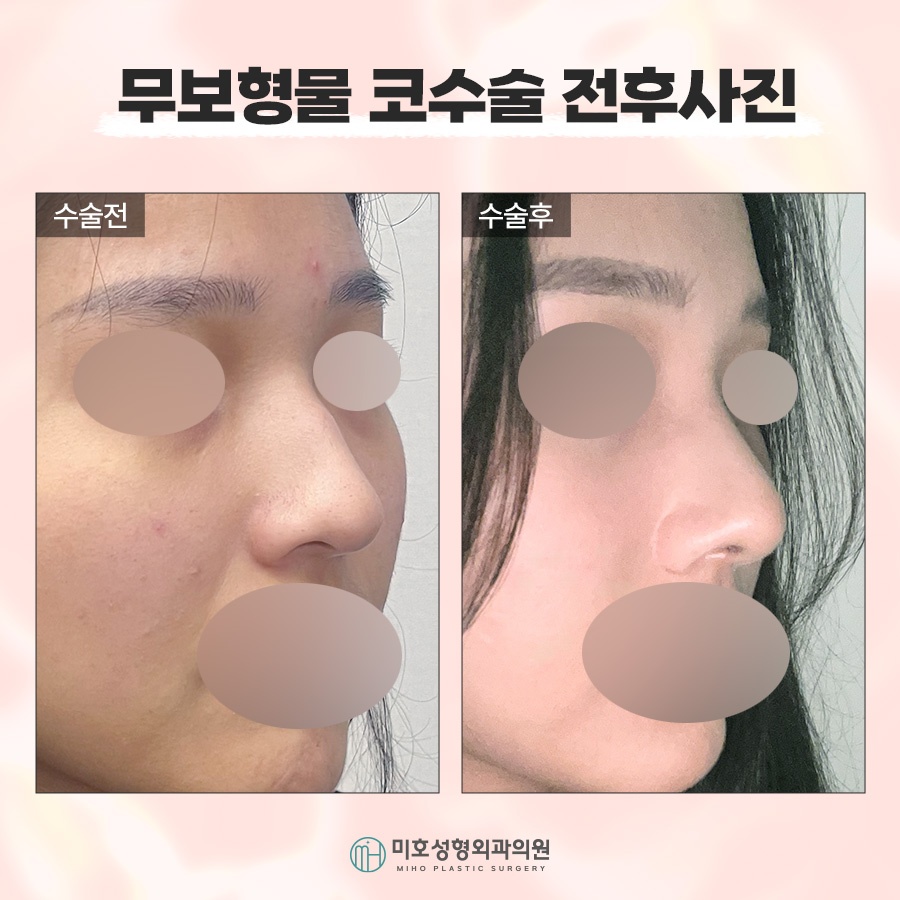
To settle stably after nose surgery without implants,
it was necessary to make efforts at home
and actively use the aftercare program provided by the medical institution.
For one month, alcohol and smoking should be avoided,
and forcefully blowing or picking the nose was prohibited.
Strenuous exercise should be avoided because it can increase pressure inside the nose
and cause impact,
while light walking helped reduce swelling.
Right after the procedure, cold compresses could be applied,
and once the heat sensation subsided, warm compresses could be used.
Wearing glasses was possible after 4 weeks,
and washing the face with water could be done after the stitches were removed.
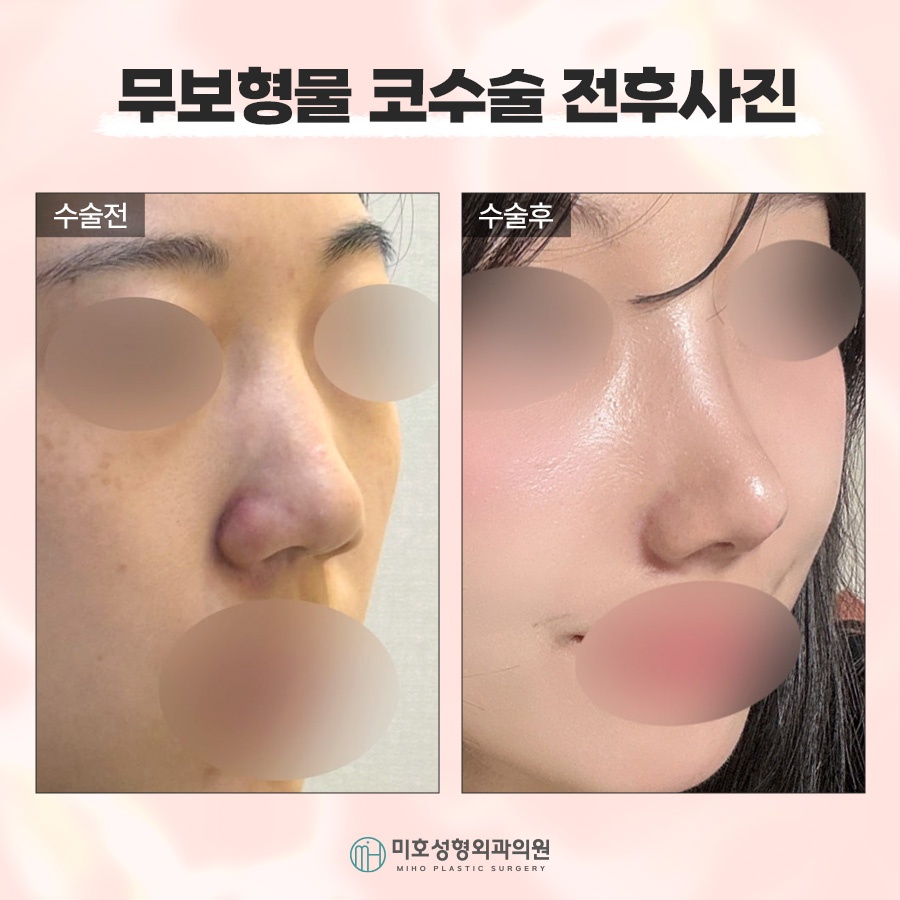
Another point people were curious about, just as much as the procedure itself,
was the cost.
This also varied from person to person.
It depended on the tissue harvesting site and method,
the current condition, and whether an aftercare program was included.
If you had previously tried several times,
the level of difficulty would increase,
which would naturally raise the cost as well.
It was also good to check in advance
whether aftercare was included.
If it was not included,
it was advisable to choose a medical institution that did include it,
if possible.
Beyond that, it was recommended that you make a decision
by comprehensively considering the medical staff’s skill and experience,
the consultation process, and other factors.
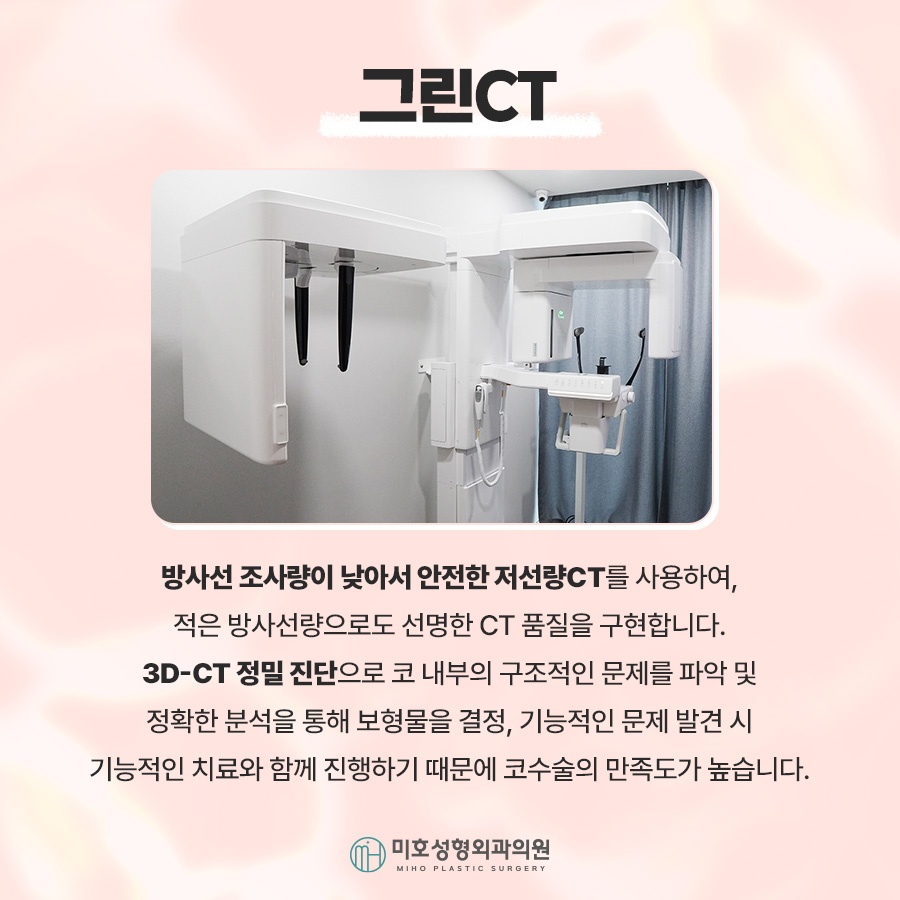
Surprisingly, many people also needed functional reconstruction
due to abnormalities in the internal structure,
so it was necessary to analyze not only the external appearance
but also internal factors in a comprehensive way.
In addition, because each person has different goals,
it was important to present a design that matched their needs.
It was necessary to check carefully whether the analysis was based on each individual’s constitution and structure,
whether a personalized blueprint was proposed rather than a uniform design,
and whether aftercare was also provided stably.
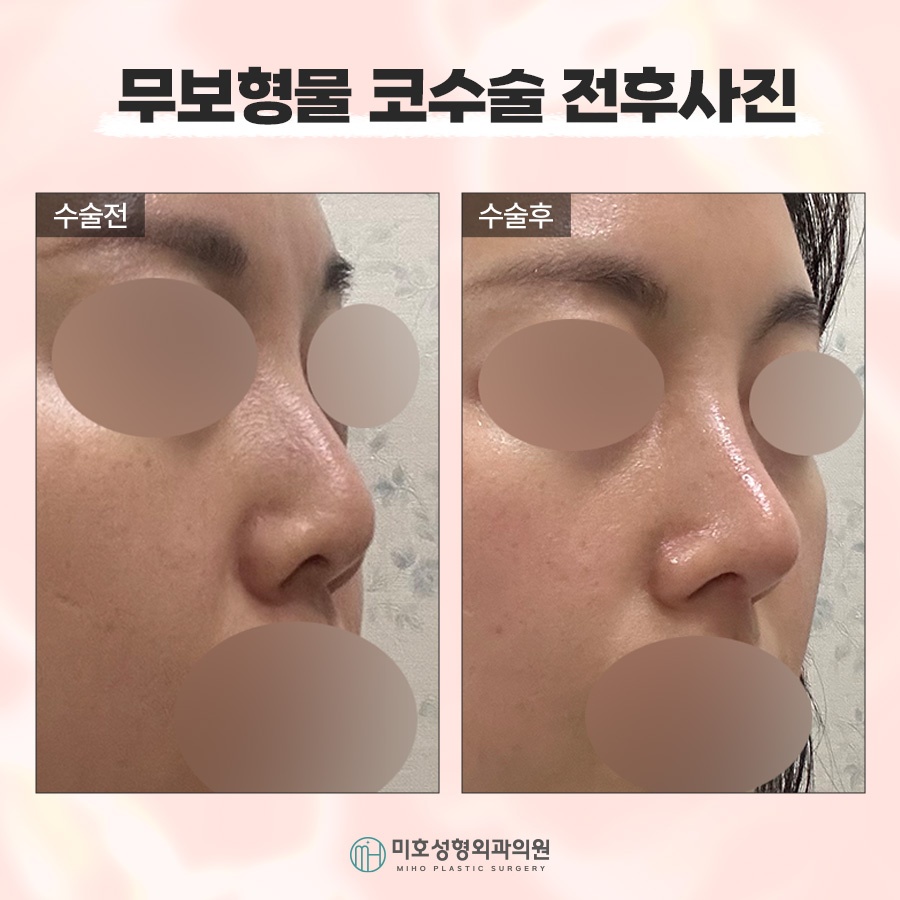
If you feel stressed by a look you do not like every time you look in the mirror
and have even lost confidence,
it was advisable to actively improve that area.
By adjusting the height of the bridge,
the angle of the nasal tip,
and the width of the nostrils,
you could get closer to the appearance you wanted.
In particular, since the nose also serves a functional role,
if there is a defect in that area,
it was necessary to correct it at the same time.
After examining both the outside and the inside,
it was advisable to proceed in a way that could address both at once.
Through nose surgery without implants,
we hoped you could reduce the burden of side effects
and be reborn with harmonious and attractive facial features.


Previous image
Next image