
The eyes are one of the main factors
that determine a person’s impression.
Depending on the overall size, whether there is a double eyelid,
or the length and position of the outer corners,
a person may look gentle or sharp,
and may even be remembered as intense,
regardless of their actual personality.
Of course, they also affect whether someone looks youthful or aged.
Everyone wants to look a little younger
and more lively.
This desire can also be seen in
recent makeup trends.
The aegyo-sal created with
bright-colored glitter is one example.
If you want a more natural three-dimensional look,
under-eye fat grafting is also worth considering.

In particular, if there is little orbital fat
or the area below the eyeliner appears hollow
due to age-related volume loss,
it can easily look like dark circles.
This phenomenon is common not only in older adults
but also among younger people.
It can also occur when various anatomical factors
such as ligament structure or skin thickness
work together in combination.
Therefore, an accurate diagnosis of the cause
must come first, of course.
Under-eye fat grafting is useful when hollowing of the lower eyelid occurs
beneath the orbicularis oculi muscle
due to aging of the orbital septum,
and it also helps improve deformation of the tear trough
caused by aging and the resulting hollowing.
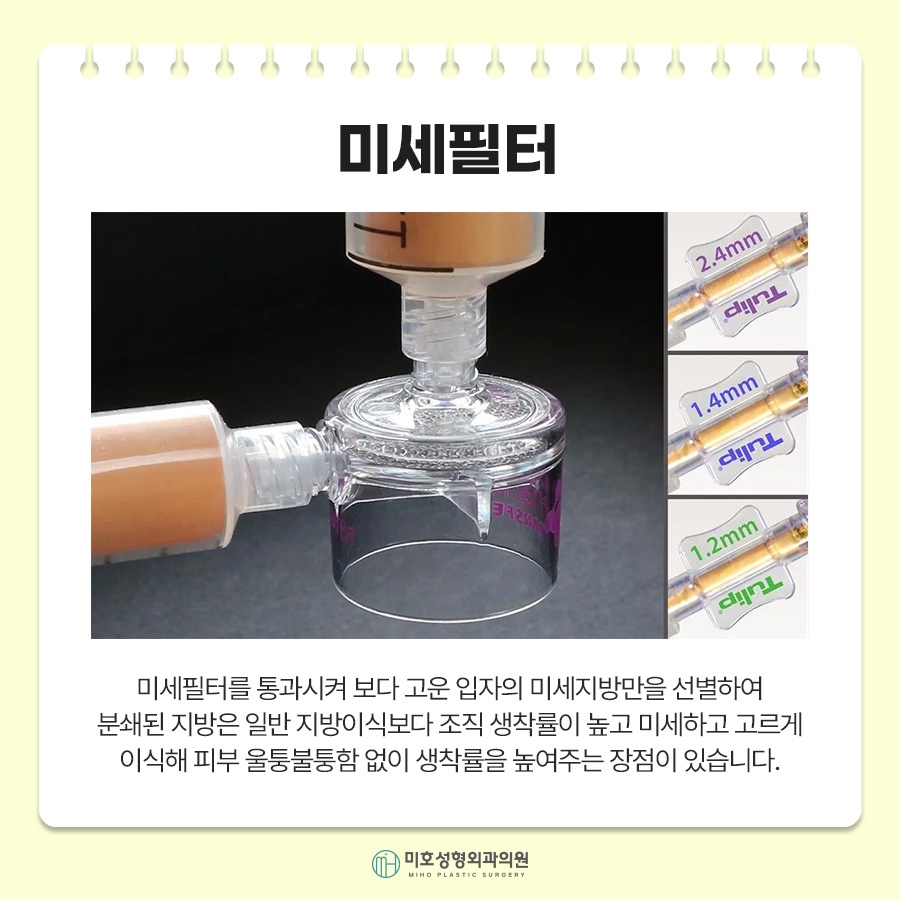
The tear trough is located
below the eye on the inner side,
and is fixed in place by ligaments connecting
from the bone to the skin layer.
However, as people age, the other tissues,
except for the ligaments,
undergo aging and change shape.
These changes can cause the skin to look bulged
or hollow, creating a tired or aged appearance.
In other words,
under-eye fat grafting is a suitable option
when the goal is to create a brighter, more refreshed look
by adding appropriate volume beneath the eyelid.
That said, natural aging
is not the only prerequisite.

Even relatively young adults
often worry about dark circles.
In many cases, this is due to a mildly underdeveloped maxilla.
If the soft tissue in the front cheek is also minimal,
even fine wrinkles under the eyes or slight skin aging
can lead others to say you look older than you are.
Dark circles also become more noticeable.
At such times, the concern can be addressed
by restoring volume.
The same applies when facial fat decreases
or when structural changes occur
due to the passage of time.

In fact, there are not just one or two factors
that cause hollowing under the eyes.
Sometimes it is caused by unusually protruding fat
or the bony structure that forms the face,
and sometimes the problem is the shadow created
as the area between the lower eyelid and the cheek becomes deeper.
Therefore, there are also many improvement methods
that can address this.
Orbital fat repositioning and fillers
are representative examples.
Among them, fillers have the advantage
of producing a relatively quick visible change.
However, because skin color changes, granulomas,
or nodules caused by the cross-linking agent may occur,
an accurate diagnosis and procedure are necessary.
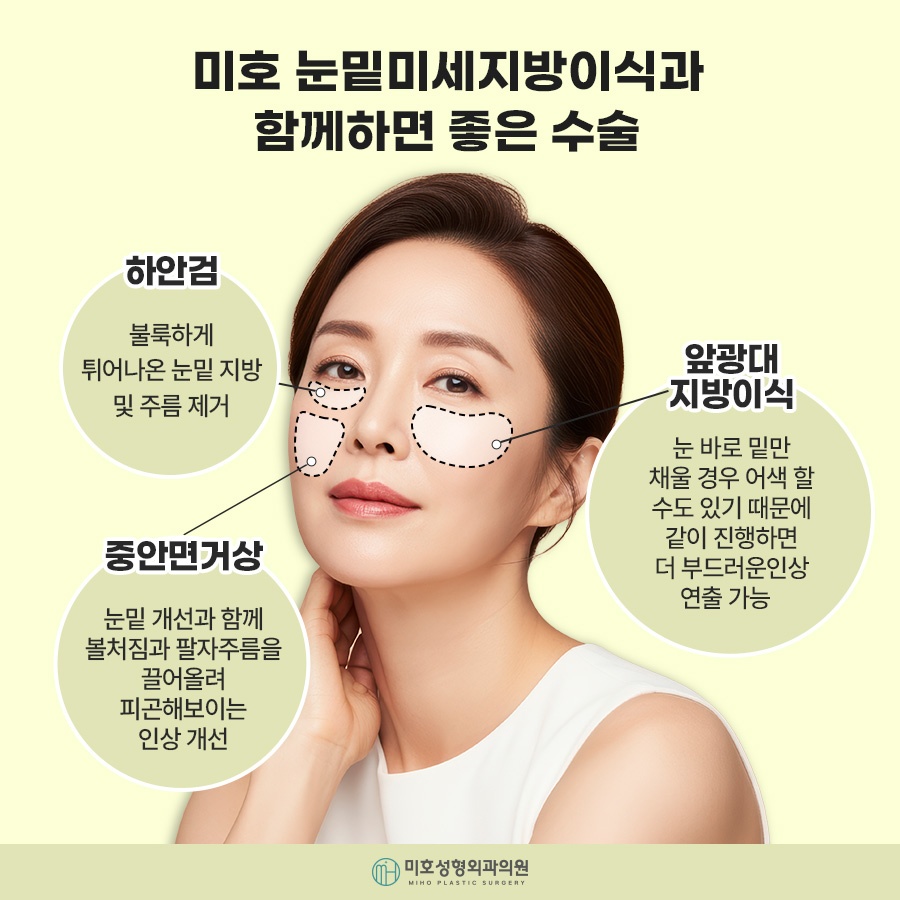
If fine wrinkles are caused by thinning skin
and reduced elasticity,
skin Botox or skin boosters are recommended
because they can bring about change
through a relatively simple procedure.
They can improve fine wrinkles
and create rich volume in the skin layer.
If the degree of sagging is mild,
lifting treatments such as threads,
radiofrequency, and ultrasound are also useful.
Under-eye fat grafting is evaluated positively
in terms of durability and satisfaction
because it focuses on more fundamental causes.
It is especially suitable when the area below the eyes
appears hollow compared with the infraorbital rim of the maxilla.
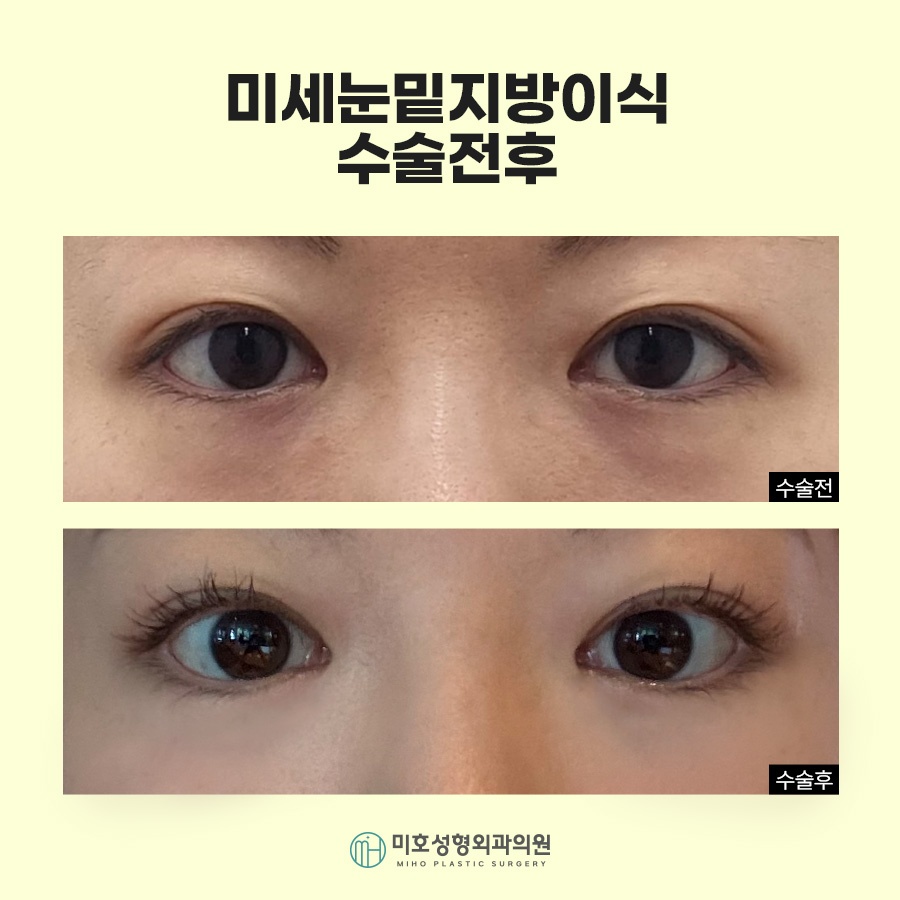
These lower eyelid procedures are often preferred
by people in their middle age and older,
when skin elasticity has decreased.
After all, removing stretched and sagging areas
makes it possible to achieve a flatter skin appearance than before.
What matters most is that the characteristics of each person’s skin,
often called the texture, and the properties of the various tissues
must be analyzed first.
Because the treatment methods that need to be applied to each layer differ,
and habits and environmental factors cannot be ignored,
a comprehensive consideration of all relevant factors is necessary.
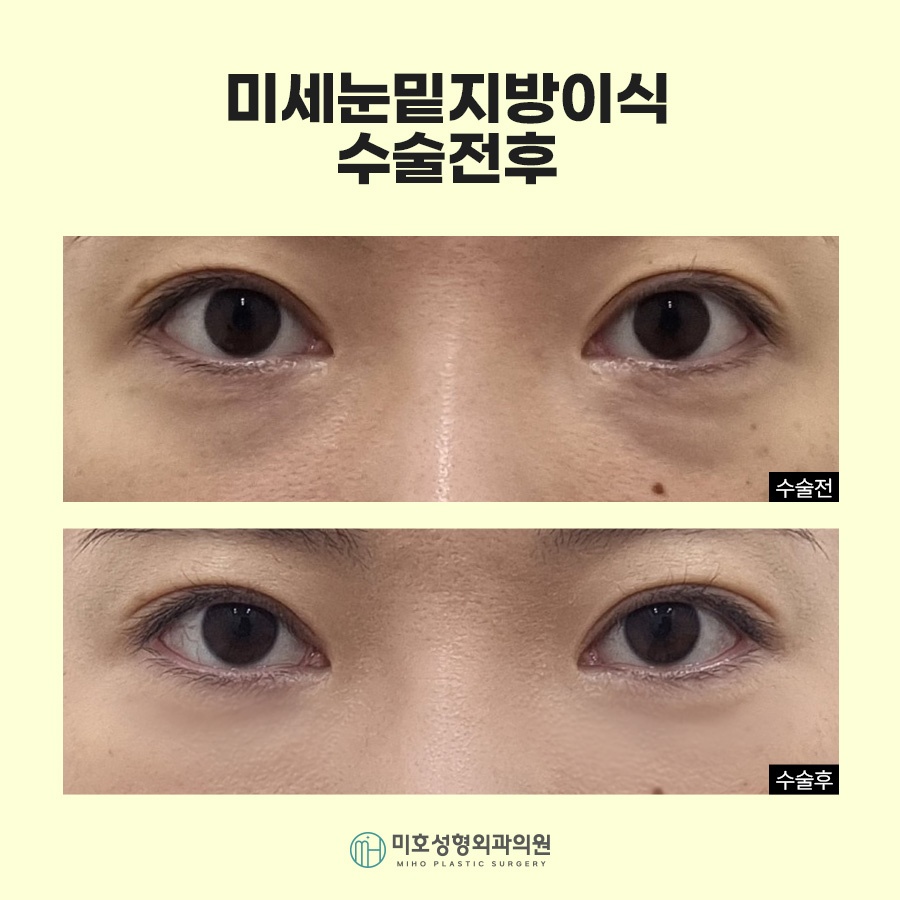
When these conditions are met,
under-eye fat grafting does more than simply supplement lost volume;
it also helps brighten a dull complexion.
As the loose and weakened orbital septum is strengthened,
the contours and shadows caused by sagging structures improve,
making the entire face look brighter.
To achieve this, a comprehensive analysis is needed,
covering the volume under the eyes,
the degree of sagging, and the condition of the eyelids.
In addition, the previously mentioned deformation of the tear trough,
the degree of maxillary development,
and the soft tissue of the midface
must also be included among the preliminary conditions to consider.
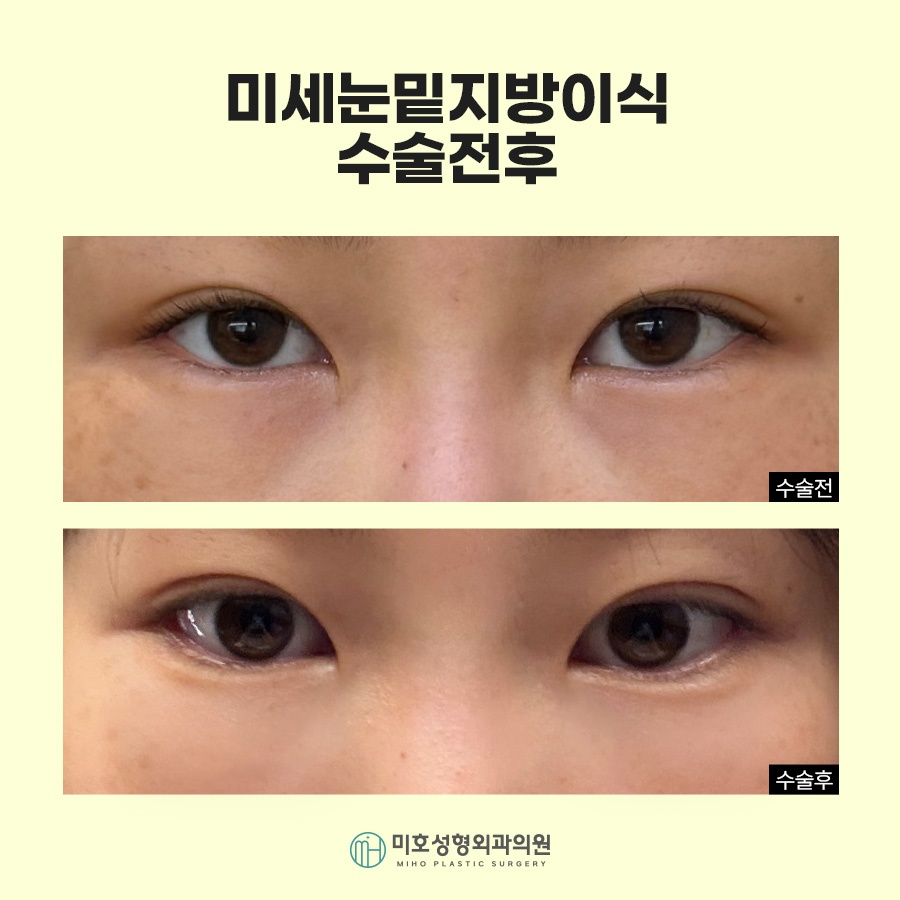
Among these, the tear trough is an anatomically
easy-to-hollow structure because it is the area where ligaments pass through.
As a result, protrusion and depression can appear together in each area,
making an appropriate corrective method essential.
If treatment is limited to simply removing the protruding part,
it becomes difficult to achieve a natural, clear eye shape
and the positive result of looking younger.
In addition, a precise incision must be made
in the inner conjunctiva
to achieve a natural result that looks like your own eyes.
This requires extensive experience, accurate judgment,
and highly refined surgical technique.
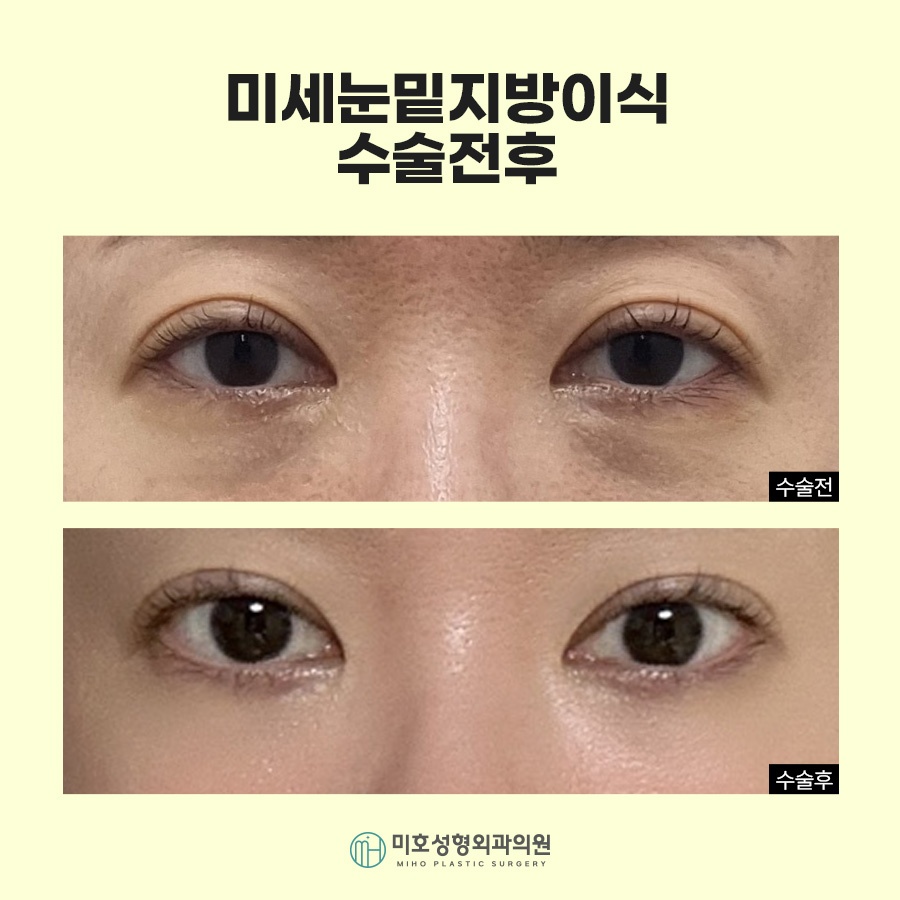
Public preference for a youthful look
is based on a fundamental desire for beauty:
to look younger and more attractive.
At the same time, everyone wants to see the look they want
as quickly as possible.
Under-eye fat grafting is widely preferred
based on these needs.
If you want a natural eye area that feels like a definite change
while still harmonizing with your existing appearance,
please remember that it is essential to accurately understand
your condition and type through precise structural analysis
and sufficient consultation based on that analysis,
and then find the appropriate improvement method
and care plan.



Previous image
Next image