
The nose, which is responsible for the center of the face,
changes one’s impression depending on its shape,
so even a small change can greatly improve
the atmosphere one already has.
In particular, the alar rims influence one’s impression
just as much as the nasal bridge, and depending on
the degree of sagging, the face can look different.
At this time, if an alar reduction procedure is performed
to lift the sagging line upward, it creates a more vibrant image
than before. The issue is the ratio according to the shape
of the alar contour, and because it differs from person to person,
balancing it so it does not look awkward is the most important part.

Alar reduction physically lifts the alar area, and if the ratio
is off or the procedure is done excessively, it can look unnatural
and damage the appearance.
The biggest concern is that if it is lifted too much,
the nostrils may show excessively like a upturned nose,
or the harmony with the columella may be disrupted,
causing the three-dimensional effect to disappear.
If it is pushed forward simply because it looks too wide aesthetically,
the curve will break and it can feel blunt and artificial.
Rather than removing tissue by the desired amount,
the procedure should be performed after precisely calculating
so that it matches the surrounding areas.

Some people choose incision based only on the fact that the alar
is thick, without considering the overall nose shape and form.
This can reduce the size, but because it can lead to unnatural results,
it is better to take a more precise approach that focuses on balance
rather than on how much tissue is removed.
If only the inner side is incised and pulled inward,
the nasal wall may appear stretched instead,
and if only the outer side is treated, it can create a straight-line
shape and a sharper impression.
In such cases, combining alar reduction helps align the overall ratio
while considering the tip height, the position of the alar rims,
and even the width from multiple angles.
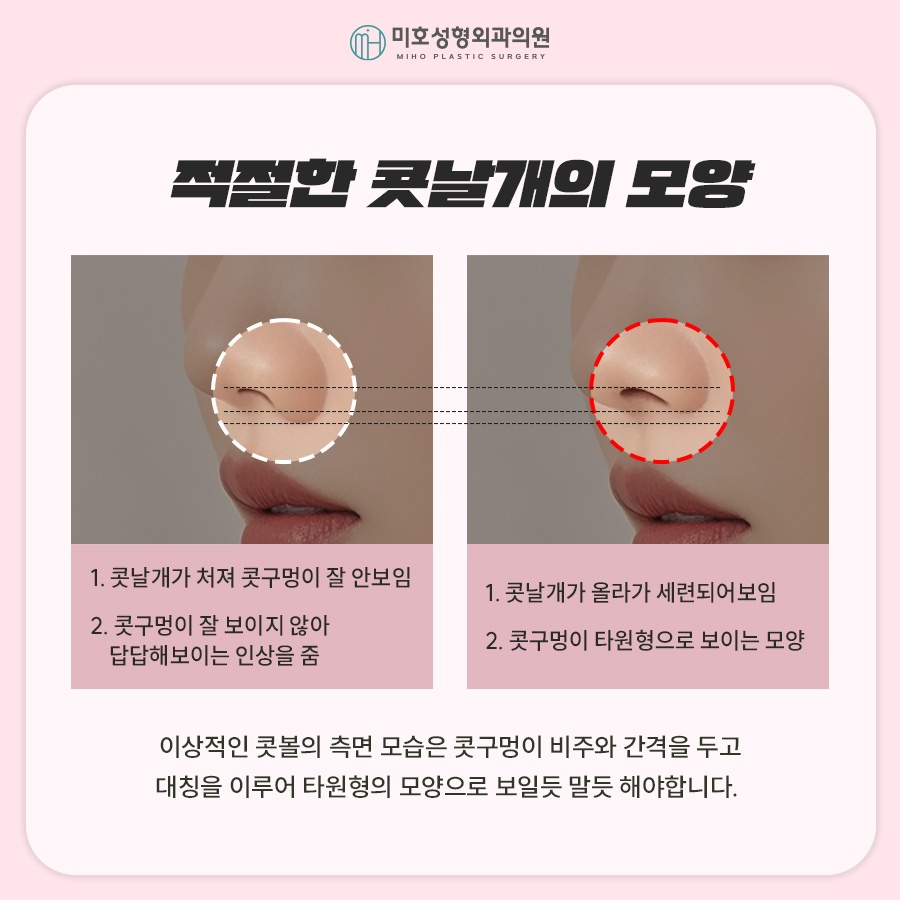
Even aside from aesthetic concerns,
aging can gradually reduce elasticity and cause the alar rims to sag.
As both ends drop downward, the nostrils become less visible,
which gives a stuffy impression.
At this time, lifting them upward and precisely analyzing the distance
from the columella to determine the position can create a much more refined image.
It can be said to be not just a correction of angle,
but a process that restores the overall firmness of the face.
If you feel a sense of stuffiness, it may be worth considering.
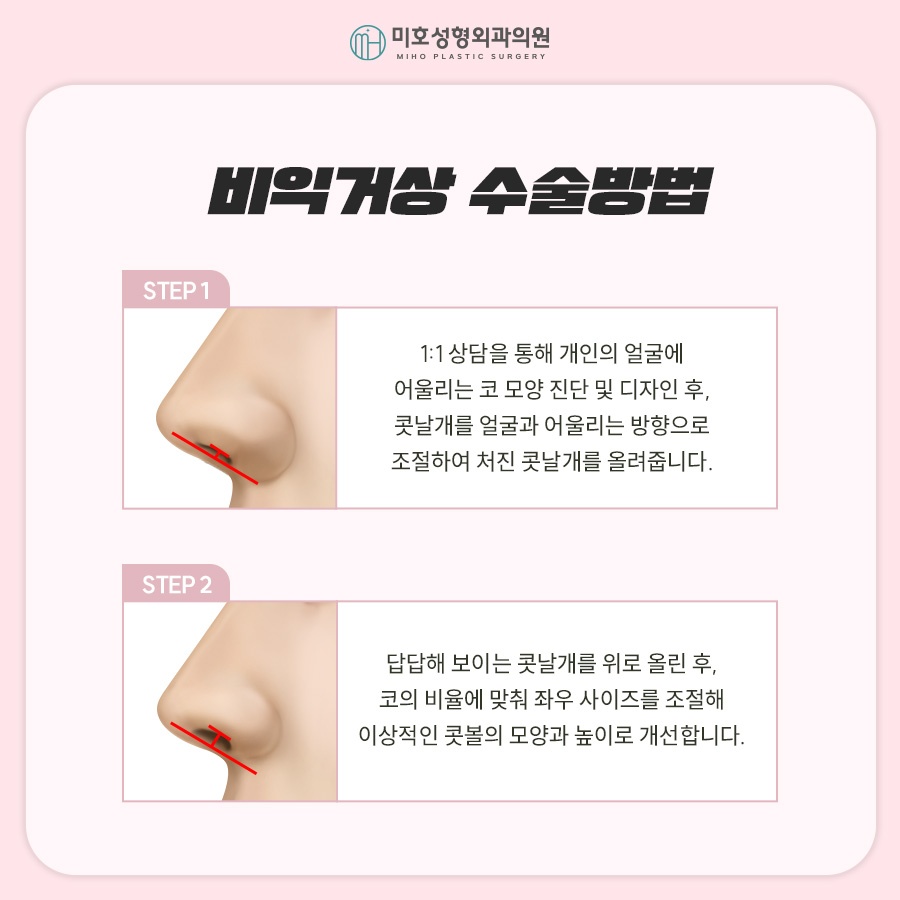
This method can also be chosen in cases where asymmetry needs correction.
By comparing both sides and making a slightly larger incision on the side
with more severe sagging, the ratio is adjusted and fixed in place.
How much the angle should be raised is determined differently for each person,
so the procedure needs to be applied according to the situation.
First, through a 1:1 consultation,
the desired areas are identified, and in addition,
changes to the alar shape or form may be suggested
to better suit the face.
The procedure is carried out after precise design
so that a natural appearance can be achieved.
One of the major advantages of alar reduction is that it can produce
a sharp aesthetic result without separate artificial implants.
Even without inserting an implant such as silicone,
careful ratio correction alone can create a refined impression.
If the nasal tip also needs to be raised, autologous cartilage is used
to complete the result naturally while avoiding an artificial look.
Because tissue from one’s own body is used, there is less sense of resistance
than when silicone is inserted, and it integrates well with the surrounding tissue,
providing support.
It also helps prevent sagging that can occur over time.
If a problem is diagnosed based only on visual inspection,
it becomes harder to identify the issue.
You may think it will end simply by lifting the sagging area upward,
but depending on the situation, structural problems can arise.
Checking whether there are functional issues is also necessary
to improve satisfaction.
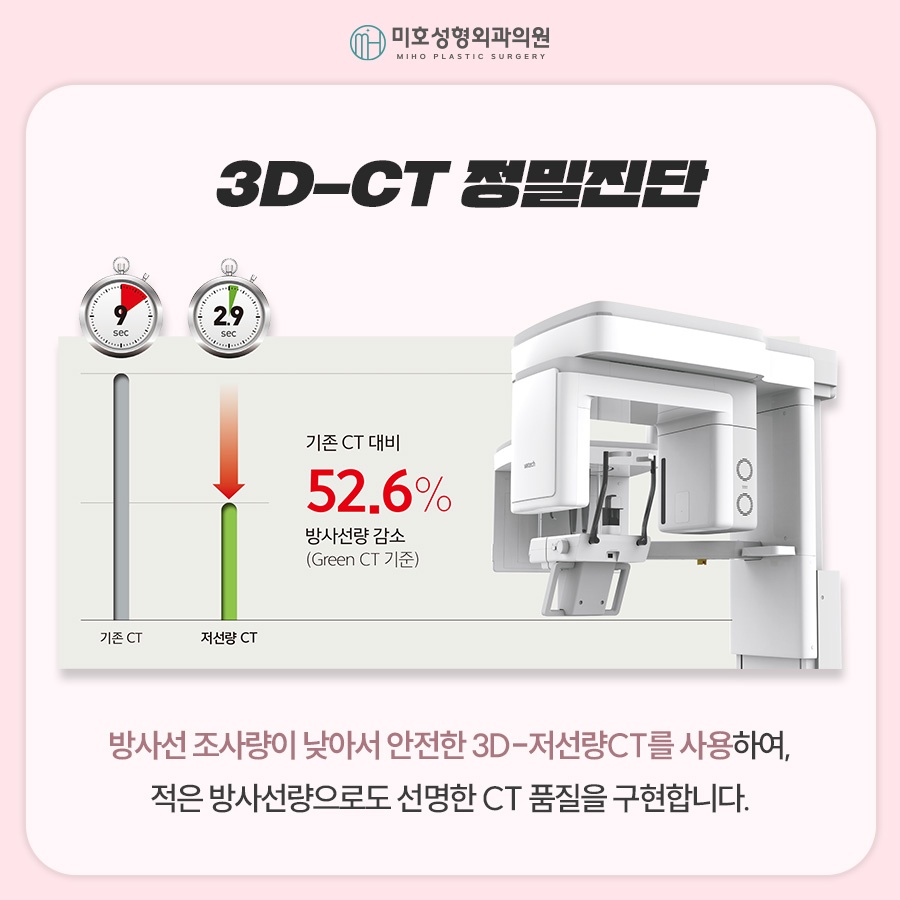
For this reason, our clinic performs a detailed diagnosis using 3D CT.
It is a method that allows clear confirmation without worrying
about a high radiation dose.
Although the aesthetic aspect is important,
function cannot be ignored either, so all issues are checked before proceeding.
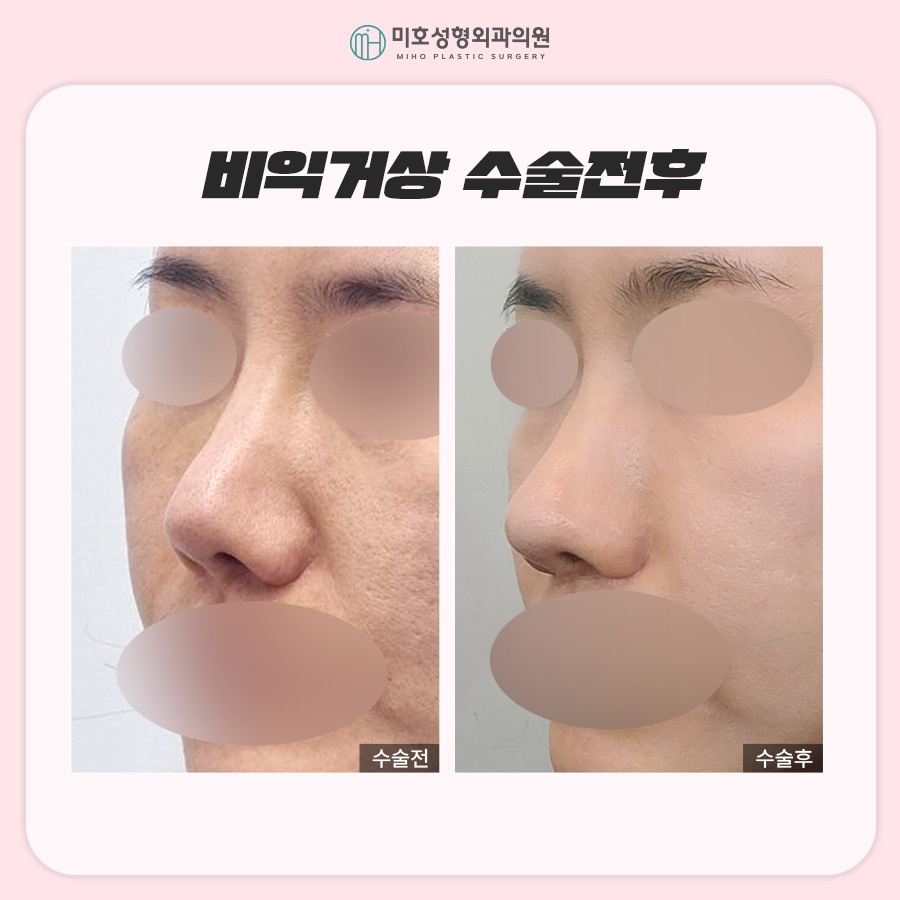
There are also cases where the original appearance returns quickly after alar reduction.
This is mostly because only the skin was simply incised,
or the surrounding tissue was not sufficiently considered,
which results in insufficient support.
Even if it appears pulled immediately after the procedure,
it can return to its original position due to gravity and its own elasticity.
To prevent this, the tissue must be firmly fixed down to the fascial layer
to secure permanent support.
It should not shift even when bumped or pressed during daily life.
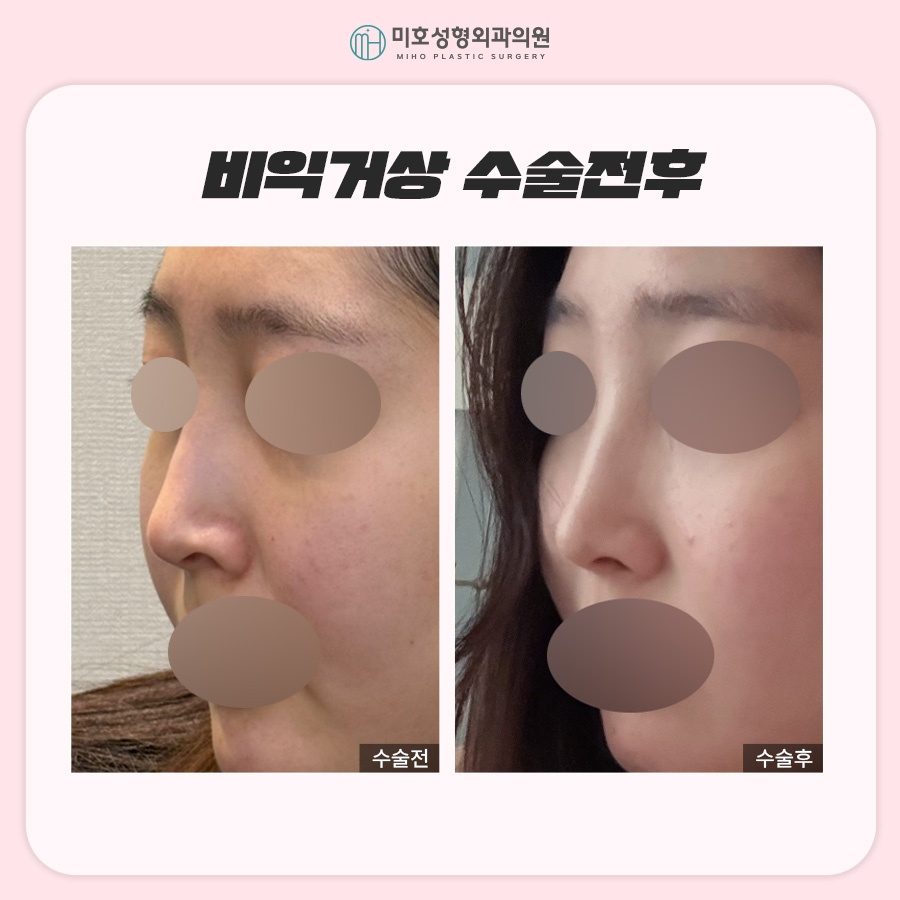
When fixed this firmly,
it can provide not only external beauty
but also psychological comfort.
There is no need to worry about whether a mark will be left behind
or whether it will deform over time.
Anyone can make something look good,
but how long it lasts is a different matter.
The precision involved in finding a ratio that suits the face
depends on skill level.
Because everyone’s aesthetic standards are different,
it is important to make careful suggestions so that the desired appeal can be found
and the result leads to the right outcome.
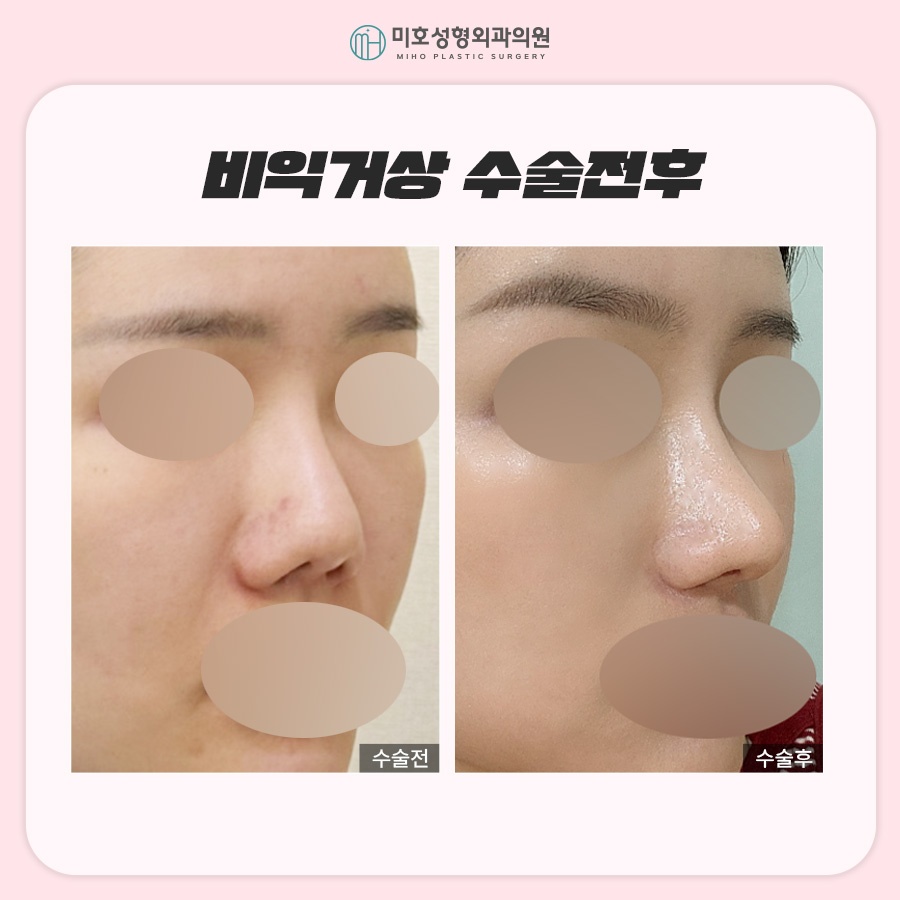
Because this is a procedure that involves incising the nose,
breathing may feel more difficult than usual for about two days.
For about three days, the swelling may be visible,
which can make you reluctant to go outside.
Although uncomfortable, using cold compresses to help control bruising and swelling
can reduce them faster than expected and make daily life possible again.
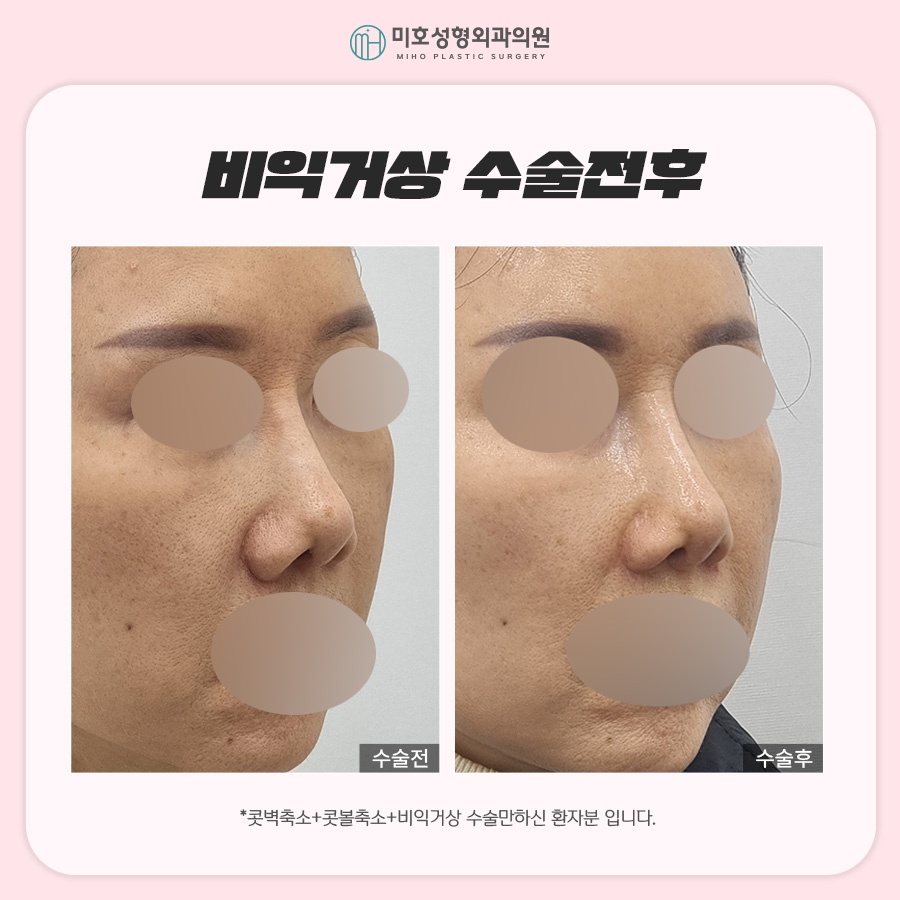
After a few days, you may be able to confirm a result that looks
much fresher and more refined than before alar reduction.
However, this does not apply to everyone, so please proceed carefully
after a thorough consultation to determine which method may suit your face best.



Previous image
Next image