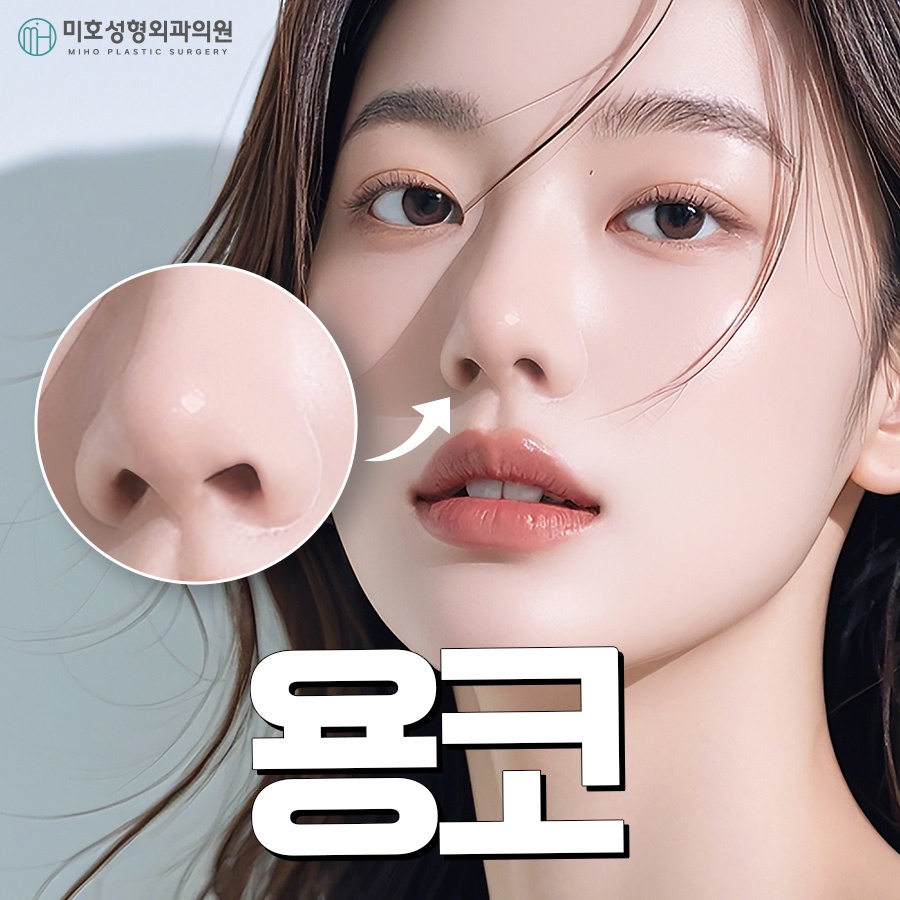
The shape of the nose has a major
impact on one’s appearance, so many people
used all kinds of methods to create
a more refined line.
If there was a burden about excision or
if they wanted quick correction,
fillers could be used.
However, it was not a method
that applied to every case.
A typical example was what is often
called a bulbous nose.
This was not a case of a low nasal bridge
or a weak nasal tip, but rather a shape
caused by excessively developed cartilage,
so it had to be improved through
bulbous nose surgery.
Because it was not caused by a lack of
volume or a low height, it was difficult
to create the desired shape with fillers
or threads.
Before learning about bulbous nose surgery,
it was important to closely understand
the characteristics of this shape.
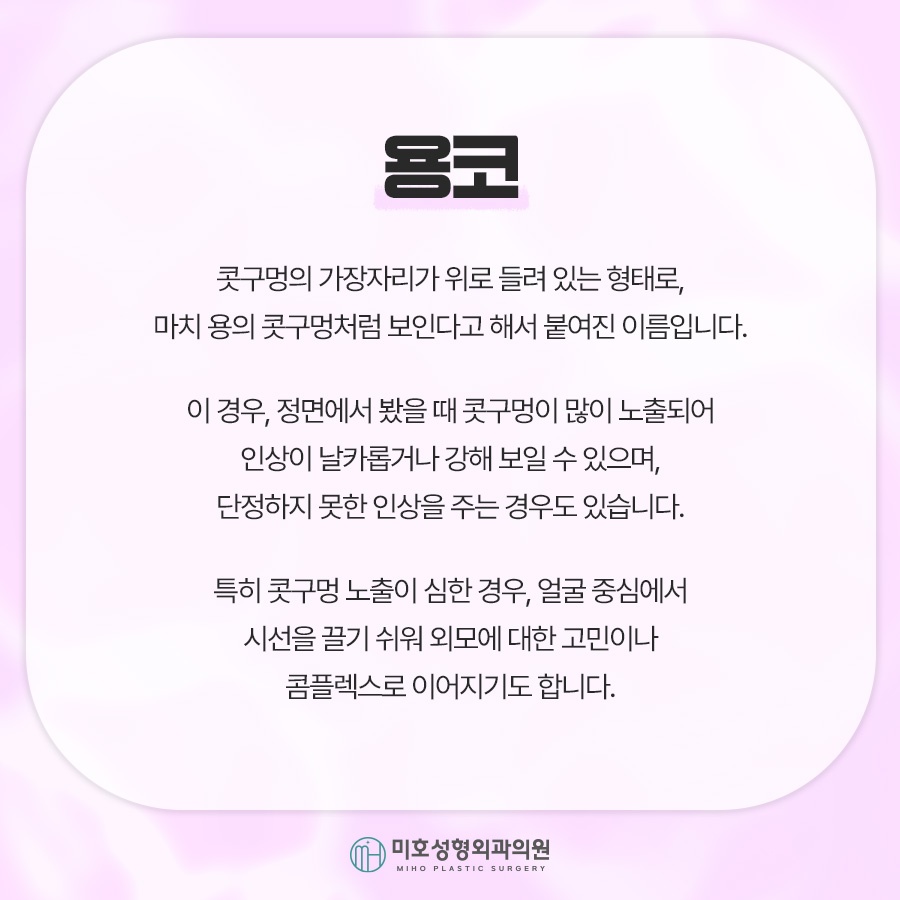
A bulbous nose had a high nasal bridge,
a pointed tip, and nostrils that rose upward.
It could be seen as similar to a hook nose.
When the nasal tip or alar cartilage was
congenitally overdeveloped and structural
tension occurred, this shape appeared.
Or, when the bridge was raised too high
during a previous procedure,
it could change into a hook-nose shape.
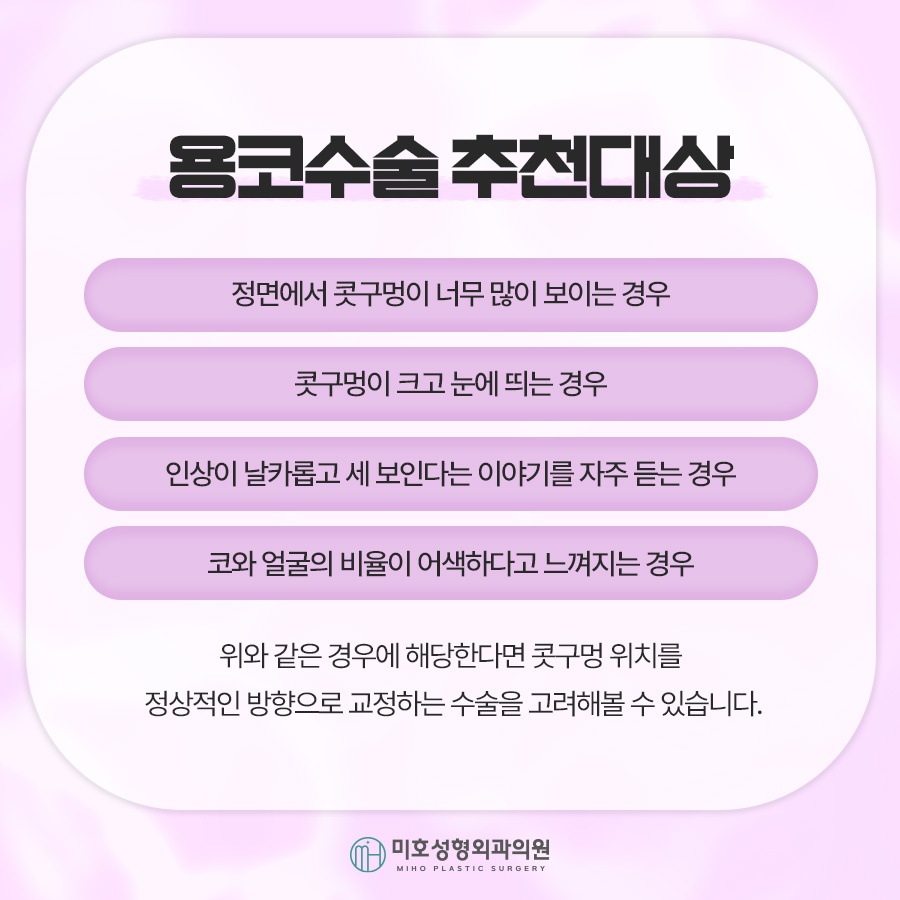
A visual characteristic of a bulbous nose
was that when viewed from the front,
the nostrils stood out prominently.
On the other hand, the nasal tip pointed
downward, making it look like a hook nose
and causing the midface to appear longer.
From the side as well, the nose could
look long, leading people to say it looked
like Pinocchio.
When the midface is long, a person can
appear older than their actual age and
may give off a stronger impression,
which became a concern.
When smiling, the nostrils could expand
sideways, making the face look awkward.
If an implant had been inserted,
the likelihood of visible implant outlines
increased over time,
so correction through bulbous nose surgery
was needed.
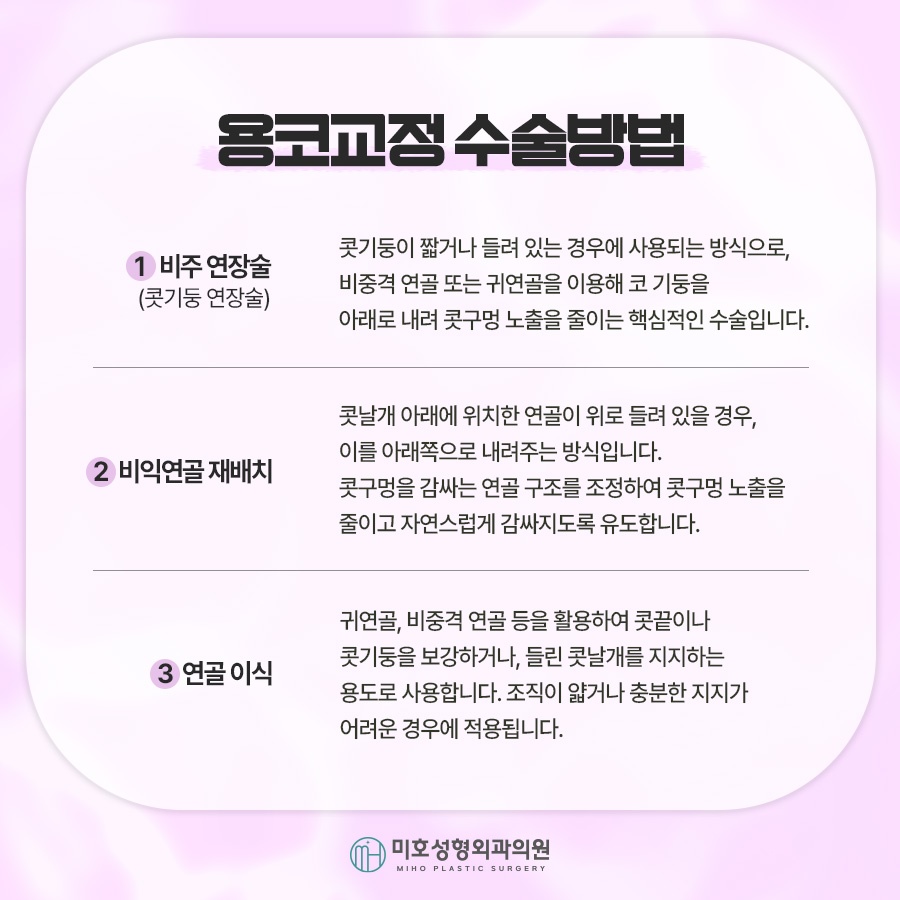
The way this shape was corrected
varied slightly from person to person.
To explain based on commonly used
methods, the core of correction was to
reduce the columella and lower the alar
wings.
If the columella, that is, the lower part
of the nose, is short, the mouth can
look protruded and the face can appear
flat, so many people try columella lowering.
This case was the opposite.
A long columella instead made the midface
look longer and gave the nose a more
arrow-like appearance, so it needed to be
appropriately reduced.
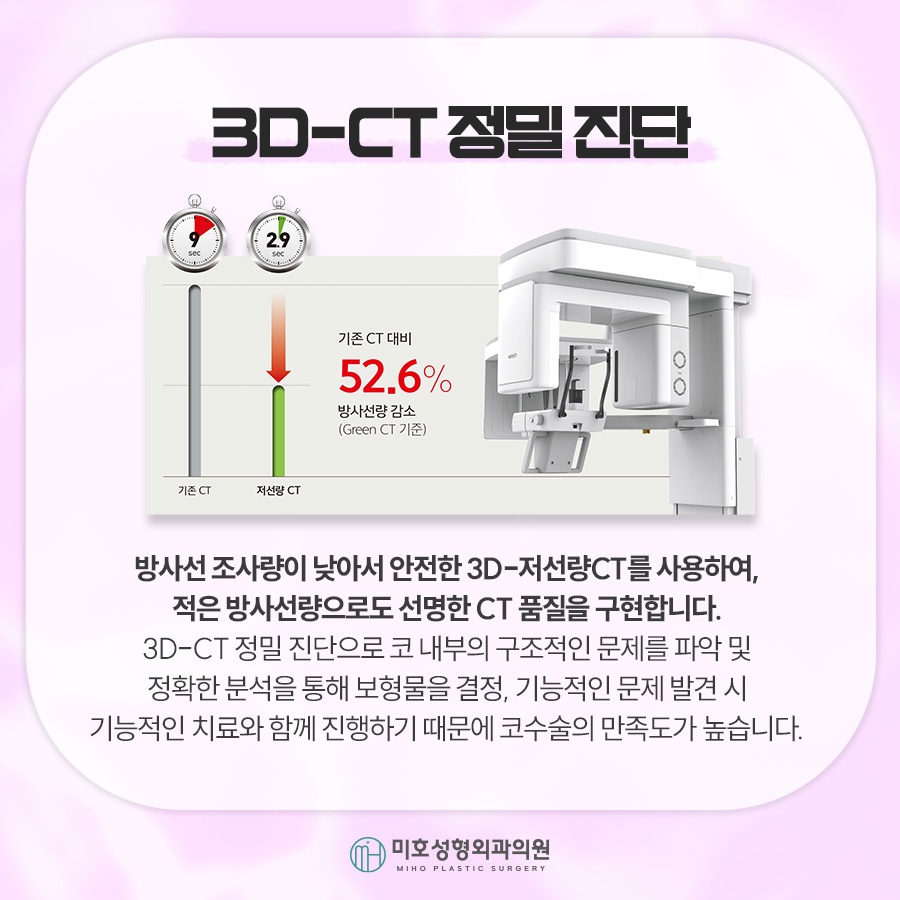
Before bulbous nose surgery, it was
important to clearly understand the
patient’s skin thickness and the degree
of cartilage development.
This was because reinforcement with
functional stability in mind was necessary
for satisfaction with the result to increase.
The length of the columella needed to be
adjusted to match the proportions of the
facial features.
If the procedure focused only on one area
without considering the whole,
the length could become excessively short
or the height too low.
Since concerns could grow from a bulbous
nose to an upturned nose or a hook nose,
the supporting structure had to be secured
enough while correcting it within a proper range.
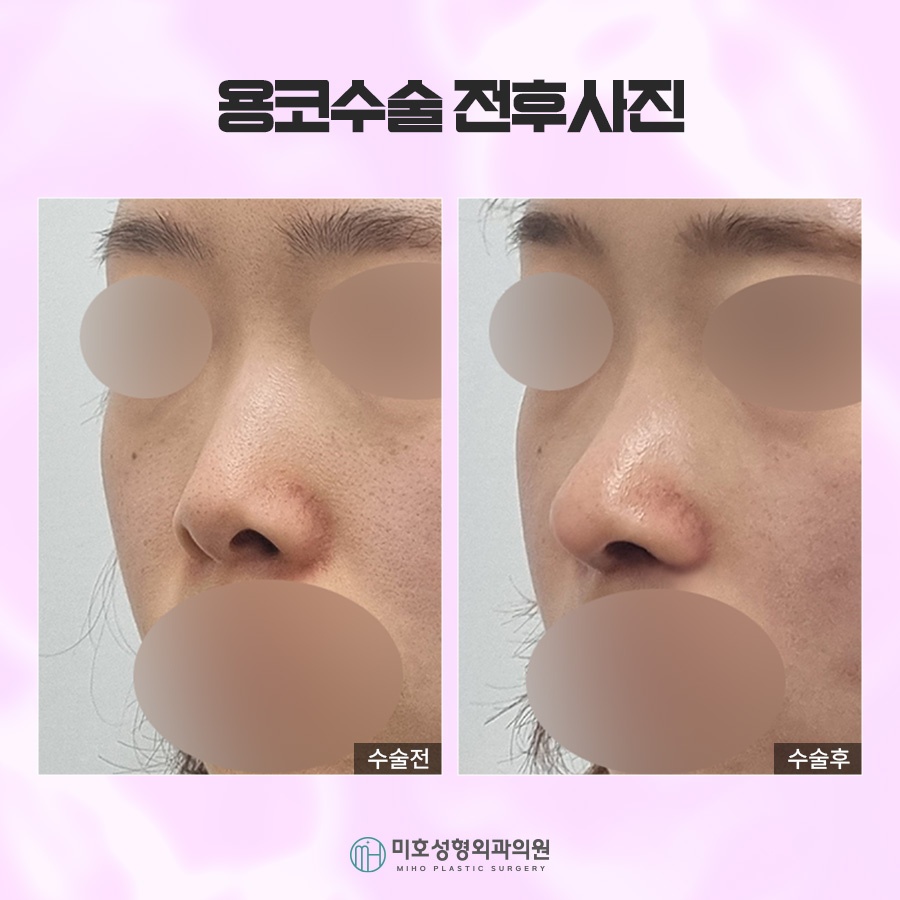
Many people gained visual confidence
through this solution.
That was because they could move away from
a strong and masculine image and
transform into a softer, more harmonious face.
With both the front and side shapes in
balance, they could feel confident from
any angle.
By properly adjusting cartilage tension,
it was possible to prevent visibility,
shape distortion, and recurrence.
If functional aspects were also improved,
ENT-related conditions such as nasal
congestion or runny nose could also be
addressed.
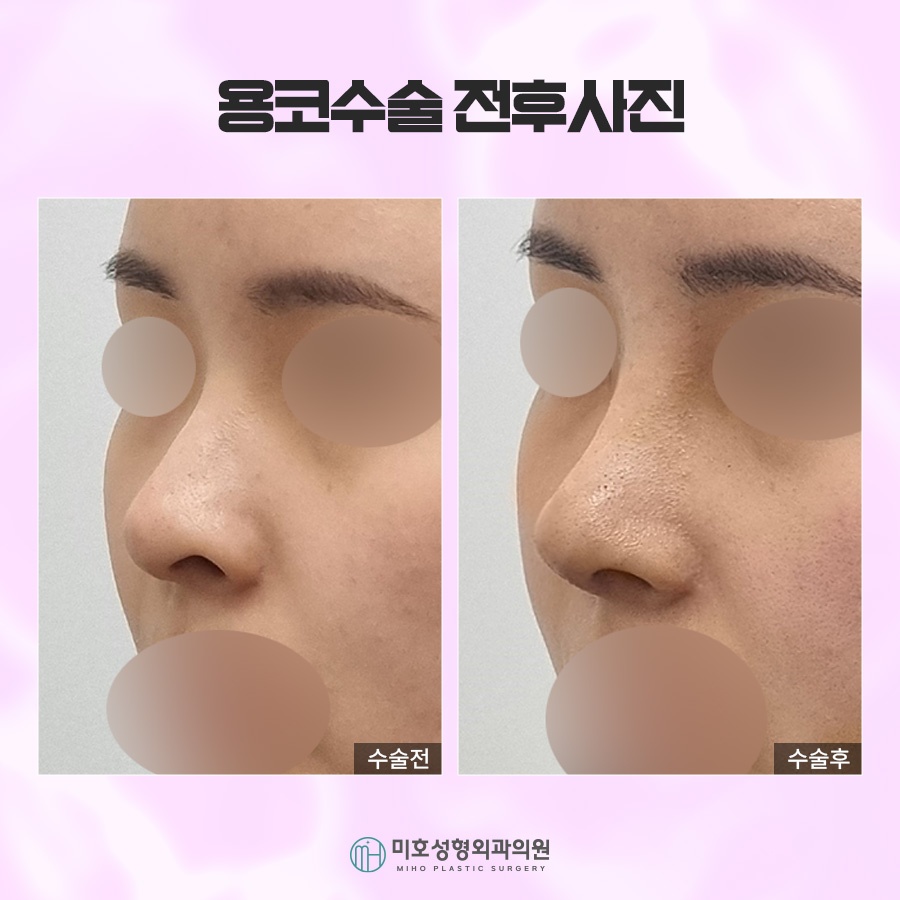
In some cases, bulbous nose surgery was
also performed when the cartilage was small.
If the cartilage was small from birth,
the skin covering it could also be lacking
in amount.
In such cases, skin was grafted to reinforce
the mucosa.
Since multiple techniques had to be used,
such as processing and inserting cartilage,
the difficulty naturally increased.
If, during consultation at a medical
institution, you often heard that the case
was complicated, then the more reason you
had to visit medical staff with abundant
experience and know-how.
That was because this would help the
grafted area remain well maintained and
prevent another attempt.
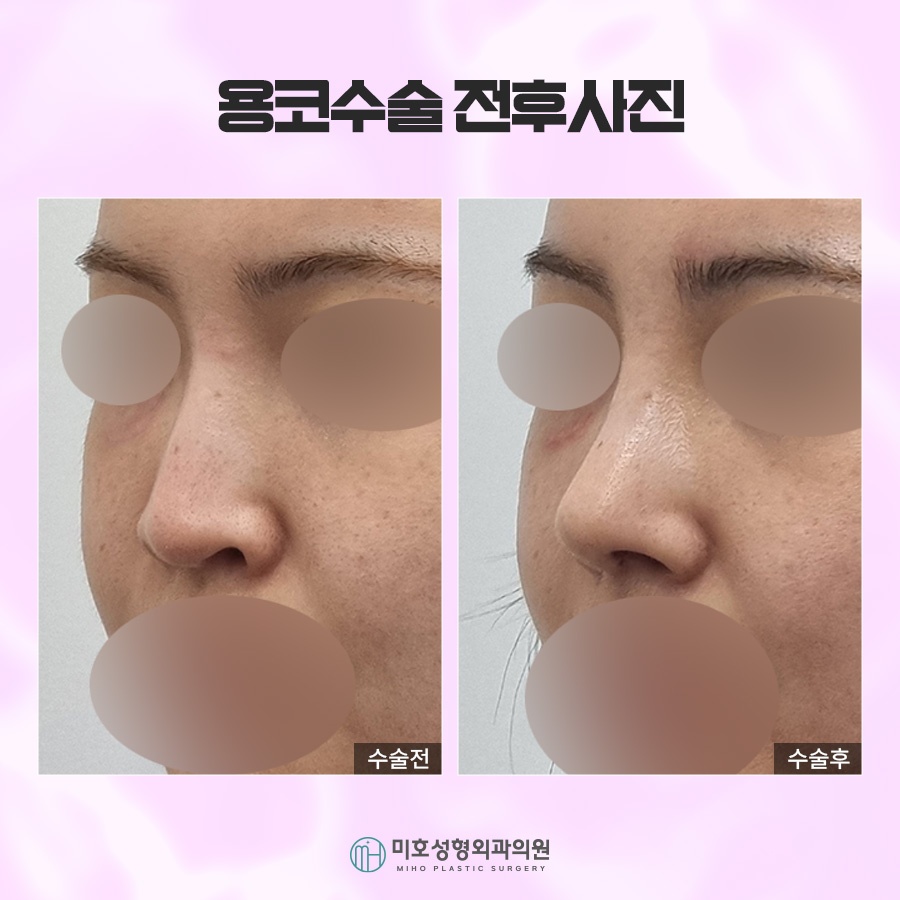
Whether it was a first attempt or a repeat
procedure, before applying the solution,
the situation had to be understood from
multiple angles using 3D-CT and endoscopy.
If deformities such as septal deviation
or nasal valve stenosis were not noticed,
or if the procedure was forced forward
despite them, recurrence would likely happen
soon or the situation could worsen.
If the cartilage was bent or the nasal
valve was narrowed, it was necessary to
correct these together.
For repeat procedures, I would recommend
using autologous tissue or donated cartilage
rather than artificial implants.
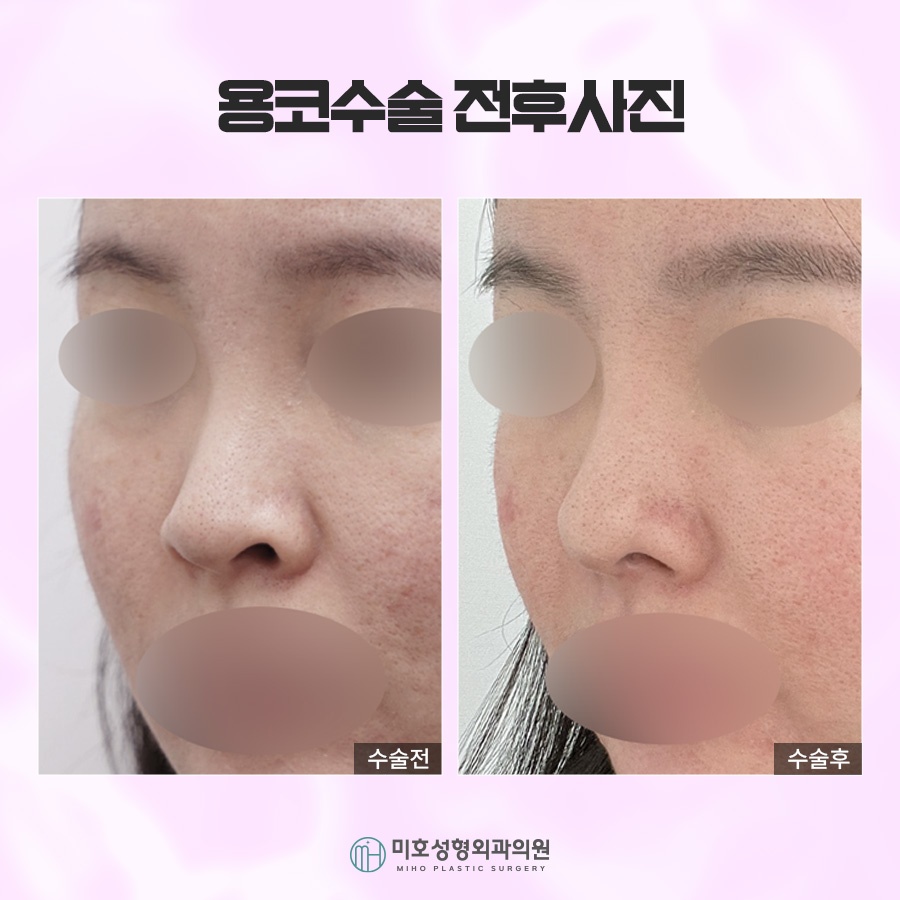
Although the shape was not as dramatic as
with artificial implants, immune reactions
were less likely to occur and the survival
rate was good, which was advantageous for
long-term stability.
The procedure took about 1 to 2 hours,
and if the skin did not stretch well,
it could take a little longer.
The skill of the medical staff was important,
but the recovery period was determined by
the care process after the solution,
so it was necessary to continuously manage
swelling and pain.
While following the instructions given by
the medical institution, it was recommended
to visit regularly to check the progress and
receive the aftercare program.
As with any procedure, the nose had to be
protected from impact, friction, and pressure
for several weeks.
Pain could be felt for a few days, but you
could take the prescribed anti-inflammatory
pain medication according to the medication
instructions.
Since glasses could not be worn for at least
one month, it was a good idea to prepare
contact lenses in advance.
The purpose of bulbous nose surgery was to
create a softer impression and prevent the
nasal tip from drooping over time.
A beautiful nose could be achieved only when
the overall balance and harmony were considered
rather than focusing on a single area.
If you want a stable and natural-looking
result, I hope you will seek help from medical
staff with refined aesthetics and excellent
know-how.



Previous image
Next image