These days, appearance is also treated as part of one’s credentials.
If you are facing an important event
such as marriage or a job search,
even a single skin issue can make you more sensitive.
At times like this, people usually prefer
an approachable, youthful look,
which is why interest in such appearances
tends to increase.
Recently, as more people want a natural and healthy image,
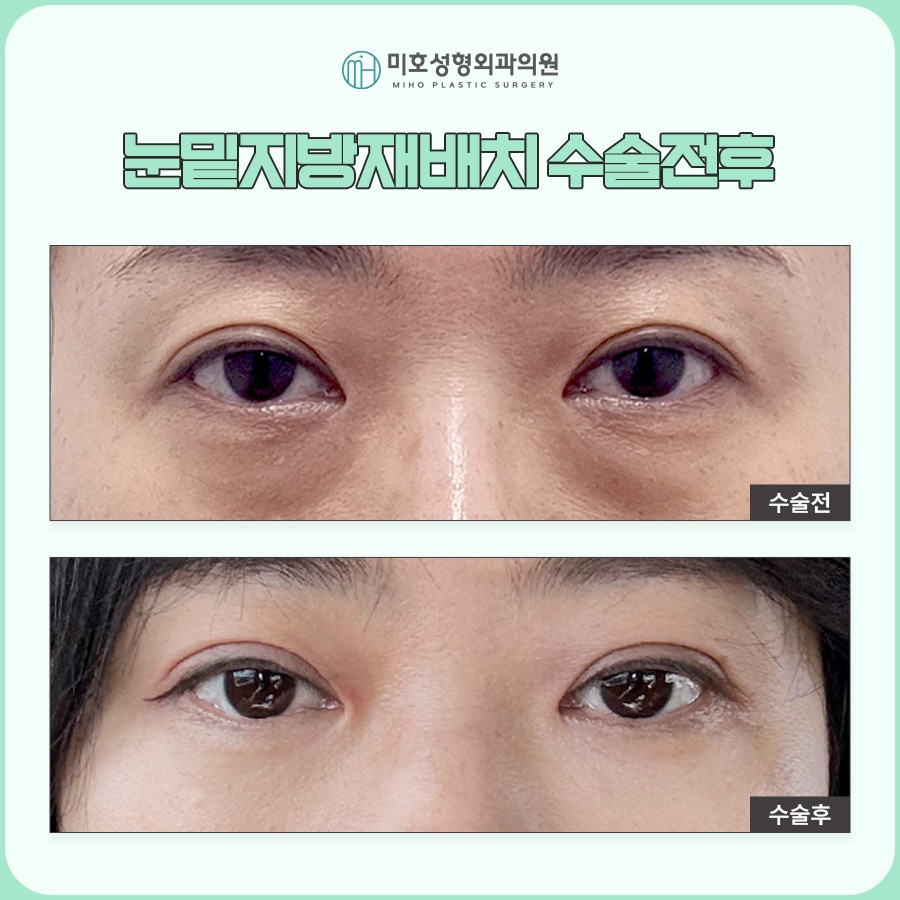
searching for reviews of under-eye fat repositioning
has become common.
Today, let’s talk about under-eye fat repositioning,
which helps improve dark circles and create a brighter, more lively impression.
Before looking at
reviews of under-eye fat repositioning,
it is better to understand the causes of dark circles first.
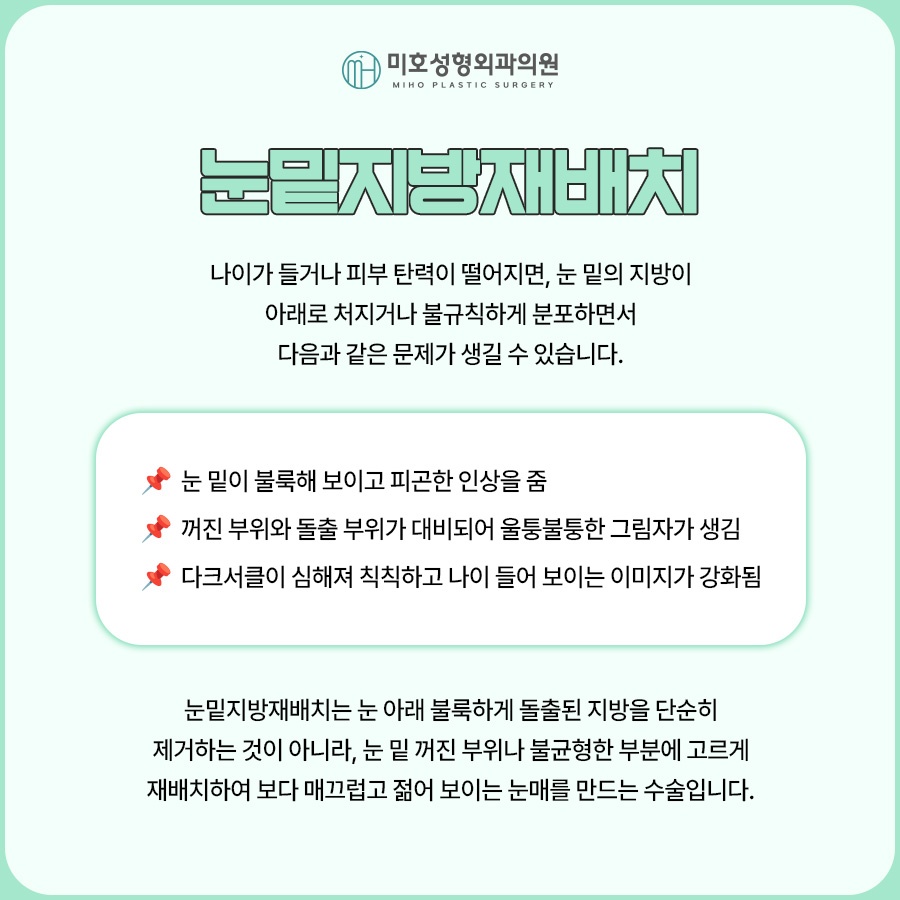
In general, as people age, the skin layer
becomes thinner and loses elasticity.
During this process, capillaries may become visible through the epidermis,
making the area under the eyes look dark
or causing fine wrinkles to appear.
Also, as aging progresses, the strength of the septum
may weaken and cause problems.
In this case, orbital fat protrudes through the loosened membrane gaps,
creating contours on the face.
This often produces shadows, which can make the skin tone look darker.
This orbital fat is also often cited as a factor
in other under-eye fat repositioning reviews.
As people age, its characteristic fullness decreases,
and when the upper or lower eyelids sink in,
many people complain that their eyes look dull and hollow.
In addition, problems can occur when the tear trough ligament,
which acts as a support to prevent the skin from sagging downward,
becomes deformed.
In some cases, dark circles can also appear
for reasons unrelated to aging.

A weakly developed maxilla
or insufficient volume in the midface soft tissue
is a representative example.
In such cases, even at a young age,
dark circles can appear due to the contour difference
with the cheek area,
creating shadows around the eyes.
Such symptoms are generally not resolved
with basic care using serums and similar products.
That is why people turn to medical institutions.
After visiting, a careful examination is used to determine how the situation can be improved,
and it is advantageous to resolve the problem
with active help from the medical staff.
One method often used at this time
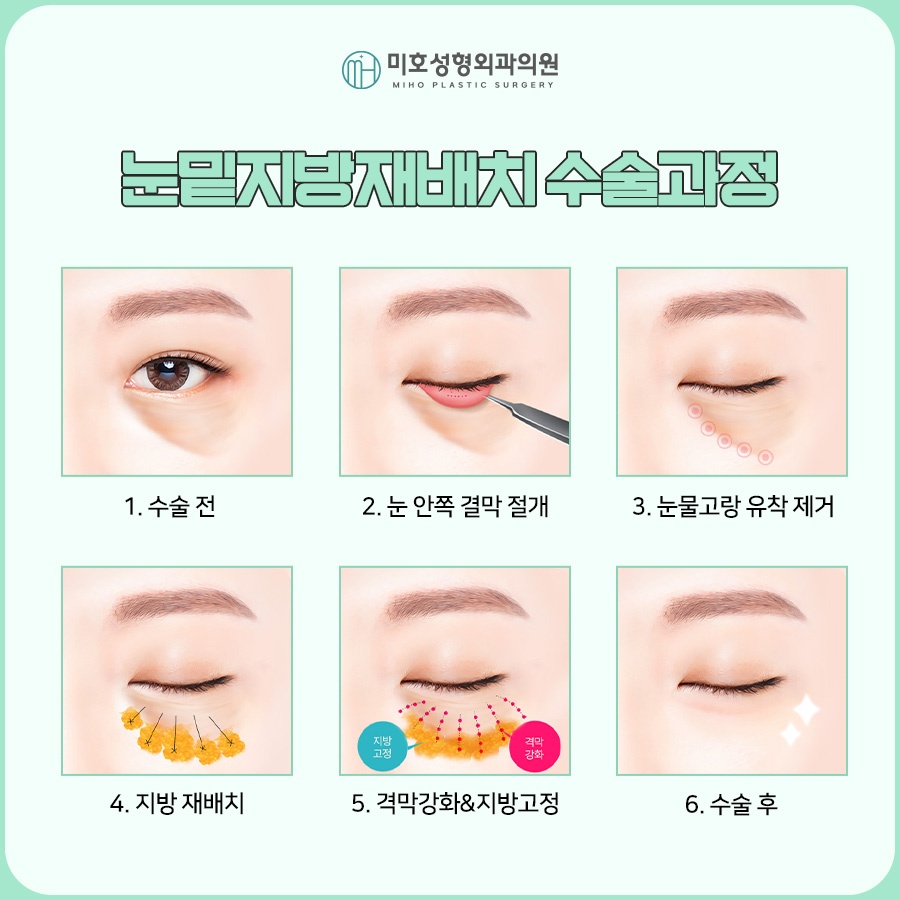
is under-eye fat repositioning.
The conjunctiva on the inside of the eye is incised,
and the adhesions of the ligaments near the tear trough
are removed.
Then the protruding orbital fat is repositioned
in the appropriate areas.
After strengthening the septum and fixing the fat,
flattening the surface of the face completes the overall procedure.
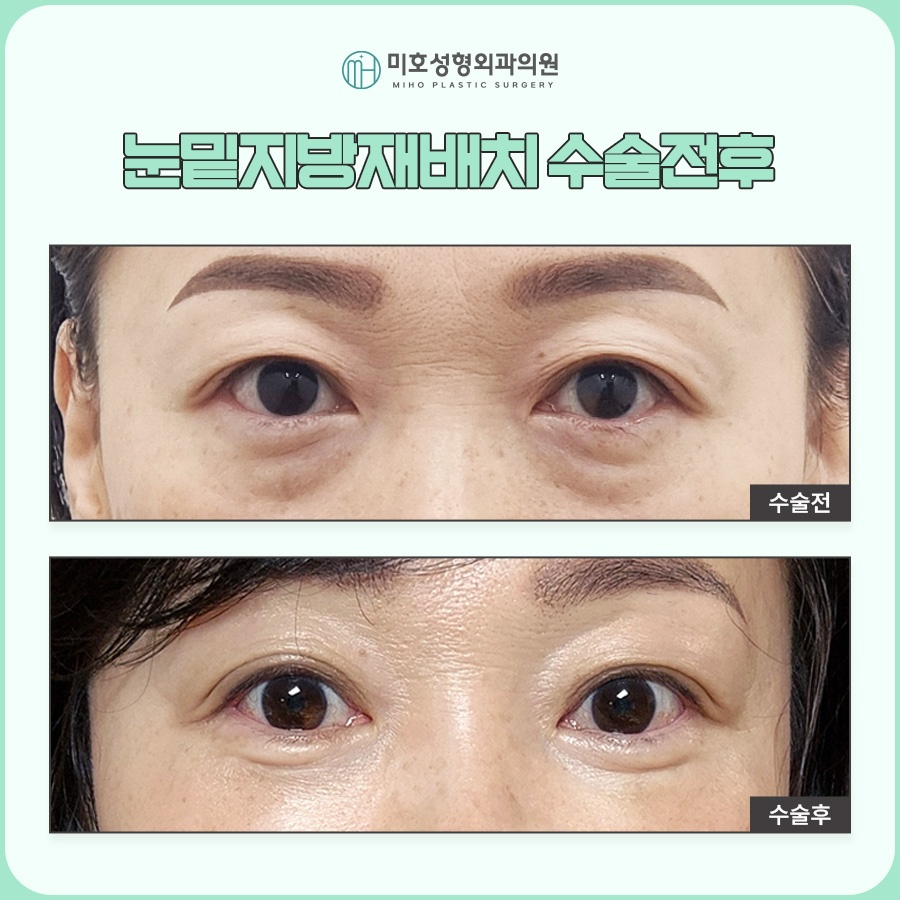
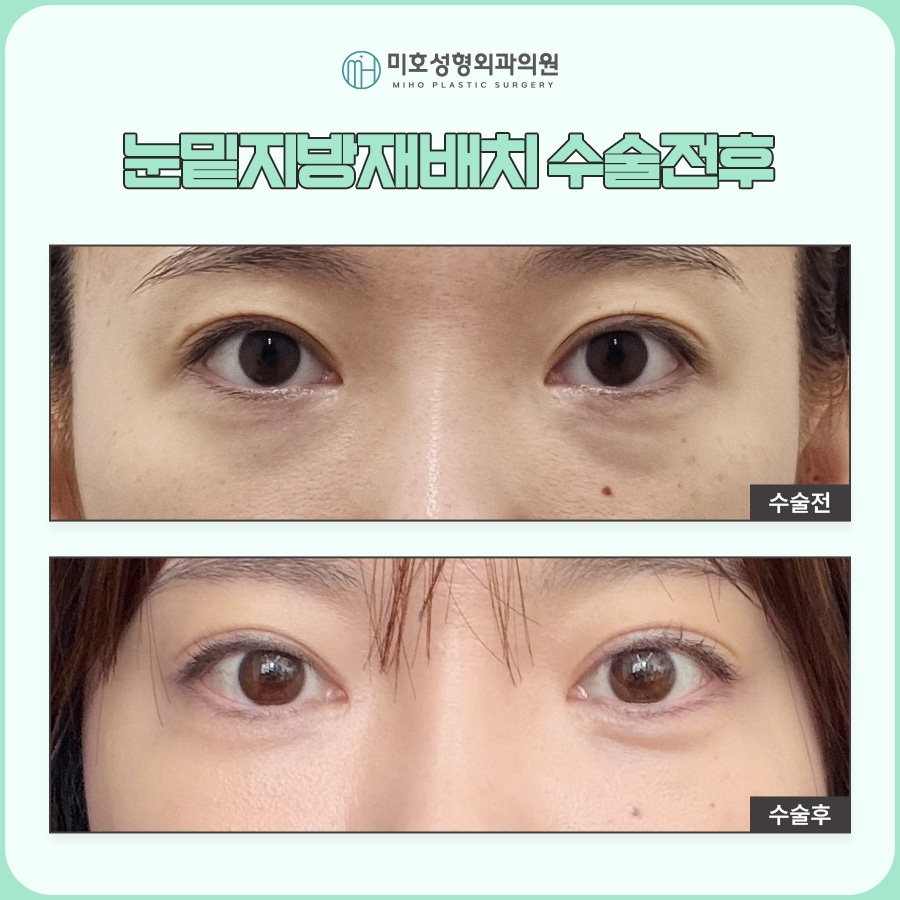
This usually reduces the blood vessels beneath the skin surface
and the shaded areas, which in turn alleviates dark circles.
However, if deformation has occurred
in other areas such as the orbicularis muscle,
it is also good to combine this with other methods
such as lower eyelid correction, skin boosters,
toning lasers, or fillers.
When various methods are used in this way,
the main person in a successful under-eye fat repositioning review
can gain several benefits.
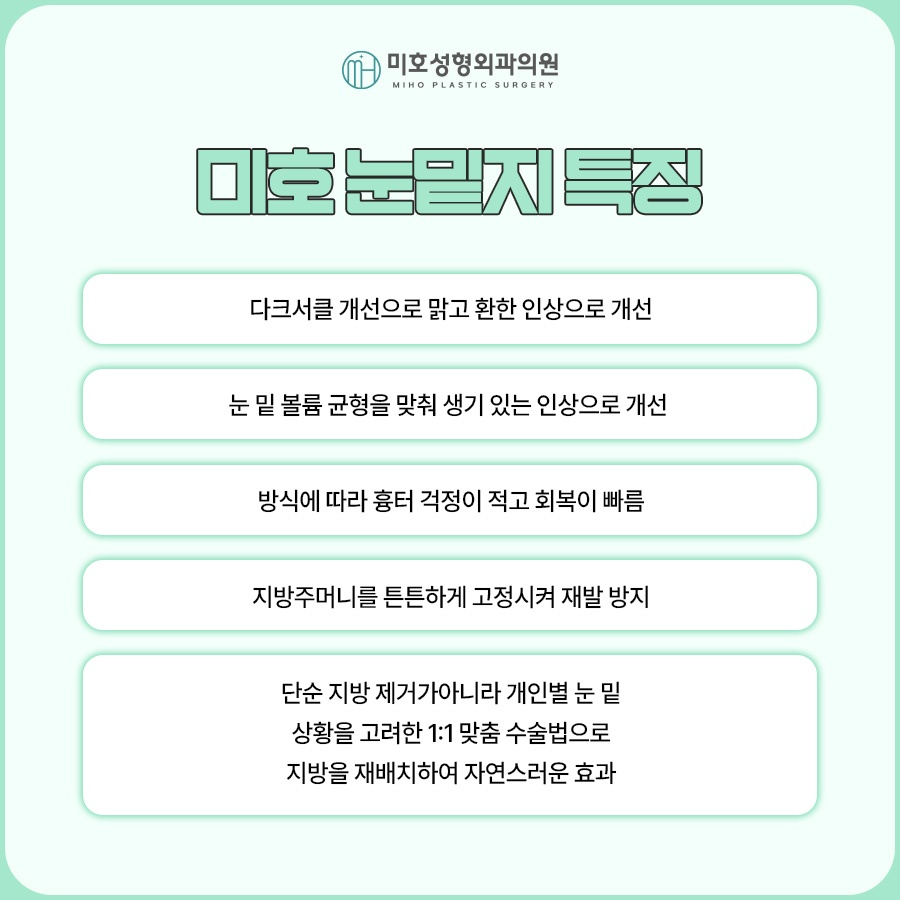
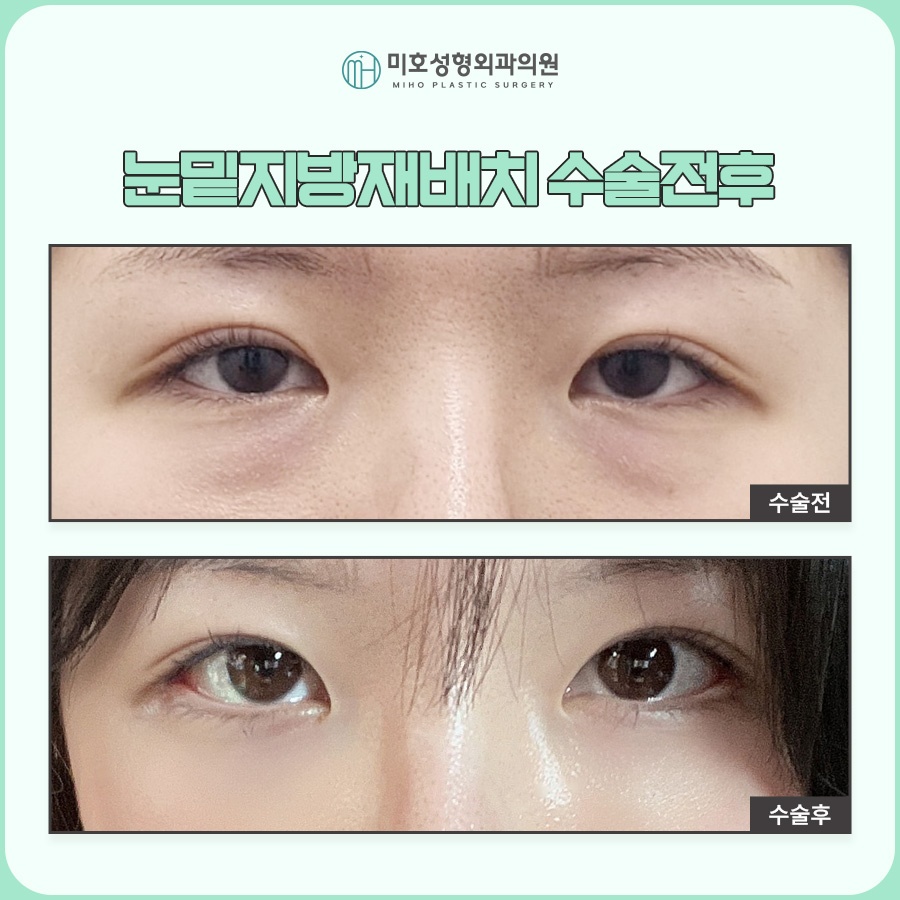
First, because the procedure removes fat based on each person’s naturally given eye shape
and repositions or grafts it in the appropriate place,
a main advantage is that the dull area under the eyes can be made flatter.
At the same time, the existing image
and advantages such as aegyo-sal can be preserved,
allowing for a natural-looking eye shape.
And because only a small incision is made in the conjunctiva,
there is less bruising and swelling,
and many people also consider it an advantage
that the scar is not visible externally.
However, the correction process requires delicate technical skill,
so in reality, one cannot help but think carefully
when choosing a medical institution and medical staff.
At this time, it is important to work with those who can identify the cause from the first visit
through proper testing and examination,
and prepare suitable improvement measures.
It is also important to check whether they have the ability and environment
to handle every procedure from planning to post-care.
It is also very helpful to thoroughly check
whether anesthesia staff are on-site,
whether a monitoring system is in place to observe the patient’s vital signs in real time,
and whether quick action is possible in an emergency.
Separately, while looking at under-eye fat repositioning reviews,
it is also good to check in advance
the precautions that the person undergoing the procedure should follow.
First, one week before under-eye fat repositioning,
a person should avoid alcohol and smoking,
and should not take medications such as aspirin
or sleeping pills.
Also, if you have conditions such as high blood pressure, diabetes, heart disease, or hepatitis,
it is important to inform the medical staff in advance
and prepare countermeasures accordingly.
In addition, you should not eat or drink for 6 to 8 hours before visiting,
and should prepare comfortable clothing
as well as a hat or scarf to protect the wound.
In addition, even after the correction is finished,
several points must be observed carefully
for the wound to heal well.
First, continuing to avoid alcohol and smoking
for at least 4 weeks is beneficial for recovery.
Also, to reduce swelling, it is good to keep the affected area
about 20 to 30 degrees above the heart.
At the same time, avoiding oily and irritating foods
also reduces the chance of inflammation.
In addition, be careful not to rub your eyes,
and use cold compresses for about 3 to 5 days,
then switch to warm compresses to help the bruising fade.
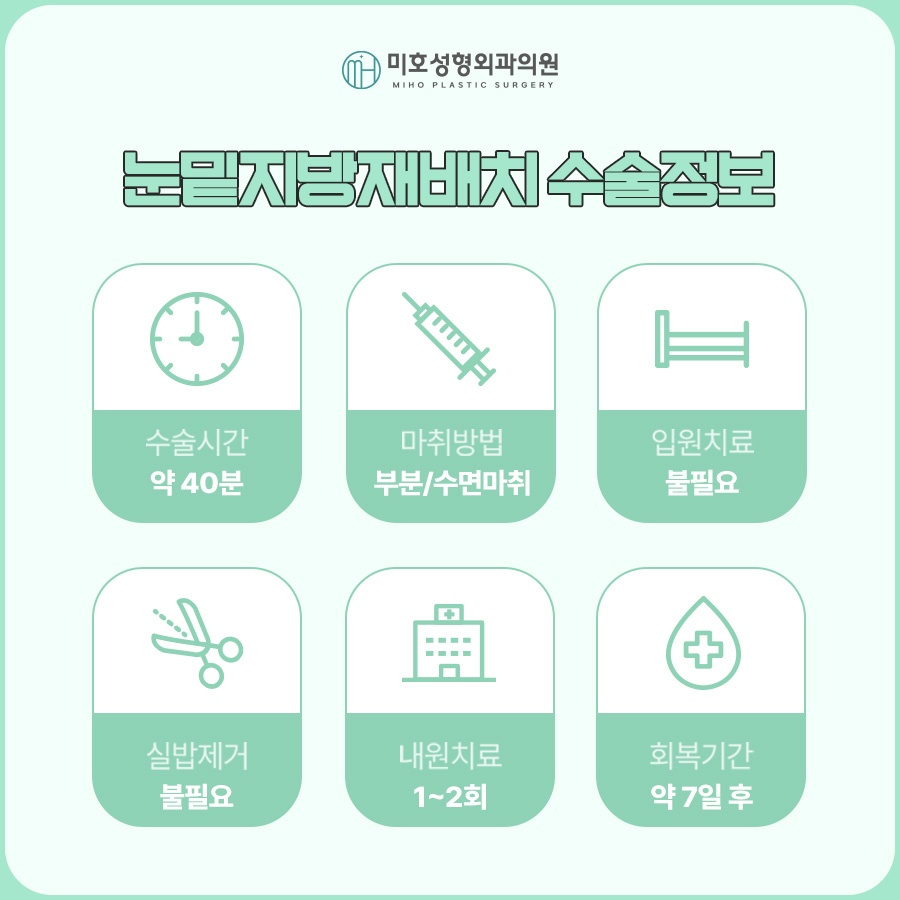
This correction procedure takes about 60 minutes,
and in most cases, pain is reduced through local or sedation anesthesia.
Afterward, hospitalization is not necessary,
so you can rest briefly and go home right away.
After about 7 days of recovery,
and once the stitches are removed,
returning to daily life becomes possible.
However, since good results can be achieved only when the medical staff,
the patient, and the environment are all in harmony throughout the process,
do not blindly trust reviews of under-eye fat repositioning.
Please visit a medical institution,
receive a consultation, and find the appropriate method.