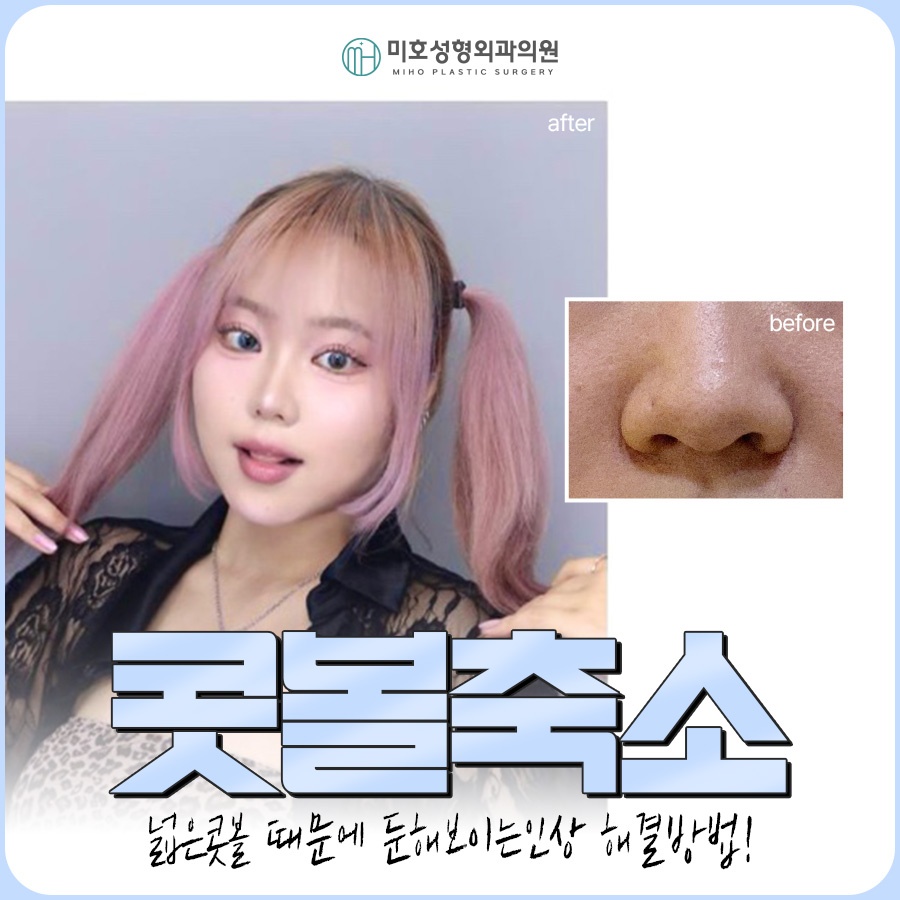
A broad nose can, depending on the person,
naturally blend in to some extent,
but if it is so wide that it disrupts facial proportions,
it may be worth considering
nostril reduction as a way to improve the overall appearance.
A blunt-looking shape can seem warm or even rustic,
a stark contrast to the refined and orderly first impression many people want,
so it is important to find a shape that suits your face
through a detailed analysis.
Because the most suitable shape and proportions vary depending on
what face shape and features a person has,
the right design and method for each individual should be identified first
and then applied appropriately.
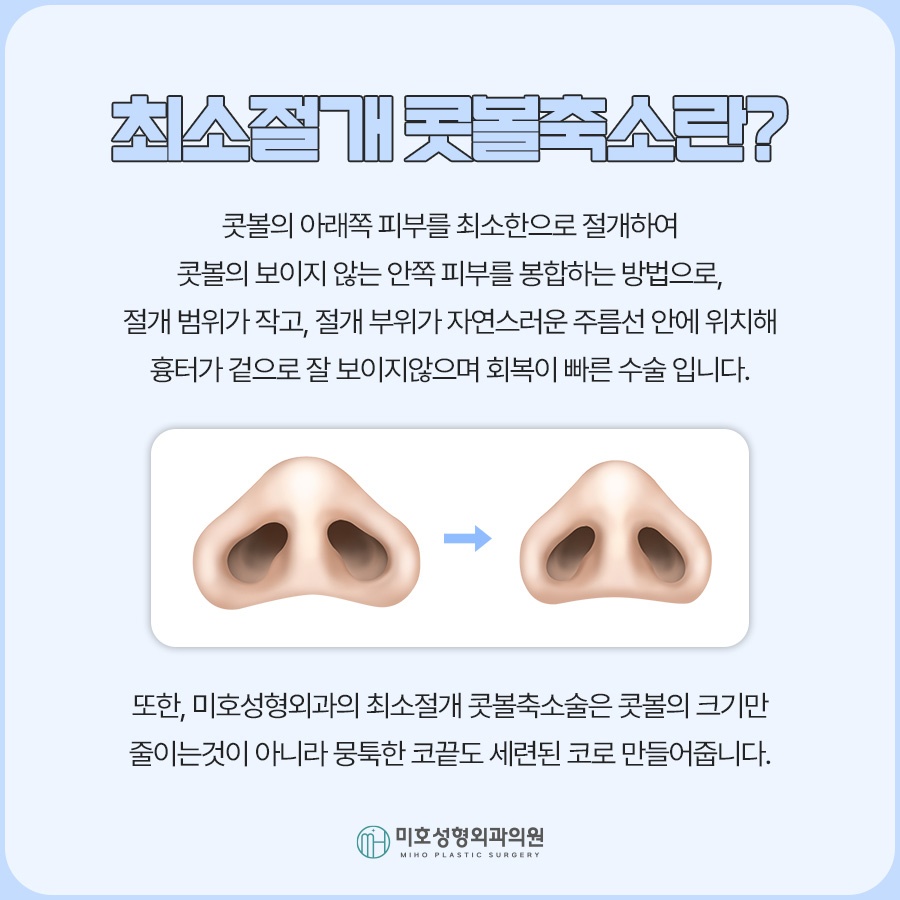
A broad nose with a nose tip that appears bluntly spread out
can feel quite different depending on the bridge of the nose,
so all overall factors must be carefully evaluated.
If the nose tip is blunt and the bridge is also low,
it may not match modern aesthetic standards
and can become a source of stress.
If you are considering improvement to achieve the image you wanted,
you should first carefully check whether nostril reduction is appropriate
and whether there are any other issues before making a decision.
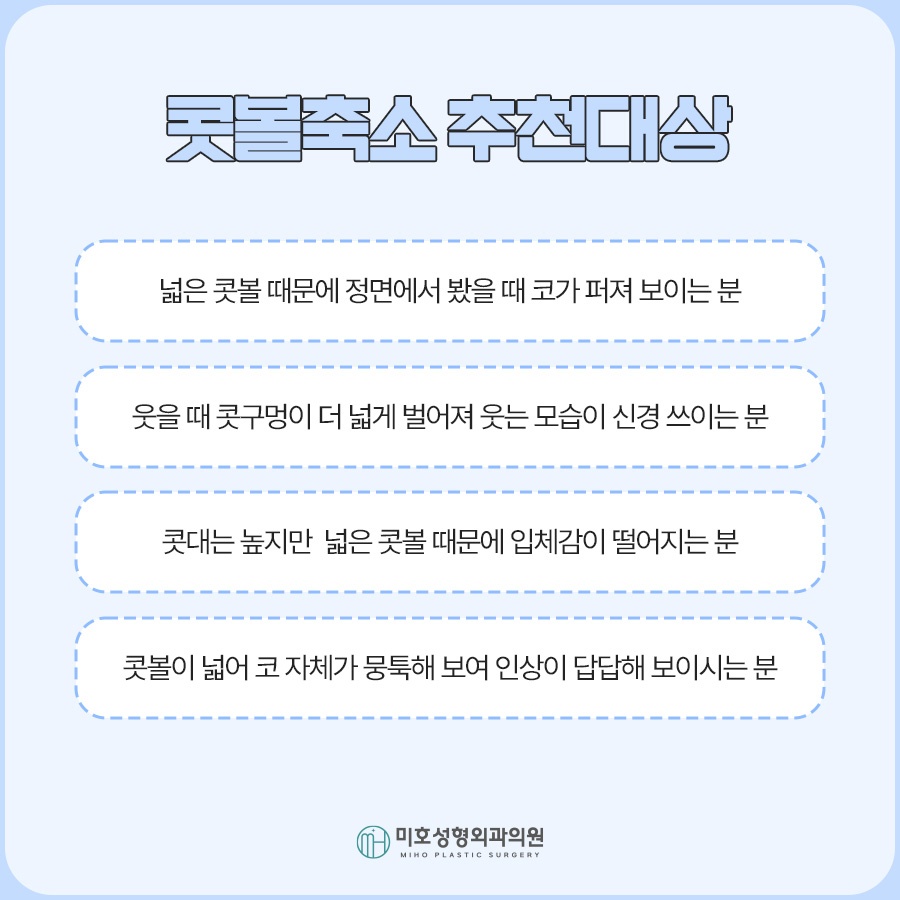
The nose has a complex structure,
so many aspects must be considered from multiple angles when planning the design.
Along with nostril reduction, it is necessary to first examine
whether the bridge height, a hump nose, or other areas also need correction,
and what effect the skin may have during the process of adjusting the shape.
If the skin is thick, the broad-nose appearance is especially prominent,
and when the cartilage has spread more than necessary during growth,
the nostrils also become wider, so it is important to first identify the cause.
If the nostrils are significantly widened,
the proper extent of reduction should be determined,
and the range and design should be adjusted in line with aesthetic standards
to suggest the most suitable option for each individual.
When the width of the nose tip is reduced, the overall length of the nose
can appear slightly longer from the front.
At this time, if the bridge is relatively low,
raising it to create better balance can also be considered.
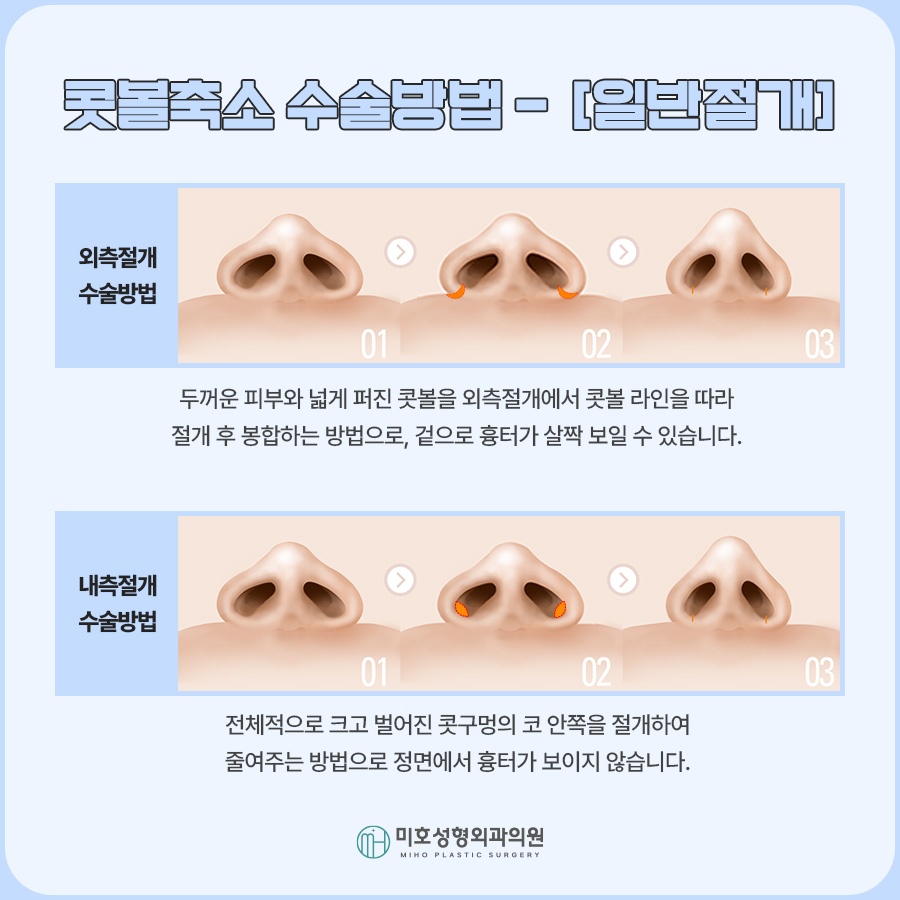
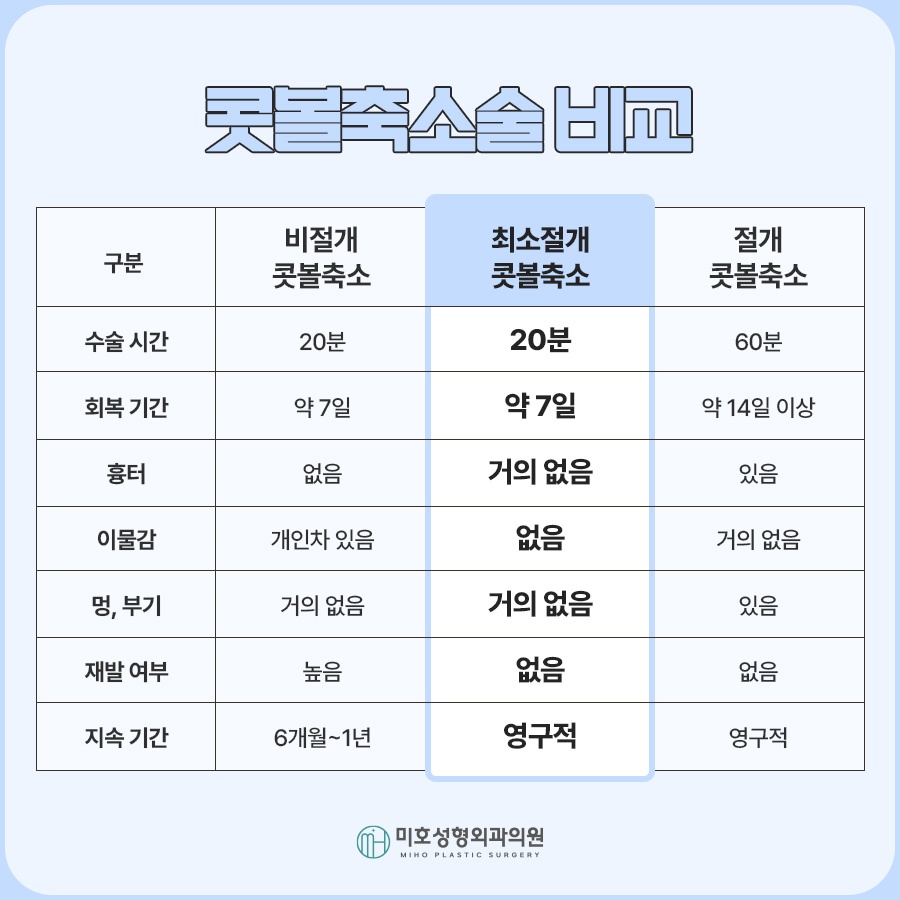
Depending on the situation, a non-incisional approach may be used,
allowing the procedure to be attempted without much concern about recovery or scarring.
If the width can be reduced simply by closing the spread cartilage,
a non-incisional reduction procedure can be used for improvement.
If the problem is cartilage-related,
an incisional or non-incisional method can be chosen as the better option.
There are various methods like this,
and the duration of post-procedure effects such as bruising or swelling,
as well as the recovery stage, differ somewhat,
so careful decision-making is necessary.
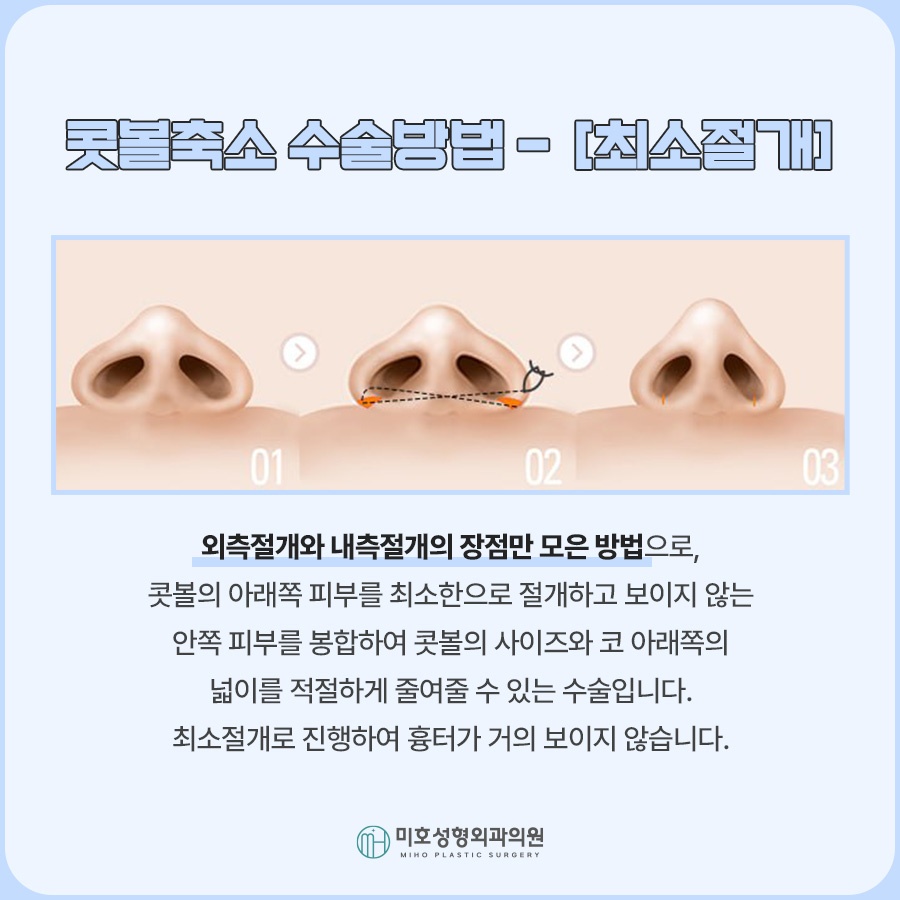
When nostril reduction is difficult with a non-incisional method alone,
it is appropriate to correct the shape using an incisional reduction procedure.
If the skin is not thick and the issue is caused by spread cartilage,
the problem can be corrected simply by tying together the internal tissue
and closing the widened width.
However, if the soft tissue is firm and thick,
this method is difficult to apply.
At this point, an incision is planned,
and to prevent scars from being visible externally,
a medial dissection method is used.
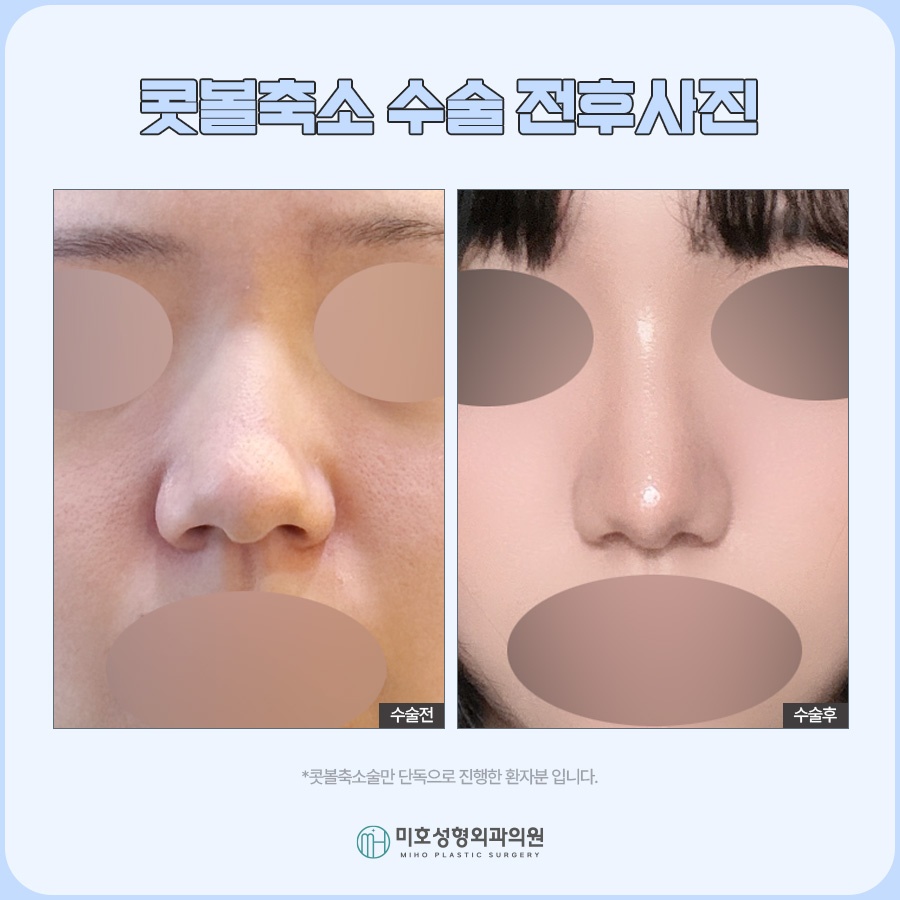
The internal incision method refers to a technique that involves dissecting only a small area from inside the nose,
which is not visible unless the head is lifted.
Because the incision is made from the inside,
even if scars are prone to form, there is less to interfere with daily life
or cause noticeable problems,
and they are not as prominent during recovery,
which can make the process feel less burdensome in everyday life.
For office workers, it can be difficult when they must return to work
after only a short recovery period,
but using a method that dissects only a small area
and makes the incision in an invisible location
can help with recovery without as much worry.
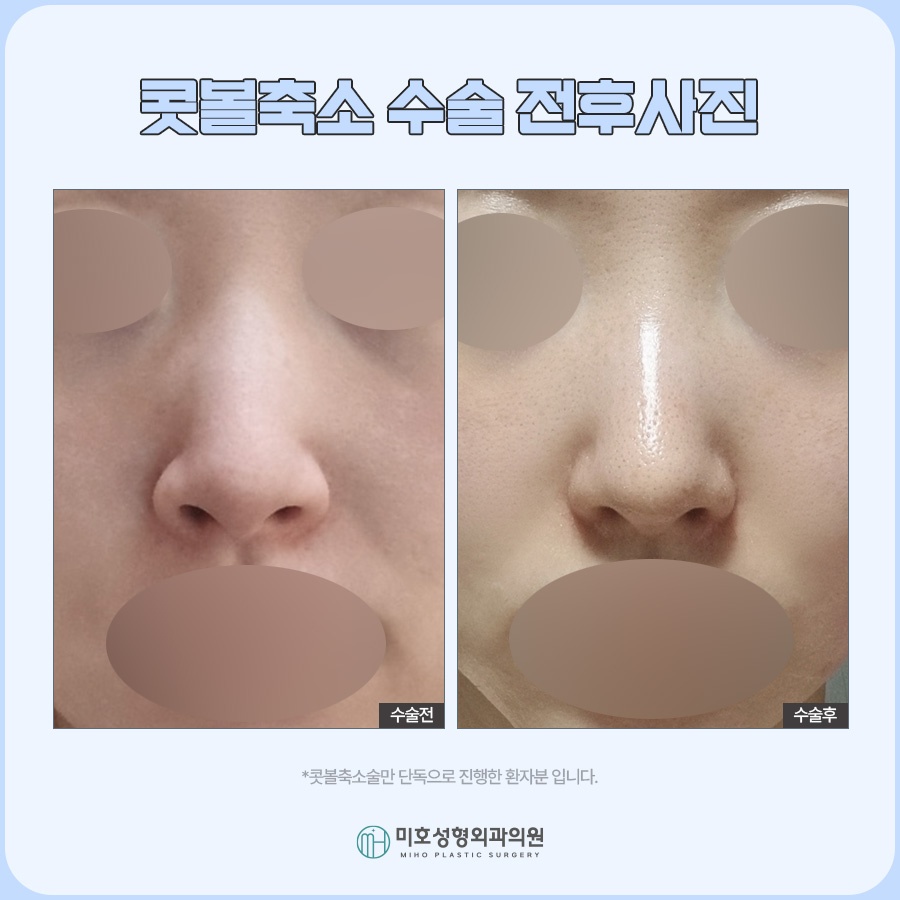
Nostril reduction alone may make it possible to improve toward the look you wanted,
but problems in parts that once seemed fine can sometimes become more noticeable,
so it is especially important to predict how facial harmony will look after the width is reduced,
design accordingly, and approach the procedure carefully.
If the bridge is low, after comparing the characteristics of each type of implant,
it may also be worth considering selecting a material suitable for the area that needs support
and transplanting an appropriate amount.
Autologous tissue options include ear cartilage,
autologous dermis, and rib cartilage,
while silicone is commonly used as an artificial implant.
The choice is made after comparing various factors such as support strength
and how freely the shape can be adjusted.
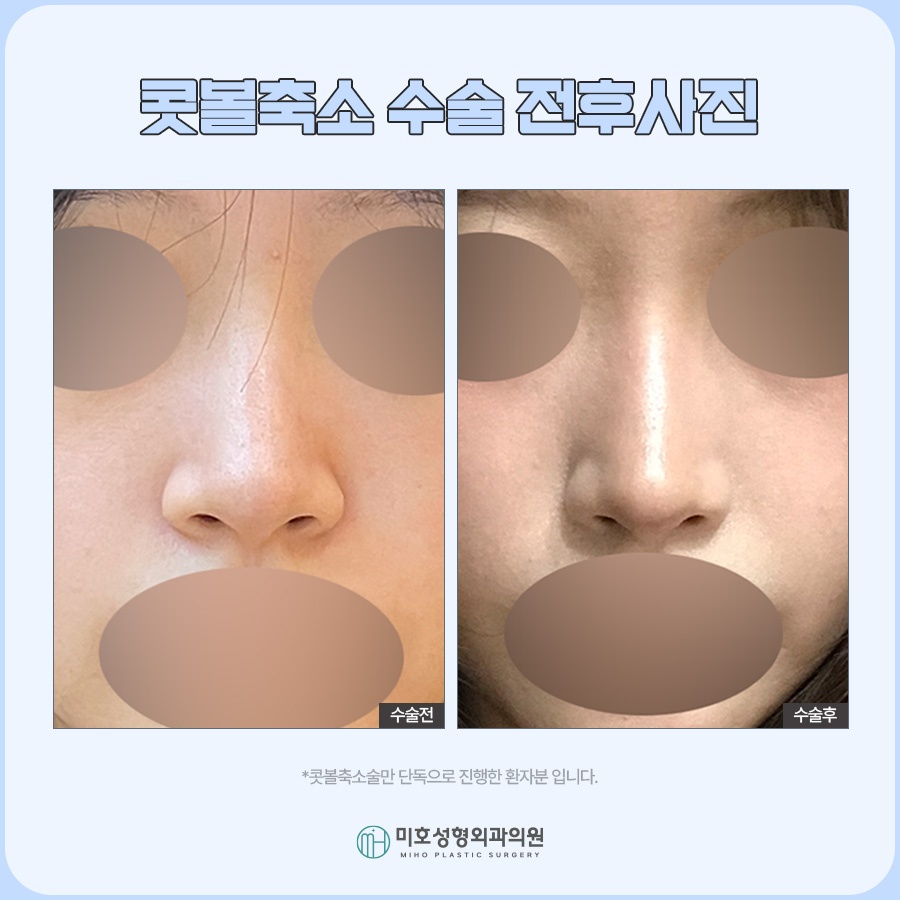
Along with correcting the nostrils,
if the nostrils are asymmetrical,
this is also addressed together so that the nose looks natural from any angle
and both sides are properly symmetrical.
If the approach is made from multiple angles and the improvement is achieved
in a way that meets aesthetic standards without harming function,
it is helpful to keep in mind in advance how the recovery process will proceed,
how long it will take, and what effects may occur.
During the first three days, swelling can be severe,
so cold compresses and proper care are necessary.
Bruising and swelling last for more than a week,
and depending on the person, they may subside earlier or last for more than two weeks,
so when sleeping, it is best to keep your pillow relatively high
and sleep with your face slightly elevated if possible.
The standards of beauty do not apply equally to everyone.
Everyone necessarily has a different approach for bringing out their own individuality
and natural appeal.
If you want not the same image as others,
but your own atmosphere and natural beauty,
it is not too late to first determine whether nostril reduction is necessary
and then make a decision.
Please carefully check from multiple angles whether the nostrils need to be raised
or whether the bridge needs to be supplemented,
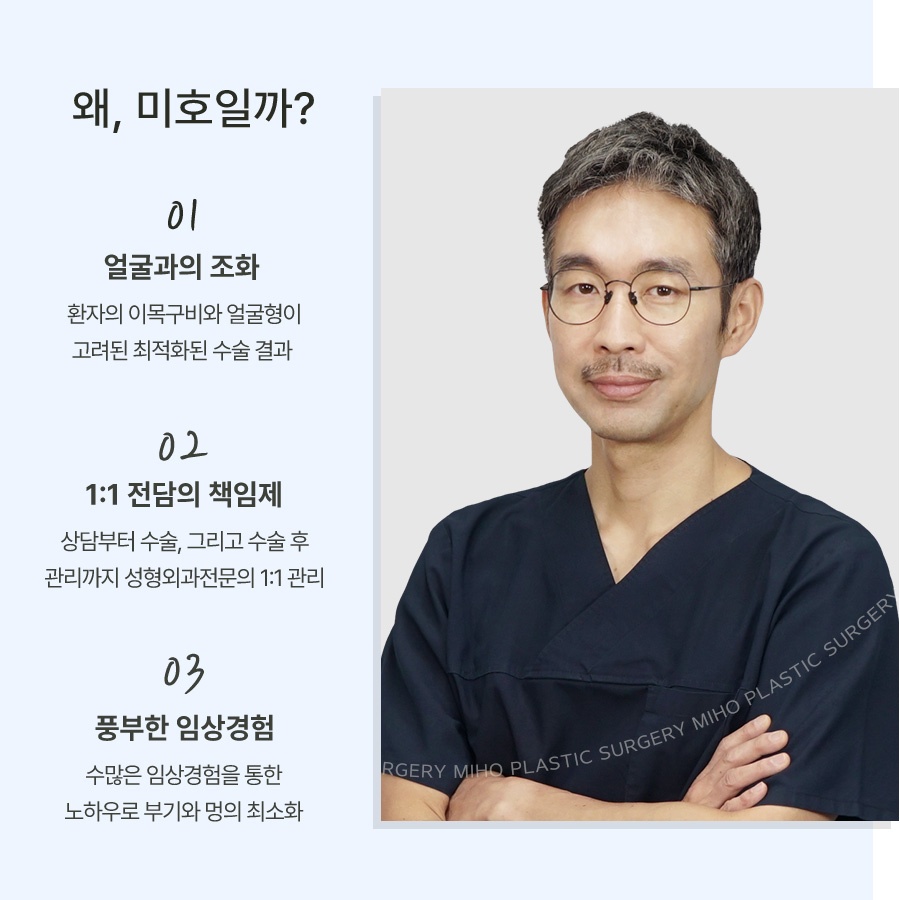
and whether a surgeon with extensive clinical experience
who can properly present a customized design for one person is on site.



Previous image
Next image