
Even when a person did not have an obese body type,
there were many cases where the jawline was especially blurred
and the flesh under the chin was noticeably thick.
A double fold under the chin made the impression
feel dull and heavy.
It could even make the face look larger
and give a more aged appearance.
Recently, to address this,
people have been receiving aesthetic care
or using methods such as radiofrequency lifting
to refine the jawline.
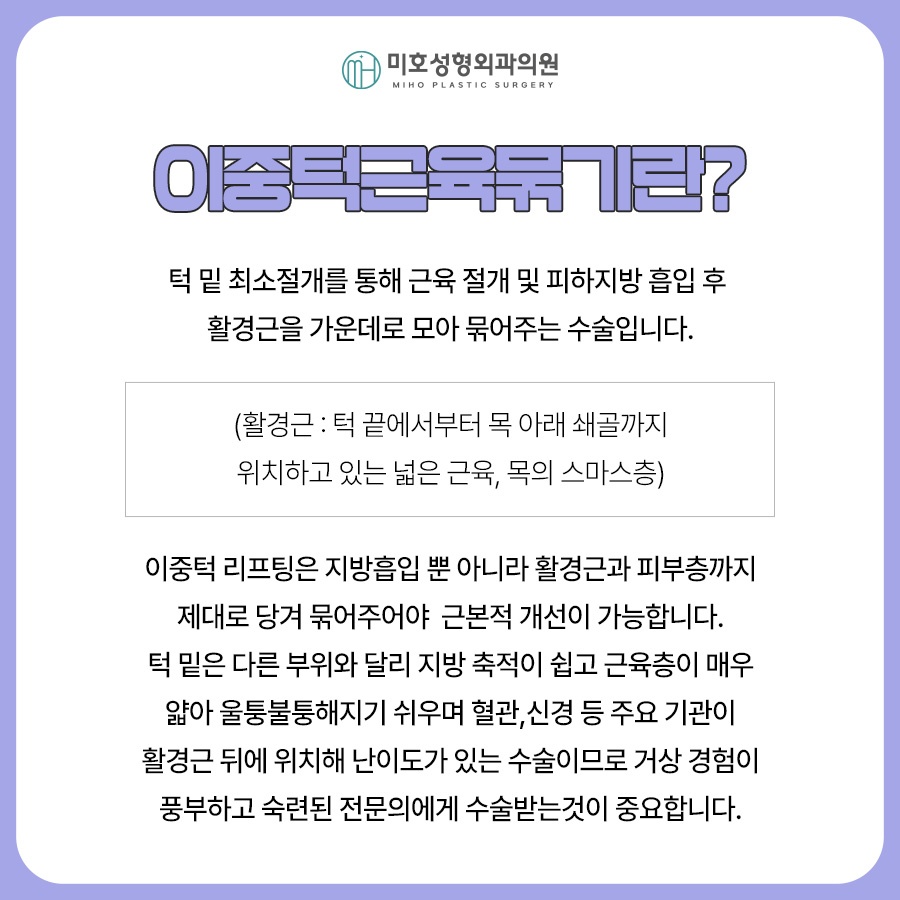
The chin muscle ligation discussed in this post
was one solution that helped correct the balance
between sagging tissue and muscles.
Before looking at the principle of chin muscle ligation,
we first covered why chin fat folds.
A representative cause was reduced elasticity.
As aging progressed, the regeneration speed of collagen and elastin
slowed down, and elasticity decreased accordingly.
The second reason was tension and weakening of the muscles
located around the neck.
As relaxation and tension occurred at the same time,
the line collapsed and became blurred.
The last cause to mention was poor posture.
If you keep your head lowered or pushed forward
for a long time, the skin and fat naturally fold
and then become fixed in that state.
If you are considering chin muscle ligation because of chin fat,
you first need to clearly set your goal.
You had to decide whether you wanted the fat under the chin
to stay firmly attached or whether you wanted
the outline of the jawbone to be clearly visible from the side.
Even within the same category,
the approach was adjusted according to the cause
and the needs of the person receiving the procedure.
During the consultation, elasticity and the degree of sagging
were assessed, and the shape of the jawbone
and muscle tension were also checked.
Even after receiving the solution,
if you consistently manage it in daily life,
you could maintain the changed appearance
for a long time.
The first principle of management was to remove
the cause of the problem.
If posture caused the chin fat,
you had to correct your habits so that your head
was properly held up.
When looking at a smartphone or monitor,
it was appropriate to set the screen at eye level
and lightly pull the chin in.
Correcting chewing habits was also necessary.
If you keep chewing on only one side,
the left-right symmetry of the jaw muscles becomes distorted,
so it was advisable to consciously use both sides.

Before chin muscle ligation, liposuction around the chin
could also be considered.
In fact, if there was a particularly thick layer of fat
in the lower part of the face,
that method could be suitable.
However, if the issue was muscular, the skin would become
even looser as the fat was removed.
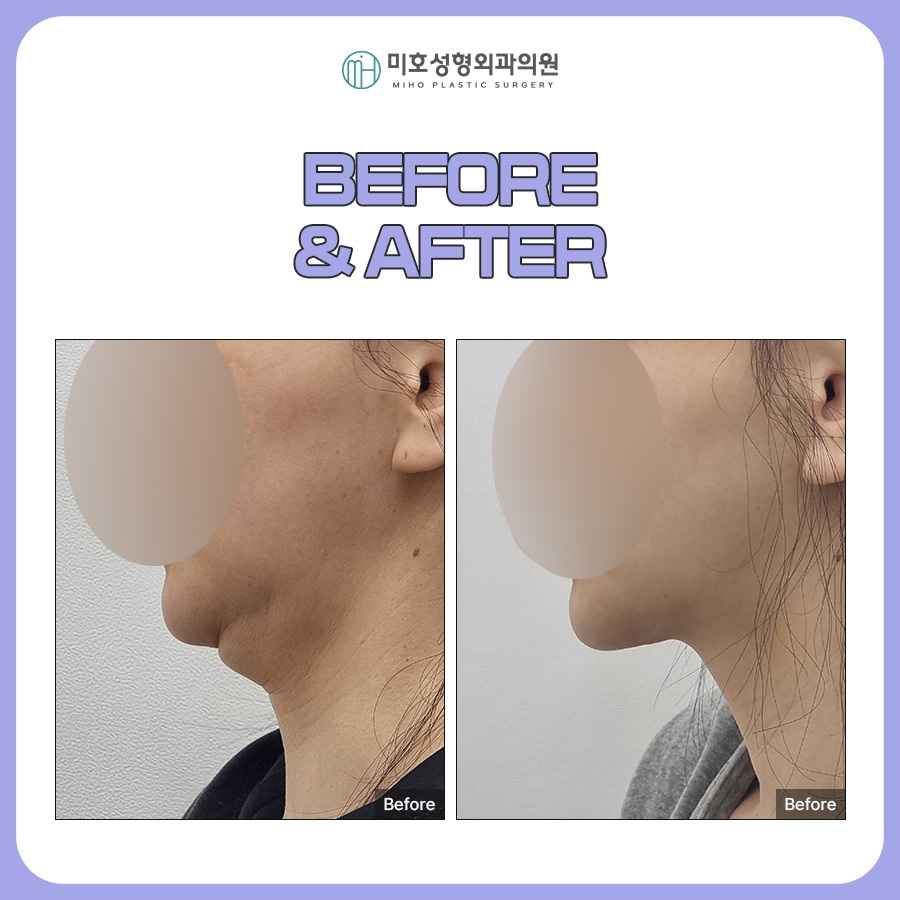
The factor that makes the jawline look sharper
lies in the platysma muscle.
As people age, the muscles also lose elasticity,
spread to both sides, and the fat layer protrudes through
the gap, creating the appearance of sagging chin fat.
This was not a problem that improved simply by removing fat;
it required bringing the separated muscles back together.
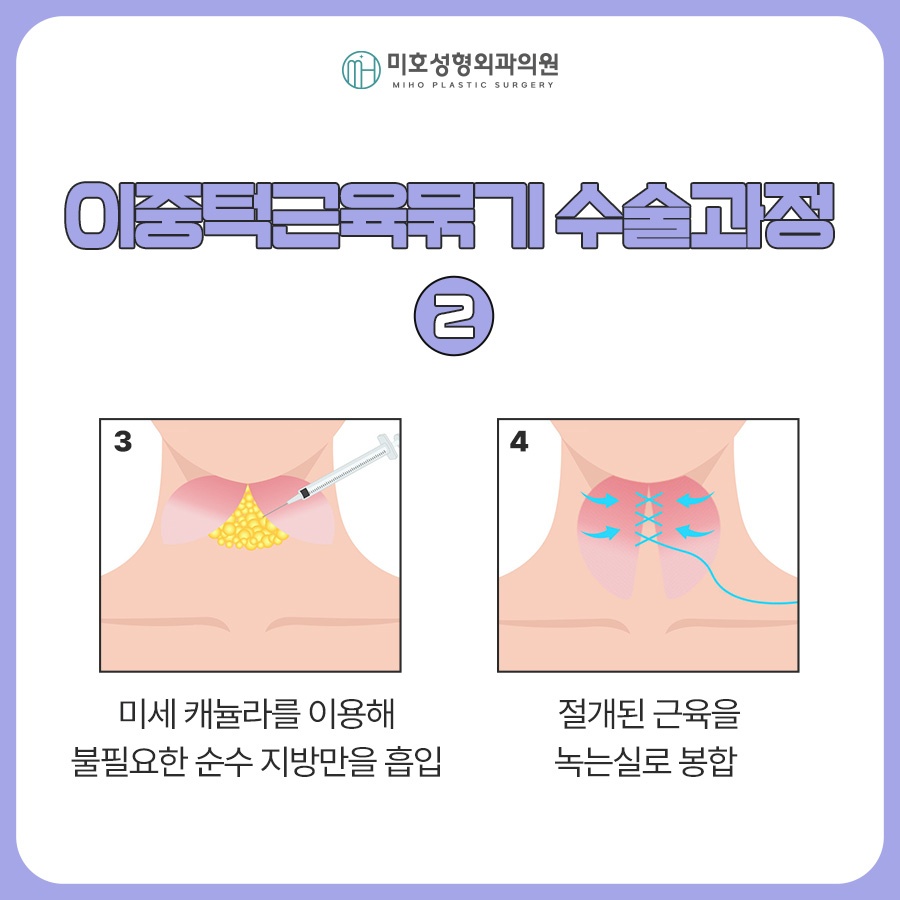
By bringing the platysma muscle, which had spread to both sides,
back to the center where it originally belonged
and fixing it in place, the area below the chin
could be reconstructed to be flat again as before.
Since this is a surgical procedure performed on the face,
concerns about scarring naturally tend to come first.
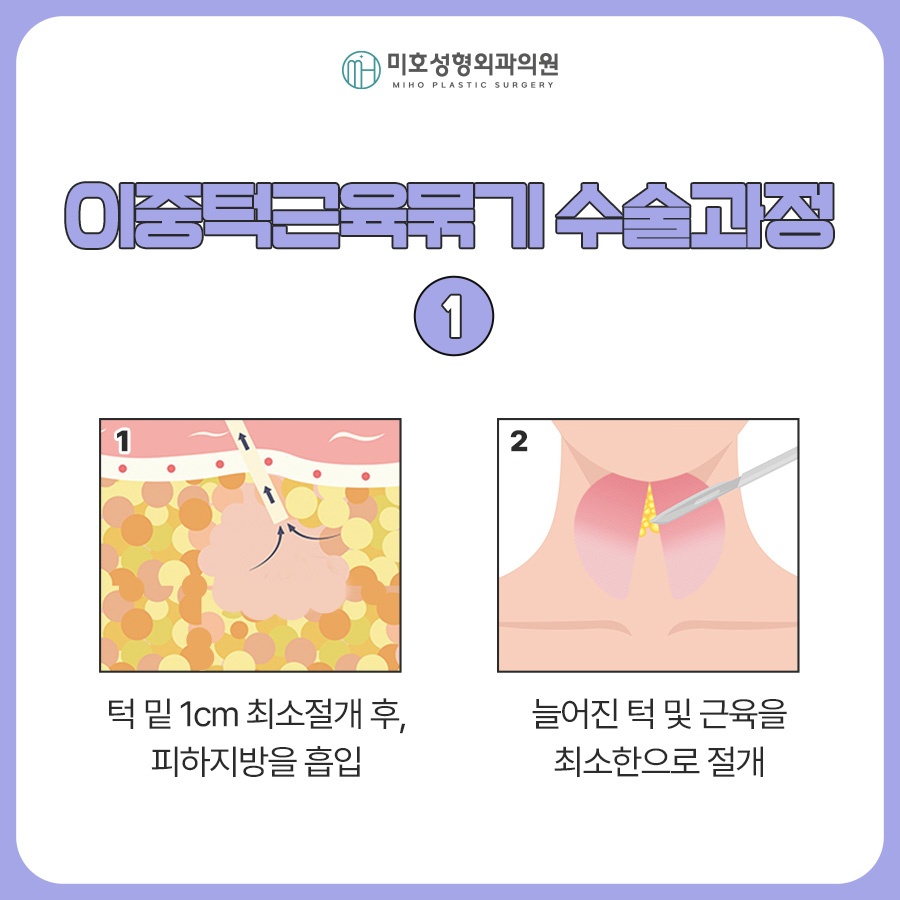
Because it is carried out precisely through a micro-incision
in the area under the chin, where it is less noticeable,
the burden of visible marks could be reduced.
Although the process itself is relatively simple,
the face contains many blood vessels and nerves,
so the skill of the medical staff played a very important role.
Therefore,
before proceeding with chin muscle ligation,
it was necessary to have enough conversation with a medical team
that had ample know-how, experience, and anatomical knowledge
related to the procedure, and then determine the scope
and extent of the treatment.
As with other lifting procedures,
this method would not solve every problem
simply by fixing it strongly.
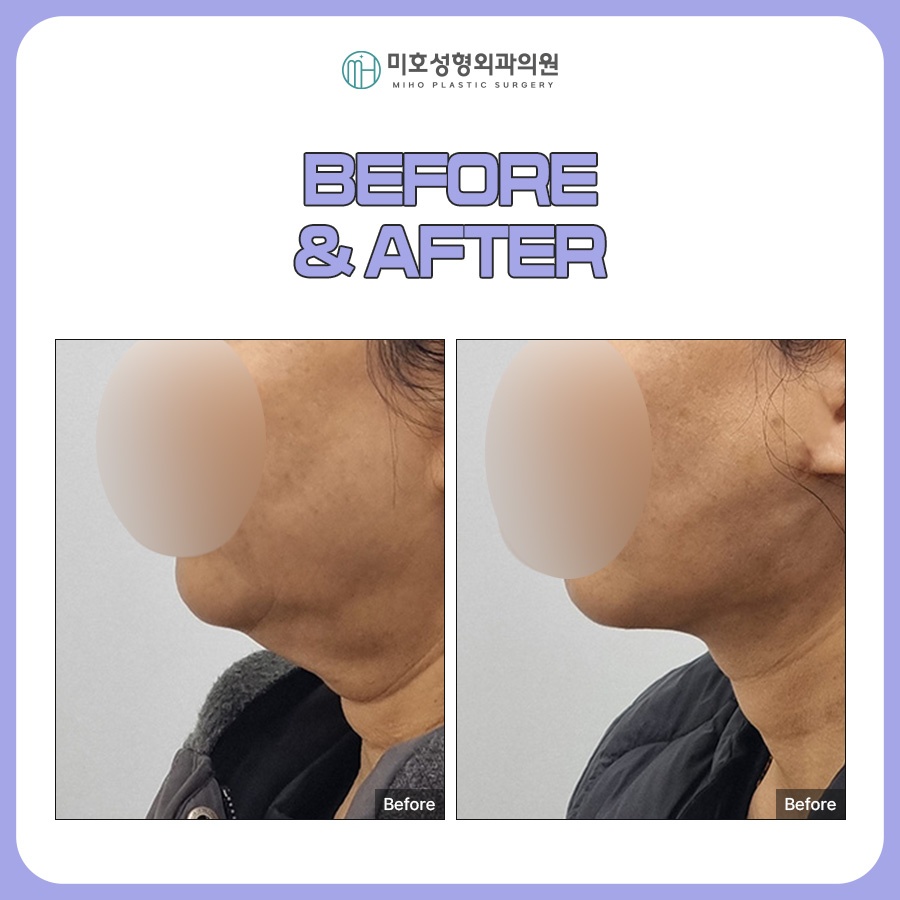
In fact, if the tension was too strong,
it could become difficult to make facial expressions,
and the impression could change awkwardly.
There were also times when the feeling of being pulled all day long
did not go away and became stressful.
Therefore, as mentioned earlier,
it was important to always keep in mind what the goal
of applying the solution was, and to carefully decide on the design.
In some cases, even though the chin fat had sagged,
muscle ligation was not possible.
If the lower jaw itself was small, the chin tip was short,
or the mandible was excessively set inward,
muscle ligation was not recommended.
Even if this were ignored and forced,
the degree of change would not be as large as expected,
and the area under the chin would stand out even more.
It was also not suitable when the cause of sagging
was the skin layer rather than the muscle.
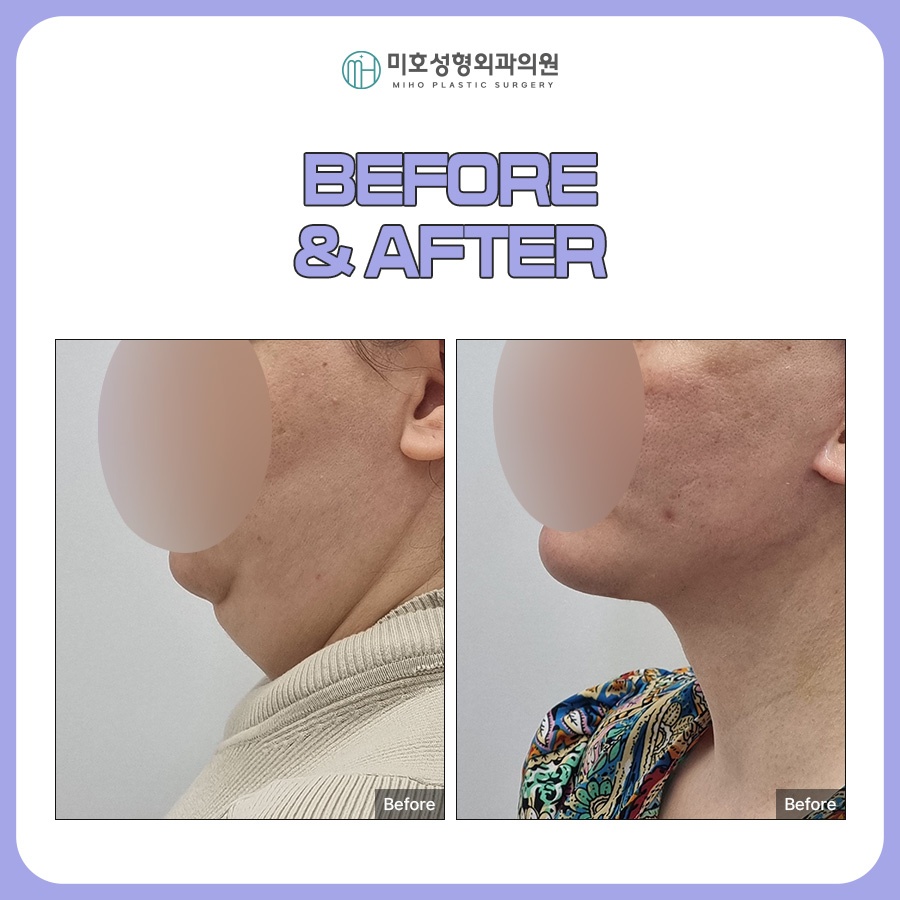
In that case, while tightening the muscles,
it would be advisable to consider a lifting procedure
that pulls the skin and removes part of it.
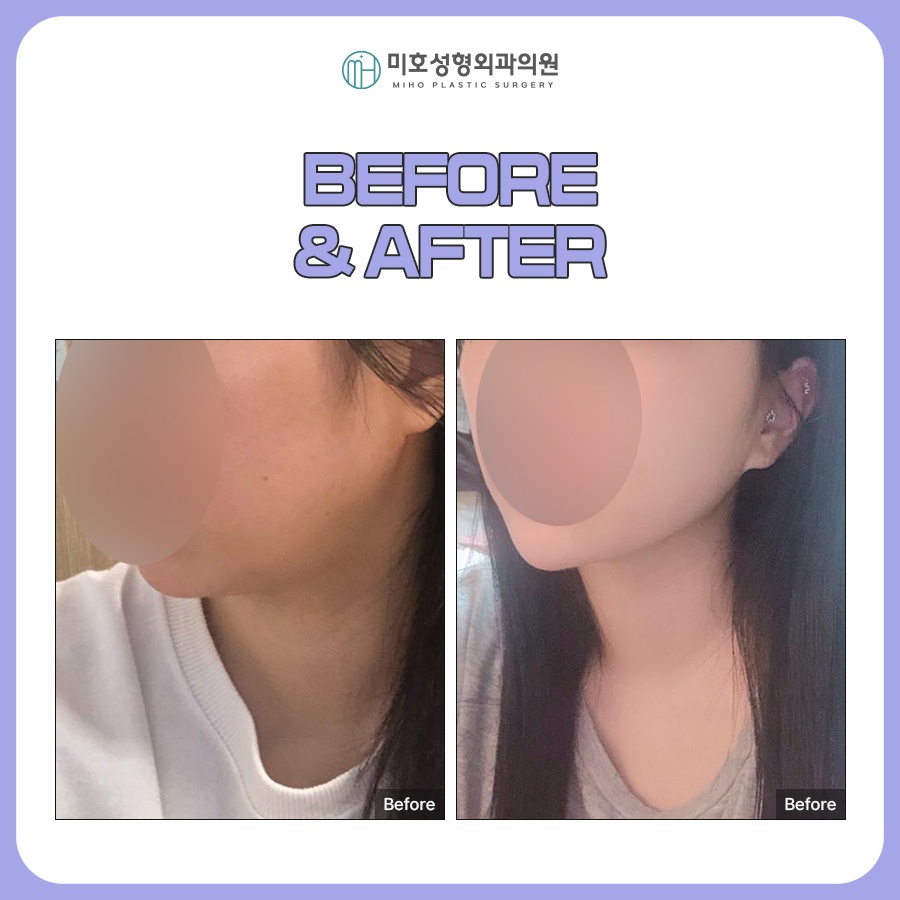
Immediately afterward, swelling and bruising made it hard
to clearly see the changed appearance.
After a day or two,
the contour would gradually become visible.
For about a week, significant swelling and bruising could stand out,
and up to days 3 to 5, cold compresses should be applied;
after that, consistent warm compresses helped relieve
swelling and bruising.
If you wore a compression band during recovery
to help stabilize the tissue and avoided bending your head down,
you could return to daily life more quickly.
After chin muscle ligation,
you also had to avoid actions that could intensify
or trigger an inflammatory response.
Touching the incision site with unclean hands,
or straining the neck area too much and forcefully
tilting the head back, could instead cause swelling.
In addition, alcohol and smoking can trigger inflammation,
and using saunas or going to swimming pools carries
a risk of infection, so these should be avoided.
Through thorough pre-research, in-depth consultation,
smooth procedure progress, and diligent aftercare
that follows the medical institution's guidance,
I sincerely hoped you would regain a clear,
sharp jawline.


Previous image
Next image