눈밑지방이식 피곤한 인상으로 스트레스라면

Even when I wasn’t feeling upset or tired,
if people around me kept asking whether
something was wrong with me,
I started to wonder whether there was
some problem with my face.
The puffy fat layer that protrudes under the eyes
is hard to hide with makeup,
and even if it is covered,
it tends to show again over time.
At such times,
if under-eye fat grafting is used to remove part of the unnecessarily
accumulated fat and fill in sunken areas,
the impression can be improved more softly than before.
In this article, we will cover
related information.
First,
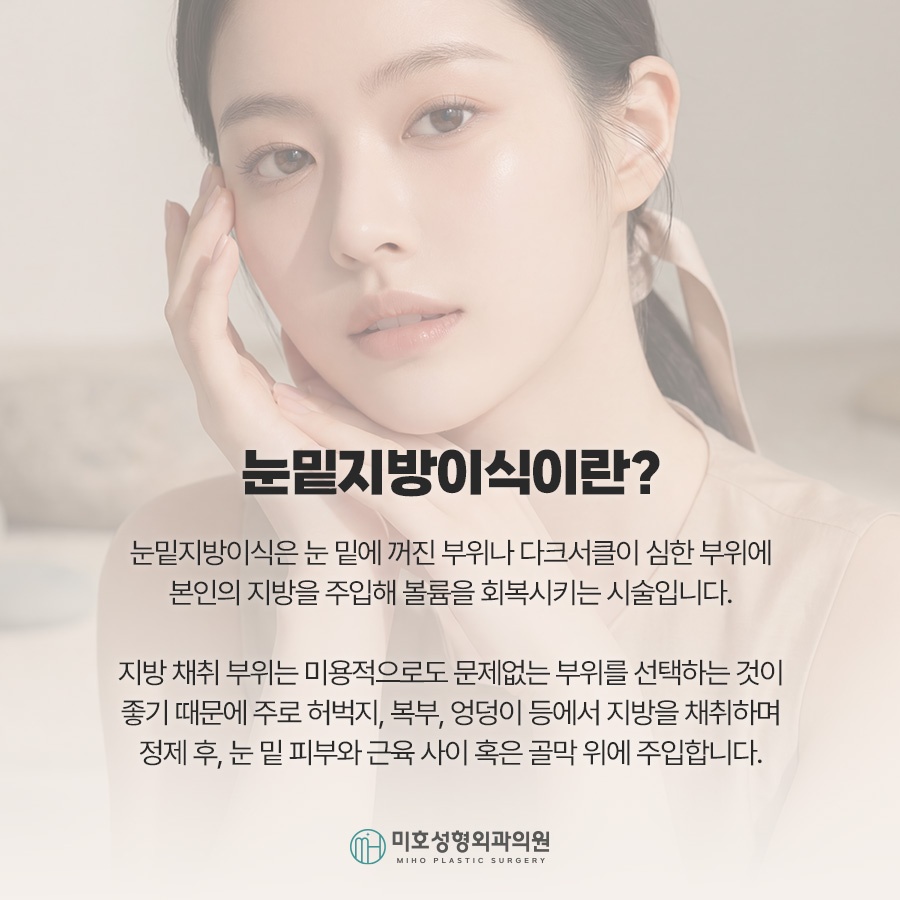
we began by defining what under-eye fat grafting is.
It is a method of redistributing one’s own fat
to add volume.
The important thing was to approach it carefully
so that the result is natural
without being excessive.
Because the fat comes from my own body,
it had the advantage of causing less foreign-body sensation
and relatively fewer inflammatory reactions.
However, if done greedily or without delicate handling,
it could look unnatural and
feel burdensome.
Even if the process seems simple,
it was important to fill in the volume precisely
while considering the overall balance and harmony.
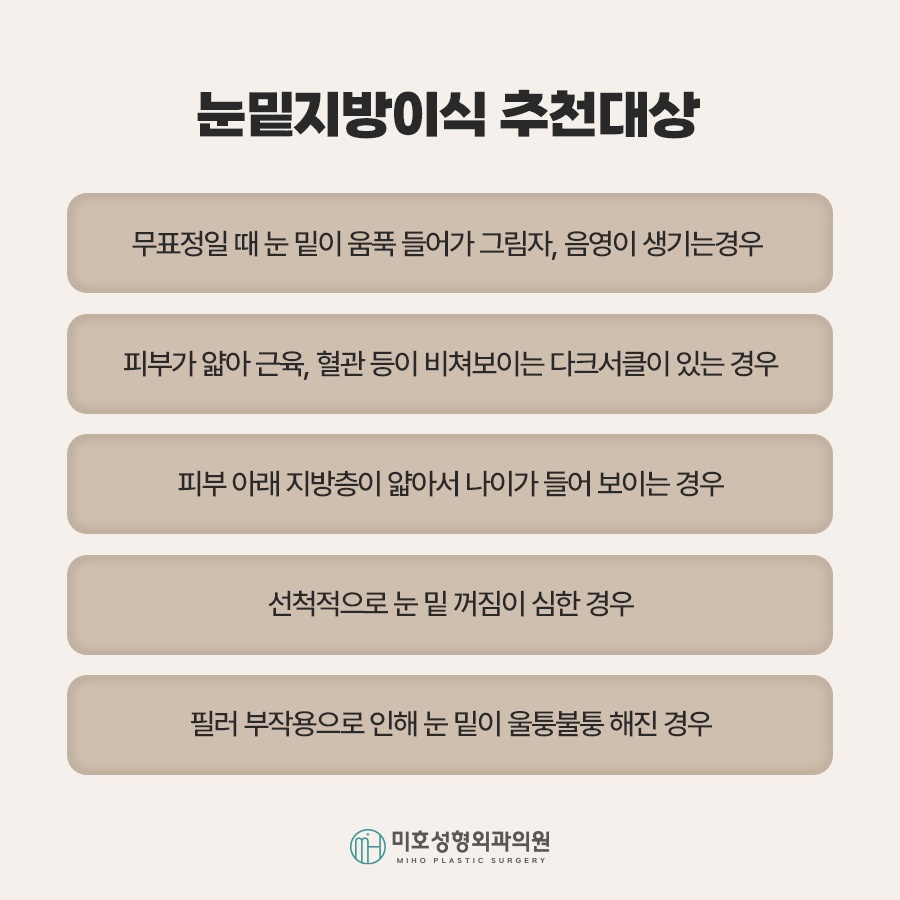
Those for whom under-eye fat grafting is needed or recommended
included people whose dark circles had become darker than before
or who had fat accumulated under the eyes,
causing sagging.
If you often hear from others that you look tired
or look sick,
this method could be used to improve the area.
If the problem was not uneven skin tone,
but rather that some areas were excessively hollow
and other areas had unnecessary fat buildup,
a process to flatten these areas was needed.
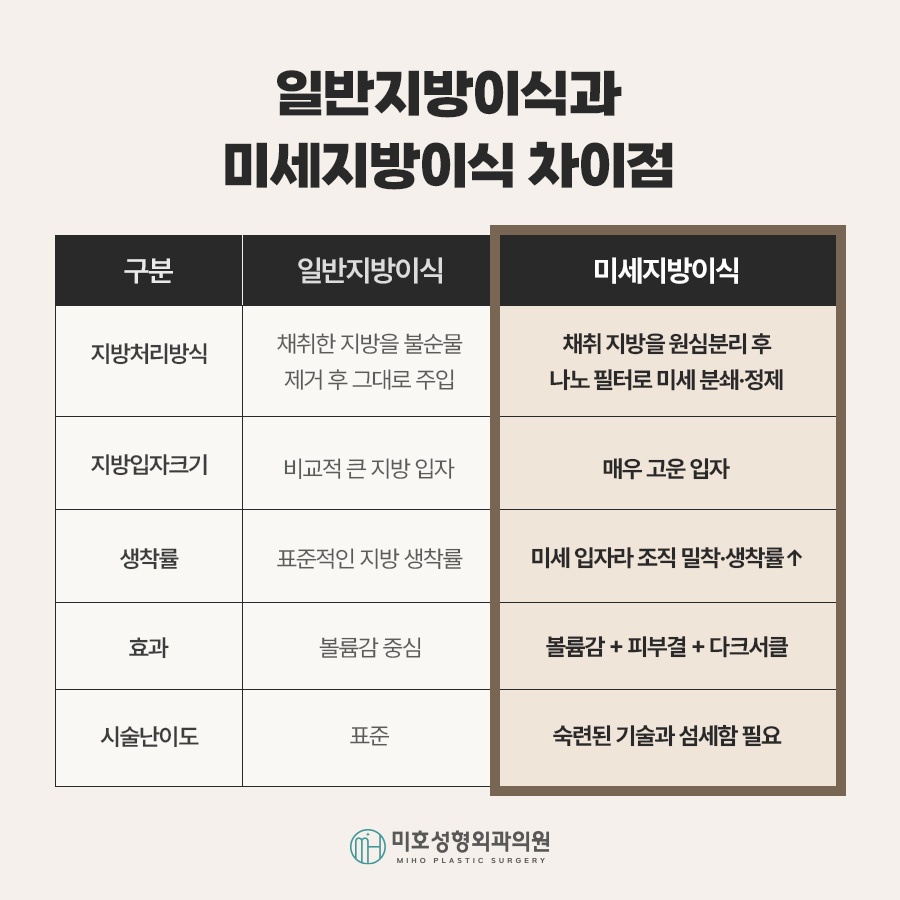
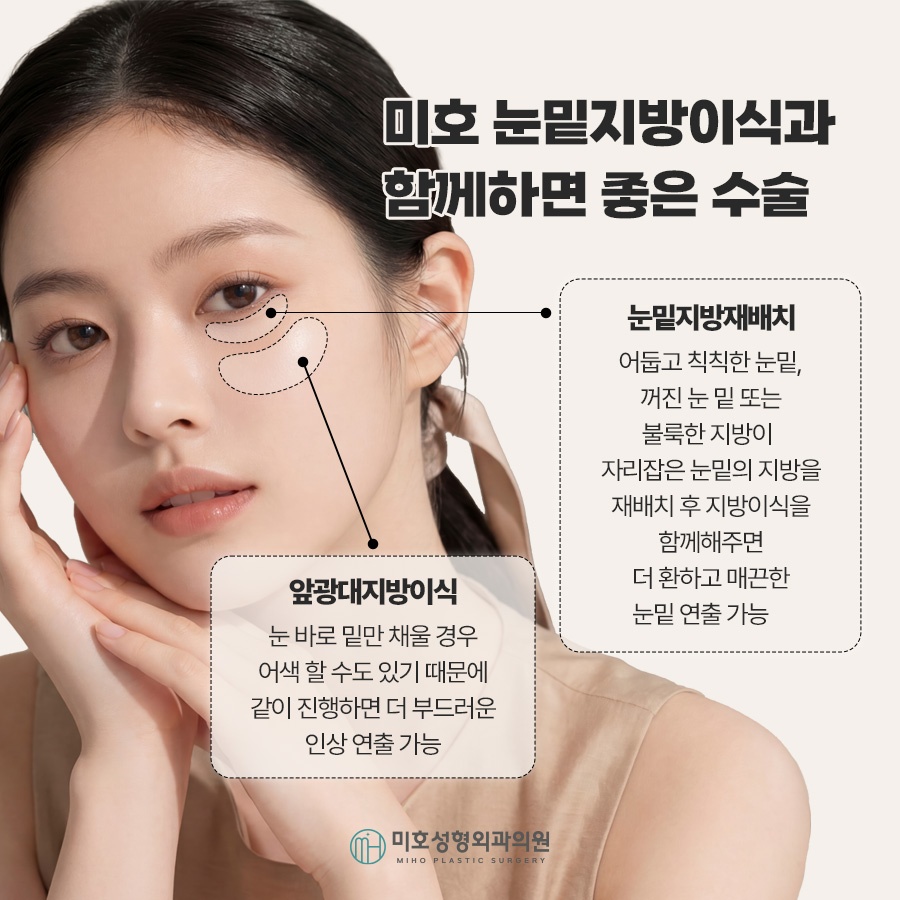
There were two main ways to address sagging and dark under-eyes.
They were under-eye fat repositioning and lower blepharoplasty.
At our clinic, we applied procedures in detail
according to each individual’s aging characteristics.
Then what causes the area under the eyes to sag and hollow out?
As aging progresses, the regeneration rate of collagen drops significantly,
which makes the skin thinner,
decreases elasticity,
and causes wrinkles.
Among these, the skin around the eyes is especially thin and sensitive,
so it is affected more directly.
Under the influence of gravity, the fat layer accumulates downward,
and uneven contours form based on the areas where the ligaments are located.
Because of this,
a shadow falls more deeply under the eyes,
and fine wrinkles become more noticeable.
At our clinic, we applied different under-eye fat grafting solutions
depending on the cause.
If there was no protrusion and only the color was dark,
we would redistribute the orbital fat or graft it
to reinforce the lower area and improve the visibility
of capillaries.
If the degree of sagging was not yet severe or only fine wrinkles had formed,
the concern could be addressed through thread lifting,
radiofrequency, ultrasound,
or skin boosters.
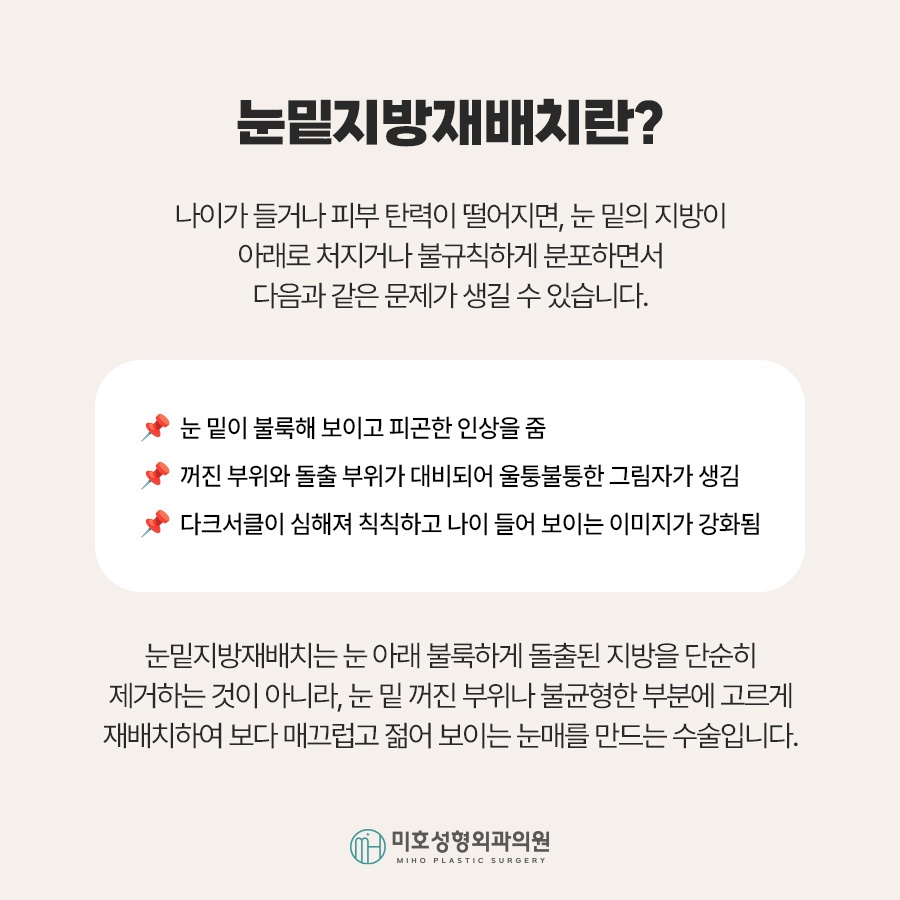
Another cause was that the strength of the septum had loosened.
When the tissue surrounding the orbital fat weakens,
the fat pushes through the gap and creates contours.
In such cases, by reinforcing and tightening the weakened septum,
the orbital fat can be returned to its proper position,
and the protruding area can also be flattened
to improve shadowing.
The solution that could be applied varied depending on the amount
and location of orbital fat.
Basically, if the amount of orbital fat was large
and it protruded through the loosened area of the septum,
part of it was removed.
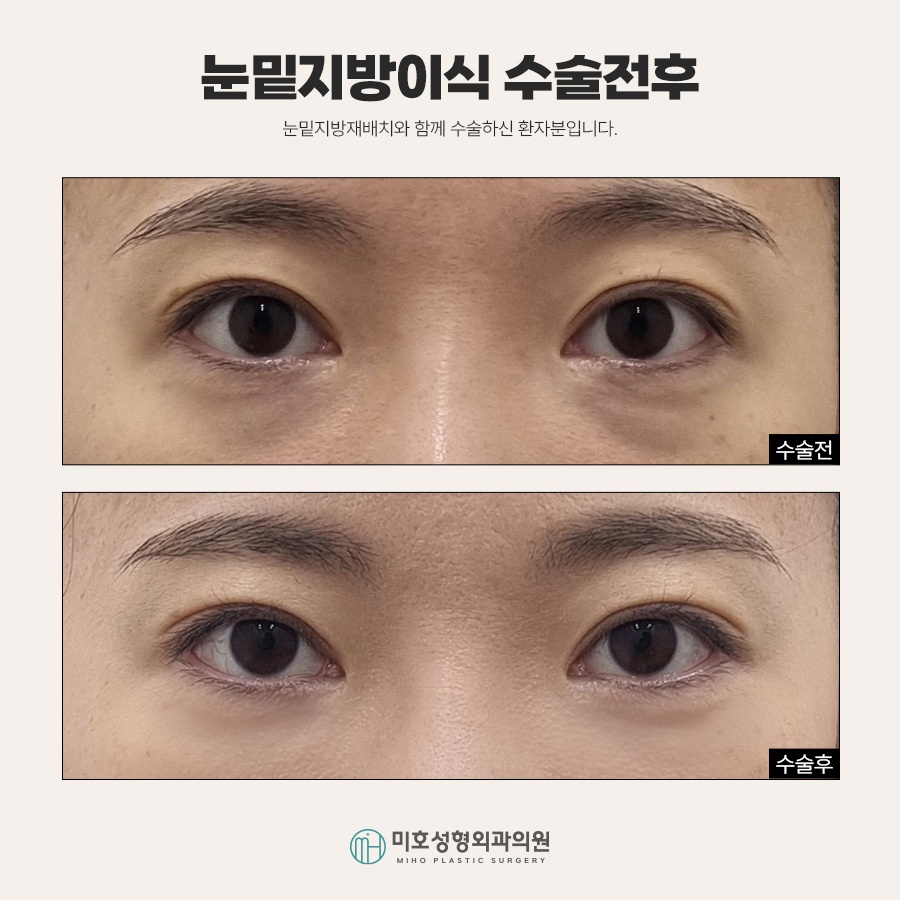
If the fat protruded while the shadowing was deep and even the tear trough became deformed,
the fat had to be removed and filled into the hollowed area
to restore volume.
If the fat volume itself was insufficient,
filler was sometimes injected together with nano under-eye fat grafting.
In this way, at our clinic,
the location and volume of the orbital fat,
as well as the condition of the eyelids,
were comprehensively considered
to flatten the uneven under-eye area.
The last cause to consider was the tissue called the tear trough ligament.
It is located in the inner lower area under the eye
and is directly connected from bone to skin.
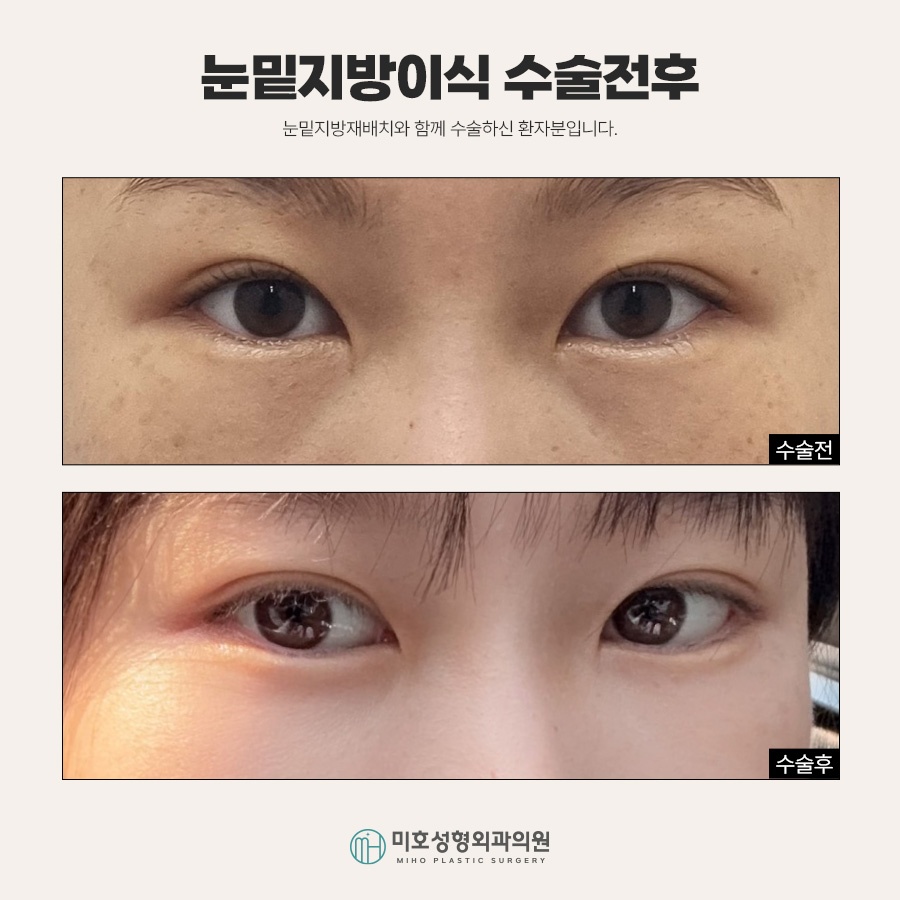
The role of the tear trough ligament is to support the skin
so that it does not descend downward.
The problem was that while the ligament was supporting the tissue in place,
other areas loosened and bulged,
which deformed the tear trough and made it appear hollow.
If the orbital fat volume was appropriate
and the septum was not significantly weakened,
but only the tear trough was deformed,
the concern could be addressed through micro fat grafting.
However, if the degree of deformation was severe
and the fat was also noticeably protruding,
the ligament had to be dissected and removed,
and orbital fat inserted and repositioned in that area.
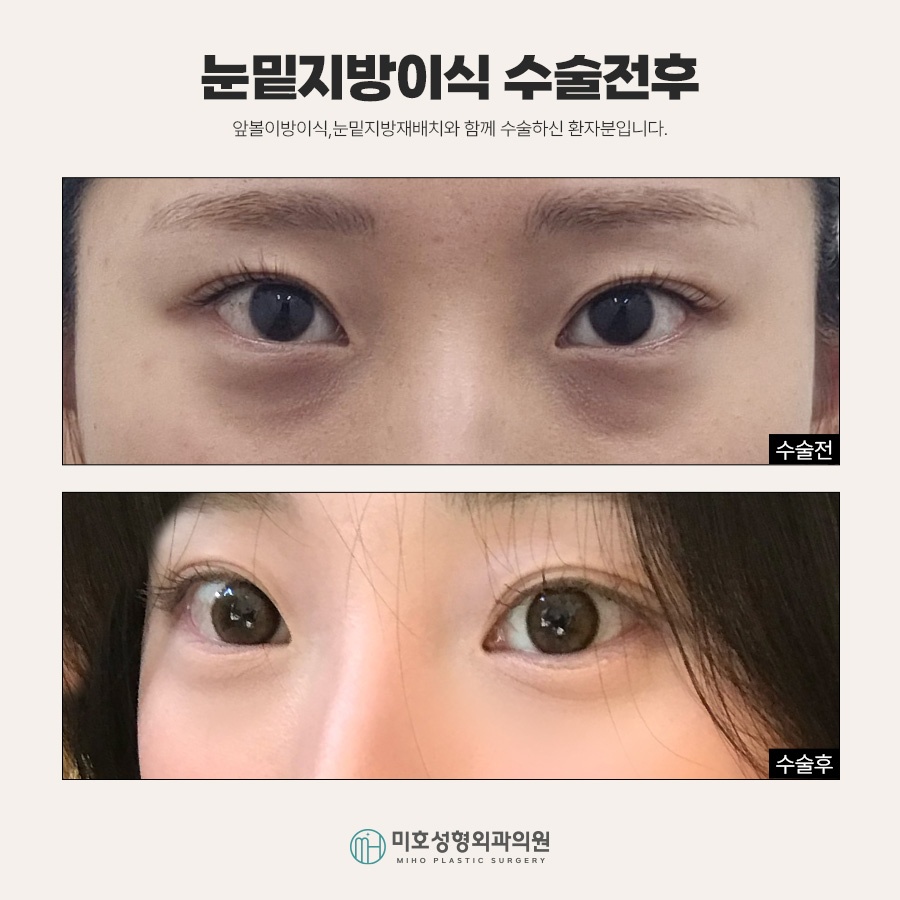
To briefly introduce the procedure,
first the inner conjunctiva of the eye was precisely incised.
The adhesions of the ligament that had formed in the tear trough area were released,
and the unnecessarily protruding fat was repositioned into the sunken area
to flatten it.
If the procedure ended there, it could return to its original state after not long,
so the septum was reinforced and the fat fixed in place
to prevent recurrence.
Because the incision is made on the inside of the eye,
the visible scar is minimal,
and since the incision is small,
there is less bruising and swelling,
and recovery is faster.
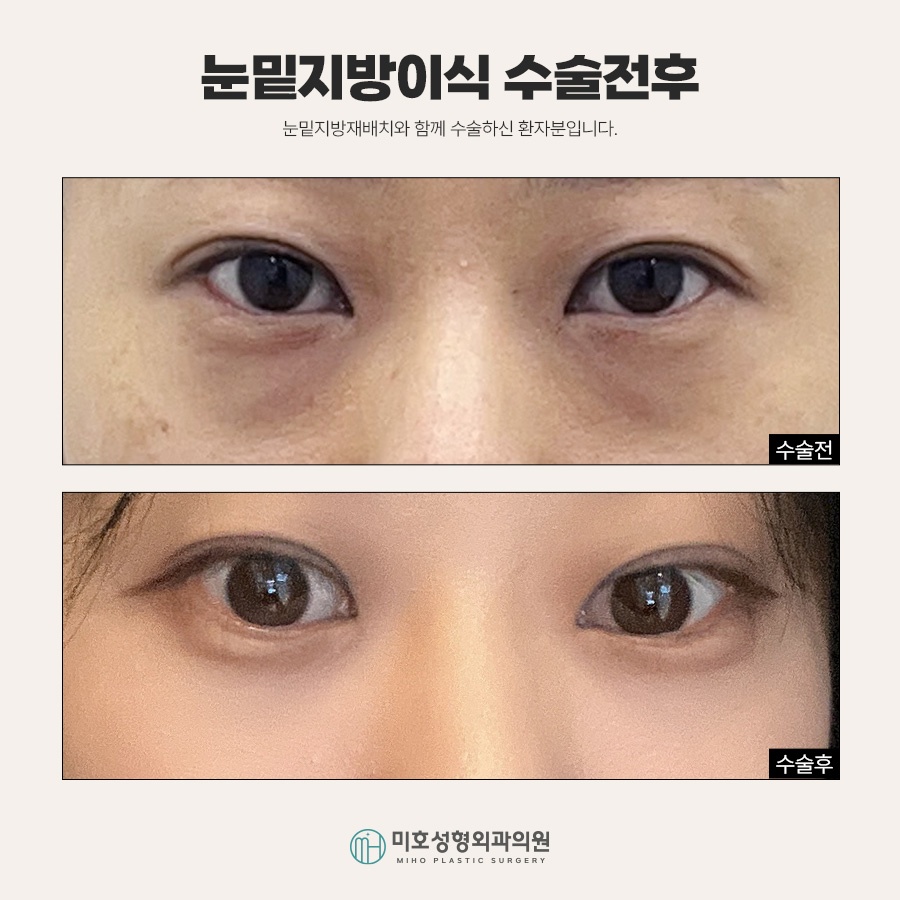
Preparations before the procedure included
refraining from alcohol and smoking for one week beforehand,
and if you are taking medication,
you must inform the medical institution
so that it can determine whether to stop it.
Depending on the anesthesia method,
fasting was required from 6 to 8 hours before the procedure,
and it was recommended that you go home with a guardian.
After under-eye fat grafting,
cold compresses for 3 to 5 days
and then warm compresses after that
were helpful in reducing swelling.
You should also be careful not to rub the incision site
or touch it with unclean hands.
After 충분한 consultation with the medical staff,
we hoped you would carefully consider the procedure
and be reborn with a better appearance.



Previous image
Next image