
Because the nose is a feature that
other people tend to look at for a long time,
I naturally became very conscious of it.
Since it sits in the center of the face,
it helps establish balance, create a three-dimensional look,
and make the impression appear more defined.
Since I could not ignore the benefits that appearance can bring
in social life,
I wanted to improve my complex,
but finding a method that suited me was
more difficult than I expected.
If you prefer a result that looks natural,
as if nothing was done,
nose surgery without implants was recommended.
In the past, a glamorous Western look
was the trend, so silicone or AlloDerm
was often used to raise the bridge of the nose.
As beauty standards changed and social 분위기가
moved toward valuing natural charm,
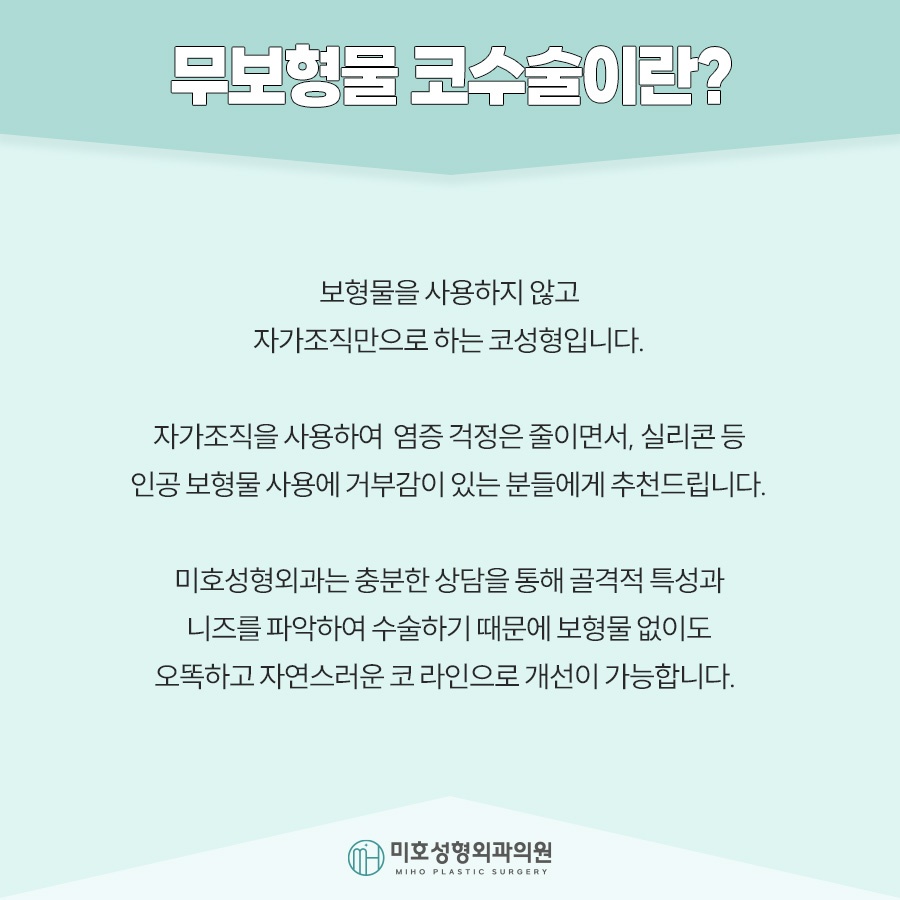
nose surgery without implants
gained attention.
This solution uses the person's own tissue
instead of artificial implants,
allowing more detailed adjustment and
easing side effects.
Representative side effects that can occur when artificial implants are used
include the silicone showing through the skin,
inflammation, and capsular contracture.
These are caused by the body's
immune response to foreign material,
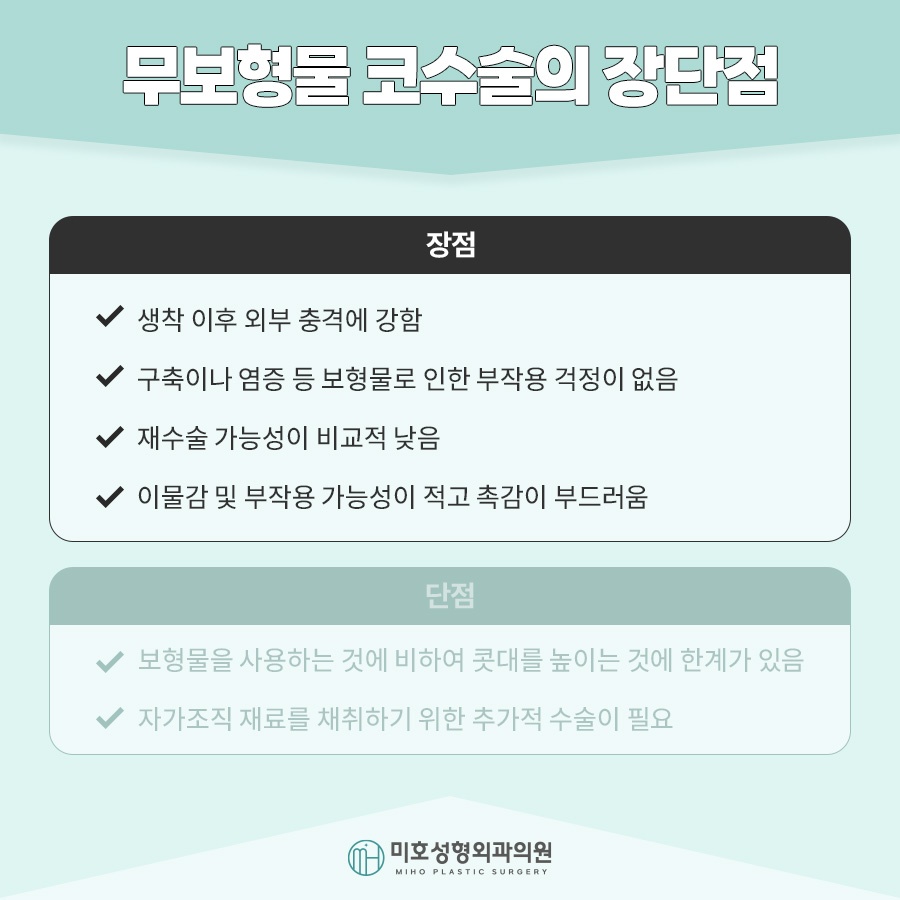
so using autologous tissue can reduce the risk
of side effects.
There are several materials used in nose surgery without implants,
and the characteristics and hardness of cartilage differ depending on where it is harvested,
so it is selected according to the purpose.
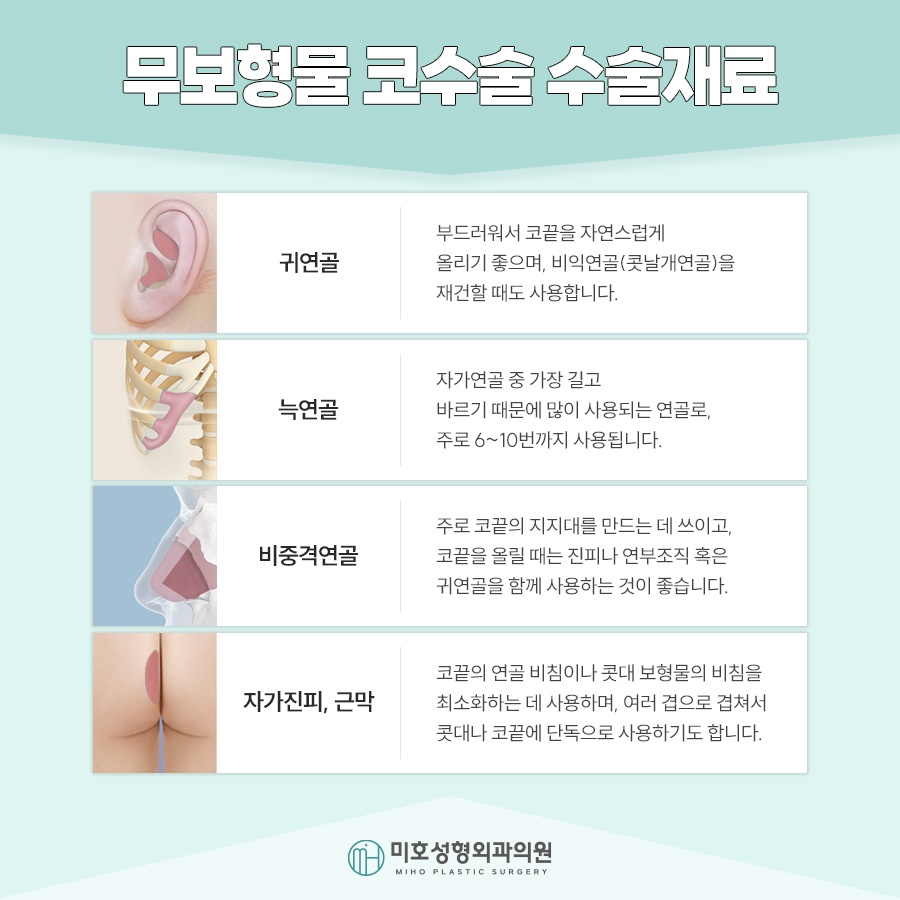
Common autologous cartilage materials include
septal cartilage, ear cartilage, and rib cartilage,
and autologous dermis may also be used.
Septal cartilage is the cartilage located inside the nose
and serves as the pillar of the nose.
It is mainly used to straighten a deviated septum,
and the remaining amount is processed and inserted into the tip of the nose.
By understanding the characteristics of the material,
it has the advantage of correcting a curved septum while also
improving a low bridge and a broad nose tip,
but the amount available is limited.
To replace it, cartilage was harvested from the ear or ribs and inserted.
Ear cartilage is soft and easy to reshape,
which makes it advantageous for creating a curved line.
Rib cartilage refers to the cartilage located between the ribs.
Among autologous materials, it is the hardest,
so it stably supports the bridge of the nose.
Since each type of cartilage has different characteristics
and produces different results,
a detailed design and material choice should be made
through personalized diagnosis.
To create a natural and beautiful nose shape,
it is important to consider the line running from the forehead to the bridge of the nose,
the tip of the nose, the lips, and the chin.
The bridge line should be adjusted while considering the angle with the forehead.
If the bridge is too high, bone was shaved down;
if it was low, cartilage was inserted
to make up for the 부족한 부분.
Because tissue taken from my own body is used,
the likelihood of foreign-body sensation, rejection,
and inflammatory reactions was relatively low.
However,
after nose surgery without implants, depending on the area from which tissue was harvested,
additional care may still be necessary,
and this should definitely be kept in mind.
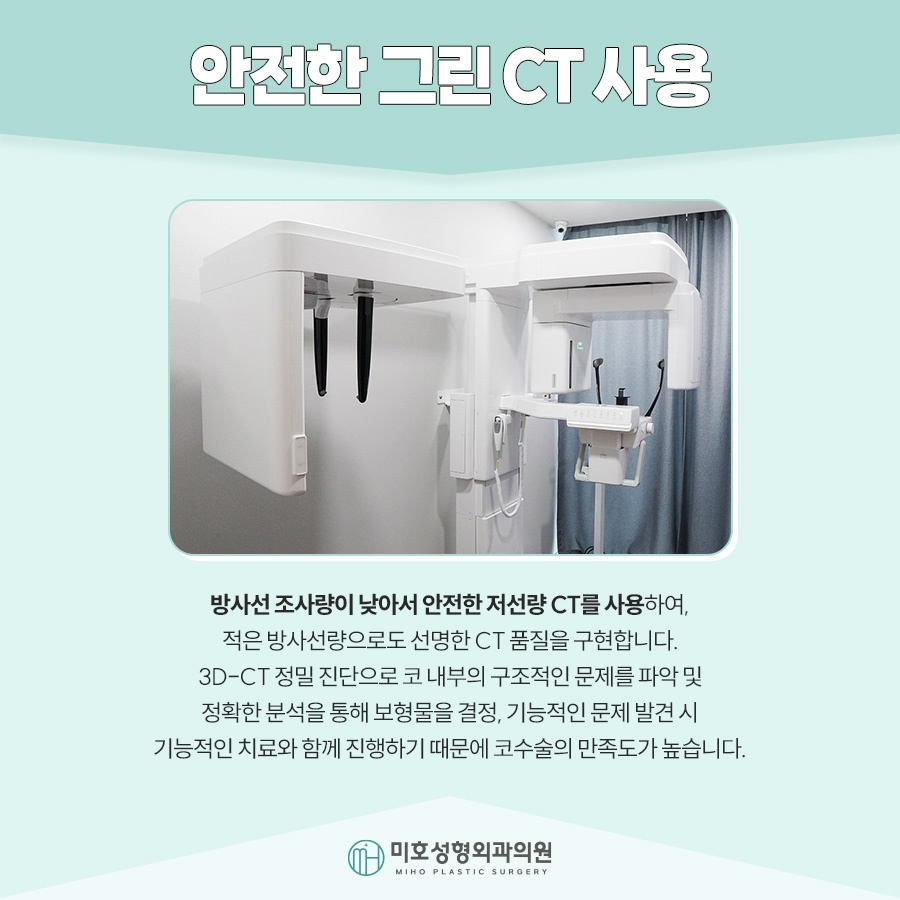
Since there are two incision sites,
the recovery period can naturally become longer.
In some cases, tissue harvesting may be difficult,
or the procedure itself may be difficult to apply.
If the amount of tissue is insufficient,
the skin is too thick,
or a dramatic change is desired,
it may actually be better to insert an artificial implant.
If there is not enough cartilage,
or if you are concerned about recovery at the harvest site,
donor material can also be used.
This reduces the inflammatory response associated with artificial implants
while helping prevent scars near the rib area.
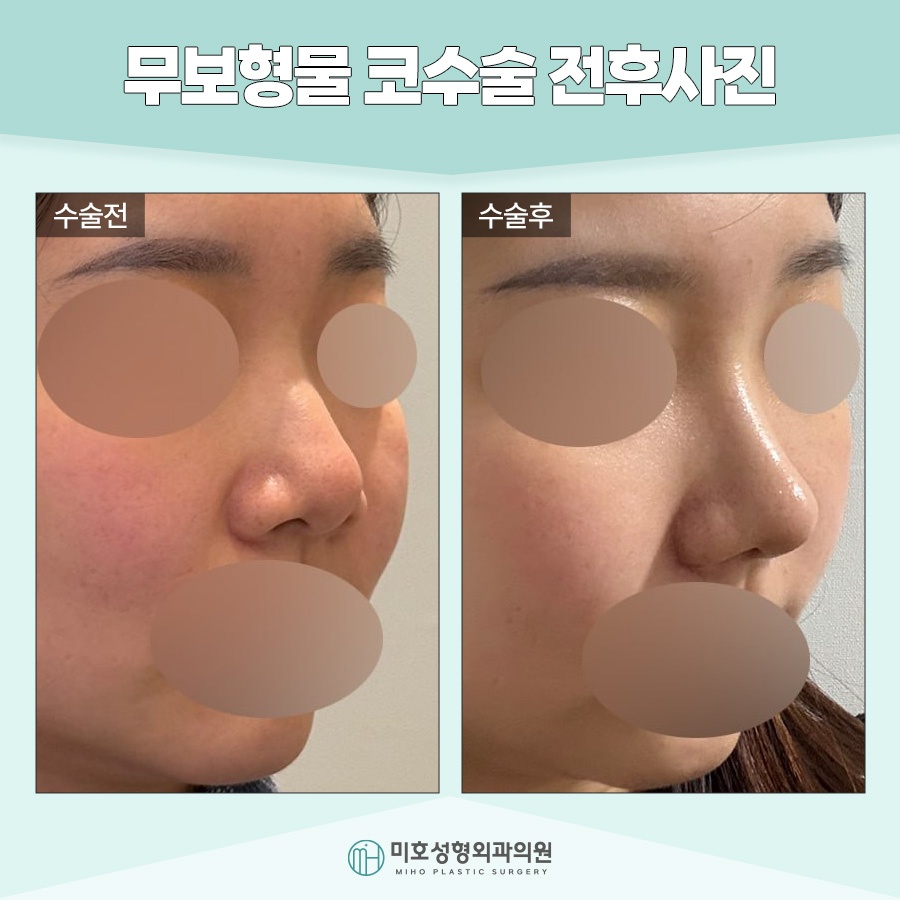
A systematic approach
If any solution is decided on hastily without going through a systematic process,
the chances of things going wrong are high.
Even if it is nose surgery without implants,
if it is attempted without considering harmony with the facial features,
it can end up looking unnatural.
To form a natural and beautiful line,
it is better to proceed systematically through a series of steps.
In order to refine the harvested cartilage and insert it stably,
a mock evaluation had to be performed in advance.
Before the procedure, you should be informed that after harvesting,
the area may temporarily experience bruising, swelling, and pain.
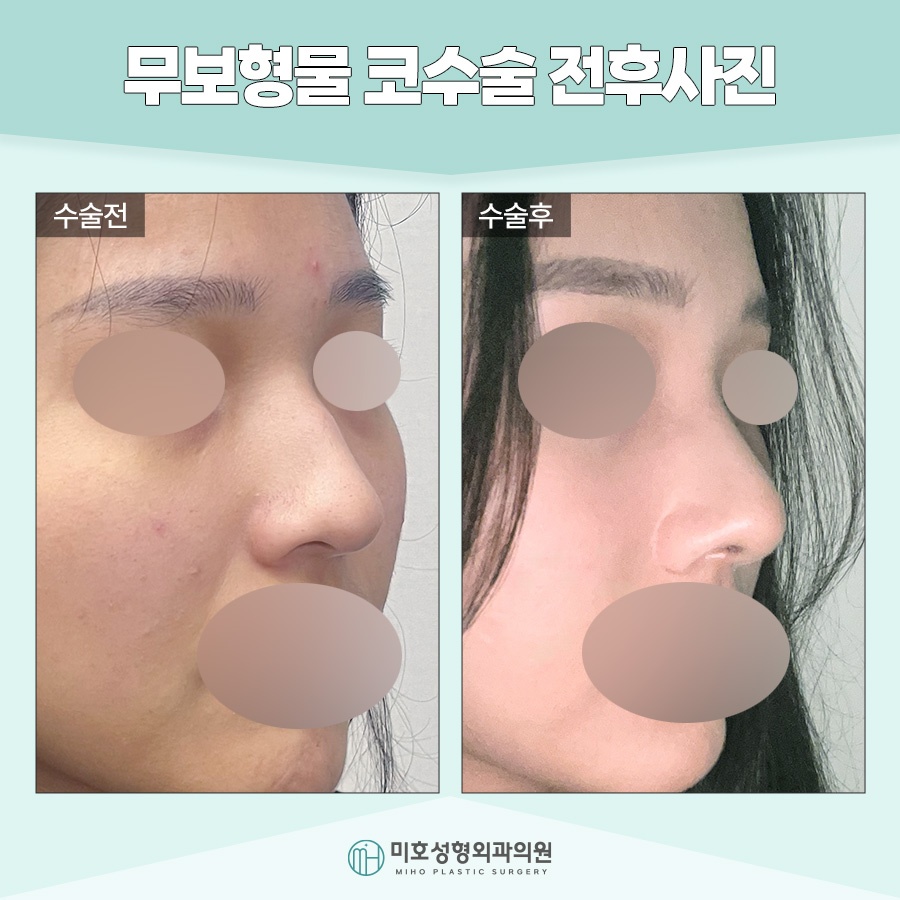
The procedure took about 1 to 2 hours.
This is only an average,
and it may be shorter or longer depending on the individual.
For 1 to 2 weeks after the procedure,
visible bruising and swelling may occur,
and the shape of the treated area may change during the recovery process.
The procedure itself is important,
but post-procedure care afterward must also be handled with special attention
for it to settle stably.
If you want to return to daily life sooner,
it is necessary to strictly follow the instructions provided by the medical institution.
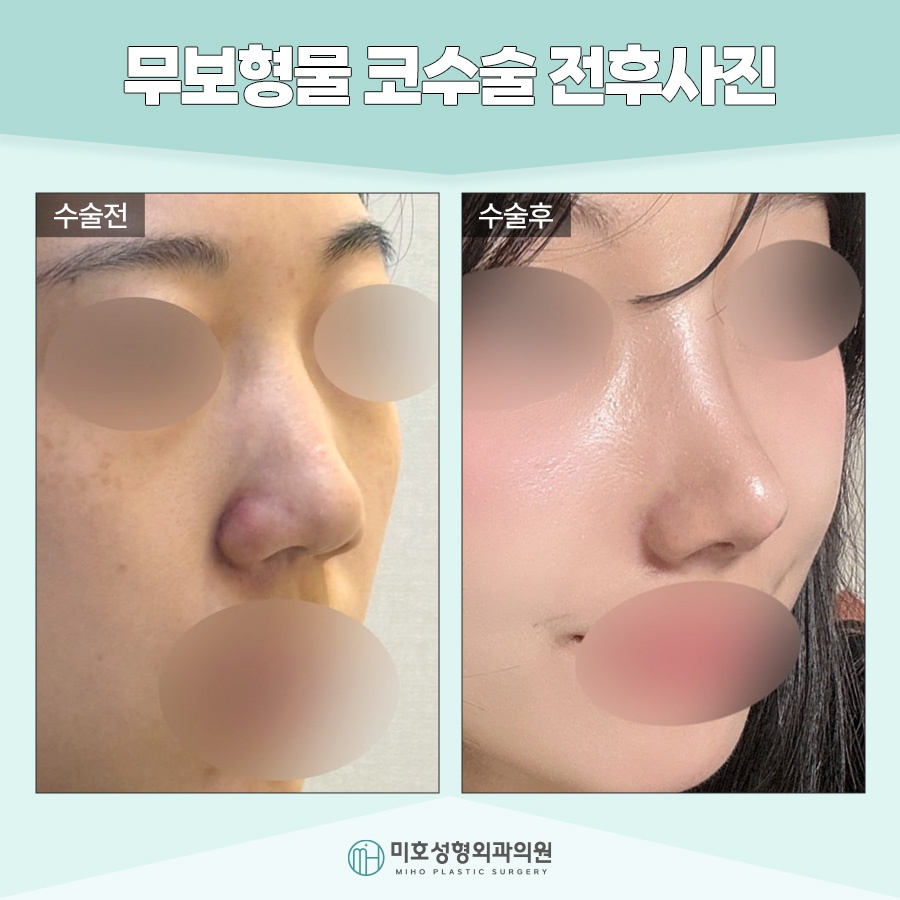
For 3 to 5 days, apply cold compresses to the affected area,
and after that, use warm compresses.
When sleeping, keeping the head higher than the heart helps reduce swelling,
and you must avoid blowing your nose or touching the incision site with contaminated hands.
Light walking is better than strenuous exercise,
and sauna use and swimming pool visits should be avoided for the time being.
For one month, it is recommended to refrain from smoking, drinking alcohol, and wearing glasses.
If you feel pain along with redness and swelling,
you should visit a medical institution without delay.
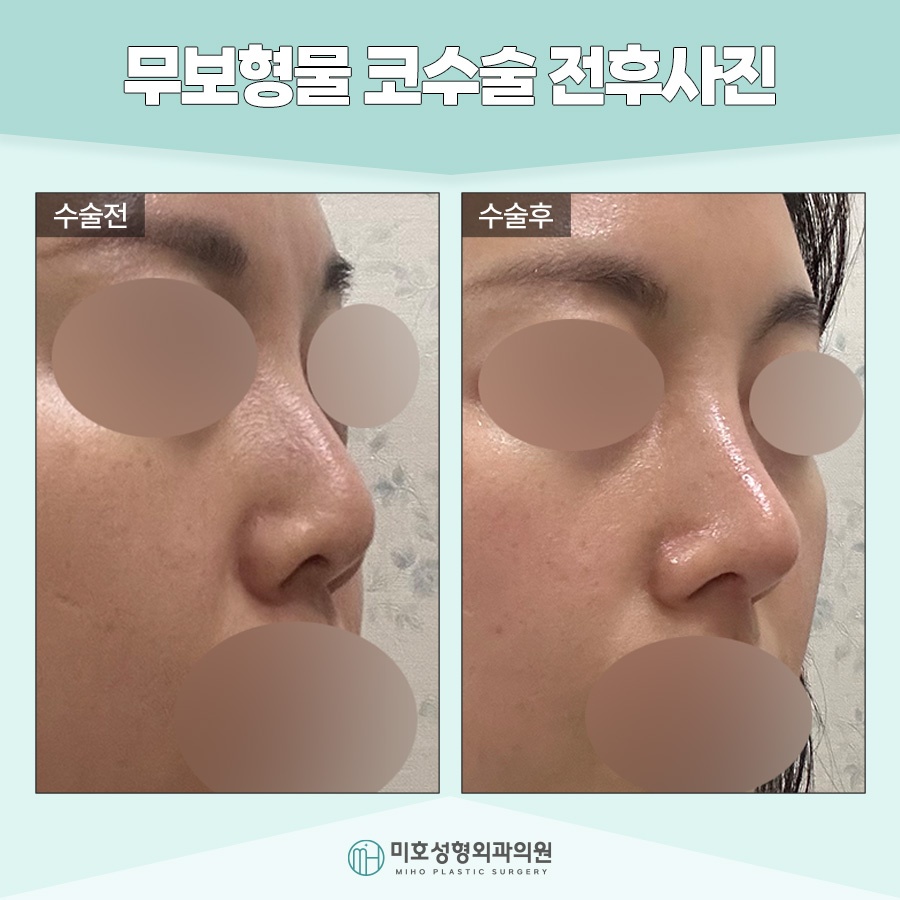
Things to check during consultation
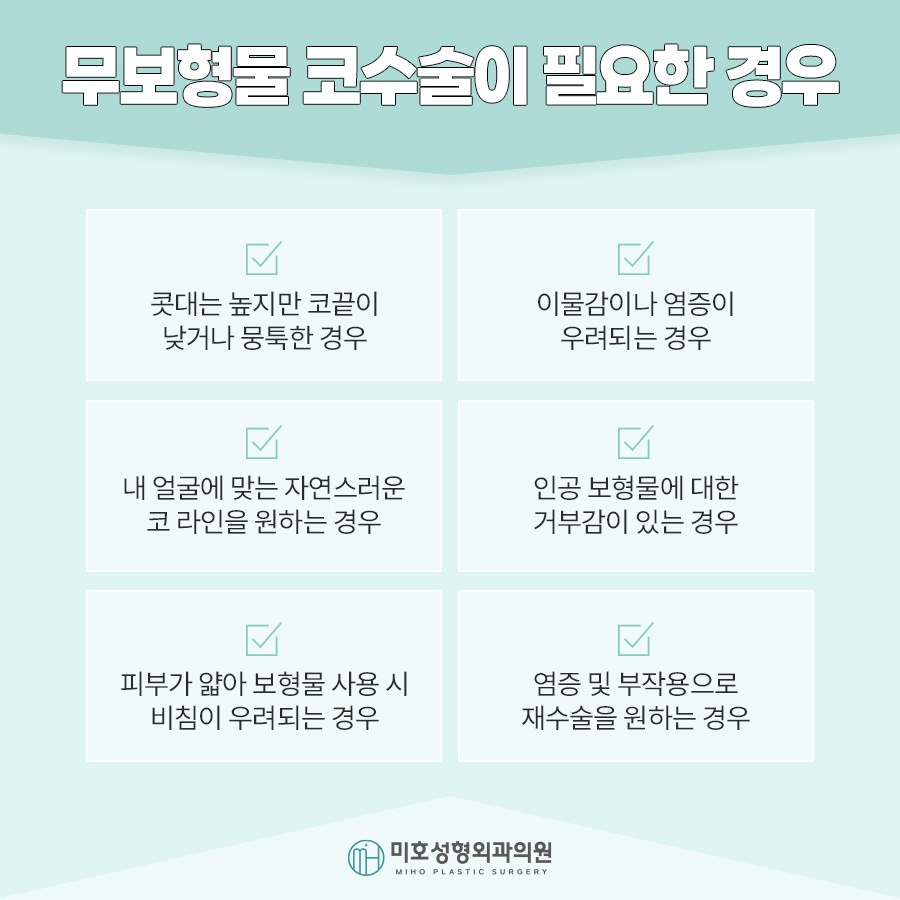
If you have decided to undergo nose surgery without implants,
I recommended visiting several medical institutions in person
and receiving consultations.
At this time, the things to check include whether they analyze each person's constitution and structure,
and whether a process for stable recovery is in place.
It is also necessary to check whether they provide ongoing follow-up to prevent complications.
I hoped they would closely assess your current appearance and facial feature characteristics,
the side profile line, bridge height, nose tip shape,
and skin thickness, and provide care in an appropriate direction.


Previous image
Next image