
Even in moments when you are not consciously aware of it,
because of the naturally moving facial muscles and
the relatively thin, delicate skin around the eyes,
the eye area ages faster than other parts of the face.
As drooping eyes develop, or as the muscles
under the eyes weaken, fat may clump together
excessively or protrude, and even the under-eye
area may begin to sag.
Because this can make the face look tired all the time
and appear older than one’s actual age,
many people begin considering ways to improve it.
However, depending on the causes and the specific
changes involved, the approach used to enhance
positive outcomes can differ from person to person.
For that reason, it is best to first determine whether
lower blepharoplasty is the right method for you
before making a decision.
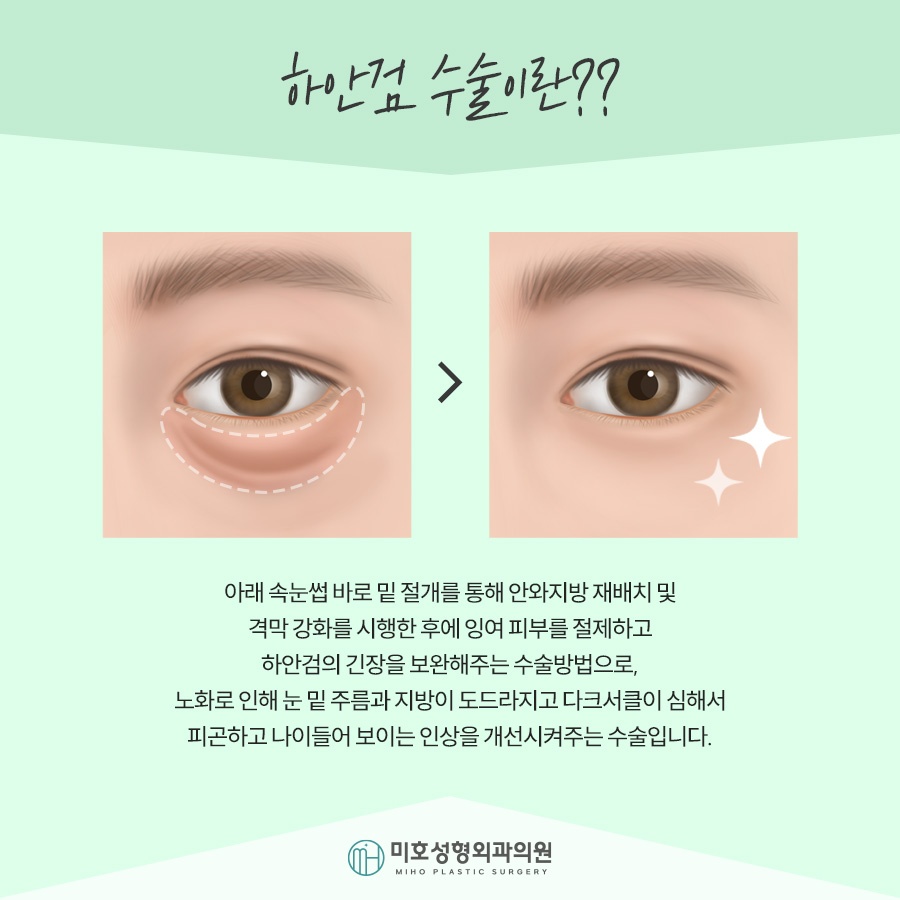
Problems such as skin irritation around the area,
dry eyes, and blurred vision caused by excessive
eyelid sagging are mostly corrected through
upper blepharoplasty. Among these, if the under-eye
area is particularly loose and dark circles have become
wider, lower blepharoplasty may be worth considering.
Depending on the case, it may be performed together
with under-eye fat repositioning, and there are also
situations where both are necessary. To achieve a
natural result, thorough examination and judgment are
needed in order to decide what plan should be used.
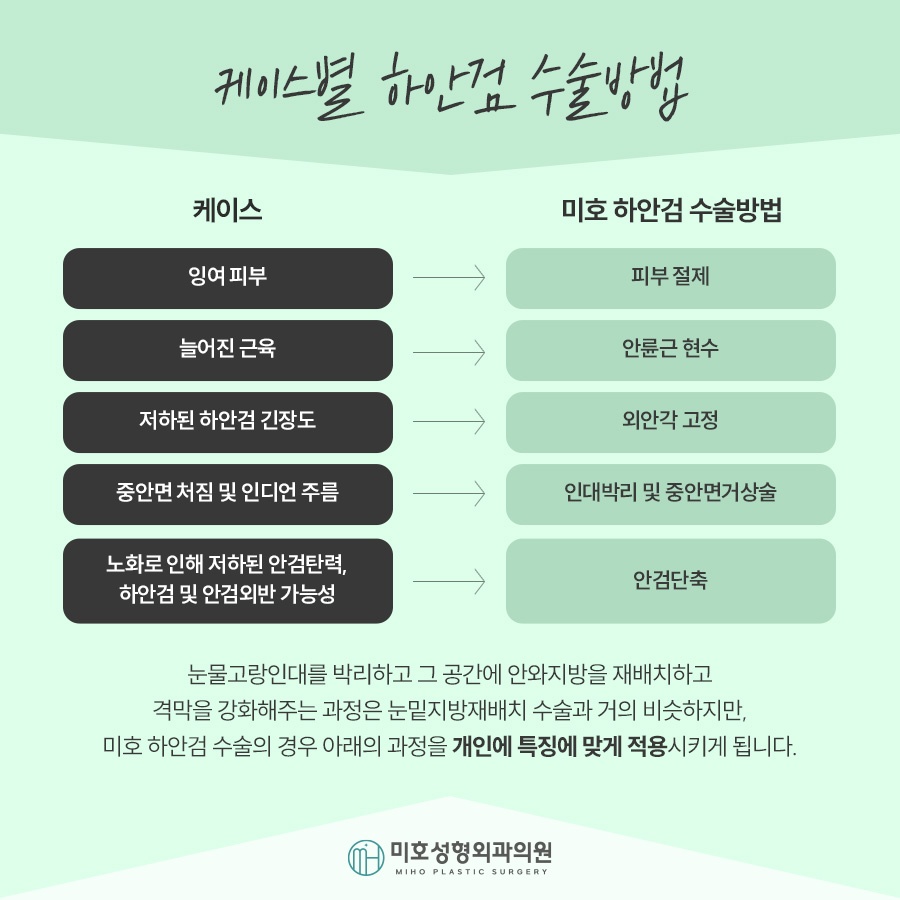
For convenience, the term lower blepharoplasty is used,
but these days the approach is further subdivided into
more detailed methods tailored to each person’s
characteristics. By identifying and applying a
combination of methods suited to the individual,
the procedure analyzes eyelid sagging and orbital fat
ptosis, as well as the degree of protrusion, and then
performs removal, reinforcement, and repositioning.
Once sagging begins, various changes associated with
aging tend to appear at the same time. Therefore,
more serious areas are corrected actively, and if there
are tissues that may become even looser or have weaker
support in the future, those are addressed as well.
When elasticity declines and the firm layer of under-eye
skin becomes thinner, the color of hidden capillaries
starts to show through.
As the face ages and the strength of the various tissues
that make it up gradually weakens and their connections
become looser, the skin begins to sag downward and
may fold at the ligament areas, creating fine wrinkles
that were not there before.
If the dark circles in the area that has lost elasticity look
wider and darker, fat repositioning is used to move fat
into the needed areas and reinforce the lower layer.
At this stage, the amount of fat must be handled very
carefully in order to create volume naturally, so more
precise techniques such as nanofat grafting are needed.

When sagging skin begins to appear,
you may also experience a bulging under-eye appearance
at the same time.
The reason for this previously absent contour is that the
orbital fat that has always been present inside has moved
out of its original position and extended into the septal
area.
This happens when the septum, which plays a role in
holding the under-eye fat in place, weakens. One of the
most concerning aspects is not only the uneven area
under the eyes, but also the shadow formed below the
hollowed contour, which can look like dark circles.

In lower blepharoplasty, the septum is strengthened and
secured so that it can regain its proper function.
When the displaced fat layer is returned to its original
position, the area becomes flat and neat again, and the
shadow caused by the protrusion can also be removed,
allowing a tired-looking appearance to be refreshed.
If there is too much fat or if there are hollow areas that
also need to be corrected at the same time, then in
addition to reinforcing the septum, options such as fat
removal and fat repositioning are considered as well.
A deep hollow line near the area between the eyes and
the nose, which remains like a pronounced crease, is also
one of the main factors that make a person look older.
The tear trough ligament is a structure that originally
helps keep the skin from sagging.
When sagging becomes severe, only the surrounding area
sags while the ligament remains firmly fixed, creating a
sunken appearance. This can look like a deep crease and
make the person appear older.
If only the tear trough has changed and both the fat and
the septum are otherwise in good condition, the hollowed
area can be corrected with microfat grafting. However,
if the fat has already protruded significantly, the
changed ligament is released and the orbital fat is
repositioned to fill the hollowed area.
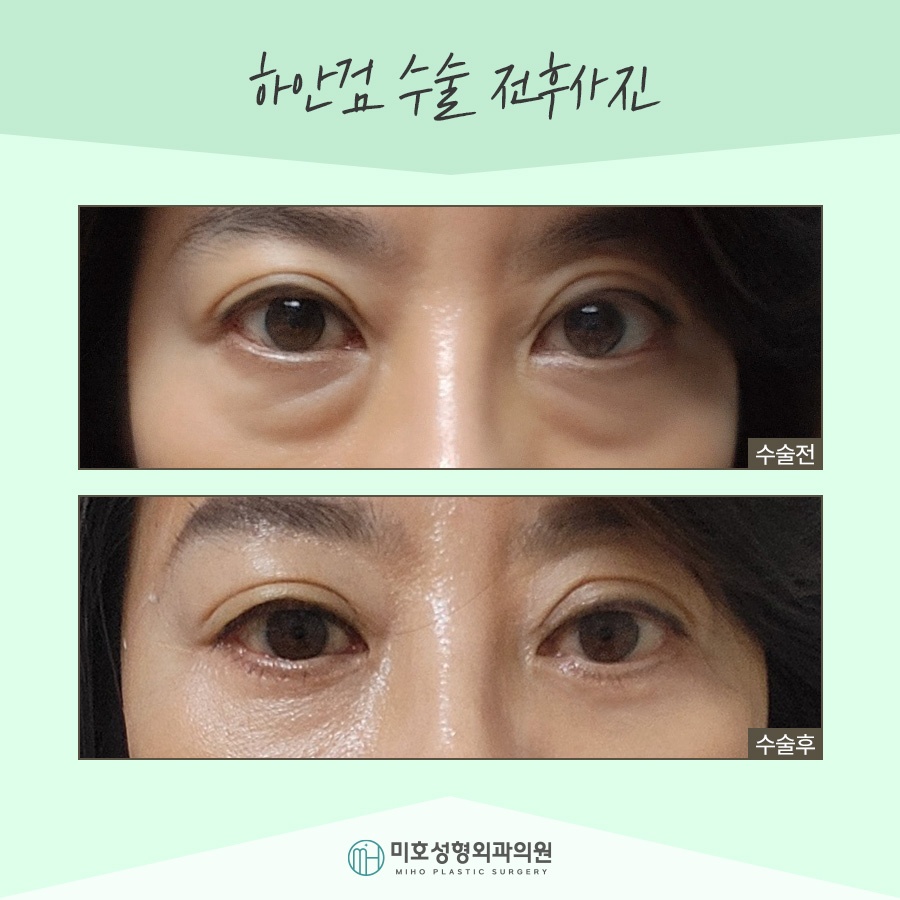
Because there are many factors that create an aged
appearance, there are also many different approaches
that may be carried out alongside lower blepharoplasty.
Among them, even if the midface soft tissue is not the
cause of under-eye sagging, it may still be treated for
aesthetic reasons because it can make the condition look
more pronounced.
If the volume of the front cheek is somewhat weak or if
the maxilla has not developed in proportion to the face,
the aging changes may appear more severe than in others.
In such cases, the lacking volume is carefully restored
without overcorrection so that the area from the eyes to
the front cheek connects naturally.
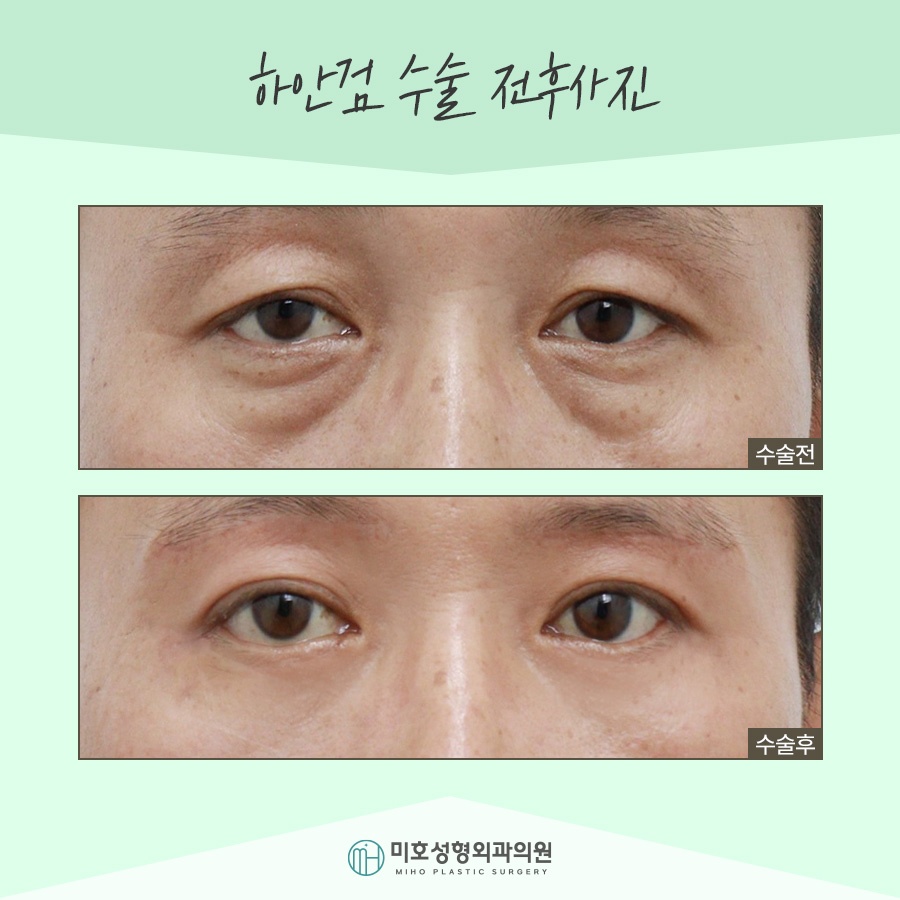
Because the factors involved are so varied, improvement
is considered by examining multiple aspects in a
comprehensive way, including septal reinforcement, fat
fixation and repositioning, and adhesion of the tear
trough ligament.
As aging progresses, problems in the orbicularis oculi
muscle and the skin and tissues of the midface also occur,
and various changes appear in the tension of the lower
eyelid area, the septum, and the orbital fat. For this
reason, the situation must be assessed carefully, along
with the amount of skin to be excised and whether a lift
procedure is needed.
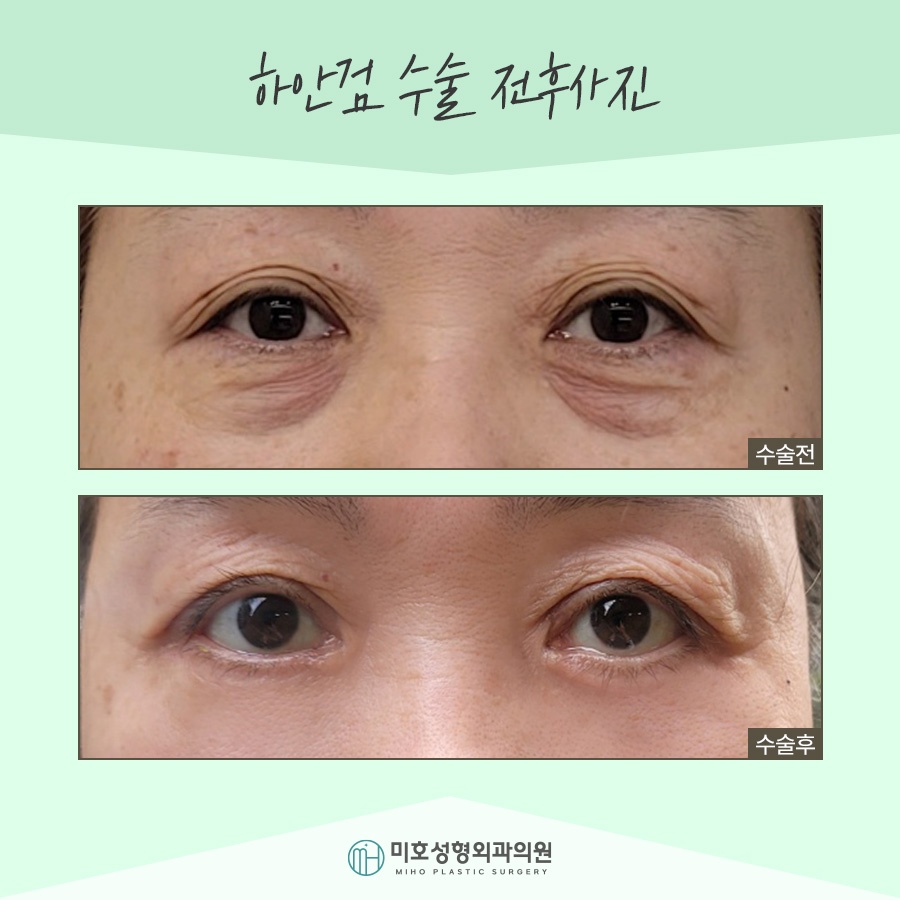
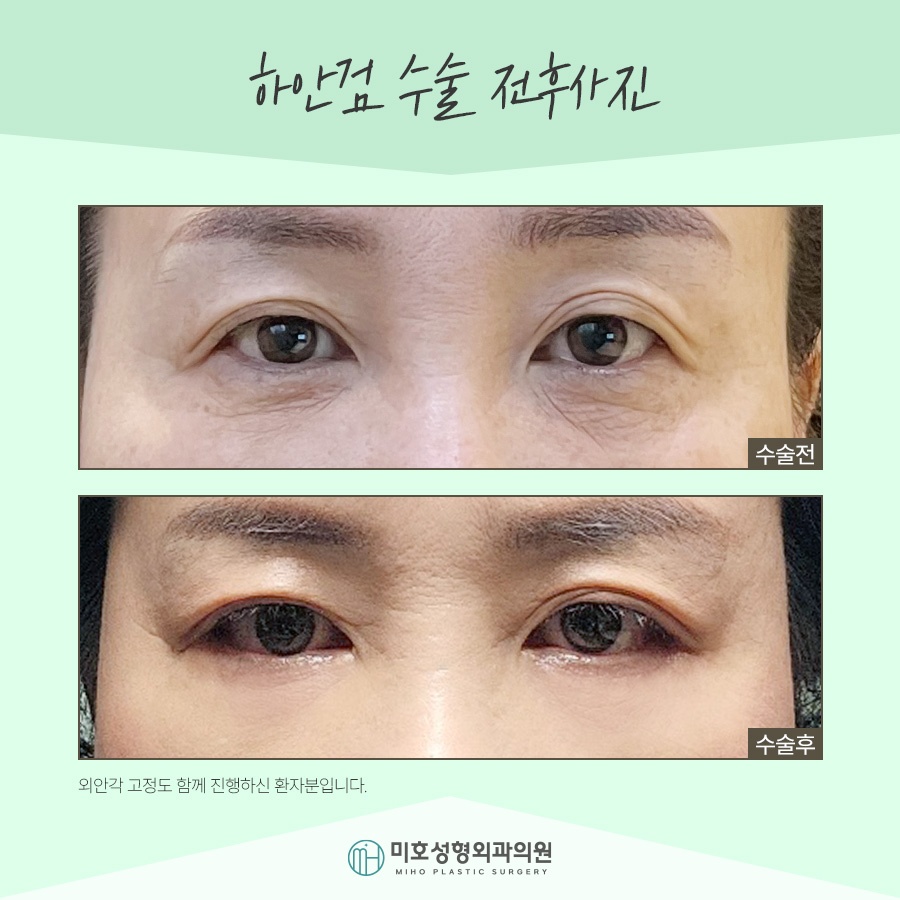
Depending on each person’s characteristics, some of the
loosened skin may be removed, and if the tension is
severe, lateral canthopexy may be applied to help the
lower blepharoplasty result appear more natural.
Above all, it is important to preserve the existing
appearance so that the original under-eye fat and facial
impression are not lost. The incision should be kept as
small as possible and its position carefully chosen so
that scars are not visible.
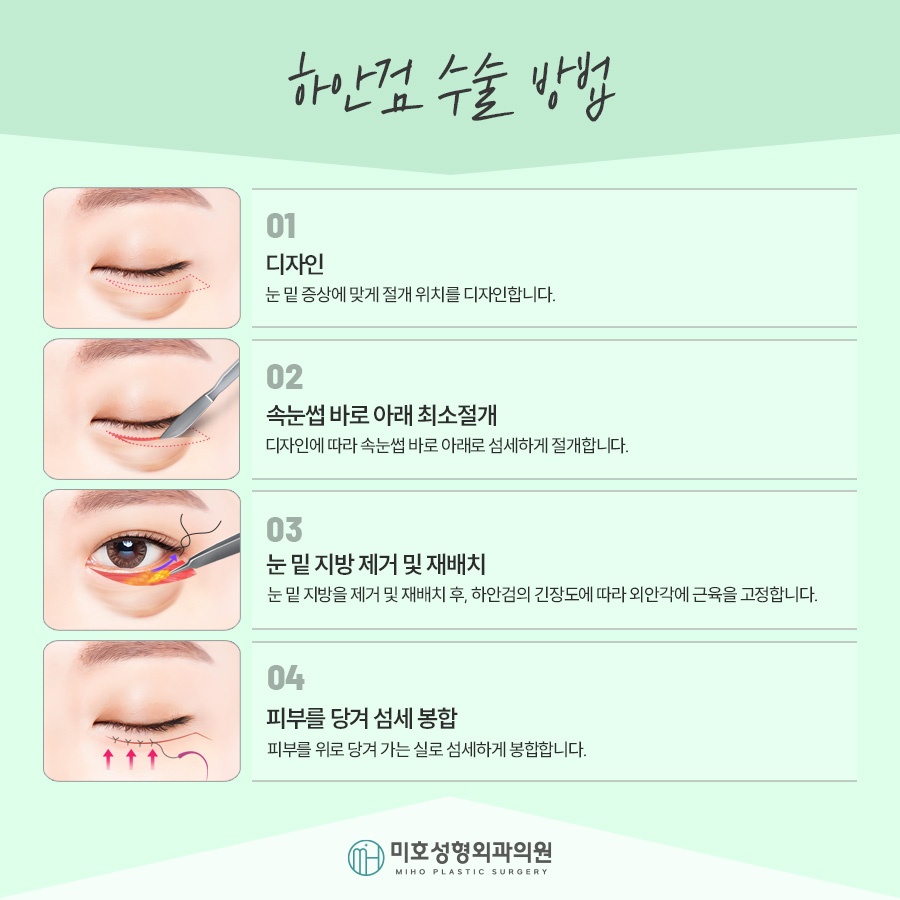
Please check in advance whether a minimal incision is
made just below the eyelashes so that the scar is not
exposed and swelling and bruising are minimized. After
the procedure, please also follow the instructions and do
your best to recover well.



Previous image
Next image