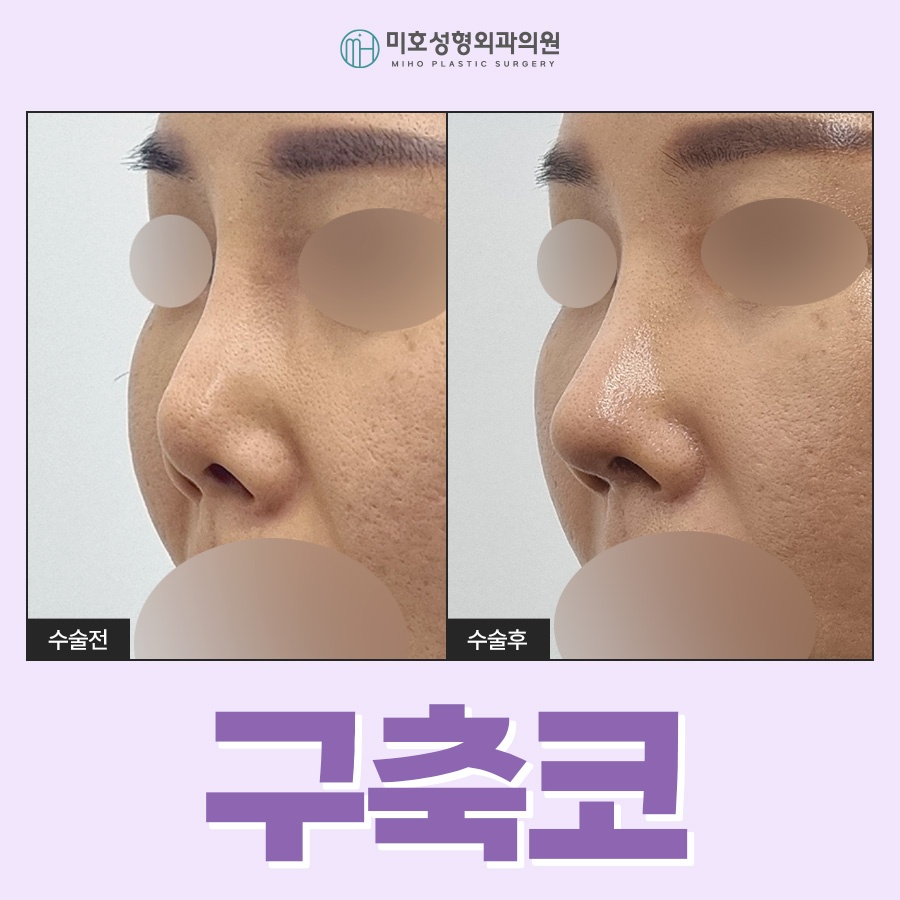
Among people who have undergone nose shape correction,
there are often cases where, over time,
they say the shape has actually become
more strange.
At first, they may have thought it was swelling or a temporary change,
but gradually they feel that the tip of the nose is lifting
or becoming stiff and hard.
These changes are commonly
called contracted nose.
However, because this area also handles
an important breathing function in the body,
rather than approaching it as a simple cosmetic concern,
it is recommended to look into why this happens
and how it can be addressed
in detail.
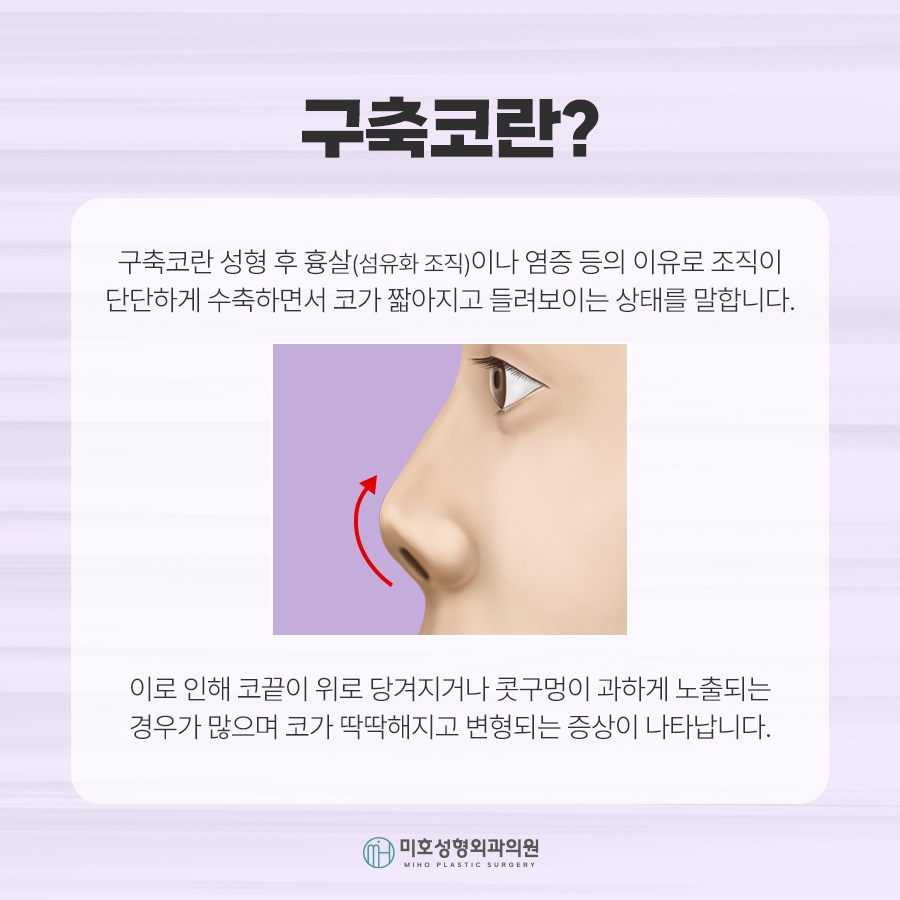
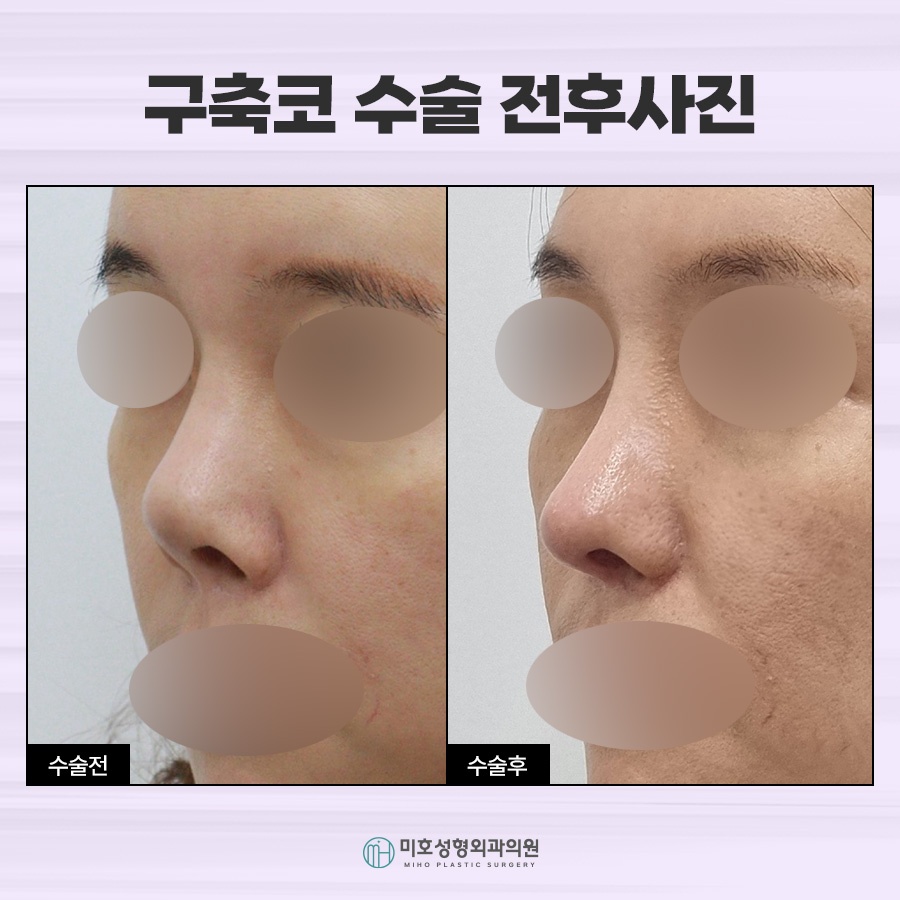
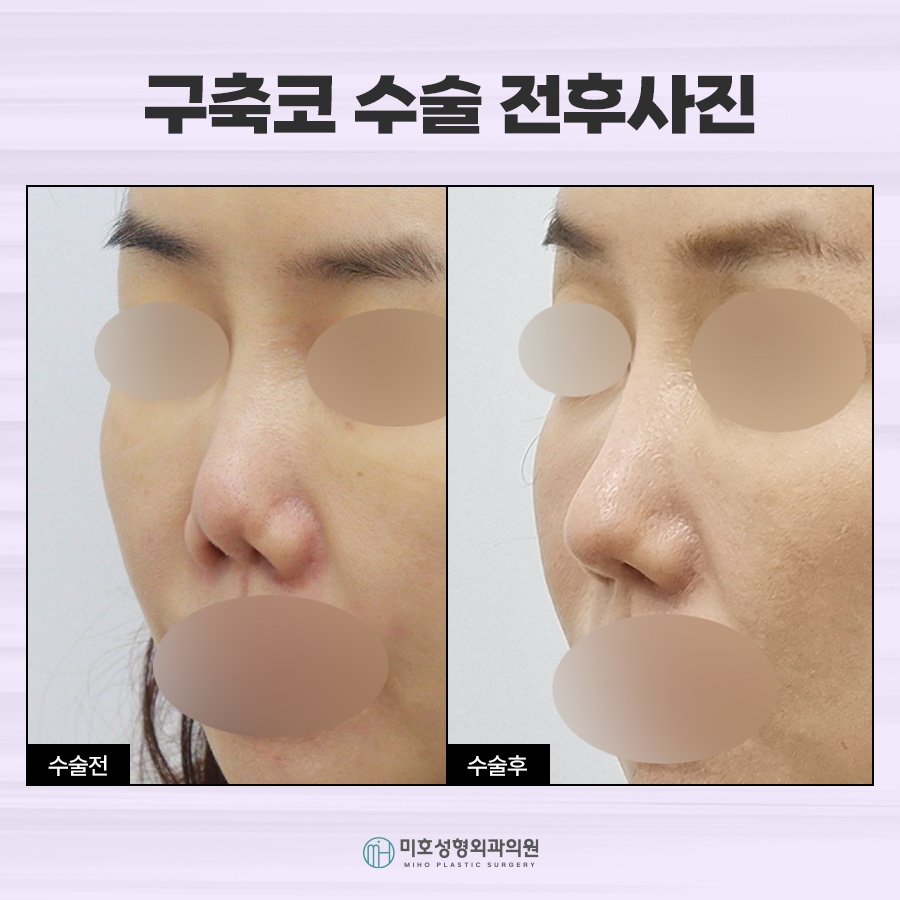
Contracted nose refers to a condition in which,
after improving the shape of the nose,
internal tissue abnormally contracts,
causing the overall shape to become deformed.
The problem is not only that the appearance becomes awkward;
the skin and soft tissue harden
and are pulled inward.
In this process, changes such as the tip of the nose lifting upward,
the nostrils becoming overly exposed,
and the nose becoming shorter may occur.
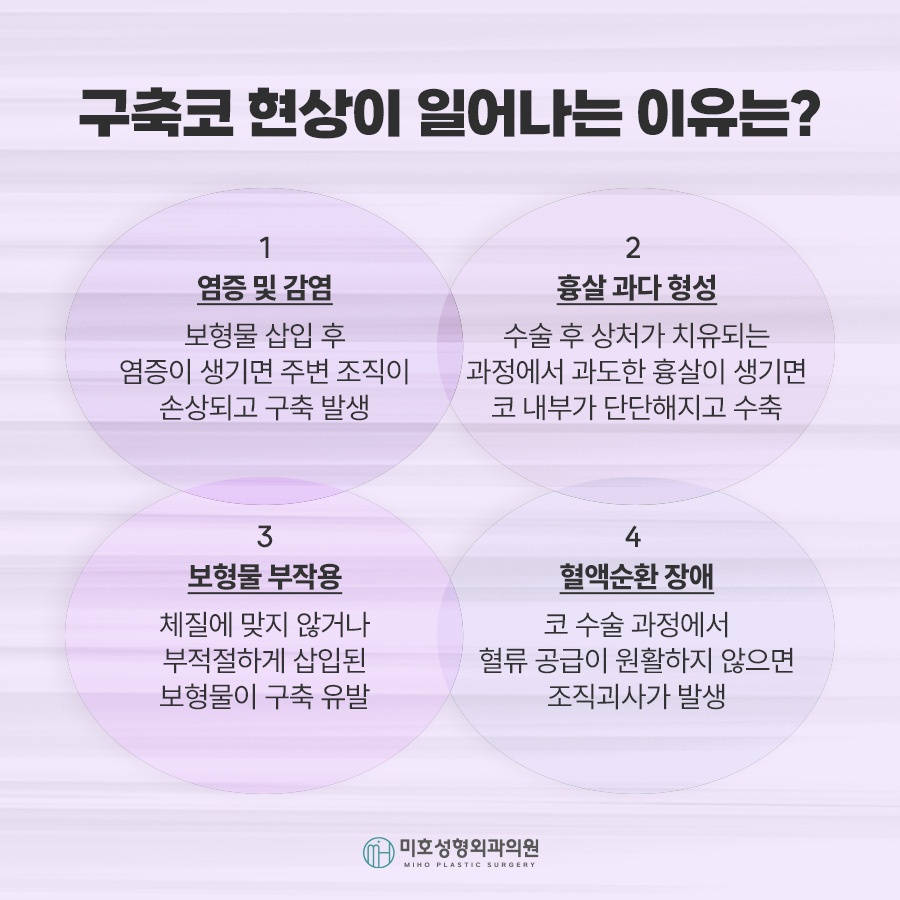
Repeated minor infections
or a foreign-body reaction to an implant in the body
can also be causes.
A constitution that tends to form a lot of scar tissue
is also an important factor.
If this condition is suspected,
the first thing to do is to identify the cause
in detail.
For example, if an implant is the reason,
it should be removed without delay.
Depending on the situation,
a certain period may be allowed until the tissue stabilizes
before attempting improvement for contracted nose.
If there have been repeated episodes of inflammation,
autologous tissue is recommended.
This is because it has a lower immune response
and tends to be more stable in the long term.
It is also important to consider
how much skin remains
and whether there is enough room for further stretching.

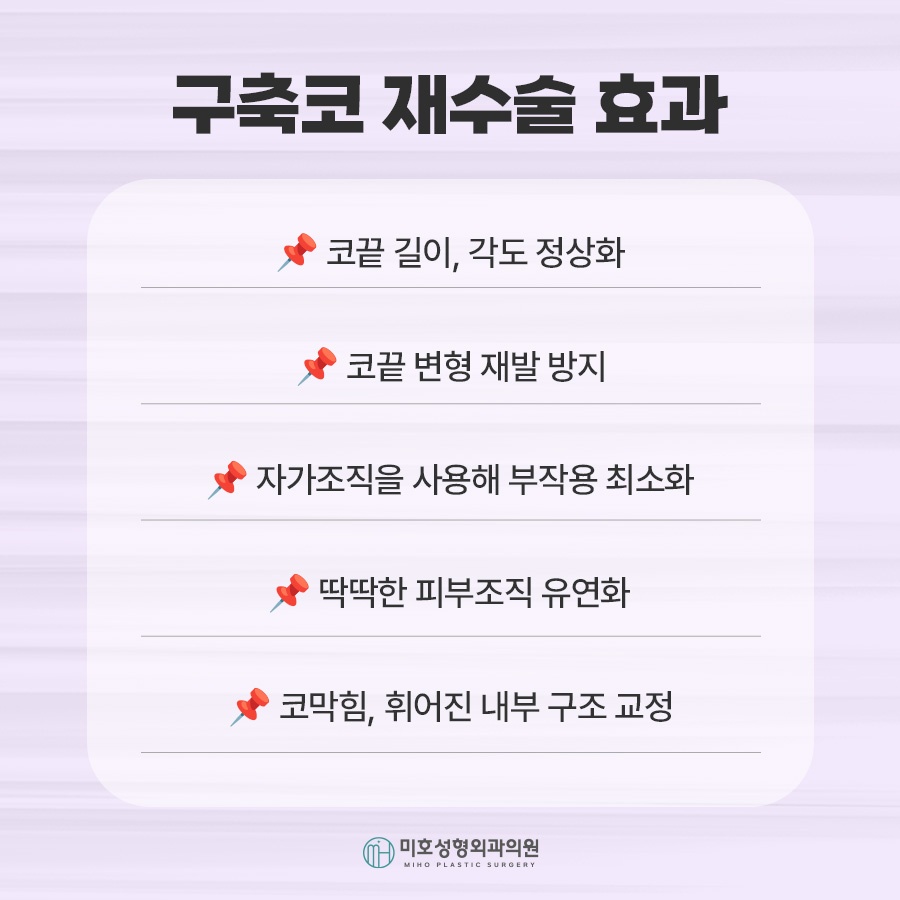
What matters in reconstruction
is not simply increasing the height.
Rather, the key is to stably bring down
the lifted portion downward.
To do this, the structure that supports the tip of the nose
needs to be rebuilt.
If this structure has collapsed,
simply raising it can make the chance of deformity
occurring again higher.
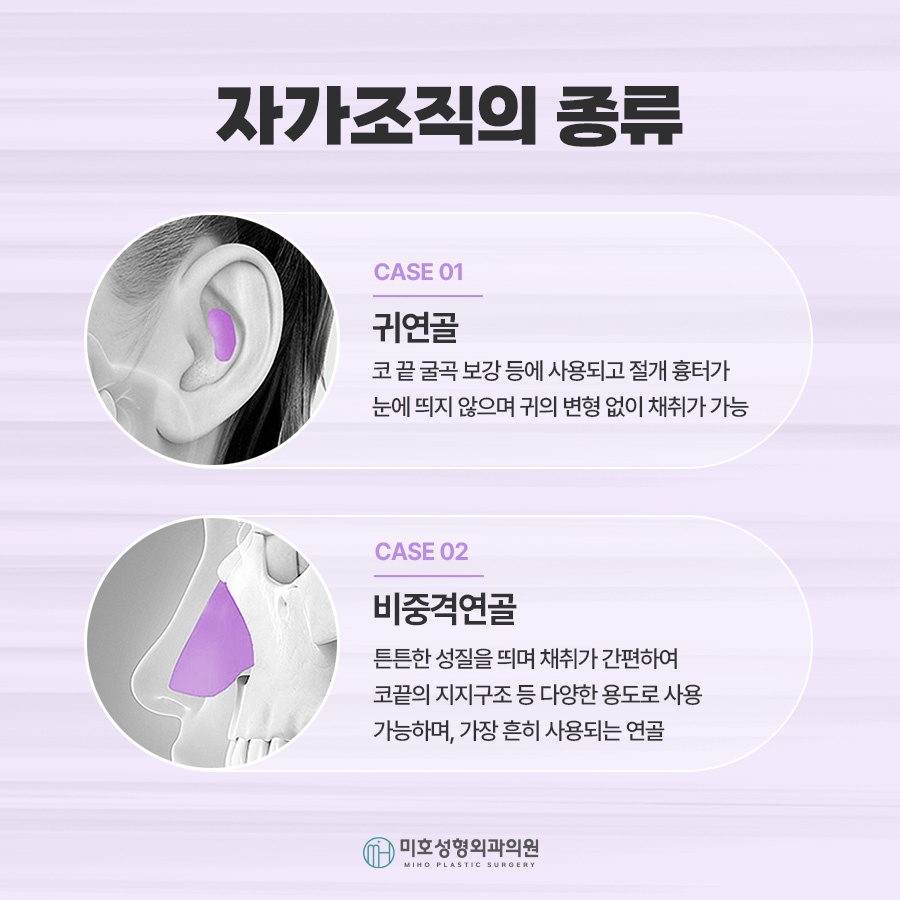
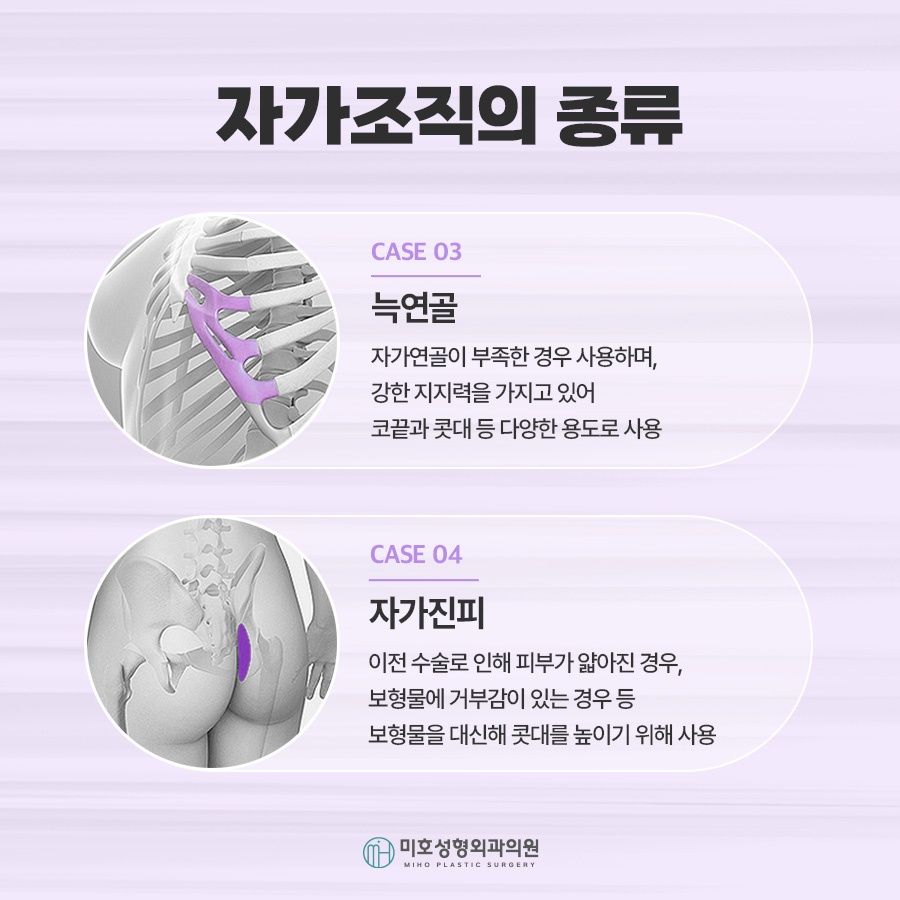
For this, autologous cartilage, especially
septal cartilage or ear cartilage,
and in some cases costal cartilage,
may be considered.
The choice depends on the condition,
so no specific material can be the answer for everyone.
It is often said that
contracted nose reconstruction
is very difficult.
The reason is that the area
has already been damaged.
The internal tissue is often hardened,
and the structure is unable to maintain
its normal position,
so simply replacing the implant
cannot resolve the problem.
Also, in cases where there is not enough skin,
it may be physically impossible to stretch it
as much as desired.
If the scar tissue is severe, the risk of bleeding also increases.
If the procedure is forced,
the possibility of recurrence of contraction
becomes higher,
so discussion with the medical team becomes even more important.
The timing also needs to be judged carefully.
This depends on the current condition.
In general, the rule is to wait for the tissue to stabilize.
However, if the tip of the nose is severely lifted
and the skin becomes thin enough that the implant is visible,
immediate action may be necessary.
Antibiotics may be administered during this process,
and the timing of reconstruction is then determined afterward.
Because healing speed and response differ from person to person,
an individualized judgment must be made.
A step-by-step approach helps reduce
the possibility of unexpected outcomes.
When structural deformity such as contracted nose
is present, the surgical treatment used to improve it
is called nose reconstruction.
This is not limited to just this case;
it can be described as a process of restoring damaged tissue
and function in that area.
At this time, rather than focusing only on changing the appearance,
the internal support structure
and airflow during breathing
must also be considered.
The treatment plan is established by comprehensively analyzing
previous history, the materials used, and the current condition.
If experience is lacking, such complex factors may be overlooked,
so the judgment of an experienced medical team is important.
The situations in which nose reconstruction is applied
are quite varied.
For example, if the columella is tilted,
it needs to be realigned to the center.
If an implant has moved or is visible,
that is also a case for treatment.
Also, if nasal congestion has become severe
or the sizes of the two nostrils differ,
functional and symmetry correction must be performed together.
As such, behind the expression "the shape has become strange"
there are many different cases.
Therefore, it is not appropriate to apply the same method to everyone,
and a solution suited to each problem
must be proposed.
For example, if the columella is crooked,
the septal cartilage is re-aligned as the center
to straighten the midline.
If a dorsal hump has recurred,
the protruding nasal bone is removed
or smoothed down to create a natural bridge line.
A problem of insufficient nasal bridge height can be approached
by using a thin implant or autologous tissue
to achieve overall balance.
In this way, even if the complaints seem similar,
the structural causes behind them are different.
Ultimately, a design tailored to each individual’s condition
can be said to determine the outcome.
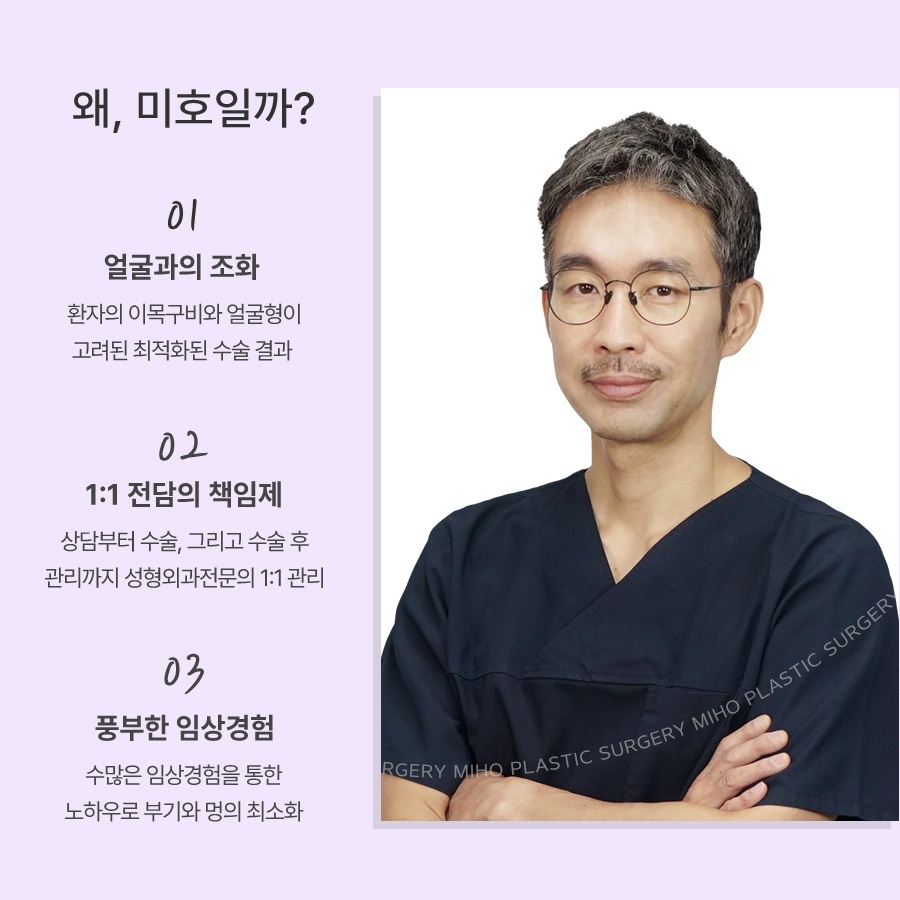
Mihwo also recognizes this well,
so for more precise examination and analysis,
3D-CT is used.
With this, from the structure of the nasal bone
to asymmetry, fractures, the shape of a dorsal hump,
and the position and condition of the septal cartilage,
it is possible to check more carefully.
Based on this information,
deciding on the implant or reconstruction method
can of course help reduce unnecessary trial and error.
If you are considering nose reconstruction
due to contracted nose,
please use the diagnosis and discussion here
to establish a more realistic treatment plan.


Previous image
Next image